TTG Asia
Asia/Singapore Wednesday, 31st December 2025
Page 82

Bali tourism operators call for urgent maritime safety reforms

0

A series of recent maritime accidents around Bali has raised concern among tourism operators, who are urging improvements in vessel safety standards, port supervision, and related infrastructure.

Three incidents – including a tourist boat capsizing in Nusa Penida in March, a fast boat accident near Nusa Lembongan in June, and a ferry sinking on the Ketapang-Gilimanuk route in July – have highlighted ongoing safety issues. While cancellations remain limited, operators say concerns are growing, especially regarding Java-Bali overland routes that depend on ferry transport.

Calls for tighter safety measures are growing following recent boat incidents near Nusa Penida, pictured

I Nyoman Subrata, secretary general of the Association of the Indonesian Tours and Travel Agencies (ASITA) Bali Chapter, described the incidents as a result of regulatory shortcomings, citing inconsistent enforcement by marine and port authorities. He warned that repeated accidents could undermine Bali’s reputation as a safe destination.

“It’s time for the government to go beyond appeals. We need stricter regulation, real enforcement, and serious investment in key ports like Gilimanuk and Nusa Penida,” he stated.

Without clear directions, some operators are now building their own safeguards. Wisnu Arimbawa, managing director of Good Day Tour, said safety concerns have forced his team to vet ferry and boat operators independently.

“We’ve started developing internal protocols ourselves. Ideally, this should be handled by authorities, but we can’t afford to be passive anymore,” he said.

In response to growing concern, the Ministry of Tourism said it is stepping up coordination with the Ministry of Transportation, search and rescue teams, and local governments to improve enforcement of marine safety regulations.

Ni Luh Puspa, deputy minister of tourism, told TTG Asia that the government is focused not only on establishing safety protocols, but also on ensuring effective implementation at the operational level. Marine tourism safety, she said, “requires discipline, accountability, and consistent oversight across all operators and routes”.

At the local level, the Bali tourism office is prioritising on-the-ground preparedness during the June-August peak travel season. Wayan Sumarajaya, head of the Bali Provincial Tourism Office, said: “We’ve asked all relevant agencies to reinforce safety protocols and ensure readiness at key marine gateways.”

Looking ahead, tourism operators expressed hope that existing systemic gaps would be addressed to prevent further incidents. I Nyoman Subrata observed that while Indonesia has made considerable investments in air connectivity, similar attention has not yet been given to maritime infrastructure.

“If we’re serious about becoming a global marine tourism destination, safety can’t be reactive. It must be built into planning, operations, and oversight, every step of the way,” he said.

Malaysia targets Indonesian travellers with new homestay showcase

0

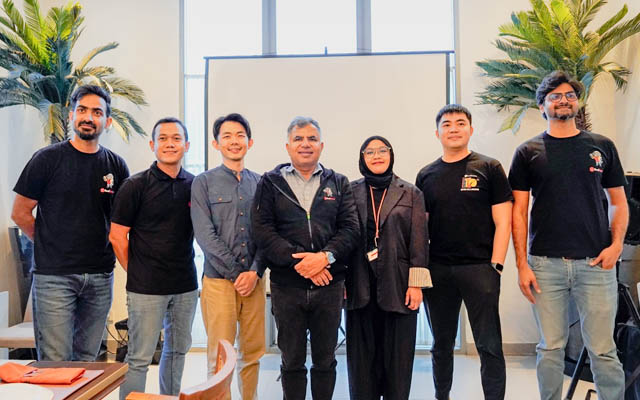
The Malaysian Homestay Entrepreneurs Association (MHEA), in collaboration with Tourism Malaysia, recently held the inaugural Homestay Tourism Showcase (HOTAS) 2025 in Indonesia.

This initiative aims to boost Visit Malaysia Year 2026 and Visit Homestay Year 2025, with a goal of attracting 25,000 Indonesian visitors to Malaysian homestays this year.

The homestay packages are designed to attract Indonesian visitors seeking authentic village experiences; photo by Dhini Oktavianti

Historically, Malaysian homestays were not heavily promoted in Indonesia due to perceived cultural similarities. However, Tourism Malaysia now recognises the unique appeal of their homestay programme, which emphasises host family experiences, traditional village life, and authentic local activities.

Sahariman bin Hamdan, president of MHEA, said: “This programme is not just an ordinary tourism promotion. This is (to strengthen the) close relationship between Malaysia and Indonesia in fostering regional sustainable tourism.”

Siti Hajar Mohd Yunus, deputy director of Tourism Malaysia Northern Region, said that Tourism Malaysia usually introduces the homestay programme to countries in Japan and Europe. She added that over time, they felt the need to promote it in Indonesia, despite the cultural similarities, because the mechanism is different. She explained that the programme uses a host family approach, with village food and traditional village activities, which they are developing as new products specifically for Indonesia.

Malaysia is offering 99 new homestay programmes tailored for Indonesian tourists, covering diverse interests such as educational tourism, ecotourism, cultural immersion, history, nature, and adventure. These packages specifically target Indonesian travellers seeking experiences beyond typical city tours.

With 223 homestays across all 13 Malaysian states, visitors have a wide array of options, according to Siti. Homestay packages range from day trips to overnight stays, with prices starting at 150,000 rupiah (US$10) per person.

At the table-top session, TTG Asia found Pelegong Homestay in Negeri Sembilan provides packages starting at 80 ringgit (US$18) for a day visit and 200 ringgit for a two-day, one-night stay, including meals and activities such as traditional dance and village tours. Kuala Medang Homestay in Pahang offers activities like boat cruises, rafting, fishing, and traditional crafts.

HOTAS 2025 is projected to generate five million ringgit in revenue from events held in Jakarta, Bogor, and Pekanbaru.

The MHEA is actively seeking strong partnerships with Indonesian travel agents to continuously promote and import these 99 new packages.

Indonesian travel agents TTG Asia spoke with view the Malaysian homestay programme as an attractive option for tourists seeking authenticity.

Ricky Hilton, general manager of communication and CRM at Golden Rama Tours & Travel, noted its particular appeal to Gen Z and millennials who desire a “living like a local” experience.

However, Febriansyah, owner of Fantastik Tour and Travel Kepulauan Riau, suggested that Malaysia needs to further adapt its packages to cater to Indonesian tourists’ pragmatic and budget-conscious nature, emphasising the need for unique destinations and attractions.

UOB Travel Planners broadens cruise portfolio with Ritz-Carlton’s Luminara

0

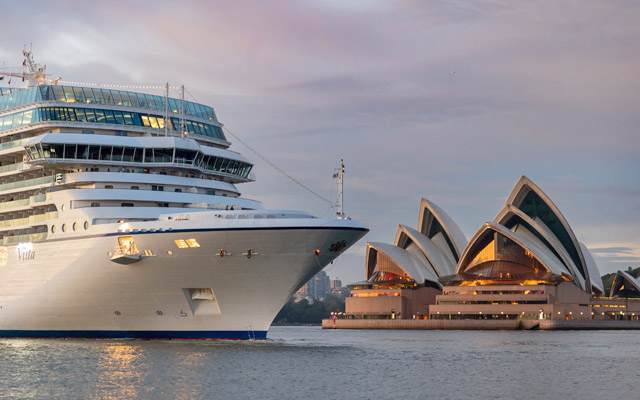
UOB Travel Planners (UTP) is preparing to promote Luminara, the third and largest superyacht in the Ritz-Carlton Yacht Collection fleet, as it arrives in Singapore on December 23.

The yacht will operate as a base for two months, offering cruises ranging from five to 14 days to destinations across the region, including Bali, Bangkok, Hong Kong, Phuket and Tokyo.

Guests aboard Luminara can enjoy curated menus featuring local cuisine from each port of call; photo by Ritz-Carlton Yacht Collection

The itineraries and deployment were detailed by Steven Ler, executive director of UTP, who attended Luminara’s launch and christening ceremony in Barcelona on June 26. Alongside UTP, travel agents from Thailand, China and Japan were also invited to the event.

UTP, recognised under Marriott International’s Stars & Luminous Luxury Celestial Club for luxury travel services, plans to combine its exclusive benefits and recognition for guests when booking Marriott properties with the Asian cruise itineraries to create an integrated cruise experience.

Ler said UTP Concierge offers – such as US$300 onboard credit and champagne on arrival – may be extended to its network of sub-agents across Malaysia, Indonesia, Thailand, Singapore and Vietnam, which serve a mid- to high-end customer base.

“Demand and interest in the Ritz-Carlton Yacht Collection have grown over the last two years since the launch of the first vessel (Evrima) and the second (Ilma) in 2024,” he said.

He added that the deployment of Luminara in Asia presents an opportunity to invite travel agents onboard to learn more about the suites, amenities, meals featuring local cuisine at each port, onboard retail, art tours and other offerings.

The average cost is about US$1,500 per person per night.

With capacity for 452 guests and no casino onboard, Ler described Luminara as a new concept for the region.

British Airways signs SAF supply deal with EcoCeres

0

British Airways has signed a multi-year agreement with renewable fuels producer EcoCeres for the supply of sustainable aviation fuel (SAF).

The partnership is expected to help the UK airline reduce lifecycle carbon emissions by approximately 400,000 metric tonnes, compared with using the same volume of conventional jet fuel. This reduction is equivalent to the emissions from flying around 240,000 economy passengers on return flights between London and New York.

British Airways partners with EcoCeres to boost use of sustainable aviation fuel

British Airways aims to power 10 per cent of its flights with SAF by 2030, in line with the UK government’s SAF Mandate. EcoCeres will supply SAF produced entirely from waste-based biomass feedstock, such as used cooking oil. The fuel has the potential to reduce lifecycle carbon emissions by up to 80 per cent compared with traditional jet fuel.

As for EcoCeres, it continues to expand production capacity and partnerships as part of its ongoing role in sustainable aviation fuel supply.

Matti Lievonen, CEO of EcoCeres, said: “We are proud to partner with British Airways in this strategic agreement to jointly tackle greenhouse gas emissions in aviation. Together, we are contributing to the broader effort of reducing emissions in transportation.”

Carrie Harris, director of sustainability at British Airways, added: “In 2024 alone, SAF accounted for 2.7 per cent of British Airways’ total fuel use and is contributing to our achievement of a 13 per cent reduction in our carbon intensity since 2019. That’s why this new agreement with EcoCeres is so exciting – it’s another important step forward on our journey to reach net-zero carbon emissions by 2050.”

Travel start-up TRAppe publishes Bali e-guide for conscious travellers

0

Singapore-based start-up TRAppe, a travel platform focused on curated, lifestyle-forward sustainable travel experiences, has debuted its Bali e-guide, featuring over 100 curated sustainable businesses, accommodation, restaurants, and tours designed for conscious travellers who want to support local communities without sacrificing style or experience.

Each business is verified through direct relationships and site visits, prioritising real local impact over costly sustainability certifications.

TRAppe launches curated collection of over 100 sustainable businesses to simplify travel choices

In a press statement, TRAppe says the digital guide addresses a common frustration for travellers seeking sustainable options: spending hours sifting through fragmented information online.

TRAppe positions itself as the well-travelled friend who has done the homework for conscious travellers seeking authentic local experiences but struggle to find them on mainstream booking platforms.

Bali e-guide will have no booking functionality at this stage; it will only provide direct links to featured businesses.

Gabriella Yan, solo founder of TRAppe, said: “I’m most excited to see travellers discovering incredible local operators they never would have found elsewhere. There are amazing family-run places doing genuinely innovative work. When travellers discover these businesses and share their stories, it creates a ripple effect that benefits entire communities.”

The Bali e-guide will serve as proof of concept for TRAppe’s broader mission: tackling economic leakage in the travel industry by making it more effortless for travellers to support authentic and sustainable businesses. The venture-backed company plans to expand across South-east Asia within the next 12 to 18 months, with upcoming guides for Singapore and Thailand.

The Langham, Custom House, Bangkok appoints new GM

0

Langham Hospitality Group (LHG) has appointed Nick Downing as general manager of The Langham, Custom House, Bangkok.

He will report to Sherona Shng, regional vice president – operations, Asia.

Downing brings over 30 years of luxury hospitality experience across South-east Asia, Australia, and the Indian Ocean. He most recently led The Siam in Bangkok.

ASEAN, South Korea plan tourism recovery at Danang roundtable

0

Tourism officials from ASEAN member states and the Republic of Korea met in Danang, Vietnam, last week to explore ways to revive travel between the two regions following the Covid-19 pandemic.

The ASEAN-Korea Roundtable in Tourism (AK-RT 2025) was jointly organised by the Southeast Asia Tourism Development Center (SATDC), Duy Tan University, and Passage to ASEAN (P2A), with funding from the South Korean government under the Korea-ASEAN FTA Economic Cooperation Project.

Officials gathered to discuss policies to strengthen travel ties and cultural exchange between South-east Asia and South Korea

The event focused on developing policy recommendations to support tourism recovery and economic cooperation under the ASEAN-Korea Free Trade Agreement.

The AK-RT initiative was first introduced at the 24th Meeting of ASEAN Plus Three Tourism Ministers in Johor, Malaysia, in January.

Before the pandemic, tourism contributed about 12 per cent of South-east Asia’s GDP and accounted for 11 per cent of employment, according to 2023 Organisation for Economic Co-operation and Development data. From 2010 to 2019, visitor arrivals from South Korea to South-east Asia countries grew by 11.7 per cent annually, while South-east Asia visits to South Korea increased by 10 per cent per year.

Kim Geun Ho, director general at Republic of Korea’s ministry of culture, sports and tourism, said: “Before the pandemic, nearly 13 million people travelled between our regions annually. This impressive figure reflects the connection between South Korea and South-east Asia.

“Now, as we recover from the impact of Covid-19, we face both challenges and opportunities. We must work together to create a more seamless, inclusive, and forward-looking tourism environment. This roundtable comes at a critical juncture calling for practical policy dialogue, deeper mutual understanding, and concrete solutions.”

Mo Chul Min, senior project manager of the AK-RT 2025 steering committee, added: “Tourism is one of the key sectors under the ASEAN-Korea Free Trade Agreement. The increased trade and investment flows under the FTA have enabled greater people-to-people connectivity between the two regions.

“ASEAN and (South) Korea are each other’s third-largest source markets for tourism. In 2024, ASEAN accounted for 15.4 per cent of (South) Korea’s total international arrivals, while (South) Korea represented 8.2 per cent of ASEAN’s inbound tourism in 2023.”

He noted that 2025 marks the 35th anniversary of ASEAN-Korea Dialogue Relations, now a comprehensive strategic partnership. He said the roundtable could help increase tourist flows between the two regions to 20 million, up from 13 million in 2019.

The roundtable focused on four areas: travel facilitation and security, addressing tourist inconveniences, workforce training, and cultural understanding.

Daniel Chong, dean of the school of hospitality and service management at Sunway University, Malaysia, pointed to data privacy concerns, varying levels of digital readiness across South-east Asia, and infrastructure costs as key obstacles. He pointed to data privacy, varying levels of tech readiness in ASEAN, and infrastructure costs as key challenges. His suggestions included bilateral data-sharing agreements, funding for digital border systems, and a regional task force to coordinate technology rollout.

To improve entry procedures, Nia Niscaya, senior advisor at Indonesia’s Ministry of Tourism, recommended expanding visa-free access based on reciprocity, piloting seasonal visa waivers, and introducing ASEAN-Korea youth cultural visas for students, exchange participants, and tourism apprentices.

Paithoon Monpanthong, former dean at the Graduate School of Tourism Management, National Institute of Development Administration, Thailand, highlighted job insecurity and limited professional growth in the tourism sector, especially in rural areas.

“During Covid-19 in Thailand, for example, the first job which was seriously affected was tour guides because more than 90 per cent of them were freelancers, making them feel it is not a stable career,” said Paithoon, adding that access to training is better in cities and suggesting online courses to support those in remote areas, as well as proposing improvements to workforce certification and multilingual promotion.

Pham Hong Long, dean of the faculty of tourism studies at VNU University of Social Science and Humanities, Vietnam, discussed cultural exchange and noted a disparity in perceptions. Citing an ASEAN-Korea Centre survey, he said 70 per cent of South-east Asian youth had a positive view of South Korea, while only 41.6 per cent of (South) Korean youth felt the same about South-east Asia.

“The Korean Wave (Hallyu) has significantly influenced ASEAN youth perceptions of (South) Korea,” he said, adding that this one-sided cultural flow needs to be balanced through reciprocal initiatives.

Each presentation was followed by discussions among tourism decision-makers and stakeholders to develop a joint recommendation, which is being finalised for submission to both governments.

Japan faces tourism fallout amid viral quake prophecy

0

A doomsday prediction of a megaquake and tsunami striking southern Japan this month could result in up to 560 billion yen (US$3.9 billion) in economic losses, according to think tank Nomura Research Institute.

Rumours of a possible disaster went viral after Ryo Tatsuki, an artist said to have visions of the future, predicted a massive earthquake and tsunami in the Philippine Sea on July 5, 2025, in her manga The Future I Saw. Originally published in 1999 and reprinted in 2021, the book gained attention for seemingly foretelling the March 2011 Great East Japan Earthquake and Tsunami.

Japan’s southern tourism faces losses as travellers react to viral quake prediction from 1999 manga; Takachiho Gorge in Miyazaki, pictured

The latest forecast has unsettled tourists, particularly in Asia, despite calls from Japan’s meteorological agency and local governments that the exact timing, size or location of earthquakes cannot be predicted.

Many potential travellers have cancelled their trips, chosen other destinations or postponed travel to Japan until autumn.

Arrivals from Hong Kong fell 11 per cent year-on-year in May, with a steeper decline expected in June and July, according to government data. Travel bookings from China, Vietnam, and Thailand have also dropped by 30 per cent compared to the same period last year.

In response to weakening demand, Greater Bay Airlines has reduced its thrice-weekly roundtrip flights between Hong Kong and Tokushima, Shikoku, to two, and suspended its seasonal service to Yonago in Tottori Prefecture. Hong Kong Airlines has also cancelled its July and August flights to Kagoshima and Kumamoto in southern Kyushu.

Ascott commences talent programme to support massive opening pipeline

0

Ascott, the lodging business unit of CapitaLand Investment, has launched Ascott Accelerate, a structured talent programme designed to catapult high-potential associates into leadership roles across more than 300 new properties slated to open in the coming years.

Wong Kar Ling, chief strategy officer and managing director, Southeast Asia at Ascott, who is also co-chair of the Ascott Learning Council, told TTG Asia said the company has to ramp up talent development to support its target of achieving over S$500 million (US$391.5 million) in fee-related earnings by 2028. This goal will materialise through the opening of more than 300 new properties by 2028, resulting in the creation of more than 12,000 new jobs, including over 1,500 property leadership roles.

Ascott Accelerate fast-tracks leadership while engaging associates through initiatives like the Ascott Learning Festival

Ascott Accelerate features three progressive career development tracks: Aim, which builds foundational leadership skills essential for supervisors; Advance, which focuses on management capabilities for heads of departments; and Aspire, which grooms future residence managers and general managers.

Aspire is the first track to launch under the programme, with courses beginning on July 1 for around 30 associates selected from across South-east Asia, where Ascott is set to see its fastest portfolio growth.

These associates are determined to be ready for their next career progression by their country operation leader and the country head in human resources.

Associates must meet specific criteria, including serving a minimum number of years with the company, attainment of an above-average performance rating, and possessing the right personality for leadership roles.

At the same time, Ascott has allowed country leaders to exercise their own judgement in their selection, “as they know their people best”.

Wong shared that the first batch of Aspire trainees is being paired with mentors from the company’s country leadership team. The trainees will follow an e-learning module covering all aspects of management, mark monthly learning milestones through expert sharing sessions, and complete the year-long course with a graduation ceremony.

Wong explained that the programme is hybrid – combining online lessons with face-to-face interaction with mentors – to make it easier for associates to learn while fulfilling their day job.

The Aim track will launch next year with potentially 30 to 40 participants.

Eventually, all three tracks will be conducted concurrently, but Aim and Advance tracks will “be decentralised from headquarters and driven by regional teams”.

Wong said an equal amount of thought goes into retaining talents.

“We have to understand our associate’s aspiration and what we, as an organisation, can provide. The success of our programme is not determined by the number of candidates we put through it, but by how fast we can place them into leadership roles. This drives retention,” explained Wong, stating that training without opportunity to progress is pointless.

She added that employees also appreciate the opportunity to expand their skill sets and grow across different departments, as Ascott does not “box our people in”.

“The Ascott brand tagline is, Stay your way, where our ambition is to provide a home away from home for our guests. This applies internally too. We want our people to grow their way,” Wong said.

Ascott Accelerate is just one of many talent development programmes offered as part of the Ascott Global Academy for Excellence, a comprehensive training platform designed to build a future-ready workforce for the company. Wong shared that team members are engaged in regular Ascott Global Exchange Programme and Ascott Learning Festivals. There are also specific task forces that associates can volunteer to join.

Hilton to open Waldorf Astoria in Bali’s Nusa Dua by 2027

0

Hilton has signed an agreement with Indonesian property developer Balibuana Perkasa to open Waldorf Astoria Bali, expanding the group’s presence in one of South-east Asia’s key tourism destinations.

Scheduled to open in late 2027, the resort will be located along Sawangan Beach in Nusa Dua. It is Hilton’s second collaboration with the developer, following Hilton Bali Resort, and will join the group’s 16 operating and 12 pipeline hotels across Indonesia.

Slated to open in 2027, Waldorf Astoria Bali is set to open in 2027 in Sawangan Beach

Waldorf Astoria Bali will comprise 71 villas and 68 guest suites overlooking the Indian Ocean. The property will include a beach club, a restaurant and pool terrace under the brand’s Peacock Alley concept, and a new outlet by chef Dave Pynt, who is known for his open-flame cooking and the one behind Burnt Ends in Singapore and The Ledge at Waldorf Astoria Maldives Ithaafushi.

Facilities will include a spa influenced by Balinese wellness traditions, a fitness centre, ocean-view swimming pools, family activities and a children’s club. The resort will also feature 748m2 of event space, including a ballroom and a chapel for weddings and private events.

Located 14.5km from Ngurah Rai International Airport, the resort offers proximity to nearby attractions including Ungasan, Uluwatu, and Geger Beach.

Waldorf Astoria hotels participate in Hilton Honors, the company’s loyalty programme. Members who book directly receive benefits such as flexible points payment, exclusive discounts, standard Wi-Fi and access to the Hilton Honors app.

Clarence Tan, senior vice president, development, Asia Pacific, Hilton, commented: “With the upcoming arrival of Waldorf Astoria, Bali will hold the distinction of being home to three of our luxury brands, including Conrad Hotels & Resorts and LXR Hotels & Resorts, in addition to our flagship Hilton Hotels & Resorts and Hilton Garden Inn.”

Gandi Rudiarto, director of Balibuana Perkasa, said: “The island paradise has been in the global spotlight for hosting world events like the G20 Summit, and we are confident that Waldorf Astoria Bali will introduce new heights of unforgettable luxury that befits leaders and luminaries – true to the brand’s illustrious legacy of hosting presidents and royals.”