

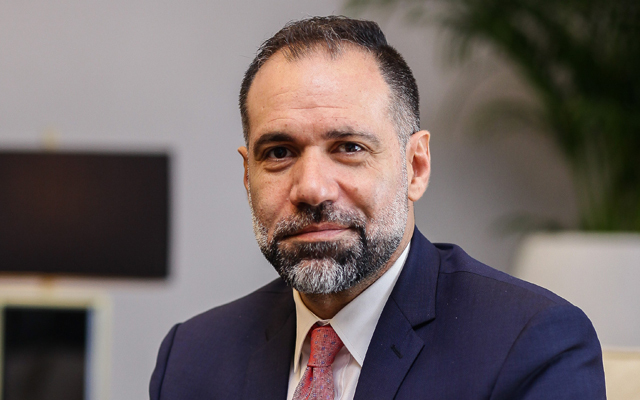
Shangri-La gets bigger in the business of fun on Sentosa

The Shangri-La Group will develop its first standalone lifestyle and entertainment precinct, Palawan Sands, on Sentosa Island in Singapore. Slated to open in 2023, it will be home to several new-to-Singapore leisure activities.
There will be a host of lifestyle entertainment and exciting food and beverage options, accompanied by Shangri-La’s hallmark hospitality.
Taking pole position at Palawan Sands is HyperDrive, South-east Asia’s first-ever gamified electric Go-Kart circuit featuring an eco-friendly fleet of electric karts on a three-level racetrack.
Palawan Sands will also be home to two unique beach clubs, each catering to different audiences. The first is a sandcastle-themed family beach club. Complementing that is the +Twelve, which will feature an iconic swim-up bar in the main pool overlooking the shoreline of Palawan beach, and 12 terraced private cabanas, each with their own plunge pool.
Other attractions are UltraGolf, a brand-new 18-hole mini golf course, and HydroDash, Singapore’s very first floating aqua water theme park.
More details on food and beverage options at Palawan Sands will be shared closer to opening.
Chan Kong Leong, regional CEO for the Shangri-La Group in South-east Asia & Australasia, said: “Here at Shangri-La, we have spent the last 50 years helping our guests create meaningful memories to last a lifetime. With Palawan Sands, we are pleased to have the opportunity to bring colourful joys of life to our guests outside of the hotel setting. Designed to bring families and friends together, Palawan Sands enables our guests to realise their Shangri-La, both individually and with one another, as they play, explore and bond together.”
Thien Kwee Eng, CEO of Sentosa Development Corporation (SDC), added: “Palawan Sands will be a reimagination of the Sentosa beach getaway, and illustrates SDC’s partnership with the industry to curate multi-faceted and unique leisure experiences for our island’s guests. With leisure and dining offerings for various ages at Palawan Sands, the attraction will reinforce Palawan Beach’s position as a family-friendly zone, and give Singaporeans and tourists a great option to unwind.”
Nara whips up a stronger focus on food tourism

Japan’s Nara prefecture is stepping up its food and drink-related offerings ahead of hosting the 7th UNWTO World Forum on Gastronomy in June 2022.
The event is expected to be a catalyst in the development of central Kansai’s gourmet tourism, and local stakeholders are working hard to ensure the prefecture is maximising the opportunity to showcase itself to the world.
Efforts include the development or expansion of authentic, traditional and innovative culinary experiences, as well as activities such as visiting local producers, participating in food festivals, and attending cooking classes.
Gurutto Auberge, which literally means travel around auberges, is an initiative to encourage visitors to stay in a French-style auberge – a restaurant focused on food but which also has accommodation. It now offers 12 facilities.
Yoshiaki Tanaka, assistant director of MICE promotion at Nara Prefectural Government, said the initiative aims “to promote the creation of local liveliness through food, the development of sightseeing tours, and the utilisation of local agricultural products”.
A new booklet, Gastronomique Promenade, introduces 47 places for gourmands in Nara’s Yamanobe-no-Michi area, such as restaurants, souvenir shops and places offering food and drink experiences.
The developments build on Nara’s successful hosting of the International Symposium on Gastronomy Tourism 2022 in January, where almost 400 people attended a hybrid event on the theme of realising sustainable regional tourism using “food x comfort x travel”.
Businesses are tapping increased demand domestically for the area’s unique food and drink, particularly sake and local ingredients.
As the heart of ancient Japan, Nara has long been renowned for sake. Now, breweries are inviting visitors for culinary experiences as well as sake tours and tastings.
Namakura Sake has private rooms where seasonal dishes and sake from across Nara are served.
At JW Marriott Hotel Nara, which opened in spring 2020, ingredients from Nara are used with local and international techniques to create fusion cuisine at Silk Road Dining.
Malaysia Airlines increases flight frequencies
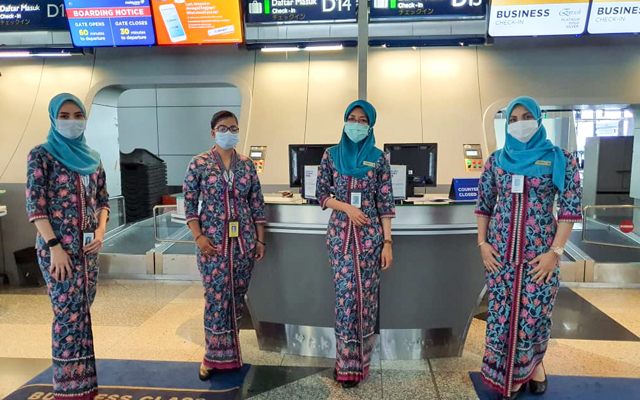
With Malaysia’s borders reopened, national carrier Malaysia Airlines has taken the opportunity to gradually increase its frequencies and network, aiming to achieve around 70 per cent of its pre-pandemic capacity by end of this year.
In an email response, the airline said it was planning to increase capacity by an additional 25 per cent on top of a 20 per cent projection made much earlier, in light of the Malaysia’s borders having reopened on April 1.
The focus this year is on rebuilding the airline’s domestic network and increase frequencies to key international markets, as it expects an influx of foreign leisure travellers who are looking forward to “connection travel”, which is to reunite with their families and loved ones.
The airline is currently seeing higher demand from India on its signature route, as well as from the UK and Australia into Malaysia. It recently increased frequencies on its flagship Kuala Lumpur–London route to 11 times weekly and will return to double daily services from July 1.
The carrier has also reinstated scheduled services to big cities in India, namely New Delhi, Bangalore, Mumbai, Chennai and Hyderabad after close to 24 months of suspension due to border closures between Malaysia and India. The airline now operates 25 weekly flights to and from India.
Coinciding with the borders reopening on April 1, Malaysia Airlines increased its capacity on the Kuala Lumpur–Bangkok route from four times weekly to seven, as well as on the Kuala Lumpur–Phuket route from weekly flights to thrice weekly.
Also since April 1, Malaysia Airlines has expanded its Bali services to twice weekly.
Frequencies on the Kuala Lumpur–Sydney route has been increased from four to seven times weekly, and on the Kuala Lumpur–Perth route to five times weekly, from four, following steady demand for travels from the Australasia region.
On the domestic front, load factors from Kuala Lumpur to Langkawi, Johor, Sabah and Sarawak has been described as “very encouraging”.
The airline has upped its weekly capacity from Kuala Lumpur to the eastern states of Sabah and Sarawak from 45 to 70 times weekly last November, just two weeks after the government allowed the resumption of interstate travel.
Ovolo promotes Dave Baswal to CEO

Ovolo has promoted Dave Baswal to CEO, allowing founder and executive chairman Girish Jhunjhnuwala to focus on branding, development, and strategic growth of the business.

A National Board Advisory Member of Tourism Accommodation Australia and a former executive at Mantra Group, Baswal brings two decades of hospitality, finance and real estate management experience to the role.
The appointment comes as Ovolo prepares for the next phase of its evolution, with plans to expand into new markets as the hospitality industry recovers from the impacts of the pandemic.
Accor, Traveloka join forces to expand global distribution
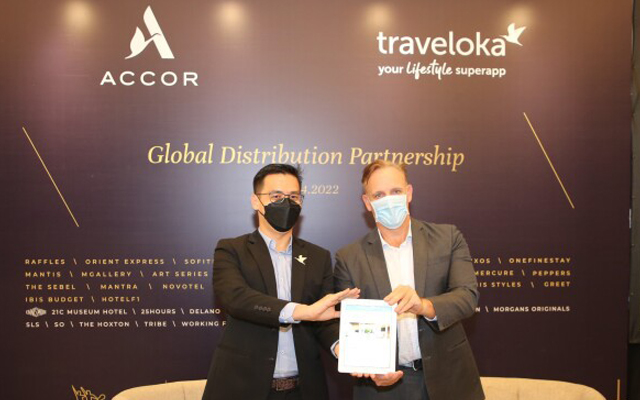
A partnership between Accor and Traveloka will grant travellers access to Accor properties in 13 countries on the latter’s platform, with reach expected to grow as the South-east Asian lifestyle superapp develops its international business into Europe.
Through marketing initiatives such as In-app Exposure, Traveloka LIVE and social media collaborations, the partnership will help drive travel recovery across South-east Asia.
Travellers will be able to book a wide selection of Accor hotels and access real-time availability, competitive offers, dedicated mobile rates as well as ease of payment for any transactions completed on the app.
Kerry Healy, chief commercial officer, Accor South-east Asia, Japan & South Korea, said that with international travel “resuming at an incredible pace this year”, this was the “perfect time” to launch Accor’s distribution partnership with Traveloka.
Healy regards Traveloka as a “key distributor and partner to support our growing pace across Indonesia and drive outbound travellers to other markets in South-east Asia and beyond”.
“This partnership will allow us to increase the value proposition for our guests across the region, allowing great booking options and flexibility for avid travellers. We believe Traveloka is our ideal partner to strengthen our visibility on the Indonesian market thanks to our complementary expertise in lifestyle and travel,” she added.
The Traveloka app has more than 100 million downloads and over 40 million monthly active users in the South-east Asia region as of January 2022.
Accor’s network in South-east Asia is set to surpass 500 properties by 2024.
Alfan Hendro, COO of Traveloka, said: “Our strategic partnership with Accor will continue to cement Traveloka’s commitment in providing the best, seamless travel experience for our customers and accelerate stronger business growth in South-east Asia. As a lifestyle superapp, we are revolutionising lifestyle services for millions of consumers, redefining how they live, play, and discovering new adventures in their very own backyards and across the world.”
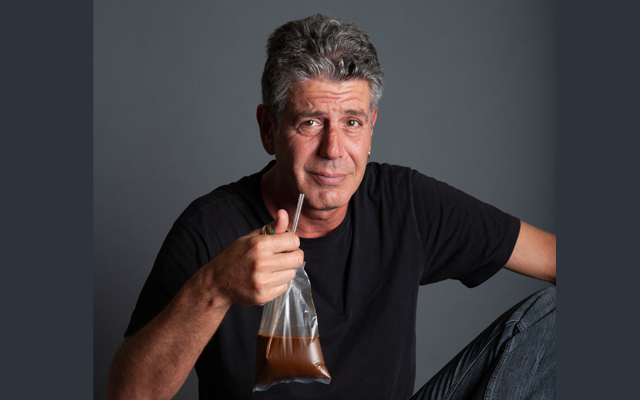
A Portrait Of Bourdain: Celebrating His Life And Legacy
Why
The secret is out! The late Anthony Bourdain’s Bob Kramer custom steel and meteorite chef knife, which sold for over US$231,250 in a 2019 auction of his personal belongings, has been revealed to have been acquired by The English House by Marco Pierre White in Singapore.
For some time, no one knew the identity of the lucky buyer. But here I was at the restaurant, fortunate enough to be peering closely at the renowned bladesmith’s bespoke culinary tool.


During a recent media preview to pay tribute to the life and legacy of Bourdain, I was one of the first few to lay eyes on the exquisite collection of art and personal possessions of the celebrated chef, unveiled at The English House.
For the very first time in Singapore, the beloved collection is now available for public viewing exclusively at the legendary British chef-restaurateur’s establishment.
What
Displayed lovingly across the antiquated interiors of The English House, diners can discover Bourdain’s trove of cherished personal mementos, art and cultural artefacts collected during his exciting travels around the globe.
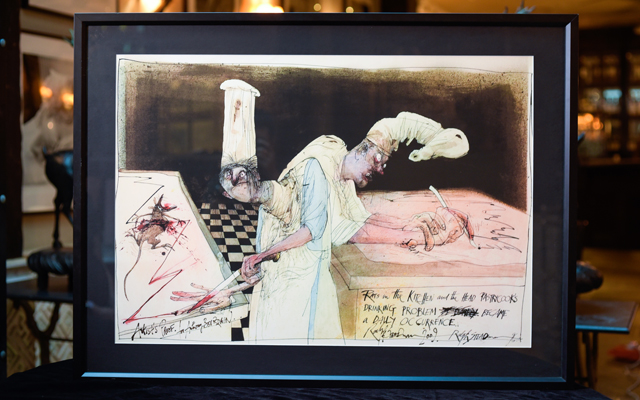
Apart from the Bob Kramer creation, the 150-seater restaurant is also home to other gems such as a chrome duck press the late chef became enamoured of during the Paris episode of The Layover; a French silvered bronze Michelin Man sculpture; a bronze skull and antler sculpture from long-time friend, White; an African carved wood and metal ritual power figure, Nkisi Nkondi, from the Portuguese colonial era which was gifted by a Mbole tribal chief; a pig chef sculpture; and intriguing works by contemporary artists Ralph Steadman and Brad Phillips.
Each item curated in the collection held special significance for Bourdain, either as gifts from friends or cherished buys picked up during his travels, creating and inspiring many on television.
Said The English House’s spokesperson, Chef Gabriel Fratini: “Anthony Bourdain was a renegade in the culinary, travel and entertainment worlds, and his experiences led him to amass a truly impressive collection of art – one that represents his eclectic taste, appreciation for discovery and, most notably, other cultures.”
I was most fascinated by the darkly hilarious works of English illustrator Ralph Steadman, especially the gritty silkscreen piece, Rats in the Kitchen, inscribed to Bourdain.
Deeply insightful with a mischievous dash of dark wit, the morbid depictions of an alcoholic cook and a dissected rat underline its droll commentary on kitchen life reflected by the themes Bourdain explored in Kitchen Confidential, his best-selling memoir.
Besides, I was also in for another delightful treat at the event, being seated at the same table as celebrity photographer, Russel Wong.
Over lunch, Wong shared engaging work tales of his collaborations with Bourdain when he was in Singapore – Wong once deployed a kitchen distributor venue in Bukit Merah as the set for Bourdain’s publicity shots for No Reservations and brought the late chef to savour roti prata at Jalan Kayu and other local favourites at hawker centres.
Bourdain was down-to-earth, had a reserved demeanour, was always respectful and had a deep knowledge of the cultures of others, according to Wong.
What’s more – for diners keen to sink their teeth into Bourdain’s favourite quintessentially Roman pasta dish, cacio e pepe, The English House can provide the flavourful offering on special request too.
Verdict
Don’t miss this opportunity to admire Bourdain’s treasured quirky possessions showcased within an equally whimsical venue.
The English House, nestled at Mohamed Sultan Road among a row of Singaporean conservation shophouses, is itself, a wonderous labyrinth decorated in vintage collectibles, impressive art, celebrity and movie memorabilia, as well as other novelty exhibits.
Think framed black and white photos by famed British photographer Terry O’Neill, featuring The Beatles, Elizabeth Taylor and David Bowie adorning the walls, and an antique carving trolley belonging to the late Hugh Hefner, founder of Playboy.
The unique interior and decor, which marry the best of Straits Chinese and classic 19th century Singapore shophouse design, were created as White’s passion project and pay homage to his love for culture.
Then, there is the restaurant’s must-try elevated international classics which include tasty signature dishes such as the homemade sausage roll, fresh lobster dumpling served with egg white and hairy crab sauce, delectable mains such as the beer battered wild cod, classic English favourite fillet of Aberdeen black angus wellington, and on special request – Bourdain’s favourite, cacio e pepe.
The art collection will be a permanent fixture at The English House and is only available for viewing to diners.
Location: 28 Mohamed Sultan Rd, Singapore 238972
Email: info@theenglishhouse.com
Website: https://www.theenglishhouse.com/
Ron Pohl heads up BWH Hotel Group and WorldHotels
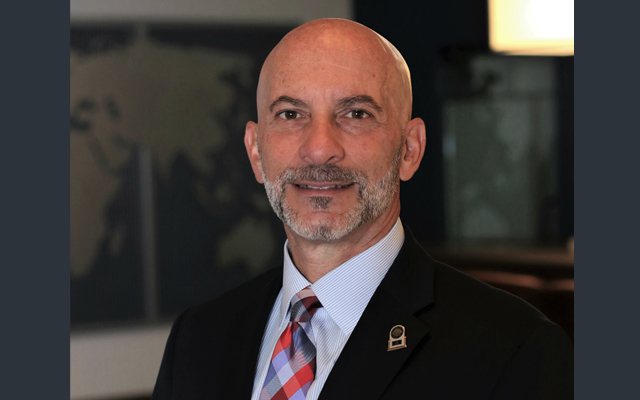
BWH Hotel Group has promoted Ron Pohl to the president of international operations BWH Hotel Group and president of WorldHotels.
In his new role, Pohl will be responsible for further strengthening the organisation’s presence around the world and enhancing the company’s operations on a global level.
Pohl joined the organisation in 2007 and previously served as senior vice president and chief operations officer. Prior to joining Best Western, Pohl spent 25 years with Boykin Management Company and Marriott Corporation. With Boykin, he served in a number of senior-level positions and, ultimately, senior vice president of operations.
Pohl currently serves on the American Hotel & Lodging Association’s Board of Directors, the Advisory Board for Grand Canyon University and previously served on the board of directors for the Convention & Visitors Bureau of Greater Cleveland.
Radisson Hotel Group outlines latest sustainability targets
Net zero, diversity in the company, and community support are among the latest sustainability targets Radisson Hotel Group has outlined and aligned with its strategic five-year plan.
Its sustainability efforts are guided by three responsible business pillars of Think People, Think Community, and Think Planet.
Under the Think Planet banner, the group will build on its heritage of sustainability by committing to set science-based emission reduction targets, and strengthen its performance with a net zero carbon future in sight by 2050.
The group will be part of the Business Ambition for 1.5°C campaign and will join the UNFCCC Race to Zero campaign as part of an important, globally coordinated effort to reach the goal of net zero.
Under the Think People banner, the group will maintain its focus on the health, safety and security of its team members, guests, and business partners. It has also reaffirmed its ongoing focus on human rights, business ethics, and diversity in hotels worldwide by issuing its sixth slavery and human trafficking statement and by increasing the number of women in leadership roles to 29 per cent.
The group continues to expand its online Learning and Development initiatives in partnership with hospitality training provider, Typsy. Training hours was increased by 120 per cent in 2021 over 2020.
Under the Think Community banner, the company remains supportive of the communities where it works and operates. Team members have volunteered more than 26,500 hours and donated more than 510,000 euros (US$) to charitable causes, including SOS Children’s Villages and Just A Drop. The group has supported 12 environmental and social carbon offsetting projects in China, India, Peru, the US, Turkey, and Borneo through its 100% Carbon Neutral Meetings initiative.
Beyond the three pillars, Radisson Hotel Group is playing a key role in the development of the Hotel Sustainability Basics in cooperation with the WTTC. The objective of the initiative is to create consistency across the industry and provide clear-to-recognise, easy-to-implement, and meaningful steps to improve sustainability at any given hotel. The Basics Framework will raise the global starting level of hotel sustainability in a transparent and easy-to-understand manner for all travellers and stakeholders.
“Our world needs responsible businesses now more than ever, and we need to accelerate global climate action by 2030 in order to ensure a livable future for both our people and our planet,” said Inge Huijbrechts, global senior vice president sustainability, security and corporate communications.
“We are proud to be playing a leadership role in the development of the Hotel Sustainability Basics, which will launch later this year to establish a common industry framework to grow sustainable travel. Together with our new Build Planet guidelines to develop sustainable hotel asset portfolios, these are essential step-changes that need to be made on the route to net zero,” Huijbrechts added.
Indonesia scraps on-arrival PCR tests, expands visa-free facility
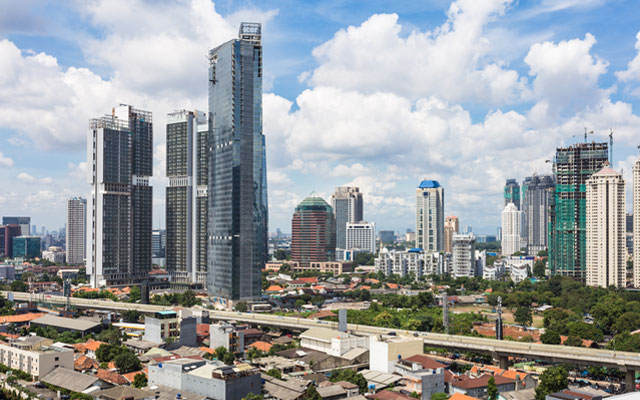
Fully vaccinated international travellers to Indonesia no longer need to complete a PCR test on arrival from April 6, while visa-free entry has been expanded to all travellers from ASEAN countries.
According to a circular from Indonesia’s Covid-19 Task Force, fully vaccinated international travellers will only need to show a negative PCR test taken up to 48 hours before flight.
Travellers will undergo a body temperature and Covid-19 symptoms check at the airport. Those with symptoms or an elevated body temperature of 37.5*C or more must take a PCR test and wait for their result at their hotel. Should a positive result show, travellers must isolate at a hotel or other facilities appointed by the government, while those with severe symptoms must be treated at appointed hospitals.
Travellers with one dose of vaccine must undergo a five-day quarantine at a certified hotel, while those with comorbidity diseases must show a medical statement.
Unvaccinated travellers under 18 years old – a change from the previous 12 year old limit – may enter when travelling with parents who meet Indonesia’s health requirements
The other requirements remain the same.
In another change to Indonesia’s entry policy, visa-free entry is now offered to travellers from ASEAN countries. Previously, the facility was only available to Singapore citizens and ASEAN member country passport holders with Singapore permanent residency.
The Indonesia Directorate General of Immigration has also added Timor Leste to the list of nationalities eligible for visa on arrival (VoA) facility, which now totals 43 countries.
The requirements for both visa-free and VoA remain the same, although the number of entry points has expanded. Previously, visa-free entry for ASEAN nationals was only available in Batam and Bintan while VoA entry was only possible via Bali. From April 6, the airports of Jakarta, Medan, Surabaya, Makassar, Manado and Yogyakarta, as well as the seaports of Batam and Bintan, are valid.







The Emirate of Ras Al Khaimah expects to Indian arrivals to return to pre-pandemic levels this year, as healthy demand makes a comeback as soon as travel curbs were eased in India.
According to Ras Al Khaimah Tourism Development Authority (RAKTDA), which was in New Delhi and Mumbai from April 4 to 7 with destination roadshows, there have been hotel buyouts in Ras Al Khaimah for Indian weddings this year.
“India is one of our top five source markets for international tourist arrivals. As a nature-based Emirate, we offer a variety of experiences for different segments, from solo travellers to family groups. We are already noticing a strong demand from wedding and MICE segments. Considering the short flight duration from India, we also promote Ras Al Khaimah as a weekend destination for Indians,” said Iyad Rasbey, executive director, Destination Tourism Development & MICE, RAKTDA, while addressing a press conference in New Delhi earlier this week.
As part of its travel trade engagements, RAKTDA brought hospitality representatives from the destination to showcase their leisure, business event and wedding offerings to Indian buyers.
Prior to the in-person roadshows, RAKTDA organised a webinar on March 22 for 100 travel partners and business event operators from across India.
Ras Al Khaimah recorded 1.1 million international tourist arrivals in 2019, of which about 70,000 were from India. The tourism board is targeting three million international tourist arrivals as part of its 2030 vision.
“We will continue to leverage our partnerships with travel agents to promote Ras Al Khaimah as a tourist destination in both metro and non-metro cities in India,” added Rasbey.
At present 85 per cent of international tourists to Ras Al Khaimah arrive through Dubai airport. Low-cost carrier SpiceJet is the only airline that operates direct flights between India and Ras Al Khaimah.
“We are in talks with another Indian airline to strengthen direct air connectivity with Ras Al Khaimah. We expect these direct flights to be operational in 3Q2022,” said Rasbey.
Apart from its nature-based experiences, Ras Al Khaimah will promote new products like Jais Sledder – the region’s longest toboggan ride – to the Indian market.
The destination will expand its hotel room inventory with 3,000 more keys over the next two years. It now has 7,720 keys.