As the official hotel partner for the third L’Étape Thailand by Tour de France Phang Nga this May 2022, Avani+ Khao Lak Resort is welcoming guests with the L’Étape Thailand 2022 VIP Edition package, which features everything from kit delivery, start line transfers, and nutritious breakfast boxes.
The package comes with accommodation and daily breakfast for two, airport transfer, early check-in and late checkout, and hotel discounts.
Avani+ Khao Lak Resort is offering L’Étape Thailand deals to cyclists
For race participants, the hotel will provide a VIP ticket with race kit and jersey, a special breakfast box on race day, and transport to the event venue.
Package prices start from 9,800 baht (US$296) per room and is available for reservation until May 15 for all stays from May 11 to 16, 2022. Fans and supporters can also benefit from an exclusive rate of 3,000 baht per room per night if they book by April 30, 2022.
Foreigners who are non-residents of Hong Kong will finally be allowed to enter the special administrative region of China from next month.
They will be subject to the same arrival procedure as residents, which calls for a quarantine of seven days.
Hong Kong will allow non-residents in, but with a seven-day quarantine condition attached
The government also said in a statement on April 22 that airlines carrying infected Covid-19 patients will face a shorter suspension of five days, down from the current seven.
Hong Kong’s borders have been tightly shut since the pandemic hit in 2020, and her reopening stance has remained cautious even as the rest of Asia moved to resume international travel.
The latest revisions are part of Hong Kong’s progressive reopening which started on April 1, 2022.
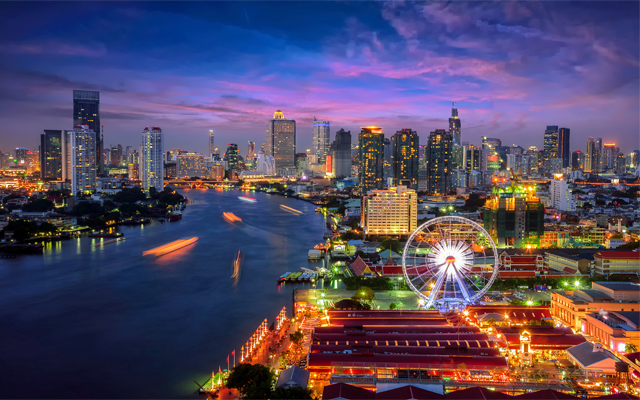
Bangkok cityscape. Bangkok night view in the business district. at twilight
Thailand is further lowering entry barriers for international travellers, with on-arrival PCR tests being scrapped and minimum Covid insurance coverage being cut from US$20,000 to US$10,000.
The latest round of changes will come into effect on May 1.
Thailand to remove on-arrival PCR test and proof of negative pre-arrival PCR test for vaccinated travellers from May 1
However, international travellers will still be required to register for a Thailand Pass with a Certificate of Covid-19 Vaccination and proof of insurance coverage. With this, they will be allowed entry and are free to go anywhere in the Kingdom.
International travellers who are unvaccinated or are not fully vaccinated will also no longer need to show proof of a pre-arrival negative PCR test nor undergo an arrival test.
They are required to register for a Thailand Pass with a five-day hotel booking and an insurance policy with coverage of no less than US$10,000
– reduced from US$20,000.
Upon arrival in Thailand, they must be quarantined for five days and take a PCR test on the fifth day of their stay.
Exception is made for unvaccinated travellers who are able to upload proof of a negative PCR test within 72 hours of travel via the Thailand Pass system. With this, they will be allowed entry and are free to go anywhere in Thailand.
The latest measures follow the removal in March of a pre-departure test requirement.
Japan’s tourism suppliers are gearing up for what is expected to be their busiest Golden Week since the onset of the pandemic, but the ailing industry continues to struggle, with domestic travel yet to return to pre-pandemic levels and international arrivals still locked out.
Some 16 million people are expected to travel domestically in Japan between April 25 and May 5 this year – the Golden Week period that includes a series of national holidays, according to a survey carried out in March by JTB Corporation.
Japan’s domestic travel has yet to return to pre-pandemic levels while international arrivals are still locked out
The figure marks a 168 per cent increase year-on-year, largely due to last year’s national state of emergency that encouraged people in Tokyo, Osaka, Hyogo and Kyoto prefectures to stay home over the holiday period.
In fact, Japan had two bleak years of Golden Week, as the holiday period in 2020 was also disrupted by a nationwide state of emergency.
The industry welcomes the expected uptick in travellers, even noting that the volume could be larger as the survey was carried out in March when 36 prefectures were under special measures to curb the spread of Omicron, which have since been lifted. Even so, visitorship is down 33 per cent on Golden Week 2019 data.
Among those respondents who will travel, the trend will be for trips that are longer, with a four per cent rise in two-night stays, and further afield.
Last year, most travel was made within prefectures or to neighbouring prefectures but now rural regions as well as Tokyo and Osaka are very popular.
Private car use and rental is down year-on-year, while Shinkansen and air travel are expected to rise.
As of April 14, the Japan Railways Group has reported 1.34 million reservations on Shinkansen and other trains over the April 28 to May 8 period, up from 66 per cent year-on-year.
Japan Airlines has scheduled 98 extra flights in its domestic network over April 28 to May 9, despite having culled 1,745 domestic flights over the rest of April and 619 flights for the rest of May.
Respondents reported no change in planned travel spending, but 37 per cent said they want to reduce their travel expenditure over the next 12 months amid economic uncertainty, in another possible blow to domestic tourism.
WTTC’s latest Economic Impact Report (EIR) revealed the travel and tourism sector is expected to create nearly 126 million new jobs within the next decade.
The optimistic forecast also showed the sector will be a driving force of the global economic recovery, creating one in three of all new jobs.
Julia Simpson: The recovery in 2021 was slower than expected due in part to the impact of the Omicron variant
Travel and tourism GDP is forecasted to grow at an average rate of 5.8% annually between 2022-2032, outstripping the 2.7% growth rate for global economy, to reach US$14.6 trillion (11.3% of the total global economy).
The report also showed global travel and tourism GDP could reach pre-pandemic levels by 2023 – just 0.1% below 2019 levels. The sector’s contribution to GDP is expected to grow a massive 43.7% to almost US$8.4 trillion by the end of 2022, amounting to 8.5% of the total global economic GDP – just 13.3% behind 2019 levels.
This will be matched by a boost in travel and tourism employment, which is expected to approach 2019 levels in 2023, only 2.7% below.
Looking back a year, the report found that 2021 witnessed the beginning of the recovery for the global travel and tourism sector.
Julia Simpson, president & CEO, WTTC, said: “The recovery in 2021 was slower than expected due in part to the impact of the Omicron variant but mainly due to an uncoordinated approach by governments who rejected the advice of the World Health Organization, which maintained that closing borders would not stop the spread of the virus but would only serve to damage economies and livelihoods.”
In 2021, the sector’s contribution to GDP climbed an impressive 21.7% year-on-year, to reach more than US$5.8 trillion, as compared to 10.3% (US$9.6 trillion) in 2019, falling to 5.3% (nearly US$4.8 trillion) in 2020 when the pandemic was at its height, which represented a staggering 50% loss.
The sector also saw a recovery of more than 18 million global travel and tourism jobs, representing a positive 6.7% rise in 2021.
If not for the Omicron variant, which led to many countries reinstating severe travel restrictions, the sector’s contribution to the global economy and employment would have been higher.
WTTC’s 2022 EIR report showed that Travel & Tourism sector across Asia Pacific is set to rebound significantly and is estimated to create almost 77 million new jobs over the next decade, with contribution towards GDP to grow at an average annual rate of 8.5% between 2022 and 2032, more than double the 4% growth rate for the region’s overall economy.
Last year, the sector’s contribution to GDP rose 16% to US$1.58 trillion after collapsing by 58.8% in 2020 due to the impact of the pandemic.
Meanwhile, job creation in the region last year was boosted by 6.2%, accounting for 8.6% of all jobs after falling 18.9% the previous year.
Vietjet has announced four new services linking India and Vietnam to mark the airline’s post-pandemic return and continued expansion in the country. The services include Mumbai-Hanoi, Mumbai-Ho Chi Minh City, New Delhi-Phu Quoc and Mumbai-Phu Quoc.
The direct services from Mumbai to Ho Chi Minh City and Hanoi will commence on June 3 and June 4, with a frequency of four weekly return flights and three weekly return flights respectively.
Vietjet has announced four new services linking India and Vietnam
From September 9, the Mumbai to Phu Quoc route will operate four round trips per week while the New Delhi to Phu Quoc route will operate with a frequency of three round trips per week.
Prior to the pandemic, Vietjet had operated two direct routes linking New Delhi with Hanoi and Ho Chi Minh City in addition to charter flights from Vietnam to Bodh Gaya. The two existing services between New Delhi to both Vietnam destinations will resume on April 29 and April 30 respectively, with a frequency of three weekly return flights on each route.
“We are thrilled to continue connecting Vietnam with India, the country of 1.4 billion population, via six direct routes, and re-energise our operations right in the post pandemic environment,” said Dinh Viet Phuong, managing director, Vietjet.
He added: “Vietjet’s renewed and increased connectivity between Vietnam and India will create many more trade and tourism opportunities between the two countries, helping to boost the economies of both. The expansion of Vietjet’s flight network into India also reaffirms the airline’s ongoing commitment to continuously help travellers save on cost and time. Passengers can enjoy flying on our new and modern aircraft, and taking transit flights to famous destinations in South-east Asia, such as Thailand, Singapore, Malaysia, and many other countries, thanks to Vietjet’s extensive flight network in the Asia Pacific region.”
Oceania Cruises’ 1,210-guest ships Riviera and Marina will get a stem-to-stern re-inspiration that will gift both vessels with refreshed staterooms, suites and public spaces.
Debuting in December 2022 and November 2023 respectively, Riviera and Marina will become better-than-new ships, sporting new colours, luxurious textures, engaging artworks, and designer residential furnishings.
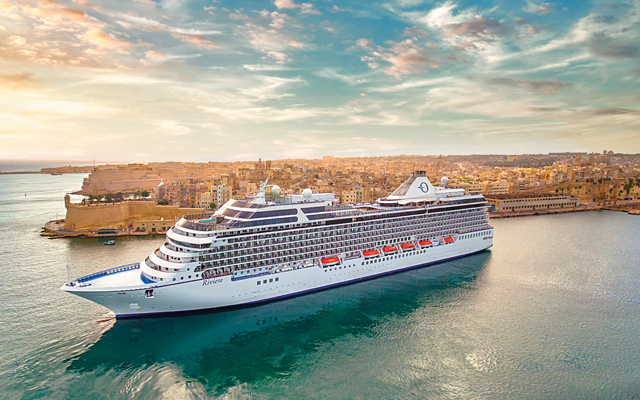
Oceania Cruises’ Riviera, one of the ships to get refreshed staterooms, suites and public spaces
The all-new staterooms and suites promise a lighter and brighter stay with more lavish fittings and furnishing. Guests can expect modern and functional improvements, such as an abundance of outlets and USB ports always within reach. Bathrooms will also be more spacious than ever before, featuring generous, oversized showers.
On the dining front, existing venues will boast new settings and there will be more alfresco dining options and new experiences, such as Trattoria, which will feature an array of wood-fired pizzas and grilled Italian specialties.
Howard Sherman, president & CEO of Oceania Cruises, said in a press statement: “At Oceania Cruises, we continue to raise the bar and elevate the guest experience at every opportunity. Whether it’s innovative new culinary concepts, immersive new destination experiences, or presenting our guests with ships that are not just better, but better than new, Oceania Cruises sets the standard by which others are judged.”
The re-inspired Riviera will debut on December 7, 2022, on a 16-day Mediterranean, Atlantic, and Caribbean cruise from Rome to Miami. From there, Riviera will reprise her popular seven- to 14-day Caribbean sailings for one final season before returning to Europe in late March 2023. She will then commence an inaugural Far East exploration from late 2023 to early 2024.
Marina will debut on November 13, 2023, on a seven-day cruise from Barcelona to Lisbon. Thereafter, she will head to will Miami for her annual South America season on December 3, 2023.
Archipelago International has made its move into the Vietnam market with five new contracts and the launch of Archipelago Indochina in partnership with Vietnam-based asset management and hospitality consultancy firm Optimum Hospitality.
Led by chief executive officer John Gardner and chief operating officer Martin Koerner, both principal partners at Optimum, the new Archipelago Indochina provides distribution and revenue management services for four hotels in Ho Chi Minh City and one in Phu Quoc.
From left: Optimum Hospitality’s John Gardner and Martin Koerner
The suite of services provided under these “Powered by Archipelago” agreements – from booking engines to yield inventory – is designed to increase online revenue by as much as 260 per cent.
Norbert Vas, vice president of development at Archipelago International, said the company will also provide independent hotels and hotel groups access to the company’s network of more than 3,000 partners.
Archipelago Indochina is also laying the groundwork for a footprint in Vietnam, Cambodia and Laos that includes full-service management contracts for hotels as large as 1,000 rooms, soft brand management contracts, and franchise agreements.
“What we at Optimum really like about Archipelago is the group’s focus on the numbers,” said Gardner. “Their philosophy – our philosophy at Archipelago Indochina – first and foremost, is all about the achievement of profitability. Everything else flows from that.”
Archipelago has a South-east Asian portfolio of more than 150 hotels under brands like Aston, Kamuela, Harper, fave, and Nordic.
Travellers now require higher levels of transparency from companies in terms of their environmental performance, as shown in a poll by GlobalData.
Almost 75 per cent of global consumers agreed that the introduction of sustainability labels on products should be mandatory. GlobalData noted that eco badges help tourism companies to boost transparency, offer responsible alternatives to travellers, and demonstrate positive environmental performance.
Ralph Hollister, travel and tourism analyst at GlobalData, said: “The adoption of badges that denote high performance concerning environmental benchmarks makes companies’ sustainability claims seem more trustworthy, which will increase demand for their products and services. GlobalData’s 2021 Consumer Survey revealed that 57 per cent of global respondents stated that they are ‘often’ or ‘always’ influenced by products or services that are trustworthy.
“Eco badges will help win the loyalty of responsible travellers in the short-term and improve brand positioning in the long-term. As a result, an increasing number of travel and tourism companies are attempting to prove their sustainability efforts through the acquisition or creation of eco badges and accreditation.”
An eco-badge pioneer, Booking.com announced in 2021 the launch of its Travel Sustainable badge, a global sustainability measure, a framework of specific sustainability practices that properties can implement, including everything from eliminating single-use plastic toiletries to running on 100 per cent renewable energy sources.
Hollister shared: “By creating its own framework and methodology for its sustainability measure, Booking.com has demonstrated the time and resources it has invested in this initiative to provide travellers with sustainable alternatives. It is operating proactively to ensure it is not lagging behind the competition in terms of environmental performance.
“Whether through the creation of independent eco badges or by adopting labels awarded by external accreditation providers, travel and tourism companies need to be working towards gaining these badges of quality that enhance transparency, increase revenue, and promote sustainability.”
Guests of Anantara Layan Resort and Anantara Mai Khao Villas recently participated in the release of 54 young green turtles and 34 young bamboo sharks along the beaches during the annual baby turtle and shark release programme.
The programme is in support of conservation efforts of the Mai Khao Marine Turtle Foundation (MKMTF) and the Phuket Marine Biology Centre, set up to rejuvenate the turtle population in Thailand.
Phuket is home to Green Turtles, Leatherbacks, Hawk Bills and Olive Ridley; over 7,000 have been released since the project began in 2002.
The resorts offer other opportunities for guests to contribute to the programme. They can visit the MKMTF next to Anantara Mai Khao every morning to learn more about the life of a turtle from resident marine biologists, and donate 30 baht (US$0.90) per night of their stay under Anantara’s Dollars for Deeds CSR initiative.











 Phuket is home to Green Turtles, Leatherbacks, Hawk Bills and Olive Ridley; over 7,000 have been released since the project began in 2002.







Thailand is further lowering entry barriers for international travellers, with on-arrival PCR tests being scrapped and minimum Covid insurance coverage being cut from US$20,000 to US$10,000.
The latest round of changes will come into effect on May 1.
However, international travellers will still be required to register for a Thailand Pass with a Certificate of Covid-19 Vaccination and proof of insurance coverage. With this, they will be allowed entry and are free to go anywhere in the Kingdom.
International travellers who are unvaccinated or are not fully vaccinated will also no longer need to show proof of a pre-arrival negative PCR test nor undergo an arrival test.
They are required to register for a Thailand Pass with a five-day hotel booking and an insurance policy with coverage of no less than US$10,000
– reduced from US$20,000.
Upon arrival in Thailand, they must be quarantined for five days and take a PCR test on the fifth day of their stay.
Exception is made for unvaccinated travellers who are able to upload proof of a negative PCR test within 72 hours of travel via the Thailand Pass system. With this, they will be allowed entry and are free to go anywhere in Thailand.
The latest measures follow the removal in March of a pre-departure test requirement.