Location
Conveniently located around an hour from Phuket Airport, Khao Lak is one of Thailand’s most appealing stretches of coastline – a place where the emerald jungle, spotless white sand, and azure Andaman Ocean join to create a crescendo of tropical hues.
Khao Lak was the coastal area of Thailand hardest hit by the 2004 tsunami. The natural disaster and the sad aftermath kept things quiet for years. However, the destination is gaining popularity as a laid-back alternative to Phuket and other beach enclaves.
The latest addition to the collection of luxury resorts on the Phang Nga coastline is the Avani+ Khao Lak Resort, a 327-key oceanfront property located on the area’s Bangsak Beach.
Rooms
A wide range of room categories ensures all types of travellers are catered to, from Deluxe Lagoon Pool Rooms for couples and solo travellers, to Family Pool Suites with plenty of running room for even the most energetic mini-travellers. The latter room type comes with garden views, separate living room and dining area, king and twin beds, and a private balcony.
F&B
Local ingredients are spun into fresh dishes served in a contemporary setting at Elements, an all-day dining restaurant serving hearty breakfasts, gourmet lunches, and themed dinners.
Relaxed and unhurried, The Beach House is the preferred spot for sultry sundowners and grilled seafood.
Splash, a poolside venue where options range from artisan pizza to homemade gelato, will hit a note with families.
Aqua Juice Bar, meanwhile, caters to the health-conscious with its vitamin-packed cold-pressed concoctions.
The Pantry, Avani’s signature on-the-go dining concept, offers wholesome salads and sandwiches, cold-pressed juices, and fresh pastries.
The property has an on-site garden and prides itself on sourcing all produce responsibly.
Facilities
The resort is especially appealing for those who like to combine vacation indulgence with a modicum of fitness. The property’s AvaniFit facility is a new lifestyle concept that aims to put fun and variety into hotel fitness via activities such as hanging yoga, and indoor and outdoor climbing walls.
Service
Checking in was swift, and all staff members I encountered were unfailingly polite.
Verdict
Avani+ Khao Lak Resort is a fantastic addition to the selection of luxury resorts lining the shoreline of Khao Lak, one of Thailand’s most underrated beach destinations.
Digital Travel Summit APAC is back for its 7th edition from August 23 – 25, 2022. The annual conference for travel professionals in ecommerce, customer experience and digital marketing is finally back as a full-fledged in-person networking summit after engaging virtually from 2020 – 2021.
Held at the luxurious Equarius Hotel, Sentosa, Singapore, attendees can look forward to the return of engaging immersive experiences through its curated learning, exhibition, and interactive networking formats.
The much-anticipated event expects to welcome more than 300 participants from Singapore and the surrounding Asia region, and summit speakers comprise of about 60 influential business leaders across industries, spanning airlines, hospitality, OTAs (Online Travel Agencies)/metasearch platforms, cruise lines and more.
Gladys Caligagan, conference producer for the long-standing brand, told TTG Asia that reception to the event has been overwhelmingly positive and travel industry leaders cannot wait to return to an in-person setting, which was not viable when the sector was battling the pandemic for the past two years.
“Numerous interactive panels, fireside chats, rapid-fire discussions, debates, and VIP networking sessions were added to the agenda this year to meet the demand for networking and engagement opportunities after a prolonged period of virtual summits that everyone has been exposed to in the last couple of years.”
Caligagan added: “With the summit coming back to Sentosa this year, we’re just as excited as the industry practitioners who are finally getting the space to meet each other in person to address the uncertain and yet exciting future of travel together and get answers to their pressing questions.”
The two-and-a-half-day conference allows visitors the chance to create, build, and nurture meaningful relationships with the pioneers of the latest solutions, technologies and future-facing strategies across ecommerce, omnichannel marketing, alternative payments, mobile, AI (Artificial intelligence)/data analytics and customer segmentation.
Digital Travel APAC 2022 will offer insights on these key topics:
Reinventing to Stay Relevant – from Surviving to Thriving: Business during ‘endemic’
The new APAC traveller: Who are the endemic travellers and what are the travel considerations that will drive the future post-Covid travel in Asia?
Purposeful Travel – No Longer Just A Buzzword: How Marriott tapped into a regenerative travel trend that benefits local communities, economies and the environment, in addition to the traveller’s personal wellbeing
Optimising Your MarTech Stack for 2022 & Beyond: As the fusion of technology and travel gains momentum, what are the top trends and advancements that you need to adapt now to stay relevant and competitive?
Meet The Tech Dragons: Identifying “The Next Best Thing” in travel tech from the newest offerings
Find out more about the event’s exciting line-up here.
The Fullerton Hotels and Resorts has appointed Gino Tan as country general manager.
In this newly-created role, Tan helms the leadership teams in The Fullerton Hotel Singapore, The Fullerton Bay Hotel Singapore and The Fullerton Hotel Sydney.
Tan is a seasoned hospitality professional with almost 30 years of operational and marketing leadership experience under his belt. Prior to joining The Fullerton Hotels and Resorts, he was vice president hotel operations at Pan Pacific Hotels Group.
Kikuhiko Okura is the new president and representative director of Hotel Okura in Japan.
Okura has been with Hotel Okura Group since November 2019, when he was first appointed corporate advisor, as well as president of Hotel Okura Amsterdam.
He has since served in various executive positions in the Hotel Okura Group, brings to his new role more than 25 years’ experience in the financial services sector in both the US and Japan.
Radisson Hotel Group is expanding its portfolio in Thailand with plans to add 100 hotels and resorts by 2025 on top of its current six properties – four in Bangkok and two upcoming in Phuket and Pattaya.
Katerina Giannouka, president, Asia-Pacific, Radisson Hotel Group, said: “Thailand is a highly desirable destination offering a wealth of experiences for all types of travellers. The removal of border restrictions is a highly important step in the recovery of the Kingdom’s tourism economy, and we expect to see a strong resurgence of inbound travel over the coming months.”
Giannouka: we expect to see a strong resurgence of inbound travel over the coming months
This move is part of the group’s wider expansion strategy which targets the growth of its current portfolio of 400 properties to over 2,000 hotels and resorts in operation and development by 2025.
Through a combination of organic growth, mergers and acquisitions, and master license agreements, the group will leverage its collection of industry-leading brands including Radisson Collection, Radisson Blu and Radisson, while tapping into growing segments such as resorts and serviced apartments. Key business and leisure destinations will include Bangkok, Phuket, Pattaya, Chiang Mai and Koh Samui, as well as up-and-coming locations across the country.
Radisson Individuals promises greater flexibility and lower investment costs, while also allowing hotels to maintain their unique characteristics and personalities. Also driving this rapid expansion are upper midscale brands Park Inn by Radisson and Radisson RED.
The group will collaborate with shareholder Jin Jiang International and affiliates to accelerate the expansion, granting owners and developers access to an expanded collection of brands in select markets across Asia-Pacific. In Thailand, the group has secured rights to develop and operate 7 Days and Metropolo through individual master license agreements with affiliates of Jin Jiang, as well as securing rights to develop and operate the Golden Tulip, Kyriad and Campanile brands from Louvre Hotels Group.
One-stop shop superapps necessary to capture today’s digital-first traveller
Enhanced offerings and personalisation to provide travellers with more flexibility and peace of mind
Building an all-inclusive marketplace to benefit both consumers and merchant partners
The online travel market is forecast to amount to about US$691 billion by 2026
The past decade’s explosive growth path, coupled with soaring demand for digital-first experiences to accommodate changing consumer behaviours and purchasing patterns, have presented OTAs with many opportunities.
GlobalData noted that from 2015 to 2019, the OTA market saw a growth of 9.4 per cent compound annual growth rate (CAGR), reaching US$480.3 billion. Looking ahead, the online travel market is forecast to amount to about US$691 billion by 2026 from roughly US$433 billion in 2021, according to Statista.
On the other hand, intense competition, such as Google’s growing presence in selling travel online, and hotels focusing on direct bookings, have posed serious hurdles.
Showing no signs of backing down, OTAs are powering ahead by breaking through the limitations of their current offerings, capabilities and markets.
Building superapp capabilities
Beyond their web-based marketplaces, expanding their service suite with superapp capabilities seems to factor greatly in some OTA playbooks.
This is in line with evolving needs of consumers who are now expecting the convenience of what Agoda’s CEO John Brown aptly described as “a mobile one-stop shop app where you can get all your travel needs met”.
“From having the widest choice of accommodation – hotels or homes; flights to anywhere in the world; packages if you want to pick up deals; and on-ground activities from a practical airport transfer to a fun cookery class; tickets to key attractions – everything is in one spot,” he told TTG Asia.
The company spent the last 17 years building agoda.com and the Agoda app to make searching and booking travel easy and stress-free.
Alfan Hendro, chief operating officer, Traveloka concurred: “We recognise the importance of delivering a connected experience, with technology as an enabler, particularly among millennials, who appreciate being able to manage all aspects of their digital life from a single app.”
For instance, Traveloka’s superapp allows users to purchase a wide range of accommodation, travel, local services, and even financial services products.
Travel activities and services booking platform Klook’s recent rebrand also marks a fundamental shift in how it engages with customers.
Chuan Sheng Soong, vice president, corporate development, Klook, explained: “We are pushing the boundaries and constantly introducing new ways to deliver joyful experiences. Customers can now discover and book the best of what any destination offers across three categories – play, stay and move.”
Meanwhile, the Booking.com app enjoys strong traction of over 100 million monthly active users, with app bookings increasing by 25 per cent year-on-year for the past six years, according to Laura Houldsworth, managing director, Asia-Pacific, Booking.com.
She told TTG Asia that it is “catering to the increasingly mobile habits of our audience, focusing on furthering our app-first approach”.
Broadening complementary services
The pandemic also provided OTAs with an opportunity to cast their net wider and build onto its suite of offerings to provide a better travel experience.
To thrive in the new era of travel, Houldsworth reckoned that “the opportunities are greatest for those that address the needs of the endemic traveller – particularly as it comes to safety, flexibility and convenience”.
For instance, Booking.com addresses health and safety concerns by continually updating the support it provides, including enhanced transparency to consumers on cleaning and hygiene information when booking on its platform.
Similarly, Klook has expanded its services to include Covid-19 testing and travel-related insurance, and invested in a strategic partnership with insurtech company, ZA Tech.
One of the first movers towards more flexibility in bookings during the pandemic, Agoda’s EasyCancel provided travellers with the flexibility and security to change their plans up to 24 hours before.
Booking.com also highlighted options for flexible cancellation policies at properties that opted to make these cancellation options available.
Traveloka even facilitated the convenience of worry-free purchases with a buy-now-pay-later feature, Traveloka PayLater for Indonesia, that can be used for any transaction on the superapp.
Brown added: “Seamless experiences will be the name of the game and being able to diversify our offerings (e.g. payment options), will help us cater to and meet the needs and requirements of each traveller.”
Traveloka’s Hendro also sees personalisation for consumers as another opportunity – where the market for travel services continues to be highly fragmented in South-east Asia due to a gap between what discerning middle-class consumers expect, and what service providers can currently deliver.
That is why Traveloka provides travellers with the freedom to customise a travel plan that is tailored to their needs, along with the flexibility to make flight bookings on different airlines on a round-trip.
“Greater digitalisation will provide stronger data insights into the unique behaviours of South-east Asian consumers, and lifestyle services will become less fragmented as a result. We expect this to transform the customer experience, by necessitating personalisation never before seen in the world, in turn retaining and attracting customers,” he opined.
Pushing forward
Several OTAs have set their sights on untapped traveller segments to expand their customer reach, as well as empower their business partners.
Houldsworth shared: “Our latest research revealed that 82 per cent of LGBTQ+ travellers have experienced less than welcoming, or uncomfortable, experiences while on holiday – this underscores the importance of understanding LGBTQ+ travellers’ needs in order to provide an inclusive stay for everyone.”
Recognising the important role properties play in providing a more inclusive experience, Booking.com created the Travel Proud programme which displays inclusive properties on a separate page on the platform.
The pandemic also made Klook realise “that domestic tourism was severely untapped in terms of potential and that it is now here to stay”.
Interestingly, the company surpassed 2019 revenue in 2021 for domestic travel, with monthly active users exceeding pre-Covid levels and its focus on building up an inventory of hyper-local activities also bore fruit.
Soong added: “Our domestic markets are resilient with strong growth potential and we continue to see strong demand across verticals such as car rentals and staycations.”
Klook also recognised early on that some merchant partners were struggling to keep pace with the accelerated shift in digitalisation during the pandemic and needed assistance.
As a result, the OTA launched Flickket, a dedicated technology solution to empower its merchant partners by helping them digitise faster and expand their product distribution globally.
Since 2020, the number of merchants coming on board to digitally transform their business has increased eightfold, Soong noted.
Strategic partnerships were also inked to open new doors. For example, Klook integrated with Google, bringing the Things to Do platform into its digital suite of offerings for travel operators.
Agoda’s Brown summed up: “We’re operating in an extremely competitive industry but that helps us innovate and drives us to deliver a better experience for our customers. Competition is healthy, helping to drive growth and innovation for the industry overall – the more accessible travel can be, the bigger the overall tourism industry becomes.”
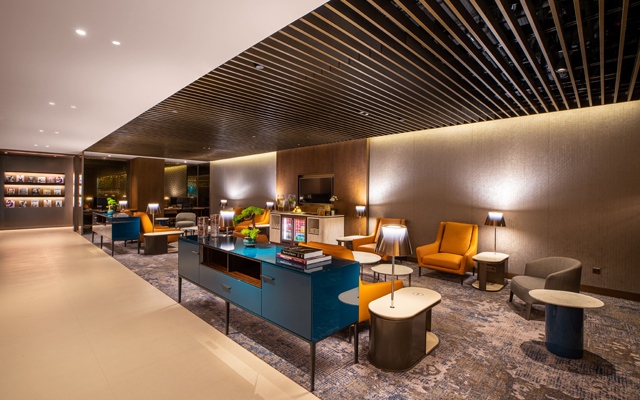
Qatar Airways officially opened its new Premium Lounge at Singapore Changi Airport Terminal 1, on June 29, 2022.
Available to Qatar Airways Business Class passengers, the Singapore lounge is approximately 700m² and accommodates up to 85 passengers. It is Qatar Airways’ fifth international Premium Lounge.
Qatar Airways opens its fifth international Premium Lounge in Singapore’s Changi Airport
The lounge features seven different seating areas – the Principal Lounge, Quiet Pods, Garden Bistro, High Seating, Martini Bar, Brasserie and Private Lounge – and a full kitchen for food orders on top of an existing international buffet spread.
Guests can relax at one of the five Quiet Pods, which offer a cosy, soundproofed, semi-private space equipped with reading lights, a coat hanger and universal charging points.
Custom furniture pieces at the lounge feature sideboards that are strategically placed next to the seats, and sport a lamp, universal plug point, wireless charger and a compartment for storing handbags and personal belongings.
Other than Singapore, Qatar Airways also has Premium Lounges in London and Beirut, with lounges in Paris and Bangkok due to reopen soon.
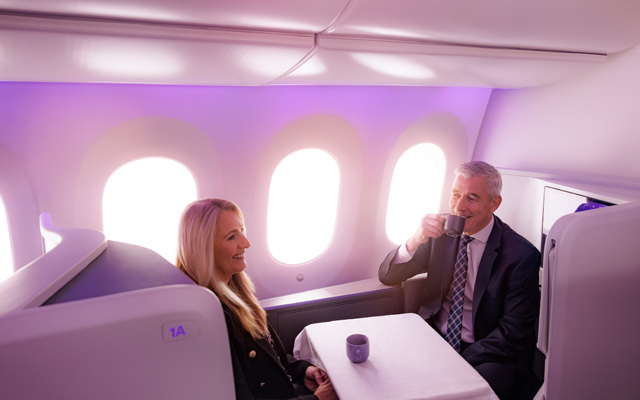
Business Premier Luxe suite lets two dine in comfort
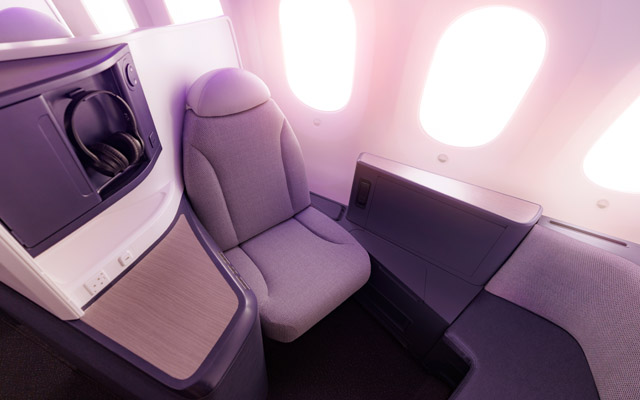
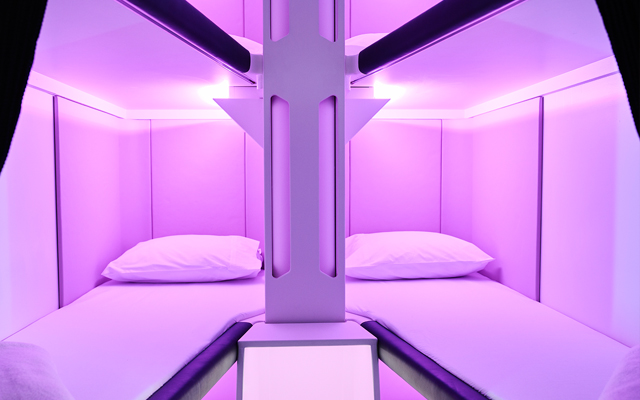
Air New Zealand will soon be able to offer a new Business Premier Luxe suite, a new Business Premier seat, and the world’s first Skynest when the airline’s new Dreamliners touch down in 2024.
This is in response to extensive customer research over five years, where the importance of a good night’s sleep, and the need for more space and comfort have been highlighted.
1 of 4
Business Premier Luxe suite
Business Premier Luxe suite lets two dine in comfort
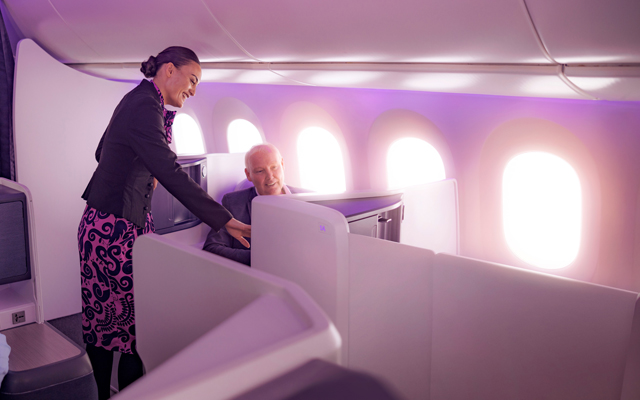
Business Premier Luxe suite with a fully-closing door for privacy
Skynest is the world’s first sleep pods in the sky for Economy travellers
The new Business Premier Luxe seat has been designed for customers looking for more space and privacy. It has all the features of a Business Premier, with the addition of a fully-closing door and space for two to dine comfortably.
Meanwhile, Skynest will be the world’s first sleep pods in the sky for Economy travellers. A concept first announced in 2020, Skynest will offer six lie-flat options for better rest.
The airline has also added a Sky Pantry to the Premium Economy and Economy cabins, where customers can stretch their legs, and grab some food and drinks.
The eight Boeing 787-9 Dreamliners arriving from 2024 and retrofitted current 787-9 fleet will have either eight or four Business Premier Luxe seats, 42 or 22 Business Premier, 52 or 33 Premium Economy, 125 or 213 Economy seats, and specifically on the ultra-longhaul aircraft, six Skynest sleep pods.
Air New Zealand’s CEO Greg Foran said: “New Zealand’s location puts us in a unique position to lead on the ultra-longhaul travel experience. We have zeroed in on sleep, comfort, and wellness because we know how important it is for our customers to arrive well-rested.
“It’s a proud moment to finally unveil five years of hard mahi (work), in what truly is a cabin of possibility – one that will provide customers with options to get some shuteye wherever they’re sitting.”
China has reduced the quarantine period for international travellers, its National Health Commission announced on June 28, 2022.
Overseas travellers will now quarantine at a centralised facility, such as a hotel, for seven days upon arrival in mainland China, and stay at home for an additional three days before being allowed to venture out.
China has reduced the quarantine period for international travellers to seven days
Previously, overseas arrivals in China had to spend 14 to 21 days in centralised quarantine, depending on the city of entry and destination within the country.
Within China, close contacts of confirmed Covid cases will also be required to spend seven days in centralised quarantine, followed by three days of health monitoring at home, down from 14 days.
A number of cities have begun to reduce the length of mandatory isolation in the last few months, such as Beijing cutting down from 14 to 10 days in centralised quarantine and seven days at home.
Australian small-ship expedition cruises Coral Expedition has released a new series of voyages to the small islands of Japan and the Philippines, as part of its Small Islands of the World series.
These unique voyages on Coral Adventurer will explore remote islands that are of historical, biological or anthropological significance.
The 19th century Cabo Engano lighthouse on Palaui Island will be one of the sites on Coral Adventurer’s journey
Visit the island chains of the Japanese Ryukyu, Ogasawara and Izu archipelagos – where very few local Japanese have ventured into – and connect with ancient coastal lifestyles at traditional fishing villages while experiencing local culture and nature.
Other sites featured are the Taroko Gorge National Park in Taiwan, the largest marble gorge in the world; the 19th century Cabo Engano lighthouse on Palaui Island; and the site of General Douglas MacArthur’s beach landing at Tacloban in the Philippines.
Coral Adventurer will cast off from Guam on the inaugural expedition of the series where sailings will range from 14 to 16 nights, departing on selected dates from September 2023 to October 2023.



 Location
 Rooms
Rooms F&B
F&B

 Tan is a seasoned hospitality professional with almost 30 years of operational and marketing leadership experience under his belt. Prior to joining The Fullerton Hotels and Resorts, he was vice president hotel operations at Pan Pacific Hotels Group.
 He has since served in various executive positions in the Hotel Okura Group, brings to his new role more than 25 years’ experience in the financial services sector in both the US and Japan.