TTG Asia
Asia/Singapore Friday, 7th August 2026
Page 7

Polar Latitudes charts Arctic adventures for 2028

0

Polar Latitudes Expeditions has released its Arctic 2028 season, featuring small-ship expedition voyages across Svalbard, Greenland, Iceland, Jan Mayen and Arctic Norway.

The programme includes itineraries aboard the company’s purpose-built polar fleet, ranging from week-long Svalbard voyages to longer crossings spanning several Arctic islands.

Polar Latitudes Expeditions’ 2028 programme spans Svalbard, Greenland, Iceland, Jan Mayen and Arctic Norway, with voyages ranging from eight to 13 days

In Svalbard, the eight-day North to the Midnight Sun itinerary focuses on polar bears, walruses and seabirds, while the 10-day Svalbard Circumnavigation circles the archipelago, taking in southern fjords and the landscapes of Hinlopen Strait.

A new itinerary, Norway’s Wild North: Lofoten to Svalbard, will connect the Lofoten Islands with Svalbard, combining Norway’s mountain landscapes with High Arctic wildlife.

Greenland itineraries include the 12-day Greenland Explorer, which follows the Norse Sea route across East, South and West Greenland. The eight-day Disko Bay & Beyond includes the UNESCO-listed Ilulissat Icefjord.

The 13-day Four Arctic Islands itinerary links Iceland, Greenland, Jan Mayen and Svalbard, operating northbound and southbound between Reykjavík and Longyearbyen.

Voyages will operate aboard the X-BOW vessels Ocean Albatros and Ocean Victory, with dates and itineraries aboard Discoverer to be released later. Kayaking, photography and citizen science programmes will also be offered during expeditions.

For more information, visit Polar Latitudes Expeditions.

Langham Hospitality Group names new COO

0

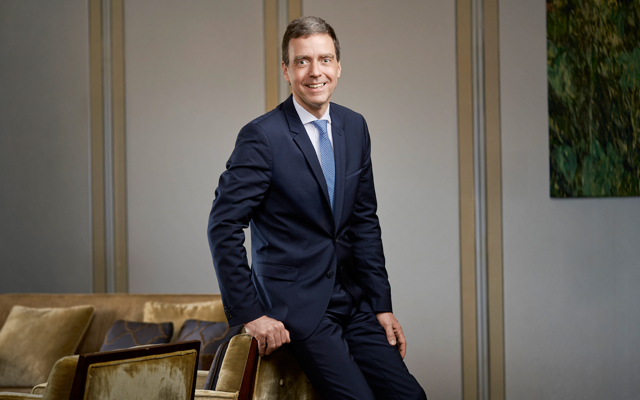
Nils-Arne Schroeder has been appointed COO of Langham Hospitality Group, overseeing operations across its global portfolio of more than 30 hotels and residences.

He joins from Raffles and Fairmont Hotels & Resorts, where he most recently served as senior vice president, operations – Europe and Africa.

Schroeder brings more than 30 years of hospitality experience across Asia-Pacific, the Middle East, Europe and Africa.

Pascal Bélanger leads global development at Plaza Premium Group

0

Pascal Bélanger has been appointed chief development officer of Plaza Premium Group, based in Singapore.

He will oversee the group’s global development strategy, strategic partnerships, investment evaluation and development pipeline.

Bélanger joined the group in 2022 and has served as senior vice president, Americas since March 2023, overseeing operations across Canada, the US, Brazil, Colombia and other markets in the region.

Mindful growth

0

SLH crossed its 35th anniversary last year. What are some interesting milestone achievements that will define the company’s growth in the years forward?
We hit a couple of interesting milestones along the way, and one of them is our achievement of more than 700 member hotels across over 100 countries. We are really proud to be going into very new destinations as a result of this membership growth.

It is clear that the pie of independent hotels has grown – there are more boutique hotels coming into the marketplace, better products are being built, and people are increasingly interested in staying in such properties all over the world.

This has resulted in us getting a lot of good leads (for potential new members), but we remain very strict on our membership and have had to turn away a lot of hotels.

The thing is, there are also more boutique hotels turning up in certain destinations, resulting in a saturation of lodging. For such destinations, we will not accept any new members until one leaves. We are accountable to our owners. Bringing on too many hotel members in a single destination means slicing the pie thinly for our owners.

So, SLH continues to be very conscious about growth.

Another milestone is our distribution partnership with Hilton, forged two years ago. We are aware of our limitations as a small company, so we have to look for the right partners to help us grow and better support our hotels commercially. We now have over 500 hotels listed on the Hilton platform.

Well, it isn’t just Hilton; we are partners also with Capital One (which allows cardholders to book SLH properties through its travel portal) and American Express (which allows cardholders access to exclusive property perks), and they help us to fill up our hotels.

We will continue to look at ways to support our owners. Happy owners, happy life!

In our conversations years ago, you spoke passionately about responsible development and wellness tourism, and then both became crucial product segments that hotels and resorts went on to invest in. What’s next in luxury tourism that will influence how people travel?
Well, I think luxury travel is coming back to prioritising things that are small and personalised. And when you take this approach, you have to consider all the different segments of guests that you may serve.

For this reason, inclusivity is especially close to my heart. Inclusivity in this context refers to offering a warm welcome to everyone, from travellers with special needs to solo female travellers to faith-based travellers.

Take our approach to faith-based travel as an example. We are going into the GCC (Gulf Cooperation Council) market and need to be conscious when selling and serving this market. We need to know if our hotels are able to provide halal menus, spaces for privacy, and other amenities that faith-based travellers expect.

This is where SLH’s Private Collection becomes our strength because every property, from Africa to Australia, promises utmost privacy. Our GCC guests get their own accommodation, private pool, private kitchen, and have the choice of spacious units for the whole family.

We recognise that not all hotels fit everyone. So, if we are lacking in a certain area and that justifies bringing in another new hotel because it serves a particular segment, we will do it.

Is it easy to find hotels that check all the right boxes for SLH?
My development team and I go into every destination and property to vet their potential. This is something we do not compromise on.

When assessing the potential of a hotel, we send a mystery inspector to conduct an inspection and produce a report to the owner that outlines areas of improvement. The feedback is science-based and aligned with our quality assurance programme, which is applied to all SLH member hotels.

This reality check is important for both SLH and the owner because some owners may feel that their property is good enough and they are reluctant to make changes. It is wiser to be clear with quality alignment before the hotel joins the network, than to have to end the relationship down the road.

This year, we signed on 17 new hotels in Asia-Pacific. One of them is Dolkhar Ladakh in India. This is a fantastic place on the Indian border, rather unexplored and very nature-driven.

We are also expanding in Japan, going into places outside of the typical Tokyo, Kyoto and Osaka. Our latest addition is The Pasona, located on the coast of Awaji Island.

In China, which is gaining popularity as a tourism destination, we are joined by Longting Vineyard Hotel in Penglai. It stands up in the halls, with a vineyard that looks very much like a French Chateau. This hotel produces award-winning wines that compete in international competitions.

SLH’s sustainability efforts include being conscious about where we add new member hotels. We want to spread the tourism load while inspiring travellers to consider places they may never have thought of before.

That’s the exciting part of travel, don’t you think?

Affluent travellers are becoming increasingly reliant on travel advisors for various reasons, one of which is the growing complexity of travel arrangements and the overload of travel information. Is SLH seeing this trend too? Does it translate into more bookings through travel advisors?
Well, yes. Travel advisors are always an integral part of our booking ecosystem. They contribute 80 per cent of our bookings. And that is why SLH continues to be present at travel tradeshows, like the ILTM series.

One reason for the strong travel advisor contribution is that not all our destinations are point-to-point, and that makes it hard for guests to get to certain places. Travel advisors ensure that everything is planned ahead for the guest.

Two, high-net-worth customers don’t really want to do their own planning. They have no time to consult AI and look into suggestions. They have their secretary or travel advisor to do all that. They simply pass on instructions that they want to go to this place this weekend, and the secretary or travel advisor will have to make it happen.

Third, with all that is happening around the world, especially coming out of the pandemic, a lot of people are unsure about flight schedules and if certain places are still in operation. Travel advisors have proven to be more reliable than information available online. Furthermore, if something were to happen during the journey, customers can rely on a human to get them out of the situation.

What is SLH doing to ensure travel advisors are well supported and able to drive bookings for your hotels?
We have a pre-qualified, by-invitation-only preferred partner programme that is designed for top-tier luxury travel advisors and agencies. This is called SLH withIN, and to qualify, they have to book a minimum of US$25,000 with us. SLH withIN travel advisors can access various inclusions and benefits for their guests.


India hotel sector calls for policy reforms to boost supply

0

India’s hospitality industry has renewed its call for policy reforms to accelerate the development of branded hotels, highlighting that the country’s accommodation capacity is falling short of demand at a time when domestic tourism is witnessing strong growth.

Speaking during a hospitality-focused session at the Federation of Associations in Indian Tourism & Hospitality’s (FAITH) conclave, held in New Delhi from July 16 to 17, industry leaders said granting industry status, extending infrastructure lending benefits and improving the ease of doing business are critical to unlocking investment and expanding branded hotel inventory across the country.

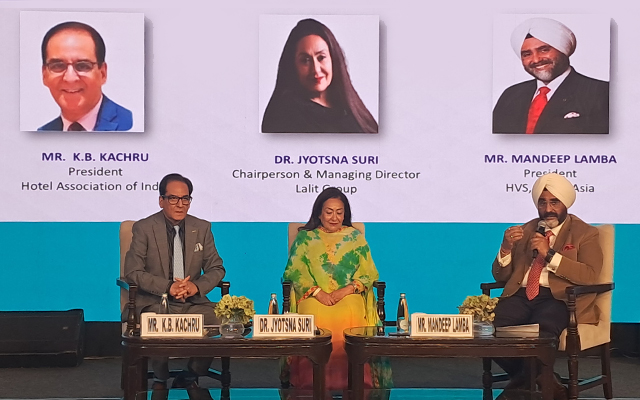
India’s hospitality industry is seeking policy and financing reforms to boost hotel supply as domestic tourism drives demand; photo by Rohit Kaul

K B Kachru, president of the Hotel Association of India (HAI), said: “The number of branded hotels in India falls far below what is required. India today has close to 200,000 branded rooms whereas a single US state has more branded hotel rooms than the whole of India combined. That is deeply concerning.”

He stressed that developing the required hotel capacity would require substantial domestic and foreign investment, which in turn depends on policy support.

“To attract large-scale capital, investors must be incentivised through policy measures and the ease of doing business needs to be improved. The government must eliminate any friction or bottlenecks preventing or delaying capital infusion into the hotel sector, treating it as vital infrastructure,” he highlighted.

Industry experts noted that India’s rapidly growing tourism market, fuelled by the domestic segment, requires accommodation across every category rather than only luxury hotels.

Mandeep Lamba, president and CEO, South Asia, HVS Anarock, stated: “We have low penetration of branded hotel rooms in the country and investment is also limited at this point. The biggest issue we have been lobbying with the government is to bring hospitality sector lending under infrastructure lending. This will provide access to affordable long-term financing which is essential for expanding supply for a capital-intensive activity like building hotels.”

“It is not just five-star hotels that we build as an industry but also guest houses and economy hotels. Domestic tourism including the religious segment is booming and all these travellers do not stay in luxury hotels. We need branded hotels across every category,” added Lamba.

Beyond infrastructure and financing, industry leaders also highlighted the need to address structural challenges related to workforce development.

Jyotsna Suri, chairperson and managing director of The LaLiT Suri Hospitality Group, said: “Looking ahead, I hope to see a narrower gap between branded and non-branded hotel inventory in India. Attracting the right talent into the hospitality sector is another key challenge that the industry is grappling with.”

Omio lands US$10 million backing for Asia growth

0

Omio has secured a US$10 million strategic investment from Granite-Integral to support its expansion in Japan and strengthen its presence across South-east Asia.

The funding will be used to grow Omio’s transport network across the region, expand local partnerships, enhance its customer offering and increase its teams in Japan and at its AI-focused technology hub in Singapore.

Omio plans to expand its transport network in Japan and South-east Asia following the investment

The investment comes as Asia-Pacific is forecast to be the world’s fastest-growing travel region over the next five years. Omio said demand for multimodal travel is also increasing, with more travellers combining rail, coach and other transport options within a single trip.

The company launched in Japan earlier this year and has since seen strong demand from international travellers booking journeys along the country’s Golden Route, as well as to regional destinations including mountain areas, pilgrimage routes and coastal communities. Omio has also expanded its transport inventory through partnerships with operators such as Japan Railways and Willer Express.

Omio currently offers bookable transport services across 48 countries and plans to expand into more than 70 markets by 2028, with Japan and South-east Asia identified as priority growth markets.

Naren Shaam, founder and CEO, Omio, said: “Japan is one of the most exciting travel markets in the world today. Millions of travellers visit every year, but planning journeys across different operators and transport modes can still be complex, particularly beyond the major cities. With Granite-Integral’s regional expertise, we intend to accelerate a new era of connected travel in Japan, expand our presence across South-east Asia and continue building a more connected future for travel across Asia.”

CK Choun, co-head, Granite-Integral, added: “Japan and South-east Asia represent some of the most important long-term opportunities in global travel, with growing demand for more connected journeys across the region. We’re excited to support Omio as it continues expanding across Asia.”

Hit Chinese drama fuels interest in Hangzhou, Amadeus data suggests

0

International air arrivals to Hangzhou increased nine per cent year on year between March and June 2026, according to Amadeus Travel Intelligence, with strong growth from several South-east Asian markets following the release of Chinese drama Pursuit of Jade.

Hangzhou serves as the main international gateway to Hengdian World Studios and West Lake in Zhejiang province, both featured prominently in the series. Leisure travellers accounted for 95 per cent of international arrivals during the period.

International arrivals to Hangzhou have increased following the global release of Pursuit of Jade, according to Amadeus data

Vietnam recorded the strongest growth, with arrivals up 516 per cent year on year, followed by the UAE (57 per cent), Malaysia (56 per cent) and Singapore (48 per cent).

The drama premiered globally in March and reached Netflix’s Global Top 10 non-English chart during its first full week. While Amadeus noted that no single factor can explain the increase in arrivals, it said the trend is consistent with the rise of “set-jetting”, where travellers visit destinations featured in popular film and television productions.

The company’s Travel Trends 2026 report identifies entertainment-driven travel as one of the industry’s emerging trends, citing productions such as Bridgerton and KPop Demon Hunters as examples of screen content influencing travel decisions.

Longhaul markets also showed growing interest in Hangzhou. Between March and June, flight searches from the US rose 29 per cent year on year, while arrivals increased 22 per cent. In the UK, searches were up 23 per cent and arrivals increased 21 per cent, suggesting demand is continuing to build.

Meanwhile, international arrivals to nearby Ningbo remained broadly flat over the same period. Taiwan remained the city’s largest source market, accounting for 37 per cent of arrivals and recording nine per cent growth, while arrivals from Singapore increased 27 per cent.

Bing Han Kee, regional vice president, travel intelligence, hospitality, Asia Pacific, Amadeus, said: “What stands out in the data is the shape of the demand, not just the headline growth. Travel to Hangzhou is being driven almost entirely by leisure travellers, with the strongest gains coming from markets across South-east Asia, while in longhaul markets like the US and UK, searches are running ahead of arrivals – typically a sign of new interest still converting into trips. We can’t attribute demand to any single cause, but this appears to be the pattern that emerges when a destination captures the popular imagination.”

Philippine Airlines orders up to 20 Boeing 787-10 Dreamliners

0

Philippine Airlines (PAL) has signed a memorandum of understanding with Boeing for 15 787-10 Dreamliners, with options for five additional aircraft, as part of its long-term fleet renewal programme.

The agreement, unveiled at the Farnborough International Airshow, marks PAL’s first Boeing aircraft order since 2007 and reinforces the airline’s 80-year partnership with the manufacturer.

Philippine Airlines has signed an agreement with Boeing for 15 787-10 Dreamliners, with options for five more aircraft

The new aircraft will strengthen PAL’s medium- and longhaul fleet, with deliveries scheduled between 2031 and 2034. The first aircraft is expected to enter the fleet in 2031.

The Boeing 787-10 will support the airline’s fleet modernisation plans by improving fuel efficiency and reducing carbon emissions compared with older aircraft. The aircraft also offers larger windows, improved cabin humidity and air quality, quieter interiors and updated cabin products.

The order also has links to the Philippines’ aerospace sector. Boeing suppliers Moog, Collins Aerospace and JAMCO operate production facilities in the country, manufacturing components for the 787 programme, including interior panels, flight control systems and hydraulic systems.

Lucio C. Tan III, president and COO, PAL Holdings, said: “This investment manifests our confidence in the future of Philippine Airlines and the continued growth of air travel. The Boeing 787-10 will strengthen our medium and longhaul fleet, allowing us to provide an even better travel experience for our customers while improving operational efficiency and supporting our long-term sustainability goals.”

Stephanie Pope, president and CEO, Boeing Commercial Airplanes, added: “Philippine Airlines’ selection of the 787 Dreamliner marks an important step forward in our partnership, one that spans 80 years. We’re grateful for PAL’s trust in Boeing, and our team looks forward to delivering advanced-technology airplanes that deepen connections across the Philippines, Asia and beyond.”

IHG inks Holiday Inn Express conversion in Krabi

0

IHG Hotels & Resorts has signed Holiday Inn Express Krabi Ao Nang, a 158-room conversion property that is due to open by the end of 2026.

Developed in partnership with Chok Deesuk Co., the hotel will join the Holiday Inn Express brand following a rebranding programme. The signing builds on IHG’s existing relationship with the owner, which also operates the nearby Holiday Inn Resort Krabi Ao Nang Beach.

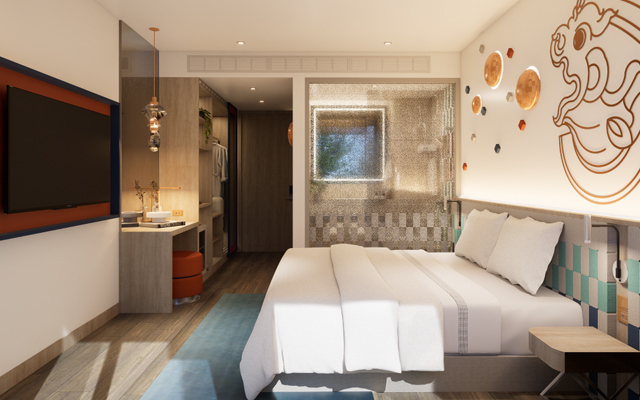
Holiday Inn Express Krabi Ao Nang is scheduled to open by the end of 2026 following the conversion of an existing hotel

Located about one kilometre from Ao Nang Beach, the hotel will offer an all-day dining restaurant, pool bar, swimming pool and fitness centre. It is approximately 40 minutes by road from Krabi International Airport.

The property will become the first Holiday Inn Express hotel in Thailand and the second in South-east Asia to feature the brand’s latest Generation 5 (Gen 5) design, which introduces redesigned public spaces and updated guestroom concepts.

Ao Nang is one of Krabi’s main tourism hubs, providing access to attractions including Railay Beach, Poda Island, Chicken Island and Hong Island.

The signing expands IHG’s Thailand portfolio, where the company currently operates 42 hotels across 11 brands, with a further 39 properties in the pipeline.

Pathana Jitsaereetham, director, development, Thailand, IHG Hotels & Resorts, said: “The conversion of this property to Holiday Inn Express reflects the growing appeal of conversions in Thailand, where conversion signings accounted for nearly 40 per cent of signed keys in 2025. This trend reflects owners’ increasing confidence in the value of joining IHG’s global enterprise, powerful distribution channels and award-winning loyalty programme.”

Thailand’s visa U-turn comes too late for India trade

0

Thailand’s reinstatement of visa-free entry for Indian travellers has been welcomed by the inbound trade, but operators say two months of policy uncertainty have already cost the market its Indian high season. FITs diverted to Vietnam and Malaysia over concerns about the proposed visa fee, while wedding groups delayed payments pending greater certainty over travel costs.

The cabinet reinstated the 30-day visa exemption on July 14, 2026, pending publication in the Royal Gazette, reversing a May 19 decision to move India to a 15-day visa on arrival costing 2,000 baht (US$60). The policy never officially came into effect. Tourism and sports minister Surasak Phancharoenworakul attributed a decline of nearly 20 per cent in Indian arrivals to the confusion. India delivered 2.48 million visitors in 2025, making it Thailand’s third-largest source market.

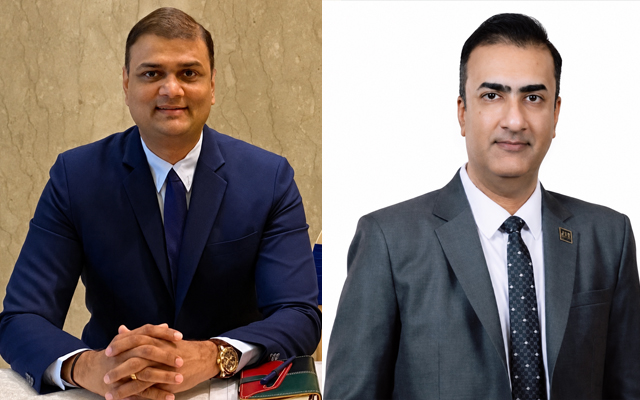
From left: Shreyash Shah and Vathanachai Chatrirath described the impacts of uncertainty over visa free access to Thailand for the Indian market

Vathanachai Chatrirath, vice president of the Association of Thai Travel Agents and owner of Thai Travel DMC, described the Indian market as “very price sensitive” and said the proposed 2,000 baht fee equated to around 6,000 rupees (US$62) per traveller.

“One family of four travelling would have to pay 24,000 rupees, which is a significant impact to valuable budgets that they could have spent for their vacation,” he said.

Leisure business shifted as uncertainty over the policy lingered, said Akash Pawar, founding member for strategy and new initiatives at Mumbai-based Media Hermits Limited.

“It is still unclear for us, and the budget issues make it a little difficult. Clients then prefer other destinations,” Pawar noted. Leisure groups postponed or switched to other destinations, although weddings were less affected, he added.

Shreyash Shah, commercial director at Destination Hospitality Management, noted the impact at his company was greater on weddings, where contracting for the November-to-March high season typically takes place six to nine months before arrival.

“The impact was quite noticeable in the wedding segment, more than FITs. At (one of the properties that we contract for), we have five weddings on hold right now. Everything was done, all the nitty-gritty on the confirmation, but we never received payment,” Shah underscored.

The revised 30-day visa-free period — down from the 60-day policy introduced in 2024 — is not a concern, he added. Indian weddings typically last three to seven days, while even travellers from the Middle East and Europe rarely stay beyond 10 days.

Higher airfares compounded the uncertainty. Shah said low-cost carriers had suspended flights to India until October because of the Middle East conflict, pushing fares up by around 30 per cent during India’s summer holiday period.

As a result, travellers who might otherwise have diverted to Thailand from the Middle East opted for domestic holidays, Malaysia or Vietnam. Malaysia continued to offer visa-free entry and uninterrupted AirAsia services, while Vietnam charges US$25 for a single-entry visa and US$50 for a multiple-entry visa.

Shah said the Tourism Authority of Thailand and the Ministry of Foreign Affairs should actively communicate the policy reversal through social media, trade media and webinars with Indian travel associations.

“They have to be more proactive to get the business back,” he stated.

He expects arrivals and group business to recover as flight capacity increases and fuel surcharges ease, with airfares already about 10 per cent lower.

“There is no deadline saying they are going to cancel this 30-day visa, so it is optimistic,” Shah concluded. “This will impact the first quarter of 2027, where we can bring business back to pre-uncertainty levels.”