TTG Asia
Asia/Singapore Friday, 7th August 2026
Page 6

Accor ramps up luxury growth in South-east Asia

0

Accor is accelerating the expansion of four of its luxury brands across South-east Asia, where they operate 28 hotels, with 20 more already signed, representing approximately 3,750 rooms. The group is sharpening its brand positioning to capture demand for culturally rooted, experience-led stays.

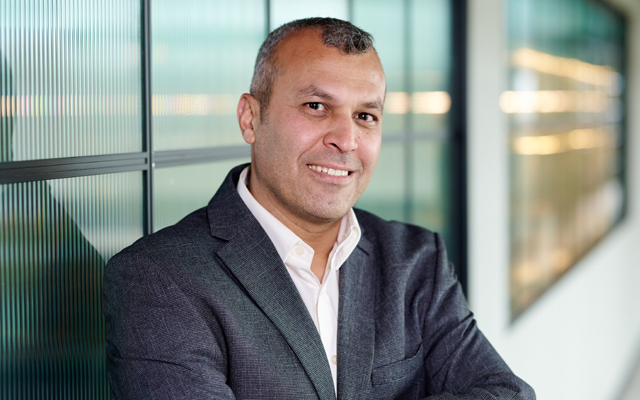
Xavier Grange, global chief development officer for Sofitel, Emblems, MGallery and all luxury brands Europe-North Africa at Accor, said the regional pipeline sits within a global network of 256 hotels spanning Sofitel, Sofitel Legend, MGallery Collection and Emblems Collection.
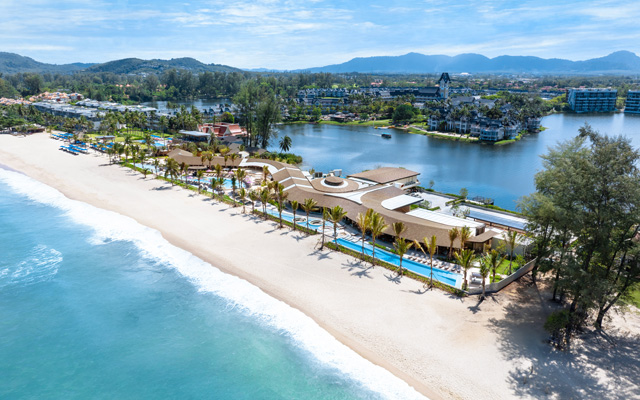
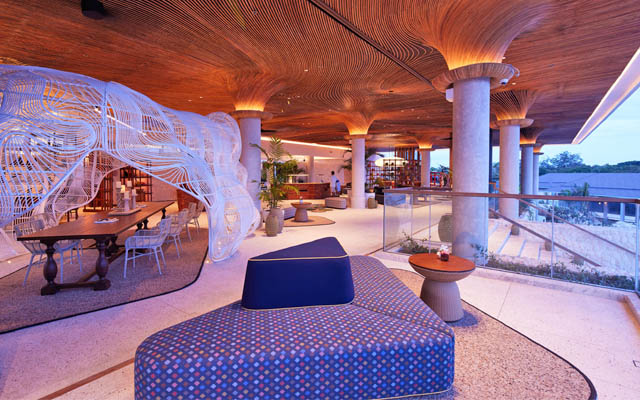
South Palms Resort and Spa Panglao – MGallery at Panglao Shores in Bohol, pictured, opened on August 8, 2025, as part of Accor’s expanding luxury portfolio in South-east Asia; photo by Byron Keane Photography

“We have nearly 105 hotels in the pipeline worldwide across our four brands, including iconic projects in Vietnam, where we will double our footprint with three new hotel openings in 2027,” Grange said.

The Vietnam pipeline comprises six new MGallery Collection properties, four Sofitel hotels and two Emblems Collection projects. Recent signings include Sofitel Sapa Hotel & Residences and Sofitel Diamond Crown Hai Phong.

“Vietnam stands out as a leading growth market,” Grange said, adding that the company is “seeing significant momentum for our collection brands, driven by increasing demand for unique and immersive experiences”.

Sofitel continues to grow following its recent repositioning around a refined French identity, adding two properties in the Philippines and entering a new phase of development in Malaysia.

Thailand is also seeing strong development momentum, particularly for MGallery Collection, with three projects underway.

Two Phuket properties are scheduled to open this year: Navera Phuket, MGallery Collection, and Hotel Montazure Lakeside Phuket, MGallery Collection.

Recent openings under MGallery Collection include South Palms Resort and Spa Panglao in the Philippines and V Villas Maldives at Mirihi, alongside Hotel Sosei Sapporo in Japan. The signings of Madarao Kogen Hotel and Lime Resort Myoko have since extended the pipeline.

Emblems Collection, launched in November 2025 with Lucknam Park Hotel & Spa in the UK, has 15 projects signed globally and expects to reach seven operating hotels by 2027, including developments in the Philippines and Thailand.

“This momentum marks just the beginning of our next phase of growth, with upcoming flagship signings ahead. Our ambition is clear: to lead a new era of committed, elegant hospitality in the region,” Grange concluded.
TransNusa builds capacity as passenger numbers rise

0

Indonesian carrier TransNusa is reporting nearly 20 per cent business growth while continuing to expand capacity across South-east Asia and regional markets.

Speaking to the media on the sidelines of the Singapore Tourism Board (STB)-TransNusa MoU signing in Jakarta recently, Bernard Francis, aviation group CEO of TransNusa, said the airline would continue expanding its network by adding aircraft, increasing frequencies and launching selective new routes.

Francis said TransNusa would prioritise increasing frequencies on existing routes rather than launching multiple new services amid the uncertain economic environment; photo by Singapore Tourism Board

The carrier will launch twice-daily services between Jakarta and Bangkok’s Suvarnabhumi Airport on August 6, followed by the Denpasar-Phuket route in September.

“We also hope to get additional slots at Changi Airport, Singapore, so we can increase the (Jakarta-Singapore) frequency, potentially from three to five times a day,” Francis said.

The airline is also awaiting approval to launch the Lampung-Kuala Lumpur route, which it expects to start next month.

In the longer term, TransNusa is interested in operating international flights from Bandung once Husein Sastranegara Airport fully reopens for international operations.

“We have proposed routes from Bandung to Malaysia and Singapore, and this is awaiting the decision of the regulator and airport authorities,” he added.

Supporting its expansion plans, TransNusa will add four aircraft before the end of the year. The airline currently operates 19 aircraft comprising Airbus A320s, A321s and C909s.

Looking ahead, Francis is considering adding more aircraft next year to support further network expansion to Australia, China and South-east Asia.

The expansion plans come as the carrier reports nearly 20 per cent business growth.

“Because we added more flights, our business grew by nearly 20 per cent (in the first half of the year), driven by higher passenger numbers. Our load factor is around 80 per cent,” he said.

Francis said TransNusa has remained relatively insulated from geopolitical uncertainty because of its focus on domestic and regional markets.

“TransNusa focuses on domestic and regional flights in South-east Asia. We see that many people who previously planned to travel to Europe are now diverting their trips to destinations in Asia. Most choose to travel to Singapore, Malaysia, China and Australia.”

TransNusa currently operates from three hubs: Jakarta, Bali and Manado. From Jakarta, the carrier serves Kuala Lumpur (four daily flights), Penang, Subang, Singapore, Guangzhou, Yogyakarta and Singkawang.

From Bali, it operates to Perth (three daily flights), Singapore (twice daily), Guangzhou, Manado, Lombok, Bima, Waingapu and Wakatobi. Meanwhile, the Manado hub serves Sorong, Timika and other destinations in Papua.

For the rest of the year, the airline will focus on increasing frequencies on existing routes rather than launching multiple new services.

“Our focus is increasing frequencies to Singapore, Malaysia and also domestic destinations. We don’t want to open many new routes in an unbalanced economic situation. Instead, we will increase the frequency,” Francis said.

Radisson rolls out AI-powered real-time rate matching

0

Radisson Hotel Group has launched an AI-powered real-time rate-matching system across its global portfolio, automatically giving guests the lowest publicly available rate when they book through the group’s website.

The technology replaces the group’s previous Best Online Rate Guarantee, which required guests to find a lower rate elsewhere, submit a claim with supporting evidence such as screenshots, and wait for manual approval before receiving a refund or rate adjustment.

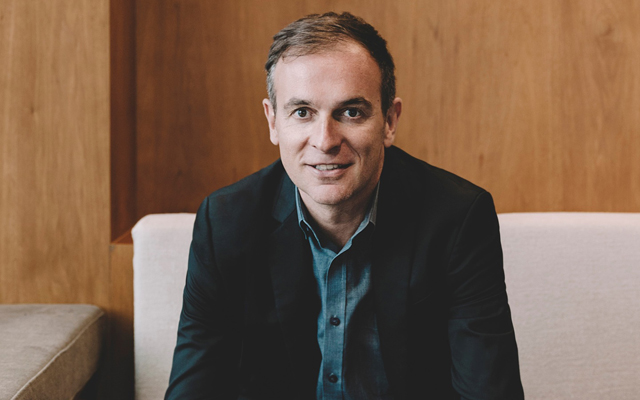
Dundar: booking direct should be the easiest and most rewarding choice a traveller can make

Under the new system, if a guest finds a lower eligible rate for a Radisson property on an OTA or a metasearch platform such as Google Hotels, the AI checks the discrepancy in real time and automatically applies the matching rate on Radisson’s website. Guests are then shown an on-screen confirmation that the discounted rate has been applied.

The feature is now available across Radisson’s global portfolio and currently compares rates from OTAs including Booking.com, Expedia, Hotels.com, Agoda, Priceline and Trip.com.

To ensure accurate comparisons, the system only matches equivalent bookings with the same room type, stay dates, occupancy, cancellation policy and inclusions.

Velit Dundar, vice president, e-commerce, Radisson Hotel Group, said the initiative is part of the company’s digital commerce strategy to make booking direct a simpler and more rewarding experience.

“Booking direct should be the easiest and most rewarding choice a traveller can make. It sits at the heart of our digital commerce strategy and our focus on what modern travellers value most: speed, simplicity and confidence.”

Dundar said the new system removes the burden of traditional rate-matching processes, eliminating the need for guests to submit claims while reducing manual work for hotel teams. It also gives commercial teams real-time visibility into rate competitiveness that was not possible under the previous manual model.

Since its launch, the tool has delivered a 19 per cent increase in direct-channel conversions compared with a control group, while also boosting engagement with the Radisson Rewards loyalty programme as more guests book directly.

The Anam Foundation expands community efforts through tree-planting programme

0

The Anam Foundation has launched a long-term tree-planting initiative that will invest one billion dong (US$38,500) annually to expand green spaces in communities across Vietnam.

Named Anam Green Life, the programme will focus on schools, public spaces and neighbourhoods with limited greenery, working with local authorities to plant trees that provide shade, improve air quality and enhance urban environments.

The Anam Foundation’s community initiatives include home improvement projects for disadvantaged families, alongside its new long-term tree-planting programme

The initiative will begin in communities surrounding The Anam Cam Ranh and The Anam Mui Ne before expanding to other parts of the country.

Rather than prioritising carbon offsetting, the programme is designed to deliver social benefits by planting trees where they can have the greatest impact on residents’ daily lives.

The initiative is led by The Anam Foundation, established by The Anam Group founder and chairman Pham Van Hien to support community development in areas surrounding the group’s resorts.

Hien shared that the Foundation would focus on planting trees where they could deliver the greatest community benefit, including in school playgrounds, public spaces and neighbourhoods lacking greenery.

The announcement follows the Foundation’s recent community projects in Cam Lam, where it funded the renovation of a home for a resident with a contribution of 90 million dong and financed the construction of a new home for a The Anam Cam Ranh employee with 150 million dong.

Hien said: “Nature has always been at the heart of The Anam. Our resorts are defined by lush tropical gardens because we believe greenery contributes to beauty and well-being. Through this initiative we want to extend that philosophy beyond our resorts and into the communities around us.

“Whether we’re helping a family have a safe place to call home or planting trees that will provide lasting benefits for entire communities, our goal is the same – to create impactful change. These initiatives are driven by our vision of supporting people and their communities as well as caring for the environment.”

Laguna Phuket broadens its wellness focus

0

Laguna Phuket is expanding its approach to wellness with activities spanning movement, mindfulness, nature, gastronomy and cultural experiences across the integrated resort destination.

Guests can personalise their stays with activities including sunrise yoga, sound healing, Thai cooking classes, kayaking and introductory golf sessions. These form part of nine lifestyle pillars developed around wellness, active living, dining, family experiences, sustainability, community engagement and events.

Laguna Phuket brings together wellness, outdoor activities, dining and cultural experiences across its resorts and surrounding natural environment

Nature is also central to the programme. Laguna Phuket spans more than 405 hectares of parkland and lagoons, alongside a 3km beach. Guests have access to jogging trails, water sports, outdoor activities and green spaces.

Wellness programmes are offered across Angsana Laguna Phuket, Banyan Tree Phuket, Dusit Thani Laguna Phuket and SAii Laguna Phuket, with guests able to travel between the resorts using a complimentary shuttle bus and ferry network.

Laguna Golf Phuket adds an 18-hole championship course and a PGA-branded Golf Academy, with programmes available for different skill levels.

Angsana Laguna Phuket will also host the Global Wellness Summit from November 10 to 13, 2026, bringing together representatives from the international wellness industry.

For more information, visit Laguna Phuket.

Hong Kong hotels stay resilient as Typhoon Noul disrupts travel

0

Disruptions caused by Typhoon Noul over the weekend brought Hong Kong to a halt, with more than 350 flights cancelled, attractions closed and rail services suspended, including the High Speed Rail to China.

Despite this, hotels remained operational to ensure guests had a safe stay while communicating closely with overseas visitors to help readjust their travel plans.

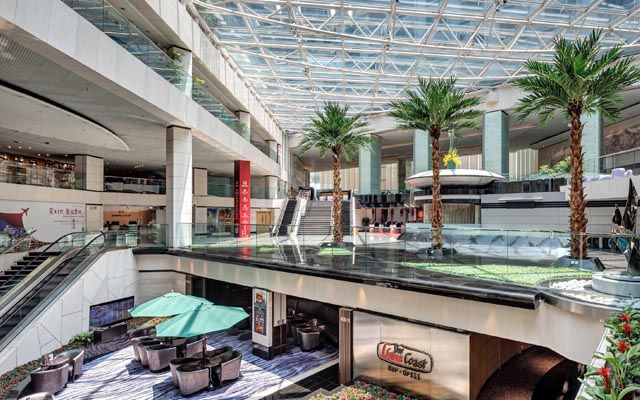
Regal Airport Hotel, pictured, accommodated stranded airline passengers as Typhoon Noul disrupted flights and transport across Hong Kong

The Fullerton Ocean Park Hotel Hong Kong’s seaside lobby suffered shattered glass doors when it was hit by a super typhoon last September. This time, the property remained intact, with only some booking disruptions due to flight cancellations and travel delays. The hotel assisted affected guests with stay extensions where possible, provided updates on transport and flight disruptions, and ensured guests continued to enjoy a comfortable stay with access to its facilities and services.

Christina Cheng, general manager, said: “We have adopted a flexible and understanding approach by assisting affected guests with reservation amendments and alternative travel dates. Our team has also maintained close communication to provide timely assistance and support as guests adjust their travel plans.

“The safety and well-being of our guests remain our highest priorities. Throughout the typhoon, our focus was on providing flexibility, timely assistance and personalised support to those affected by travel disruptions. We are delighted that our arrangements were well received and helped ensure guests felt cared for, reassured and supported during a particularly challenging period.”

Likewise, The Hari Hong Kong remained in operation throughout the typhoon period and offered stay extensions, subject to availability, as well as assistance with alternative accommodation arrangements where needed.

General manager Edward E Snoeks said: “For guests unable to travel as planned, we are offering date changes and postponements, subject to availability. Our Reservations team remains in close contact with affected guests and travel partners to minimise inconvenience and facilitate alternative arrangements as smoothly as possible.

“Our team also provides personalised support from our Guest Experience and Concierge teams to help guests manage changes to their travel plans.”

Regal Hotels Group’s two airport-connected hotels – Regal Airport Hotel and Regala Skycity Hotel – have more than 2,300 rooms and layover contracts with all major airlines, enabling stranded passengers to transfer quickly without lengthy check-in procedures.

Balwin Yeung, chief commercial officer of Regal Hotels International, told TTG Asia: “Thanks to our long-standing relationships with the airlines and our extensive experience in handling flight disruptions, the guest journey is usually very smooth and efficient, despite the interruption to their travel plans. I think the best support is a quick and efficient check-in, as most guests are very tired after flying.

“During Typhoon Signal No. 8 or above, our hotels typically run at over 90 per cent occupancy. Only a small number of guests choose to cancel their trips, and these are usually non-airline guests. We encourage them to change their travel dates rather than request a refund, and almost all are happy to do so. Their intention is still to visit Hong Kong, and if they cannot make it this time, they will usually plan another trip in the near future.”

Noto Peninsula tourism rebuild gathers pace

0

Facilities in Ishikawa Prefecture’s Noto Peninsula that were devastated by a 7.6 magnitude earthquake in January 2024 are gradually reopening to visitors.

In Nanao, a city that suffered extensive damage to infrastructure and historic buildings, two accommodation properties will start welcoming tourists again this month. One is the first property to be completely rebuilt in Wakura Onsen, an area known for its hot springs.

Trip.com Japan’s Hope Tourism Project brings together hotels and local businesses to support tourism recovery across the Noto Peninsula

“In Noto, businesses are working diligently to reopen and rebuild, and the environment is becoming more welcoming to tourists,” said Noto mayor Yoshinori Yoshida.

The Noto Peninsula Wide-Area Tourism Association said more developments are expected in 2027, including resumed operations for Wajima Morning Market and Hotel Mercato Wajima.

Until full recovery is achieved, OTA Trip.com Japan aims to support Noto via its Hope Tourism Project, launched on July 22 to bring together hotels and businesses.

The first tie-up, between Hotel Nikko Kanazawa, Matsunami Sake Brewery and Noto-based farmers, offers kaiseki (multi-course) meals featuring seasonal ingredients and sake from Noto at the hotel’s restaurant.

“We are promoting the planning and sale of travel products and tourism promotion in collaboration with local businesses, aiming to popularise a new tourism model where travelling contributes to recovery support,” said Tomoyuki Takada, president and CEO of Trip.com Japan.

In another boost for the area, Noto Satoyama Airport reopened on July 7 following a Pokémon-themed rebranding. The three-year initiative, which includes renaming the airport Noto Satoyama Pokémon with You Airport in partnership with the Pokémon with You Foundation, aims to boost local tourism and revitalise the community through themed exhibits, decorations, food, merchandise, photo booths and short films.

Cathay Pacific builds network for multi-city travel

0

Cathay Pacific is expanding its network to meet evolving travel patterns, enabling more complex, multi-city itineraries for leisure, corporate and MICE travellers across Asia-Pacific.

Rather than travelling to a single destination, business and MICE travellers are increasingly combining meetings, conferences and site visits across multiple cities, placing greater importance on connectivity, flexibility and efficient schedules, according to Nicolas Masse, area head of Singapore and Malaysia.

Masse: the strength of our network lies not just in the number of destinations served, but also in the connectivity it offers

He contended: “In this environment, schedule reliability is essential, as even a small disruption can have a knock-on effect across the entire itinerary. Network connectivity, frequency and hub efficiency will play an even greater role in enabling seamless multi-market travel. Our extensive network of over 100 destinations worldwide is well positioned to support this.”

Cathay’s 13 gateways in South-east Asia connect travellers through Hong Kong to the Chinese mainland, North Asia, Europe and North America.

Masse said Hong Kong’s strategic location, global connectivity and direct access to the Greater Bay Area (GBA) differentiate it from other regional hubs. The completion of Hong Kong International Airport’s Three-Runway System has increased long-term capacity, while Cathay’s intermodal network provides direct connections between the airport and seven ports across the GBA.

Cathay serves 24 passenger destinations in the Chinese mainland with more than 330 flights per week, alongside intermodal travel options between Hong Kong and other GBA cities.

The 2026 Middle East conflict has affected the GCC region’s hub status, with Cathay postponing the resumption of flights to Dubai and Riyadh from September 1 to October 25 and October 26, 2026, respectively. Meanwhile, stronger demand for Europe has prompted additional passenger services to London and increased capacity to Zurich, Manchester and Rome.

Looking ahead, Cathay has committed more than HK$100 billion (US$12.8 billion) to its fleet, cabin products, lounges and digital innovation over the next seven years. Alongside its Aria Suite Business class, new Premium Economy and refreshed Economy cabins on retrofitted Boeing 777-300ER aircraft, the airline will introduce Aria Studio, a fully lie-flat Business class seat, on selected regional Airbus A330-300 aircraft this year.

Cathay has also rolled out Wi-Fi across its fleet and is continuing its global lounge enhancement programme.

Qantas, Melbourne Airport agreement clears path for network growth

0

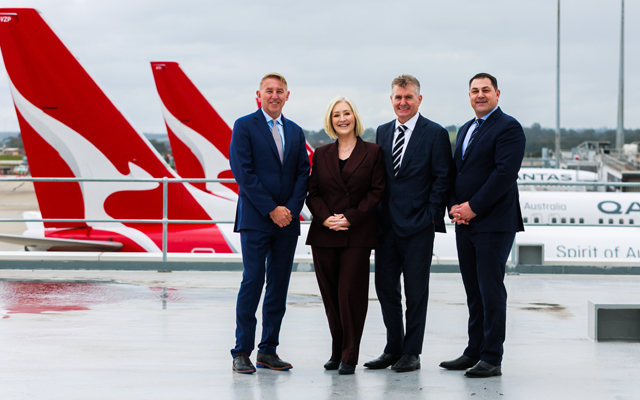
The Qantas Group and Melbourne Airport have reached a commercial agreement covering airport expansion, additional flights and passenger facilities, including a 15-year commitment supporting the airport’s third runway.

The agreement will support Melbourne Airport’s A$4.5 billion (US$3 billion) international terminal expansion, which will add five widebody gates. The third runway is scheduled to open in 2031.

Qantas plans to grow its Melbourne network, including basing some of its new Airbus A350-1000LR aircraft at the airport

Qantas also intends to base some of its Airbus A350-1000LR aircraft in Melbourne, allowing the airline to serve international destinations that are not currently within its network from the city. The aircraft are part of a 12-aircraft order separate from the A350-1000ULRs earmarked for Project Sunrise.

Qantas and Jetstar currently serve 17 international destinations from Melbourne. The plans also provide capacity for Jetstar to expand at the airport, where it operates almost 1,000 flights a week during peak periods and handles around 45 per cent of its domestic passengers.

Passenger facilities will also be upgraded. Qantas is planning a new International Business Lounge above Terminal 2, up to one-third larger than its existing facility and scheduled for completion by 2029.

Terminal improvements will include upgraded check-in areas, automated bag drops, an expanded baggage reclaim hall and additional space for Australian Border Force operations.

Final agreements between Qantas and Melbourne Airport are expected to be signed in the coming months.

Rob Marcolina, chief financial officer, Qantas Group, said: “Basing some of our new A350-1000LRs in Melbourne will unlock a range of new destinations that aren’t possible today.

“Qantas and Jetstar currently fly to 17 international destinations from Melbourne and we look forward to increasing that number, helping to connect more Australians with the world, and growing Victoria’s tourism economy.”

Lorie Argus, CEO, Melbourne Airport, added: “Our investment in a third runway opening in 2031, coupled with the Qantas Group’s 15-year agreement supporting its delivery, is a significant vote of confidence in Melbourne.”

Singapore retains world’s most powerful passport ranking

0

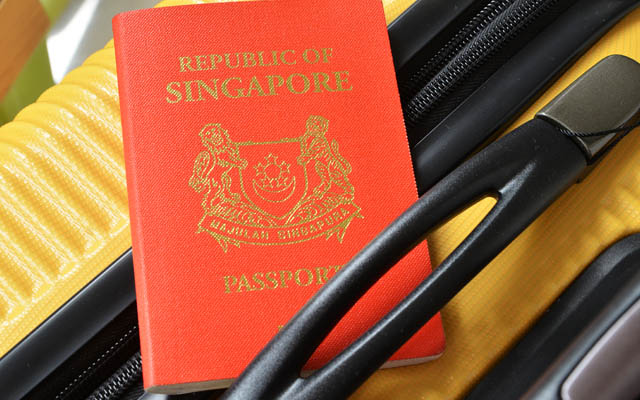
Singapore tops the latest Henley Passport Index, with visa-free or visa-on-arrival access to 192 destinations, according to the latest Henley Passport Index released on July 21.

The city-state held on to the top ranking from the previous index published in January. The UAE recorded the biggest improvement in the latest rankings, climbing three places to share second position with Japan and South Korea, with access to 188 destinations.

Singapore’s passport leads the latest global rankings, providing visa-free or visa-on-arrival access to 192 destinations

Sweden ranked third with access to 187 destinations, while Belgium, Denmark, Finland, France, Germany, Ireland, Italy, Luxembourg, the Netherlands, Norway and Spain were tied for fourth with 186 destinations. Austria, Greece, Malta, Portugal and Switzerland shared fifth place with access to 185 destinations, followed by Hungary, Poland and the UK in sixth. Malaysia, Australia, New Zealand, Canada and four European countries were jointly ranked seventh.

At the opposite end of the rankings, Afghanistan remained the world’s weakest passport, providing access to just 22 destinations. That is two fewer than in January, widening the mobility gap with Singapore to a record 170 destinations.

Henley & Partners said the long-term growth in global travel freedom has come despite a 12th consecutive year of declining global peacefulness, according to the latest Global Peace Index by the Institute for Economics & Peace.

Singapore ranks eighth on the Global Peace Index while topping the Henley Passport Index. Japan, Switzerland, Ireland, Austria, Portugal, Finland, Denmark, New Zealand, Canada, Czechia and Malaysia also perform strongly on both measures. By contrast, Afghanistan, Syria and Yemen rank among the world’s least peaceful countries and have the weakest passports, while Israel, the US, South Korea, Ukraine and Russia are notable exceptions, ranking higher for passport strength than for peacefulness.

Christian H Kaelin, chairman of Henley & Partners and creator of the Henley Passport Index, said: “The world’s strongest passports belong to nations that other countries want as partners – for trade, investment, security or cooperation. Mobility is ultimately a measure of the value other countries place on their relationship with you.”

The Henley Passport Index is published twice a year and ranks 199 passports based on the number of destinations their holders can enter without obtaining a visa in advance. It uses official travel data maintained by the International Air Transport Association to assess global visa requirements.