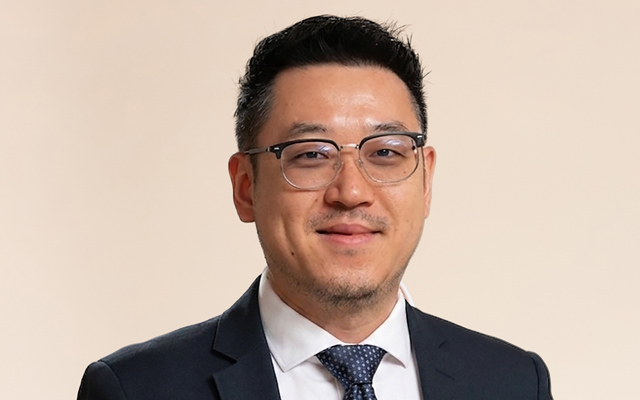
Michael Yang has been named general manager, Hong Kong at Plaza Premium Group (PPG).
Based in Hong Kong, he will lead the group’s business and operations in the market.
He most recently served as general manager – special task force at PPG, where he led strategic expansion initiatives and partner engagement programmes across the region.
New Zealand’s tourism sector is moving to ensure the country remains visible and competitive as AI reshapes how travellers choose destinations.
Speaking at TRENZ 2026 in Auckland, Air New Zealand CEO Nikhil Ravishankar warned that AI is changing the traveller decision-making process, with destinations now competing to appear in AI-generated recommendations rather than traditional search results.
Air New Zealand CEO Nikhil Ravishankar speaking at TRENZ 2026 in Auckland
“Increasingly, travellers will not start with the destination. Instead, they will start with the prompt,” said Ravishankar. “Where should I go for two weeks in November with great food and lots of nature? The countries that show up well in that answer may well win the fight for the tourism dollar.”
To stay ahead, Air New Zealand is investing in AI-focused marketing and digital visibility strategies. Ravishankar said the airline is working to ensure New Zealand and the carrier are “sighted, trusted and machine-readable” by AI platforms.
The airline is also exploring “new agentic advertising approaches with OpenAI and Google” while preparing for AI-driven booking systems that could eventually make travel transactions on behalf of consumers.
Tourism Industry Aotearoa CEO Rebecca Ingram said AI was changing tourism marketing and booking behaviour.
“A recent US study by Phocuswright showed that over half of US travellers are now actively using AI to inform their travel booking decisions,” she said.
However, Ingram said New Zealand still held a competitive advantage in an increasingly digital environment.
“People don’t travel to gather information. They travel because they’re seeking a feeling they don’t have words for,” she said.
Tourism New Zealand CEO René de Monchy said while AI is transforming how travellers discover destinations, it also presents a significant opportunity for New Zealand.
“We’re going through a massive technology disruptive phase,” he said. “We have a massive opportunity as a destination to make sure we are discovered, that our content is accurate, and that machines can find us.”
Osaka’s luxury accommodation sector is gaining momentum, supported by Expo 2025 and the city’s upcoming US$10 billion integrated resort, scheduled to open in autumn 2030.
More than 250 new accommodation properties opened across Osaka Prefecture between 2020 and 2024, with the strongest development concentrated in the city’s central districts and the high-end segment, according to local government data.
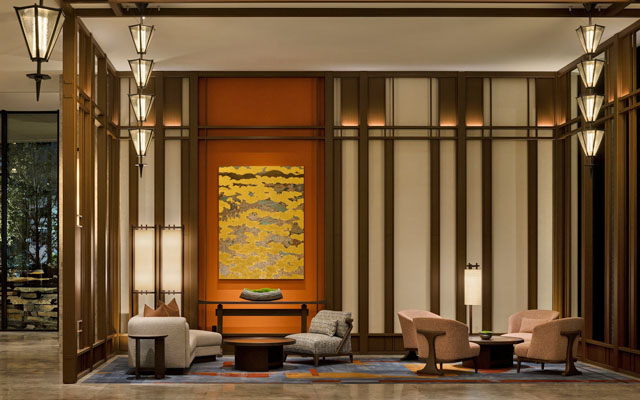
Waldorf Astoria Osaka is among the new luxury hotel openings helping to drive the city’s high-end accommodation growth
International visitors have responded strongly to the growth. Properties in Osaka Prefecture recorded 19.7 million inbound guest stays in 2024, the latest available data, up from 13.5 million in 2023, according to the Japan National Tourism Organization.
Upscale openings in 2025 include the Waldorf Astoria Osaka and Patina Osaka, with both brands choosing Osaka for their first properties in Japan.
“Japan has long been a pinnacle of refined travel, blending deep-rooted traditions with modern innovation, and Osaka – renowned for its vibrant culture, culinary excellence and warm hospitality – was the perfect setting for Waldorf Astoria’s debut in the country,” Candice D’Cruz, vice president of luxury brands, Asia-Pacific at Hilton, told TTG Asia.
As luxury travellers increasingly seek “authenticity, emotional resonance and a deeper sense of connection to a destination”, Osaka stands out for “its unique culinary landscape as the Kitchen of Japan, vibrant street culture and proximity to key destinations across the Kansai region”, she said.
D’Cruz added that the city’s “distinctive personality” creates “a layered, experience-rich journey that appeals to discerning travellers”.
Elen Franke, general manager of Patina Osaka, said Osaka has become increasingly attractive to high-net-worth travellers in recent years.
“The Expo 2025 significantly elevated the city’s global visibility, bringing international attention, infrastructure investment, and renewed confidence in Osaka as a world-class destination. At the same time, the upcoming integrated resort development, including MGM Osaka, signals long-term growth in luxury hospitality, entertainment and international business,” said Franke, adding that this “kind of large-scale investment typically attracts affluent travellers”.
The Philippines is continuing efforts to position itself as a Muslim-friendly destination in Asia through expanded halal tourism infrastructure, workforce training and targeted engagement with Muslim-majority markets.
The country was recently ranked eighth among non-OIC destinations in the 2025 Global Muslim Travel Index by Mastercard-CrescentRating, reflecting growing recognition of its halal and Muslim-friendly tourism initiatives.
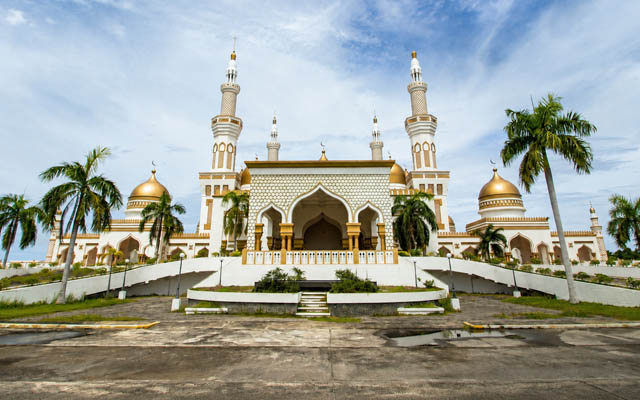
The Philippines is expanding its halal and Muslim-friendly tourism offerings through recognised accommodation, halal dining and culturally inclusive travel experiences
The Department of Tourism (DoT) said Muslim-friendly travel experiences across the country now include a growing number of halal-certified restaurants, accommodation options, prayer facilities and tourism services designed to support Muslim travellers.
To date, 67 accommodation establishments nationwide have received recognition under the DoT’s Muslim-Friendly Accommodation Establishment (MFAE) programme. Megaworld Hotels & Resorts has also become the first hotel group in the country to achieve full MFAE recognition across all its properties.
The DoT said approximately 3,000 tourism frontliners and stakeholders have undergone halal and Muslim-friendly tourism training programmes focused on cultural understanding and service delivery.
Destinations including Boracay, Cebu, Davao City, Cagayan de Oro and Metro Manila continue to expand Muslim-friendly tourism offerings. In Boracay, initiatives include the development of Marhaba Boracay, an 800m² beach cove designed for Muslim families.
The Philippines is also strengthening tourism ties with neighbouring Muslim-majority countries including Brunei, Indonesia and Malaysia under the BIMP-EAGA regional framework.
Alongside infrastructure development, the DoT continues to promote the country through targeted campaigns and the Muslim-Friendly Travelogue of the Philippines series, highlighting halal dining, cultural heritage and tourism experiences across the archipelago.
The tourism department stated improved international and domestic connectivity is supporting easier access to destinations including Manila, Cebu and Clark, allowing Muslim travellers to explore multiple regions across the country.
The Bali and Beyond Travel Fair (BBTF) 2026 is positioning itself as a marketplace to strengthen the competitiveness of Indonesian tourism through product readiness, industry quality and market confidence.
Speaking at the opening of BBTF 2026 Travex on May 29, Widiyanti Putri Wardhana, Indonesia’s minister of tourism, said the event was more than an exhibition, describing it as a business platform designed to connect local stories with market-ready tourism products.
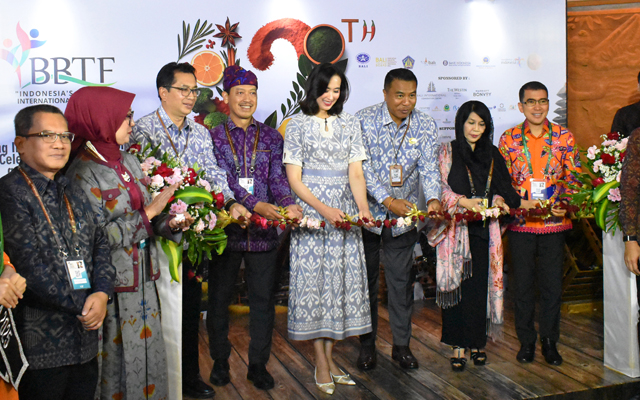
Widiyanti Putri Wardhana (centre) and dignitaries cut the ribbon to mark the opening of BBTF Travex opening
“BBTF is where Indonesia transforms beauty into travel business destinations, culture into experiences, and promotion into real market opportunities,” she said, highlighting tourism’s role in economic growth and job creation.
This year’s event has brought together 407 buyers from 44 countries and 286 sellers from Indonesia, Malaysia, China and Namibia.
Bali remains a key driver of Indonesia’s tourism growth, recording 6.95 million international visitor arrivals in 2025, up 9.7 per cent year on year. The island accounted for nearly half of Indonesia’s international arrivals.
However, Widiyanti stressed that Bali’s position should also help drive travel to other parts of the country. Under the “Bali and Beyond” banner, buyers are being encouraged to explore destinations including Lombok, Manado, Jakarta and tourism villages across the archipelago.
She noted that global competition has moved beyond natural attractions alone, with travellers increasingly seeking distinctive and high-quality experiences. As a result, Indonesian tourism businesses need to move beyond generic travel packages.
“The world doesn’t just buy a destination. The world buys a product that is clear, trusted, well-packaged, and ready to deliver the promised experience,” she said.
To support this effort, the ministry is developing Wonderful Indonesia Gastronomy as a tourism product and using the fair to showcase tourism villages through a collaboration with Bank Indonesia.
Meanwhile, Heru Hartanto Subolo, director general for Information and Public Diplomacy at the Ministry of Foreign Affairs, highlighted tourism’s role in Indonesia’s international relations.
Through a network of 131 overseas missions, embassies and consulates, the Ministry is working to build cross-border trust and position Indonesia as a stable and credible tourism partner in South-east Asia.
Putu Winastra, chairman of the BBTF 2026 organising committee, said the event’s business sessions and post-tour programmes play an important role in encouraging longer stays and generating benefits for local communities.
“Quality tourism does not mean exclusive tourism. Quality tourism means tourism that creates higher value, better experiences, and stronger benefits for local communities,” he said.
Moxy Hotels has made its debut in Nepal with the opening of Moxy Kathmandu. The launch marks the Marriott Bonvoy lifestyle brand’s entry into a market attracting a broader mix of visitors beyond trekking and pilgrimage tourism.
Located in Kathmandu’s Durbarmarg business and entertainment district, the property is 15 minutes from Tribhuvan International Airport. It is targeting younger, experience-driven travellers seeking access to both heritage sites and the city’s growing creative scene.
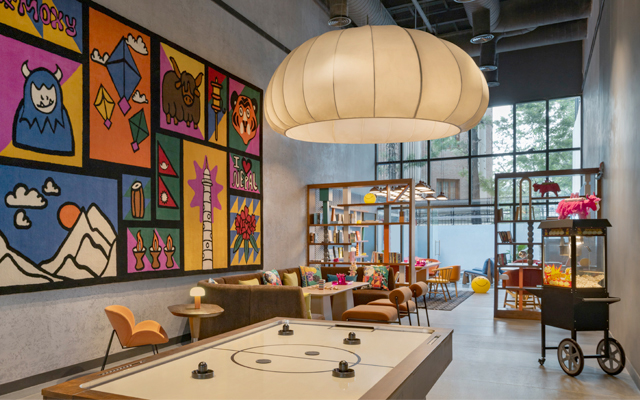
Moxy Kathmandu marks the lifestyle brand’s debut in Nepal
Subarna Thapa, Moxy Kathmandu’s captain – the brand’s term for general manager – said the timing is right as Kathmandu evolves into a destination in its own right.
“Kathmandu is seeing a growing mix of digital nomads, young professionals, solo travellers and culturally curious visitors who want more fluid and socially engaging hospitality experiences,” said Thapa.
They are increasingly seeking spaces that are “energetic and interactive rather than overly formal”, aligning with Moxy’s communal and design-led approach. The hotel incorporates signature Moxy features including check-in at the bar and shared social spaces designed to encourage interaction among guests and locals. Programming includes community runs, DJ-led wellness sessions, full moon parties and events featuring local artists.
Thapa said Kathmandu’s hospitality landscape is evolving alongside changing traveller expectations.
“Today’s travellers are approaching Kathmandu with a deeper sense of curiosity and intention. The city is evolving into a destination that offers a compelling blend of spirituality, culture, creativity, cuisine and community,” he said.
“There is a desire to engage more deeply with the character of a place rather than simply tick off landmarks and Kathmandu naturally lends itself to that kind of discovery.”
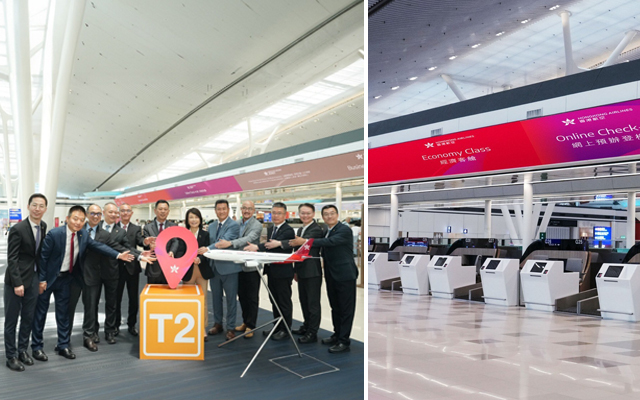
Hong Kong Airlines has moved its check-in counters at Hong Kong International Airport from Terminal 1 (T1) to the new Terminal 2 (T2), becoming the first airline to operate from the expanded facility.
Passengers can now check in and drop baggage at Aisle Q or use self-service facilities at Aisle R in T2 before proceeding through security and immigration to board flights at the Midfield Concourse in T1.
Hong Kong Airlines has become the first carrier to move check-in operations to Hong Kong International Airport’s new Terminal 2
The airline said the overnight relocation was completed after the final T1 departure, enabling passengers on the first T2 service to Shanghai Pudong to use the new facilities.
Hong Kong Airlines chairman Bruce Wang said the move comes ahead of the carrier’s 20th anniversary and would support the airport’s three-runway system by easing congestion at T1 and increasing operational capacity during peak periods.
He added that the airline would deploy additional staff and use social media and mobile apps to help passengers navigate the new check-in and boarding arrangements.
Hong Kong Airlines also recently launched a new brand identity inspired by Hong Kong’s Bauhinia flower, marking the first update to its aircraft tail livery since the airline was founded. Four aircraft are expected to be repainted this year, with the design to be introduced progressively across the fleet.
The airline also announced upgrades to its Flight Rewards Programme and Birthday Offers for loyalty members to coincide with the opening of T2.
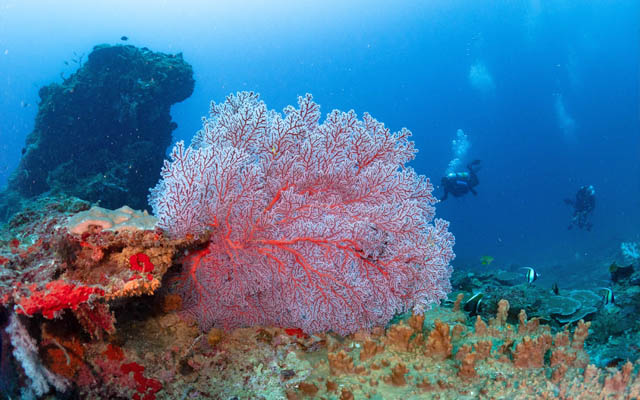
Manami Resort has introduced two newly identified offshore dive sites in Sipalay, expanding the destination’s appeal for experienced divers seeking less frequented reef environments.
The new sites are exclusively accessible to Manami guests as part of the resort’s marine experiences and follow a no-touch, no-take diving approach focused on low-impact reef interaction.
Manami Resort has added two newly identified offshore dive sites to its marine experiences in Sipalay, Negros Occidental
The sites, Jonel’s Garden and G A P, are located within an offshore reef system less than one kilometre from the resort and accessible within five to 10 minutes by boat. Situated west of Manami Resort, the reef network is characterised by deep reef formations, coral structures and open-water conditions that remained largely undocumented until earlier this year.
The dive sites were identified during exploratory dives conducted in March 2026. According to the resort, G A P was first located after divers were carried by shifting currents into an unmapped reef section, while Jonel’s Garden was documented shortly afterwards as a separate site featuring dense coral growth and marine biodiversity.
Jonel’s Garden ranges from depths of 18m to 25m and is known for hard and soft coral formations, including foliose Montipora corals. Marine life observed at the site includes snappers, barracuda and reef fish species. G A P, located at depths of 25m to 30m, features larger coral structures and attracts pelagic species such as giant trevally, groupers and emperors.
Across both sites, divers may also encounter green sea turtles, pygmy seahorses, nudibranchs and schools of fusiliers. The presence of larger predatory fish is considered an indicator of the reef system’s relatively low levels of human impact.
Manami Resort said the sites remain among the better-preserved reef areas in Sipalay due to their depth and limited access. Diving conditions vary seasonally, with visibility typically ranging between five and 20 metres, while the best conditions are generally experienced from April to June.
Due to depth and current conditions, both sites are recommended for Advanced Open Water divers and above, with guided dives led by experienced professionals.
Cristina Corro, founder of Manami Resort, shared: “The discovery of these sites reinforces how much there is still to protect and understand. For us, it is about creating access in a way that remains thoughtful, controlled and respectful of the ecosystem.”
“These sites offer something increasingly difficult to find, which is a sense of true exploration,” said Giro Solatorio, general manager of Manami Resort. “You are not just observing marine life, you are entering a system that feels largely undisturbed. That changes how people experience the ocean.”
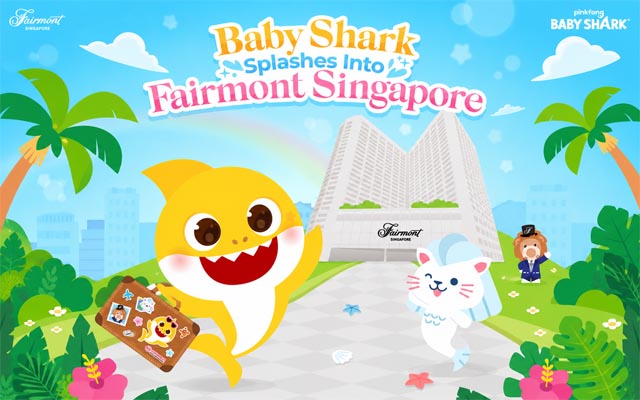
Fairmont Singapore has partnered with the Singapore Tourism Board and The Pinkfong Company to introduce a Baby Shark-themed family stay experience running from now to November 17, 2026.
The programme combines themed accommodation, dining and interactive activities aimed at families travelling with children. For the first time in Singapore, Baby Shark will appear alongside Merli, the Singapore Tourism Board mascot, and Pakcik, Fairmont Singapore’s lion mascot.
Fairmont Singapore introduces a Baby Shark-themed family programme with stays, dining and interactive activities
Family stay packages include themed room amenities, a dedicated Baby Shark television channel and exclusive keepsakes including tote bags, key rings and plush toys.
The hotel’s poolside venue, The Eight, has also been transformed with a Baby Shark-inspired menu featuring child-friendly dishes and desserts, alongside themed pool toys available for guests.
Additional activities include the Little Fins Cupcake Decorating Workshop and scheduled meet-and-greet sessions with Baby Shark and Merli on selected dates.
The experience is open to both hotel guests and day visitors, with dining, workshops and merchandise available separately from overnight stays.
Packages are available from S$459 (US$340) per night.


 He most recently served as general manager – special task force at PPG, where he led strategic expansion initiatives and partner engagement programmes across the region.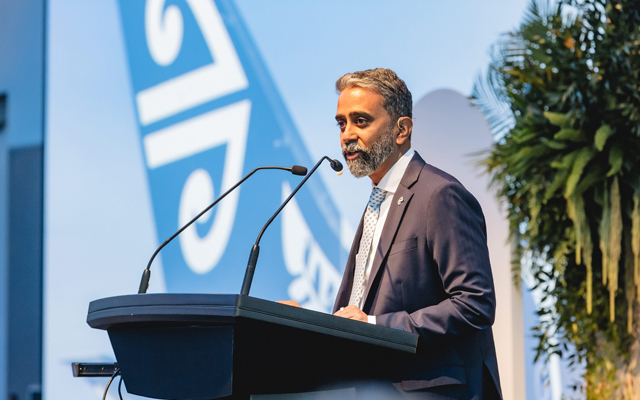

 Here’s wishing all our Buddhist readers a happy Vesak Day!