Adding another brand to its portfolio of more than 40 brands, Accor has introduced the Handwritten Collection, which will plug its midscale gap.
Handwritten Collection joins the luxury Emblems Collection, which Accor launched in November 2021 to complement its upscale MGallery Collection.

The chain said it has secured 12 signings globally, among them three hotels in Asia-Pacific that will open in the next two months as part of the collection, namely, Hotel Shanghai Sheshan Oriental, Wonil Hotel Perth and Hotel Morris Sydney.
Accor expects Handwritten to reach more than 250 hotels by 2030. It said it has over 110 leads globally totalling more than 11,500 rooms.
Handwritten targets franchising and conversions, a high-growth area as it enables owners to attach a brand and chain distribution to assets quickly and with little capital expenditure. Covid-19 has only increased the popularity of collections due to this.
Accor’s global chief development officer, premium, midscale, economy, Camil Yazbeck, said at a media launch on January 19 that there were three times more signings for collections than for classic brands over the last two years.
“Collections will grow a lot more in the future,” he said, adding that 70 per cent of independent hotels worldwide are unbranded. They want to retain their identity and personality but also need the strength of distribution afforded by chains.
As its name suggests, the brand’s emphasis is on providing personal touches, quirkiness and authenticity – just like a handwritten note.
Accor promises that Handwritten hotels will be so distinct that “it’s as if each local hotelier were inviting guests into their charming and stylish homes”.
Alex Schellenberger, Accor’s chief marketing officer, premium, midscale, economy brands, said: “The hotels we will feature in Handwritten Collection are those sought out by travellers who appreciate heartwarming travel experiences and a twist on traditional hospitality, as well as by hoteliers who cherish the unique personality of their properties while desiring the benefits that come with a leading global partner.”
Handwritten has been in the works for more than a year.
Accor’s move into soft brands started with MGallery in 2008. It was not until November 2021, a gap of 13 years, that it launched Emblems, and now Handwritten, joining all hotel chains in the race to sign up more independent hotels for management and/or franchise fees.


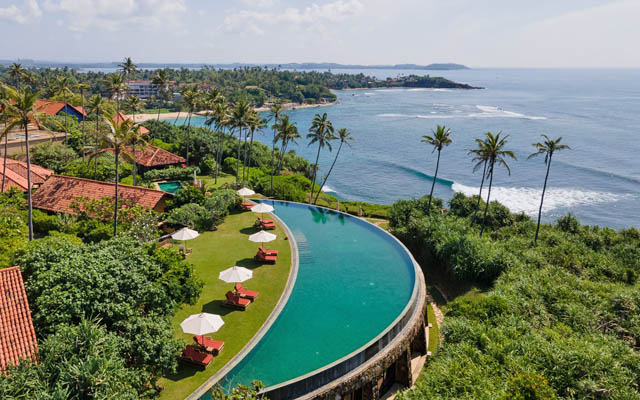
Despite tourism challenges, two Sri Lankan hotel players have remained firm in their efforts to uplift local communities as they rebuild their business.
Homegrown Teardrop Hotels, which has seven hotels across the country, maintains at least nine community projects, according to Manoj Devaraj, group head – sales and marketing.
Each hotel has an adopted charity organisation, while the head office supports two others – Teardrop Care Centre for Children with Disabilities, where the company is the main sponsor for Volunteers to Assist Children with Disabilities’ Welimada centre, scheduled to open this year; and a collaboration with the Tea Leaf Trust, where the company provides employment opportunities for impoverished young people raised on tea estates as well as organises field trips and workshops to expose these youths to personal growth opportunities in the tourism industry.
The team at Fort Bazaar, a hotel set within the historic port city of Galle, supports Sambodiya Home with regular infrastructural refurbishment and maintenance.
Recalling the progress of the hotel’s work with Sambodiya Home, Devaraj said efforts initially were not structured. It took a partnership with Travelife in 2020 to realise that a guided approach was needed for work to be meaningful.
“Travelife also led us to scrutinise our use of resources and cut down on imported items,” added Devaraj. As a result, Teardrop Hotels has improved the conditions of its four fruit and vegetable gardens across the country so that more produce could be harvested for use in hotel kitchens. Today, 30 per cent of its fruit and vegetable supplies are from these gardens.
Seafood, meats and other ingredients are also obtained from local producers “as much as possible”.
Close to 85 per cent of ingredients used in Teardrop Hotels kitchens are now locally sourced – up from about 60 per cent pre-pandemic.
“We have even looked at how suppliers work with us,” he added. To encourage local producers to deliver orders more sustainably, the company supplied reusable, stackable crates.
“The pandemic and import disruptions made us realise that relying on local producers is more reliable, offers greater value, and enables us to support our own people,” Devaraj said.
The slow return of tourism business has not dampened the company’s community commitment. Devaraj said: “Some of them were initiated during the pandemic, and we continue to do whatever we can with the manpower and resources we currently have.”
Over at Shangri-La’s Hambantota Golf Resort & Spa, efforts have been ongoing the past three months to raise the digital literacy of the teachers at a local village school. The effort is a long-term investment to build a more tech-savvy pool of young people that the hotel and other businesses could eventually hire.
General manager Refhan Razeen told TTG Asia: “Tourism will return to Sri Lanka, and we need to be prepared for that. One way is to work on local human resources.”
Next on Razeen’s to-do list is the establishment of a hotel school in Hambantota, “which will give locals a chance for employment at both Shangri-La hotels here and in Colombo”.
He said the “plans are drawn up” and awaiting approval from the top.
Besides investing in education, the hotel will soon launch the Green Passport, a hotel-wide sustainability programme with a goal of 15 Rs – Respect, Rethink, Responsible, Resource, Restore, Reduce, Reuse, Repair, Reclaim, Replace, Refill, Refocus, Recycle, Refuse and Reward.
Fleshing out the objectives of some of the Rs, he said Rethink would involve reviewing daily practices towards a sustainable future, while Restore would mean fixing damaged items so that they could continue to be used and not simply thrown away.
Razeen acknowledged that the Green Passport is “an ambitious project”, but it provides a clear structure for all staff to follow through on their sustainable journey.
A green champion will be appointed to lead topical efforts, such as water conservation, and come up with an action plan to bring ideas to fruition.
Razeen is hopeful that achievements could be used as case studies for other Shangri-La hotels as well as for local university students specialising in sustainability.
To further support the local community, Razeen is looking to engage a village near Yala to produce and supply the hotel with vegetables.
“This community is dependent on wildlife safari, which is seasonal. By having them grow and supply food to our hotel, they can earn income during the off-season,” he explained.