 How is the airport passenger experience evolving?
The overriding trend today has been the increasing need for technology and automation, which will be paramount in the years to come across the airport passenger experience and airline industries.
This is fuelled by growing expectations of a new generation of tech-savvy travellers (both business and leisure), which has created demand for seamless and integrated travel experiences that minimise or remove traditional complications that go along with travelling.
A post-lockdown world is seeing an exponential consumer need for integrated platforms that provide and pull together all the components that allow travellers to hyper-personalise their experience and customer journey at the airport. This includes access to bundled experiences of hotel accommodation, lounge and spa, to dining and entertainment options, as well as personalised retail and e-shopping components while at the airport.
What factors are shaping these requirements and what does this mean for airports and passenger facilities?
The desire of passengers to be assured of a seamless travel experience at various touch points, and the freedom to utilise their personal time the way they would want to, are the primary drivers of these requirements.
The expectation of transit travellers – or travellers in general – is constantly evolving and Plaza Premium Group (PPG) has dedicated the last 25 years towards elevating the passenger experience into a seamless, memorable and holistic journey for our guests.
There is also an urgent need to redefine the airport hospitality journey for all passengers, and to improve the dynamic relationship with customers, not just towards First and Business Class guests, but for every person who deserves a seamless, hassle-free and convenient access to better arrival, transit or departure experiences.
How does PPG cater to transit passengers travelling with young children?
We provide families or couples with young children access to the largest collection of airport lounges, airport passenger services and airport hotels (Aerotel) as well as a myriad of F&B options.
Aerotel in Singapore, as an example, provides family-friendly facilities that include a swimming pool and culinary options (suitable for) children. These features not only keep the young ones happy and busy while waiting for their flight, but also create an opportunity for memorable bonding moments for the family while in transit or even before arriving at their destination.
How was business last year, and what are your projections for this year?PPG’s pivot amid challenging times has given us an optimistic outlook for post-lockdown recovery. Last year was a turning point for us, with recovery in key travel hubs like the US, Canada and Brazil as well as key transit hubs like Dubai, Singapore and London.
We are exceptionally glad that the Greater China region has just opened up too. We definitely see a brighter year ahead, with more travel segments beyond the usual business travellers.
During the recent Christmas and New Year peak season, we recorded over 80 per cent (of business compared against) pre-pandemic in 2019. The next few quarters are looking very optimistic too.
With our locations targeted to triple by the end of this year, as compared to 2019, we see business demand diversifying further.
From a travel demand perspective, we foresee travellers requiring a more diversified, integrated and seamless airport experience. Airport lounges, concierge services and other passenger services would be expected in one single journey.
Travellers are more particular now and desire a more memorable journey. We certainly see airport-as-a-destination becoming more common, which is important to note for airport and airport experience design and development in the coming years.
PPG has been implementing a diversification strategy, product-wise and region-wise. For example, we are rapidly expanding in the US, Latin America, and Africa, as we see huge business opportunities for airport hospitality services in these emerging markets. In addition, from an alliance and partnership perspective, we plan to further strengthen our business offerings across our network, with a goal to transfer our know-how and form a cross-functional expert network to maximise our value to our strategic partners.
We also launched the “Smart Traveller” global membership programme as a reflection of PPG’s vision – we wish to offer something truly meaningful, rewarding and privileged, and create a platform to unite the travel community and have them enjoy rewards, benefits and memorable experiences through access to our lounges, hotels, dining concepts and other airport services.
How many airport lounges does the company manage now?
To date, PPG operates and manages over 250 lounges around the world and we expect to expand our airport hospitality footprint further.
What new innovations can we expect to see in the near future?
We believe that the key to seamless and integrated passenger journey lies in leveraging technology, combined with the art of hospitality and human engagement, to provide seamless experiences for our guests, and reshape the future of travel.
In response to this need, we recently collaborated with Tata Consulting System to develop an end-to-end digital platform to improve the customer experience and journey. This first-of-its-kind Travel Experience Ecosystem Platform connects the different nodes that are integral to the customer experience in the airport, encompassing the reservation experience, sales and marketing, customer engagement, back-of-the-house command and control. The platform integrates into an omni-channel B2B partner ecosystem and enables a hyper-personalised product and service bundling for the end users.
As a traveller, which is your favourite airport in Asia-Pacific for long layovers?
Hong Kong International Airport (HKIA) holds a special place in my heart. Being the world’s premier aviation hub that connects Asia to other parts of the world, HKIA’s high efficiency, seamless terminal experience, proximity to the city, and world-class hospitality services provide an overall airport experience that is beyond comparison. It also has a great variety of F&B options and one of the best duty-free shops. With the current airport expansion plan, it is set to become a multi-faceted destination on its own.


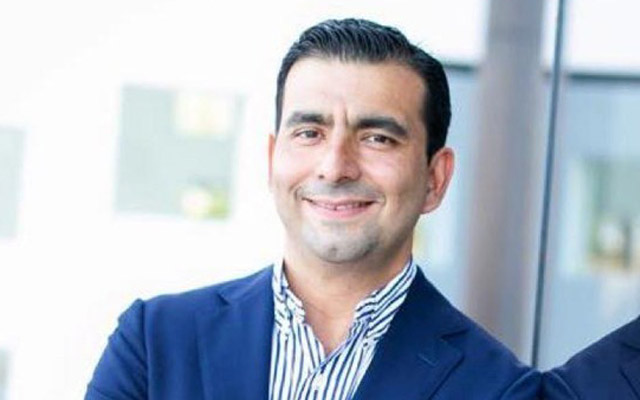
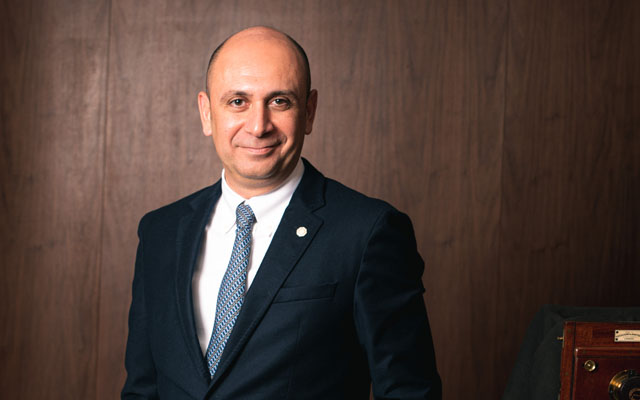
 Originally from Mexico, he held leadership roles at high-profile resorts in the Americas, Middle East and Asia-Pacific.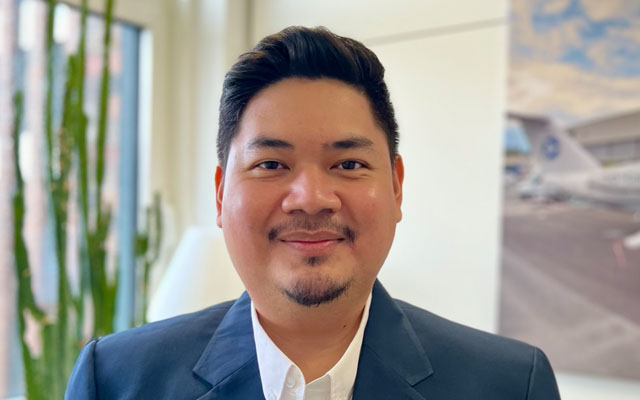
 He has a broad background in tourism and his past experience includes positions at Legend Hotels International, Philippine Airlines and an online travel agency.