 How did the idea for Song Saa Private Island come about and what were your priorities?
When I first visited the Koh Rong archipelago in 2006, the twin islands were in a state of decline. The waters were over-fished, the forest on one of the two islands had been cut down, the land was covered in rubbish and the reef system surrounding the islands were marred with litter and black sludge from fishing boats.
There was immediately a deep sense of commitment to start picking up the rubbish and work with nearby communities to regenerate the environmental ecosystems. With overwhelming support from communities, we set up Cambodia’s first marine protected area. Within the first 18 months, we saw fish stocks start to come back, with regular sightings of baby barracudas, seahorses and spotted sting rays.
We were able to formalise Cambodia’s first protected marine reserve, Koh Ouen Marine Reserve, in 2007. We were then granted a lease over the twin islands and surrounding reef system with the commitment to invest and protect. In 2012, we built on our conservation efforts to develop Song Saa Private Island resort. In 2013, we launched Song Saa Foundation to continue the extensive conservation efforts and community development initiatives, while promoting responsible tourism.
How important is sustainability in tourism?
The dictionary definition is “fulfilling the needs of current generations without compromising the needs of future generations, while ensuring a balance between economic growth, environmental care and social well-being”. However, in tourism, we are sadly way past this. We are in a state of crisis in terms of any kind of global balance. As an industry, we need to be striving for positive impact in and around the areas where we are travelling to, or where our properties are based.
While I truly believe tourism can be a powerful force for good, there needs to be a seismic shift in the industry’s mindset to become collectively aware of, and therefore accountable for, the invisible burden of tourism. Not just the untold impact on the environment, but also on local communities – their heritage and culture. As hoteliers and developers, we need to be working with local governments and ask how we can support them.
How do you embrace regenerative travel?
Regenerative travel is more than just selecting a property that is protecting the natural environment and banning single-use plastic. To be a regenerative traveller, it is equally important to look at the property’s relationship to its surroundings and communities. However, we also need to look beyond the walls of the hotel and look at where this property exists within its community and how travellers should show up in these communities when exploring. Whether it’s an ancient temple, pagoda or local restaurant, how we dress and interact is important to help preserve local culture and its heritage.
How do you involve local communities in your projects?
I’ve always seen our role to serve the communities in which we work and live. Our commitment to ensuring the well-being of the Song Saa team and surrounding community is equal to that of our guests.
For example, Song Saa Foundation strives to serve the community through a range of initiatives, including medical missions, environmental educational programmes and organic farming support. Some projects are designed for the local community as the end user, such as our Library of Hope, a partnership with Room to Read to increase literacy rates of children in the archipelago.
Other projects are designed to include the local community in the process, such as our Solid Waste Management project, a collaborative effort with the local community to design a management system, including educational workshops, a waste management station and a waste collection team.
What is your latest project, The Song Saa Reserve in Siem Reap?
We are currently developing Song Saa Reserve, an extensive 200-plus hectare mixed-use eco-park, setting a foundation for hotels, villas, conservation initiatives and hospitality training centres – all powered by renewable energy. The project entails a strong commitment to the regeneration, restoration and resilience of the project site and its surrounds.
This includes a commitment to rewilding indigenous fauna and flora, the restoration of rainforest and wetland communities, the conservation of Khmer heritage and the sustained improvement of local livelihoods. This is all while partnering with the world’s best developers, hotel companies, designers, technologists, conservationists and thought leaders to create a pioneering destination for residents and tourists to immerse in Cambodia’s cultural heritage, natural beauty and personal charm.





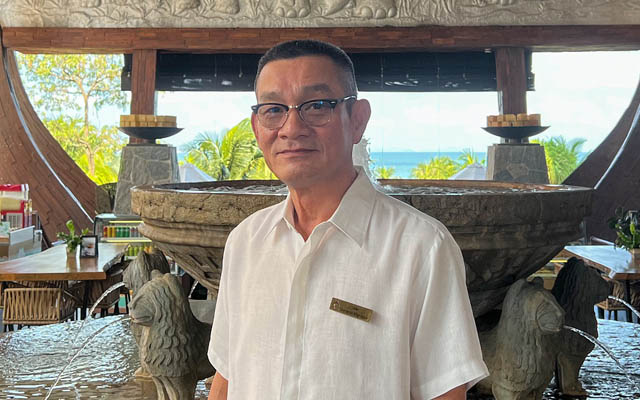
 Prior to transferring to Centara Grand Mirage Beach Resort Pattaya, he was area general manager overseeing four resorts – Centra by Centara Maris Resort Jomtien, Centara Q Resort Rayong, Centara Chaan Talay Resort & Villas Trat, and Centara Koh Chang Tropicana Resort.
 Prior to joining The Hotel Britomart, Swan was client value manager with Corporate Travel Management in Auckland, New Zealand.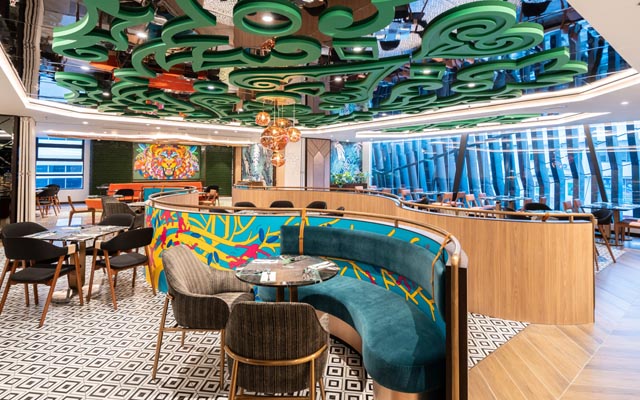











New Zealand’s national carrier, Air New Zealand, made several key announcements on May 10 at TRENZ 2023, which includes a significant investment in its fleet, expansion in capacity, and future marketing plans, as well as revealed more details about Skynest, the world’s first sleep pods in the sky.
The airline’s NZ$3.5 billion (US$2.2 billion) investment includes the purchase of eight new 787-9 Dreamliners and five Airbus A320neo that will be deployed on its Tasman and Pacific Island services. The investment also includes interior refurbishment of 14 Boeing 787 aircraft and installation of new Business Premier Luxe product. Work is expected to start next year.
It is also in final negotiations to lease another Boeing 777-300ER, which could add 3,000 more seats per week to the airline’s international network. This would bring the total 777-300 fleet to eight.
“Across our international network, capacity is back to about 91 per cent of pre-Covid (levels) and bookings are steady. We’re now at 30 routes, having returned to Bali in March,” Greg Foran, chief executive, Air New Zealand, said during a media briefing.
Within Asia, Air New Zealand’s capacity is at 117 per cent of pre-Covid levels, with Singapore a key hub, particularly for connections to India and Europe. Demand out of China is “rebuilding slowly but surely”, noted Foran, adding that Air China, an alliance partner, restarted its Beijing-Auckland route earlier this month.
Domestic flights are back to pre-Covid levels, where 15,000 seats were added every week over summer. Regional flights out of Christchurch and Auckland have also increased.
“We know it’s not just about bringing overseas visitors to New Zealand but also giving them plenty of options to explore around Aotearoa New Zealand,” Foran pointed out.
During the media briefing, the airline revealed more details about Skynest, where a prototype was available onsite at TRENZ for industry stakeholders to explore.
Located between Premium Economy and Economy, the Skynest is a six-pod configured sleep zone that will offer four-hour sessions for economy passengers to stretch out and lie down. Each passenger will be limited to one session, and each pod will feature a full-size pillow, sheets and blanket, ear plugs, a separate reading light, USB outlet, ventilation outlet, seatbelt, and lighting designed for rest.
The bedding will be changed between each session, and a 30-minute transition time will be allowed for this. The lights will gently come on at the end of each session, and crew will politely wake any passengers who sleep through this.
“We’re still working through the exact details of how the booking process will work, and we have yet to determine the price. At this stage, we are looking at around NZ$400 to NZ$500 for the four-hour period,” shared Air New Zealand’s chief customer and sales officer, Leanne Geraghty.
Geraghty added that the Skynest – designed and to be installed in Aotearoa – will be made available from September 2024 on Air New Zealand’s ultra-longhaul flights, starting with the Auckland-New York and Auckland-Chicago routes.
Air New Zealand will also be investing NZ$30 million in marketing campaigns this financial year in key markets, and continue to rebuild its offshore sales and marketing teams.
Foran added: “Our relationship with Tourism New Zealand is one of our most important marketing partnerships. Teaming up makes every dollar go further to raise destination awareness and it was great to re-sign our MoU last year to promote New Zealand offshore.”