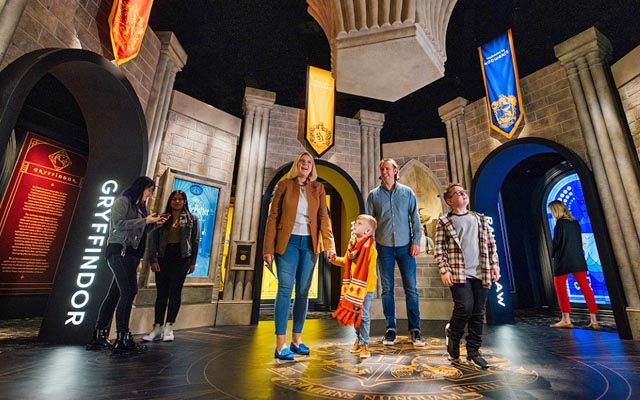
Harry Potter: The Exhibition will premiere at The Londoner Macao this December and will take visitors of all ages on a magical journey through the entire Wizarding World when it opens.
Celebrating some of the most iconic moments from the books and films of Harry Potter and Fantastic Beasts, visitors can practice their Quidditch skills, brew a potion, pot a Mandrake, earn points for their Hogwarts house and more, all while learning behind-the-scenes filmmaking magic.
Harry Potter: The Exhibition will open at The Londoner Macao this December
Upon entry, everyone is given an exhibition RFID wristband to enhance their personalised experience, capturing their interactions as they explore each gallery, then delivering their experiences to their visitor profile.
Exhibition Gallery will comprise the Page to Screen Gallery, Hogwarts Castle Gallery, The Great Hall Gallery, Hogwarts Houses Gallery, Hogwarts Classrooms, Hagrid’s Hut, and The Forbidden Forest.
Harry Potter: The Exhibition merchandise will also be available onsite, featuring a range of products such as apparel, jewellery, and edible treats, as well as merchandise not available at any other Wizarding World experience.
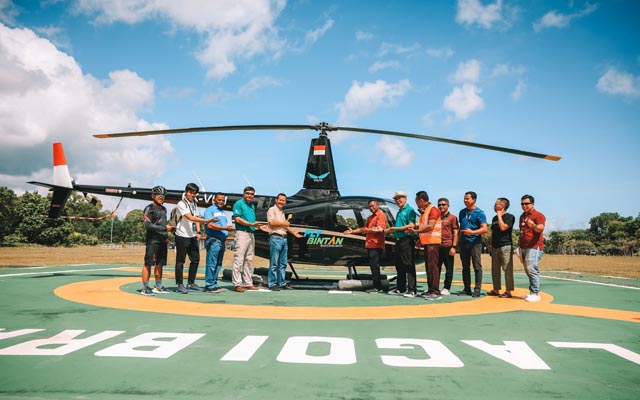
Bintan Resort has launched Fly Bintan, a new tourist attraction for visitors featuring helicopter rides around Lagoi and other areas of Bintan.
Flying on the five-seater Robinson 66, the helicopter offers passengers air-conditioned comfort on its three tours.
Fly Bintan features helicopter rides around Lagoi and other areas of Bintan
The Crystal Beach Tour is a 12-minute flight that costs 7,600,000 rupiah (US$507) per flight and flies over the Lagoi area of Bintan. The 30-minute Bintan Historical Tour soars over five historical sights and costs 17,500,000 rupiah, while the Paradise Island Tour brings visitors on a 60-minute tour to sights like Fish Head Island, Nikoi Island and Berakit Island, for 35,000,000 rupiah.
Fly Bintan operates daily during daylight hours only, and only eligible for passengers six years old and up.
Concerned about the poor maintenance and service standards of the hospitality industry, the Ministry of Tourism, Arts and Culture Malaysia called on hotels to upgrade their assets, raise the assessment level of environmental cleanliness and sanitation, as well as to improve their service quality.
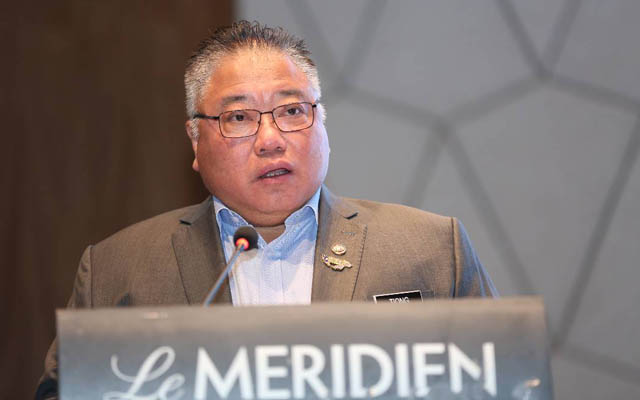
Its minister, Tiong King Siong, shared that from January to April, the ministry had received many more hotel-related complaints from tourists, as compared to only three complaints last year, all related to hotel service standards.
Tiong shared that the ministry had received many complaints from tourists regarding hotel service standards in 1Q2023
Complaints received included guests being disillusioned by advertising which do not reflect the reality of the premises, poor maintenance of the hotel properties, and poor services rendered by hotel staff.
Tiong said this in his speech to hoteliers prior to launching the inaugural Hospitality Leadership Conference organised by Malaysian Association of Hotels on May 25.
He shared that he will propose to prime minister Anwar Ibrahim, who is also the finance minister, to inject funds into commercial banks so that hoteliers can get low interest loans to carry out their hotel upgrades.
To address the issue of hoteliers being unable to secure loans, he has also urged commercial banks to relax their loan terms.
Tiong stressed that the ministry was taking all complaints related to the hospitality industry seriously and stated that the ministry will even go as far as to downgrade the hotel rating for hotels that fail to meet expectations.
Editor’s note: In the original post, the headline stated the upgrading was mandatory. This is not the case – hotels in Malaysia are highly recommended by the government to undergo upgrading. The headline has been corrected.
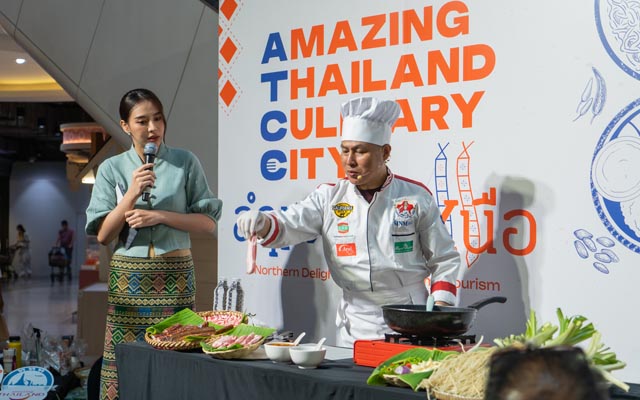
The Tourism Authority of Thailand (TAT) has launched the Amazing Thailand Culinary City project to further develop and promote Thailand as a world-class gastronomy tourism destination.
Held alongside the Thailand Travel Mart Plus (TTM+) 2023 from May 31 to June 2 at the Queen Sirikit National Convention Center in Bangkok, the project aims to offer innovations and experiences to spur development under a creative economy in line with the Thai government ’s BCG (Bio-Circular-Green) Economy Model.
The Amazing Thailand Culinary City project will be held alongside the Thailand Travel Mart Plus (TTM+) 2023
Conceptualised under the BCG Economy Model, the project will encompass the AGFEC components – Agriculture, Gastronomy, Food Safety, Experience, and Creative Entrepreneur.
“Activities are designed to stimulate a circular economy and underline the country’s vision for national development to achieve prosperity in terms of economic, social and environmental sustainability,” said Chattan Kunjara Na Ayudhya, deputy governor, marketing communications, TAT.
Bringing together entrepreneurs in the food tourism sector to create business matching opportunities, the project will see the participation of 30 Gastronomy Tourism sellers, under the categories of City Dining Experience, Farm To Table, and Culinary Cooking Activity.
In addition, visitors will be able to try food from the various participating restaurants, and even try their hand at making Thai desserts and get a traditional Thai massage. There will also be an exhibition on Thai dishes such as Tom Yam Kung, Phat Thai and Green Curry, and lesser known ‘hidden dishes’ from across Thailand.
During the event, international food blogger Mark Wiens and Thitid ‘Ton’ Tassanakajohn, chef of Bangkok restaurant Le Du, will lead a panel discussion on the topic of food to stimulate the tourism economy, readiness for gastronomy tourism expansion, and relating trends.
Under the project’s B2C strategy 4 Locations: 4 Styles, culinary events are scheduled to be held across Thailand’s four regions in May and June, including Chiang Mai (North) from May 19 to 21; Khon Kaen (North-east) from June 9 to 11; Phuket (South) from June 16 to 18; and Chanthaburi (East) from June 23 to 25.
Each of these four events will feature food entrepreneurs, other entrepreneurs and local operators from across the respective region, and will include workshops on preparing local snacks from the respective region, cooking shows, an exhibition on the potential and distinctiveness of Thai cuisine, and local food to enjoy.
Trip.com Group and Cambodia Angkor Air have signed a Memorandum of Understanding on May 24 to collaborate on the construction of a smart airport, develop tourism talent training programmes, and further promote Cambodia as a key global destination.
Cambodia Angkor Air will leverage on Trip.com Group’s global user network and leading product capacity to increase its global market reach, while Trip.com Group will improve Angkor International Airport’s digital and intelligent services, and help the airport become an essential smart airport in the region.
Both companies will work together to get the new Angkor International Airport in Cambodia ready for its opening in October
Both parties will further embark on marketing campaigns and cooperation in hotel development, travel visa services, and tourism talent training programmes in both countries.
Tekreth Samrach, minister attached to the prime minister, and chairman of Cambodia Angkor Air, said: “We hope to grasp the opportunity of global tourism revival, and closely work with Trip.com Group to carry out comprehensive cooperation, from constructing smart airports to enhancing our services for more travellers”.
“We’re excited to collaborate with Cambodia Angkor Air to support Cambodia in achieving its full global market potential and linking it with the international tourism industry,” shared Xing Xiong, COO of Trip.com Group.
The new Angkor International Airport in Cambodia will be put into operation later in October, with projected passenger numbers of seven million people per year, and expected to increase to 10 million people per year by 2030.
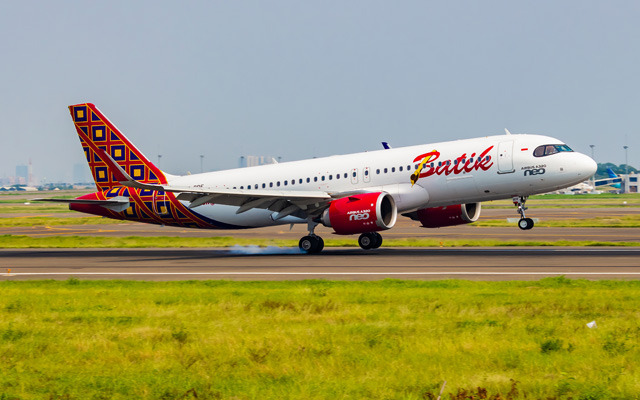
JAKARTA, INDONESIA - OCTOBER 6, 2020 : A Batik Air A320-200 arriving at Soekarno Hatta Intl Airport in Jakarta, Indonesia.
Batik Air will launch six weekly flights between Kuala Lumpur and Auckland, New Zealand from August 24.
Operating via Perth, Australia in both directions, the flights will depart Kuala Lumpur at 10.55 and arrive in Auckland at 04.55 the next morning, while return flights will depart Auckland at 07.00 and arrive in Kuala Lumpur at 15.30.
Batik Air will fly six times a week between Kuala Lumpur and Auckland
Due to daylight saving time changes in Auckland from September 24, the flights will arrive and depart one hour later.
teamLab SuperNature Macao, a permanent interactive art experience at The Venetian Macao’s Cotai Expo, has officially opened on May 26, marking the launch of the landmark project presented by The Venetian Macao and Tokyo-based international art collective teamLab.
Located at The Venetian Macao’s Cotai Expo, teamLab SuperNature Macao is an extremely complex, three-dimensional interactive space with varying elevations that spans over 5,000m² and is comprised of eight-metre-tall works by art collective teamLab.
Visitor can draw fish that come to life at Sketch Ocean (Photo: teamLab SuperNature Macao)
Visitors can change the nature of the works in real time, directly affecting artwork spaces through synergistic interaction that can never reoccur or be replicated – making no two visits the same.
From June 1, three new artwork spaces – Floating Flower Garden: Flowers and I are of the Same Root, the Garden and I are One, and Massless Clouds Between Sculpture and Life – and En Tea House, will be opened to elevate the visitor experience.
In addition, the Light Sculpture series will reveal its major renewal, and Autonomous Abstraction, Continuous Phenomena from the Universe to the Self will replace the existing Life is the Light that Resonates in the Dark.
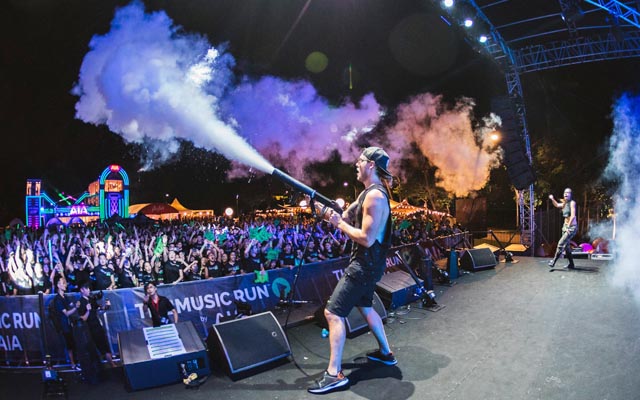
The Music Run will make a much-anticipated return to Singapore after five years, in collaboration with the Professional Triathletes Organisation (PTO) Asian Open weekend on August 19 to 20.
Held at the Marina Bay area, The Music Run will feature its signature five-kilometre fun run as one of the events staged alongside the PTO Tour’s women’s and men’s race events.
Held at the Marina Bay area, The Music Run returns to Singapore after five years
Adding to the open-to-all five-kilometre fun run format will be a pumping soundtrack featuring everyone’s favourite hits to ensure that everyone has a place at the PTO Asian Open weekend.
With a strong following across Asia, The Music Run has previously staged events in Singapore, Thailand, Indonesia, the Philippines, China, Taiwan, and most recently, Malaysia’s Kuala Lumpur.
Registration for The Music Run will open officially on June 1.
Four Seasons Explorer is setting sail to one of the world’s last remaining frontiers beginning later this year. Hidden in a remote part of the Pacific is Palau, home to more than 340 emerald islands and a variety of marine life.
The island also keeps the 4,000-year-old Palauan culture alive, sustained by the local knowledge of 20,000 traditionally-minded people.
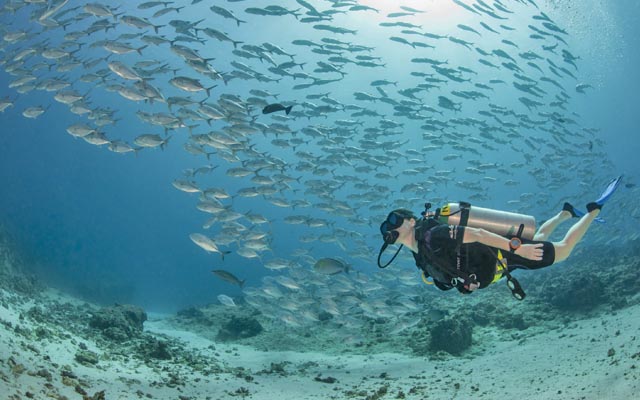
Four Seasons Explorer brings visitors to Palau, a haven for divers and snorkelers
Referred to as one of the Seven Underwater Wonders of the World, Palau provides a haven for divers and snorkelers, as well as opportunities for cultural immersions ranging from insights into the rich Palauan dance tradition and exploration of WWII sites to visiting the Badrulchau Stone Monoliths, and marvelling at the cave paintings of Ulong Island, and more.
Reservations for the Palau experience with Four Seasons Explorer in late 2023 are now being confirmed. Meals are included onboard the vessel.
Over May 19 to 21, eyes of the world will be on Hiroshima as it hosts the G7 Summit, and the Hiroshima Convention & Visitors Bureau (HCVB) is hoping the exposure of the global event will inspire an uptick in inbound travellers to the city.
Indeed, as early as September 2022, at international travel event Tourism Expo Japan, representatives of HCVB commented that “Hiroshima, as a cosmopolitan city, welcomes the G7 Hiroshima Summit and looks forward to welcoming (international visitors)”.
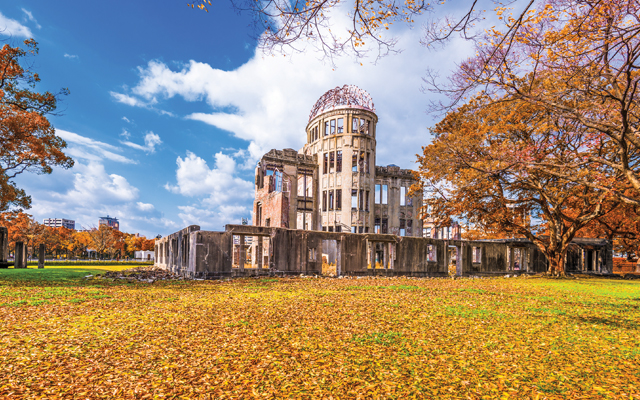
Hiroshima’s Peace Memorial Park – or Genbaku Dome – is a critical part of the city’s history
The unveiling of the famed “floating” otorii (grand gate) of Itsukushima Shrine on Hiroshima’s nearby island of Miyajima in late 2022, after more than three years of painstaking restoration work, is expected to be a major draw. At 16.6m tall and weighing 60 tonnes, the gate is a symbol of Hiroshima, attracting 4.7 million visitors in 2019, according to Miyajima Tourist Association.
Also adding to the prefecture’s appeal is the increased number and range of hotels available. These include the luxury Japanese- and Western-style Kyukamura Taishakukyo, which opened in February 2023, as well as the popular Fav Hotel and international brand Hilton Hiroshima, both of which launched in autumn 2022.
The biggest change in Hiroshima since the outset of the pandemic, though, is in adventure travel, defined by the Japan Adventure Tourism Organisation (JATO) as “trips that consist of two or more of the three elements of activity, nature and cultural experience”.
In 2023, more arrivals to the prefecture are expected to take part in adventure tourism than ever before, thanks to recent local efforts, buoyed by national support. In autumn 2022, the Japanese government named adventure travel as one of its three focus areas – along with sustainable travel and luxury travel – to entice travellers back to Japan. Officials are banking on post-lockdown visitors seeking out trips that are slower, longer and more connected to nature or offer unique outdoor and cultural activities.
And the travel trade in Hiroshima has been busy preparing for the arrival of these travellers.
Takeo Tamamoto, director of the MICE promotion department at HCVB, said there are many new tours and activities that cater to travellers who want to enjoy the local area’s culture and scenery.
A popular option is an early morning hike up Mount Futaba, according to Taeko Abe, supervisor of the creative tourism department at HCVB. After setting off from the city centre, participants call at Hiroshima Toshogu, a shrine dedicated to the god of peace and where residents fled in search of water following the 1945 atomic bombing. On reaching the summit, a bento breakfast made with local, sustainable ingredients is served and enjoyed against the backdrop of the city, Seto Inland Sea and Miyajima.
Hiroshima Castle is a reconstruction of the former 1589 landmark
Food and drink activities are also booming. Tokyo-based company ByFood offers guided tours around Hiroshima by day or night. Guests get to try the region’s unique and renowned dishes, such as okonomiyaki pancakes and oysters. Hiroshima produces more than 60 per cent of Japan’s oysters, according to the Japan National Tourism Organization.
Leading local alcohol maker Sakurao Brewery and Distillery also recently launched a tour and tasting package to showcase its whiskey and craft gin.
And, as Hiroshima is known locally as a City of Water, thanks to the six rivers that flow through it, the past few years have seen growth in water-based activities, too.
Hiroshima-based Magic Island offers SUP tours that pass by the city’s two world heritage sites: Itsukushima Shrine and Hiroshima Peace Memorial Hall.
Companies are also maximising Hiroshima’s advantageous position beside the Seto Inland Sea and its many islands.
Tokyo-based company Heartland Japan’s tours include walking part of the Tobishima Kaido, a 100km route connecting Kawashiri, Kure and Shimo-Kamagari via a series of bridges, and an island homestay incorporating cycling and sailing on Etajima.
Local company Setouchi Reflection Trip, meanwhile, offers a range of airborne activities including a 50-minute seaplane tour over the area’s coasts and islands. It is also possible to take an eight-minute or 17-minute helicopter ride to view the city’s famous sites such as Hiroshima Castle and the Peace Memorial.
Indeed, “momentum for adventure tourism promotion is increasing in Hiroshima and the surrounding area”, according to JATO. June 2022 saw the establishment of the Hiroshima Adventure Tourism Association (HATA), designed to revitalise the prefecture’s tourism industry “through promotion and awareness of adventure tourism”.
HATA offers a five-day adventure tour under the theme of Hiroshima’s story woven through time, which aims to tell the story of the city’s “origin, reconstruction, passion and future” via cycling, river trekking, hiking and sea kayaking.
“Hiroshima has many places and activities that have the potential to change lives and the world,” said HATA chairman Toshiro Yoshihara, noting that the association aims to make “physically and mentally adventurous products” for visitors to enjoy and for the revitalisation of the area.
In February 2023, AdventureConnect, a national event organised by JATO, Adventure Travel Trade Association and HATA, was held in Hiroshima for the first time, marking the prefecture’s continued rise in Japan’s adventure tourism sector.