TTG Asia
Asia/Singapore Tuesday, 23rd December 2025
Page 55

Malaysia plays up lesser-known destinations

0

As more international travellers seek off-the-beaten-path destinations, tourism specialists in Malaysia are riding the trend by promoting lesser-known locations for authentic and enriching experiences.

Chairman of the Consortium of Inbound Tourism Alliance, Uzaidi Udanis, is helping to bridge the gap between rural product owners and local inbound tour operators. Through fam tours and in-person engagements, tour operators are gaining a deeper understanding of tourism products in Lenggong Valley and the outskirts of Selangor and Kuala Lumpur, enabling them to design new and compelling itineraries for the international market.

Malaysia promotes off-the-beaten-path destinations, offering cultural, wildlife, and authentic experiences for international travellers

Uzaidi told TTG Asia: “Through our workshop in Kuala Lumpur, we also emphasise the importance of having a B2C digital presence, as today’s travel landscape is increasingly driven by FITs who do their own research online and make decisions based on what they see on social media, travel blogs, and review platforms.

“We encourage participants to share compelling stories with attractive photographs, and to market them through renowned OTAs such as Viator, Get Your Guide, Klook and other B2C travel platforms. These channels not only boost visibility but also provide a seamless booking experience with instant confirmations, which is what today’s tech-savvy travellers expect.”

The Consortium of Inbound Tourism Alliance also encourages city hotels to showcase handicrafts made by rural communities across Malaysia, which would support local artisans and inspire foreign guests to explore the origin of these crafts and consider visiting the rural destinations where they are produced.

Irshad Mobarak, founder of JungleWalla Nature & Wildlife Tours, shared that demand for wildlife photography is experiencing steady growth, driven by travellers seeking purposeful and nature-focused experiences.

He noted that Malaysia’s rich biodiversity, ranging from rare bird species to elusive rainforest mammals, are attracting both amateur and professional photographers from overseas.

The company’s new primate-watching tours, conducted in Perlis State Park, Panti Forest, and Borneo, have earned “encouraging” responses from wildlife enthusiasts and photographers.

Jessica Koh, director of The Traveller Malaysia, said cultural immersion experiences are in demand post-lockdown. The company offers rural experiences in destinations within Peninsular Malaysia and East Malaysia. Guests are encouraged to purchase local handicrafts, such as woven products, wood carvings, and beadwork.

“Buying local not only gives travellers a meaningful souvenir to take home, but it also provides a much-needed source of income for the villagers and helps preserve traditional craftsmanship,” Koh added.

Agoda introduces AI bot to answer hotel questions in real time

0

Agoda has launched an AI chatbot designed to provide instant answers to travellers’ hotel-specific questions. The Property AMA (Ask Me Anything) Bot aims to help users make quicker, more confident booking decisions by delivering precise information in seconds.

Since its soft launch, the Property AMA Bot has gained popularity, answering over 30,000 hotel-related questions per day. Millions of travellers visit Agoda each day to explore accommodation options, compare amenities, and find suitable stays. While property pages provide detailed information, answers to simple questions such as “Is there parking available?” or “What is the quality of the breakfast?” can sometimes be difficult to locate. By connecting Agoda’s systems with the advanced language model ChatGPT, enriched with live property data, the Property AMA Bot provides up-to-date responses.

The Property AMA Bot provides instant responses to travellers’ hotel queries across Agoda’s platforms

Previously, Agoda users could contact property owners directly via a messaging system, but response rates and times varied. The Property AMA Bot offers real-time, reliable answers to enhance user confidence and is available on any property page across all Agoda platforms, including desktop, mobile web, and app. With its launch, Agoda aims to provide more responsive and user-friendly booking experiences, allowing travellers to move from browsing to booking with greater ease, supported by the company’s focus on making travel simpler, faster, and more personalised.

“Helping travellers get the answers they need, when they need them, is central to building trust in our platform and delivering even more value to customers,” said Idan Zalzberg, chief technology officer at Agoda. “The Property AMA Bot reduces uncertainty by answering questions instantly, which in turn leads to a smoother, more satisfying booking experience.”

Fairfield by Marriott rolls out upgraded hotels across China

0

Fairfield by Marriott has launched an upgraded product in China, including a new Chinese name under the Marriott brand and updated design and guest services – the changes aim to meet the needs of modern travellers with improved design, functionality, and service.

The brand began at Fairfield Farm and Manor House in the Blue Ridge Mountains, where JW and Alice Marriott practised simple living and hospitality. The upgraded hotels reflect this heritage through design inspired by the Blue Ridge Mountains and manor living. The redesign focuses on three areas: The Fairfield Living Room, The Fairfield Restaurant, and guest rooms, addressing working, sleeping, bathing, and service.

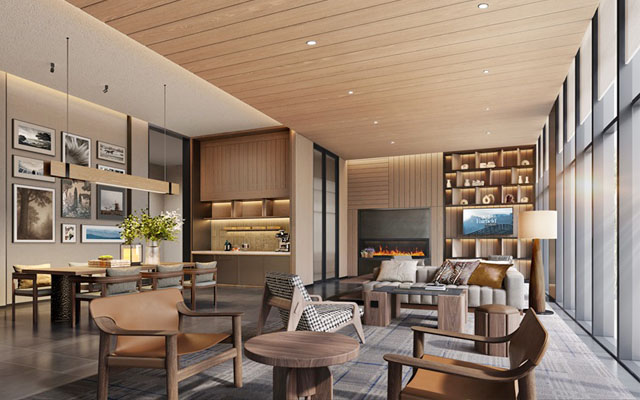
The upgraded Fairfield by Marriott hotels in China feature redesigned public areas, guest rooms, and workspaces to meet the needs of modern travellers

Public areas provide flexible spaces for work, meetings, gatherings, and retail. Wood tones are used throughout, and the front desk features a wall inspired by “a view through the window” of the Blue Ridge Mountains.

The Fairfield Living Room offers spaces for work and meetings. Private meeting rooms are available for small groups, and The Fairfield Market provides business items, snacks, and supplies.

The Fairfield Restaurant has an open kitchen layout and can expand to connect with the Living Room during busy periods.

Guestrooms have textured walls, wood-panelled TV backdrops, and artwork referencing the Blue Ridge Mountains. Furniture is arranged to support different uses. Bathrooms include glass partitions for privacy, and showers are designed for ease of use.

Rooms also provide a workspace with an ergonomic chair, desk lamp, and an optional height-adjustable desk with extended screen and wireless charging.

Guests are welcomed with an arrival experience inspired by Blue Ridge flora and a basket with local items, such as honey and regional snacks, reflecting Fairfield by Marriott’s approach to hospitality.

Gavin Yu, chief development officer, Greater China, Marriott International, said: “This product upgrade enhances the brand’s competitiveness in the select service segment, while the new Chinese name reflects Marriott’s systematic empowerment.”

Betty Tian, managing vice president for customer experience in Greater China, added that the upgrade responds to evolving travel needs and maintains the brand’s connection to simplicity and its heritage, while supporting guests’ work and travel requirements.

Hotel101 Global expands into Cambodia with two major hotel projects

0

Hotel101 Global has signed agreements to develop and operate two large hotels in Cambodia, marking its entry into the country and adding to its regional expansion drive.

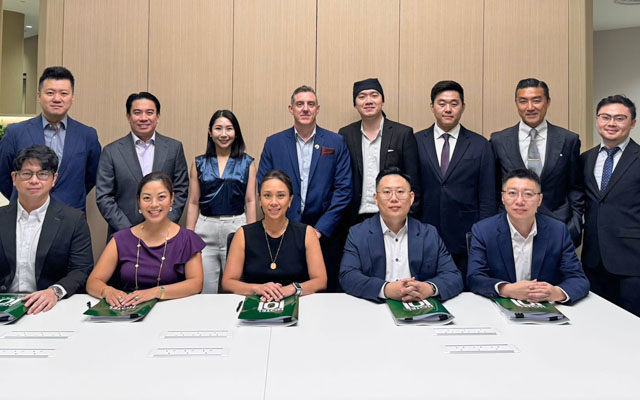
On August 20, 2025, the Singapore-headquartered subsidiary of Hotel101 Global Holdings and a unit of DoubleDragon Corporation confirmed it will partner with local developer Canopy Sands Development Co. to construct projects in Phnom Penh and Sihanoukville.

The new Phnom Penh and Sihanoukville properties are set to boost tourism and investment in Cambodia

The Phnom Penh project will be built on a 2,033m² site in the Tonlé Bassac district, close to Boeung Keng Kang, with 30 floors and about 700 rooms. The Sihanoukville project will occupy a 4,623m² site within the Bay of Lights coastal development, near the proposed international convention and exhibition centre, with about 680 rooms.

Together, the projects are expected to generate 6.3 billion pesos (US$109.55 million) in sales revenue.

Hotel101 Phnom Penh will consist of standardised 21m² units with kitchenettes and include facilities such as a swimming pool, fitness centre, dining outlets, business spaces and function rooms. The site is near Aeon Mall 1 and the Independence Monument. Hotel101 Sihanoukville will follow the same model and be located within a 934-hectare Bay of Lights development led by Canopy Sands, valued at US$16 billion. The hotel will be within five minutes of Sihanoukville Airport, the country’s third largest, and close to other branded hotels.

Cambodia reported 6.7 million international arrivals in 2024, with growth expected following the opening of Techo International Airport in Phnom Penh on September 9, 2025. Hotel101 said the new properties will add to the country’s hospitality market, which already includes global operators such as Hyatt, Rosewood, Shangri-La, Raffles, Novotel and Wyndham.

Cambodia will be the sixth market for Hotel101, following the Philippines, Japan, Spain, the US and Saudi Arabia. The two hotels are scheduled for completion by 2028 and form part of the group’s goal of 50,000 rooms in the Philippines and one million rooms worldwide across 100 countries. DoubleDragon said the expansion is expected to contribute to Cambodia’s employment and tourism growth while supporting foreign exchange inflows to the Philippines.

Trip.com debuts cultural dining experience in Shanghai

0

Trip.com Group has launched Taste of China, a dining show in Shanghai that combines regional cuisine, digital projections and live performance. The 90-minute production, staged at the Bund City Hall Plaza, features a seven-course menu representing different parts of the country.

The show is led by an animated panda chef, Cheng BaoBao, and reflects the company’s strategy to expand in culinary tourism, a sector showing rising demand among both international and domestic travellers.

Trip.com’s Taste of China presents a seven-course dining show in Shanghai led by panda chef Cheng BaoBao

The event is set in a panoramic dining theatre where food is presented alongside storytelling. Each of the seven courses is paired with tea and accompanied by performances or digital scenery. Diners are introduced to dishes such as Peking Duck with jasmine tea from the north, Sour Soup Fish with Pu’er tea from the south, and a herbal hot pot from central China. In the western region chapter, Mapo Tofu is served with wagyu beef and lobster.

The programme also incorporates cultural themes including wisdom, responsibility, benevolence, integrity, heritage, connection and innovation. These are conveyed through short stories such as fishermen in Guilin observing a seasonal ban to allow stocks to recover or a Sichuan chef using three-year-aged bean paste for Mapo Tofu. Each course is supported by live performance. Dancers in traditional hanfu costumes appear in digital garden scenes from Suzhou, a martial artist demonstrates Shaolin techniques, and an interactive tabletop game allows guests to join a Guilin fishing story. The show concludes with a Sichuan opera face-changing act.

Guests are invited to arrive early to try on traditional Chinese costumes with styling services offering hanfu, cheongsam and regional attire. A 3D screen and sets outside the venue are available for photography.

Trip.com Group data shows that culinary travel bookings rose 30 per cent year-on-year in 1H2025. Internationally, Paris, London, New York, Madrid and Milan were leading destinations, while in China, Shanghai, Beijing, Guangzhou, Chengdu and Changsha recorded strong demand. Shanghai and Beijing stand out with particularly high restaurant bookings.

The production forms part of the group’s wider culinary tourism strategy. Each course doubles as a destination guide, with QR codes on menus linking to regional travel information.

Taste of China will continue to develop with seasonal menu updates and overseas events. Reservations are available through Trip.com. Performances run from 12.00 to 14.00 and 19.00 to 21.00. Prices start from 1,000 yuan (US$137) per person. All dishes are pork and lard-free, and vegetarian options are available.

“Innovation opens new horizons for travel, inviting travellers to connect with the world’s destinations in richer and more meaningful ways,” commented James Liang, co-founder and chairman of Trip.com Group.

“Immersive new experiences like this show how personalisation, discovery, and interaction can expand the possibilities and inspiration of travel.”

Star of the Seas takes flight with astronaut godmother

0

Royal Caribbean has officially named its newest ship, Star of the Seas, in a ceremony at Port Canaveral, Florida, with astronaut and payload specialist Kellie Gerardi serving as godmother.

The event, held in the ship’s AquaTheater earlier in August, brought together crew members, executives and guests as Gerardi bestowed safekeeping on the vessel, its crew and the passengers who will sail on it in the years ahead.

Astronaut Kellie Gerardi (second from left) officially names Star of the Seas, kicking off its Caribbean voyages

The naming marked the latest milestone for Royal Caribbean’s Icon Class, following the debut of Icon of the Seas in Miami earlier this year. Star of the Seas will now begin seven-night sailings from Port Canaveral to the Eastern and Western Caribbean, including stops at the company’s private destination, Perfect Day at CocoCay in The Bahamas.

The ship features eight neighbourhoods, more than 40 dining and drinking venues, and a range of entertainment across air, ice, water and stage. Highlights include Category 6 waterpark, Crown’s Edge suspended high above the ocean, a dedicated Surfside family neighbourhood and a suspended infinity pool at sea.

With Star of the Seas now in service, Royal Caribbean continues its expansion with new destinations and beach clubs scheduled to open from 2025 through 2027.

“I’m honoured to celebrate Royal Caribbean’s new Star of the Seas in such a beautiful naming ceremony as godmother – a tradition that is close to my heart and a spirit that spans both sea and space,” said Star’s godmother Gerardi. “A vacation on Star is the perfect combination of two of my biggest passions in life, a spirit of exploration and quality time with family, and I can’t wait for this journey to begin.”

Banyan Group launches wellness programme at Garrya Mù Cang Chải

0

At the heart of Garrya Mù Cang Chải is the Awakening in the Mountains wellness programme, offering multi-day experiences with holistic practices, seasonal cuisine, and cultural activities.

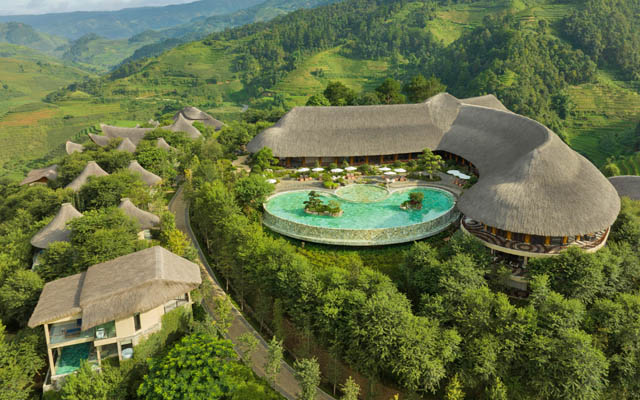
The resort, Banyan Group’s first Garrya property in Vietnam, sits 1,000 metres above sea level in Yen Bai province, with bamboo-built villas overlooking rice terraces and peaks.

Set amid northern Vietnam’s rice terraces, the resort offers wellness programmes, cultural experiences, and bamboo villas

With 110 rooms, suites and villas, Garrya Mù Cang Chải offers private wellness areas, valley-facing terraces and naturally ventilated interiors overlooking the terraced landscape.

The resort’s Awakening in the Mountains is a multi-day wellness programme combining holistic practices, seasonal cuisine, and cultural activities. It is available as a four-day-three-night package from US$1,015 and a six-day-five-night package from US$1,821.

Guests begin with morning breathwork and grounding exercises in open-air gardens, followed by sessions at the 8LEMENTS Spa Hydrotherapy Wellbeing Area, which includes thermal pools, cold plunges, experiential showers, and an infrared sauna. The programme also features aqua yoga, spinal stretching, meditation, and natural detox sessions. Outdoor spaces and guided meditations provide areas for reflection and connection with the surroundings.

Culinary offerings include plant-based dishes from seasonal, locally sourced ingredients at Refresh, the all-day dining venue, and dinners at Charcoal Grill, which uses traditional cooking techniques. Cultural activities include brocade weaving workshops, herbal craft demonstrations, village-led treks, and storytelling with local H’Mong communities.

A six-hour drive from Hanoi, Garrya Mù Cang Chải provides access to sites such as Mam Xoi Hill, Khau Pha Pass, and the Mù Cang Chải Bamboo Forest, allowing guests to experience the land, the heritage of the H’Mong people, and a slower pace of travel.

For more information, visit Garrya Mù Cang Chải.

Rosewood Luang Prabang appoints new MD

0

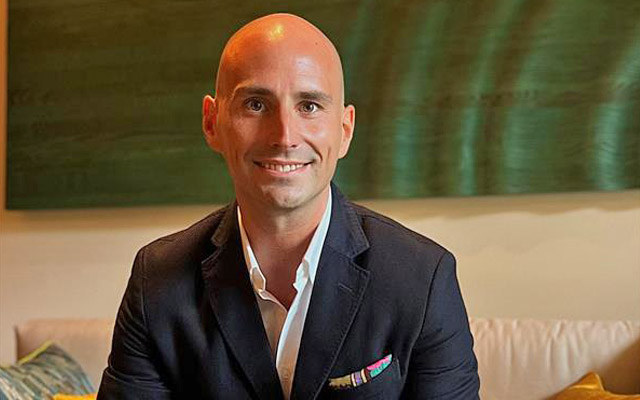
Jonathan Lallemand joins Rosewood Luang Prabang as managing director, where he will oversee operations, guest relations and strategic development at the resort in Laos.

Lallemand brings more than 20 years of hospitality experience, much of it in Asia. He was most recently resort manager at Regent Bali Canggu.
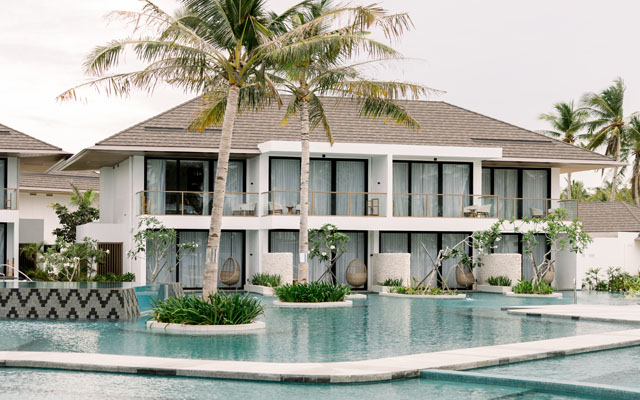
South Palms Resort and Spa Panglao – MGallery Collection

0

Location
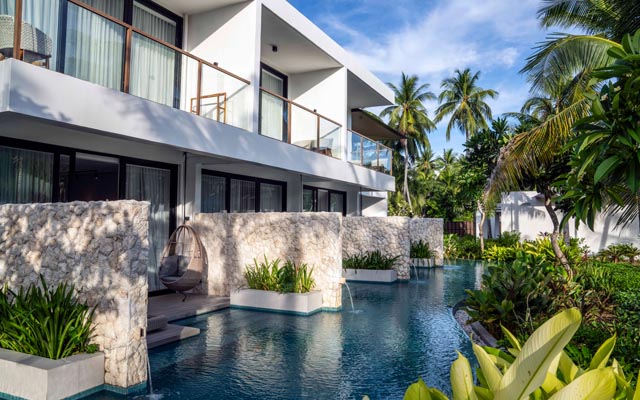
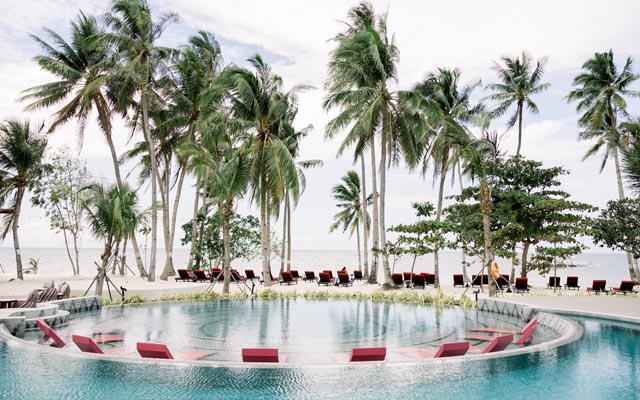
This resort by the sea is just 10-15 minutes from Bohol-Panglao International Airport and a short distance from dive sites, the Chocolate Hills and the tarsier sanctuary.

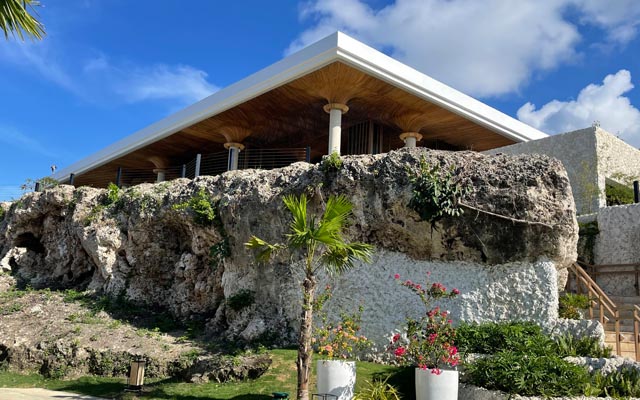
Its biophilic design blends seamlessly with the natural environment, creating a calming and restorative hideaway.

The creative teams of interior designer Patricia Ho Douven of White Jacket, F&B and detailing specialist Phillip Pond of Atelier Pond, public space designer Patrick Keane of Enter Projects Asia, and master planners Chris Singer and Prasasti Chenchin of SCSY Studio have together created a luxury Filipino resort through and through.

Limestone, timber and clay abundant in Bohol were used to build the resort, with its design inspired by the province’s folklore, culture and traditions. Local artisans incorporated native materials such as rattan, bamboo, abaca, and recycled wood, tiles and stained glass salvaged from old, abandoned houses, crafting décor, furniture and fixtures that are rustic yet refined.

Accommodation
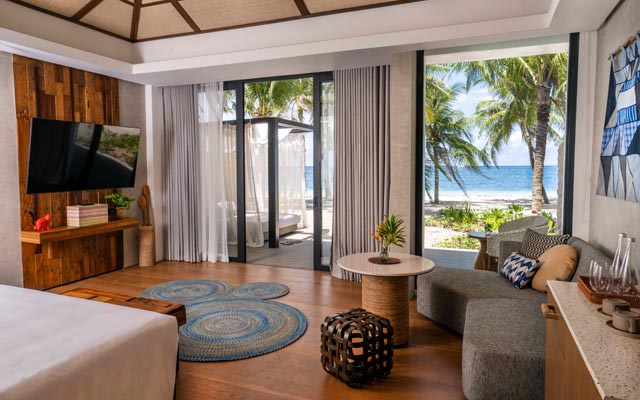
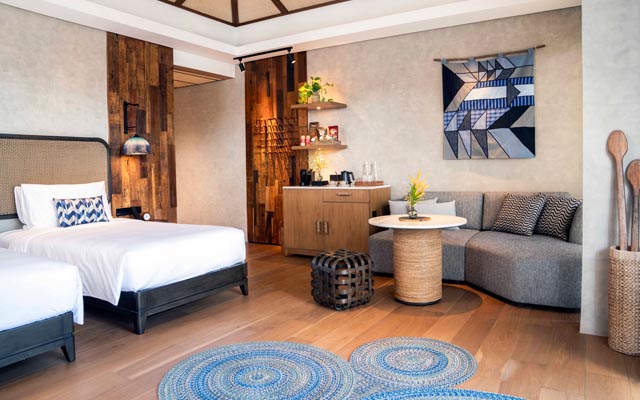
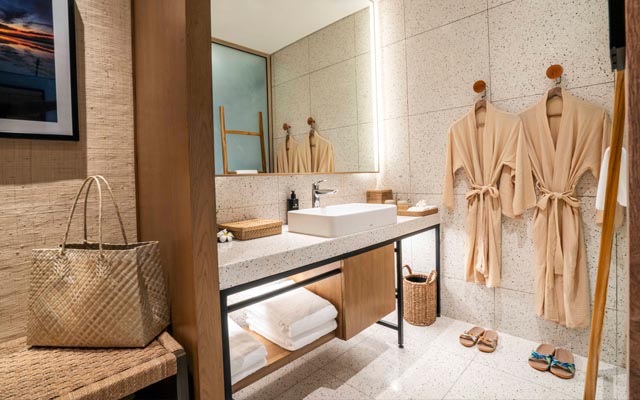
The resort has 188 rooms and suites arranged in clusters of two-storey structures. Our 48m² superior room features a king bed with a headboard of traditional solihiya rattan weave – a Filipino lattice pattern known for its craftsmanship and airy design – and a large bathroom with a wooden bench and stepladder. It opens onto a private balcony with a plunge pool and views of the gardens and a sliver of the sea.

Unexpected touches in the décor create a modern yet whimsical, playful and calming sanctuary, as the photos show.

The resort is also a high-tech hideaway, offering fast and constant internet, multiple electrical sockets and data ports. A smart room system with touch controls and motion sensors reduces energy consumption and enhances security.

F&B
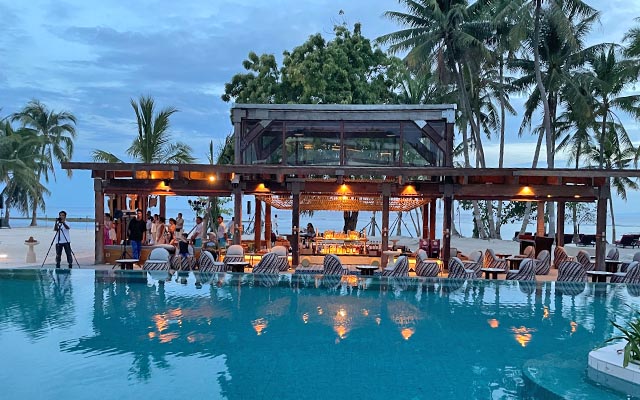
The resort’s culinary offerings focus on local, organic ingredients – from seafood to fruits and vegetables – prepared using traditional cooking techniques. Guests can enjoy farm-to-table dishes, the day’s fresh catch, and tropical fruit tasting at UMA, which features market-style stalls and al fresco dining typical in the Philippines.

Manja, playfully designed with large tables and a children’s garden with games, serves international dishes including brick-oven pizzas and rotisserie chicken. The Sirenna Bar offers cocktails, including lambanog, a Filipino liquor fermented from coconut sap.

Facilities
The vast grounds and beach of South Palms Resort and Spa – MGallery Collection lead to herbal trails, hydroponic gardens, sunrise yoga, and at night, torch-lit ceremonies and firelit drumming rituals that honour the rhythm of the island.

For MICE, the resort offers the 200m² Marcela Ballroom, designed with indigenous Filipino motifs; the 100m² Acqua Pavilion along the coastline, with fluid geometry inspired by fish scales and sea creatures; and the sweeping 500m² beachfront lawn, connected by a grand staircase to a rooftop garden for alfresco celebrations. Tiya’s ground floor and two upstairs event rooms provide a charming setting for cocktails and conferences.

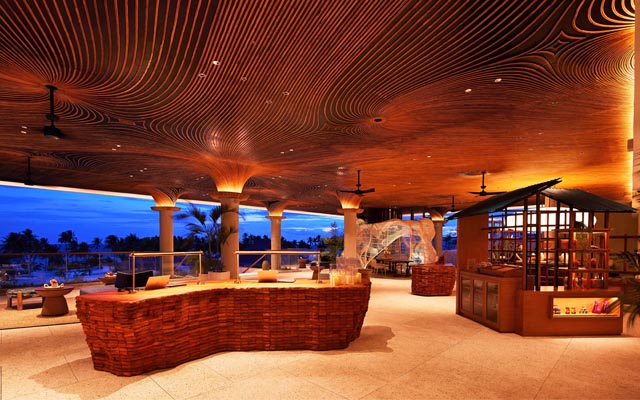
The open-air lobby, featuring an elevated sari-sari store (after the ubiquitous small neighbourhood shops), is ideal for informal gatherings and enjoying views of the gardens and sea.

A meaningful experience is a guided tour of the facilities for making asin tibuok, or sea salt, a Bohol tradition that involves immersing coconut husks in seawater for three months. Aside from using asin tibuok in its kitchens, the resort plans to use it in the spa scheduled to open in September.

Adjacent to the resort is the nine-hectare South Farms, established during the pandemic to retain staff from the owner’s other property, now renamed Oceanica Resort Panglao. Today, South Farms supplies both resorts with organic food, ornamental plants such as bamboo, and water from its reservoir and harvested rainwater.

Service
The resort maintains a high guest-to-staff ratio. There is always someone available to assist, whether it is for directions, riding the buggy, visiting the 24-hour clinic, or catching a tricycle to the town centre. The housekeeping, lobby, and restaurant staff are courteous, polite, and helpful.

Verdict
South Palms Resort and Spa Panglao – MGallery Collection approaches sustainability and community engagement with care. Recycling is widespread, the resort provides 14 refill water stations for guests, and its 1,017 solar panels generate enough energy for six to seven hours of daily use.

Beyond its design and experience offerings, and support for local artisans and small enterprises, the resort also assists two local orphanages through regular donations, play-based visits, and shared meals, reflecting the brand’s belief that hospitality begins at home.

These efforts made my two-day stay at the resort memorable long after checkout.

Contact details
E-mail: southpalmsmgallery.reservations@accor.com

Indonesian hotels raise concerns over music royalty enforcement

0

Indonesia’s hospitality industry is raising concerns as music royalty enforcement by the National Collective Management Agency (LMKN), under the Ministry of Law and Human Rights, begins affecting hotels nationwide. While hotels accept the principle of paying royalties, their main concern is how the law is interpreted and enforced.

The Indonesian Hotel General Managers Association (IHGMA) points to ambiguities in Indonesia’s Copyright Law and Government Regulation No. 56/2021, particularly around “commercial use” and “public space”. LMKN currently considers sounds from guestroom televisions, natural soundscapes, and even religious recitations such as Islamic murotal or adzan as commercial performances, triggering royalty fees. Hoteliers argue that guest rooms are private spaces.

According to IHGMA’s Erick, LMKN, the ministry, and industry players interpret copyright and music royalty rules differently

“It shows that LMKN, the Ministry of Law and Human Rights, and industry players all interpret the rules differently,” stated Erick Herlangga, IHGMA’s head of legal affairs.

The impact of this legal uncertainty is evident in the experience of Sutan Bustamar Koto, general manager of Pranaya Boutique Hotel, whose property was penalised for the sound of wild birds.

“LMKN insisted the chirping was recorded and subject to fees, even though we haven’t played background music since 2022,” Bustamar said, adding that he feels unfairly portrayed. “At times, it feels like we’re being treated as criminals, rather than as legitimate businesses seeking clarity on our obligations.”

This example underscores broader legal concerns raised by the industry.

Erick stressed that royalty obligations should be addressed under civil, not criminal, law. “The key question is what legal basis allows a civil matter to be turned into a criminal threat,” he said. He also noted that LMKN’s collection process appeared sudden, with hotels receiving bills and only two weeks to comply before possible legal action. “This approach risks creating uncertainty and pressure for hotels,” he added.

Hotel associations, including the Indonesian Hotel and Restaurant Association (IHRA) and IHGMA, are calling for dialogue with LMKN and the Directorate General of Intellectual Property (DJKI) of the Ministry of Law and Human Rights. They want a narrower definition of commercial use, monitoring systems to ensure royalties apply only to registered works, and disputes resolved through civil law.

“Is it fair to set tariffs by room numbers rather than actual music use, ignoring hotel type or business model?” asked Hariyadi Sukamdani, IHRA chairman. He also recommended digital platforms to track music use and distribute royalties transparently, noting that such tools exist but have not been properly socialised by LMKN.

LMKN has responded to these concerns. Agung Damarsasongko, director of copyright and industrial design at DJKI, explained that royalties are required under both Indonesian and international law. “Streaming services are personal. Playing music publicly in a business counts as commercial use and requires a proper licence,” he said.

The Ministry of Law and Human Rights plans to convene LMKN and industry groups soon to clarify the rules and ensure a fair, understandable approach to music royalties in hotels.

The parliament and government will convene to address the issue through a revision of the Copyright Law. The update will clarify tariffs, collection procedures and oversight, with royalties adjusted according to business type, room size and music duration.

Dewi Asmara, a member of parliament, said the revision aimed to create a fair and transparent system, supported by public education and digitalisation, allowing businesses to play music legally without financial strain while ensuring musicians receive proper compensation, fostering a more sustainable music industry in Indonesia.