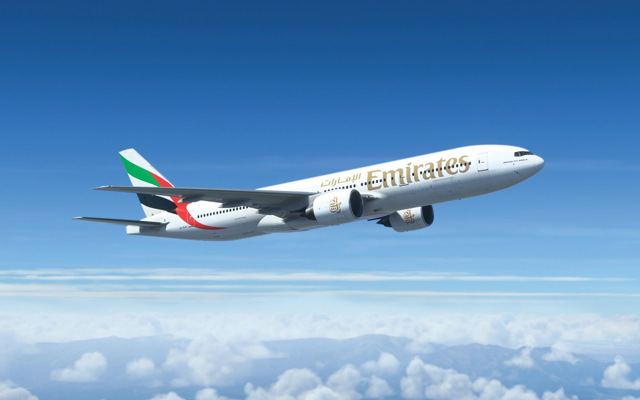
Travellers arriving in Australia from China, Hong Kong and Macau must show a negative Covid-19 test result from January 5.
Travellers from China, Hong Kong and Macau will need a negative Covid-19 test result to enter Australia from January 5
According to news reports, Australian health minister Mark Butler said the decision was made “out of an abundance of caution”, citing a lack of epidemiological information and genomic sequencing data from China.
The government is also considering additional measures including testing wastewater from airplanes and voluntary sampling at airports for arrivals, Butler told a news conference.
He stressed that the measure is only temporary and a reflection of the current Covid-19 situation in China.
Kandima Maldives will kick off a wellness retreat this March, with world-renowned celebrity trainer Ramona Braganza at the helm of the seven-day programme.
Kandima Maldives launches a new wellness retreat in March
The Strong Body, Strong Mind, Gentle Spirit retreat, running from March 14 to 21, will be built on Ramona’s famous 321 Training Method which was initially designed to train her Hollywood clients. Guests can expect effective nutrition programmes, daily meditation, workouts, a spa treatment, a snorkelling excursion, plus a bonus 60-minute personal one-on-one training session, and much more.
To be part of the retreat, travellers will need to book and pay for the fitness programme on Ramona’s website and then confirm and pay for their stay at Kandima Maldives. Stay packages are available.
Artyzen Hospitality Group (AHG) will open seven hotels across Asia in the new year, an expansion driven by positive travel trajectory and recovery across the Asia-Pacific region.
A notable move, according to AHG, is the launch of flagship luxury brand Artyzen in Singapore and Shanghai.
Artyzen Habitat Taopu Shanghai is among the new properties to launch in 2023
Artyzen Singapore, located in the heart of the Orchard Road district, will open in 4Q2023. The contemporary hotel will comprise 142 guestrooms and a roof garden that celebrates the Strait’s Chinese heritage. In partnership with renowned architect ONG&ONG and interior design studio Nic Graham + Associates, Artzyen Singapore will be transformed into a luxury vertical oasis in the heart of Singapore. The green theme extends to The Roof Garden, a private social destination that is alive with botanical vibes where guests can dip in the 25-metre cantilevered infinity pool and enjoy signature drinks in the sunken lounge.
Set to open in 3Q2023, Artyzen New Bund 31 Shanghai is located in a buzzy art and cultural hub. Designed by the award-winning Neri&Hu Design and Research Office, Artyzen New Bund 31 Shanghai is a modern classic, subtly weaving unique Shanghainese aesthetics, art, and cultural temperament into the hotel design and guest experiences. It will take in 202 guestrooms, an expansive floor integrating indoor and outdoor spaces, a destination restaurant, al fresco bars, and one-of-a-kind full event spaces.
In addition, the Artyzen Habitat brand will add another four hotels to its China portfolio – Artyzen Habitat Suzhou, Artyzen Habitat Taopu Shanghai, Artyzen Habitat Hengqin Zhuhai, and Artyzen Habitat Yuelai Chongqing. These join TOP Residence Taopu Shanghai, bringing a total of 19 operating properties worldwide in 2023.
The robust growth reflects AHG’s brand appeal among Gen Z and millennials. According to a recent survey, 76 per cent of consumers plan to take a leisure trip in the next 12 months, out of which 84 per cent are Gen Z and 81 per cent are millennials. These consumers show specific interest in learning more about travel options that support local cultures and communities which reinforces AHG’s brand strategy.
Peter Wynne, senior vice president of Artyzen Hospitality Group, said in a statement: “Shanghai remains our launchpad with 10 properties in operation by end of 2023. We look forward to welcoming guests to Artyzen’s Asia-rooted DNA bringing to life our own distinct homegrown lifestyle philosophy woven into every aspect of the stay experience.”
Indian travel agents are seeing an uptick in outbound golf tourism demand, with destinations like Vietnam, Indonesia and Sri Lanka gaining favour.
Thailand, which used to dominate golf tourism promotions in India, now battles for the spotlight with Vietnam, Sri Lanka and Dubai – all of which have held roadshows in 2022 to appeal to Indian golfers.
More Indian golf enthusiasts are heading overseas for sports holidays
Rajan Sehgal, president, India Golf Tourism Association (IGTA), said: “Thailand has been promoting its golf tourism products to the Indian market for a long time. However, other destinations, especially short-haul ones like Vietnam, Malaysia, Dubai and Sri Lanka, are getting popular with Indian golfers. The respective tourism boards have realised the potential in the Indian outbound golf tourism market.”
According to Sehgal, foreign NTOs are drawn to the spending potential of Indian golfers. An average Indian golfer spends at least double of a regular leisure tourist.
He added that golf is now an integral part of many Indian destination weddings and business events.
“Event planners are creating opportunities for guests and delegates to enjoy a golfing experience,” said Sehgal.
Travel consultants told TTG Asia that the average size of Indian golfing groups ranges from eight to 40 pax.
Jyoti Mayal, president, Travel Agents Association of India (TAAI), said the intensified golf-focused destination promotions have helped to grow Indian outbound golf tourism numbers.
Even longhaul destinations, like South Africa, are keen to attract Indian golfers.
“We have diversified the way we sell South Africa to appeal to the core passions of Indian travellers. With highly customised and personalised itineraries, we are looking at mobilising niche communities like golfers,” said Neliswa Nkani, hub head – MEISEA, South African Tourism.
Made up of 7,641 islands, the Philippines offers a myriad of adventure ideas. They range from city trips, to relaxing in remote idyllic islands, to adrenaline pumpingactivities, to culture and gastronomy shaped by the country’s unique blend of Filipino, Spanish, Catholic tradition, American and Asian heritage, to wondrous natural sights.
Lake Sebu (Credit: DOT SOCCSKSARGEN)
Multiple international gateways make it so easy for visitors to connect to the archipelago and citizens of more than 150 countries can enter visa-free.
Main entry points include Manila’s Ninoy-Aquino International Airport, Mactan-Cebu International Airport, Clark International Airport, Francisco Bangoy International Airport, more commonly known as Davao International Airport, Panglao International Airport, Iloilo International Airport, Kalibo International Airport, Bicol International Airport, and Puerto Princesa International Airport to access Palawan.
A warm and hospitable welcome awaits as the public and private sectors have been working extra hard to collaborate and create products and services to meet the changing needs of today’s travellers looking for sustainable, inclusive and unique travel memories.
Look no further than the Philippines. Here are the reasons why.
Unique travel experiences
1 of 8
Beach holiday fun (Credit: Marc Go)
Palawan
Cebu canyoneering (Credit: Erwin Lim)
Anilao Pulang Buli Sanctuary (Credit: Wowie Wong)
Banaue Rice Terraces (Credit: Russel Llanera)
The Farm at San Benito in Batangas (Credit: Justin Ventura)
Bukidnon Monastery of the Transfiguration
Hosting international business events
FAMILY TRAVEL Reconnect, It’s Play Time
Spend quality time together whether it is away from the hustle and bustle on an island escapade or explore hidden gems in a Manila national park.
Head to world-famous Boracay, greener and better after being closed for six months to improve the island’s infrastructure, and sample its new-found identity as a model of sustainable tourism development.
The renovated and modernised Manila Zoo, or Manila Zoological and Botanical Garden, now features an animal museum, botanical garden, butterfly garden and animals like resident 40-year- old elephant Ma’ali and Siberian white tiger Kois.
DreamPlay is another popular family entertainment attraction where everyone can interact with his or her own favourite DreamWorks character.
NEW ADVENTURES Ready, Steady, Jump Get an adrenaline rush canyoneering in Badian, Cebu where intrepid travellers leap off small waterfalls then navigate over river rapids and free float through river canyons.
The Philippines also offers some of the best scuba diving in the world with its pristine coral reefs, lush coral gardens, huge schools of fish, rare sea creatures, manta rays and even whale sharks.
Popular scuba diving destinations include Anilao, Batangas, located about three hours’ drive south of Manila.
Bohol also offers some of the best dive spots in the archipelago. The province can be accessed via Manila or from Cebu City to Tagbilaran City. Or take a direct flight to Cebu followed by a ferry ride to Tagbilaran City.
Explore adrenaline pumping attractions at Dahilayan Adventure Park in Bukindnon, which boasts one of the longest zip lines in Asia to glide across 840m above a 100m elevation. Other attractions within the park include ATV and buggy trails, a hanging bridge and bumper boats.
CULTURAL EXPLORATION World Heritage Sites On the southern island of Mindanao is South Cotabato’s Lake Sebu, the Land of the Dreamweavers.
The lake and its surroundings are now being promoted as a prime ecotourism destination. The area consists of the expansive Allah Valley.
In northern Luzon, Cordillera is a showcase of mystical and mysterious highlands with raw and rugged beauty. Wander through the ancient Banaue Rice Terraces, a United Nations Educational, Scientific and Cultural Organization (UNESCO) World Heritage Site cultural living landscape, which form the combined works of nature and man. Also explore the hanging coffins at Sagada in Echo Valley.
NATURAL BEAUTY Outstanding Scenery
Batangas, one of the most popular tourist destinations near Metro Manila, is about 106km south of the capital.
It is home to the well-known Taal Volcano, and Taal Heritage Town, a small town that has ancestral houses and structures dating back to the 19th Century.
Tagaytay, located around 26km away from Batangas, is the base for trips to the volcano.
Tagaytay, overlooking Taal Lake and Taal Volcano, is one of the most frequented places because of its outstanding scenery. Given its high altitude, the climate here is considerably colder.
WELLNESS Embrace Self-care The healing power of nature and deep-rooted healing traditions make wellness journeys in the Philippines sublime.
Set in a welcoming and nurturing environment, the wellness destinations focus on rebalancing physical and mental health.
Choose from wellness resorts complete with accommodation facilities and holistic wellness programmes, or luxury resorts and spas where nature is a big part of the rejuvenating experience.
Renowned wellness brands near Manila include The Farm at San Benito in Batangas, Luljetta’s Hanging Gardens Spa in Rizal and the Nurture Wellness Village in Tagaytay. Elsewhere, there is Chi, The Spa at Shangri-La Mactan, Cebu, and also Eskaya Beach Resort and Spa and Mithi Resort Spa, both in Panglao, Bohol.
PILGRIMAGE Spiritual Seeker The Philippines is Asia’s only Christian nation where the majority of Filipinos are Catholic.
In northern Mindanao, the Abbey of Transfiguration, also referred to as the Transfiguration Monastery, located in San Jose, Malaybalay City in Bukidnon, is known for its pyramid chapel, where the faithful, seeking peace of mind and calmness of soul and spirit, go to pray.
Its serene surroundings provide an ideal backdrop for retreats and solemn weddings.
Another Catholic emblem is the Shrine of Padre Pio in Santo Tomas, Batangas, around 71km south of Manila.
The church, famous for its architectural design, is on most traveller’s checklist when they visit Batangas.
Nearby are hot springs and Mount Makiling offers hiking and back-to-nature activities.
BUSINESS TRAVEL Meetings are Back
Manila is Asia’s pioneer when it comes to hosting meetings and conventions. As the market expands, other destinations such as Cebu and Davao are as able to welcome national and international events.
New meeting destinations have emerged. Palawan, for example, now has a convention centre and space that can host meeting groups of up to 1,000 people.
Get to explore business opportunities just minutes away from any adventure you have in mind, whether its thrill-seeking skydiving fun or relaxed island living, there is an island for everyone.
China’s resumption of travel is lifting spirits across Hong Kong’s tourism sector, but players are urging China for more details to help them better plan their operations.
Fanny Yeung, executive director of the Travel Industry Council (TIC), told TTG Asia that the announcement this week took the industry by surprise.
Hong Kong players need more clarity on China’s reopening
“It’s vital that we are able to cope with inbound traffic (from China). With more details from the Central Government, such as daily arrival quota, we can better plan ahead,” she said, adding that Hong Kong has a severe manpower obstacle to overcome due to a talent bleed-out over the past three disrupted years.
She said businesses would need to “offer competitive salaries” to lure people back.
“I reckon it may take us three to four months to ramp up manpower to meet the needs (of returning Chinese travellers),” said Yeung.
However, if all goes well, Yeung expects Hong Kong tourism business to return to pre-pandemic levels in 3Q2023.
TIC’s chairman Gianna Hsu is less worried about the immediate future, as China’s travel resumption will coincide with the Chinese New Year holidays starting January 22, 2023. This is typically a low travel season for group tours from China, and that buys Hong Kong some time to prepare for the market’s return.
Luc Bollen, general manager of The Park Lane Hong Kong – A Pullman Hotel, is upbeat. “According to recent studies (by Trip.com), Hong Kong remains the top-three most popular destination for all Chinese tourists,” he said.
Bollen said his team is well prepared to welcome guests from China. Together with Accor’s regional office, the hotel launched in late-December several room packages aimed at the Chinese.
He expects Chinese guests to combine business and leisure when they return to Hong Kong for their first trip in three years.
Industry players have expressed concerns about the return of sufficient air capacity to support China’s reopening.
Yeung hopes that China’s latest announcement will motivate airlines to accelerate their plans to return to service.
A spokesman with homegrown Greater Bay Airlines said the company would “keep monitoring the market situation and work closely with respective stakeholders to get prepared as appropriate”.
Greater Bay Airlines is current serving only Bangkok and Taipei.
Cathay Pacific has also shed little details on service plans following the December 27 announcement, only saying it would “continue to communicate with relevant authorities and to increase our passenger capacity to and from the Chinese Mainland as much as possible”.
Cathay Pacific is operating at about 30 per cent of its pre-pandemic capacity and has some weekly services between Hong Kong and select Chinese cities, like Beijing and Chengdu, scheduled for January.
In order to keep pace with China’s reopening, Hong Kong will also remove all mandatory PCR test requirements for inbound travellers, quarantine orders and the use of the Vaccine Pass from December 29.
Trip.com Group recorded a 254 per cent increase in Mainland China’s outbound flight bookings on December 27 compared to the day before.
This follows mainland China’s decision to reopen borders as announced on December 27.
Outbound travel demand is expected to spike for the upcoming Chinese New Year break
Flights to Singapore, South Korea, Hong Kong, Japan and Thailand led the surge as the top five tourist destinations.
Flight bookings to Singapore leapt six-fold, followed by an average 400 per cent jump in airline ticket orders for the other four destinations. Longhaul flight bookings to the UK, the US and Australia also grew.
The top five most popular cities of departure were Shanghai, Beijing, Guangzhou, Chengdu and Hangzhou – there is also a spike in interest among overseas tourists looking to visit China.
In addition, bookings for inbound flights on December 27 rocketed 412 per cent from the same period on December 26, with Australia, Germany, Japan, Singapore and Hong Kong as the largest sources of inbound travellers.
Passport issuance for business and tourism
The increased volume of travel orders comes as China’s National Immigration Administration announced on December 27 that starting January 8, 2023, it will handle Chinese citizens’ applications for ordinary passports for tourism, as well as resume permit issuance for mainland residents to visit Hong Kong for tourism and business purposes.
The news gave a boost to visa processing services. According to Ctrip platform, searches for outbound visas skyrocketed 300 per cent as soon as news of China’s border reopening broke, with those for an entry permit to enter Hong Kong soaring fivefold.
Over the past few months, visa applicants on Ctrip platform mostly comprised business travellers, however, after the removal of mandatory quarantine measures for inbound travellers was announced on the evening of December 26, customers who consulted Ctrip on visa matters did so primarily for tourism purposes.
Outbound travel boom expected for Chinese New Year
After China abolishes its quarantine restrictions for inbound visitors on January 8, 2023, the country will celebrate its traditional Chinese New Year holiday, a usual peak season for an outbound travel boom.
Searches for trips during this period to pre-pandemic tourist hot spots such as Japan, Thailand, South Korea, the US, Singapore, Malaysia, Australia and the UK have grown significantly – searches for package tour products during the festive break also soared six-fold.
China announced this week that it would scrap quarantine for foreign arrivals from Jan 8, 2023. It is big news, as China has maintained a strict zero-Covid regime for almost three years, cutting traffic past its borders down to only absolutely necessary cases.
Many in the travel and tourism industry expect China’s reopening to begin some time in 2023, with different opinion leaders projecting different points in the year.
The giant returning to the travel and tourism party is certainly progress, but the impact on business will take time to show. Flights have to return and airfares stabilised enough to not make an average man weep. A quick search on Google for a Singapore-Beijing roundtrip on January 9, a day after quarantine barriers are removed, shows up economy fares of S$3,005 and up.
Manpower must be brought back to handle the wave of travel enquiries, passport renewals, visa applications, passenger traffic and all necessary procedures to make travel possible for the Chinese.
And with China battling fresh waves of Covid infections now, destinations may not see the throng of Chinese travellers they have dreamt of for three years come Jan 2023. Dampening initial recovery are also moves by governments elsewhere to restrict Chinese entry out of infection fears – Japan, Taiwan, Malaysia and Italy are stepping up surveillance. India too, but not just for arriving Chinese travellers. News reports state the US and the Philippines are considering the same as well.
But hey, the world has waited three long years for big market China to return to travel. We can afford to wait a little more for it to find its footing.
How would you describe the global appetite for travel throughout 2022, and how do you expect that to continue into 2023?
This has been an interesting year. 2021 started off terribly depressed but started recovering toward the second half of the year. We started 2022 at about 50 per cent recovered and it has been pretty linear all year. I expect we will exit this year on a strong pace, at about 70 per cent or so compared to 2019.
Demand is outstripping supply right now. The demand and supply curve is inverted for the first time in a very long time. Our current shopping data shows we are well over 100 per cent of 2019’s.
Airlines did such a good job streamlining their fleet and workforce during the pandemic that now there are staffing issues. That has pushed prices up. We will go into 2023 with airlines continuing to bring on staff and aircraft, and grow air supply.
Of course, staffing issues exist across the industry and are not limited to airlines.
Will this strong pent-up travel demand hold up against a recession?
Even if we were to see some recessionary type of activity in 2023, we doubt it would have a big impact on travel recovery.
Signs of recession will show in the prices, be it hotel rates or airfares. You will know when you see prices drop. (Despite warnings of inflation and recession,) every sector has been able to hold prices the past year or so because consumers are willing to pay more to get back to travel.
It is a hot topic now – China is rationalising its Covid strategy but it is anyone’s guess how much more changes will come and how quickly. How do you expect the return of Chinese travellers to impact global travel and tourism supply, and are suppliers ready for them?
First of all, we are very excited about the idea that China will begin to ease restrictions. China’s restrictions on travel have significantly impacted all of Asia’s travel recovery, which is behind the rest of the world. A lot of that is due to the absence of Chinese travellers, who make up a significant portion of the Asian population.
Well, I don’t know if travel and tourism suppliers are ready if China goes from zero to hundred miles per hour, meaning if China lifts all restrictions at once for inbound and outbound.
Singapore feels pretty busy right now despite the fact that there are no Chinese travellers. Normally, China makes up a significant portion of inbound visitorship to Singapore. Imagine all that China demand returning on top of the current traffic. I don’t think a lot of places in Singapore are ready for that.
However, when China resumes travel and starts to allow visa and passport applications, it will experience some of the same struggles we had in other regions in terms of supply and demand.
China is now battling waves of fresh infections and healthcare challenges as it exits from its zero-Covid policy. That would impact travel demand. Can the world afford to deal with another few months or a year of no Chinese travellers? The worldwide travel economy is able to absorb the fact that this (the return of the Chinese) may take a while. We are seeing significant load factors across all regions and hotel occupancy rates are climbing. It is still sustainable without the Chinese, but we would like to see the whole world being able to travel without restrictions.
Could you identify top two or three global trends that would benefit Asia-Pacific travel and tourism in 2023?
We have seen very strong domestic travel in India, and that has boosted the travel economy.
We are also seeing an ongoing push for luxury travel. Destinations like the Maldives and Bali have rebounded fairly quickly as a result. I think continued marketing to the luxury travel segment will help this region rebuild tourism.
However, not all of the luxury travel demand is coming from the wealthy population. Many people have acquired savings throughout the pandemic from not being able to go out and spend on nice things. So, the initial rebound is led not just by high-end travellers but also general leisure travellers who have both pent-up travel desires and cash, and are eager to reunite with family and friends through a holiday together.
Another trend to watch is sustainability, which has gone from being a topic that was discussed but little was happening, to being discussed and a lot of things are happening. One of the big things we can do as an industry is to focus on setting standards. A big issue for sustainable travel today is the existence of multiple ways to measure. The exact same aircraft flying the same route could result in different emission calculations.
The industry must push for one transparent method to calculate carbon footprint, and communicate that to travellers so that they understand how their impact is measured. Doing so will encourage more travellers and suppliers to make better decisions about sustainability.
What must travel suppliers and retailers do to make the most of recovery opportunities in 2023?
They will need to focus on the travel experience. We talk a lot about modern retailing, where the traveller feels well-served across the process. Do they feel like they have the ability to make good buying decisions? Do they feel that their needs are catered to in a fashion that they prefer, be it online or via a person they can talk to?
Automation and technology have continuously been sounded as the solution for our industry’s painful staff shortage. Where do you see automation and technology serving the most use in our industry, and what more can travel retailers do in this area to be more efficient – and even more importantly, make more money with the smaller staff strength? Pre-pandemic, a lot of money is spent by consumers on travel changes. Airlines have removed all those fees now. What used to be a financially painful process is now a lot easier, but we are still not at that place where it is a super simple process.
Travelport is therefore very focused on creating a simple and automated refund and exchange process that will allow travel agents to easily refund and/or exchange tickets for their travellers.
We are also focused on AI (artificial intelligence) and machine-learning-driven search capabilities. The airlines have done a good job differentiating their products to improve the retailing experience. As airlines differentiate their products more and more, we can no longer just identify the lowest fare. We will have to return a search criteria that is more honed to what the traveller is looking for.
Therefore, I think more intelligent searches as well as faster and more effective refunds and exchanges will help the industry.
Technology is helping with the current manpower shortage. That being said, it is not helping enough. Our industry is the world’s largest and one that makes up 10 per cent of the world’s GDP. We have got to find ways to get people back and interest them to be part of the travel ecosystem.
China is reopening from January 8, 2023 and the co-authors of e-handbook 88 Practical Ways to Prepare for the New Wave of Chinese Visitors say “trusted destinations will be prioritised by many Chinese travellers in the first months”.
Check-in Asia CEO Gary Bowerman noted “patterns of choice could be similar to the late-2010s”.
Travellers from China have been researching and planning their trips for three years
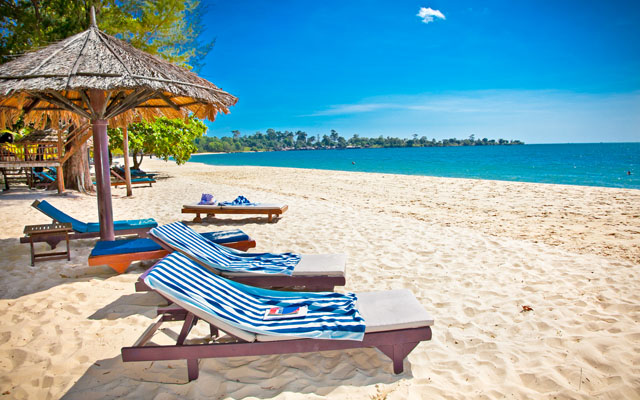
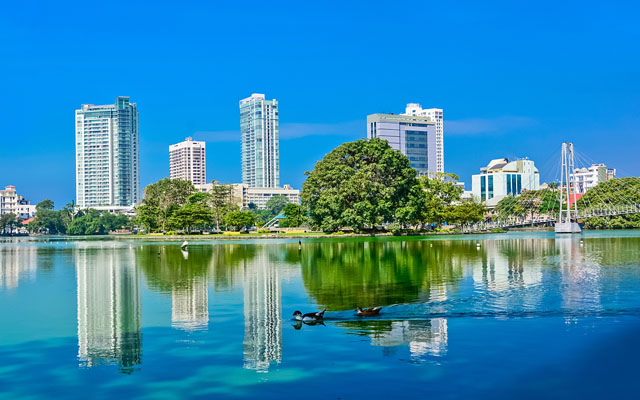
Bowerman continued: “Popular vacation destinations will likely include Japan, South Korea, Australia, Singapore, Thailand, Bali, Maldives, maybe Sri Lanka, plus neighbouring countries like Laos and Vietnam.”
The first wave will also comprise VFR (visiting friends and relatives) travel to North America and Europe, he added.
Seasonality will be an important factor in choosing a first vacation destination, as will flight availability, cost and ease of access related to the visa situation.
Bowerman warned that countries that make it difficult for Chinese to enter would likely get overlooked.
China Outbound Tourism Research Institute (COTRI) founder and director Wolfgang Georg Arlt observed that Chinese tourists were better informed than ever.
Arlt said: “The Chinese have had three years to dream about travel, participate in virtual tours and have researched carefully the destinations that interest them. They will know exactly what they want and – very importantly – what they don’t want from their first overseas trip in three years.”
He added: “Chinese tourists will be determined to visit new locations, smaller cities and will be more interested in immersion in local culture and meaningful tourism.
“Everything will be about the ‘backstory’ – how Chinese tourists can go beyond the obvious to penetrate the deeper cultural narratives that will bring alive their travel experiences and, of course, photos and videos.”
The COTRI chief noted that expectations of technology-enabled convenience will surprise unprepared destinations, and understanding how advanced Chinese consumer tech had become over the past three years would be a big challenge.
Destinations, Arlt advised, should also be prepared for some Chinese travellers spending a little more frugally than in pre-pandemic years.
With the rollercoaster development of China in recent few weeks, China outbound forecasts will be subject to frequent revisions.
At press time, COTRI forecasts 58 million outbound trips (excluding Hong Kong and Macau) in 2023.
The first quarter of 2023 will almost exclusively comprise non-leisure trips, while 2Q2023 will see the start of leisure tourism despite problems with passports, visas and air ticket prices and an increase in 3Q2023 with partial solutions.
COTRI also predicts that 4Q2023 will see a “normal seasonal decrease evened out with more business events, including fairs, the disappearance of passport and visa problems, lower air ticket prices and the first special discount offers”.
Kandima Maldives will kick off a wellness retreat this March, with world-renowned celebrity trainer Ramona Braganza at the helm of the seven-day programme.
The Strong Body, Strong Mind, Gentle Spirit retreat, running from March 14 to 21, will be built on Ramona’s famous 321 Training Method which was initially designed to train her Hollywood clients. Guests can expect effective nutrition programmes, daily meditation, workouts, a spa treatment, a snorkelling excursion, plus a bonus 60-minute personal one-on-one training session, and much more.
To be part of the retreat, travellers will need to book and pay for the fitness programme on Ramona’s website and then confirm and pay for their stay at Kandima Maldives. Stay packages are available.
For more information, visit Kandima Maldives.