TTG Asia
Asia/Singapore Tuesday, 23rd December 2025
Page 54

Advance flight, hotel bookings stream in for F1 Singapore race weekend

0
Wyndham Singapore Hotel's Sky Lounge on the 22nd floor overlooks the F1 race circuit and Singapore's million-dollar skyline
  • Flight bookings for travel to Singapore during the Formula 1 Singapore Grand Prix 2025 season have been climbing since June
  • 75% of visitors plan on staying two to seven days while in Singapore for the races
  • Hospitality businesses roll out limited-time experiences and deals to boost takings
Wyndham Singapore Hotel’s Sky Lounge on the 22nd floor overlooks the F1 race circuit and Singapore’s million-dollar skyline

The promise of a thrilling night race and an impressive entertainment line-up featuring high-profile international acts over three days, from October 3 to 5, 2025, is drawing overseas Formula 1 fans to Singapore. Flight data shows bookings for Singapore ahead of the races are up since June, while hotels are enjoying a more lively booking pace compared to 2024.

Sojern’s latest travel insights noted that flight bookings had begun climbing in early June, with volumes now tracking four per cent higher year-on-year at the same lead time.

Data identified Australia as the leading source market for flight bookings for the Formula 1 Singapore Grand Prix 2025 race week, comprising 18.7 per cent of total booking volume.

South Korea (12.2 per cent), the UK (7.8 per cent), China (11.4 per cent), and Taiwan (6.8 per cent) make up the rest of the top five markets.

Long-hual markets have shifted to a lower gear, noted Sojern researchers. Booking momentum from Europe, the Middle East, and North America is slower this year compared to the last.

Solo travellers lead bookings, but Sojern has highlighted a pick up in bookings by family groups – 19 per cent this year versus 12.5 per cent in 2024.

Race fans are arriving at different stages – Asia-Pacific travellers favour flying into the city-state on October 2, while Europe, the Middle East, and Africa (EMEA) fans are giving themselves two to three extra days in Singapore before the tracks heat up. North Americans touch down as early as a week prior.

Indeed, visitors are maximising their time in Singapore, with 75 per cent of visitors planning to stay two to seven days – up from 72 per cent in 2024. Longer stays are more common among EMEA, US and Canadian travellers than Asia-Pacific visitors.

Wong Kar Ling, chief strategy officer and managing director, Southeast Asia for Ascott, said the home of the original F1 night race “continues to draw visitors from around the world each year, significantly boosting business for the hospitality industry”.

She told TTG Asia that Ascott is “running almost 30 per cent ahead in revenue from race period stays compared to last year, supported by an uplift in average daily rates”.

“As we approach the October race weekend, occupancy across our diverse portfolio of properties spanning hotels, serviced residences and social living properties in Singapore is tracking well above 60 per cent, which aligns with broader market performance. Based on past years’ trends, we expect to hit an occupancy of over 90 per cent across our portfolio in Singapore over the race weekend,” added Wong.

Entrepot at The Robertson House by The Crest Collection welcomes guests over the F1 race season with a delicious introduction to Singapore’s culinary heritage

Wyndham Singapore Hotel, an upscale property in the heart of the civic district and within walking distance of several entry gates to the race circuit, will run at almost full occupancy for the race weekend, according to its spokesperson Gilbert Ong.

Ong attributed the strong demand to the hotel’s central location near Marina Bay.

“The majority of our bookings are from international guests, many of whom are specifically here for the F1 races,” he added.

While F1 race fans “show a clear preference” for track-side and city stays, evidenced by a faster booking pace at Ascott properties close to the race hub, Wong noted that Ascott’s hotels elsewhere are benefitting from an “increasingly diverse international audience” that is attracted to the Singapore races.

“A growing segment of visitors now weighs factors such as value for money and authentic local experiences when selecting their accommodation. This shift reflects the race weekend’s evolution from a niche motorsport event to a broader lifestyle and entertainment destination,” she explained.

An opportunity to boost takings
Hospitality businesses in Singapore are banking on the festive vibes of the race weekend to attract both local guests and foreign visitors, dangling limited-time experiences and deals to boost takings.

Wyndham Singapore Hotel is leveraging its prime location and million-dollar view of the race circuit from its Sky Lounge on the 22nd floor, with a lavish dinner party on October 5, when the Grand Prix flags off.

Ong said the hotel fielded “numerous enquires” before details of the one-night-only special race dinner were released this week.

At The Robertson House by The Crest Collection, a property along the historic Singapore River, a multi-course Dr Robertson’s Culinary Voyage is served, introducing guests to flavours of the past and present while paying homage to the municipal councillor from colonial Singapore.

Race festivities extend to Sentosa island, where Sofitel Singapore Sentosa Resort & Spa is hosting a Race Car Simulator Challenge from October 3 to 5 at LeBar for spending guests. Participants stand to win stays, feasts, and bottles of bubblies.

Thailand launches safety initiative to reinforce international confidence

0
Thailand’s vice minister of tourism and sports Jakkaphon Tangsutthitham (fourth from left) and TAT’s Thapanee Kiatphaibool (fifth from right) preside over the launch of the Trusted Thailand safety stamp

The Tourism Authority of Thailand (TAT) has unveiled the Trusted Thailand Stamp to give international travellers peace of mind when choosing the Kingdom and to recognise operators that meet the highest safety standards.

TAT noted that in today’s travel environment, safety has become a decisive factor, especially among families, female travellers, independent tourists, and quality visitors from key markets such as China, South Korea, Japan, the US, the UK, and Europe.

Thailand’s vice minister of tourism and sports Jakkaphon Tangsutthitham (fourth from left) and TAT’s Thapanee Kiatphaibool (fifth from right) preside over the launch of the Trusted Thailand safety stamp

Online platforms and social media significantly shape a destination’s image, and negative reports can impact confidence on a wide scale. Recognising this, TAT has prioritised the development of a robust initiative that demonstrates Thailand’s readiness to be a safe, trustworthy, and friendly destination in both systemic and symbolic ways.

Jakkaphon Tangsutthitham, vice minister of tourism and sports, said the Thai government recognises that safety is the foundation of sustainable tourism and remains the first priority in policy.

He emphasised that the government has continuously paired safety measures with tourism promotion, including upgrading the standards of attractions, coordinating with security agencies, delivering accurate communication, and facilitating visitors in all dimensions.

Under this initiative, tourism operators aiming for the Trusted Thailand stamp will be assessed on four key areas: general safety measures at tourism sites such as CCTV installation, emergency response systems, controlled access and disaster preparedness; secure financial transactions with recognised global platforms and transparent practices (such as Alipay and WeChat Pay); foreign language communication and professional visitor care, particularly in emergencies; and safe access and mobility, including clear signposting, transport connections and information points.

Beyond certification, the project also features supporting activities to strengthen confidence across the sector. These include a public forum with agencies such as the Department of Provincial Administration, Department of Tourism, Tourist Police Bureau and Department of Land Transport to discuss integrated safety management; workshops on passenger transport safety with demonstrations of emergency procedures; and targeted campaigns to rebuild trust ahead of the high travel season.

While the initiative serves all travel markets, it will have a strong focus on key points of interest for Chinese travellers – accommodation, restaurants, attractions, recreational venues, and shopping centres.

A mini-site will be launched in September 2025, providing a self-assessment platform for operators and a directory of certified businesses accessible to visitors.

Thapanee Kiatphaibool, TAT governor, said: “The Trusted Thailand stamp is a practical mechanism to restore traveller confidence while laying the foundation for Thailand’s tourism industry to meet international safety standards. More than a symbol, it represents our commitment to making Thailand a destination where every visitor feels secure and truly welcome.”

Asia-Pacific seeks to restore connectivity through multilateral visa and passenger initiatives

0

The Asia-Pacific region has fewer international aviation routes now compared to before the Covid-19 pandemic, with a gross loss of 1,017 international routes, where a majority of the losses are from China, followed by Thailand and Cambodia.

These insights come from Thomas Pellegrin, Asia-Pacific aviation leader at Deloitte, and Mayur Patel, regional sales director at OAG Aviation, who spoke during the Aviation Outlook + Aviation Connectivity in 2025: Observations from the Post-Pandemic Recovery session at the PATA Knowledge Forum on August 26.

Reduced air connectivity isolates the region, affecting tourism and trade, while domestic travel and collaboration offer recovery opportunities

Pellegrin first presented a whitepaper, titled Asia Pacific Aviation Connectivity in 2025: Observations from the Post-Pandemic Recovery, which examined how international and domestic commercial aviation networks in Asia-Pacific evolved during two key periods – from December 2013 to December 2019, before the Covid-19 pandemic, and from December 2019 to the present, since its onset.

“We have seen an incredible contraction in the international connectivity of Asia-Pacific. The region is the only region in the world that has lost net international connectivity over the last six years,” he said.

This reduction of airline connectivity means that “that the region is far more isolated than it used to be and that has downstream effects on foreign trade, GDP growth and employment”, which impacts tourism and cultural exchanges and scientific programmes, he noted.

To reduce these effects, Pellegrin suggests that hospitality companies can capitalise on the robust growth in domestic travel in Indian and China to expand their offerings to previously underserved secondary and tertiary cities, while airports need to do more to attract airlines.

At the regional level, there needs to be stronger multilateral collaboration on passenger and visa facilitation, as well as broader open skies and air service agreements.

Patel then shared a broad overview of the global aviation industry, indicating how airlines in the region are reporting strong financials, while others are recovering. However, there are some “dark clouds in the horizon” to look out for, such as demand normalisation.

He highlighted that many European airlines are consolidating with acquisitions of smaller carriers – a trend that will continue to happen.

Meanwhile, the Middle East remains a key player, with passenger traffic expected to continue as the region connects the East and West. Türkiye’s aviation market is also expected to grow in a similar pattern.

Patel concluded that the industry faces many unknowns and a great deal of uncertainty moving forward, which he believes will be “very interesting” for how the sector navigates future challenges.

Overhaul needed for tourism measurement

0

Measuring tourism success has to go beyond simply tallying visitor arrivals or tracking tourism expenditure – a more holistic approach should take into account the impact of tourism on local communities, cultural preservation, and the environment.

These were the views of seasoned travel and tourism industry professionals who spoke at the PATA Knowledge Forum earlier this week.

Semone: we have to find a way to cultivate better quality tourism that we can manage and report within the system

PATA chairman, Peter Semone, stressed that governments in Asia must rethink the way they evaluate tourism growth, which has traditionally been driven by destination marketing campaigns designed to attract ever-higher visitor numbers.

He pointed out that Asia has already experienced a burst of growth.

Semone opined: “I don’t think we can continue down that path for much longer. We have to find a way to cultivate better quality tourism that we can manage and report within the system.”

He sees PATA’s role as helping its clients, which are primarily governments, to identify innovative solutions and strategies that align tourism growth with broader national objectives, so that destinations can be better positioned to deliver tourism that benefits all stakeholders, not just the bottom line.

Wolfgang Georg Arlt, executive director of the Meaningful Tourism Center, indicated that in order to create a meaningful tourism economy, there must be transparency and unique Key Performance Indicators that demonstrate how tourism benefits the economy and local communities.

Equally important, Arlt added, is ensuring that local communities have a voice in shaping tourism development in their area.

Siripakorn Cheawsamoot, director general of the Designated Areas for Sustainable Tourism Administration, cited Phu Kradueng National Park in Thailand’s Loei Province as an example of how infrastructure development – when thoughtfully designed – can balance visitor demand with ecological preservation.

A new cable car project planned for the summit of Phu Kradueng, for example, aims to serve a dual purpose – boosting visitor traffic while also reducing environmental impact by minimising the trash left behind by hikers.

Frasers Hospitality leverages AI to streamline training and enhance service operations

0

Frasers Hospitality has implemented an AI-driven system to streamline staff training, recognising that service quality – from room maintenance to staff attentiveness – directly impacts guest satisfaction, reviews, brand reputation and occupancy.

As its portfolio grows, the need to onboard and train new team members has increased. This process is complicated by frequent updates to in-room amenities, such as coffee machines and washers, each requiring new installation and maintenance procedures. Updating standard operating procedures (SOPs) manually across multiple properties and languages is time-intensive.

Frasers Hospitality uses AI to automate staff training and improve operational efficiency across its properties; Fraser Residence River Promenade, Singapore, pictured

To address this, Frasers Hospitality joined Google Cloud’s AI Cloud Takeoff (AI CTO) programme and collaborated with Kyndryl, a Google Cloud partner, to develop an AI agent-based SOP creation and knowledge base app. Built using Google Cloud’s Firebase Studio, Vertex AI platform and the Gemini API, the app automatically analyses training videos to generate SOP documents and Business Process Model and Notation 2.0 flowcharts. Managers review the outputs before they are made available to staff as training modules. The app includes a translation feature powered by Google Cloud’s Translation API to support a multinational workforce.

The solution has been initially deployed at Frasers Hospitality properties in Singapore, with a gradual roll-out planned across South-east Asia. Ian Loe, managing director of group digital and technology at Frasers Property, said that using Google Cloud’s software and the Gemini 2.5 Flash model allowed the company to move from solution ideation to production in six weeks. The system has transformed staff training, enabling quickly generated procedural documents and supporting a scalable development programme. Frasers Hospitality is also considering its use in facilities management across its wider portfolio.

The company is piloting a feature that converts text-based SOPs into motion graphics with voiceovers, recognising that visual formats can improve learning for some staff. This phase remains exploratory.

Google Cloud’s AI CTO programme, organised with Digital Industry Singapore under the Singapore Government’s Enterprise Compute Initiative, aims to establish AI Centres of Excellence (AI CoEs) within 300 digitally mature Singapore-based companies. Participating firms receive consultancy support, Google Cloud credits and Skills Boost licences worth up to S$500,000 (US$360,000) to pilot at least one minimum viable product addressing a high-value AI use case.

Applications for the AI CTO programme are open. Partners appointed by DISG include Accenture, Aimazing, AsiaPac, Cloud Ace, CloudMile, Deloitte, Endava, Kyndryl, NCS, NTT Data, Onepoint, PointStar, Searce, and Tridorian.

New hotels: voco Quang Binh Resort By IHG, Tantawan Tented Camp and more

0
voco Quang Binh Resort By IHG

voco Quang Binh Resort By IHG, Vietnam
voco Quang Binh Resort by IHG has opened in Dong Hoi, Vietnam, offering 68 suites and beachfront villas with direct access to Bao Ninh beach. The suites and villas range from 43m² to 300m², blending Indochine-inspired design with natural light and locally crafted details.

The resort features a spa with treatment rooms, hydrotherapy pool, sauna, salon and foot spa, alongside indoor and outdoor pools. Guests can dine at Flamingo Restaurant, which serves Vietnamese specialities and international dishes, or enjoy cocktails at Oasis Pool Bar overlooking the sunset.

Located in Quang Binh, known as the “Kingdom of Caves,” the resort provides easy access to Son Doong Cave, Phong Nha-Ke Bang National Park, Mooc spring, and the region’s beaches including Nhat Le and Da Nhay. Guests can also experience activities such as kayaking, ziplining and mud bathing, or visit cultural sites like the Lieu Hanh Mother Temple.

Tantawan Tented Camp

Tantawan Tented Camp, Thailand
Dusit International has begun managing Tantawan Tented Camp, a sustainable retreat in the mountains of Chiang Rai, Thailand, featuring 10 safari-style tents with modern amenities and handcrafted teak furnishings. The tents include two-bedroom family options and a one-bedroom suite, each with a private bathroom.

Located 40 minutes from Chiang Rai International Airport, the camp offers valley views and experiences connecting guests with local culture and the environment, including trekking, cooking classes, meditation sessions, and tree-planting programmes.

The on-site farm supplies fresh produce, herbs, and free-range eggs to the camp’s restaurant, where northern Thai and international dishes are prepared with locally sourced ingredients.

Facilities include a central swimming pool with mountain views, an outdoor amphitheatre with a bonfire, and two covered, lighted pickleball courts. Guests can also visit nearby hill tribes and an elephant sanctuary, participate in archery, or book private forest and field picnics. Families can join creative workshops such as pottery, glass painting, and the making of Tung banners, traditional Lanna decorations with cultural significance.

Gurney Bay Hotel, A Parkroyal Hotel

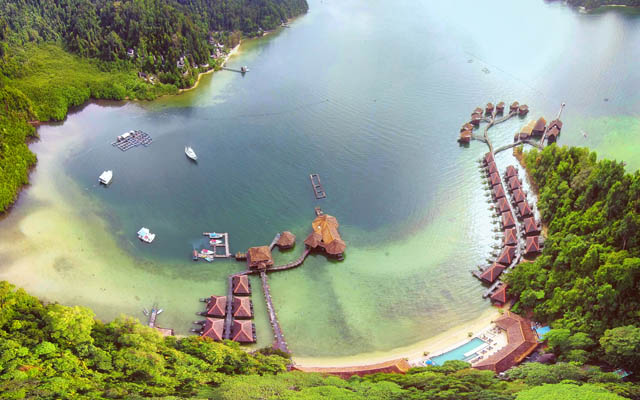
Gurney Bay Hotel, A Parkroyal Hotel, Malaysia
Gurney Bay Hotel, A Parkroyal Hotel, has opened with 368 rooms, located 10 minutes from George Town, a UNESCO World Heritage site known for its shophouses, town houses, and cultural landmarks.

The hotel is part of the Gurney Bay lifestyle precinct, developed under the Penang2030 Vision, and offers unblocked views of the Penang coastline, George Town, and the Penang Hills.

Facilities include a 220-seat all-day dining restaurant, a lobby lounge and bar, a ballroom for up to 550 guests, four meeting rooms, kids’ club, gym, health club, outdoor tennis court, two swimming pools including a children’s pool, steam and sauna rooms.

Tui Blue Angkor Grace

Tui Blue Angkor Grace, Cambodia
Tui Blue Angkor Grace has opened in Siem Reap, Cambodia, close to the Angkor Wat temple complex and Tonlé Sap Lake.

It offers hydrotherapy facilities including a magnesium-rich pool, onsen and ice baths, along with traditional healing therapies. The hotel also features a gym with certified instructors, the Aum Yoga Studio with daily classes, and the Amazing Grace Sound Healing Temple for sound therapy sessions. A kids wellness centre caters to children aged six months to 12 years.

The hotel works closely with the local community, sourcing ingredients from nearby farmers for its culinary offerings.

Mövenpick Jimbaran Bali encourages longer stays with Holiday Saver package

0

Mövenpick Resort & Spa Jimbaran Bali has launched its Holiday Saver package, encouraging guests to extend their stays with a range of inclusive benefits. The offer applies to bookings of five nights or more between August 1, 2025, and March 31, 2026, with reservations open until September 30, 2025.

The package includes breakfast each morning, one daily meal at the resort’s restaurants, a daily cocktail, the brand’s Chocolate Hour in the afternoon, and a 60-minute massage for two once per stay. Rates start from 2,600,000 rupiah (US$170) per night, with Accor Plus members receiving an additional 10 per cent off.

Holiday Saver at Mövenpick Jimbaran Bali offers longer stays with inclusive dining and spa experiences

The resort, located within Samasta Lifestyle Village, offers access to shops, cafés, and entertainment, while Jimbaran Beach and cultural landmarks such as Garuda Wisnu Kencana are a short drive away. The property combines resort comfort with authentic Balinese experiences, allowing guests to structure their days around rest, exploration, and leisure.

For more information, visit Mövenpick Resort & Spa Jimbaran Bali.

TTG Asia Luxury feature wins PATA Gold Award

0

A feature on China’s affluent female travellers, a segment that is shaping the future of luxury travel, has won PATA Gold Awards 2025, Best Industry Article.

Published within TTG Asia Luxury’s September-October 2024 issue, the feature, titled Rise of Chinese female explorers, was written by group editor, Karen Yue.

TTG Asia Media’s Darren Ng (third from left) receives the award on behalf of the editorial team

It looks at the scope of influence Chinese female travellers have on travel decisions, and the steps industry players should take to engage with this segment.

This is TTG Asia Media’s 12th PATA Gold Award recognition. TTG Asia and TTGmice were also recipients of past Business Article awards.

Revinate expands Asia-Pacific team with key leadership hires

0

Revinate, a direct booking platform for the hospitality sector, has appointed Jeff Hoh as APAC head of sales and Nick Ellis as Australia country director, strengthening its presence and capabilities across the Asia-Pacific market.

Ellis will report to Hoh, who reports to Doug Tilford, chief revenue officer.

From left: Jeff Hoh and Nick Ellis

Hoh brings over 18 years of experience in SaaS and travel technology, with leadership roles at Agoda, Bookaway, and Seatos, specialising in regional expansion and partner development across Asia-Pacific and Oceania.

Ellis has more than 25 years of hospitality leadership experience across brands including Accor, Ovolo, Spicers Retreats, and Salter Brothers Hospitality, with expertise in hotel launches, digital transformation, and commercial growth. He also serves as deputy chair of Queensland’s peak tourism body and is a senior judge for the Queensland Tourism Awards.

World Sustainable Hospitality Alliance bolsters Middle East Presence with UAE appointment

0

The World Sustainable Hospitality Alliance (WSHA) has appointed Radhika Arapally, founder and chief consultant of Sustainability Kiosk, as senior strategic representative for the UAE, advancing the industry’s shift towards net positive hospitality in the region.

In this role, Arapally will develop high-level partnerships, drive programme delivery, and increase engagement across the UAE hospitality sector, supporting the WSHA’s mission to create an industry that gives back more than it takes.

Arapally brings over 20 years of international hospitality and sustainability experience. She founded Sustainability Kiosk in 2022, a platform with more than 70 validated solutions that help hotels reduce waste, cut costs, and progress towards net zero while maintaining operational efficiency. The platform has worked with groups including Minor Hotels, The First Group, and Millennium Hotels.

She also founded the Responsible Hoteliers Summit, the UAE’s first operational sustainability event, bringing together industry leaders and solution providers to share knowledge and foster collaboration.