South Korean hospitality technology company, ONDA, is expanding its business to Taiwan by launching an all-in-one solution optimised for Taiwanese hotels.
ONDA’s SaaS-based hospitality solutions for small- and medium-sized hotels in the Taiwanese market include a property management system, channel management system, booking engine, and website.
ONDA is launching hospitality solutions optimised for Taiwanese hotels; Taipei, pictured
With the goal of speeding up its lead in the Taiwanese market, the adoption of hospitality solutions for efficient operations has recently been actively carried out, and the company is in detailed discussions with more than 10 major hotel brands, including K Hotels Group which operates nine hotels in Taiwan, to introduce ONDA’s hospitality solutions.
In addition, ONDA aims to sign a solution adoption and distribution partnership with more than 100 properties in Taiwan this year.
A data-driven hospitality technology company that handles around 70 per cent of the domestic online accommodation booking market, ONDA has built strong partnerships with major global tech companies by becoming the first Airbnb Preferred Partner and the first Google Hotel partner in South Korea.
By launching its global expansion strategy last year, ONDA has successfully entered the hotel market in South-east Asia, followed by Taiwan, and is accelerating its expansion in the Middle East and North Africa region, as well as Europe.
Following its merger with Habyt last year, Hmlet is rebranding to Habyt, fast-tracking the company’s growth plans and mission to offer fully global flexible living solutions.
Engaging the services of design agency DesignStudio, Habyt’s new brand purpose, Your next move unlocked, reflects the company’s commitment to removing the traditional barriers associated with housing.
Hmlet is rebranding as Habyt following the merger last year; Hmlet Cantonment, pictured
The new brand strategy focuses on delivering a highly utilitarian experience, with a visual identity that takes inspiration from architectural floor plans and a new bespoke Habyt logo that reflects opening opportunities through the symbol for opening doors.
Habyt’s CEO of Asia-Pacific, Jonathan Wong, said: “Rebranding Hmlet to Habyt in Asia-Pacific was the next logical step following last year’s merger and will enable us to retain all the best parts of the strong Hmlet legacy, while fully leveraging the synergies of being one larger global entity that’s setting out to revolutionise the way people live and move around – a win-win which benefits our members and our real estate partners.”
Dusit Thani Maldives has elevated its arrival experience by opening a seaplane lounge at the Trans Maldivian Airways (TMA) terminal at Velana International Airport in Malé.
The resort will assign airport representatives to assist guests with luggage and navigate guests through the transfer process.
Dusit Thani Maldives’ new lounge will provide a comfortable place for guests during transfers
The air-conditioned lounge is furnished with seating spaces, floor-to-ceiling windows, and decor embodying Maldivian serenity, providing a comfortable place for guests waiting for their connecting flight to the island.
The lounge will also offer refreshments, gourmet snacks, beverages, complimentary high-speed Wi-Fi, electronic device charging stations, and a children’s play area.
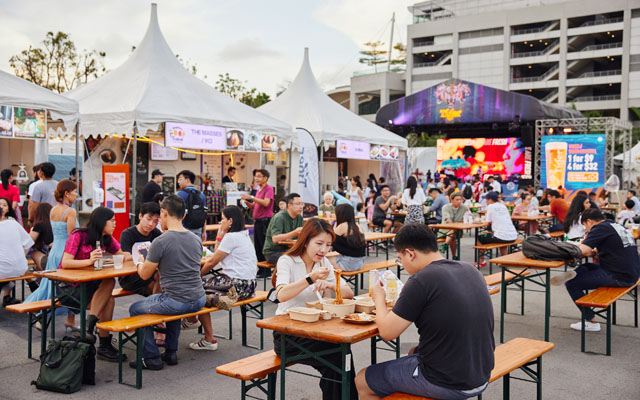
The annual Singapore Food Festival (SFF) is back to celebrate its 30th anniversary from July 19 to 30, and will be the largest-ever Festival Village at Bayfront Event Space housing more than 100 brands.
To mark the occasion, SFF 2023 will showcase Singapore’s food culture, inviting participants to explore its rich past, savour the flavours of the present, and be inspired by the innovations that will shape the future of dining.
Singapore Food Festival 2023 will feature three new zones in the Festival Village
Festival highlights include an expansive Festival Village with three new zones – Food Cartel, Sweets Alley and Café Boulevard; island-wide activations like culinary tours, workshops and chef masterclasses; as well as exclusive finds specially created for the event.
The SG Food Walk zone will give a nod to Singapore’s diversity of flavours, and feature festival-exclusives such as curry chicken fried popiah (thin crepe-like roll), calamari nachos with a remoulade made from belimbing (a fruit native to Malaysia and Indonesia), and more.
For the new zones, Food Cartel will showcase pop-ups, bar concepts and masterclasses; Café Boulevard will give a tribute to Singapore’s thriving café culture; and offerings at Sweets Alley are sure to satisfy sugar cravings with a mix of traditional and modern sweets.
Hands-on gourmands can pick from a curated line-up of workshops including Indie Singapore Tours’ Market, Mingle, Mixology tour, a heritage shophouse cake workshop, or try their hand at making traditional min jiang kueh (peanut pancake).
With the rising trend of microbreweries and distilleries in Singapore, look out for thirst-quenching offerings by Papa Doble, Archipelago Brewery and The 1925 Brewing Co at the Festival Village, as well as SFF fringe event Brewnanza Fest by Brewlander which will showcase over 100 unique craft beers at the same spot from August 3 to 6.
Entry passes to the Festival Village start from S$8 (US$6).
Quark Expeditions is offering hot summer promotions for polar explorers with up to 30 per cent off on Arctic and Antarctic expeditions, including new solo traveller deals.
For a limited time, guests can get up to 30 per cent discount across any sailing season: Arctic escapes this summer, Antarctic expeditions next winter, and all itineraries in 2024 or 2025.
Travellers can enjoy up to 30 per cent discount across any sailing season in 2024 or 2025
Solo travellers on select Antarctica voyages, such as the Emperor Penguin Quest to Snow Hill, can save up to US$20,000 by booking now with no single-occupancy premium.
Regular offers are also available, such as an additional five per cent discount for guests combining back-to-back voyages, an immediate 10 per cent off when paying in full at time of booking and, for all repeat explorers with the company, a further five per cent discount for life as a member of the Shackleton Club.
Destination Queenstown chief executive Mat Woods has been appointed to the board of Regional Tourism New Zealand with immediate effect.
Representing Queenstown and all the South Island regions, Woods will work alongside other regions on nationally significant issues, such as shaping the evolution of the visitor economy.
He was previously the chair of Lake Wānaka Tourism, and is currently on the board of Snow Sports NZ.
Hyatt Hotels Corporation has named Ratih Handayani as general manager of Alila Manggis in Bali.
Bringing a wealth of experience to her new role, she previously served as an independent hospitality consultant since 2020, contributing her expertise to Triloka Architects in Bali.
Prior to that, she was general manager at the Cabochon Hotel & Residence in Bangkok.
Minor Hotels has appointed Ian Di Tullio as the company’s new chief commercial officer, who joins the Bangkok-based group from his most recent position as chief commercial officer Europe at Accor.
Di Tullio brings to Minor Hotels a deep expertise in loyalty, analytics, customer engagement and digital, having overseen ground-breaking innovations in customer loyalty, digital marketing and distribution during previous roles at Accor, Qatar Airways and Air Canada.
Fluent in English, French and Italian, he also has extensive global management experience with large multinational organisations.
Locally-owned Thai DMC, Tripseed, has published a comprehensive Climate Action Plan to underline its commitment to taking an honest and open approach to environmental sustainability.
As one of the few founding members and signatories of the Glasgow Declaration, Tripseed recognises the urgency of reducing its environmental impact throughout its operations and has developed a pragmatic Climate Action Plan.
Tripseed aims to have high quality tours and services in the country without compromising on ethics or integrity
Tripseed sets out to accomplish realistic and achievable emission reduction goals, which will be tangible and measurable; prioritise sustainable procurement by joining with sustainable partners and suppliers whose social and environmental values are aligned with Tripseed’s; integrate sustainable transportation in its programmes; and collaborate with local communities that enable it to support social and environmental initiatives, conservation efforts, and sustainable tourism practices.
In a press statement, Ewan Cluckie, director of growth at Tripseed, stated that the company values “greater levels of honesty and transparency… in addressing climate change, as well as more sustainable approaches to tourism in general”.
“Through our Climate Action Plan, we aim to drive positive change within Thailand’s DMC sector and inspire others to prioritise the development of more sustainable supply chains. We recognise the collective responsibility we have towards the environment and are fully committed to making a meaningful difference,” he said.
When asked if the Climate Action Plan would impact existing partnerships, Cluckie told TTG Asia that none of his partners would be affected.
“Most, if not all our current partners, are already on their own sustainability journeys and trying to do things better. I believe we have one of the largest B-Corp (a certification for businesses that are meeting high standards of verified performance, accountability, and transparency on Environmental, Social and Governance factors) partner bases out of all DMCs in Thailand, so this is an area that they are all prioritising and one that we can assist them with by providing comprehensive, measurable, and transparent impact data,” he detailed.
Furthermore, when queried on how the strict approach to sustainability would impact operating costs at Tripseed, Cluckie commented that responsible sustainability choices would typically result in higher operating costs.
“While we do everything that we can to make our pricing competitive on the marketplace, paying fair wages, not engaging in any creative international accounting tactics to avoid taxes, and having a fully legal business registration without utilising nominee shareholders are all things that introduce a higher cost of business or otherwise impact our market competitiveness,” he said.
He emphasised that Tripseed’s focus is on “having the highest quality tours and services in the country without compromising our ethics or integrity towards growing travel back better”.
Cluckie also disagreed with the commonly-held belief that sustainable practices, in comparison with old-school tourism operations, would cut operating costs.
He remarked: “I think all the partners we work with understand and appreciate that we won’t always be the cheapest, but we’ll always be working the hardest to do things right and offer the best overall value and quality standards.”
SITA has signed a deal with the Airports Authority of India (AAI) to support and provide technology to 43 of the country’s biggest airports.
The deal will see improvements to over 2,700 passenger touch points. Initially deployed across 43 airports, the technologies are scalable to an additional 40 airports over the next seven years. Over 500 million passengers are expected to be processed during this period.
SITA’s solutions will help India’s airports reduce their infrastructure footprint and increase operational efficiency
Under the agreement, SITA will deploy its IATA-certified solutions, including SITA Flex, CUPPS, SITA CUSS, and SITA Bag Manager, which offer airlines and ground handlers the benefits of common use technologies, enabling scalable operations to meet their specific operational requirements.
Indian airports will benefit from a reduced infrastructure footprint and increased operational efficiency, while airlines will be able to enforce better security and take advantage of an agile technology platform to host new progressive technologies and move away from native applications.
In addition, a centralised cloud hosting of all servers means reducing on-premise infrastructure costs on top of enabling proactive monitoring and control of services.
The adoption of cloud solutions will also benefit passengers, who will gain more control over their journey through a low-touch, efficient check-in, bag drop, and collection process via assisted and self-service mechanisms.
Sumesh Patel, president, Asia-Pacific, SITA, said: “The number of airports in India is expected to increase from 148 today to 220 by 2025. By connecting cities better, air travel and transport will help unlock the full potential of India’s economic growth too.
“Ensuring efficient and fluid operations and a seamless passenger experience at these airports will be critical to delivering on India’s air transport industry opportunity.”







 Prior to that, she was general manager at the Cabochon Hotel & Residence in Bangkok.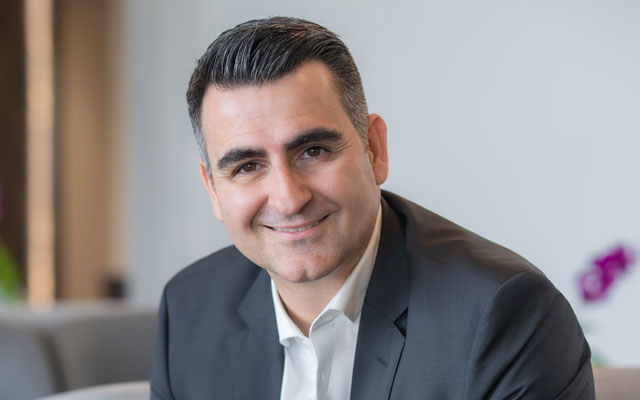
 Fluent in English, French and Italian, he also has extensive global management experience with large multinational organisations.