Korean Air is deploying the new Airbus A321neo aircraft on its daily Seoul Incheon-Phnom Penh service starting July 1, and is the first Asian airline to feature Airbus’ Airspace cabin on an A321neo.
The A321neo is a new aircraft type and the airline’s first narrow body aircraft to have fully lie-flat seats in Prestige Class (business class), a feature normally found exclusively on wide-body aircraft. The cabin comprises eight Prestige Class seats and 174 economy class seats.
Korean Air is the first Asian airline to feature Airbus’ Airspace cabin on an A321neo
The SkyTeam carrier’s Airspace cabin will include customisable lighting system, audio/visual Bluetooth pairing, larger overhead bins, and more.
The airline is slated to receive a total of 30 A321neo aircraft by 2027. It will also be deploying these aircraft on other routes to South-east Asia as well as routes to China and Japan.
Royal Caribbean International is set to return to China in April 2024, and vacationers can now book four- and seven-night vacations on Spectrum of the Seas as it sails from Shanghai to popular destinations like Fukuoka, Okinawa, Nagasaki and Osaka, Japan.
Specially designed for Asia and travellers of all ages, Spectrum of the Seas features a line-up of restaurants and entertainment with regionally-inspired menus and shows, like Hot Pot, Teppanyaki and Sichuan Red, as well as karaoke lounge Star Moment, Showgirls in the Royal Theater and Silk Road in the one-of-a-kind Two70.
The two-level Ultimate Family Suite is perfect for large families and features an in-suite slide
The adventure seekers can try out activities like skydiving on the RipCord by iFly, the all-glass observation capsule, as well as bumper cars and sports in the indoor activity space SeaPlex.
For larger families, they can choose to live it up at the two-level Ultimate Family Suite that accommodates up to 11 people and features an in-suite slide.
Pradyot Rana has been named general manager for Shinta Mani Mustang – A Bensley Collection, which opens in Nepal on August 1.
With a strong background in luxury hospitality and his vast knowledge of the region and creating bespoke unique guest experiences in remote locations, Pradyot will manage all aspects of operations at the property.
He was previously at Tiger Tops Nepal where he held the position of project and business development manager.
The Hong Kong Tourism Board (HKTB) has appointed Martin Gwee as director, South-east Asia.
He will lead the development and implementation of the HKTB’s marketing strategies in South-east Asian markets in his new role.
With extensive marketing experience, industry connections and keen understanding of the evolving needs and preferences of South-east Asian travellers, Gwee first joined the HKTB in 2016 and is currently director, marketing for South-east Asia.
A growing appreciation for winter sports and a strong desire for holidays in the great outdoors and colder climes have fired up intense interest in winter and ski holidays among Asian travellers, especially those from tropical zones.
Expedia data shows ski holiday bookings last winter season (December 1, 2022 to March 31, 2023) out of Asia have climbed to 70 per cent of pre-pandemic levels (December 1, 2019 to March 31, 2020). With ski resort bookings showing an average duration of three nights at least, Expedia believes travellers are staying on longer to ski.
Younger families are showing up for ski holidays
Luxury travel specialist, Scott Dunn, told TTG Asia that Asian enquiries and bookings for ski vacations have spiked 250 per cent in the last ski season, compared to the previous season in 2021/2022.
Koo Ying Ying, Europe travel specialist, Scott Dunn, said the intense interest could be due to travel restrictions being lifted, allowing Asians to get back to planning their long-overdue winter fun.
Asians are also drawn to wintry landscapes, like Lapland and Iceland, and the chance to chase down aurora visions.
“Snow has always been a really strong pull factor for guests from Asia, especially (those living in) tropical climate,” said Koo. “Post-pandemic, we also see that more guests are craving fresh air and longing to be in the great outdoors. The snowy mountains are the perfect place for this, and they also present a very different type of landscape compared to what most of us are accustomed to, which is another factor we think has led to this spike (in winter travel demand).”
When asked if Olympic Winter Games in Beijing 2022 and Pyeongchang 2018 could have fired up Asian interest in ski holidays, Rachael Harding, CEO for East and South Asia & Pacific at Club Med, said any major events on the world stage could influence consumer behaviour. Through the two Winter Olympics, winter sports as well as the host country are cast into the spotlight.
“The fact that Asia had two Winter Olympics in recent years certainly put the region on the map as a winter playground (and inspired people to see Asia as an option) for mountain holidays,” Harding told TTG Asia.
She added that the games had also created a new pool of young athletes and led to more ski associations opening up in various countries across Asia.
“A big case is the formation of the Ski and Snowboard Association of Thailand in 2016. Thailand is now our most aggressive market to rebound,” she said.
That said, Club Med mountain resorts have seen “this consistent trend for quite some time”, where ski business now contributes a third of total business compared to just 10 per cent in 2015.
Demand is growing year on year and “completely outstripping the capacity that we have”, remarked Harding.
Scott Dunn expects strong bookings to continue into the 2023/2024 season. “We’ve just opened bookings for the next ski season and there is already a healthy level of interest and bookings, especially from big families and groups of friends,” shared Koo.
She believes that customers are moving fast to secure availability and rates “because key dates – such as the Lunar New Year, Christmas and New Year’s Eve, and Easter – get booked up very quickly”.
Not only is ski travel demand returning fast, Koo said traveller profiles are also getting younger.
“Traditionally, we often see families with older children, between 12 and 19 years old. Now, we see a trend of younger families with children aged four to 10 exploring ski holidays,” she said.
Asians are open to snowy adventures all over the world. Expedia noted that Niigata, Japan; Zermatt, Switzerland; Banff, Canada; and Haute-Savoie, France are top ski destinations among Asian travellers. Among Scott Dunn’s customers, France and Italy are hot favourites, while Canada and Switzerland are gaining popularity. New Zealand makes a fine choice too, according to Koo, as it has a great ski season between June and September.
Slopes and more
With seven ski mountain resorts in Asia and 13 elsewhere in the world plus three more set to open, Club Med has established itself firmly in the space of winter vacations. However, Harding said the mountains are not just for winter sports enthusiasts.
“The mountains are a beautiful place to escape the city. There is fresh air and the resorts offer a holistic wellness experience. We have a lot of activities that don’t involve skiing and they lean into our different target audiences,” she said.
At Club Med Val d’Isère, the company’s first Exclusive Collection mountain resort in the heart of the French Alps, guests not into snow sports can spend their winter vacation learning how tomme de Savoie and Avalin cheese are made, exploring the old village of Val d’Isère, reclaiming their health at the yoga studio and gym, wining and dining through multiple F&B outlets on property, and joining in artistic events.
Easier vacations
Recognising that winter holidays are a little more complex to plan, Expedia has in recent years been working with ski resorts to provide packages and deals for customers, all to make ski holidays more accessible for international travellers. Ski packages may include room nights, breakfast, barbecue, ski lift and gear rental, shared an Expedia spokesperson.
Scott Dunn’s travel specialists are trained to guide customers on their ski needs and propose the best destination and property based on their preferences. For adventurous guests, these travel specialists may even suggest heli-skiing and glacier hiking. The agency also boasts its own ski concierge team that will help customers secure lessons, passes, restaurant bookings, and transfers once the holiday booking is confirmed.
“We are also able to plan flight routings and itinerary suggestions to visit nearby European cities before or after a ski trip,” said Koo, adding that pre-departure calls and briefings are provided to ensure guests are well-prepared for their winter break.
For families, Scott Dunn offers two Explorers Kids Clubs in the French Alps – one in Val d’Isere and the other in Courchevel. In Val d’Isere, for example, families can engage a nanny to pick the children up from the hotel in the morning, and help them with ski passes, lessons, attire and equipment.
“This equals less fuss, and allows parents to enjoy themselves on the slopes knowing that their kids are well taken care of,” said Koo.
Scott Dunn Explorers Kids Club also curates other activities, besides winter sports, to keep little ones engaged for days.
Limited seats and high airfares have slowed travel recovery across Asia, with experts predicting traffic volumes will only return to pre-pandemic levels by 2024 as airlines increase frequency and routes.
According to figures from the Association of Asia Pacific Airlines, international traffic in Asia-Pacific sat at 52 per cent of 2019 levels in January 2023, with Asia recovering much slower than other regions, due to travel restrictions remaining in place much longer.
The figures revealed that South-east Asia’s recovery in particular have tracked below the global average, with Indonesia, Malaysia, and Thailand lagging, while the Philippines and Vietnam were above average. Vietnam now sits well above pre-Covid-19 levels.
The Asian Development Bank reports that domestic traffic in South-east Asia could reach 100 per cent of 2019 levels by the end of 2023, while international traffic is predicted to hit 90 per cent. In 2Q2023, international seat capacity for South-east Asia hit about 76 per cent recovery, with the full reopening of China expected to aid recovery throughout the rest of the year.
“Airlines have been steadily restoring flights in the South-east Asia-China market since January 2023, when quarantine restrictions in China were lifted, but flights are often added to the schedules with very short notice,” the report noted.
Air Asia launched new services to various Chinese cities, such as Guilin, pictured
It added that by the end of 3Q2023, the South-east Asia-China market could reach 70 to 80 per cent, contingent on airlines securing approvals for additional flights. However, securing approval from Chinese authorities for additional flights has so far been a “slow and gradual process”.
Mayur Patel, head of Asia at OAG Aviation, said that while current schedules show a 98 per cent recovery to pre-pandemic 2019 levels, a full recovery in global capacity is not expected before March 2024.
He added: “As consumers continue to search for fresh experiences, pent-up demand will carry on driving traffic to regional Asia-Pacific destinations over the next 12 months.”
Patel said the reopening of China’s borders and the anticipated travel boom will play a major role in the region’s full flight recovery.
“Most regional travel associations and carriers are predicting traffic volumes to return closer to pre-pandemic levels, despite economic and geopolitical headwinds, by 2024,” he noted. “As for the broader recovery, this will be dependent on how the outbound market from China recovers in the near term.”
He said some of the bottlenecks lie in getting slots for foreign carriers approved by China. For example, capacity recovery has been distorted with Chinese carriers having a larger capacity share.
Pointing to Singapore as an example, Patel said overall capacity for June 2023 compared with the same period in 2019 has shown overall recovery of 54 per cent. However, the two large Chinese carriers, Air China and China Southern, have reinstated 81 per cent and 75 per cent of capacity respectively, while Singapore Airlines Group has only been able to reinstate 58 per cent of its capacity between Singapore and China.
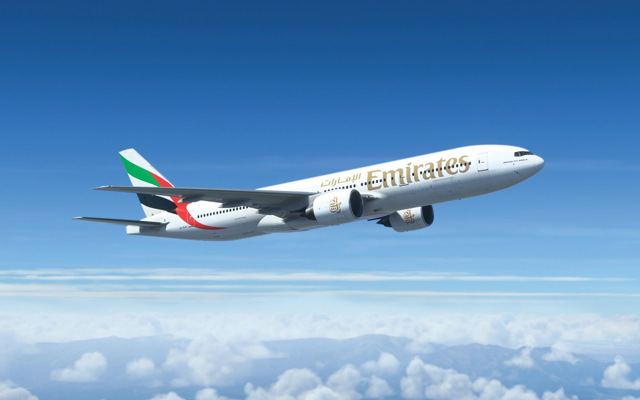
Emirates is expanding its fleet, in preparation for additional capacity and new services
“The Chinese regulators have been somewhat restrictive with the granting of slot allocations to airlines, especially to foreign carriers, which can be attributed to a phased approach for outbound travel that has been slower than anticipated by the market,” he told TTG Asia.
Patel added that other regulators across the region are also imposing restrictions. For example, the Indonesia regulator is imposing restrictions on Singapore Airlines’ flights from Singapore to Jakarta.
“This can be seen from schedules filing for which this city pair has only recovered two-thirds of the frequency from 2019 levels. In comparison, Singapore to Bali has recovered fully,” he added.
On a brighter note, recent schedule announcements made by airlines operating in this region continue to show confidence, with new and additional services planned besides reinstating former ones.
Emirates resumed its longhaul Dubai-Auckland service in December 2022
Emirates unveiled plans to deploy a fleet of 85 A380s, taking the total to 95 by the end of next March.
Adnan Kazim, chief commercial officer at Emirates, said the airline operates about 3,080 departure flights a week globally and is currently exploring adding more capacity to markets, including China.
Furthermore, additional flights to New Zealand’s Christchurch and Auckland as well as Australia’s Sydney and Melbourne will take off on July 15, as well as Singapore on June 1, strengthening operations in the Asia-Pacific region, increasing competition and driving down fares.
Low cost carrier AirAsia is also pinning hopes on China pushing its rebound. In addition to the carrier flying to nine destinations in China, it recently unveiled new services from Kuala Lumpur to Quanzhou, Guilin and Chengdu, beefing up weekly flights between the two nations to more than 129.
Benyamin Ismail, AirAsia X Malaysia CEO, said: “As China is rapidly bouncing back, we expect to launch even more flights to the country, as well as increase frequency on the most popular and profitable routes within our network in the short- to medium-term.”
Earlier in February, when the airline announced its resumption of China services, Benyamin said that its services to the country had seen “tremendous success”, with over 1.8 million guests carried to and from China in 2019 alone.
As travel appetite ramps up, Hong Kong Airlines is stepping up operations, with new services between Hong Kong and China’s Beijing, as well as Hong Kong and Japan’s Fukuoka, besides reinstating services to Bali’s Ngurah Rai International Airport and Shanghai’s Hongqiao International Airport.
New entrant, Thailand-based full-service Really Cool Airlines, said in May that it plans to commence flying in 1Q2024. Its initial routes are likely to include Singapore, Tokyo, Hong Kong and Taiwan, with European routes to be added in 2025.
Patel said factors that would drive full recovery in the region included developing a dual-brand strategy to increase low-cost offerings while simultaneously tapping into the luxury market. For example, through the pairing of Cathay Pacific and HK Express, Qantas and Jetstar, and Singapore Airlines and Scoot.
He predicted a “significant” increase in demand for Bali, Vietnam, Thailand, South Korea and Japan.
“This surge in traffic can be attributed to a growing trend among travellers seeking out more personalised experiences and to explore new, previously unexplored destinations.”
But he cautioned that the road to full recovery is not paved with roses, as airlines have to navigate major challenges such as shortages of staff, spare parts, and engineers, as well as the high cost of oil.
“With the price per barrel unlikely to fall in 2023, air fares will remain high, at least through the summer season,” he remarked.
We have crossed the mid-year mark so swiftly. Time flies especially fast when you are busy attending to pent-up travel needs and catching up on years of lost business. Back in April, the World Travel & Tourism Council published an industry performance report stating that the travel and tourism sector was “catapulting” into 2023. What a welcome verb!
The sector is expected to reach US$9.5 trillion this year, just five per cent below 2019 pre-pandemic levels when travel was at its highest. Thirty-four countries had already exceeded 2019 levels back in April.
And as we catapult through these critical months and return to the rat race, it is good to see that years of promising to build tourism back better have not given way to eager profit pursuits. The content we carry in this issue provides encouraging proof.
Hotels are intensifying their environmental-focused pursuits (yes, more than just cutting out plastic straws), which are leading to improved experiences for guests, be it through architectural designs that bring soothing nature indoors or meals that are big on flavour and small on emissions.
Silversea Cruises, in chasing its ambitions to be an ultra luxury cruise line with the best in class destination experiences, is distancing itself from same-old shore excursions and choosing instead to work with NTOs and real destination specialists to identify hidden gems and spread tourism deeper into destinations.
New Zealand’s tourism players are more determined than ever to make regenerative tourism the core of what they do, providing travellers an opportunity to contribute positively to the country’s environment and community development.
Building on its move last September to make tourism accessible to visitors of all physical abilities, Queensland has gone on to designate 2023 as the Year of Accessible Tourism. Demonstrating that it is doing more than just talk, the Australian state is pumping A$12 million into making sure accessible tourism goals are met.
Beyond singular destinations, UNWTO is moving into the third edition of its Best Tourism Villages initiative, established in 2021 to identify and support the world’s most outstanding tourism villages that are able to drive rural development and local well-being. This initiative has recognised more than 70 tourism villages from almost 40 countries. Among these, only 14 are in the massive and culturally-diverse Asia-Pacific region. Hence, it is no surprise that UNWTO is especially keen for more tourism villages here to come forward for assessment.
All these initiatives and more, from developing destinations responsibly to support tourism dispersal to making tourism accessible to everyone, answer the increasingly urgent call for quality tourism – where tourism isn’t extractive and benefits only travellers and businesses, and where consumers understand that their ability to explore someone else’s home is a privilege and they must leave it better than how they had first found it.
Travel had to come to a standstill for the world to wake up to its importance.
In an industry governed by constant change, be it societal, cultural, or economic, what emerged following the disruption of the last few years are major shifts in consumer mindset, spending and lifestyle.
A complete overhaul in the way brands market, engage and capture the imagination of travellers, redefined by the personal priorities of consumers, may be required today.
Released as a yearly tradition, The Digital Travel APAC 2023 Innovation Brief aims to help travel brands embrace change, navigate uncertainty and refocus growth to capitalise on emerging trends and re-align brands amid the changes in the sector today.
Gathering hours of research and case studies from top regional and international brands like Expedia, Booking.com, Klook, Discovery Hospitality, the report discovers ways for travel and tourism brands to leverage on:
Regenerative Travel and the Future of Tourism beyond Sustainable Travel
Unlocking the Potential of Data-Driven Insights and Re-Think Customer Touchpoints
The themes in the report will also be explored in detail at the upcoming in-person Digital Travel APAC 2023from August 15 to 16, 2023. Event participants can look forward to cross-learning and gaining new perspectives from over 300 travel leaders from Asia’s leading hotels, airlines, OTAs, as well as opportunities to trade successful strategies to improve their businesses.
Readers of TTG Asia are entitled to a 20 per cent discount to attend Digital Travel APAC 2023. Simply quote ‘TTG20’ upon checkout here.
*only applicable to non-solution providers/companies
AirAsia will resume flights between the Cambodian coastal resort of Sihanoukville and the Thailand and Malaysian capitals, spurring hopes among tourism players of improved arrivals and inbound business.
From August 1, AirAsia will operate three weekly return flights connecting Sihanoukville with Kuala Lumpur every Wednesday, Friday and Sunday. From August 3, two weekly return flights will resume between Sihanoukville and Bangkok. every Tuesday and Saturday.
AirAsia will resume flights to Sihanoukville, Cambodia from Bangkok and Kuala Lumpur; Sokha beach, pictured
A Cambodia Airports’ spokesman said this is a “breakthrough” move as currently Sihanoukville International Airport operates only two international flights.
Steve Lidgey, general manager of tour company Asia a la Carte, predicts the connections will be a hit with Thai and Malaysian travellers looking for casino-driven breaks in Sihanoukville, which in recent years has seen scores of gaming spots mushroom.
“I can only see benefits for Asian travellers who book at short notice, and are keen to discover new destinations. The lures of casinos will be sure to attract Thai and Malaysian travellers,” he said, adding that the nearby islands of Koh Rong and Koh Rong Samleom may then benefit from day trippers.
“Western travellers cannot use Don Muang as a connecting point for onward flights to Europe. Therefore, that route is only practical for expats living in Bangkok,” Lidgey added.
He also hopes Bangkok Airways will launch the Sihanoukville-Bangkok connection it announced pre-Covid, which had not started as planned due to the onset of the pandemic.
“We can still hope that the previously announced Bangkok-Sihanoukville route with Bangkok Airways will start sometime in the future, as the airline offers connections through Suvarnabhumi to multiple other destinations,” he said.
“We can see how developed Sihanoukville is now, but there’s not much air connectivity. So, AirAsia is starting at the right time and it’s good news for the tourism sector there,” said Thourn Sinan, chairman of B2B Cambodia and PATA Cambodia Chapter.
“The city is well developed but all hotels are almost empty and restaurants are closing because there are not many international tourists, (so) they rely on domestic tourists.”
Sichon in Southern Thailand will welcome its new international terminal at Nakhon Si Thammarat Airport by 4Q2023, setting it on course to attract more travellers who will discover its peaceful and serene environments.
Just 40 minutes from the airport, attractions include Sichon beach, recognised by Lonely Planet as one of the best 10 beaches in Thailand, and the country’s second highest peak, Khao Luang mountain range, a terrain intersected by waterfalls traversing its sides. Visitors to Sichon can expect to spend their time strolling through coconut groves, uncovering the rich heritage of Nakhon Si Thammarat, which dates back over 1,200 years, and more.
Sichon is home to Wat Phra Mahathat, pictured, one of Thailand’s oldest temples and an annual destination for Buddhist pilgrims
Ravi Chandran, senior advisor to Urasaya, a residential and hospitality development concept which will be unveiled on Sichon beach in the coming months, commented on the potential of the destination: “Far from the tourist crowds, this is life in southern Thailand as it was 30 years ago – naturally beautiful, culturally authentic and perfectly peaceful.”
Chandran, who was former CEO of the Laguna Phuket integrated resort, added: “This is the most authentic and natural destination I have seen in Asia – this is the Thailand visitors want to see and it is somewhere people will want to live.”
In his press statement, Chandran said Sichon will not become a mass tourism hub – high-rise hotels are not expected to rise along the coast and the buzz of banana boats and jet skis will not be heard offshore.
“Naturally, sustainability will underpin every aspect of Sichon’s future development. The concept is already ingrained in the area’s heritage, as local people have been practicing responsible, eco-sensitive crafts for centuries. Take Kiriwong Village (for example) – materials are hand-woven and organically dyed using the local fruit from indigenous trees, including mangosteens. (On) Pak Phanang river, fishermen cast their nets. This is the most authentic and natural destination I have seen in Asia,” he remarked.






 He was previously at Tiger Tops Nepal where he held the position of project and business development manager.
 He will lead the development and implementation of the HKTB’s marketing strategies in South-east Asian markets in his new role.