TTG Asia
Asia/Singapore Wednesday, 25th February 2026
Page 53

Swire Hotels unifies House Collective under global Upper House brand

0

Swire Hotels has introduced Upper House, a global brand that unites its House Collective properties and marks a new phase of international growth.

The move also includes the launch of the brand’s first branded residences project, Upper House Residences, in Bangkok in 2030.

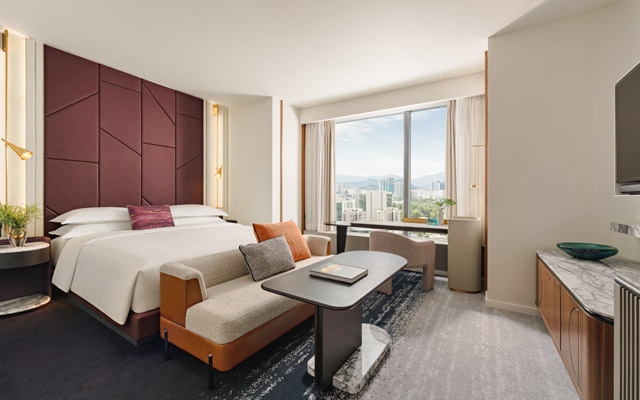
Swire Hotels brings its House Collective portfolio under the global Upper House brand, marking a strategic shift toward international consistency; Upper House Shenzhen to open in 2027, pictured

Following the success of Upper House Hong Kong, ranked among the top five in the World’s 50 Best Hotels for two consecutive years and recognised in the inaugural global Michelin Keys selection, all existing Houses in Hong Kong (Two Keys), Chengdu (One Key) and Shanghai (One Key) will be renamed Upper House. Future openings in Shenzhen, Xi’an, Tokyo and Bangkok will also carry the Upper House name, strengthening brand consistency across international markets.

The rebrand brings together the group’s portfolio under one name while maintaining the brand’s Houses not Hotels philosophy. Each property reflects its local culture through guest experience, dining and service.

Upper House Residences Bangkok, opening in 2030, will extend the brand’s hospitality approach to residential living. The project will offer homeowners integrated amenities, services and property management under the Upper House brand.

Upcoming openings include Shenzhen in 2027, Xi’an in 2028, Tokyo in 2029, and Bangkok in 2030 with the launch of Upper House Residences.

Dean Winter, managing director of Swire Hotels, said: “The rebrand heralds a new chapter for Upper House as a single, iconic brand. Guided by the same passion, precision, and incredible people who shaped our vision of hospitality over almost two decades, the Upper House experience remains unexpected and personal, where genuine hospitality, thoughtful design and unscripted service create something truly memorable.”

Ireckonu targets Asia-Pacific growth with data-driven hotel platform

0

Amsterdam-based hospitality technology company Ireckonu is targeting growth in the Asia-Pacific region, building on opportunities identified since opening its Singapore office in December 2024.

With the mission to empower hotels with reliable insights and streamlined software, the company offers a three-part platform: a middleware layer that connects all systems in a hotel ecosystem; an AI- and machine learning-powered customer data layer that merges the profiles of each guest across hotel facilities; and a marketing automation layer that can be used for customised marketing or to power other marketing tools in the hotel’s system.

Sam Samsudi highlights Ireckonu’s plan to help hotels in Asia-Pacific capture market share through personalised guest experiences and improved data visibility; photo by Kathryn Wortley

Asia-Pacific’s huge population, increasingly mobile travellers and growing number of hotels make it a hugely attractive location for growth, according to Ireckonu.

“We foresee at least double digital growth in the next three years,” said Sam Samsudi, director of Asia-Pacific, Ireckonu.

The region’s younger generations and high-value customers, in particular, expect to receive tailored communications from hotel brands based on their previously recorded preferences, stays or experiences, so trying to reach them using fragmented, non-consolidated data means “brands are missing out”, he noted.

Samsudi aims to help hotels differentiate themselves and capture a greater share of the market from OTAs by providing them with better visibility of their data.

By using Ireckonu, brands will be equipped to offer a personalised experience, he explained, emphasising the need for them “to engage customers at the right time with the right messaging”.

New hotels: Prince Hotel Da Nang, Mett Singapore and more

0
Prince Hotel Da Nang

Prince Hotel Da Nang, Vietnam
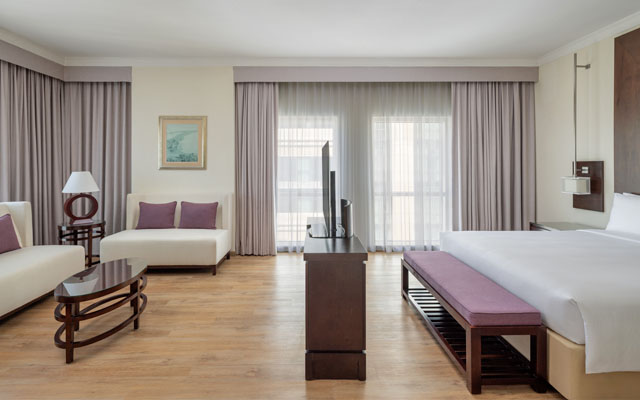
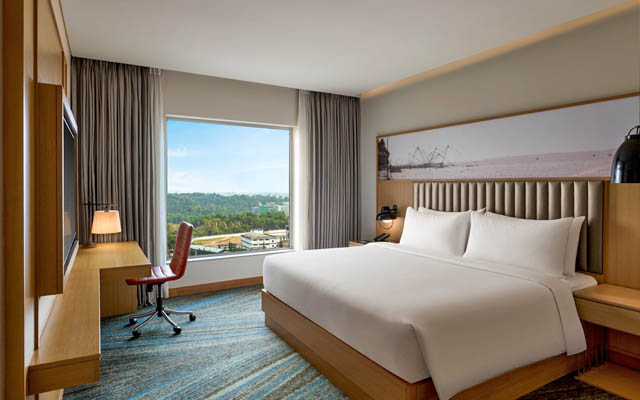
Prince Hotel Da Nang, formerly Sel de Mer Hotel Suites, features 164 rooms and suites with private balconies overlooking Danang city or My Khe Beach.

Facilities include multiple dining options, a rooftop bar with panoramic views, an infinity pool, a gym, and a spa with treatments inspired by Japanese techniques.

The hotel is located near My Khe Beach and provides easy access to the Son Tra Peninsula, Dragon Bridge, Marble Mountain, Hoi An Ancient Town, and the Golden Bridge.

Mett Singapore

Mett Singapore, Singapore
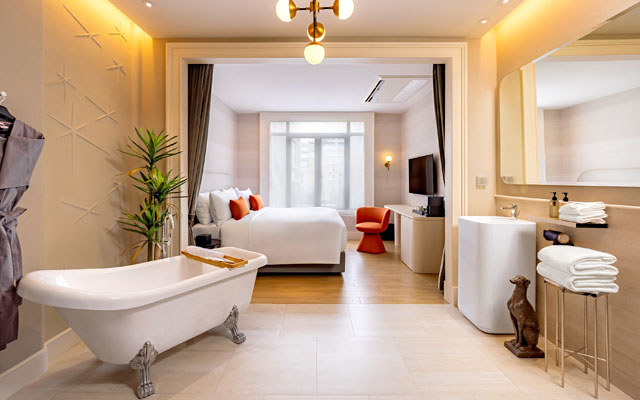
Mett Singapore, the brand’s flagship property in Asia Pacific, features 84 suites and rooms ranging from 35m² to 160m², overlooking Fort Canning Park or the city skyline.

Facilities include two outdoor pools, padel and pickleball courts, gym, fitness classes, a grand ballroom for 800 guests, and the upcoming Madison House members’ club with The Longevity Suite wellness centre.

The hotel offers multiple dining venues, including Italian, Korean, and contemporary concepts. Located within Fort Canning Park, guests have easy access to museums, live events, outdoor activities, and Singapore’s central city attractions.

Kahanda Kanda

Kahanda Kanda, Sri Lanka
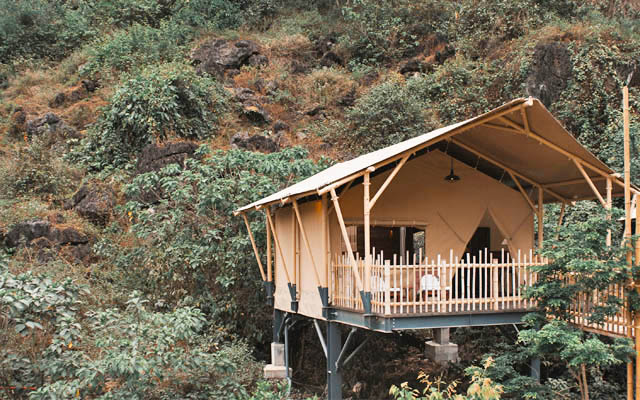
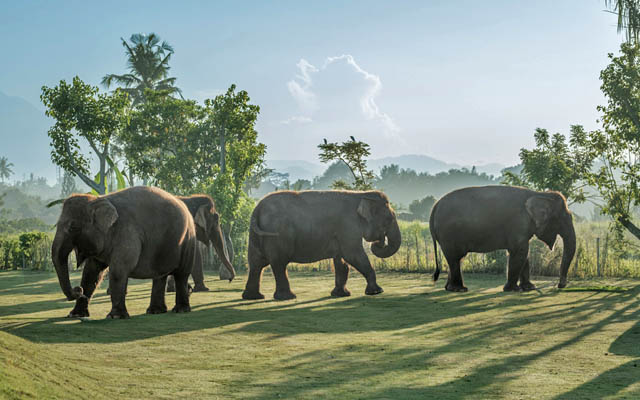
Kahanda Kanda has added five luxury pool villas and opened the KK Spa, offering private plunge pools and views over Lake Koggala and surrounding jungle.

Villas are designed for couples, honeymooners, and families, with access to guided jungle walks and the Cinnamon Experience exploring Sri Lanka’s spice heritage.

The treetop spa features treatments using local ingredients, including massages, steam sessions, Dead Sea mud wraps, and consultations with a Hela Vedakama healer, complemented by wellness retreats with yoga, meditation, and mindful dining.

Caption by Hyatt Central Sydney

Caption by Hyatt Central Sydney, Australia
Caption by Hyatt Central Sydney offers 174 rooms from Standard to Premium with city and neighbourhood views. Facilities include a social hub combining café, bar, co-working space, and event venue, alongside curated programming and locally influenced dining.

Located in Haymarket, the hotel is steps from Central Station, the Light Rail, Capitol Theatre, and Chinatown, providing easy access to Sydney’s cultural and commercial attractions.

Expedia eyes Asia-Pacific and AI as key drivers of global travel growth

0

Expedia Group is focusing on Asia-Pacific and AI as the next drivers of global growth. The company sees the region as a commercial hub, fuelled by rising intra-regional travel, a growing middle class, and untapped online potential, while AI underpins efforts to deliver faster, smarter, and more personalised travel experiences.

Speaking at Explore Local Bangkok, senior executives described Asia-Pacific as both a commercial powerhouse and a trendsetter in travel.

From left: Thai TV star Tayme Thapthimthong chats with Expedia’s Amanda Maltos about set-jetting during the Explore Local Bangkok event on October 2, 2025; photo by Expedia Group

“We talked a lot about how the future of travel is being shaped right here in Asia-Pacific – it’s hard to find somewhere in this region where it’s not an opportunity. Whether it’s Japan moving, China now moving, ASEAN moving, or India moving, there’s growth everywhere,” said Michael Dykes, vice president, hotel market partnerships, APAC at Expedia Group. He added that the global OTA market remains “largely under-penetrated” and that Expedia, Booking.com and Trip.com account for about 15 per cent of it.

Greg Schulze, chief commercial officer at Expedia Group, said the company aims to expand the overall industry rather than compete solely for margins. “This business is a growing pie. Of course, we’re all a handful of companies trying to gain a bigger share. But if we do this well, we’re in an industry that provides experiences we should all want to see grow,” he stated.

Dykes highlighted the impact of Asia’s rising middle class on travel demand. “In the past, travel was a luxury only a few could chase. Now we see something different. India is, or soon will be, one of the world’s largest economies with one of the fastest-growing middle classes. These aren’t markets where consumers only chase the lowest price. Travel is becoming more aspirational, inspired by social media – and it’s about finding the best experience for the best value.”

Packaged products combining air, hotel and experiences are Expedia’s fastest-growing B2C segment in the region, while distribution rates for B2B partners are also scaling as smaller agencies and white-label partners leverage Expedia’s technology.

Schulze noted the company’s long-term confidence rests on its ability to lead through technology revolutions.

“During my 25 years in the travel industry, 20 years of which are with Expedia – I’ve seen three distinct eras of travel and technology. We started by putting information in consumers’ hands, then came the mobile revolution. Now we’re in a new era where information and computing are so powerful that we can do so much more, so much faster, right at our fingertip. Expedia Group has been a leader through each of those phases, and I’m incredibly confident we will be in this next exciting AI phase. This isn’t happening to us; we’re creating the future of travel.”

Expedia has integrated more than 350 AI models and recently unveiled four new tools: Smart Trip AI, a conversational planner; the Merchandising API for machine-learning-driven campaigns; the Typeahead API for seamless bookings; and the Lodging Sponsored Listings API, allowing B2B partners to monetise traffic.

Jennifer Andre, global vice president of Expedia Group Advertising, said first-party travel data gives the company a strategic advantage as the internet moves away from third-party cookies. “A lot of advertisers are shifting their dollars toward commerce and retail media networks because first-party data allows them to track real actions and outcomes, without relying on third-party cookies or invasive tracking. That’s where Expedia is very well positioned.”

She added that collaborations with Netflix and Amazon Prime are enabling instant travel inspiration.

“People want instant gratification – they say, ‘I’ve seen it, and I want to go there’. Our collaborations with Netflix and Amazon Prime are making that possible.”

Expedia and Netflix launched a global advertising partnership in early 2024, embedding travel inspiration in Netflix’s ad-supported tier, including localised campaigns in Japan. In May 2025, Expedia introduced Trip Matching, an AI tool turning Instagram Reels into bookable trips, currently in beta in the US.

Sentosa highlights nature and mindful restoration in new campaign

0

Sentosa Development Corporation (SDC) has introduced a new brand direction, Discover your element in ours, building on the island’s tagline Where Discovery Never Ends.

The refreshed campaign encourages visitors to reconnect with themselves through Sentosa’s five natural elements – sun, sand, sea, nature, and biodiversity – across its 500-hectare island setting.

Sentosa invites visitors to rediscover balance through its natural elements of sun, sand, sea, nature, and biodiversity; photo by Sentosa Development Corporation

The campaign draws on neuroscience-backed insights into nature’s restorative impact on emotional and mental well-being. Each of Sentosa’s natural elements serves as a sensory pathway for visitors to regain balance through grounding, flow, energy, and connection.

The initiative reflects growing public focus on well-being and work-life balance, aligning with national efforts to promote time outdoors. The brand’s evolution will be expressed through new creative materials, including a brand film and sensory-led visuals, shifting Sentosa’s storytelling towards emotional reconnection and reinforcing its identity as an evolving island destination.

“This is not wellness tourism in the sense of spa treatments and yoga retreats,” said Chris Pok, divisional director, marketing and guest experience at SDC. “It’s about making restoration part of everyday life, and being in nature, which is almost a fundamental human need. Sentosa offers a space for regular micro-restorations that sustain our guests, long after they leave.

“Here at Sentosa, the experience begins once our guests step foot on the island, where they can experience a physical and mental reset, and feel alive as they immerse themselves in our natural elements.”

Ascott expands portfolio in Europe to 64 properties

0

Ascott has signed seven new properties in Vienna and Seville through franchise and management agreements, adding nearly 1,100 units and expanding its European portfolio to 64 properties with about 8,500 units across 26 cities in 10 countries.

Globally, Ascott now manages more than 1,000 properties with over 175,000 units.

The additions strengthen Ascott’s European portfolio and mark its first beachside resort project in Europe

The signings were made during the official opening of lyf Gambetta Paris, Ascott’s first lyf property in France and third in Europe. The lyf brand now has eight properties in the region, either open or in development.

Five of the new properties are in Vienna, deepening Ascott’s partnership with VIE Trust Real Estate Group and adding 750 units across multiple brands, including a second lyf property due to open by end-2026. These additions bring Ascott’s Vienna portfolio to nine properties with nearly 1,400 units.

In Seville, Ascott will partner with Forty Management to manage two properties – a 250-unit lyf and a 120-unit Somerset – within the 12.5-hectare Lagoon City Seville mixed-use development. Scheduled to open at the end of 2028, the project marks Ascott’s first beachside resort in Europe and expands its Spanish portfolio to three properties with more than 500 units.

Kevin Goh, CEO of Ascott, shared: “Europe is a cornerstone of Ascott’s global growth strategy, offering a resilient, high-yield market underpinned by strong tourism fundamentals and fragmented supply, where a significant portion of quality assets remain unbranded.”

“The momentum across our European portfolio reflects a disciplined expansion strategy focused on destinations where quality accommodation meets authentic demand,” added Lee Ngor Houai, COO, Europe, Middle East, Africa, South Asia and China, Ascott.

Mixed reality to inject fresh experiences into familiar attractions and tours

0

Imagine walking towards a dinosaur, its head tracking your every move with a level of realism that outshines any VR (virtual reality) or AR (augmented reality) demo. The lingering question: can immersive mixed reality (XR) experiences like this drive visits and bring genuine value to tourist attractions and destinations?

AStation, which made its global debut at ITB Asia last week, offers a compelling case study. Its Enterverse technology transforms outdoor spaces into interactive XR playgrounds.

Immersive XR experiences transform heritage sites into interactive, information-rich destinations without altering the physical environment

On the ground, creative development director Sion Yang explained how the company’s approach differs from traditional XR setups: “The biggest benefit is that it lets us add new information to heritage or protected sites, places where you can’t physically renovate or modify the environment, like Forbidden City (in Beijing, China) or Wugong Mountain (in Jiangxi, China).

“You can (instead) overlay digital content on top of what already exists.”

He added that, unlike location-based XR or location-based entertainment, “ours doesn’t need a huge physical space to operate”.

The optimal setup is a space of seven by 14 metres.

CEO Chris Chen highlights the use case in a press release: “Tourism needs AStation because destinations worldwide are searching for innovative ways to engage visitors and differentiate themselves.”

For tour operators, the benefits are clear. Immersive XR can elevate engagement at sites that would otherwise remain static, without major physical interventions.

The caveats? Investment in technology, equipment upkeep, and the constant need to keep experiences fresh for repeat visitors.

Still, as Yang noted, the goal is not to replace real-world exploration. The technology allows attractions to become “higher-density information hubs” that make trips more engaging.

Kaohsiung International Airport, SITA to upgrade passenger processing systems

0

Kaohsiung International Airport (KHH), Taiwan’s second-largest international gateway, has signed a seven-year agreement with SITA to introduce new passenger processing systems aimed at improving check-in, boarding, and operational resilience.

The deal includes Common Use Terminal Equipment for shared airline check-in, Common Use Self-Service kiosks for faster check-in and bag tag printing, and a Local Departure Control System to ensure flights continue during system disruptions.

The seven-year agreement introduces next-generation technology to improve efficiency, resilience, and passenger flow at Taiwan’s second-largest airport

The agreement strengthens SITA’s role as technology provider for all of Taiwan’s international airports and expands the number of global sites using its Airport Management Solution to 165.

“Across Asia, passenger numbers are climbing fast, and airports are under pressure to deliver efficient operations without compromising the travel experience,” said Sumesh Patel, president, Asia Pacific at SITA. “Legacy systems simply cannot keep pace with this demand. By adopting next-generation passenger processing, Kaohsiung is setting a benchmark for how airports can combine speed, resilience, and flexibility. This is part of a broader regional shift, where airports are embracing scalable, future-ready tools that reduce cost and complexity while keeping passengers moving seamlessly.”

“Our focus is on improving operations across all touch points while preparing our airport for future growth,” said Guojie Chen, chief technology officer at KHH Airlines Operation Committee. “By expanding our shared systems with SITA, we improve efficiency, reduce congestion and enhance resilience across check-in and boarding. We look forward to continuing this partnership as we respond to rising travel demand and innovate our services.”

ITB Asia 2026 to spotlight experiential and niche travel

0

ITB Asia will introduce curated verticals from 2026, focusing on experiential travel, wellness tourism, luxury and lifestyle, as well as sustainable/regenerative travel. Themed zones and dedicated pavilions will allow exhibitors and buyers to explore emerging trends and meet evolving traveller demands.

A new Experience Pavilion, co-developed by Messe Berlin Asia Pacific and Tripadvisor Singapore, will debut at ITB Asia 2026. The Pavilion will feature adventure, culture, wellness, culinary tourism, and other experience-driven offerings. Messe Berlin will manage positioning, media visibility, and buyer engagement, while Tripadvisor will co-curate content.

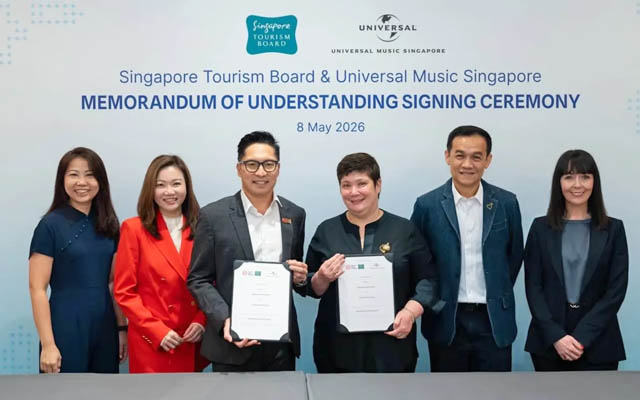
Singapore Tourism Board and Messe Berlin formalise partnership ahead of ITB Asia 2026 Experience Pavilion

Messe Berlin Asia Pacific has also signed an MoU with the Singapore Tourism Board to guide ITB Asia from 2026 to 2028, focusing on content development, co-marketing, buyer engagement, and government participation.

ITB Asia will also launch a New Offering badge from 2026 to recognise exhibitors presenting innovative products, services, or destinations, highlighting the event as a platform for industry breakthroughs.

David Ruetz, senior vice president, Messe Berlin, said: “The Experience Pavilion is more than a new show feature – it’s a bold statement about where the future of travel is heading. Together with Tripadvisor, and the strategic support of the Singapore Tourism Board, we are creating a dynamic platform that showcases the most innovative and inspiring experiential travel offerings. It marks a key milestone in ITB Asia’s evolution, as we champion the trends that will define the next decade of global tourism.”

Fly high on a culinary voyage above Dubai’s skyline

0

Balloons at the Palace has returned to Jumeirah Al Qasr with a new season titled Tales of the Arabian Skies.

With only four balloons and limited seats, this intimate dining experience invites guests to step into a floating majlis, where Arabian artistry meets panoramic views of the Gulf and Dubai skyline.

Dine among the clouds as Balloons at the Palace unveils a new season of Arabian elegance

New this year is Breakfast in the Clouds, served 09.00 to 11.00 on Fridays and Saturdays, followed by the Afternoon Tea in the Sky daily from 13.00 to 15.00 and 15.30 to 17.30.

As night falls, The Spice Route Journey offers a six-course dinner at 18.30 and 21.00, inspired by flavours from across the region.

Prices per person start from 195 dirhams (US$53) for breakfast, 295 dirhams for afternoon tea, and 395 dirhams for dinner, with festive rates from December 19 to 30 at 195 dirhams for breakfast, 345 dirhams for afternoon tea, and 445 dirhams for dinner.

Each balloon accommodates two to six guests for breakfast and tea, and two to four guests for dinner. Minimum age is eight years old for breakfast and tea, and 16 years old for dinner.

Balloons at the Palace is closed Mondays and on December 25 and 31, as well as January 1, 2026.

For more information, visit Balloons at the Palace.