Silversea Cruises has appointed Teresa Ignacio as assistant vice president, global guest services.
Based in Miami, she reports to Massimo Brancaleoni, senior vice president of global sales, and will collaborate with each of Silversea’s regional managing directors to develop, implement and lead a global operational strategy across all Silversea contact centers.
She has over 25 years of experience, and previously oversaw the consumer managed services programme for an American multinational financial services corporation.
InterContinental Singapore has promoted Judy Koh to hotel manager and Fai Abdullah to director of sales and marketing.
With almost 20 years of experience in the hospitality industry, Koh brings a wealth of expertise to her role having begun her journey at IHG two years ago as the director of sales and marketing.
From left: Judy Koh and Fai Abdullah
She will work hand in hand with general manager, Andreas Kraemer to further enhance guest satisfaction, and will oversee all operational functions within the hotel.
Fai has served as the director of sales in numerous luxury hotels such as Fairmont, Swissotel and Marriott for the past 10 years.
In her new role, she will be responsible for leading the sales and marketing teams, driving revenue growth, and enhancing the hotel’s brand presence in the luxury hospitality market.
Village House Management Co, together with MRM, has launched the Narita Hospitality Academy within the rental housing premises of Village House Narita Tamatsukuri in Narita City, Chiba Prefecture.
The academy is a post-arrival training centre specialising in hospitality internships for foreign technical interns, and aims to produce a pool of talent for the local hospitality industry.
Narita Hospitality Academy is a training centre specialising in hospitality internships for foreign technical interns
MRM will provide a hotel-specific training programme in addition to a general Japanese language and life study programme for technical interns aspiring to intern in the hospitality industry. The programme was developed under the supervision of Mystays Hotel Group, which operates hotels of various forms throughout Japan.
The academy is well-equipped and comprises mock-up rooms that replicate Western and Japanese-style hotel rooms to support its programme. There are 80 private rooms which include air conditioning, mini fridge, toilet, bath, and Wi-Fi, as well as shared facilities like a laundry room and a BBQ terrace in the garden.
SITA and Envision Digital, a Singapore-headquartered global net zero partner and Artificial Intelligence of Things (AIoT) technology leader, have joined forces to help airports reduce operational costs and support their net zero ambitions.
The companies have developed solutions that allow real-time data IoT flows, enabling airports to monitor and report their energy usage, emissions from aircraft and other vehicles, and their carbon footprint.
The partnership will provide solutions for airports to harness and orchestrate renewable energy sources
Airports can use insights from these data feeds to take action to reduce consumption costs and resulting emissions. In future, the above solutions will allow airports to harness and orchestrate renewable energy sources.
These solutions will be pivotal to SITA’s Total Airport Management concept, which will help airports manage every aspect of their operation and bring sustainability into the heart of holistic operational decision making.
As part of the partnership, SITA will create a new Centre of Excellence to accelerate product development and customer project delivery. The partnership harnesses Envision Digital’s strengths in energy management and smart building solutions, with SITA’s strengths in air transport technology and operations to support airports and make their operation more efficient and sustainable.
Drew Griffiths, head of SITA at Airports, shared: “Today, SITA works with nearly 1,000 airports globally to manage every aspect of their operations – from baggage and passenger processing to airside and aircraft operations. Supporting airports to reduce costs and cut their greenhouse gas emissions is a natural extension of this offering and one our customers have asked for.”
IHG Hotels & Resorts has signed a management agreement with Ginger Tree Goveia to bring a new hotel to Goa, India.
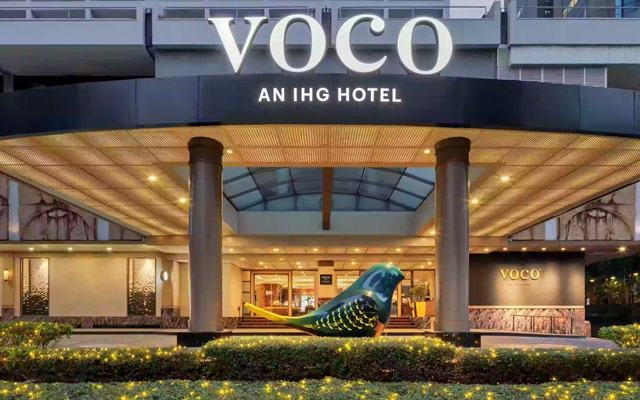
Slated to open in January 2025, voco Goa Arpora will be IHG’s seventh brand in the country and will cater to the growing demand for quality accommodation in Goa.
voco Goa Arpora will open in January 2025; voco Orchard Singapore, pictured
Located in North Goa, the new property will offer proximity to popular night markets, dining, boutique shopping and beaches of Baga and Calangute.
The hotel will feature 110 rooms, an outdoor pool, spa, gym, meeting rooms and three F&B options.
Macao Government Tourism Office (MGTO) and Air Macau recently organised a familiarisation trip for tourism professionals from Tokyo and Osaka, Japan.
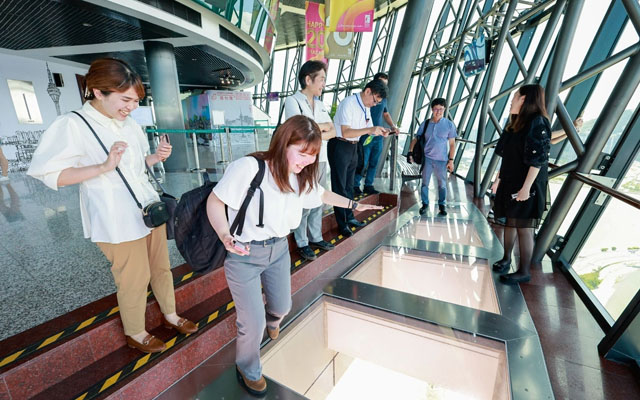
The event from July 20 to 23 saw 14 representatives visiting diverse and abundant “tourism+” elements in Macau, where they also participated in the Tokyo & Osaka Travel Mart on July 21.
Delegates experience the diverse and abundant elements of “tourism+” in Macau
The itinerary included visiting the Macao Grand Prix Museum and the Lai Chi Vun Shipyards, the World Heritage “Historic Centre of Macao” attractions, learning about hotel facilities, and tasting various delicacies. These experiences aim to inspire their design of more Macau tourism products targeting Japanese tourists.
MGTO also promoted the Travel Stimulation Program at the travel mart to continue to expand different types of tourist groups and promote diversification of tourist sources.
Klook has teamed up with Singapore’s Zurich Insurance Company to introduce TravelJoy, a revamped travel insurance offering that includes all-encompassing coverage for Klook customers.
Designed to go beyond conventional travel insurance boundaries to ensure peace of mind for customers, TravelJoy covers trip cancellations, medical emergencies, and lost or stolen luggage, and even tele-health services – this allows policyholders to consult medical professionals through virtual appointments, providing a convenient and efficient medical solution for travellers no matter where they are in the world.
TravelJoy covers trip cancellations, medical emergencies, and lost or stolen luggage, and tele-health services
TravelJoy can be purchased directly through Klook’s platform when making travel arrangements.
The partnership aims to continually tailor insurance offerings that meet the unique needs of today’s travellers and provide reliable protection. Both Klook and Zurich Singapore aim to make insurance more accessible and adapt to the evolving needs of customers in an increasingly connected world, making insurance purchases seamless and effortless.
This collaboration also marks Zurich Singapore’s entry into digital retail partnerships, following the launch of Zurich Edge – a proposition that combines deep insurance expertise with digital innovation to deliver unique embedded solutions in protection.
Chuan Sheng Soong, CEO of Klook Insurance, said: “We’ve always believed that our customers’ travel experiences should be seamless and hassle-free.”
“Through this partnership, we are committed to delivering seamless, dependable travel coverage with exceptional service to Klook’s customers,” added Reginald Peacock, CEO, Zurich Singapore.
Architect, artist and activist, Bill Bensley, has joined forces with Junkyard Theatre Phuket to create an exclusive art and theatre experience for one weekend only at The Slate Phuket.
Bringing to life his Faroese Chronicles exhibition, the resort will provide the perfect setting for guests to learn from Bill Bensley how to unleash their inner artist, engage in a one-night-only dinner and theatre performance narrated by the artist, and indulge in a vibrant art-themed feast at Rivet – all funds raised will go to the Shinta Mani Foundation and the Phuket Hotels Association.
Some of the artwork in Bill Bensley’s The Faroese Chronicles, which will be on exhibition at The Slate Phuket
Guests will have the chance to book a three-night stay to enjoy intimate access to the artist, with limited tickets available for the dinner and show, or an art-inspired lunch. The hotel will also organise a special online auction (prizes include travel experiences) and have prints from The Faroese Chronicles on sale to further assist fundraising.
The Faroese Chronicles is an exhibition of 38 artworks inspired by Bill Bensley’s numerous travels in the remote Faroe Islands and the quirky characters he discovered there. The Junkyard Theatre will perform a one-off show through song, dance, comedy, and rich storytelling, with Bensley joining the performers onstage to share the wit and wisdom of his Faroese friends.
Bill Bensley commented: “I always love returning to The Slate and am so looking forward to this fabulous event, which will be full of fun, but also with a serious side to raise funds and awareness for the Phuket Hotels Association and the Shinta Mani Foundation.”
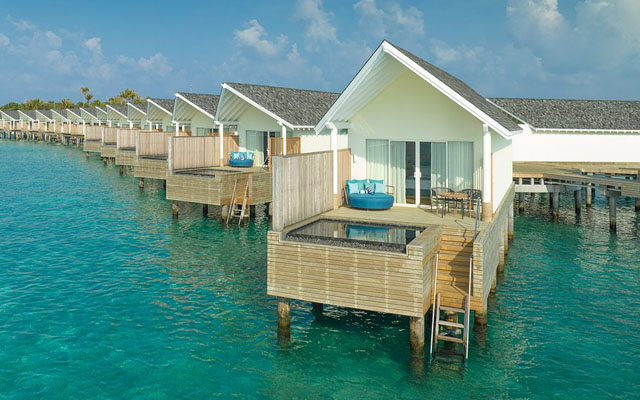
Amari Raaya Maldives, Maldives
The 187-key Amari Raaya Maldives has just opened on a private island in the Raa Atoll and boasts its own seaplane jetty to facilitate safe and comfortable arrivals for guests.
The all-villa property offers accommodation options ranging from private beachfront villas to overwater pool villas, including 14 two-bedroom beach villas that are suitable for families.
For recreation, guests can discover arts and craft activities as well as various rustic features embedded in the resort design. Other facilities include eight F&B venues, a mangrove forest to explore, indoor and outdoor kids’ zone, an artist’s village where arts and craft workshops are conducted, a spa, and more.
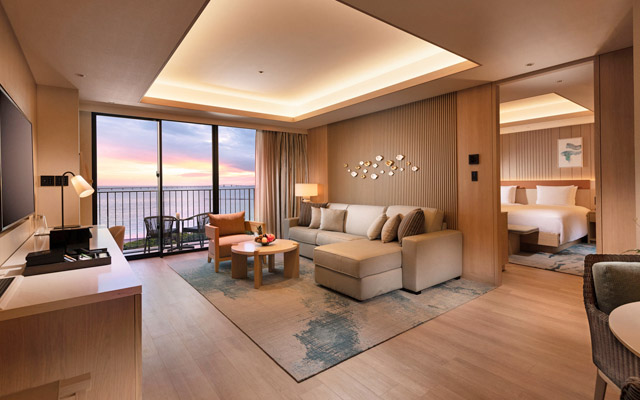
Hilton Okinawa Miyako Island Resort
Hilton Okinawa Miyako Island Resort, Japan
Hilton Okinawa Miyako Island Resort is the first Hilton property on the Miyako Island, which is nestled approximately 300km southwest of the main Okinawa Island.
The 329-key hotel is just a 15-minute drive from Miyako Airport which is a short direct flight from Tokyo Haneda or Osaka Kansai Airports, and a 25-minute drive from Shimojishima Airport.
There are four restaurants and bars, three outdoor pools, gym, spa, kids’ club, ballroom, and a rooftop chapel for gatherings and celebrations.
HIIVE Binh Duong
HIIVE Binh Duong, Vietnam
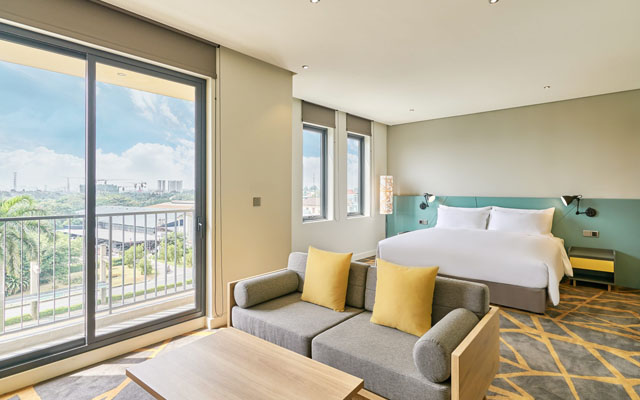
Located in the Vietnam Singapore Industrial Park 1 (VSIP 1) in Thuan An, Binh Duong, the 172-room HIIVE Binh Duong is also nearby Aeon Mall, Song Be Golf Resort, and just an hour away from Ho Chi Minh City’s international airport.
Onsite are an all-day dining restaurant, sports bar, meeting rooms, co-working spaces, golf simulator, and fitness centre – there are also laundry facilities on every floor.
Dusit Thani Himalayan Resort Dhulikhel
Dusit Thani Himalayan Resort Dhulikhel, Nepal
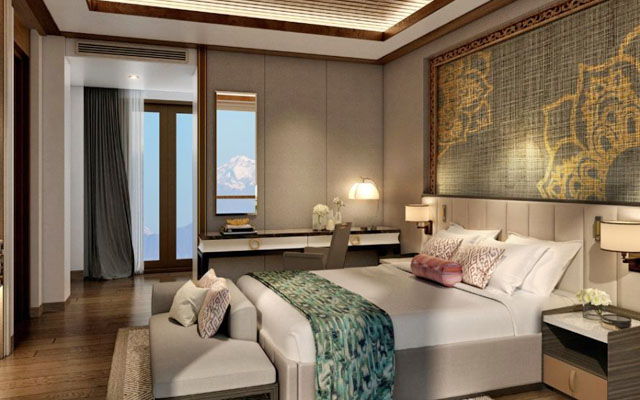
Dusit Thani Himalayan Resort Dhulikhel has opened its doors on July 24 in the Himalayan foothills between the Mahabharat range and Alpine highland ridge.
About an hour’s drive from Tribhuvan International Airport and 10 minutes from Namo Buddha, the new property offers guests a bespoke experience with personalised butler services, customised wellness activities, and exclusive dining experiences.
The hotel boasts 54 guestrooms and facilities such as a spa, outdoor infinity pool, Jacuzzi, restaurants, poolside bar, ballroom, and meeting venues.
ADGE Hotel + Residences
ADGE Hotel + Residences, Australia
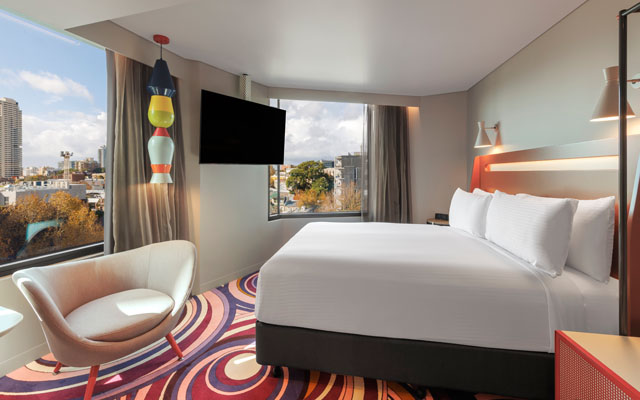
The 254-room ADGE Hotel + Residences is situated in the heart of Surry Hills in New South Wales, Australia, and comprises a mix of guestrooms and two-bedroom apartments.
Dining options include Japanese omakase restaurant, Raida Noda’s Chef Kitchen, and Soul Deli which serves Korean fare.
The hotel is just a short walk from Sydney’s CBD, and minutes from the restaurant and shopping precincts of Crown and Oxford Streets.
E-sport events came into focus at the recent Asian IR Expo in Macau, with conference panellists underlining the power such activities have in attracting younger travellers and driving a technology-forward economy in Asia.
A survey conducted by a researcher from University of Macau found that China’s Gen Z is digitally connected and adept at multitasking, and has a preference for casino games, e-sports, video games as well as lifestyle.
Hong Kong hopes to organise events such as e-sports and music festivals
Hong Kong-based e-sports organisation Talon Esports’ CEO Sean Zhang, said good connectivity within China and between China and its surrounding region could position Hong Kong and Macau as a hub for e-sports events and festivals.
However, Zhang cautioned that the right people who understand e-sports and video games are required to sell related events well, because these are part of fan culture and it may be challenging to understand the target audience.
He referenced US-based Dreamhack, which is renowned for its local area network (LAN) parties that blend e-sports and community interaction.
Jarrold Tham, co-founder and chief financial officer, Talon Esports, agrees that Asia has the potential to grow its e-sports events calendar.
He said: “Last September, Singapore had its first international tournament, which was a success. Tickets at US$400 were sold out, and 20,000 people were packed into the stadium. There are many competitions in South Korea that bring in a lot of people. We also had an event in Bangkok last month,” Tham detailed.
Every event (in different countries) has the potential to attract a different demographic and fan base, he opined.
Talon Esports is working with tourism boards to grow e-sport events in Asia.
Dreamhack’s director, Sylvia Cristina Amaya, said the company is working with regional experts, such as groups managing e-sports talents, to better understand the Asian audience.
“This is a new market for us,” Amaya said.
Dreamhack made its foray into Asia with a two-day mobile gaming event in May 2023.
Hai Ng, co-founding partner of Neomancer, opined that e-sports is not just a singular event, and there needs to be strategies to get people to keep coming back, such as engaging the community to create fans.
“The event just gets them here (to the destination) – what happens around (them), like local experiences and activities, are what’s going to bring them back,” Ng remarked.



 She has over 25 years of experience, and previously oversaw the consumer managed services programme for an American multinational financial services corporation.