Cathay Pacific has made key leadership appointments across South-east Asia and Oceania as part of a regional restructuring aimed at enhancing collaboration, efficiency, and growth.
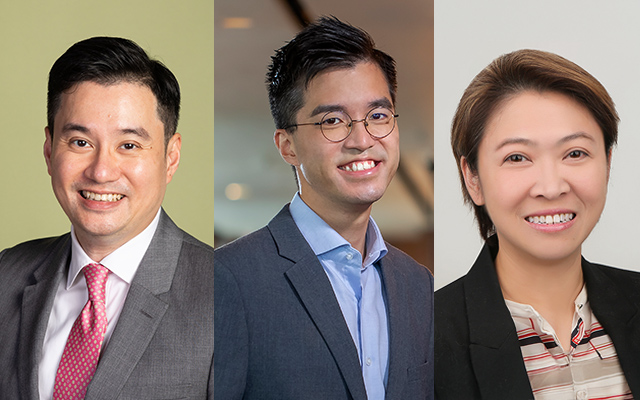
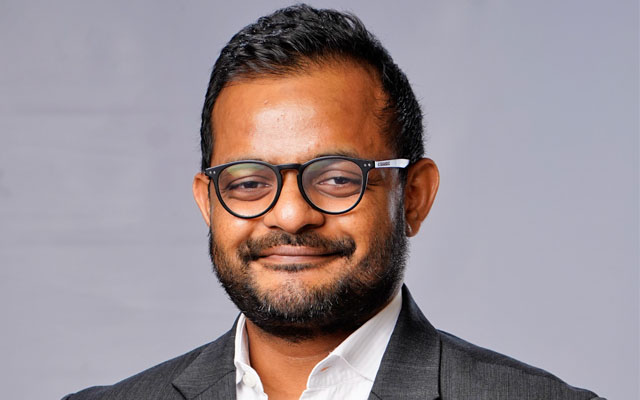
Frosti Lau has been appointed regional general manager, South-east Asia & Oceania. He brings 25 years of experience across commercial, cargo, and operations in Hong Kong, China, South Africa, and Oceania.
From left: Frosti Lau, Jonathan Ng and Lynn See
Jonathan Ng has been named regional head of customer travel and lifestyle. He joined Cathay in 2011 and has held roles across China and the Middle East and was seconded to HK Express as general manager, corporate planning, supporting the airline’s acquisition transition.
Lynn See, who joined Cathay in 2021, has been appointed regional head of people, overseeing talent development, organisational design, and inclusive employee experiences across the region; while Steve Cheung becomes regional head of finance, bringing 12 years of experience in finance operations and regional leadership, managing financial planning, budgeting, and commercial initiatives.
Area and country leadership appointments include Kelly Tsang as area head for Cambodia, Thailand, and Vietnam, Nicolas Masse as area head for Singapore and Malaysia, while Tony Sham and Vishnu Rajendran continue as country heads of Indonesia and the Philippines.
Other appointments comprise Ashish Kapur as regional head of cargo, Adam Nelson as regional head of engineering, and Dominic Vallado as regional head of airports.
This week at Asia’s largest sustainability forum for tourism, PHIST 2025, Phuket’s governor delivered a keynote reiterating calls for Special Economic Zone (SEZ) status, arguing that the island’s competitiveness depends on decisive action from both central and local government.
Governor Sophon Suwannarat said SEZ designation would allow Phuket to act more independently when budgeting for planning, infrastructure, and environmental regulation.
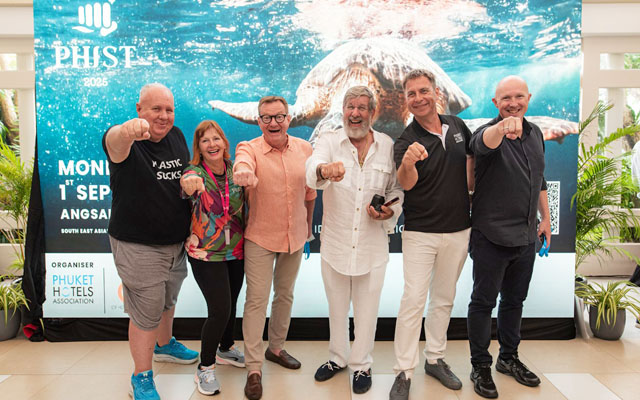
From left: C9 Hotelworks’s Bill Barnett, Phuket Hotels Association’s Jayne MacDougall, Discover Collection’s Bernhard Bohnenberger, Minor International’s William E Heinecke, Phuket Hotels Association’s Bjorn Courage, and Delivering Asia’s David Johnson; photo by PHIST
“For too long we have spoken about transport links between the airport and southern Phuket, yet nothing has happened. Without SEZ status, we cannot address these issues quickly or effectively. Our future competitiveness depends on it,” he stated at the PHIST 2025 press conference.
He also highlighted the fiscal imbalance holding back local development.
“Phuket generates more than 400 billion baht (US$12.33 billion) for the national economy each year, yet we are given only 170 million baht for local development. This imbalance is unsustainable. If Phuket is to continue to drive the country’s tourism revenues, we must be allowed to harvest the benefits of SEZ designation and control our own resources,” he emphasised.
Sophon painted a stark picture of mounting waste pressures. With 13 million visitors last year, Phuket generated 1,200 tonnes of waste per day, but can only process 700 tonnes. The remainder is dumped at a Saphan Hin landfill. An incinerator is in development and a waste-sorting facility is planned in Thalang to manage future volumes.
The growing local wastewater management crisis is equally urgent.
“We sell Phuket through its beaches, but once wastewater starts to flow into the sea, the island will no longer be appealing,” he warned.
Four new treatment plants are under construction, with five more in the pipeline covering Patong, Karon, and Choeng Thalay.
“The project will rely partly on local administrative budgets, but we must also seek support from the central government. This is an urgent issue – the system should be operational within a year, and, in my view, it is even more important than traffic infrastructure,” he stated.
Phuket is also bracing for a looming water shortage, with 16,000 new residential units set to open next year. To avoid drilling into the fragile local water table, the province is negotiating with Suratthani to pipe raw water from the Chiew Lan Dam via Krabi and Phangnga. Current stopgap measures, the governor cautioned, are unsustainable.
The governor also called for stronger protection of natural buffers.
At Layan Beach, a new community park will be established to expand green space and curb illegal construction.
“We need to conserve green forest zones to prevent mudslides and maintain climate resilience,” he said, pointing to mangrove forests along the Gulf of Thailand as vital breeding grounds for marine species.
On infrastructure, Sophon noted progress with a new motorway through Krathu and a road funded by Laguna Phuket group, while discussions continue with the Ministry of Commerce on a central-island monorail.
Hospitality leaders backed the governor’s urgency. William E Heinecke, chairman and founder of Minor International, echoed the call for Phuket to secure SEZ ratification.
“Phuket needs the ability to plan, fund, and implement its own infrastructure solutions. Without this, tourism and community life will both suffer,” he said.
Bill Barnett, managing director of C9 Hotelworks and founding organiser of PHIST, pointed to the need for broader community engagement.
“The Phuket Hotels Association now has 108 members, but hotels only account for one per cent of this island. The other 99 per cent is communities. We want to champion public–private partnerships that elevate the quality of life for local people,” he underscored.
PHIST 2025, held at Angsana Laguna Phuket, is now in its eighth year and drew a record 1,300 delegates for 25 sessions, sustainable fashion and gastronomy showcases, and best-practice awards.
With arrivals slowing and visitor preferences shifting, the forum highlighted how the private and public sectors must collaborate once again – as they did during Phuket’s Sandbox initiative – to reposition the island as a model for sustainable urban resort planning.
The event was organised by the Phuket Hotels Association, C9 Hotelworks and Greenview, with support from Pan Pacific Hotels, Winnow, Luxury Escapes, Tuu, Delivering Asia, QUO, and SaiYok Springs.
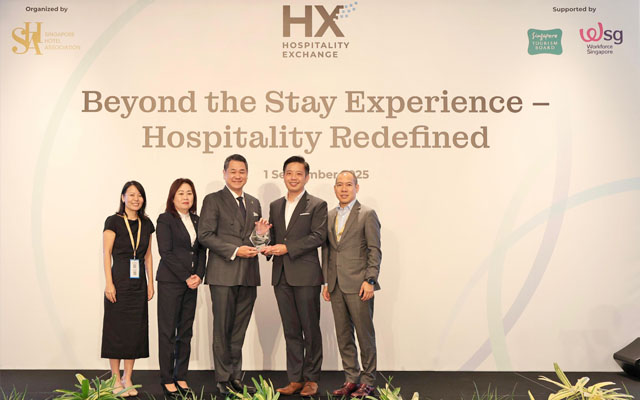
Efforts to deepen staff’s skill sets and leadership opportunities as well as redesign processes to build a more inclusive workforce have earned Parkroyal Collection Pickering hotel the Workforce Transformation Award 2025.
Jointly presented by Workforce Singapore (WSG) and the Singapore Hotel Association, the award recognises hotels that have demonstrated outstanding commitment to job transformation and human capital development.
Parkroyal Collection Pickering wins the Workforce Transformation Award 2025 for advancing inclusive hiring, career development, and job redesign in hospitality
Kung Teong Wah, general manager of the hotel, told TTG Asia in an interview that the hotel’s ongoing career conversion programmes are instrumental in earning WSG and SHA’s recognition.
The career conversion programme identifies “intelligent Singaporeans” who have the capability to take on new responsibilities and deepen their contribution to the property. These identified talents are then given skills training with support from WSG, career development opportunities, and higher wages.
One of the converted staff is a Nanyang Technological University graduate who expanded her sales role to include both channel distribution and F&B revenue optimisation. Another employee, a graduate of the University of Nevada, Las Vegas, was moved from an asset and lifestyle management role into a managerial position overseeing quality and process improvement.
“We have many, many other similar examples of how we have career-converted our staff through job redesign, career development, and profit sharing,” said Kung, adding that this process is necessary since “young people join companies wanting to acquire new skills, land a better job, earn a better pay, and lead a better life”.
He noted that younger staff tended to lose interest in their job within 12 to 24 months, and would move on to something else that excited them.
“If the employer can offer career development opportunities and give them something to look forward to, they will be very engaged and will stay. We hope that what we do (through the career conversion programme) will help Singapore to develop talents for the hospitality industry,” said Kung.
Another success story in Parkroyal Collection Pickering’s job transformation efforts is the hiring of Persons with Disabilities (PWDs). Five per cent of the hotel’s employee community are PWDs who are able to contribute to the hotel following careful job redesign that bear their strengths in mind.
Citing an example, Kung said an associate with vision impairment is tasked with folding napkins in the uniform room. Her work space is designed with her in mind – a black-topped table is provided to offer stark colour contrast for ease of work.
“When she started with us, she would fold 180 to 200 napkins in five hours. Now, she can do more than 600. When she is on leave, her absence is obvious for all to see. She is probably one of the most important persons in our team today,” shared Kung.
Parkroyal Collection Pickering’s inclusive team also comprises mature workers – defined in Singapore as people aged 40 and above. The hotel’s workforce has 39.1 per cent mature workers, of which five per cent are aged above 65 years old. The oldest associate is 76 years old.
Kung shared that processes are altered to allow mature workers to still contribute to the business. For example, younger and stronger staff are assigned to clear stations and tables, so that older colleagues will not have to perform the labour-intensive function.
“We are all very proud that Pan Pacific Hotels Group (PPHG, the parent company) promotes inclusive hiring,” he added.
Kung emphasised that PPHG’s commitment to hire PWDs and mature workers are not a “social effort”, but one that is driven by “enterprise need”.
“These people are our human capital and the work they do cannot be done by others,” he remarked.
Parkroyal Collection Pickering’s job transformation efforts are part of PPHG’s Project Lighthouse, which is aligned with the nation-wide Job Transformation Map for the Hotel Industry programme led by the Singapore Tourism Board (STB) and WSG.
With Project Lighthouse now complete and Parkroyal Collection Pickering’s job transformation efforts showing positive outcomes, Jastina Balen, director of communications with PPHG, said “fundamental principles” in job transformation will be shared with all hotel general managers in the group.
She recalled strong interest in what Kung and his team were doing when their initiatives were presented at PPHG’s last global leadership conference.
“We hope that some of our job transformation initiatives can be repurposed globally,” said Balen, adding that general managers will be given flexibility to decide what areas of job transformation will be relevant to their teams.
Kung said “a simplified version of what we have done” has been produced as an interactive playbook by STB and WSG, and will be shared with hotels nation-wide.
Anticipating a surge in visitor numbers during Visit Malaysia Year 2026, Malaysian inbound operators interviewed at PATA Travel Mart 2025 are planning to expand into new markets and introduce new products to capitalise on the year-long campaign, which is targeting 47 million tourist arrivals.
Alvin Lim, director of sales for Borneo Nature Tours, said the company plans to expand the market reach of its flagship property, Borneo Rainforest Lodge, to include Asian markets such as China, India, South Korea, and Japan. This will help diversify the lodge’s visitor base, which has primarily been promoted to European markets.
Paradesa Borneo’s Casandra Bong said the company is preparing non-cycling tours to reach more travellers
“We see significant potential in the Asian markets due to accessibility and shorter travel times,” Lim told TTG Asia.
He added that the expansion will also help raise awareness of Borneo’s unique biodiversity and conservation efforts among a new audience. The Borneo Rainforest Lodge is the only accommodation option within the Danum Valley Conservation Area.
Starting next year, Paradesa Borneo plans to expand its tours to cater to non-cyclists, said the company’s sales and marketing manager, Casandra Bong.
“We have received feedback and requests for non-cycling tours and have already started our groundwork preparations which will be rolled out in 2026,” she shared.
Paradesa Borneo, currently Sarawak’s only operator for specialised cycling tours, aims to make exploration of the region’s natural beauty, wildlife, culture, heritage, and food more accessible to a wider range of travellers.
Fariz Khan Zamurad Khan, senior sales manager at Putrajaya Leisures & Services Group, said the group will work closely with Tourism Malaysia to promote its tourism offerings in Putrajaya to international markets.
He also revealed plans to open an Indian food outlet in Putrajaya by the end of 2025, a timely initiative in view of the anticipated influx of Indian travellers next year. Currently, there are no Indian restaurants in Putrajaya, Fariz said.
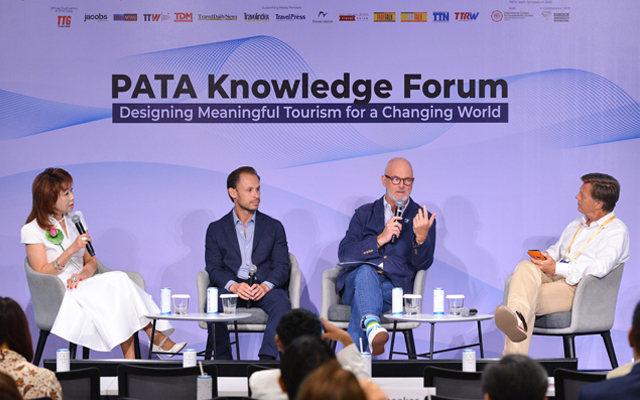
Today’s travellers want personalised, seamless and instant, whether at the trip planning stage or during the trip itself, say industry experts during the Connected Journeys: Reimagining the Travel Experience in a Digital-First World session at the PATA Knowledge Forum last Tuesday.
Cindy Lui, vice president of resort sales, MGM, pointed out that travellers are used to digital experiences in their daily lives.
From left: MGM’s Cindy Lui, Simplenight’s Mark Halberstein, BBC Asia’s John Williams, and Eventiz’s Frederic Vanhoutte (moderator)
“They want the same with travel – personalisation, speed – and to be able to control this all within the palm of their hands. This means that service design has to be mobile-first, frictionless and integrated,” she stated.
John Williams, vice president – Asia, advertising sales, BBC Asia, agreed, adding that service providers have huge expectations placed on them and they have to constantly deliver the same.
“The overall experience has to be personalised from start to finish. It’s the ‘me’ culture,” added Mark Halberstein, CEO at Simplenight, a tech experience platform.
Every touchpoint that the consumer engages with a brand – such as its loyalty programme, website, or mobile app – needs to cater to the consumer, Halberstein noted. Brands can then advertise to consumer on their preferred social media channels.
On what defines a truly connected journey, Lui said it is one that is “very seamless, consistent and also personalised from every touchpoint from the guest’s booking process to check out”.
Halberstein indicated that it is about connecting all the components of the journey from the inception, planning, booking and fulfilment. “If a company can deliver all this, it makes the customer’s experience that much more memorable and enjoyable,” he added.
The discussion also touched on the challenges integrating technology and data in the travel ecosystem.
Speakers all agreed that a key challenge is fragmentation. Different parts of the travel ecosystem – airlines, hotels, transportation, and attractions – operate on separate platforms. This makes it difficult to collect data and create a single, comprehensive view of the guest, said Lui. There is also the added complexity of privacy concerns, especially with guests moving across borders.
Halberstein emphasised that while tools like AI and loyalty programmes are valuable, they are “useless without proper data”, so the key is to attack fragmentation and translate raw data into meaningful insights.
Speakers also noted the need to balance the push for personalisation with growing privacy concerns, suggesting that transparency and offering choice can achieve this balance.
Lui said that by being transparent about what data is collected and how it benefits guests, companies can build trust. When customers understand the value of sharing their data, such as receiving personalised dining or entertainment recommendations, they become more comfortable.
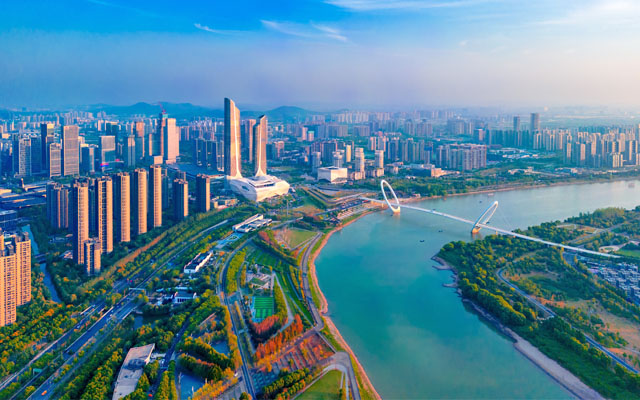
The Chinese province of Jiangsu boosted its profile at PATA Travel Mart, where it exhibited for the first time, as part of its push to attract more international travellers by showcasing its mix of food, culture, and nature.
Paul Chin, director representing the Jiangsu Tourism (Singapore and Malaysia) Promotion Centre, sees the event as a platform for raising awareness among a professional audience.
Jiangsu highlighted its culinary traditions and heritage during its debut at the recent PATA Travel Mart
“A lot of people still don’t know much about Jiangsu. Whether for business, culture, scenery, or food – we have it all here,” he stated.
Chin focused on highlighting the region’s culinary traditions, which are celebrated as one of China’s Eight Great Culinary Traditions. He hopes that by sharing the stories behind the food, tourists will be inspired to explore the destination and its history more in depth.
Moving forward, Chin’s team will continue to organise fam trips and focus on marketing efforts to draw visitors from key markets such as Singapore, Malaysia, and Thailand. He believes that by emphasising culture and heritage, Jiangsu can offer travellers a more immersive and meaningful experience.
The World Sustainable Hospitality Alliance (WSHA) has partnered with Zeero Group, a climate innovation company focused on decarbonising luxury hospitality and travel through scalable, community-driven solutions, to create measurable global impact for people and the planet.
The partnership brings together WSHA’s global network of hospitality leaders and Zeero’s approach to waste-to-energy, renewable fuels, and climate financing. Together, they aim to support hotels, resorts, and private aviation companies in addressing two of the industry’s main challenges: waste and emissions.
The partnership aims to fund clean energy and waste-management projects, making sustainability seamless for guests; Parkroyal Collection Pickering, Singapore, pictured
Rather than requiring guests to make decisions during their stay, Zeero enables properties to integrate climate contributions directly into the booking path, either as an included benefit or a subtle, optional addition.
Zeero’s model allows properties to fund clean energy and waste-management projects through small guest climate contributions, typically only a few euros or US dollars per booking or checkout folio, while remaining cost-neutral for operators. Aggregated at scale, these contributions are directed into projects such as converting municipal wastewater into low-emission biofuels, which can reduce lifecycle emissions by up to 81 per cent compared with fossil fuels.
Through this model, hotels fund projects that reduce emissions and provide benefits to the local environment and economy. The process allows properties to maintain their operational standards while supporting long-term community and environmental outcomes, without altering the guest experience.
The partnership will focus on scaling regenerative energy projects that convert waste into renewable fuels and electricity, creating sustainability narratives that resonate with travellers, and building shared ownership models to enable hospitality groups to co-invest in renewable energy infrastructure.
Glenn Mandziuk, CEO of the WSHA, said: “By partnering with Zeero, we are helping luxury hospitality brands transform sustainability into a source of innovation, value, and leadership. This collaboration will accelerate systemic change while supporting local communities and infrastructure worldwide.”
Zeero Group CEO Nico Nicholas added: “Luxury travel has both the responsibility and the opportunity to lead in climate action. Through our partnership with WSHA, we can rapidly scale solutions that make sustainability seamless for guests and profitable for operators, turning climate contributions into meaningful global impact.”
Singapore Oceanarium will launch its Animal Spotlight: Manta Rays programme to coincide with World Manta Day on September 17, 2025. The programme will run from September 6 to 20, 2025, overlapping with the September school holidays. It will feature activities that highlight the ecological role of manta rays and the conservation issues they face.
The 45-minute English-guided programme runs three times daily and provides behind-the-scenes access to manta ray care and monitoring. Participants will learn about their health, diet and behaviours, and how conservation efforts are applied. An Oceanarium education guide will also be present for questions and discussion. Each participant will receive a manta ray plush keychain and lanyard set. The add-on programme costs S$28 (US$21) per person aged four and above.
The two-week programme offers behind-the-scenes insights into manta ray care and conservation
As part of the programme, Daniel Fernando, co-founder of Blue Resources Trust and associate director at the Manta Trust, will hold an Expert Sharing Session on September 13, 2025, at 16.00. The session will be available online and in person for ticket holders. He will speak on the threats manta and devil rays face, including overfishing and international trade, and discuss conservation strategies.
Other activities during the two weeks include a manta ray mascot meet-and-greet, food and beverage specials, a retail collection, and a storytelling session titled Manja’s Adventure at the Children’s Biodiversity Library on September 6 from 11.00 to 12.00.
The Animal Spotlight series is part of Singapore Oceanarium’s education and conservation efforts. Other editions focus on sea jellies and corals.
Tickets may be purchased on the Singapore Oceanarium website, and registration for the Expert Sharing Session must be made with full name, ticket number and attendance mode at least three working days in advance.
Additional programmes offered during the September holidays include the Singapore Oceanarium Insider Experience, Ocean in Focus: Into the Abyss, and the Fossilist Workshop, which features fossil study and excavation activities.
Overt objections of overtourism – such as anti-tourist protests in some parts of Europe – and stealthy push-backs – like signs in English or Chinese to turn away tourists from eateries, but welcome locals in native small print – are increasingly showing up on the news and social media. Netizens clash in the comments section over who’s to blame for a poor destination experience, suspected racial profiling of bad behaving tourists, and dual pricing standards for locals and foreigners.
Even though overtourism is mostly seasonal and occurring only in certain locations, negative public perception can jeopardise an entire country’s welcome for a longer time.
Natalie Kidd, managing director, Asia at Intrepid Travel contributed an insightful opinion piece to TTGAsia.com on what Asia could learn from Europe’s overtourism crisis. In it, she called for a restructure of tourism that uplifts and protects local communities while establishing a respectful connection between people.
Our Bhutan destination feature in this issue (A shining beacon, pages 20 and 21) highlights a tourism structure that prioritises economic and social development for the country, where benefits of tourism are broadly distributed across local communities while preserving the nation’s cultural identity. Like attracts like – Bhutan’s unique destination reputation attracts travellers who appreciate high-value, low-impact tourism development.
With arrivals to the Greater Mekong Subregion set to surge in the coming years, tourism leaders in the region are now determining visitor management systems to protect their environment and communities (Reshaping tourism flow, page 9). Case studies on successful methods are shared, such as the use of digital tools to monitor and redirect tourist flows.
Indeed, this is where AI magic can come in to anticipate travel peaks and trends, monitor online reviews to spot issues in host community and traveller sentiments, and push recommendations to lesser-known areas.