Mantra Melbourne Airport will begin a multi-million dollar refurbishment that will result in a whole new look and improved facilities come 2024.
The hotel, formerly known as Mantra Tullamarine, will remodel all guestrooms and present new furniture, bedding, and interior design. The restaurant and bar will also be transformed and promises a memorable dining experience along with a refreshed beverage menu once complete.
All guestrooms will get a new look and fresh fittings
The enhancements will join the other facilities currently available at Mantra Melbourne Airport – a fully equipped gym, sauna, heated lap pool, and the conference and events centre.
Mantra Melbourne Airport’s general manager, Stuart David, said: _”_The refurbishment is a significant investment in the hotel, and we are confident that our guests will enjoy the new facilities.”
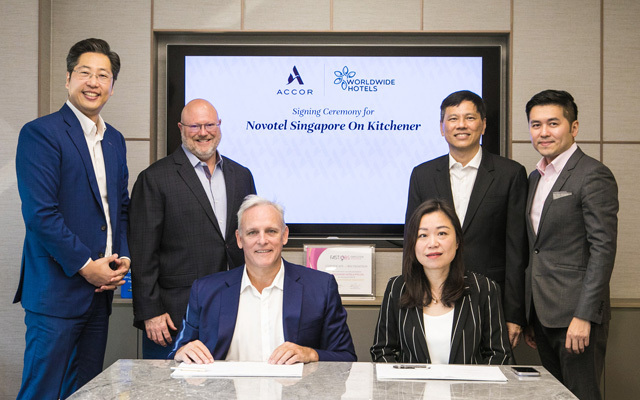
The former Parkroyal on Kitchener Road will adopt the Novotel brand from November 1, 2023, as Accor and Worldwide Hotels Group sign on a new partnership. This follows Worldwide Hotels Group’s acquisition of the property in July 2023.
The 543-key Novotel Singapore on Kitchener, located in the Little India cultural enclave, will begin its rebranding exercise on October 31, 2023.
Accor and Worldwide Hotels Group expand on their partnership with a new Novotel signed for Singapore
Accor has an existing strong partnership with Worldwide Hotels Group, as evidenced by the latter’s successful management of ibis Styles Brisbane in Australia and ibis Budget Osaka Umeda in Japan. Carolyn Choo, CEO of Worldwide Hotels Group, said: “This acquisition aligns with our growth strategy and allows us to expand our commitment to delivering exceptional guest experiences and thoughtful customer service in strategic locations.”
The hotel had previously undergone a full-scale refurbishment in 2020, presenting now updated décor and interior design. It is ideal for both leisure and business travellers, with facilities ranging from all-day dining restaurant, hospitality lounges, and retail shops.
“We are delighted to introduce Novotel Singapore on Kitchener as a milestone achievement in our ongoing partnership with Worldwide Hotels Group, a property that emphasises our shared commitment to exceptional guest experiences,” said Garth Simmons, CEO for Accor’s Premium, Midscale & Economy Division in Asia.
“This signing is a significant step for Accor as we continue to elevate hospitality standards to provide our guests with genuine hospitality and premium comfort.”
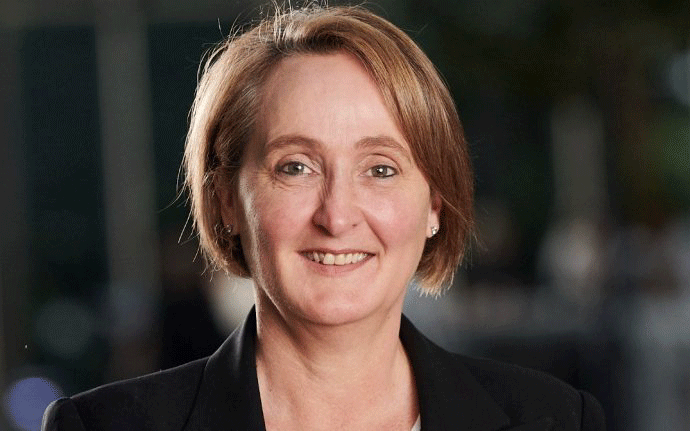
Qantas Group’s current CEO Alan Joyce will bring forward his retirement by two months to help the company accelerate its renewal, paving the way for CEO designate Vanessa Hudson to assume the role of managing director and group CEO effective September 6, 2023.
Joyce said: “In the last few weeks, the focus on Qantas and events of the past make it clear to me that the company needs to move ahead with its renewal as a priority.
Vanessa Hudson will assume the role of managing director and group CEO effective September 6, 2023
“The best thing I can do under these circumstances is to bring forward my retirement and hand over to Vanessa and the new management team now, knowing they will do an excellent job.”
In a press statement, Qantas chairman Richard Goyder noted that Joyce “always had the best interests of Qantas front and centre”, and thanked him for his leadership “through some enormous challenges”.
Goyder said: “This transition comes at what is obviously a challenging time for Qantas and its people. We have an important job to do in restoring the public’s confidence in the kind of company we are, and that’s what the Board is focused on, and what the management under Vanessa’s leadership will do.”
As planned, shareholders will formally vote on the appointment of Vanessa Hudson as managing director at Qantas’ Annual General Meeting in November.
With Joyce’s advanced retirement, one of the executive changes announced in June this year will also be accelerated, namely the appointment of Rob Marcolina as the group’s chief financial officer and Hudson’s transition to the group CEO role.
Leveraging AI that can help its airline and travel agency communities, Sabre will complete migrating and moving all of its GDS business to Google Cloud this year.
“Google has the best ability to advance our capabilities in the travel space….and so we’ve been working collaboratively…to figure out how do we leverage our own data and assets, and adapt AI and machine learning for our partners,” said Brett Thorstad, vice president, Sabre Travel Solutions, agency sales, APAC.
Sabre Space Asian roadshow heads to the Philippines as the company resumes its in-market engagements post-lockdown
Speaking at the Sabre Space Asian roadshow in the Philippines, Thorstad said that in the first years following its 2020 partnership with Google, Sabre launched airline pricing products so carriers can use AI to dynamically price their fares and ancillaries.
He noted that both traditional travel agencies and OTAs, which value automation, could also benefit from AI use.
Hence, Sabre launched this month the Lodging AI that offers up to 20 alternatives when a hotel is sold out or a search criteria is not met. Additionally, the Schedule Change Predictor of flight cancellations and disruptions can be used to create and offer travel itineraries. Both products are available on the Sabre Red 360 platform.
While the GDS is traditionally known for air content, today the most addressable types of content is air followed by hotel, car rental, cruise and tours.
“We’re looking at ways to add more content into the GDS,” said Thorstad.
“Bringing (more content) into the GDS, into a single shopping request, and having it all bookable into the same portal will be hugely beneficial for our (agency) community,” he said.
“We do see a potential for the future where anything can be sold through our platform,” he added.
Further, Thorstad also shared insights into the industry. He said airline seat capacity is recovering and almost back to normal, but travel agency GDS bookings are not growing as quickly; most bookings come from the corporate travel side.
Thorstad pointed out that the work-from-home environment has complicated the corporate travel market. Corporates are booking less frequently as they reduce day trips and become more intentional about travel. On the bright side, business travellers are taking longer trips.
As a percentage of corporate travel bookings, business class and premium economy seats are selling better now than in 2019, he said.
Global OTA Trip.com has launched its year-long exclusive Explore with Mastercard promotion, spanning 17 territories across Asia-Pacific and granting travellers discounted flights when they pay with any Mastercard World or World Elite Consumer Credit and Debit cards on the Trip.com app.
Explore with Mastercard is a result of the MoU that was signed between the two companies earlier in March this year.
Explore with Mastercard promotion grants travellers in Asia-Pacific discounts on airfares
Range of discounts and minimum spend conditions vary across territories. In Singapore, for example, customers can enjoy S$25 (US$18.50) off with at least S$670 charged to their card for all flights, while in Malaysia a minimum spend of RM2,000 (US$431) is required to qualify for an RM88 off.
Edmund Ong, senior product & marketing director (Singapore, Indonesia and Malaysia), Trip.com, said: “We are always seeking to help our customers plan the perfect trip. We hope that this promotion will encourage them to explore more of the world and live their dreams, and we look forward to introducing more of such programmes together with Mastercard in the coming months.”
Explore with Mastercard promotion will conclude on August 31, 2024.
Thai Vietjet will increase the number of flights to and from Phuket, Thailand starting this October, with a target of 204 weekly flights by the end of the year.
Woranate Laprabang, CEO of Thai Vietjet, said the decision came after a discussion with Thailand’s prime minister Srettha Thavisin and the Thai Airlines Association.
Thai VietJet commits to boosting Thailand’s tourism through expanded services to and from Phuket
“We all agreed that tourism is one of the largest sources of sustainable income for Thailand, and it’s important that we push forward and enhance policies to stimulate the tourism industry in the long run, including the free-visa policy for tourists from potential countries such as China and India. In response to those open policies, Thai Vietjet will be increasing our flight capacity to Phuket, which is one of the most popular Thai destinations, from 126 flights weekly to 204 flights weekly, beginning October onwards, which highlights our relentless efforts to contribute to the recovery and sustainability of the travel industry, said Woranate.
The services will connect Phuket International Airport with Bangkok, Chiang Mai, and Chiang Rai in Thailand, as well as Ho Chi Minh City in Vietnam. Thai Vietjet will announce additional Phuket services to and from different cities in China, India, South-east Asia, and Australia soon.
The Standard is reviving its last-minute booking app, One Night Standard, due to popular demand.
The app allows its guests the power to book the lowest “night of” rate at a moment’s notice.
One Night Standard grants travellers access to same-night reservations at the lowest available rates
Originally launched in 2015, the One Night Standard app was well received but had to be shut down during the pandemic.
With its return, guests can now access spontaneous, same-night reservations at the lowest available rates across the brand’s portfolio. Participating properties in Asia include The Standard, Hua Hin; The Standard, Bangkok Mahanakhon; and The Standard, Maldives.
“Guests are not only enthusiastically returning to travel, but are dropping inhibitions and allowing themselves to live spontaneously once again,” said Amber Asher, CEO, Standard International. “It feels great to bring One Night Standard back for all those who missed it during the past few years and lobbied for its return. It is particularly gratifying because we have added some stunning new locations like Ibiza and Bangkok that are just perfect for impromptu late-night fun.”
One Night Standard will continue to expand across the globe as The Standard brand does, including openings in Singapore and Melbourne next year, and thereafter in Lisbon, Dublin, Brussels, Austin, Brooklyn among other locations.
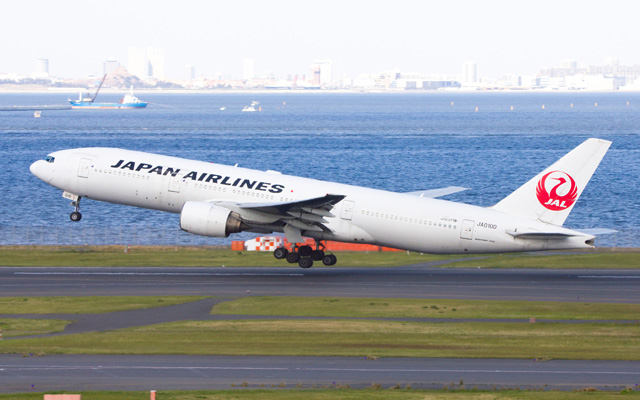
TOKYO JAPAN / APR 15 2019 / Japan airlines Boeing 777-200 take off from Tokyo Haneda airport.
Japan Airlines (JAL) is now a member of the Global Sustainable Tourism Council (GSTC), a move that extends from its ongoing sustainability commitment.
The airline is striving for net zero carbon emissions by 2050, and has been working towards this goal by upgrading its fleet to low-carbon aircraft, supporting the use of Sustainable Aviation Fuel, switching from single-use plastic to certified paper products and in-flight meal containers, among other things.
Japan Airlines advances on its sustainability efforts by joining the Global Sustainable Tourism Council
Through the JAL Vision 2030, the company has also set out goals to create a ”safe and secure society” and “sustainable future” with ESG as the core of its management strategy. Further, the JAL Group Service Policy on Accessibility Improvement was established in August 2019 to provide an accessible environment and a stress-free travel experience for all customers.
Randy Durband, CEO of GSTC, said: “We welcome Japan Airlines as a member of the GSTC; its commitment to sustainability is reflected in its actions, with an ESG strategy as its topmost company plan. JAL is not just a world-class airline but it owns tour operators and has a stake in a hotel operator. Japan Airlines is flying towards a sustainable tomorrow and we’re delighted that GSTC is part of its journey.”
Ochi Kenichiro, managing executive officer of Japan Airlines, added: “Japan Airlines is honoured to become a member of the GSTC. JAL places ESG strategy at the core of its management plan and strives to make various efforts. We expect to learn a lot from the council and make progress in our efforts to realise a sustainable society.”
Grand Hyatt Singapore, which is undergoing a massive transformation towards its phased opening from 1Q2024, has produced a movie trailer-style video to inspire explorers to immerse themselves in all that Singapore has to offer, including new hotel features.
Titled Grand, the teaser video also kicks off the hotel’s Moments of More campaign.
Grand teaser videos highlight Singapore experiences
Charis Choi, regional vice president, sales & marketing, Southeast Asia, Hyatt, said: “Moments of More bears testament to Grand Hyatt Singapore’s legacy as the region’s leading hotel for trailblazing celebrations and experiences in the past five decades. True to the Grand Hyatt brand promise, we eagerly invite friends in Singapore and from around the world to share their Singapore Story and bring travel dreams to life.
“As we prepare for Grand Hyatt Singapore’s unveiling next year, we look forward to capturing the unexpected facets of Singapore in celebration of the diversity and unique charm of this City in Nature.”
Along with the new campaign is a visual storytelling contest, where participants will share their treasured experiences that are off the beaten path in Singapore. The grand prize is one million World of Hyatt points. Judging guidelines are based on the creativity in recommending local recreation activities; ways to recharge in the City in Nature; or sustainability activities (40 per cent), the originality of the post (50 per cent), as well as the public appeal during the voting period (10 per cent).
Submissions for the contest will close on 29 September 2023 at 2359hrs, and the top five entries will be announced on October 16, 2023 for public voting. The Grand Winner will be announced by October 31, 2023.
Four additional prizes will be awarded to exceptional submissions, with winners taking home two-night retreats in the renewed hotel and a room credit of S$600 (US$442.80).
Thapanee Kiatphaiboon has taken on the role of governor at the Tourism Authority of Thailand (TAT).
She has been with the TAT since 1999, and has held various positions within the organisation, including deputy governor for tourism products and business, and most recently deputy governor for domestic marketing.
Thapanee Kiatphaiboon has been a strong advocate for Thailand’s tourism industry
In her most recent role as TAT deputy governor for domestic marketing, Thapanee initiated various tourism initiatives that drove Thailand’s economy. They included workation in Thailand, faith and religious tourism routes, and solo travels – all of which helped to stimulate 151.45 million domestic trips in 2022 – about 88 per cent of the record year in 2019 – and generated 641.5 billion baht (US$18.1 billion).
In her role as deputy governor for tourism products and business, she initiated the Amazing Thailand Safety and Health Administration certification programme that enabled hotels and services to meet specific health and safety standards during the pandemic; the Special Tourist Visa scheme to promote the reopening of Thailand, which led to subsequent entry schemes, including Villa Quarantine, Yacht Quarantine and Golf Quarantine; and the Phuket Sandbox, which has been recognised internationally as the model for a country’s post-lockdown reopening.
Thapanee is also a savvy social media and technology strategist, and has played a key role in utilising technology and social media to promote and develop Thailand’s tourism. Some of her outstanding achievements included the Google Street View project in cooperation with Google Thailand, and the Amazing Thailand social media platforms.
She was also instrumental in the development of various special interest tourism products, including health and wellness tourism, yacht and cruise tourism, and community tourism, as well as the King’s Wisdom for Sustainable Tourism project, which won the PATA Grand Awards 2018 in the category of Education and Training.





















The former Parkroyal on Kitchener Road will adopt the Novotel brand from November 1, 2023, as Accor and Worldwide Hotels Group sign on a new partnership. This follows Worldwide Hotels Group’s acquisition of the property in July 2023.
The 543-key Novotel Singapore on Kitchener, located in the Little India cultural enclave, will begin its rebranding exercise on October 31, 2023.
Accor has an existing strong partnership with Worldwide Hotels Group, as evidenced by the latter’s successful management of ibis Styles Brisbane in Australia and ibis Budget Osaka Umeda in Japan. Carolyn Choo, CEO of Worldwide Hotels Group, said: “This acquisition aligns with our growth strategy and allows us to expand our commitment to delivering exceptional guest experiences and thoughtful customer service in strategic locations.”
The hotel had previously undergone a full-scale refurbishment in 2020, presenting now updated décor and interior design. It is ideal for both leisure and business travellers, with facilities ranging from all-day dining restaurant, hospitality lounges, and retail shops.
“We are delighted to introduce Novotel Singapore on Kitchener as a milestone achievement in our ongoing partnership with Worldwide Hotels Group, a property that emphasises our shared commitment to exceptional guest experiences,” said Garth Simmons, CEO for Accor’s Premium, Midscale & Economy Division in Asia.
“This signing is a significant step for Accor as we continue to elevate hospitality standards to provide our guests with genuine hospitality and premium comfort.”