


Fire mishap shuts down Mount Bromo

A wildfire on Mount Bromo’s Teletubbies Hill has forced The Bromo Tengger Semeru National Park Center (BB TNBTS) to close the attraction to visitors until further notice as authorities scramble to extinguish the fire.
The fire was allegedly caused by the use of flares by a couple who were taking pre-wedding photographs at the location.

All access routes to the Indonesian national park have been shut down. An entrance is available only for locals living in the areas surrounding the mountain.
In statement, Septi Eka Wardhani, head of the administrative division at BB TNBTS, explained that the closure would ensure the safety of visitors. Once the situation is under control, a reopening will be evaluated.
Based on Regional Disaster Mitigation Agency data, the area of forest and land destroyed by the fire on Mount Bromo has reached 274 hectares.
Efforts to extinguish the devastating fire is being carried out by the East Java provincial and Malang task force teams, volunteers, fire awareness community, and the BB TNBTS’s fire-handling team.
Septi said visitors who had purchased tickets online can apply for a change in visiting dates. Procedures for rescheduling and other information will be provided by BB TNBTS.
Although the national park is closed, Adjie Wahjono, operations manager of Aneka Kartika Tours, said tourists could still enjoy views of Mount Bromo from Seruni Point or Metigen Viewpoint, areas that are not within the management of BB TNBTS.
“There have been no cancellations so far. We can still conduct Mount Bromo tours with slight modifications, as tourists cannot go to Whispering Sands or hike up the mountain. However, Jeep rides and other activities are still possible,” said Adjie.
Mazen Abilmona helms Pullman Singapore Hill Street
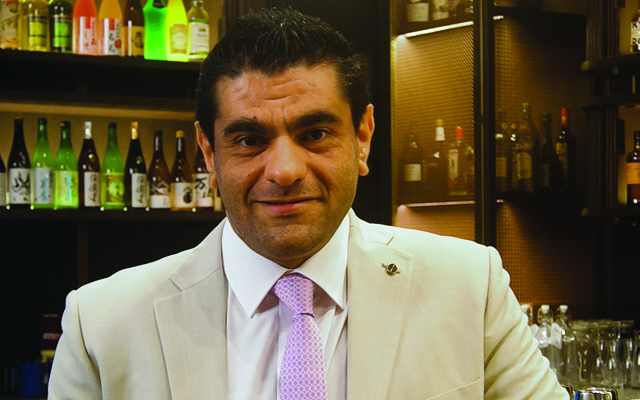
Pullman Singapore Hill Street has appointed Mazen Abilmona as general manager.
Prior to this, he served as the cluster hotel manager of both Sofitel Singapore Resort & Spa and SO/Singapore.
Abilmona has built his 25-year career with properties across the Middle East, China, and Singapore; having spent the bulk of his earlier journey within F&B. He began his career with Fairmont Dubai as an F&B service supervisor, before becoming F&B Director within the same hotel.
Abilmona has also been involved in several pre-opening task forces over the years and has spearheaded rebranding projects in properties including Fairmont Singapore, Fairmont Peace Hotel, Sofitel Sanya Leeman Resort, and Fairmont Riyadh.
The 350-key Pullman Singapore Hill Street under Accor opens on October 1, 2023. The hotel will feature three dining concepts, a pool bar, outdoor swimming pool, 24-hour fitness area, and event spaces.
Boracay’s stakeholders clamour for more marketing and promotions as foreign visitors dwindle
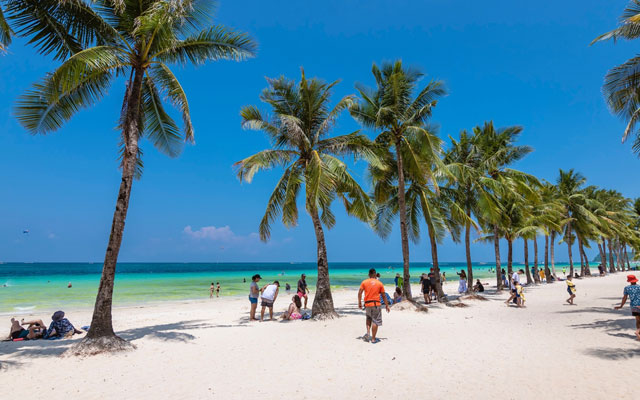
Although Boracay’s carrying capacity is 6,405 people per day, only 10 to 15 per cent are foreign tourists, compared to 70 to 75 per cent pre-pandemic.
This observation was made by stakeholders interviewed by TTG Asia at the recent 34th Philippine Travel Mart of the Philippine Tour Operators Association.
Unfortunately, Boracay’s losses started when it closed for six months for its environmental rehabilitation, which was made worse by the pandemic.
Lea Rosales-Wong, director of sales and marketing, The Muse Hotel, conceded that Boracay can be expensive because as an island, it imports everything from the mainland including food, labour, electricity and gasoline.
South Koreans, the island’s top market, have reportedly been opting to head to Vietnam instead. To combat this, Boracay hotels have reduced their rates, where the price of staying at a five-star hotel in Boracay, is about the cost of staying in a three-star hotel in Vietnam.
Claribel Casimero, president, Boracay Island Travel Agency and Tour Operators Association, pointed out that regional flights, mostly chartered from South Korea, China and Taiwan, have also not been fully restored.
Moreover, Boracay was rebranded from a leisure destination to a family-orientated destination which meant that bars and beach parties were restricted, which could have affected tourist numbers as well, said Casimero.
To return to 2019 levels, Rosales-Wong opined that attractive airfares and more marketing and promotions for Boracay are needed.
A source requesting anonymity said the island is currently being sustained by local business events and leisure tourists, but destinations need foreign tourists to survive and grow.
The source added that the government should have started promoting Boracay soon after the removal of international borders.
“They’re promoting other destinations but why take Boracay out of the picture when it’s the destination that introduced Philippine tourism to the world? If you go to other countries, they don’t know the Philippines but they know Boracay”.
Another source who also requested anonymity agreed, and pointed out that the government should have started promoting Boracay after the reopening of Philippine borders.
Japan’s adventure tourism sector receives much-needed recognition through ATWS

Japan’s adventure travel industry warmly welcomed the Adventure Travel World Summit (ATWS) to Hokkaido this week, as the four-day event kicked off on Monday with plenaries, meetings and other activities at the Sapporo Convention Center.
National and local stakeholders shared their joy that Japan’s northernmost island was chosen as the first venue in Asia, where they voiced their hope that the hosting will spur the development of adventure travel across the country.

“Hosting ATWS presents an opportunity for people to realise the potential of adventure travel in Japan,” Tetsuo Saito, Minister of Land, Infrastructure, Transport and Tourism, told delegates, adding that Hokkaido is “a treasure trove of adventure travel resources” that allows for diverse activities such as trekking, kayaking, snowshoeing, wildlife watching and learning about the indigenous Ainu people.
Moreover, Japan’s 3,000km-long archipelago, which stretches from the subarctic zone in Hokkaido to the tropical zone in Okinawa, can offer inbound visitors a whole range of outdoor activities, from skiing to snorkelling, added Atsumi Gamo, president of the Japan National Tourism Organization.
By holding seven of the 22 pre-summit adventures outside Hokkaido, the ATWS has also helped expand the domestic network of industry players, to help develop adventure travel in Japan, added Takeshi Mizuguchi, director of the international tourism division at the Hokkaido District Transport Bureau.
Industry players also noted that advancing adventure tourism in Japan can help the country tackle some of its pressing tourism issues, including overtourism, because adventure travel is more prevalent in nature-rich areas that are off the beaten path.
For Hokkaido, ATWS is also an opportunity to engage with delegates from the European and North American markets whose inbound numbers have been slow to grow in the prefecture, said Kenji Koganezawa, chair of the Hokkaido Tourism Organization and member of the AWTS Hokkaido Executive Committee.
“We hope the summit will fuel people’s adventure spirit and serve as a place for new encounters and discoveries,” he said.
THAI to reintroduce domestic routes following Thai Smile merger

Thai Airways International Public Company Limited (THAI) has unveiled plans to reintroduce nine domestic routes previously serviced by its subsidiary Thai Smile Airways, with the imminent merger of Thai Smile into the group.
The nine domestic routes that THAI plans to relaunch – utilising A320 aircraft ported over from Thai Smile – during its winter flight schedule spanning October 2023 to March 2024 will connect Bangkok’s Suvarnabhumi Airport to Krabi, Khon Kaen, Phuket, Narathiwat, Chiang Mai, Chiang Rai, Hat Yai, Udon Thani, and Ubon Ratchathani.
Thai Smile currently operates 55 routes, nearly half of which are domestic flights. The rest include unique international routes to connect secondary destinations in Thailand to primary and secondary locations abroad, such as Udon Thani-Colombo, Hat Yai-Colombo, or Penang-Chiang Mai.
However, the decision to cease operations on one of Thai Smile’s most popular routes on October 1, the Suvarnabhumi-Surat Thani route, has drawn backlash and raised questions about its potential consequences on local tourism, prompting Surat Thani governor Wichawut Jinto to appeal for reconsideration regarding the discontinuation.
He referred to Surat Thani International Airport as the “Suvarnabhumi airport of the upper South”, given the province’s key role in the local tourism infrastructure.
Surat Thani is key hop-off point to drive to nearby popular tourist destinations in the province such as Khao Sok National Park, and is a transit point to provinces with less connectivity such as Chumpon. It also is the nearest airport to several major piers from which travellers can take a boat to the famed islands Koh Samui, Koh Phangan or Koh Tao.
For now, the Bangkok (Suvarnabhumi)-Surat Thani route will continue to be serviced by Vietjet, as well as Nok Air, Air Asia and Thai Lion Air from Bangkok’s Don Mueang International Airport to Surat Thani.
Earlier in May, the merger between THAI and Thai Smile was approved by Thai Airways creditors. The move includes 800 Thai Smile staff being transferred over to THAI, to reduce operational costs, and aid with recovery from substantial debt and losses exacerbated by the pandemic.
Wharf Hotels launches lifestyle brand Maqo
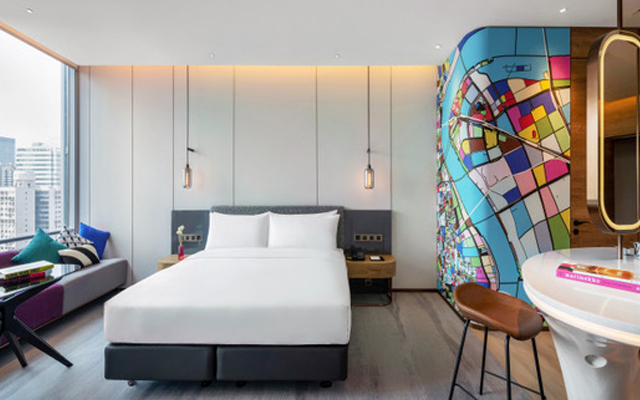
Hong Kong-headquartered hospitality group Wharf Hotels has launched Maqo, a new premium lifestyle brand, joining sister brands Niccolo Hotels and Marco Polo Hotels.
Maqo envisions itself as stylish and edgy, where its approach is based around the art of selection where “editors” meticulously refine possibilities to arrive at crafted and “edited” art and culture programmes, F&B offerings, music playlists and wellness concepts. Designed to provoke and inspire guests with the unexpected at every stay, Maqo is for those who want to connect, and are attracted by the edited experiences the brand provides.
Wharf Hotels’ president, Thomas Salg, stated in a press release: “Maqo has given us the opportunity to rethink hotel spaces and experiences, and we believe the brand will resonate with guests who appreciate blended spaces and our edited collections. Looking ahead, we are confident that the brand’s offerings will appeal to diverse guest segments from business and leisure and are keen to take on development prospects in North Asia, South=east Asia and China.”
The brand’s first property will be Maqo Changsha on November 1, 2023, in Tower Two of International Finance Square, featuring 286 rooms and suites, a restaurant, bar, co-working space, as well as a gym. Its sister hotel, Niccolo Changha opened in 2018 at Tower One of International Finance Square.
Salg added: “We are optimistic about the future outlook of Mainland China and its steady resurgence of outbound and domestic travel… Among all the progressive cities contributing to the exponential growth of travel within China, Changsha continues to be a core domestic destination with considerable market potential, and we are confident the brand’s inaugural hotel in the city will be popular for leisure and business travel.”
The launch of a new brand is one of many strategic opportunities to realise Wharf Hotels’ vision of “25 by 2025”, as it targets more openings in key Asian destinations such as Singapore, Shanghai, Tokyo and Bangkok.
Thai government champions eased entry for Chinese travellers

The new Thai cabinet has proposed a temporary visa exemption for Chinese tourists in support of the country’s tourism industry recovery and efforts to welcome at least 28 million visitors by year’s end. The policy is expected to begin next month and remain in effect until the end of the next high tourism season.
New prime minister Srettha Thavisin, who has expressed his government’s commitment to supporting tourism as a stimulus for the economy, met with key stakeholders on September 10 to iron out the mechanics of the rollout. Visa offices nationwide are reportedly preparing for the additional workload of visa-free Chinese entries.

Thailand already offers 30-day visa-free entry to another significant market, Russia.
Adith Chairattananon, honorary secretary-general of ATTA, noted that visa exemptions can serve as a short-term marketing tool to increase demand, citing a 2019 WTTC study that showed visa waivers lead to a 16.6 per cent increase in travel demand, while introducing new types of visas can increase travel by 8.1 per cent.
“The Chinese market is sensitive to visa fees and overall ease of entry procedures, so we believe that these measures should increase visitors from these markets by at least 10 per cent,” he told TTG Asia.
He added that additional flights between Thailand and China were also needed to maximise the positive outcomes of visa exemptions.
“If there aren’t enough carriers, passengers cannot be transported (to Thailand),” he remarked.
Adith also stressed the importance of government-led efforts, especially by the prime minister, in engaging China in tourism discussions and creating incentives for airlines to boost flight operations to Thailand.
The new government has included in its policy statement plans to increase flight volume to Thailand and boost the local airport infrastructure.
On September 11, Thai Airways International (THAI) announced in response to a visit from the prime minister that it will increase flight frequencies to various destinations in China during this year’s high season. Between October 29 and March 30, THAI will operate daily flights to Shanghai and Guangzhou. Starting December 1, THAI will also operate daily flights to Beijing, Chengdu and Kunming.
As of July, ATTA recorded 1.9 million Chinese arrivals – approximately 40 per cent of the corresponding period in 2019.
China is currently grappling with economic challenges such as a weak yuan and inflation that have led to lower spending power, curbing outbound travel demand.
The Tourism Authority of Thailand in August revised its estimates for Chinese arrivals down to four million, from 5.8 million previously.
SIA to launch non-stop services to Brussels in 2024

Singapore Airlines (SIA) will launch non-stop flights between Singapore and Brussels, the capital of Belgium, from April 5, 2024, marking a return to the city after more than 20 years.
The airline will operate four weekly flights to Brussels with the long-haul variant of its Airbus A350-900s, which feature 253 seats in three cabin classes: 42 in Business Class, 24 in Premium Economy Class, and 187 in Economy Class.
Subject to regulatory approval, flight SQ304 will depart Singapore for Brussels on Mondays, Wednesdays, Fridays, and Sundays at 2355hrs (local time). The return sector, operated as flight SQ303, will depart Brussels for Singapore on Mondays, Tuesdays, Thursdays, and Saturdays at 1210hrs (local time).
The addition of Brussels increases the number of European destinations in the SIA network to 13.
Adventure Travel World Summit kicks off in Hokkaido

The Adventure Travel World Summit (ATWS) kicked off Monday in Japan’s northern-most island, marking the first time the Adventure Travel Trade Association (ATTA) event has been hosted in Asia.
Some 800 travel professionals, including national and local tour operators, destination management representations and thought leaders, joined a Day of Adventure on the first day of the four-day event. Each of the adventures were designed to introduce the best Hokkaido has to offer in adventure activities. Options ranged from hiking the indigenous Ainu people’s Mountain of God and rafting on the Shiribetsu River to farming, exploring Daisetsuzan National Park and making traditional Ainu crafts.

Under the summit theme of chowa (harmony), the ATTA plans to showcase the potential of Hokkaido for adventure travel, defined as a trip that includes at least two of the characteristics of physical activity, interaction with nature and cultural learning or exchange.
“Hokkaido was one of the first destinations within Japan to attend an ATTA event, and to be inspired by the potential that adventure travel could bring to the destination, beyond it being seen as a snow and ski destination. And indeed, there is so much adventure in Hokkaido – from hiking to kayaking, learning more about local Ainu culture to indulging in the fabulous food here,” Hannah Pearson, regional director – APAC, of the ATTA, told TTG Asia.
“Holding ATWS has really been a rallying call for adventure travel in Japan,” she added, noting that other prefectures have been motivated by the attention that Hokkaido and the Japan National Tourism Organization have given to adventure travel and hosting ATWS, and see how it could help address the challenges they are facing, such as overtourism.
“I think we can expect to see more adventure travel options throughout the country, as demand grows from both the international community, and tour operators themselves want to get more involved in adventure travel,” Pearson concluded.








World of Frozen, the world’s first and largest Frozen themed land, will open at Hong Kong Disneyland Resort on November 20.
Inspired by the Walt Disney Animation Studios’ films, Frozen and Frozen 2, World of Frozen will transport guests to the cinematic and living land, Arendelle, where captivating stories, beloved characters, culture, stunning landscapes, and enchanting music can be found.
Cutting-edge technology will also be harnessed to present various attractions and experiences like Summer Snow Day, Frozen Ever After and Wandering Oaken’s Sliding Sleighs.
Michael Moriarty, managing director of Hong Kong Disneyland Resort, said: the new World of Frozen “is an integral part of the park’s latest expansion and growth”, and he expects the new draw to attract “even more guests from around the world”.
Frozen fans can expect to find a number of iconic scenes at World of Frozen, such as the North Mountain, with its peak being the highest point in Arendelle at the resort; the Ice Palace where Elsa unleashes her icy powers freely for the first time; Arendelle Castle, home of the royal family; and many more.
Nordic history and culture will permeate the new attraction, including its themed dining venues Golden Crocus Inn and Bayside Wharf where delicacies are inspired by traditional Nordic dishes. Visitors can pick up Frozen souvenirs at Tick Tock Toys & Collectibles and Traveling Traders.
Klook has been appointed as the designated booking platform for World for Frozen experiences and products in the Philippines, Thailand, and Singapore. Guests who book through Klook Travel will have the exclusive opportunity to be among the first to explore World of Frozen with a special hotel package on November 4, 2023 before its official gate opens on November 20. In addition, guests can also purchase the One-Day Ticket with Early Park Entry Pass.