Harilela Hotels will expand its The Hari brand to Singapore with the opening of The Hari Singapore in spring 2027.
The new hotel will be created through the conversion of the Holiday Inn Singapore Orchard City Centre and will become the third property under The Hari brand, following openings in London and Hong Kong.
The Hari Singapore will occupy the former Holiday Inn Singapore Orchard City Centre and become the brand’s third property
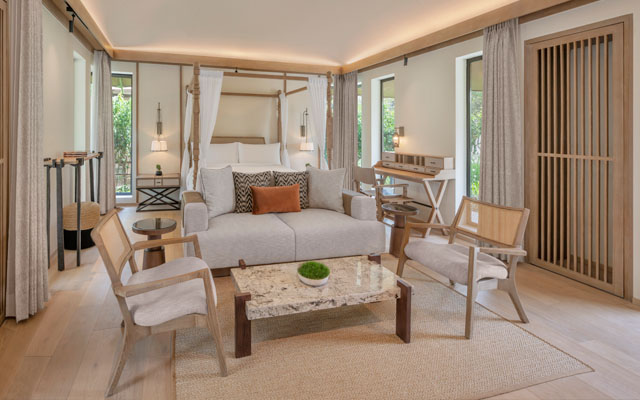
Located at 11 Cavenagh Road, the hotel will feature 326 guestrooms, a rooftop pool, executive lounge, dining outlets, wellness facilities and a rotating art programme that has become a hallmark of the brand.
Interiors will be designed by British designer Tara Bernerd, whose work also features at The Hari London and The Hari Hong Kong.
The Hari London opened in 2016, followed by The Hari Hong Kong in 2020. Both properties are part of the Harilela Group, which was established in 1959 and remains family-owned.
The Harilela Group, through Harilela Hotels, owns 15 properties across Asia, Europe and the US.
Aron Harilela, founder of The Hari, said: “This hotel, like our sister properties in Belgravia and Wan Chai, will embody relaxed elegance punctuated by eccentricity, wit, culture and genuine heartfelt hospitality.
“Singapore is key to our ambition to evolve The Hari in major international destinations.”
AmaWaterways has released the first details and renderings of AmaRudi, a new double-width river cruise ship scheduled to debut on the Danube River in spring 2027.
The vessel will be the second ship built using the wider design first introduced with AmaMagna in 2019. Accommodating 196 guests in 98 staterooms and suites, AmaRudi will become one of the largest river cruise ships operating in Europe.
AmaRudi will offer 98 staterooms and suites, accommodating up to 196 guests on Danube itineraries
Named after AmaWaterways co-founder and chairman Rudi Schreiner, the ship will feature multiple dining venues, expanded wellness facilities and new entertainment spaces. Schreiner grew up near Austria’s Danube River, where the vessel will operate.
Dining options will include the main restaurant, The Chef’s Table speciality venue, al fresco dining areas and Rudi’s Wine Bar. Additional features include a Deck Club barbecue on the Sun Deck.
The ship’s wellness facilities will comprise treatment rooms, a fitness centre, beauty services and wellness programmes led by onboard hosts. Guests will also have access to a pickleball court on the Sun Deck.
AmaRudi will introduce a new entertainment venue featuring a cinema, karaoke, billiards and a jukebox.
As with other newbuilds in the fleet, sustainability features will include Stage V engines, solar panels, shore power connectivity, spud poles and lightweight construction materials designed to improve operational efficiency.
AmaRudi will operate a selection of AmaWaterways’ Danube itineraries when it enters service in 2027. Further details on accommodation categories, onboard experiences and bookings will be released at a later date.
Rudi Schreiner, co-founder and chairman of AmaWaterways, said: “AmaMagna changed what travellers believed was possible on a river cruise ship.
“We knew there would be a right time to revisit that concept, and with river cruising continuing to grow, that time is now.”
Hong Kong has been selected to host the 2027 Puma Hyrox World Championships, with the event scheduled to take place at AsiaWorld-Expo from June 10-13, 2027.
The championship will mark the first time the event is staged in the Asia-Pacific region and follows the rapid growth of Hyrox in Hong Kong since its regional debut in the city in 2022. The most recent Hong Kong event, held in May 2026, attracted nearly 20,000 participants, compared with fewer than 1,000 competitors at the inaugural race four years earlier.
The 2027 Puma Hyrox World Championships will be held at AsiaWorld-Expo in Hong Kong from June 10-13
Hyrox said only the top 0.5 per cent of athletes from its global community will qualify for the World Championships. The company recorded 1.5 million participants across 95 cities during the 2025-26 season and expects participation to exceed two million in the coming season.
The multi-day event combines elite competition with age-group racing and is expected to attract international competitors, supporters and visitors to Hong Kong.
According to Hyrox, the 2026 World Championships in Stockholm are projected to attract an audience of one million viewers worldwide, providing a platform for Hong Kong to showcase itself to an international audience when it hosts the event the following year.
Peter Lam, chairman of the Hong Kong Tourism Board, said: “(This) adds another world-class mega event to our city’s calendar and underscores Hong Kong’s standing as the Events Capital of Asia. We look forward to welcoming elite athletes and Hyrox fans from around the world to Hong Kong, where they can stay longer, explore more, and experience all that our vibrant and diverse city has to offer.”
Christian Toetzke, co-founder and CEO of Hyrox, said: “Hosting our 2027 season finale in Hong Kong is a historic step forward, demonstrating not only the growth of our sport in the Asia-Pacific region, but also our commitment to bringing world-class hybrid racing to new global hubs. We cannot wait to deliver an unforgettable experience in this vibrant city.”
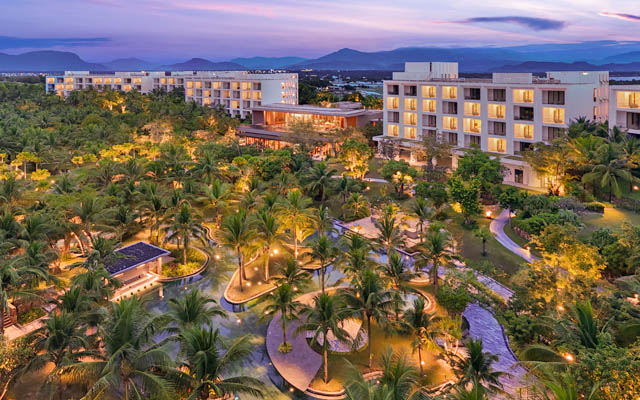
Location Situated on a private two-kilometre stretch of Bai Dai Beach in Cam Ranh, the resort is a convenient 20- to 30-minute drive from Cam Ranh International Airport and about 30 minutes from Nha Trang.
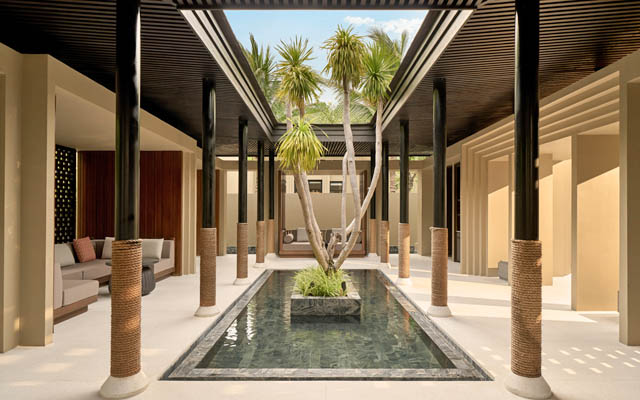
Once a barren patch of land, the resort took six years to develop and has been transformed into a natural haven. Today, more than 1,000 indigenous trees sourced from across Vietnam bring life to the 22-hectare property, with meandering pathways winding through landscaped gardens.
Accommodation The 203-key resort, comprising 27 one- to four-bedroom villas with private pools, pays tribute to the area’s Champa heritage. Crafted by design studios AND, Super Potato and PIA to embody the five elements of wood, fire, earth, metal and water, serenity spills into every room.
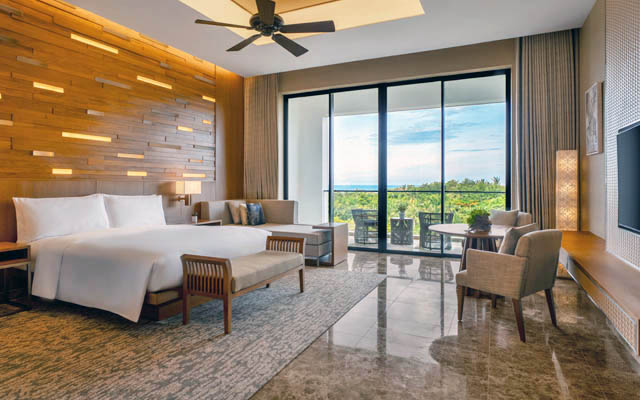
I checked into the 72m² Premium Double Room, which was impressively spacious for an entry-level category. Natural light poured through a large balcony overlooking the resort grounds, out to the sea.
Rooms feature organic tones, natural materials and wooden accents that showcase Vietnamese craftsmanship. Champa influences appear through handwoven rugs, ceramics and artwork, while a separate standalone shower and toilet are complemented by a large bathtub.
JW Marriott Cam Ranh
1 of 6
3-Bedroom Oceanfront Villa with Private Pool
Premium King Room
Relaxation Lounge at Spa by JW
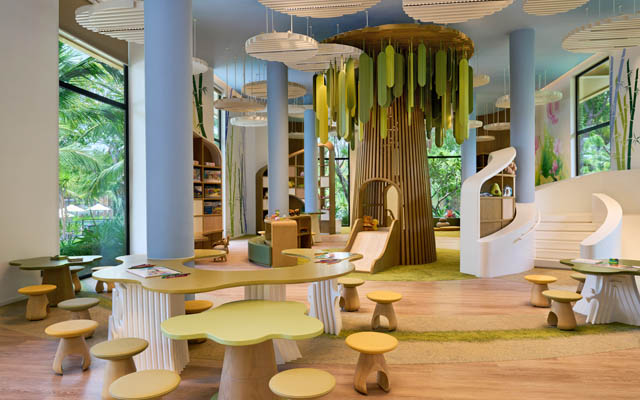
Kids Club
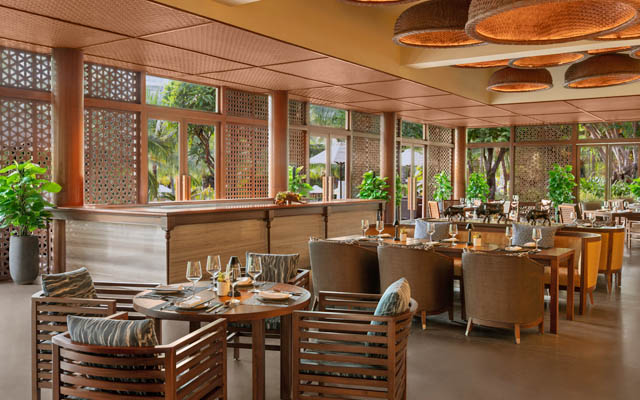
Seafood Grill
Ocean Bar
F&B Food and beverage sits at the heart of the resort, with seven venues. Thanks to its location near several fishing villages, seafood features heavily. The Seafood Grill showcases the day’s freshest catch, with an open kitchen highlighting the chefs’ culinary flair.
All-day dining venue Clay Craft serves a buffet breakfast featuring Vietnamese staples and Western favourites, including pho, bánh mì, eggs cooked to order, soups and pastries.
Beachside dining can be found at Bayside Bistro, serving pizzas, burgers and Asian dishes, while neighbouring Ocean Breeze bar overlooks the infinity pool and private beach.
More casual options include artisan breads and pastries at the Baking Company, while The Pool Bar and Lobby Lounge serve cocktails and refreshments. Locally sourced ingredients are prioritised throughout, with herbs, fruit and vegetables grown in JW Garden.
Facilities Paying homage to local heritage, guests can join complimentary pottery classes at The Pottery Club, where expert potters help participants create or decorate their own pieces. The Baking Company also hosts slow-drip coffee workshops.
The resort is particularly family-friendly. The Tree House offers supervised activities for children aged 12 and under, alongside a dedicated teen space. A children’s pool includes slides and a mini waterpark, while a lazy river winds through the gardens.
Fitness enthusiasts can access the 24/7 gym, while Spa by JW offers eight treatment rooms designed to soothe away any remaining stress. Conference and meeting facilities are also available.
Service Staff delivered warm, attentive service throughout my stay, with someone always available to assist. This included patiently pointing me in the direction of Bayside Bistro more than once after I declined a buggy ride and got lost trying to walk there instead.
Verdict For a sophisticated beach getaway, JW Marriott Cam Ranh Resort & Spa ticks all the boxes, offering couples, families and friends a relaxing coastal escape in a sprawling natural setting.
The cost of obtaining a Japanese visa is set to increase fivefold from July, but Filipino travellers will continue to enjoy free visa processing.
The Embassy of Japan in Manila clarified in a notice issued on June 24 that temporary visitor visas for Philippine nationals will remain gratis (free of charge).
Filipino travellers will continue to enjoy free Japanese visa processing despite higher visa fees taking effect from July
Japan has raised its visa fees for the first time in nearly five decades. The fee for a single-entry visa has increased from US$18 to US$93, while a multiple-entry visa now costs US$186, up from US$37.
Although Philippine passport holders are exempt from the visa fee, applicants are still required to pay consular service fees of US$18.69 for a single-entry visa and US$37.43 for a multiple-entry visa.
Japan welcomed 42.68 million international visitors in 2025. Of that total, 885,023 arrivals came from the Philippines, making the market Japan’s ninth-largest source of international visitors.
The Philippines is launching an aggressive domestic tourism campaign as it seeks to offset continued declines in arrivals from South Korea, its largest source market, and relatively modest growth from other international markets.
Tourist arrivals increased 6.1 per cent year on year between January and June 15, according to tourism secretary Dita Angara Mathay. Speaking on the sidelines of the Hotel Sales and Marketing Association (HSMA) general membership meeting and the launch of its 12th Virtus Awards, she said all source markets recorded growth except South Korea, although exact figures were not disclosed.
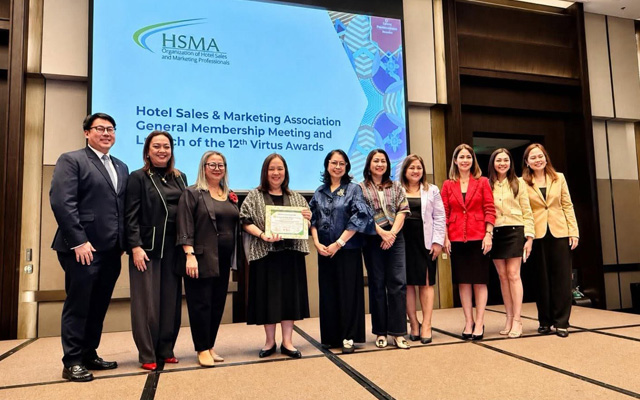
Dita Angara Mathay (fourth from left) joins HSMA members during the association’s general membership meeting and the launch of the 12th Virtus Awards
To help restore visitor numbers, Mathay said the Department of Tourism (DoT) is strengthening its domestic tourism efforts with support from HSMA and other industry organisations.
With a population of more than 110 million, the Philippines offers a substantial domestic travel market that tourism stakeholders hope can help offset softer international demand.
The initiative includes a refreshed version of the Love the Philippines campaign, branded as Discover More Love in the Philippines, supported by discounted travel packages and promotional offers.
Mathay added that the DoT will review gaps in the country’s tourism offering and identify measures needed to improve competitiveness. This will include consultations with the Tourism Infrastructure and Enterprise Zone Authority (TIEZA) and the Department of the Interior and Local Government (DILG) on initiatives to improve the visitor experience and tourist safety.
Margie Munsayac, chair of HSMA, said the association is exploring ways to encourage Filipinos to travel domestically while continuing efforts to attract international visitors.
She stressed that restoring arrivals from South Korea should remain a priority, given its importance to the Philippines’ tourism industry.
“The decrease in Korean numbers cannot be made up by the increase in numbers from other countries, other providers,” Munsayac said.
She noted that many South Korean travellers are choosing destinations such as Vietnam, Thailand and China, which are perceived as offering better value than the Philippines.
Travellers are increasingly seeking quieter, slower and more restorative holidays, driving demand for ‘quietcations’, sleep tourism and wellness-focused travel experiences.
Hotels, resorts and travel companies are responding by creating programmes centred on rest, digital detox, well-being and simplified luxury.
The trend is extending beyond individual operators, with destinations such as Thailand incorporating wellness and healing into national tourism strategies.
From left: Amit Gilani and Gaurav Punjabi say travellers are increasingly prioritising rest, well-being and slower-paced journeys
The modern traveller is exhausted. In an era defined by hyper-connectivity, crowded cities and packed itineraries, a new paradigm is quietly taking hold across the hospitality sector.
Welcome to the era of ‘hushpitality’ – an evolution of wellness and luxury where the greatest indulgence is the deliberate removal of excess. It is no longer about filling an itinerary with endless activities; it is about stripping the experience back to essentials, proving that in travel, less can indeed be more.
The appeal of the quietcation
The shift in traveller intent is becoming increasingly evident. Global hospitality company Hilton identified ‘hushcations’ as a major driver in its 2026 traveller intent study, signalling a growing desire for restorative quiet and describing the best travel companion as ‘silence’.
More than one in four travellers (26 per cent) plan to travel alone in 2026, while 48 per cent intend to add solo travel days before or after family trips.
According to Hilton’s global research, respondents’ top motivation for leisure travel in 2026 is ‘to rest and recharge’ (56 per cent). Other key motivations include spending time in nature (37 per cent), improving mental health (36 per cent), and enjoying ‘me time’ (20 per cent).
Gaurav Punjabi, founder of Cozymoons, is embracing the ‘Quietcation Theory’ for his honeymoon clients, many of whom are young and time-poor. The company offers retreats focused on a slower, more intentional style of travel, free from back-to-back activities, which Punjabi described as: “No alarm clocks. No sightseeing marathons. No pressure to make every minute count. Just long, unhurried mornings, landscapes that encourage lingering, and the rare pleasure of having absolutely nowhere to be.”
Cozymoons’ ‘quietcation’ escapes range from remote wilderness retreats at Nayara Alto Atacama in Chile and desert stays in Sossusvlei, Namibia, to jungle retreats in Yala, Sri Lanka.
“At this point, the Quietcation trend is definitely most popular with millennials, as they move away from over-sharing and over-stimulation to more immersive and enriching experiences on their journeys. Undoubtedly, Gen-Zs are resonating with this already as well given their innate personality of being more private and caring more about their minds and bodies as compared to the former generations,” shared Punjabi.
He added: “While there’s initial hesitation (from our clients), once they’ve experienced it: they’re coming back for more such getaways organically. The effect it seems to be having on their emotional well-being is truly admirable and it’s quickly becoming an important part of their yearly sojourns.”
Sleep tourism and slow travel
The desire for rest has also given rise to highly structured sleep tourism. Amit Gilani, founder of Mumbai-based agency TravelButler, has seen demand for restorative travel grow across destinations such as Thailand, Vietnam, the Philippines and Japan.
To avoid heavily visited destinations, Gilani directs clients towards lesser-known locations including Sapa and Lang Co in Vietnam, Khao Yai in Thailand, and smaller boutique resorts in the Maldives. He describes the approach as “slow tourism” or a “stay low, go slow” philosophy.
For these clients, TravelButler creates dedicated sleep programmes built around a 12-hour rest framework. Recognising that quality rest often requires a digital detox, clients are encouraged to put away their phones from 22.00 to 08.00, alongside a two-hour afternoon nap. Gilani also advises clients to charge their phones away from the bedside to encourage better sleep quality.
“This concept thrives in resort settings in the Maldives, Thailand and Bali, where the spaced-out environment and tropical sea breeze naturally set a relaxing mood. We are in fact setting up sleep packages with properties dedicated to pure wellness, who are seeing tremendous success by offering extensive two- or three-week breaks that pair deep wellness with exceptional food,” Gilani noted.
Similarly, facilities such as the 12ha Tulah Clinical Wellness Center in Kerala, India, which offers 65 rooms and suites, are attracting guests seeking targeted sleep programmes. Meanwhile, the Longevity Suite Retreats at Mett Singapore, due to launch in September 2026, will feature circadian rhythm-aligned guestrooms designed to support sleep restoration and recovery.
The shift towards Bare Luxury
As sustainability becomes increasingly embedded across the hospitality sector, luxury brands are redefining what value means to their guests. Soneva, which pioneered the Barefoot Luxury concept in 1995, is now evolving the idea into what it calls Bare Luxury.
Rhea Saran, global director of communications at Soneva, said the approach focuses on removing anything that does not contribute meaningfully to the guest experience and instead concentrates on “Just What Matters”.
“The first thing you will sense is a change in how you feel,” she shared.
“This repositioning drives significant operational changes across our Maldives portfolio. By replacing rigid standard operating procedures with a focus on staff adaptability and emotional intelligence, Soneva aims to empower its staff to give guests exactly what they need in the moment, rather than blindly following orders,” she explained.
The concept is also reflected in physical design. At Soneva Jani, former office spaces within overwater villas are being converted into 37 well-being suites with direct access to fitness equipment, reflecting changing guest priorities. Soneva Secret, the company’s 13-villa property on a remote atoll, operates without fixed schedules and offers programmes tailored entirely to individual preferences.
Future villa designs will also incorporate natural materials and lighting intended to reduce sensory overload.
“At the end of the day it’s about balance in everything that feels meaningful. This editing process is not about minimalism or restricting choice; rather, it is about removing the burden of creativity from the guest so they can effortlessly focus on what matters – creating a space where they can truly reconnect with themselves,” Saran said.
When wellness becomes national strategy
This focus on simplicity and restoration is no longer limited to individual operators. It is increasingly influencing national tourism strategies.
At the Thailand Travel Mart Plus 2026, the Tourism Authority of Thailand (TAT) placed wellness and restorative travel at the centre of its tourism strategy, positioning the country’s natural and cultural assets as pathways to mental and physical well-being.
Under the theme Healing is the new luxury, TAT is promoting Thailand through five pillars: Retreats, Rituals, Reels, Rhythms and Relations.
TAT governor Thapanee Kiatphaibool highlighted that amid global uncertainty, travellers increasingly seek a sense of safety and reassurance.
“By situating our wellness offerings within a ‘Safe Haven’, Thailand is conveying to travellers that they can achieve genuine healing to rejuvenate both body and mind,” she stated.
In a world that constantly demands attention, ‘hushpitality’ reflects a growing preference for slower, quieter and more restorative travel experiences. By focusing on rest and simplicity, destinations and hospitality brands are responding to travellers who increasingly value space, time and well-being over packed itineraries.
According to Hilton’s 2026 Trends Report, “In 2026, travellers will look for destinations and experiences to dial down life’s distractions. Seeking calm – even moments of silence – signals a change in why people are travelling, where they’re going, and how they’ll relax.”
“We see this as a trend that is here to stay and will grow exponentially over the next 18-24 months, as travellers seek less fabricated and more nature-driven explorations. Destinations and hotels will need to highlight this segment more ardently, as the ever-evolving traveller will move deeper into the ‘quietcation/hushpitality’ space,” Punjabi concluded.
Sun Group, a Vietnamese conglomerate with businesses in tourism, entertainment, real estate and infrastructure investment, is giving wings to Phu Quoc’s tourism development through the 2025 launch and rapid expansion of Sun PhuQuoc Airways.
During Sun PhuQuoc Airways’ trade and media engagement in Singapore last week to introduce its Phu Quoc-Singapore service commencing July 25, its deputy director of sales, La Vinh Nam, emphasised the airline’s clear intent to grow its international network, having already launched flights connecting Seoul (South Korea), Hong Kong and Taipei (Taiwan) with Phu Quoc. More flights are also being planned, and the airline will reveal network updates after receiving 18 more aircraft at the end of August this year.
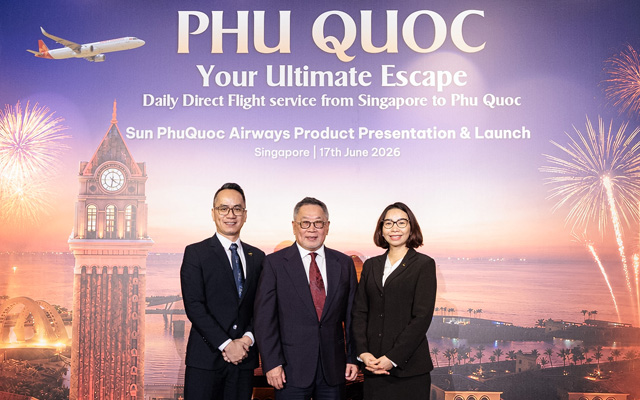
From left: Sun PhuQuoc Airways’ La Vinh Nam; Discover the World Singapore’s Tony Lim; and Sun Hospitality & Entertainment’s Luong Thi Hoang Lan welcome Singapore’s trade buyers at an event on June 17
Nam told TTG Asia that the airline’s network strategy relies on a “hub-and-spoke model with Phu Quoc at its absolute core”.
“Our foundational mission is to take Phu Quoc to the world and bring the world to the Pearl Island (Phu Quoc’s local nickname). When determining our routes, we look for high-potential markets that either lack direct connectivity to Phu Quoc or are underserved in the premium leisure space.
“Domestically, we connect the island to major economic hubs like Hanoi, Ho Chi Minh City, and Danang. Internationally, our network expansion is engineered to capitalise on Phu Quoc’s unique 30-day visa exemption for international visitors,” said Nam.
For now, Sun PhuQuoc Airways takes pride in being the only premium airline with both Economy and Business classes flying the Phu Quoc-Singapore route.
Branded as a “resort airline”, Sun PhuQuoc Airways invites travellers to begin their vacation from the moment they come onboard.
“Our resort in the sky concept offers a luxurious, private, and comfortable flying experience that connects Phu Quoc with major domestic and international destination. Everything from the cabin interior inspired by the vibrant colours of the island, to our in-flight hospitality and cuisine, is designed to evoke the relaxation of a luxury getaway,” explained Nam.
The strongest manifestation of the resort airline positioning is Sun PhuQuoc Airways’ ability to leverage Sun Group’s tourism and entertainment ecosystem. Nam shared that the airline is “inextricably linked to Sun Group’s resorts, entertainment complexes, and dining venues in Phu Quoc, thus, we can offer our passengers exclusive, all-in-one privileges that standalone airlines simply cannot replicate”.
Sun PhuQuoc Airways’ market entry comes at an opportune time, as Phu Quoc gains stronger interest from tourists and readies to host the APEC 2027 leadership meetings. To capture momentum, the airline is leveraging Sun Group’s well-established B2B network and creating bundles that make it easier for event planners to secure integrated transport, accommodation, and venue solutions.
“We have also strategically appointed General Sales Agents (GSAs) in vital markets like South Korea, Taiwan, Hong Kong, and Singapore. We selected these specific markets because they have a high density of affluent travellers seeking new, premium leisure destinations, and they also possess strong (business events) outbound potential. Our local GSAs give us the deep market penetration, cultural nuance, and established travel trade relationships required to efficiently convert that growing destination interest into bookings,” said Nam.
Tony Lim, managing director of Discover the World, the appointed GSA in Singapore, said Sun PhuQuoc Airways would attract both business travellers on leisure extensions as well as corporate incentive programmes. Since opening the Phu Quoc-Singapore service for sale on May 20, Discover the World has received multiple corporate enquiries for meetings and incentive trips planned for 4Q2026 and early-2027.
Sun PhuQuoc Airways believes that the APEC 2027 meetings will be “the ultimate catalyst for establishing Phu Quoc as a premier global business event and luxury destination” and allow the airline to demonstrate its ability to “execute flawlessly on a global stage”.
“When global leaders and delegations arrive, Sun PhuQuoc Airways will be their very first touchpoint with Vietnamese hospitality. We want delegates to feel the warmth, sophistication, and cultural richness of the Pearl Island the moment they board our aircraft. We are enhancing our premium cabin offerings with bespoke in-flight menus that highlight local Vietnamese flavours, and we are upgrading our priority ground services to align perfectly with the world-class, five-star operations expected at the newly-expanded Phu Quoc International Airport Terminal 2,” he told TTG Asia.
In the lead up to the meetings, the airline is mapping out capacity increases from major transit hubs for enhanced global connectivity and will launch flights from China, Malaysia and Thailand in the coming months.
“Sun PhuQuoc Airways will continue expanding our global commercial footprint through partnerships with prospective representatives and distribution partners in Australia, Kazakhstan, Uzbekistan, Oman, the Czech Republic, Mongolia and Japan,” added Nam.
Japan Airlines (JAL) and Tokyo International Air Terminal Corporation (TIAT) have successfully tested the use of digital identity technology for transfer passengers.
The initiative, conducted as part of the International Air Transport Association’s Data & Technology Proof of Concepts programme, is claimed to be a world first and could support a more seamless travel experience.
JAL and TIAT tested digital identity technology that enables passengers to complete boarding and transfers using facial recognition
The trial used facial recognition based on information including boarding passes, passports and facial data that had been pre-linked to a traveller’s smartphone mobile wallet. By sharing the digital identity with airport systems, passengers were able to complete boarding and transfers using facial recognition alone on a test journey from Haneda to London via Hong Kong.
The proof of concept involved three different mobile wallets and two biometric authentication methods – one-to-one and one-to-many – while integrating with existing systems including Haneda Airport’s Face Express and Hong Kong International Airport’s Flight Token.
In a joint statement, JAL and TIAT said the trial demonstrated a significant simplification of procedures from reservation to boarding while reducing the potential for human error.
The organisations added that the results could support future technology standardisation across the aviation industry.
“With practical implementation, customers will no longer need to present passports at multiple touchpoints, including check-in counters, security screening, immigration control, boarding and transfer gates,” they said.
Ryohei Mishima, vice president of station operations planning at JAL, described the technology as part of the evolution of airports.
“We expect to improve the efficiency of airport operations by using digital identity to streamline passenger flow. Despite limited airport facilities and staff resources, this technology enables us to accept more passengers at airports,” he said.




 He joined Royal Caribbean in 2014 and has held senior commercial, sales and marketing roles across the UK, Europe, the Middle East, Africa and China.
 Location