Seven Secrets by Hanging Gardens, Indonesia Luxurious beachfront escape Seven Secrets by Hanging Gardens is the latest gem in the crown of Indonesia’s hospitality landscape and is located on the pristine shores of Lombok.
The resort is nestled against the backdrop of Mount Bali Batur and the Bali Sea, and offers an outdoor pool, spa, fitness centre, and dining venues.
Guests can explore the island, known for its dazzling waterfalls, pearl farms, picturesque towns, rice paddies, and white-sand beaches, or even hop on a luxury helicopter tour.
Park Proxi Gibraltar Bowral
Park Proxi Gibraltar Bowral, Australia
Gibraltar Hotel in Bowral, Australia has relaunched as Park Proxi Gibraltar Bowral, managed by StayWell Holdings. The hotel offers 77 rooms and suites plus an extensive suite of facilities including a resort-style 18-hole golf resort course, gym, and heated indoor swimming pool.
There are also be multiple F&B options including Harvey’s Bar, where live musical performances and a novel cocktail selection are available.
Guests will rest well in generously-sized rooms and suites that feature floor-to-ceiling panoramic views of Mount Gibraltar and the surrounding woodlands.
ibis Palembang Sanggar
ibis Palembang Sanggar, Indonesia ibis Palembang Sanggar is located 35 minutes from Sultan Mahmud Badaruddin II International Airport by car and is surrounded by various tourist destinations including The Grand Masjid Agung Sultan Mahmud Badaruddin, which is a 10-minute walk away.
With a total of 158 rooms, the hotel offers distinctive elements such as a vibrant social hub that provides guests with opportunities to gather, socialise, and enjoy themselves to the fullest, an all-day dining restaurant, and function rooms.
Hotel Indigo Melbourne on Flinders
Hotel Indigo Melbourne on Flinders, Australia Situated in Melbourne’s most iconic laneway, Hotel Indigo Melbourne on Flinders’ neighbourhood offers a laneway culture of street art, hidden cafés, bars, boutiques and galleries right on the hotel’s doorstep.
Boasting 216 reinvented guestrooms, the hotel also features a dramatic lobby-gallery space and lounge, a selfie booth, fitness centre, bar and restaurant, as well as event venues.
The Oakwood Hotel & Apartments Saigon in Ho Chi Minh City is offering 35 per cent off stays in celebration of its first birthday.
From now to October 31, enjoy the Funtastic One Birthday Promotion of up to 25 per cent off, with an extra 10 per cent discount exclusively for Ascott Star Rewards members.
Oakwood Hotel & Apartments Saigon celebrates its first year with stay discounts
Starting at a rate of 1,100,000 dong (US$45) per night, the promotion includes a welcome drink upon arrival, daily breakfast, daily complimentary drink coupon, and early check-in or late check-out. In addition, guests can explore the city’s culture and attractions with the hotel’s complimentary shuttle.
Furthermore, guests will receive a special code offering a 10 per cent discount at restaurants, spas, and workshops in Ho Chi Minh City.
Manish Nambiar has been appointed as the new managing director of Siam Kempinski Hotel Bangkok and vice president operations, South-east Asia.
Manish will be responsible for the execution of operations, including service, operational brand standard delivery and the quality of all Kempinski hotels in the region. He will be based at Siam Kempinski Hotel Bangkok and will lead four other properties in South-east Asia.
A veteran hotelier with almost 20 years of experience with Kempinski, he joins from his executive role as area general manager of Africa since 2021. In his previous position, he oversaw the operations of all Kempinski properties in the Africa region and was based at Kempinski Hotel Gold Coast City Accra, in Ghana.
Manish started his career path with Kempinski S.A. as an F&B specialist in Tanzania, East Africa in 2004 and enhanced his expertise by opening various Kempinski properties in the Middle East and Africa.
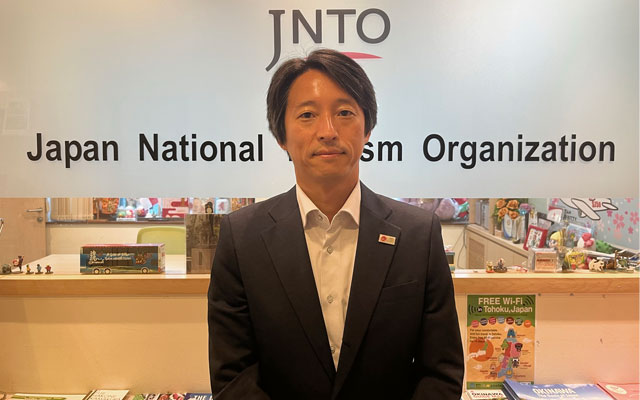
The Japan National Tourism Organization (JNTO) has appointed Takuya Shiraishi as executive director for the Singapore market.
In this role, he will be responsible for leading the development and implementation of strategies to promote Japan as a preferred tourist destination among Singaporean travellers.
The Pacific Asia Travel Association (PATA) has appointed Noor Ahmad Hamid as CEO, commencing October 1, 2023.
Noor’s illustrious track record began at the Malaysia Tourism Promotion Board, where he served for more than 16 years in various departments. He was also based in their Los Angeles, US office for four years.
Following this, Noor ventured into the corporate world, joining an events management company specialising in international sporting events. He later joined a government-affiliated company focused on hospitality and tourism investment.
In 2009, Noor joined the International Congress and Convention Association (ICCA) as the regional director of Asia Pacific where he served for 11 years. During his tenure, membership in Asia Pacific grew substantially, resulting in the region being ICCA’s largest.
During the Covid-19 pandemic, Noor worked with the Malaysia Convention and Exhibition Bureau as chief operating officer, and played a key role in the recovery of Malaysia’s business events industry.
In 2022, he was inducted into the Events Industry Council Hall of Leaders, the most prestigious award in the global business events industry. In 2018, he received the China MICE Leaders Award from Meetings and Conventions China for his contributions to the Asia Pacific region.
Thai Vietjet will be increasing its flight services between Bangkok (Suvarnabhumi) and Surat Thani to a total of three round-trip flights daily from October 12, 2023.
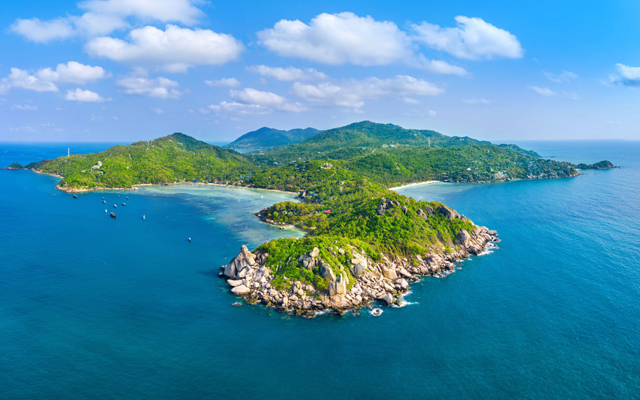
Surat Thani
The additional flight will be operated in the early morning between Bangkok (Suvarnabhumi) and Surat Thani. The flights will be operated with A320 and take approximately 1 hour and 15 minutes.
The following flight schedule is as follows:
Currently, Thai Vietjet is the only airline that operates direct flight services between Bangkok’s Suvarnabhumi Airport and Surat Thani International Airport.
KP Ho, executive chairman of Banyan Tree Holdings, believes that Phuket is poised to leverage its temperate weather conditions to become a tropical hub for business and leisure over the next decade.
“I think a greater Phuket effect is going to happen eventually over the next 10 years where Phuket will transform into a ‘Honolulu’,” Ho predicted during his talk at Phuket Hotels for Islands Sustaining Tourism (PHIST) 2023 earlier this month.
KP Ho speaking at PHIST
Southern Thailand, particularly along the Andaman Sea, can evolve into a dynamic hub similar to Hawaii’s cluster of resort cities over the next decade, given ample attractions in neighbouring regions like Krabi, Phang-Nga, Khao Lak, and Surat Thani.
He cited the government’s investments in the Phang Nga and Krabi airports as being instrumental in this transformation.
“There are very few truly international class destinations in this part of Asia which perfectly meet the climactic needs of people living in temperate climates,” he said.
Taking a broad view as an owner of resorts in various tropical spots, he pointed out that many resorts in Indonesia, Vietnam, and China – even Bali and Samui – experience cold and wet winters.
“If you look at the map, only Phang Nga and the Greater Phuket area are perfectly attuned to winter conditions. Of course, Burma would be too – but (due to current events) it has fallen out completely as a tourist destination,” he stated.
He indicated that the Banyan Tree group is “doubling down on Phuket purely from a climactic point of view,” and also added that North-east Asia should not be overlooked as a significant source of travellers seeking to escape cold weather.
Banyan Tree Phuket, established in 1994 as the group’s first property, remains the most lucrative for the group, which now has properties in over 25 countries and will celebrate its 30th anniversary next year.
Phuket is also positioned to withstand the impacts of climate change, given its geographical location near the equator.
A recent study published by UNICEF and authored by the Thailand Development Research Institute shows that Phuket consistently holds the lowest risk among Thai provinces in various climate change projections, including both RCP4.5 and RCP8.5 baseline emissions scenarios.
A Peranakan Heritage Room in The Fullerton Hotel Singapore
The Fullerton Hotel Singapore has partnered The Intan, a private Peranakan home museum, to launch an exclusive Peranakan-inspired accommodation experience for hotel guests.
Those who book the Peranakan Heritage Stay room package will enjoy accommodation in guestrooms that have been dressed up with details reflecting the unique blend of Chinese and Malay cultures that defines the Peranakan community, alongside other specially curated privileges.
A Peranakan Heritage Room in The Fullerton Hotel Singapore
Guests can expect floral motifs and batik-inspired fabrics in the rooms, while an artful display of decorative ceramics, porcelain, and pottery adorned with Peranakan-inspired designs. Completing the experience is a selection of handmade Ondeh Ondeh and Hae Bee Hiam cookies, embodying the taste of classic Peranakan flavours.
Guests who book the room package will also be able to enjoy a nostalgic Peranakan afternoon tea at The Courtyard, featuring classics such as the Kueh Pie Tee (an appetiser featuring a crispy tart shell filled with shredded Chinese turnips and a mix of thinly sliced vegetables and prawns), and Mackerel Otah and Cucumber Sandwich. There will also be a house-made Pandan Coconut Scone served with Nyonya kaya and clotted cream, alongside an assortment of sweet treats — Rainbow Kueh Lapis, Ang Ku Kueh, Kueh Dadar, and more.
Guests will also receive a pair of passes to the newly-reopened Peranakan Museum to further delve into the Peranakan community’s traditions, influences and lifestyles.
MGTO’s Maria Helena de Senna Fernandes welcomed North American trade partners at the September 14 trade seminar
The Overseas Affairs Office of the Ministry of Culture and Tourism of the People’s Republic of China, Department of Culture and Tourism of Guangdong Province, Hong Kong Tourism Board, Macao Government Tourism Office (MGTO), and Air Canada recently came together to bring a delegation of North American travel trade professionals to inspect the Guangdong-Hong Kong-Macao Greater Bay Area.
The fam trip to Macau ran for three days, from September 12 to 14, and concluded with a seminar on September 15, during which participants connected with Macau tourism professionals and both parties explored ways to grow the longhaul visitor market for the destination.
MGTO’s Maria Helena de Senna Fernandes welcomed North American trade partners at the September 14 trade seminar
The fam programme featured Coloane, Taipa and several integrated resorts, as well as Macau’s diverse “tourism +” experiences.
Attendees also crossed the new Hong Kong-Zhuhai-Macao Bridge.
The complete experience is expected to inspire the travel trade to design Macau and multi-destination travel products for the North American market, as well as support Macau’s longhaul market development and the transformation of the Greater Bay Area into a world-class destination.
North America is one of Macau’s major longhaul visitor markets and the US currently ranks seventh among Macau’s top 10 visitor markets. MGTO has maintained a destination presence in North America over the past three years.
Just as Silver Nova is the most sustainable ship in the Silversea Cruises fleet, careful considerations are also taken in planning shore excursions for the new ship, with meaningful experiences that support local communities and showcase traditions being a top priority.
Walter Barinaga, senior director, destination experiences with Silversea Cruises, told TTG Asia that such a goal required a different approach to curating shore programmes.
Silversea Cruises designs unique culinary showcases with three Michelin-starred restaurant Mirazur in Menton,(Photo by Les impatients, Florent Parizi)Gou
“The way we develop shore excursions is quite different from others in the industry,” said Barinaga. “Rather than simply selecting pre-existing excursions from a list, we endeavour to work with local operators who have deep, local roots in the destination to identify the unique experiences we want to provide for our guests. We then challenge the operator to build a programme around these experiences.”
Barinaga said the team is able to “develop deep, proprietary knowledge of the destinations we visit, which allows us to identify the experience, and also understand the role it plays in delivering the larger destination story”.
Justin Poulsen, vice president, itinerary planning & destination development with the luxury cruise line, pointed out that “the ship must function as the best platform from which to experience the destination”.
With Silver Nova, for instance, Silversea Cruises hopes to present local communities and heritage through culinary experiences.
“Some considerations that influenced our deployment and itinerary planning decisions were to find destinations where our S.A.L.T. Lab could provide an opportunity to get hands-on with regional ingredients and dishes. We also sought destinations that would amplify the experience in the public venues, such as sunset aperitifs anchored off Sorrento, and destinations that could come alive and in which guests can take advantage of unobstructed views from the ship, such as Alaska’s famed Inside Passage,” shared Poulsen.
S.A.L.T. Lab is part of Silversea Cruises’s signature dining programme, Sea And Land Taste, hence S.A.L.T, which showcases flavours of the destinations and region the ship calls at. It was conceived by Adam Sachs, former editor-in-chief of Saveur and who is now director of the programme. S.A.L.T is an exclusive programme, available only on Silver Moon, Silver Dawn, Silver Nova.
S.A.L.T, according to Sachs, is an “ecosystem” that comprises S.A.L.T shore excursions, which are in-depth tours led by food experts who delve into local culinary traditions; S.A.L.T onboard dining through S.A.L.T. Bar and Kitchen, where the menu changes with the ports of call and local recipes are made with local products; and S.A.L.T Lab, where small groups of guests will learn local recipes in a professional kitchen. On Silver Nova, guests have the added benefit of the first-ever S.A.L.T Chef’s Table, where a chef duo who will serve, interact and feed an exclusive group of just 18 guests.
Some of the meaningful experiences that have been created for Silver Nova guests were birthed from a unique collaboration with the three Michelin-starred restaurant Mirazur in Menton, a town on the French Riviera, headed by celebrated chef Mauro Colagreco. Tailor-made for Silversea Cruises’s guests, the experiences take guests closer to the heart of French culinary traditions and offer a deep-dive into local food and drink culture.
Guests will join Mirazur’s talented chefs, bakers, and gardeners to explore the central market in Menton’s old town, and meet with Mirazur’s local producers; visit chef Colagreco’s artisanal bakery, Mitron, where they will learn about ancient grains and taste a range of traditionally baked breads and pastries, all produced sustainably through certified organic agriculture; learn about the research being undertaken at the Sanctuaries del Mirazur, five biodynamic vegetable gardens at varying altitudes that are owned by the restaurant; and enjoy a nine-course tasting menu in Mirazur’s private tasting kitchen.
Other carefully crafted ways to appreciate ports of call through fine flavours include a half-day tour of the Karst region to visit a herbal farm and for brunch with wine tasting; and an intimate day with a natural wine master in the medieval town of San Miniato, which features a visit to a wine estate, wine tasting, and a three-course lunch with wine pairing.