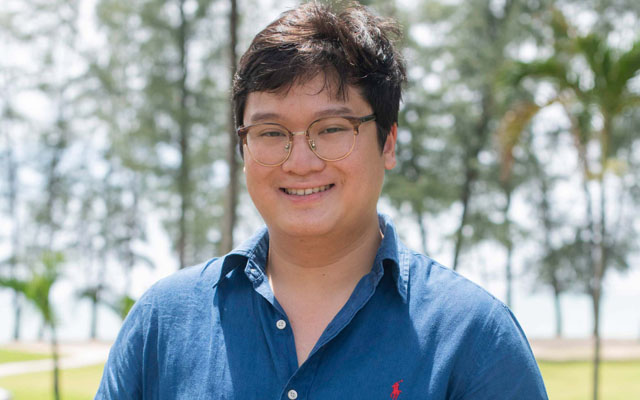
 Tell us about your journey in the Amora Group.
I’m the second-generation owner of the Amora Group, founded by my late father. I took over the business just during the midst of Covid, and my first endeavour was the acquisition of Novotel Brisbane during 2020. Despite my mergers and acquisitions (M&A) background, I’ve always been working part-time and stayed very close to the family business. (The pandemic) was a challenging time and that was what prompted me to come back. Currently, our chairwoman is my mother, Khun Amornrat.
How extensive is Amora Group’s property portfolio?
We have six properties – three in Australia located in Sydney, Brisbane, and Melbourne, and three in Thailand. We’re (currently) transforming our new flagship in Thailand, the Amora Phuket Beach Resort, which will soft-open as a 264-key five-star property in December 2023 on Bangtao Beach.
Can you tell us about your experience with five-star hotels?
Our flagship in Sydney was our inaugural five-star venture, catering primarily to corporate clients. The Phuket property, however, is our first five-star leisure resort. It was open since 1999 as a 4.5-star hotel, and shut down two years ago for renovation. This is our biggest renovation to date – it’s a complete overhaul with the addition of many facilities including two F&B outlets and 1,000m² of event space for up to 750 pax.
Why the focus on Australia?
Our first hotel was in Melbourne, opened by my father in 1997. He travelled there to study and ended up putting down roots. There’s not a lot of Thai owners in Australia. Our background is unique, because Thai people tend to invest more in Thailand, or the US and the UK rather than Australia.
Your father ventured into hospitality during the Tom Yum Kung crisis. What drove him?
He was a very experienced and accomplished entrepreneur. His background was not hospitality, but duty-free – export and import. He was just a businessman with a love for hotels. As he didn’t grow up rich – he grew up middle-class or lower – it was his aspiration and dream to own a hotel. Seeing the opportunity in Melbourne, he just went for it.
What distinguishes Amora from other Thai hospitality brands or family businesses?
Firstly, what stands out is that we have international exposure. Not a lot of Thai hotel owners have properties in Australia, so we try to leverage that. We’re able to market to more audiences, especially in Australia. Secondly, we focus a lot more on our people, trying to cultivate a family-like culture. Family values are at the heart of what we do. It’s due to my background of growing up in a hotel, and seeing my father build this company.
When you grow up in a hotel and you see your people every single day, they become a family.
We want to extend this treatment to our guests. We treat our staff as a family, and in turn they treat our guests as family. This means recognising what they come for, why they travel, who they are – knowing their names, what they do for work, what they order for dinner so that next time we can immediately come to them with, “Do you want the same thing, sir?”
I think that personalised service makes us a bit different from the other independent hotels.
We call it the Amora way.
What’s the story behind the name Amora?
Amora translates to ‘love’ in Spanish. It’s also reminiscent of my mother’s name, Amonrat. The name was coined by my father as a tribute to her, to show his appreciation and love for my mother. So, Amora is a brand of love, a brand of warm hospitality.
The reason we focus so much on our people and legacy staff is because (we know that when our) customers come in and see the same people who were here five to six years ago having developed in their careers – you might see a receptionist turned assistant front manager, for example – it creates more stickiness, as if you’re going back home and seeing your family. That’s the kind of culture we’re trying to build.
The pandemic was a tough time for many hospitality brands. How did you handle the Covid crisis in terms of staff management?
While we had to make some tough decisions, our diversified presence in both Thailand and Australia helped us. Even if Thailand was badly affected, our Australian properties were able to go into a quarantine business. So, we still had cash flow and we were still afloat. Consequently, we could retain most of our legacy staff.
What can guests look forward to in terms of the interior for the Phuket property?
We focused on ‘bringing the beach into the resort’ – for example, our restaurant is called Isla, from the Thai word for ‘freedom’ – but in Latin, it means ‘cave,’ so we designed the venue to replicate a cave surrounded by water. This type of wordplay is indicative of what we are. We’re a multicultural company. The name of our beach club, located right smack on the beach where light shines through the most, is derived from ‘Manora,’ a Thai word meaning ‘light & pride’ – thus, the name Nora.
What is the average profile of travellers to your property in Thailand?
For our Phuket property, it’s leisure. We’re positioning it post-renovation as a modern lifestyle hotel, because we have a very balanced mix of customers who come to the hotel. I think it’s very risky these days to try to go after one market. Going only for Chinese, for example, would have been a disaster this year. It’s all about having a balanced mix and diversification rather than trying to take one main segment.
Historically, Russians and Europeans dominate the high season, but we’re keen on expanding our reach to other markets.
What is the inbound travel capacity from Australia to Thailand, and what are the travel behaviours of Australians?
Not a lot of Australians come to Thailand relative to other key markets, but what’s interesting about this is that as hoteliers, we don’t need millions and millions of Australians to come – we just need a few who are actually selecting our hotel.
The Australian market’s potential also lies in its different seasonality. Their winter is our summer – during Christmas, it’s hot. During June to July when Europeans travel less, it’s freezing there.
What are the specific markets and destinations you’re targeting for expansion in Asia-Pacific and South-east Asia?
We only focus on acquisition and renovation. In the next three to five years, we’re eyeing expansion in key Australian cities. We want a five-star property in each of the CBDs, which means Adelaide, Perth and another one in Melbourne; our current property there is 4.5-star and located on the fringe of the CBD.
In Thailand, we really want our next acquisition to be in Bangkok. We now have a small property, the Neoluxe Amora on Sukhumvit Soi 31. We want another flagship five-star property in central Bangkok for corporate clients.
What do you anticipate hospitality veteran Lars van der Most will bring as general manager of the Amora Phuket Beach resort?
He has extensive experience, coming from Marriott and Starwood – but what I like about him is that because he was a general manager in China, he understands the Asian culture and family values, so he resonates with what I want to do from a people perspective.
As a second generation hotelier whose father was passionate about hospitality, what do you think you can bring to the brand as an owner?
We didn’t have houses when I grew up in Melbourne. I grew up in a hotel, with hospitality staff around me, and that has shaped my vision of family.
At the start, I brought knowledge about M&A because my background is in deals advisory and investment banking – something less common among hotel operators. I’m expecting to utilise more of my experience in the future as our strategy is to acquire, renovate and rebrand properties.
Coming from the younger generation, I’m passionate about innovation, flexibility and aligning with modern trends – understanding more about these unique experiences that customers are eagerly awaiting when they travel. You have to be adaptable and ensure that you can accommodate all these trends. To go for only one trend, like digital nomads only, would be a mistake. Even when it comes to trends, we still have to diversify.



 His career has seen him work for major international hospitality brands in Europe, the Middle East, South-east Asia and mainland China.






 With a wealth of experience in luxury hospitality which spans over three decades, he has held leadership roles in commercial, hotel operations and luxury brand management across five countries in three continents including the UAE, South Korea, China, Malaysia, Indonesia and Singapore.
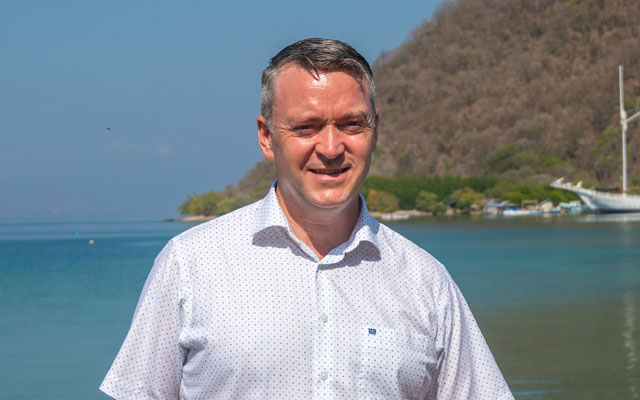 He has over 25 years’ experience in luxury hospitality, and was most recently general manager at Barcelo Mussanah Resort in Muscat, Oman.








The third edition of the UNWTO Best Tourism Villages programme has recognised 54 villages from all regions in a ceremony on October 19 during the UNWTO General Assembly; 14 of which are in Asia.
The programme, established in 2021, recognises villages that are leading in nurturing rural areas and preserving landscapes, cultural diversity, local values, and culinary traditions.
The stringent selection, which took into consideration factors such as Cultural and Natural Resources, Social Sustainability, and Governance and Prioritisation of Tourism, was made from almost 260 applications.
A further 20 villages have joined the Upgrade Programme, which supports villages on their journey to meet recognition criteria, helping to close gaps identified during evaluation.
All 74 villages are now part of the UNWTO Best Tourism Villages Network, which will allow operators to share experiences and good practices, and learn from tourism and rural development experts in the public and private sectors.
UNWTO secretary-general Zurab Pololikashvili said: “Tourism can be a powerful force for inclusivity, empowering local communities and distributing benefits across regions. This initiative acknowledges villages that have harnessed tourism as a catalyst for their development and well-being.”
The list of Asian tourism villages new to the programme this year are: Biei, Hakuba, Oku-Matsushima and Shirakawa in Japan; Dhordo in India; Dongbaek, Mosan and Sehwa in South Korea; Huangling, Xiajiang, Zhagana and Zhujiawan in China; Penglipuran in Indonesia; and Tân Hoá in Vietnam.
Meanwhile, Asuka in Japan; Madla in India; and Bilebante, Pela and Taro in Indonesia are now being supported under the Upgrade Programme.
The call for submissions for the fourth edition will take place in the first months of 2024.