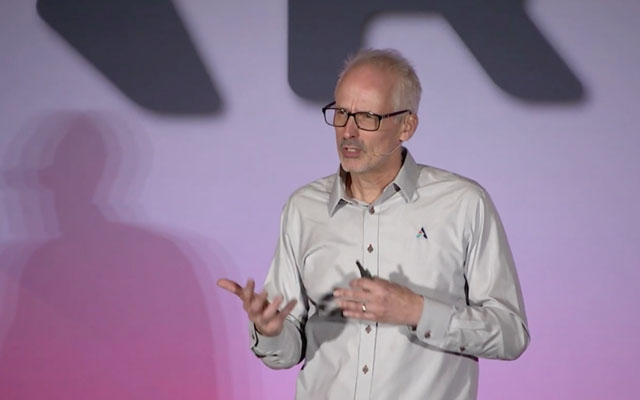
While it is common to hear of travel and tourism companies embarking on sustainable initiatives in response to growing awareness of responsible operations and the United Nations Sustainable Development Goals, Walk Japan’s first steps into its community engagements were borne out of its CEO’s longing to live out his countryside dream.
Paul Christie’s love for the countryside first bloomed in his teenage years, when he used to visit his grandfather in Southern England and would take walks together through the surrounding apple orchards and botany of hops.
“My grandfather also kept honey bees and geese, and grew lots of vegetables. I loved walking with him through the area, and determined then that I would one day live in the countryside,” Christie recalled in a conversation with TTG Asia.
At the age of 40 in 2002, he decided it was time to get started on fulfilling that dream. With that, he gave up his life in London to settle in Kyushu, Japan, where he found joy in building his own house, growing some vegetables, helping the local farmers with their tasks, “pottering around”, and leading tours for Walk Japan “to earn some pocket money”.
“Essentially, I got to lead the good life in the countryside. But as the tour business picked up, I got taken away from the other things I wanted to do in the countryside. So, I started Walk Japan’s Community Projects some time in 2007, and my initial plan was to do things related to farming and looking after the forests,” he said.
“But these projects developed into things far more than that.”
One of the first initiatives of Walk Japan’s Community Projects was to buy over houses in Kunisaki, a small coastal town in Kyushu, that have long been abandoned. A team renovated and converted the houses into offices and places for customers – and eventually volunteers – to stay.
Christie now has seven properties in the area, five of which have been renovated. Two are used as offices, two as accommodation for guests, and a beach house that is currently being rented.
Another aspect of the Community Projects is taking care of communal parks that local councils are unable to care for due to budget issues. One initiative involves regenerating forests that have just one or two types of cedar trees grown very densely together, resulting in poor sun access and barren forest floor with little variation of flora and fauna. Christie hopes to turn these plots into ecologically vibrant areas, but acknowledges that this will be an initiative lasting for decades.

Coming up, Walk Japan’s Community Projects will embark on English classes for Kunisaki children. It will work with local schools that are unable to provide English enrichment classes due to limited skillsets.
“We hope that in doing so, we will encourage people to move to Kunisaki because they see opportunities in getting English education not available in other rural areas,” said Christie.
Christie believes that Walk Japan’s Community Projects are helping to revitalise rural areas.
As the projects are “integral to our walking tours”, Walk Japan’s customers have the opportunity to be part of initiatives and interact with the local people. Some customers have chosen to visit Kunisaki again and again, and to eventually stay for weeks or months to volunteer for Walk Japan’s Community Projects in the area.
“For example, we have an Australian, who is retired now but used to work with the national parks, who came for six weeks to help us on our projects. He started off as a customer who booked a tour with us later in the year, but learnt about our projects and decided to come ahead of time to join us.”
There are also others who have relocated from the big cities to work at Walk Japan’s office in Kunisaki. The company has a multinational team, comprising Japanese, Italians, French, a Hong Kong Chinese, a Lithuanian and many more.
Christie said: “The main population in Kunisaki is getting old and will not be producing youngsters. So, our community projects also look at ways to make Kunisaki a more vibrant place to live in, not just a place to farm rice for example, so that people elsewhere will be enticed to move here and live.”
He noted that fresh relocations to Kunisaki were few prior to the pandemic.
“There were a few Japanese who moved here and nearly no foreigners. That has since changed. I think two major reasons are at play, besides us being here to create jobs.
“One reason is the Fukushima nuclear incident, which forced many people in East Japan to relocate elsewhere. Second, the pandemic: some people living in the Tokyo region looked to move into the countryside where pandemic restrictions were fewer and it was easier and cheaper to move around. There were also people who could not travel overseas during the last three years and considered domestic destinations, like Beppu (a popular hot springs town), not too far away from Kunisaki. They came, fell in love after realising Kunisaki is more than just a beautiful coastal town, and moved in.”
It is not just Kunisaki that is benefiting from revitalisation through Walk Japan’s work.

Christie cited villages on the Nakasendo trail as an example. Walk Japan is recognised as pioneers of walking tours through Nakasendo, an ancient route that connected Edo (Tokyo today) to Kyoto. Its tours prioritised support for local businesses – small inns, local transport operators, restaurants, and more.
“That placed money in the hands of locals. When I did economics in university a long time ago, I learnt that when you put a dollar into a local business, that value grows six-fold because local businesses often go on to support other local businesses,” he said.
And as word spread that tourism brought improved financial independence to the local community, people were inspired to stay put and set up tourism-related businesses, instead of leaving for the big city.
“I’m not saying that Walk Japan alone can inspire that sort of change. We are the vanguard of walking tours. Many other travel companies that have seen what we do went on to design similar experiences with their own flavour. When more travel companies do that, they bring more people into a destination, which then supports local businesses,” he said.
In assessing the outcomes of his Community Projects, Christie said the initiatives are also good for the heart.
“Sure, our customers support the local communities as they participate in our walks, but they also gain so much from being part of the communities,” he said, pointing to the intangible value of spending time with a host family and transcending language barriers to share genuine conversations.
In Kunisaki, Walk Japan tours sometimes call on Etchan, an old friend of Christie who just turned 80, at her house.
“She cannot speak a word of English but is a master communicator. During Covid, she was so desperate for foreigners to return. So, I think, in a way, our Community Projects are also about building bonds between travellers and the locals, and among travellers,” he reflected.


He is also the current chair of Tourism Australia and a director of the Star Entertainment Group.
He was previously part of the pre-opening team at Four Seasons Hotel Bangkok at Chao Phraya River, and has supported several Four Seasons properties in other locations, including Beijing, Maldives, Singapore and Mumbai.


The climate crisis was under the spotlight during the opening session of Arabian Travel Market (ATM) on Monday, with tourism and economy figureheads from across the Middle East discussing travel industry action plans.
According to Sustainable Travel International, tourism is responsible for approximately eight per cent of global carbon emissions from transport, food and beverage, accommodation, and related goods and services. The opening session looked at the industry’s crucial role in climate change – a particularly pertinent topic as the UAE prepares to host COP28 later this year.
The session featured Sujit Mohanty, regional division for the Arab States, United Nations Office for Disaster Risk Reduction (UNDRR); Abed Al Razzaq Arabiyat, managing director, Jordan Tourism Board; and Walid Nassar, tourism minister for Lebanon, with CNN anchor and correspondent Eleni Giokos as moderator.
Building a picture of the current situation, Mohanty said: “Globally, in the last 20 years, there have been US$2.97 trillion in economic losses due to disasters. Climate change is leading to more frequent and severe climate-related hazards such as floods, heatwaves, cyclones and hurricanes. In turn, the tourism industry loses enormous amounts of money due to these hazards. Therefore, the return on investment is clear – invest now to help protect the future.”
The UNDRR works closely with governments, the private sector and stakeholders across the globe, including 22 Arab nations, to reduce disaster risk.
Jordan is one of the highest-ranking countries in the region on The Euromonitor Environmental Sustainability Index and responsible tourism is now a key focus for the nation.
“Educating both businesses and travellers on how they contribute to the carbon footprint is one of our key priorities. In parallel with education, we are offering incentives to hotels, businesses and other stakeholders to encourage sustainable practices,” said Arabiyat.
Despite political and economic challenges, Lebanon has attracted a significant number of tourists since 2022. In summer 2022, Lebanon welcomed two million tourists, a quarter of which were international. As a result of the growth in visitor numbers, rural tourism has seen a boost, an area of tourism which is more sustainable and, therefore, more favourable to the issue of climate change.
Speaking on the growth of rural tourism, minister Nassar said: “The guesthouse sector has grown in the last two to three years in Lebanon, which has been a welcome trend. We have now established a syndicate of over 150 guesthouses, encouraging tourism in more remote areas.”
Agreeing that the issue of climate change is urgent now, Danielle Curtis, exhibition director ME for Arabian Travel Market, said the opening session “provided the perfect launchpad for ATM 2023 as we explore the future of sustainable travel under the theme: Working towards net zero.”