

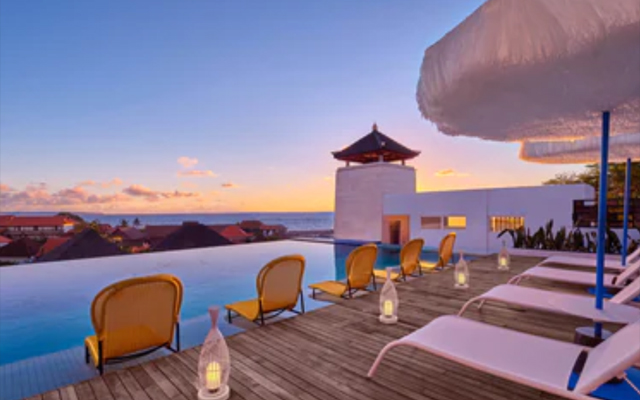
Trisara offers special summer rates on residences
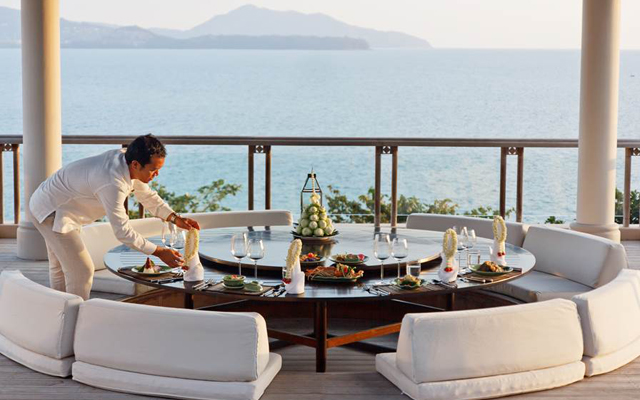
Luxury resort Trisara in Phuket, Thailand is offering families and groups of friends the opportunity to bond in style this summer, courtesy of special rates on its signature residences.
The hideaway in Phuket’s unspoiled northwestern corner boasts a collection of residences, which range from two-bed units to multi-bedroom configurations. These residences come with sea-facing verandahs, extensive swimming pools, a blend of indoor and outdoor spaces, and the support of a dedicated maid and chef who prepare home-cooked Thai and Western dishes on demand and by request.
For the summer season, Trisara’s two-bedroom villa is available for a nightly rate starting from US$2,900++. The price includes breakfast and a return airport transfer from Phuket International Airport.
The largest of the residences is Villa Sawan, an eight-bedroom “resort within a resort”. Home to ocean-facing views, lush gardens, a 25-metre swimming pool, home cinema, a well-equipped gym, and spa facilities, Villa Sawan is the ultimate exclusive escape. Guests can also access a cove with a private beach at the foot of the property. Staff are available and on-call throughout the stay. It is available during the summer season for a nightly rate starting at US$8,000++.
Chinese travel hesitancy remains finds new Dragon Trail, ForwardKeys study

- A segment of those who used to travel are now lacking in travel confidence
- Personal safety, destinations friendly with China, travel convenience are key motivations
- Visa-free entry, visa-on-arrival, good air options help with Chinese outbound return
The What’s New in Chinese Outbound Travel April 2023 research by Dragon Trail International (DTI) and ForwardKeys has identified persistent travel hesitancy among Chinese consumers, with 26 per cent needing persuasion to travel in 2023 and 28 per cent looking to travel only in 2025.
Furthermore, according to a poll of 1,012 respondents, 27 per cent did not know if they would travel this year, and 37 per cent want to wait until 2024.
These and other details were shared during a recent webinar.
DTI research analyst, Yelinuer Kadeerbieke, said the research conducted in early-April showed that 30 per cent of respondents had previously travelled internationally.
Key reasons for the reluctance to travel abroad were concerns about destinations not being “as safe as China”, “countries opposing China” and “Covid-19”.
Kadeerbieke stressed: “The Chinese are affected by news like gun ownership and Chinese being attacked or robbed even if there are only one or two cases. It’s about personal safety and about the communication.”
While crowds were a concern, being able to take in local experiences was a top reason for going abroad,” she said.
On what travellers want, research shows that 56 per cent voted for landmarks; 61 per cent still want to buy a complete package with visa, guide and transport for “convenience”, “safety” and to be “worry-free” when travelling with children or the elderly; and 48 per cent only want to book flights and hotels.
Traveller uncertainty has presented destinations keen on tapping the China market with the opportunity to “message and target” the “26 per cent who hope to travel in 2023 but had not booked”.
Kadeerbieke commented: “Many Chinese travellers renewed their passports recently, but 31 per cent would not be travelling abroad,” and with 20 per cent planning to go to Europe, this buys destinations and businesses “time to get ready”.
She noted that five million passports were issued in 1Q2023, that about 10 per cent of Chinese had passports pre-pandemic but the number would have gone down since.
Asia remains top choice
Sienna Parulis-Cook, DTI director of marketing and communications, noted of 40 destinations given to respondents to choose from, Asia was in the lead, with Japan, South Korea and Europe also favoured.
The top destinations for 2023 according to the research are:
Hong Kong (22.1 per cent)
Macau (9.9 per cent)
Thailand (9.6 per cent)
Japan (6.7 per cent)
South Korea (4.4 per cent)
Taiwan (3.3 per cent)
France (3.2 per cent)
Singapore (3.2 per cent)
Australia (3.0 per cent)
Russia (2.2 per cent)
For preferred accommodation type, respondents picked boutique hotels, resorts, private homes stays and Airbnb options. Nancy Dai, China market expert, ForwardKeys, added there was increasing demand for homestays and apartments, and the availability of such options would make a destination more attractive.
As of March 15, 2023, 60 countries – 46 per cent of 2018 figure – had received approval to sell group and packaged travel to the Chinese, Parulis-Cook said, while Dai pointed out that longhaul trips were “picking up again”.
Dai added that destinations offering visa-free entry or visa-on-arrival facilities were “showing good recovery” while connectivity to and from China to some mid-haul regions had increased exponentially.
According to ForwardKeys data announced ahead of the webinar, Africa and the Middle East are set to increase the most at 75 per cent in 2Q2023, with six per cent of total international capacity from China, while the UAE is the most well- connected destination at 44 per cent.
The number of seats between China and Kenya has doubled since 2019, and Egypt has also experienced 10 per cent growth. These three countries are included in the destination list of approved group tours and have a close relationship with China through the One Belt, One Road initiative.
For short overseas trips, Dai said South Korea “was a particularly important destination for singles and couples, and had become more prominent in 2Q2023”.
The research, conducted between April 3 and 7, had a profile breakdown of 51 per cent female and 49 per cent male.
Forty-nine per cent of respondents were from first-tier and new first-tier cities and 51 per cent were from second-tier cities.
Of the 1,012 respondents, 25 per cent were born post-2000, 34 per cent post-1990, 26 per cent post-1980, 11 per cent post-1970, and four per cent post-1960 and older.
Editor’s note: The percentage of countries approved for Chinese group and packaged travel is 46 per cent of 2018 figure, not eight per cent. This has been corrected.
Expedia Group shows B2B growth with new partnerships and tech features

Expedia Group has announced new partnerships and tech features aimed at expanding its network following a strong quarter for its B2B segment where it delivered 55 per cent in revenue growth compared to 2022.
The announcements came as hundreds of leading travel players met at Expedia Group’s EXPLORE 23: Connect conference, held for the first time at its Seattle campus.
“Our growth in B2B is largely due to the pace at which our tech has been adopted by businesses of all sizes who want to either break into travel or expand their current travel offerings. The demand for this business continues to be strong as evidenced by our new partnerships with Mastercard, SoFi, and some of our biggest hotel partners,” said Peter Kern, vice chairman and CEO, Expedia Group.
“The work we’ve done in building a widespread B2B network that provides travel to millions around the world through leading names in banking, travel and more, will grow as we continue to establish our tech as the primary operating system for the travel industry.”
The group’s White Label Template and API solutions power travel for more than 400 million loyalty members worldwide.
Expedia Group’s exciting new and expanded partnerships include Travel with Rewards with Mastercard, which is a loyalty points redemption programme to allow cardholders to redeem credit card loyalty points for travel bookings; and SoFi Travel, which will soon allow members to book flights, hotels, cars, packages, activities and vacation rentals through SoFi.
“Over the last decade, our B2B segment has grown phenomenally as we power online and offline travel programmes,” said Ariane Gorin, president Expedia for business, Expedia Group, adding that the company enables “businesses of all sizes to succeed in the world of travel, and in an industry that is nearly US$2 trillion, there is plenty of room to grow”.
Expedia Group is also committed to help more companies succeed in the world of travel with the following developments.
Expedia Group’s travel operating system, Travel OS, will externalise its tech in the form of microservices to help any kind of travel company use its tech to enhance their business, such as fraud capability, which has now reached commercial status. Its service tech and revenue management API are now in beta-testing with partners.
After a year of success working with hotel partners to create a guest experience score that shows which hotels give great traveller experience, Expedia Group’s Guest Experience Score will be made available to travellers in 2H2023, where hotel partners can view their Guest Experience Score by logging into Expedia Group Partner Central.
In two years, Expedia Group has tripled the number of participating chains using Optimised Distribution, an innovation that provides hotel partners with greater control of their wholesale businesses. New rate-management capabilities will be released later this year, allowing for more flexibility for a wider array of partners to leverage.
Expedia Group’s first-ever fully unified loyalty programme, One Key will launch on July 6 in the US, and additional markets will follow in 2024. In addition to the Member Only Deals for hotels, cruises and activity partners, the programme will now extend these offerings to air partners, helping them increase visibility to One Key members. Member Only Deals for flights will first be available in the US for One Key members.
Expedia Group continues to invest in its Travel Agent Affiliate Program (TAAP), which powers more than 35,000 travel agencies across more than 30 countries with its booking platform built specifically for their unique needs.
TAAP has also launched several new capabilities including enhanced payment options, which provides travel advisors more flexibility and improved servicing with Live Agent chat to help travel advisors get answers to their questions faster.
Expedia Group is seeing strong usage with 32 per cent of all agent interactions in the US in 1Q2023 serviced through Live Agent chat. A reimagined booking experience which will make it easier for travel advisors to serve their clients will be rolled out in the US this year with the global launch to follow later in 2023.
New Zealand broadens marketing attention to Asian markets

Tourism New Zealand (TNZ) has shifted its focus from Australia and North America to Asia, as the country works towards building a more resilient and broader portfolio of inbound markets amid tougher economic times.
Rene de Monchy, chief executive, TNZ, told TTG Asia: “We are going to focus on building off peak travel from Asia, as the region gives us the highest seasonality. We want to get more productivity out of the Asia region (as the different markets have various) outbound timings, to even (visitation) out as much as we can across the year.”

For example, in India, the big travel season is from April to June, while for Japan and South Korea it is during summer, from June to August. These months are generally New Zealand’s lull season.
“As such, we’ll be launching a full suite of activities across consumer and trade. Last year, we didn’t have any activity in South Korea and India, but in this new financial year, we will be pushing a full suite of marketing activations in key Asian markets,” he added.
Specific trade activities will include Kiwi Link in China and a roadshow in Singapore, to enable the sector to re-engage and reconnect with buyers, as a lot of travel to New Zealand is still converted through trade channels.
Consumer marketing will also be intensified, under the banners of the If You Seek campaign which launched last August, or 100% Pure New Zealand.
“The If You Seek campaign is performing really well, and people are engaging with it highly. At a global level, 92 per cent of people are more interested in New Zealand after they’ve seen the campaign than they were prior. We’ll continue to use that with new creatives,” said de Monchy.
So far, in this first year of recovery and New Zealand’s first summer post-lockdown, de Monchy pointed out that operators have had to scale back up as well as look for and train staff, which has been “challenging” as travel demand was returning faster than anticipated, leading to a manpower constraint in running activities, increase in flight ticket prices, and lack of rental cars.
He opined that by early 2024, recovery will “stabilise” and operators will be “thinking ahead towards the next summer”.
When asked if there was an overall target in terms of the number of visitors that New Zealand wants to welcome, de Monchy shared that TNZ “does not set a volume target, but a value target”. This is because tougher economic times are expected globally, and tourism will be a “really important buffer” for the New Zealand economy.
“This is why as we look ahead to 2024, we will work on maximising the value of visitors and ensure that they grow more quickly than the volume. Part of this work is influencing visitor choices when they arrive in New Zealand, to enhance their experience, and ensure they have a more positive impact on the places they visit,” he stated.
He is optimistic about New Zealand’s tourism future.
“But we are also realistic that it will be very competitive,” noted de Monchy. “We are going to have to focus and work very hard to (win more Asian outbound travellers), as the region is crucial for both tourism and exports.”
Philippines to boost medical tourism with strategic global partnership

The Philippine Department of Tourism (DOT) has recently joined forces with Dubai-based Agora Group, a global leader in the medical and wellness industry, to position the country as an emerging medical and wellness tourism destination in Asia.
Both will also partner for the first International Health and Wellness Tourism Congress (IHWTC) 2023, which will be held from June 8 to 9 in Dusseldorf, Germany. This two-day event is a high-level closed-door gathering of invitation-only tourism stakeholders mostly from the medical and wellness industry.
Tourism secretary Christina Garcia Frasco commented that the partnership will help strengthen the Philippines’ position as a health and wellness tourism hub in Asia, as well as globally. She also emphasised how special the Philippine medical healthcare workers are, primarily the Filipino diaspora.
“We are giving the Philippines a fighting chance at becoming a tourism powerhouse in Asia. We recognise that medical tourism and wellness tourism hold one of the keys to this endeavour, because we have the people, we have the facilities, and we are adjusting government policies to ensure that the climate for medical tourism to thrive will ensue,” she said.
Competing with other countries like Saudi Arabia and Qatar with prime healthcare facilities, Frasco acknowledged that while those countries already have the “wealth of medical facilities”, however, “the culture of care and compassion shown by Filipinos who are in these facilities give us the strategic advantage that people from the Middle East are already familiar with the level of care that Filipinos can give”.
In addition, 23 of the country’s health facilities are internationally accredited and recognised by the International Society for Quality in Health Care, and there are 63 private hospitals in close proximity to four international airports.
The DOT is targeting to train 100,000 tourism front-liners this year under its Filipino Brand of Service Excellence programme, and with the IHWTC 2023 later this year, this would open massive opportunities for the country’s health and wellness offerings and to market the Philippines, especially from the most coveted Middle East tourist market.
Sri Lanka sets eyes on the Middle East market
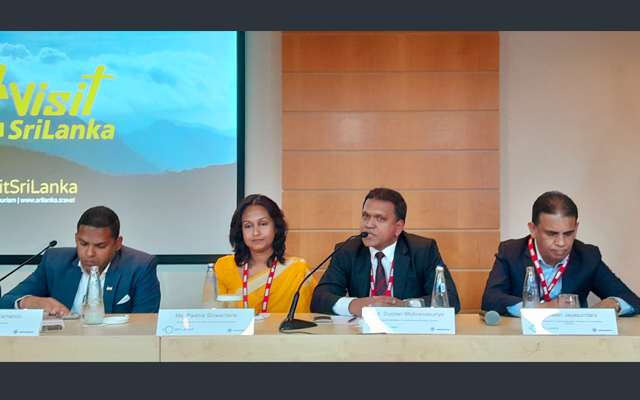
Sri Lanka is bouncing back after three years of crises and is targeting the Middle East as a key market due to the mix of high-spending Emiratis and expatriates.
Speaking at the Arabian Travel Market (ATM), Udaya Indrathna, ambassador at the Sri Lanka embassy in Abu Dhabi, said: “Sri Lanka has had its challenges but I’m pleased to say most have passed.”
He went on to refer to the 2019 bomb attack, Covid-19 pandemic, and recent political and economic turmoil. He said the new president has surrounded himself by young talent to steer the country in a new direction, with tourism positioned as a promising economic pillar.
In this new chapter of Sri Lankan tourism, the country has shifted its focus from quantity to quality, with the Middle East region – home to a healthy mix of high-spending Emiratis and expatriates – being aggressively targeted.
According to official figures, expats from the region tend to stay an average of four to five days and Emiratis for two weeks, enjoying luxury accommodation and experiences.
Dushan Wickramasuriya, director of marketing, Sri Lanka Promotion Bureau, noted: “The UAE in particular is unique because 80 per cent of the population are expat residents from places like India, Europe, the US and Canada. These are all key markets for us, so when we target this region, we’re not only reaching Emiratis but other nationalities as well.”
Minister of tourism, Harin Fernando, said the ministry has set a target to increase visitor spend from the current average of US$200 to US$250, to between US$400 and US$500 by next year.
“The Middle East market is crucial as we are now seeking quality tourists over quantity. We slowly want to focus on the right markets and right people over numbers,” he noted, adding there are no plans to make Sri Lanka an expensive destination – instead it will appeal more to the “affordable luxury” segment.
At ATM, Emirates also signed a Memorandum of Understanding to actively promote Sri Lanka as a leading tourist destination.
SEIT expands to North Queensland

Local small group touring specialists SEIT has expanded into North Queensland with the rollout of a brand refresh along with the launch of two new Daintree tours.
Known for its interactive small group tours offering experiences which immerse travellers in hyper-local culture and history, SEIT’s new tours comprise rich and authentic experiences within the Daintree Rainforest and the Tablelands Region.
The full-day small group Daintree Dreaming – Aboriginal Art & Culture and Daintree Dreaming – Traditional Aboriginal Fishing tours, offer travellers a glimpse into the unique lives of the Kuku Yalanji people, the Indigenous people of Mossman country.
In addition, as part of the brand refresh, a new logo and visual identity was created to support and enhance the SEIT brand as it branches out to new destinations.
“The SEIT brand refresh reinforces and further articulates the already outstanding experiences we offer, our local small group tours allow travellers to embrace the art of doing, feeling fully immersed and energised via our truly individual guides,” said Ben Hall, CEO of SEIT.
“Our guides are the beating heart of our business, encompassing our brand ethos, sharing stories through hands-on experiences to travellers looking to feel truly connected to a place.”
Oceania Cruises takes delivery of newest ship Vista
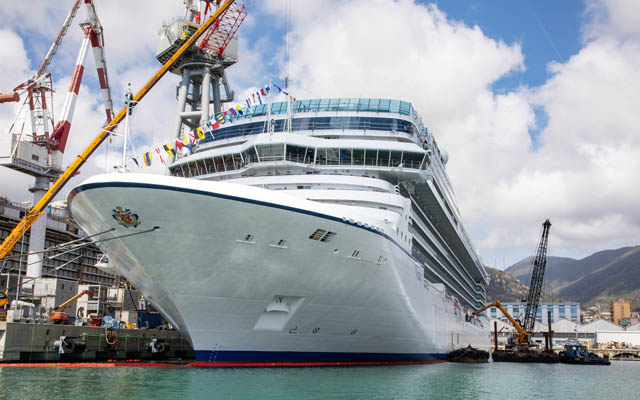
Oceania Cruises has welcomed its newest ship, Vista, which was delivered at Fincantieri’s shipyard in Genoa, Italy. She was christened on May 8 in Valletta, Malta.
The 1,200-guest Vista boasts spacious standard staterooms at sea, three brand-new dining concepts and operates with a market-leading service ratio of two staff members for every three guests.
Frank A Del Rio, president of Oceania Cruises, remarked: “From the smallest of design details to the largest per capita galley at sea, Vista is a marvel that will be enjoyed by guests for decades to come.”
The ship will feature a few select staterooms for her inaugural summer season in the Mediterranean. Vista will then sail to Canada and New England before heading south for a series of winter itineraries exploring the Caribbean, Mexico and Central America.
Taking the pulse of affluent Chinese travellers

 Your new report, Decoding the Luxury Traveller Mindset: Spotlight China, looks at a hot topic: the travel behaviours of wealthy Chinese. There have been so many other studies on Chinese travel intentions, so what makes this latest study stand out from the rest?
Although the topics of revenge travel and resuming international travel has been portrayed publicly, this report has much more granularity and dives right into the push and pull factors.
Quantifying the findings creates genuine, actionable insights for professionals in the luxury travel industry. For instance, we learn that there is a strong appetite for living their bucket list and that there is clear push and pull factors such as health and safety that remains the most influential factor in holiday bookings, but also the retail/food and drink offering (49 per cent) and sustainability credentials (46 per cent). The report also contains a lot of verbatim illustrating the data points.
Finally, we have been running this survey for the second year in a row, so we have been able to highlight some critical evolution in the luxury traveller’s mindset.
Furthermore, the survey has been exclusively submitted to validated affluent and HNWIs to bring relevant content and help luxury industry professionals understand their target more precisely. More than two-thirds of the interviewees (69 per cent) were the equivalent of USD millionaires (US$1m in investable assets), while almost half (49 per cent) had a household income of US$300,000 or more.
What are some of the most fascinating finds from the survey?
We noticed a surprising turn since the previous wave. In 2021, 48 per cent of wealthy Chinese preferred spending on luxury goods rather than luxury experiences versus only 37 per cent in 2023. Also, 73 per cent told us they are willing to spend more and travel in style on more extravagant and unique trips.
Are there earlier industry projections on Chinese travel intentions that have now shown to be mere speculations?
We have heard a lot about privacy/seclusion becoming the guiding choice for the years to come, or that regional tourism will take over international trips. The study has demonstrated that just 39 per cent now prefer this, and international trips are already back on the agenda, with 60 per cent of the interviewees planning to go abroad.
Based on your research, what new business avenues or opportunities are there for travel and tourism organisations and destinations looking to grow their share of HNW Chinese travellers?
Family and multi-generational trips are growing, with almost half of the wealthy Chinese planning for one in the next 12 months. Mental wellness-related travel is a priority for 41 per cent, increasing by five percentage points. It is important to give the right attention to these trends in the imminent future, (and for) travel agents to gain more market share by offering more complex trips to this hard-to-reach population.
Editor’s note: Findings from Decoding the Luxury Travellers Mindset; Spotlight China will be presented during ILTM Asia Pacific 2023’s Opening Forum at the Ritz Carlton Millenia Singapore on June 19







Marriott International has signed a Memorandum of Understanding (MoU) with Pertagas Niaga which will see 26 of Marriott Bonvoy’s hotels and resorts in Bali commit to using clean energy source.
This agreement is guided by the company’s 2025 Sustainability and Social Impact Goals and in tandem with the UN’s Sustainable Development Goals.
Marriott will pledge to make positive impact such as converting LPG (Liquefied Petroleum Gas) to CNG (Compressed Natural Gas), as well as lowering carbon emission by 15 per cent.
Marriott’s area vice president, Indonesia, Ramesh Jackson, said: “Beyond a corporate platitude, it is impossible for us to ignore the pressing and urgent environmental needs of today. This partnership with Pertagas Niaga is a step towards the right direction to conserve and preserve what we have for the next generation. We look forward to expanding this to our portfolio in key cities such as Jakarta, Surabaya, and Bandung in the near future.”
“This MoU signing marked the collaboration of two different businesses contributing towards sustainability for future generations and SDG’s achievements of Indonesia,” added Aminuddin, president director, Pertagas Niaga.