

GSTC, WTTC to advance hotel sustainability standards

Christchurch Airport works to sharpen passenger experience
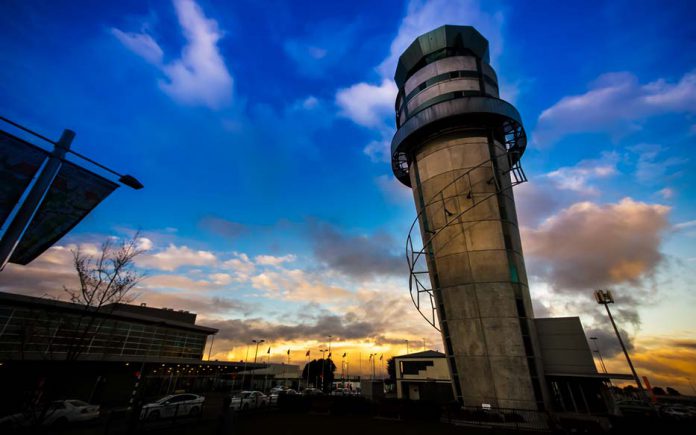
Christchurch International Airport, the second largest airport in New Zealand, has brought in Amadeus to upgrade its passenger service infrastructure with the use of more efficient, flexible and sustainable Common Use technology shared by multiple airlines.
The new system allows multiple airlines a simpler check-in process, more flexibility for seasonal operations, and to connect with passengers at locations away from the airport, such as the Christchurch convention centre Te Pae, or Lyttelton Port, during the cruise season. Doing so means the airport can unlock capacity ahead of demand from its airline partners.

Swifter check-in processes for both airlines and passengers also mean more time for travellers to relax before boarding.
The airport will work with Amadeus to enable future transition to more self-service kiosks and bag drops for all airlines and passengers.
With this upgrade, the airport will decommission 80 energy-intensive workstations and replace them with super-efficient thin client devices. Thin-client devices are simple, low-power, computers that provide an interface to the cloud, where computing tasks are undertaken by more efficient servers*.
Craig Dunstan, head of customer & commercial, Christchurch Airport, said: “We are especially pleased to have this first upgrade in place ahead of our upcoming very busy summer season. We will see all our international airlines return, some with larger aircraft and more flights, as well as a new direct service between Christchurch and San Francisco. The transition to the Amadeus Cloud Use Service is another exciting step forward in embracing new technology to enable a more streamlined and frictionless journey for our passengers.”
The Crest Collection rides high on strong opening wave

The Ascott’s portfolio of charming bespoke hotels and serviced residences under The Crest Collection brand is on a strong growth trajectory, with seven properties in operation and more to come in London, Bucharest, Hanoi, Tokyo and Paris.
The company debuted the brand in Asia with the opening of three properties in Singapore, Indonesia, and Malaysia, between the months of August and October 2023. Newest in this lot is The Robertson House by The Crest Collection, which stands along the Singapore River. It opened on October 14 following a seven-month refurbishment.

The Grand Mansion Mentang by The Crest Collection in Jakarta, Indonesia and The George Penang by The Crest Collection in Penang, Malaysia were both signed and rebranded in August and October 2023 respectively.
These properties join The Crest Collection’s four in France, which have recorded a strong occupancy rate of about 73 per cent, with the average daily rate increasing by up to eight per cent over the previous year.
Riding on the success of the portfolio in France, The Crest Collection has gained strong traction and further recognition in Europe. The 230-key The Cavendish London – the brand’s first property in the UK – will undergo a one-year renovation next year and reopen in 4Q2025. It will expand into Bucharest, Romania with a 171-unit property set to open in 3Q2025, and add a fourth to Paris come 2026.
Serena Lim, Ascott’s chief growth officer, said: “Ascott has seen a growing demand for collection brands from owners as they provide flexibility of a distinctive property positioning while being backed by the power of a global brand through its global sales and distribution platforms, and strong loyalty base. The ease of conversion with a collection brand means increased speed to market, and that is key especially in today’s economic climate amidst tighter lending conditions and rising construction costs.
“At Ascott, we are committed to manage our owners’ assets not only for the short and medium term. Bearing in mind long-term strategic growth, we work closely with our owners to uplift the value of their real estate, ensure longevity and future proof their business.”
KKday, Rail Europe collaborate on sustainable rail travel push

Asian travel e-commerce platform KKday has inked an MoU with Rail Europe on October 19 on a strategic collaboration focused on promoting sustainable rail travel.
KKday’s decision was spurred by a significant uptick in sales of European travel products during the first three quarters of 2023, with figures surpassing the same period in 2019 by 60 per cent, as well as expectations of continued demand surge going into 2024.

Björn Bender, president and CEO of Rail Europe, shared that the partnership would see the creation of an all-in-one platform for travellers and the travel industry to access a wide array of products spanning 33 European countries and featuring over 150 European rail brands and routes.
Bender said: “In the post-pandemic era, individuals will have a heightened desire to travel. Many will opt for train travel over unnecessary flights due to the growing focus on sustainable tourism and environmental considerations, such as reducing carbon emissions.”
Rail Europe’s business recovery has been robust, according to Bender, with current performance across the globe now standing at 74 per cent of 2019.
Ming Chen, founder and CEO of KKday, hopes the partnership will serve to inspire more Asian travellers to explore Europe.
Both companies have concluded the initial phases of electronic product integration, and will commence joint marketing campaigns and collaboration on marketing resources. Both will also be working on enhancing the online feedback mechanism for passengers and automating product recommendations for Rail Europe.
Chen hopes to integrate sustainable travel with a range of in-depth experiences offered through Rail Europe pass packages.
Nils-Arne Schroeder helms as SVP operations at Fairmont

Fairmont Hotels & Resorts has appointed Nils-Arne Schroeder as the senior vice president of operations for the Asia-Pacific and Middle East regions.
In his new role, he will be responsible for the operational performance of 18 hotels across Asia-Pacific and the Middle East as well as lead the expansion of the Fairmont portfolio across gateway cities with the debut of hotels such as Fairmont Dubai Skyline, Fairmont Shimla Fagu, Fairmont Udaipur, Fairmont Mumbai Sahar and Fairmont Agra.
 With a wealth of experience in luxury hospitality which spans over three decades, he has held leadership roles in commercial, hotel operations and luxury brand management across five countries in three continents including the UAE, South Korea, China, Malaysia, Indonesia and Singapore.
He joins Fairmont Hotels & Resorts from his position as vice president, luxury brands at Hilton, Asia-Pacific.
Ayana Komodo Waecicu Beach appoints Dermot Birchall as GM

Ayana Komodo Waecicu Beach has named Dermot Birchall as its new general manager.
In his new role, he will work with the team to elevate the hotel’s reputation in Indonesia, as well as spearhead sustainability efforts in Labuan Bajo.
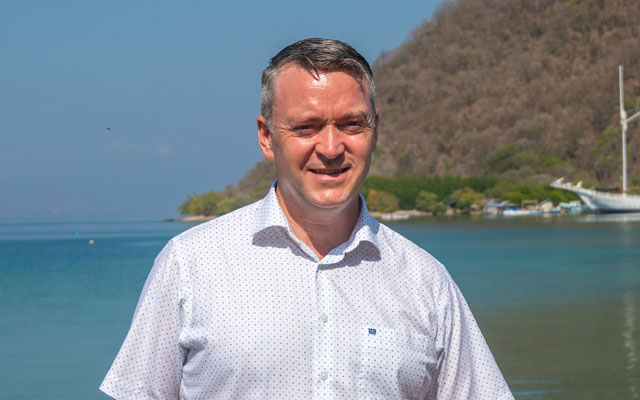 He has over 25 years’ experience in luxury hospitality, and was most recently general manager at Barcelo Mussanah Resort in Muscat, Oman.
Hospitality from the heart

 Tell us about your journey in the Amora Group.
I’m the second-generation owner of the Amora Group, founded by my late father. I took over the business just during the midst of Covid, and my first endeavour was the acquisition of Novotel Brisbane during 2020. Despite my mergers and acquisitions (M&A) background, I’ve always been working part-time and stayed very close to the family business. (The pandemic) was a challenging time and that was what prompted me to come back. Currently, our chairwoman is my mother, Khun Amornrat.
How extensive is Amora Group’s property portfolio?
We have six properties – three in Australia located in Sydney, Brisbane, and Melbourne, and three in Thailand. We’re (currently) transforming our new flagship in Thailand, the Amora Phuket Beach Resort, which will soft-open as a 264-key five-star property in December 2023 on Bangtao Beach.
Can you tell us about your experience with five-star hotels?
Our flagship in Sydney was our inaugural five-star venture, catering primarily to corporate clients. The Phuket property, however, is our first five-star leisure resort. It was open since 1999 as a 4.5-star hotel, and shut down two years ago for renovation. This is our biggest renovation to date – it’s a complete overhaul with the addition of many facilities including two F&B outlets and 1,000m² of event space for up to 750 pax.
Why the focus on Australia?
Our first hotel was in Melbourne, opened by my father in 1997. He travelled there to study and ended up putting down roots. There’s not a lot of Thai owners in Australia. Our background is unique, because Thai people tend to invest more in Thailand, or the US and the UK rather than Australia.
Your father ventured into hospitality during the Tom Yum Kung crisis. What drove him?
He was a very experienced and accomplished entrepreneur. His background was not hospitality, but duty-free – export and import. He was just a businessman with a love for hotels. As he didn’t grow up rich – he grew up middle-class or lower – it was his aspiration and dream to own a hotel. Seeing the opportunity in Melbourne, he just went for it.
What distinguishes Amora from other Thai hospitality brands or family businesses?
Firstly, what stands out is that we have international exposure. Not a lot of Thai hotel owners have properties in Australia, so we try to leverage that. We’re able to market to more audiences, especially in Australia. Secondly, we focus a lot more on our people, trying to cultivate a family-like culture. Family values are at the heart of what we do. It’s due to my background of growing up in a hotel, and seeing my father build this company.
When you grow up in a hotel and you see your people every single day, they become a family.
We want to extend this treatment to our guests. We treat our staff as a family, and in turn they treat our guests as family. This means recognising what they come for, why they travel, who they are – knowing their names, what they do for work, what they order for dinner so that next time we can immediately come to them with, “Do you want the same thing, sir?”
I think that personalised service makes us a bit different from the other independent hotels.
We call it the Amora way.
What’s the story behind the name Amora?
Amora translates to ‘love’ in Spanish. It’s also reminiscent of my mother’s name, Amonrat. The name was coined by my father as a tribute to her, to show his appreciation and love for my mother. So, Amora is a brand of love, a brand of warm hospitality.
The reason we focus so much on our people and legacy staff is because (we know that when our) customers come in and see the same people who were here five to six years ago having developed in their careers – you might see a receptionist turned assistant front manager, for example – it creates more stickiness, as if you’re going back home and seeing your family. That’s the kind of culture we’re trying to build.
The pandemic was a tough time for many hospitality brands. How did you handle the Covid crisis in terms of staff management?
While we had to make some tough decisions, our diversified presence in both Thailand and Australia helped us. Even if Thailand was badly affected, our Australian properties were able to go into a quarantine business. So, we still had cash flow and we were still afloat. Consequently, we could retain most of our legacy staff.
What can guests look forward to in terms of the interior for the Phuket property?
We focused on ‘bringing the beach into the resort’ – for example, our restaurant is called Isla, from the Thai word for ‘freedom’ – but in Latin, it means ‘cave,’ so we designed the venue to replicate a cave surrounded by water. This type of wordplay is indicative of what we are. We’re a multicultural company. The name of our beach club, located right smack on the beach where light shines through the most, is derived from ‘Manora,’ a Thai word meaning ‘light & pride’ – thus, the name Nora.
What is the average profile of travellers to your property in Thailand?
For our Phuket property, it’s leisure. We’re positioning it post-renovation as a modern lifestyle hotel, because we have a very balanced mix of customers who come to the hotel. I think it’s very risky these days to try to go after one market. Going only for Chinese, for example, would have been a disaster this year. It’s all about having a balanced mix and diversification rather than trying to take one main segment.
Historically, Russians and Europeans dominate the high season, but we’re keen on expanding our reach to other markets.
What is the inbound travel capacity from Australia to Thailand, and what are the travel behaviours of Australians?
Not a lot of Australians come to Thailand relative to other key markets, but what’s interesting about this is that as hoteliers, we don’t need millions and millions of Australians to come – we just need a few who are actually selecting our hotel.
The Australian market’s potential also lies in its different seasonality. Their winter is our summer – during Christmas, it’s hot. During June to July when Europeans travel less, it’s freezing there.
What are the specific markets and destinations you’re targeting for expansion in Asia-Pacific and South-east Asia?
We only focus on acquisition and renovation. In the next three to five years, we’re eyeing expansion in key Australian cities. We want a five-star property in each of the CBDs, which means Adelaide, Perth and another one in Melbourne; our current property there is 4.5-star and located on the fringe of the CBD.
In Thailand, we really want our next acquisition to be in Bangkok. We now have a small property, the Neoluxe Amora on Sukhumvit Soi 31. We want another flagship five-star property in central Bangkok for corporate clients.
What do you anticipate hospitality veteran Lars van der Most will bring as general manager of the Amora Phuket Beach resort?
He has extensive experience, coming from Marriott and Starwood – but what I like about him is that because he was a general manager in China, he understands the Asian culture and family values, so he resonates with what I want to do from a people perspective.
As a second generation hotelier whose father was passionate about hospitality, what do you think you can bring to the brand as an owner?
We didn’t have houses when I grew up in Melbourne. I grew up in a hotel, with hospitality staff around me, and that has shaped my vision of family.
At the start, I brought knowledge about M&A because my background is in deals advisory and investment banking – something less common among hotel operators. I’m expecting to utilise more of my experience in the future as our strategy is to acquire, renovate and rebrand properties.
Coming from the younger generation, I’m passionate about innovation, flexibility and aligning with modern trends – understanding more about these unique experiences that customers are eagerly awaiting when they travel. You have to be adaptable and ensure that you can accommodate all these trends. To go for only one trend, like digital nomads only, would be a mistake. Even when it comes to trends, we still have to diversify.
Trip.com Group, TAT join forces to boost tourism to Thailand

Trip.com Group and the Tourism Authority of Thailand (TAT) have signed a letter of intent (LOI) to cooperate on bolstering tourism in Thailand.
This collaboration aims to promote Thailand as the premier travel hotspot for tourists from mainland China, who have consistently ranked it as one of their top destinations. In fact, searches for Thai destinations across Trip.com Group’s platforms soared by 800 per cent when the announcement of visa-free travel for Chinese travellers was made last month.
The LOI was signed by Trip.com Group’s vice president, global destinations, Amanda Wang, and TAT’s governor Thapanee Kiatphaibool during an official visit by a high-level delegation to China led by Thailand’s prime minister, Srettha Thavisin. It will serve as a catalyst to further enhance the existing partnership and harness Trip.com Group’s intel on Chinese travellers – these include knowledge and information sharing, joint promotional activities, as well as the establishment of formal communication channels for regular bilateral tourism updates.
Wang said: “Thailand has consistently captivated the hearts of travellers from the Chinese mainland, establishing itself as an irresistible destination. With the recent introduction of visa-free travel to Thailand, we foresee this trend of travel to Thailand continuing, and look forward to working closely with TAT to bring more tourists to the Land of Smiles.”
“The Tourism Authority of Thailand will use (the LOI) as a framework to continue our close collaboration, and make every effort to ensure the safety and security of tourists travelling to Thailand,” shared Kiatphaibool, adding that a series of promotional activities to attract more tourists from mainland China to Thailand are in the works.
flydubai launches services to Malaysia

Low-cost carrier, flydubai, is set to expand its network to Malaysia, offering daily services between Dubai, Penang, and Langkawi starting from February 10, 2024.
In addition, the airline has appointed World Avenues Malaysia as its general sales agent for Malaysia.
This milestone marks flydubai as the first Middle Eastern carrier to provide direct flights to the two Malaysian islands. In contrast, two other UAE airlines, Emirates and Etihad, already offer direct services from their respective hubs to Malaysia’s capital, Kuala Lumpur.
The carrier’s non-stop flights from Dubai will touch down in Penang, and after a brief transit stop, will continue on to Langkawi. The airline will utilise its B737 MAX on this route, featuring comfortable lie-flat seats in Business Class.
For Malaysians residing in the Northern region, flydubai’s new services will offer a convenient option to fly directly to Dubai, eliminating the need to travel to Kuala Lumpur for a flight to the UAE.
Malaysian inbound agents are equally excited about the new business opportunities presented by flydubai.
Solihhene Abdullah, director of ONThego Travel and Tours, commented: “These flights will undoubtedly attract tourists from Middle East and North African countries such as Algeria, Morocco, and Tunisia to Malaysia, as they seek to enjoy beach holidays. Currently, we are losing market share to neighbouring islands like Bali and Phuket due to the absence of direct flights from the Middle East to the Malaysian islands.”
With the introduction of flydubai’s new services to Penang and Langkawi, SBS Pradeep Kumar, director and COO of Asian Famous Tours & Travel, sees an enticing opportunity to attract budget-conscious travellers from the Middle East to these islands.
Qantas to trial neighbour-free seating on select international routes

Qantas international customers could soon have the chance to travel ‘neighbour free’ following the success of the airline’s Neighbour Free product on its domestic network earlier this year, which is now available on the majority of Qantas’ domestic network.
The airline is currently trialling Neighbour Free seating on 19 international routes where some Economy passengers will have the option to keep the seat next to them free. Neighbour Free will start from A$45 (US$28) on trans-Tasman flights, A$100 between Australia and Singapore, and A$225 between Australia and the US.
Customers booked on a flight with spare capacity will receive an email 48 hours before their flight with the option of selecting a Neighbour Free seat. The seat is not guaranteed until departure, with customers receiving a refund if the seat is subsequently sold.
During the trial, Neighbour Free will only be available for flights that are operated by Qantas aircraft and for select customers. Passengers who have purchased additional products, such as extra legroom, have requested an upgrade, are travelling with an infant or have an unaccompanied minor in the booking will not be eligible for Neighbour Free during the trial. Customers travelling as part of a group booking will also be ineligible.
The trial routes include Singapore to Brisbane, Melbourne, and Perth; Brisbane to Auckland, Christchurch, Los Angeles, and Wellington; Melbourne to Auckland, Christchurch, Dallas, Los Angeles, and Wellington; as well as Sydney to Auckland, Christchurch, Dallas, Honolulu, Los Angeles, San Francisco, and Wellington.
More international routes will be rolled out in the coming months following the evaluation of the initial trial.
Qantas’ chief customer and digital officer, Catriona Larritt, commented: “We’ve had a really positive reaction from customers who’ve opted to travel Neighbour Free on our domestic network, and customers have told us they want the option on our international flights too.
“International bookings can be a little more complex, which is why we’re starting with select routes and bookings without additional products to test our processes, before expanding the programme in the coming months.”







The Global Sustainable Tourism Council (GSTC) and the World Travel & Tourism Council (WTTC) have entered into a partnership that will result in a structured framework for hotel sustainability that leads to GSTC Certification.
The partnership endorses the existing WTTC Hotel Sustainability Basics, which is a three-year programme.
Both organisations intend to send a potent message to the market regarding the coherence and collaboration in the travel and tourism sector.
The three-stage framework for hotel sustainability will now see the integration between the WTTC Hotel Sustainability Basics verification and GSTC Certification, designed to support hotels in their pathway towards full sustainability.
Julia Simpson, WTTC president and CEO, said: “Collaborating with an esteemed body like GSTC reinforces our dedication to leading the industry towards a more sustainable future. It’s imperative that we work with key global players like GSTC to drive change, set benchmarks, and inspire others to follow.
With members spanning across the world, GSTC’s rigorous accreditation programme not only elevates our initiative but also ensures that the hospitality sector worldwide moves toward a unified vision of sustainability.”
The next phase in collaboration with GSTC is scheduled to launch in 2024.