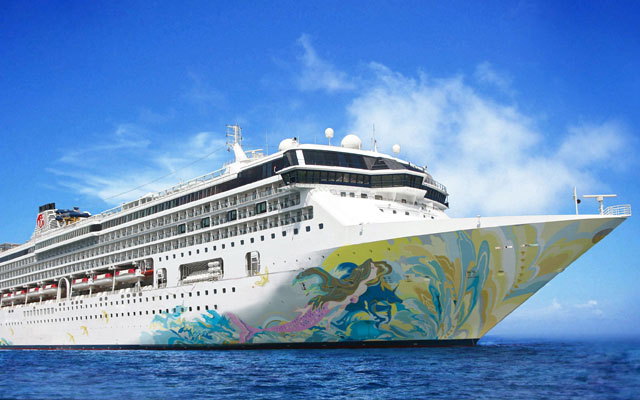
Resorts World Cruises (RWC) will be the first international cruise line to homeport in Jakarta, Indonesia from June 16 to July 1 this year.
The cruise line will offer four round-trip six-day-five-night cruises from Jakarta to Singapore and Kuala Lumpur (via Port Klang) onboard Resorts World One.
Resorts World One will homeport in Jakarta from June 16 to July 1 this year
With the six-day-five-night cruises, guests will also get to enjoy the ship’s onboard offerings – international and authentic Asian F&B across 18 restaurants and bars; a Roman-themed Parthenon Pool with a Caesar’s Slide and jacuzzi, virtual games, onboard duty-free shopping, spas, enrichment workshops, movie nights at sea and more.
RWC president Michael Goh said: “As an international cruise line that is homegrown in Asia, Resorts World Cruises is excited and proud to pioneer the first-ever homeport deployment in Indonesia. Indonesians are familiar with the Resorts World Cruises brand sailing out of Singapore and now they can sail with a round-trip cruise from Jakarta to Singapore and Kuala Lumpur on the Resorts World One. We look forward to developing the country’s and regional cruise tourism industry together.”
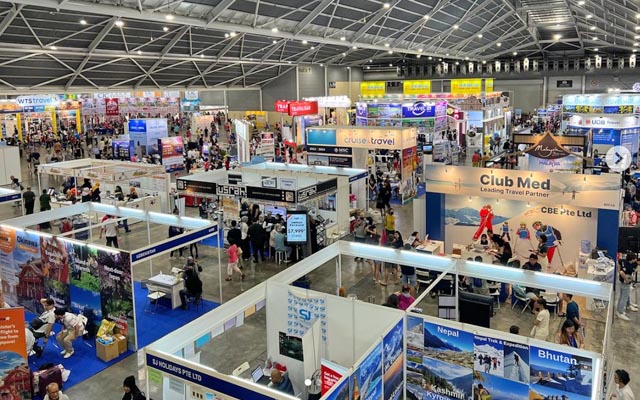
The annual NATAS Travel Fair, organised by the National Association of Travel Agents Singapore (NATAS), will return from March 1 to 3 with 20 per cent more exhibitors compared to the last edition in February 2023.
The event, which is open to the public will be held at Singapore EXPO Halls 4 and 5A. Visitors can expect to snap up an array of travel itineraries, packages and deals curated by participating travel agents, as well as obtain travel ideas and advice from more than 60 exhibitors including airlines, cruise lines, NTOs, and travel-related suppliers.
NATAS Travel Fair 2024 will offer travel itineraries, packages and deals curated by participating travel agents
The six NTOs joining NATAS Travel Fair 2024 are Central Japan, Hokkaido Tourism Organisation, Sarawak Trade And Tourism Office – Singapore, Taiwan Tourism Administration, Tourism Authority of Thailand, and Wonderful Indonesia.
The opening ceremony will be graced by Melissa Ow, chief executive of Singapore Tourism Board.
Steven Ler, president of NATAS, said: “NATAS is excited to welcome visitors who are eager to travel to the NATAS Travel Fair, a one-stop platform that aims to meet every traveller’s need. As the organisation representing travel agents in Singapore, we are pleased to be able to give travel agents and industry-related organisations a platform to showcase the different destinations, packages and deals they have to offer.”
NATAS Travel 2024 is proudly supporting Extra•Ordinary People (EPL), a non-profit charity with Institute of Public Character (IPC) in Singapore. EPL empowers children and youths with special needs, fostering their development of essential independent living skills that pave the way to increased employability. In partnership with EPL, NATAS aims to raise awareness about the importance of inclusivity in contributing to a harmonious and diverse society. During the three-day fair, EPL’s beneficiaries will take centre stage, showcasing their talents through heartfelt performances. Fair attendees will get to witness first-hand the resilience and abilities of these extraordinary individuals.
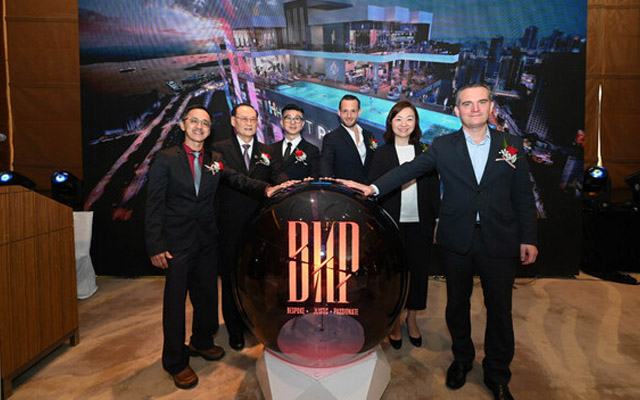
Developer Bangsar Heights Pavilion (BHP) and an affiliate of Hyatt Hotels Corporation have partnered to manage the 200-room Hyatt Place Johor Bahru City Centre, located at Quayside JBCC, a new lifestyle, retail and entertainment destination in the heart of Johor Bahru.
This collaboration marks a significant occasion for both parties, bringing Hyatt Place’s renowned select service offering tailored for those working on-the-go or travelling with families to Quayside JBCC, and solidifying Bangsar Heights Pavilion’s position as a leader in innovative development projects.
Hyatt Place Johor Bahru City Centre will be situated at Quayside JBCC, a new lifestyle, retail and entertainment destination in Johor Bahru
Hyatt Place Johor Bahru City Centre’s 200 rooms will feature dedicated spaces to work, sleep, and hang out. Facilities comprise The Breakfast Bar, lobby bar and restaurant, a grab-and-go station, business centre, meeting spaces, fitness centre and swimming pool.
Strategically positioned in Johor Bahru’s commercial district, Quayside JBCC is a freehold mixed development comprising retail, hotel, serviced suites, and sky bar fine dining. This development is just a short distance from the Johor Bahru Customs, Immigrations and Quarantine Centre.
Aaron Yap, CEO of BHP, commented: “We believe that this partnership will add value to the stakeholders of both companies; locally and internationally. We believe Hyatt’s expertise will be instrumental in positioning Quayside JBCC as a premier destination in Johor Bahru.”
“With BHP’s legacy of over 30 years of experience in developing residential, commercial, and industrial properties in the country, we are proud to give our guests a place they can call their own, defined by a comfortable and convenient stay during their travel,” said David Udell, group president, Asia Pacific, Hyatt.
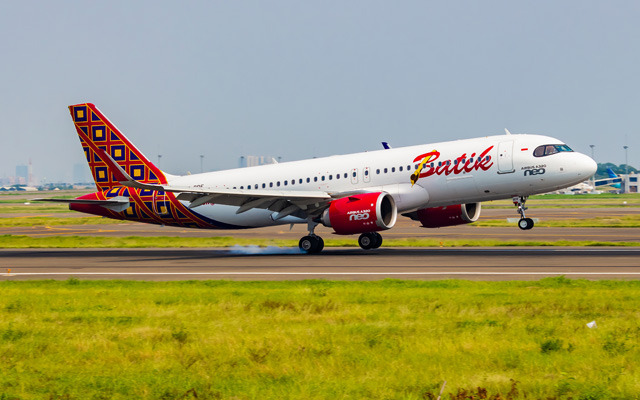
JAKARTA, INDONESIA - OCTOBER 6, 2020 : A Batik Air A320-200 arriving at Soekarno Hatta Intl Airport in Jakarta, Indonesia.
Batik Air has commenced its Batam-Kuala Lumpur service, operating three times weekly flights on a Boeing 737 aircraft.
Batik Air has started its thrice-weekly Batam-Kuala Lumpur service
The new route will connect passengers from Indonesia’s Batam to the airline’s network of 53 destinations across 22 countries through Kuala Lumpur International Airport in Malaysia.
PATA is set to organise its International Conference on Women in Travel from March 20 to 22 in Bohol, the Philippines.
Hosted by the Philippine Department of Tourism (DoT), the three-day conference featuring industry leaders will underscore the crucial role of women and the current state of gender diversity in the tourism industry. It will uncover initiatives and strategies towards progress and equality such as breaking barriers for women’s empowerment in the industry, promoting sustainability with women as agents of change, and fostering women’s leadership development.
PATA’s International Conference on Women in Travel will celebrate women’s achievements and contributions to travel and tourism
The event will not only celebrate women’s achievements and contributions to travel and tourism but also provide an opportunity to critically examine gender disparities in the industry, shedding light on various issues such as the lack of women in managerial positions.
Recognising that addressing gender equality in the travel and tourism sector is crucial to the responsible and sustainable development of the travel and tourism industry, PATA CEO Noor Ahmad Hamid said: “Despite comprising almost 50 per cent of the tourism workforce in the Asia-Pacific region, women have not received the appreciation and support necessary for their own economic and social prosperity. The event aims to spark meaningful dialogues and creative solutions dedicated to the empowerment of women in the travel sector.”
“This event aligns seamlessly with our commitment to promoting diversity and empowering women in the travel and tourism sector. Through this conference, we aim to showcase the country’s dedication to women’s progress, from supporting local entrepreneurship to advocating for gender equality in education,” remarked Philippines’ tourism secretary Christina Garcia Frasco.
Bohol is nestled in the heart of the Central Visayas region of the Philippines and is renowned for its landscapes, dolphin encounters near Pamilacan Island and coral garden exploration at Panglao, Balicasag, and Cabilao Islands. Other highlights include Danao’s Adventure Park, and Bohol’s rich heritage, featuring old houses, centuries-old stone churches, and watchtowers. The destination has also made significant strides in promoting women empowerment through various initiatives, supporting local women in entrepreneurship, providing opportunities for skill development and economic independence.
Minor Hotels has appointed Rohit Pandey as the new general manager of Anantara Jaipur Hotel.
In his new role, he will lead the launch and positioning of Minor Hotels’ first Anantara in India.
The seasoned pre-opening hotelier has amassed more than two decades of experience, and joins Minor Hotels from The Leela Bhartiya City Bengaluru in India, where he most recently served as the property’s hotel manager.
TUI Blue Hotels & Resorts has named Alex Lam as the head of operations, Southeast Asia. He will be responsible for overseeing all aspects of hotel operations and driving business performance.
With his extensive experience and proven track record in the industry, Lam was previously vice president of hotel operations at Conduit House before joining TUI Blue Hotels & Resorts. He also oversaw a portfolio of over 100 properties across the region during his tenure as Hyatt Regional’s vice president, hotel finance, Asia Pacific.
News that arrivals to Koh Samui surged by 66.65 per cent in 2023, compared with 2022, has been welcomed as a sign that the island’s tourism scene is well on the road to recovery. The end of 2023 was particularly successful, with 207,096 tourists arriving by air to the popular destination in December – a leap of 15.25 per cent on the same period in 2022.
The positive bump has also given more weight to a recent proposal to upgrade the island’s airport with new technology that will make the hub more efficient – able to handle up to 73 flights per day – and more sustainable.
Koh Samui’s tourism sector is seeing a robust bounce back to pre-pandemic levels
Speaking to TTG Asia, Tim Sargeant, co-founder & CMO of Explorar Hotels & Resorts, explained the significance of the development.
“It’s heartening to witness the region’s tourism sector bouncing back robustly. We’re currently surpassing the visitor rates and occupancy levels of 2019, marking a significant upturn not just for hotels and resorts but for the entire local community as well,” he said.
“Today’s travellers prioritise unique experiences in their destination choices, and with the surge in visitors to the island, it’s equally gratifying to see local businesses and communities flourish alongside. Adding to this positive momentum, the recent news about the airport’s expansion plans promises to further boost accessibility and convenience for visitors, heralding a new era of growth and opportunity for the region.”
Jane Soergel, general manager of InterContinental Koh Samui, shared: “We are delighted to witness the remarkable growth in tourist arrivals at Samui. We are also thrilled to note a significant uptick in the number of Chinese travellers returning to the island this year, further contributing to the positive tourism trend. This surge, underscores the island’s popularity as a sought-after destination.”
At present, Koh Samui benefits from a daily schedule of 50 flights. To further elevate the experience for international guests, an expansion of flight options in the near future is encouraged, remarked Soergel.
“We highly support the proposed increase in daily flights and we are excited about the opportunities this presents for the local tourism industry and our hotel.”
Editor’s note: The article has been corrected to show that the airport in Koh Samui will be able to handle up to 73 flights a day, not an additional 73 flights as previously stated.
International arrivals into Macau throughout the eight-day Spring Festival Golden Week (February 10 to 17) has crossed the 1.3-million mark, reaching close to 2019’s level, say authorities.
The bulk of arrivals came from China, with a million on record for the period. This segment made up 76.2 per cent of total visitor arrivals. The average daily volume of visitors from China exceeded 129,000, a year-on-year surge of 243 per cent and 101.3 per cent over 2019’s figures.
International arrivals into Macau during this year’s Lunar New Year reached near 2019’s level
Arrivals from Hong Kong reached 253,000, while the average daily volume of Hong Kong visitors neared 32,000, a surge of 34.6 per cent over last year’s and 97.8 per cent of 2019’s.
The average daily volume of international visitors topped 6,600, up by 168.8 per cent over last year’s and 78.5 per cent of 2019’s.
Macau’s Spring Festival tourism surge was supported by an array of festive events presented by the government, tourism businesses, and community organisations.
In a press statement, the Macao Government Tourism Office said visitor arrivals were trending towards significant recovery.
The average hotel occupancy rate in the destination also topped 95 per cent, while average room rate hovered at 1,922 patacas (US$238.60) during the Golden Week, a year-over-year growth of 23.4 per cent.
Ant Group, the owner and operator of open platform Alipay, has reported a rebound in consumer spending during this year’s Lunar New Year travel season, one that is significant as the first celebrations without restrictions since the Covid-19 pandemic.
In the holiday period between February 9 and 12, the number of transactions made by Alipay users overseas surpassed that of 2019’s level by seven per cent while consumer spending recovered to 82 per cent of 2019’s or 2.4 times of 2023.
Chinese tourists spent 70 per cent more on F&B than in 2019
Ant Group noted that closer socio-economic connections within Greater China, new visa-free policies from major South-east Asian destinations, and recovering international flight capacities were key drivers of the festival travel boom.
While traditional Asia hotspots kept their following, more distant destinations in Europe, Australia, New Zealand, the Middle East, and North America also showed a rise in Chinese traveller expenditure.
Alipay spend data showed that Hong Kong, Japan, Macau, Thailand, Malaysia, Singapore, South Korea, France, Australia and Canada were top destinations for Chinese travellers. Thailand, Malaysia and Singapore combined saw a 7.5 per cent increase over 2019, and a 580 per cent leap over 2023, with Thailand leading in total volume and Malaysia showing the largest increase.
Expenditure was made on traditional activities like shopping and tourism spots-hopping, as well as on immersive and unique local experience. Globally throughout the Lunar New Year week, Chinese tourists spent 70 per cent more on F&B than in 2019, venturing from downtown hotspots to off-the-beaten-track locations.
In-destination transportation spend now ranges from rail and taxi to subway and scooter-share, allowing more local SMEs on the public transport network to gain a share of international tourist revenue. The cost per ride on any vehicle for Alipay travellers dropped by 60 per cent compared to 2019.
On the back of new partnerships forged in 2023 and increased travel, cross-border expenditure on regional e-wallets powered by Alipay+ rose by 252 per cent year-on-year. Daily average transactions increased by 304 per cent. Japan, South Korea, Macau, Thailand and Singapore are the top five most popular destinations for Alipay+ consumers besides the Chinese.
Since September 2023, 10 leading e-wallets and payment apps in Asia have been serving their roaming users across Alipay’s 80-million-strong merchant network in China, also supported by Alipay+. Visa, Mastercard, JCB, Discover, and Diners Club International expanded their collaboration with Alipay for travellers linking their international credit or debit card to their Alipay e-wallet.
During the current Spring Festival, international travellers to China spent 500 per cent more on their international card-enabled Alipay accounts at merchants in China compared to 2023. Chinese restaurants, tourist attractions and public transportation are the most popular use cases for international visitors traveling in China and experiencing the festival.





 With his extensive experience and proven track record in the industry, Lam was previously vice president of hotel operations at Conduit House before joining TUI Blue Hotels & Resorts. He also oversaw a portfolio of over 100 properties across the region during his tenure as Hyatt Regional’s vice president, hotel finance, Asia Pacific.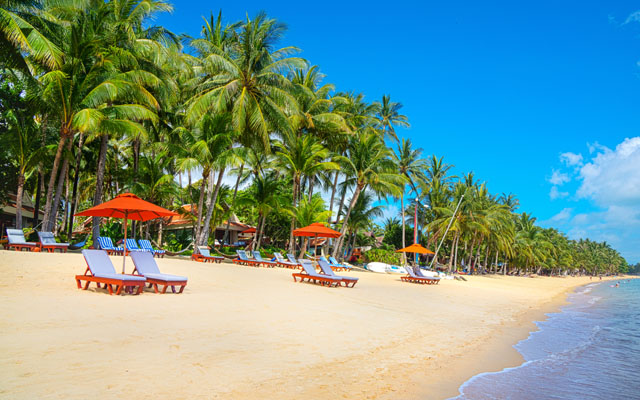









Minor Hotels has appointed Rohit Pandey as the new general manager of Anantara Jaipur Hotel.
In his new role, he will lead the launch and positioning of Minor Hotels’ first Anantara in India.