

Hilton teams up with Singapore to offer entertainment, stay experiences

Hilton and Kallang Alive Sport Management have signed a multi-year partnership to offer entertainment and hospitality experiences tailored for guests and travellers throughout their stay in Singapore.
As the newly-appointed official hotel partner for the Singapore Sports Hub, Hilton will immerse its Hilton Honors members in one-of-a-kind experiences, including coveted access to an exclusive Hilton Suite at the Singapore National Stadium.
The Hilton Honors loyalty programme allows members to use their points to access exclusive concerts, unique sports packages, delectable food experiences, and once-in-a-lifetime adventures through the Hilton Honors Experiences platform.
With international superstars such as Taylor Swift and Bruno Mars heading to the region in the coming weeks, Hilton Honors members can now use their points to redeem an exclusive suite experience to watch Taylor Swift’s sold-out The Eras Tour in Singapore.
“We are thrilled to be partnering with Kallang Alive Sport Management to bring music and fans closer together. Our collaboration will allow travellers from across the region to experience our signature hospitality, and to Stay in the Music with Hilton,” said Ben George, senior vice president and commercial director, Asia Pacific, Hilton. “The incredible synergy between world-class entertainment and the hospitality sector, as seen with concerts such as Taylor Swift’s, propels growth within tourism and the broader economy.”
Marriott International, Cathay to roll out enriched travel benefits
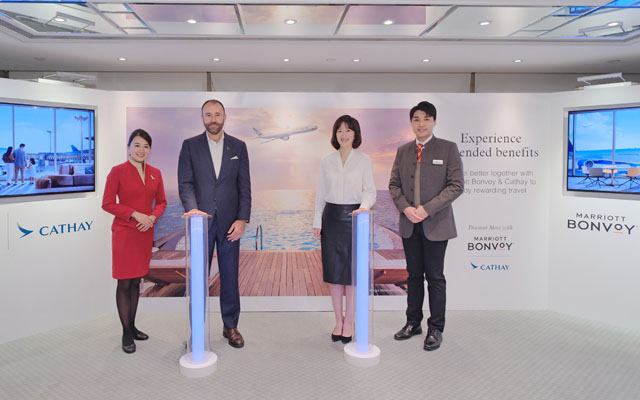
Marriott International is expanding the travel benefits in its Marriott Bonvoy loyalty programme through a collaboration with Cathay and its loyalty programme Cathay Membership.
Eligible members will gain exclusive access to both programmes’ membership benefits through limited status match offer, and accelerated points earning via seamless two-way conversion between miles and points.
The strengthened partnership provides Marriott International with access to Cathay’s extensive membership base. Global Cathay members, around 11 million, will be connected with to Marriott’s portfolio of nearly 8,800 hotels and resorts around the world, which span over 30 leading brands from Marriott Bonvoy.
Both Marriott Bonvoy and Cathay members can enjoy a wealth of benefits and privileges, such as hotel stay redemptions, enhanced flight and travel package experiences, two-way points conversion, fast track to accelerated status upgrades, and membership tier matching.
Alison Yang, vice president, revenue strategy, loyalty & partnerships, distribution, Greater China, Marriott International, said: “Together with Cathay, the expansion of our global airline partnership programme presents an opportunity to engage more members in the region as they go even further and explore new destinations around the world. By unlocking a new wealth of rewards and privileges with both loyalty programmes, members are encouraged to partake in a broader variety of experiences and benefits, while forging genuine connections with people and places as they learn more and feel more deeply in their next adventures.”
“Strengthening our partnership with Marriott allows Cathay members to unlock benefits even when they’re not flying. Members can enjoy more ways to earn and redeem their points and miles, providing greater value add to the programme,” added Paul Smitton, director customer lifestyle, Cathay.
New hotels: Waldorf Astoria Ras Al Khaimah, Moxy Putrajaya and more

Waldorf Astoria Ras Al Khaimah, the UAE
Waldorf Astoria Ras Al Khaimah reopens its doors after an extensive refurbishment, offering 203 keys in total including 149 guestrooms and 54 suites. The hotel’s nine restaurants and lounges have also undergone transformation, along with its extensive outdoor space.
The suites are complemented by Waldorf Astoria’s personalised service, with each guest assigned a personal concierge who attends to every detail of their stay from pre-arrival to post-departure.
Little ones get their own junior check-in, special amenities and a children’s club with a varied, fun-filled programme. The hotel’s unique concierge programme, Little Hotelier, allows children to step into the world of hospitality for a day and learn new skills while creating beautiful memories during their stay.

Moxy Putrajaya, Malaysia
Located in Putrajaya, Malaysia is the new 480-key Moxy Putrajaya, just steps away from IOI City Mall, South-east Asia’s retail giant and in proximity to Kuala Lumpur International Airport and major highways connecting Klang Valley and beyond.
The hotel’s lobby features a multi-functional work and interactive social space, and facilities comprising a fitness centre, all-day dining restaurant, sky bar, and event venues.

Wyndham Jomtien Pattaya, Thailand
The newest addition to the Wyndham portfolio, Wyndham Jomtien Pattaya is the brand’s largest property in Thailand to date.
Boasting 630 guestrooms, the hotel features a range of amenities including three outdoor tropical plunge pools, children’s pool, swim-up bar and jacuzzi, as well as a spa, restaurants, 550m² ballroom, and meeting venues.
Located 32km from U-Tapao–Rayong–Pattaya International Airport and 125km from Suvarnabhumi Airport, Wyndham Jomtien Pattaya is also just moments away from Jomtien Beach, and attractions such as the Pattaya Floating Market, Tiger Park, and Nong Nooch Tropical Garden.
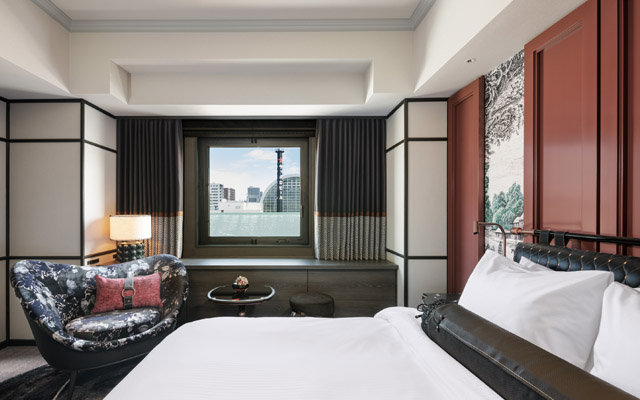
Hotel Sosei Sapporo, Japan
Set in the Sosei East neighbourhood, Hotel Sosei Sapporo pays tribute to Japanese traditions and showcases historic breweries.
Featuring 118 rooms, guests can enjoy Sapporo beer, as well as Hokkaido wines and locally brewed sake at the hotel bar – even the bath salts in the rooms are made from hop (also called ‘sleeping grass’) for a relaxing bath before retiring for the day.
The onsite restaurant serves up local culinary dishes and a wide selection of seafood, purchased at the fish auctions at the city market.
Sail away on a culinary tour of Japan & South Korea aboard Silversea Muse
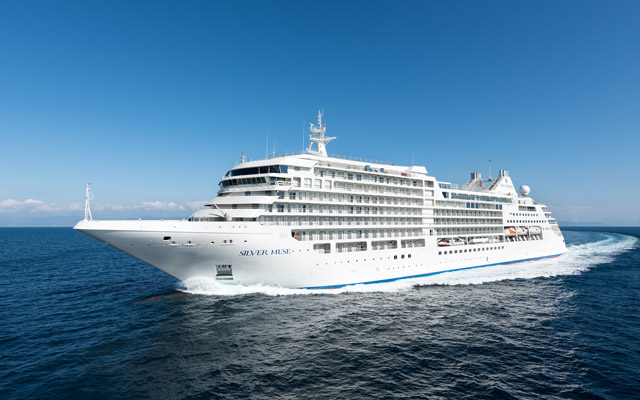
Silversea, in collaboration with Gullivers, will welcome acclaimed chef Adam Liaw aboard Silver Muse for a unique East Asian gastronomic adventure for its guests from September 26 to October 6 this year.
Guests will embark on an 11-day journey that explores Japan’s rich culinary heritage through five distinct destinations, including a call into Busan, South Korea.
Foodie travellers will get to savour and learn about the gastronomical delights of East Asia as well as participate in six special engagements with chef Liaw.
Travellers will start their journey in Tokyo, then onward to Kobe, where shore excursions include sake and Kobe beef tastings. At Busan, guests will head for a shore excursion that features the Jagalchi Fish Market and a cooking class to make the traditional bulgogi dish. From Busan, sail back to Japan and the ports of Kanazawa, Hakodate, and Yokohama.
This immersive epicurean tour offers a rare opportunity for food and travel enthusiasts to expand their knowledge and enjoyment of Asian cuisine and enjoy the ultimate in luxury sea travel aboard Silver Muse, with fares from AUD$10,550 (US$6,862) per person.
For more information, visit Gullivers.
Dao by Dorsett AMTD Singapore welcomes new GM

Ken Yong has been named general manager of Dao by Dorsett AMTD Singapore.
 In his new role, Yong aims to revolutionise the hotel’s operations and guest experience through innovative technology integration while maintaining a high level of personalised service.
Ammarawadee Cheowit joins NH Boat Lagoon Phuket Resort as GM

Minor Hotels has appointed Ammarawadee Cheowit as the general manager of NH Boat Lagoon Phuket Resort, the first NH Hotel brand in Thailand and Asia.
 Previously general manager at OZO Chaweng Samui, she brings over 13 years of hotel management experience to her new role, having effectively led teams in various hotel types, including boutique hotels and luxury properties, across Thailand’s prime tourist destinations such as Koh Samui, Koh Phangan, Phuket, and Hua Hin.
Japan welcomes digital nomads with six-month visa

Japan is eyeing digital nomads as a way to increase the number of wealthy inbound travellers and tackle overtourism, but challenges, such as visa criteria and stiff competition from neighbouring destinations, remain.
The Immigration Services Agency will offer a six-month visa for digital nomads from the end of March. Digital nomads from 49 countries will be eligible to apply at their nearest Japanese consulate or embassy provided they earn 10 million yen (US$68,300) annually and have private health insurance coverage during their stay. Their spouse and children will also be granted entry.
Although the visa is not eligible for renewal, it may be applied for again six months after the digital nomad leaves the country.
The visa is part of Japanese government efforts to boost economic growth and consumption, particularly through attracting travellers with higher incomes. The Japan Tourism Agency’s Basic Plan for the Promotion of a Tourism Nation, which was launched in April 2023, aims to increase annual tourism consumption, particularly in the regions, to 22 trillion yen annually by 2025.
In recent years, workations and digital nomads have been considered an increasingly important component of this work. In 2023, the Japan National Tourism Organization classified workations as a priority tourism type and the Japan Tourism Agency established the Telework Workation Public-Private Promotion Council.
The council has been supporting telework nationwide via collaboration between public and private sectors, resulting in the proliferation of co-working spaces and high-speed Wi-Fi as well as more accommodation offering dedicated working spaces. Even national parks have workstations and Wi-Fi through recent government initiatives.
With Japan’s domestic workation market expected to be worth 108.4 billion yen by the end of March, up from 69.9 billion yen in 2021, according to Statista, Japan is seeing the potential of welcoming digital nomads from overseas. More than 35 million people are working as digital nomads globally, according to The Japan Digital Nomads Association, and by 2030, the number is expected to reach one billion.
In practical terms, Japan has never been more equipped to cater for remote workers, but experts point to the limitations of its digital nomad visa compared to the offerings of other countries in the region.
South Korea’s digital nomad visa, which became available on January 1 this year, requires applicants to have had a minimum income of 85 million won (US$64,000) in 2023 and hold personal medical coverage. These terms are similar to that of Japan’s but successful applicants can stay for up to one year with the possibility of a one-year extension.
Malaysia’s digital nomad visa also allows remote workers to stay for up to one year, provided they work in a digital domain, such as IT or content creation, and show proof of annual income of at least US$24,000 — much lower than Japan’s level — and private health insurance. The same requirements and offer apply to the Philippines’ digital nomad visa, launched in 2023.
Still, Japan remains hopeful that strong pent-up demand for its tourism offering will entice digital nomads wishing to experience its off-the-beaten-track destinations that can be appreciated with more time.
In October 2023, Fukuoka’s local government invited 50 digital nomads from 24 countries to experience what it would be like to work in and explore the city. Trip participants stayed in hotels equipped with co-working spaces, ate in restaurants serving local dishes, and joined cultural activities such as watching a Bon Odori dance.
Kagoshima Prefecture has unveiled a range of workations promoting wellness, creativity and inspiration in a bid to attract digital nomads. In addition to high-grade working facilities at resort hotels, ryokan inns and co-working spaces, offerings include forest bathing on the World Heritage Site of Yakushima, well-being experiences with horses, matcha tasting among green tea fields, and watching traditional samurai armour being made.
In Nagano Prefecture, the Karuizawa Report Telework Committee, a private sector group composed of tourism and business groups, is working to attract digital nomads interested in spending time in nature and taking part in activities such as hiking, skiing and stargazing.
Although Japan has stricter digital nomad visa criteria than nearby destinations, public and private organisations are working to make every region of the country as appealing as possible, to create a strong selling point amid this competitive market.
Kazakh Tourism opens maiden global representation office in India
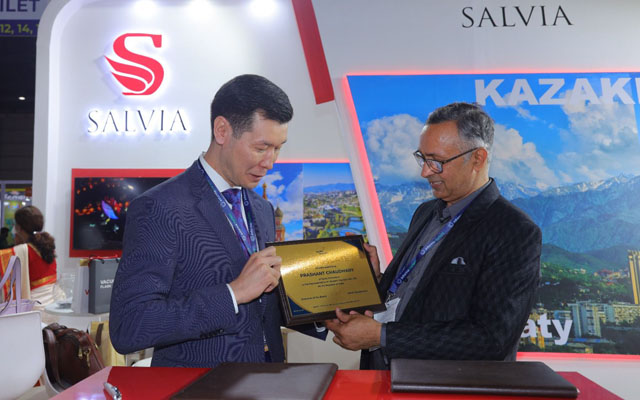
Kazakhstan has appointed its first international tourism representation office globally with the signing of a memorandum of understanding (MoU) with India’s Salvia Promoters.
Kazakh Tourism is expecting to double its tourist arrivals from India in 2024 compared to the last year with the appointment of its representation office in the country.
“India is one of our main source markets from where we are looking to double tourist arrivals in 2024. We tripled tourist arrivals from India last year after introducing a visa waiver programme for the Indian market. Our target is to welcome half a million tourist arrivals from India by 2026,” said Kairat Sadvakassov, chairman of the board, Kazakh Tourism National Company during the MoU signing ceremony that took place on the sidelines of SATTE 2024 in Greater Noida last week.
“Our target is to make Kazakhstan one of the preferred tourist destinations in India. We will be engaging with travel trade and media partners besides stepping on our participation in travel exhibitions to promote various destinations across Kazakhstan in India,” said Prashant Chaudhary, managing director of Salvia Promoters.
Kazakhstan introduced a visa-free entry regime for Indian travellers in 2022. The country recorded about 100,000 Indian tourists in 2023.
“Our focus is on FIT and MICE segments in India. We plan to organise a roadshow in Mumbai later this year to offer a platform for our DMCs to network with Indian travel agents. We will be hosting a media familiarisation trip too,” said Sadvakassov.
The tourism board is at present also negotiating with the Travel Agents Federation of India for hosting its annual convention in Kazakhstan this or next year.
Apart from India, Kazakh Tourism plans to open representation offices in China, Germany, the UK, Russia and GCC countries – half of these representation offices are expected to be opened by the end of 2024.
China’s Lijiang to host Mekong Tourism Forum 2024

The Mekong Tourism Forum (MTF) 2024 will be held in the city of Lijiang, China from April 23 to 25 this year.
Themed Visionary Journeys Redefining Tomorrow’s Travel, MTF invites travel professionals and stakeholders from the Greater Mekong Subregion (GMS) to engage in a collaborative platform dedicated to reshaping the future of GMS tourism.
MTF 2024 is expected to welcome 200 tourism professionals and stakeholders, comprising tourism ministers, leaders, NTOs, NGOs, and private sector representatives. This year’s forum will emphasise collaboration, innovation, and forward-thinking strategies, and aims to inspire delegates to explore new forms of tourism that deliver economic benefits, environmental consciousness and cultural enrichment.
Focusing on maximising tourism’s potential in the Asia-Pacific region, MTF 2024 will feature the latest trends, destination marketing and management innovations, cultural highlights, sustainable practices, inclusive practices, and the benefits of the latest technology in travel.
The keynote speech entitled Visionary Journeys Redefining Tomorrow’s Travel will offer a glimpse into the future of GMS travel, spotlighting the shift towards sustainable and conscious tourism in a post-lockdown era.
A panel session on Unleashing Potential: Enhancing International Cooperation to Propel Tourism Growth will address strategies for strengthening cooperation and fostering a unified, prosperous, and responsible future for GMS tourism.
Delegates will get a chance to join a field study, an on-site exploration of Lijiang’s Old Town, and see an exhibition at the museum showcasing Lijiang’s cultural heritage.
MTF2024 is hosted by the Bureau of International Exchanges and Cooperation of the Ministry of Culture and Tourism of China, Yunnan Provincial Culture and Tourism Department, the People’s Government of Lijiang City, and the Mekong Tourism Coordinating Office. It is co-organised by Lijiang Municipal Administration of Culture and Tourism and Network International Culturalink Entities.
Registration closes at 23.59 (GMT+7) on April 8, or when all spots are filled.








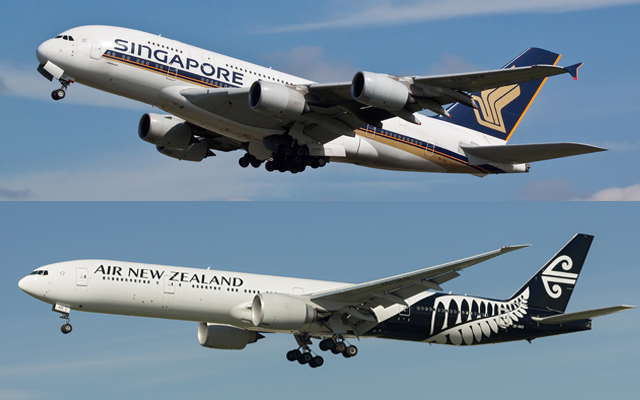
Singapore Airlines (SIA) and Air New Zealand will reauthorise their joint venture alliance for another five years until March 2029, which will see both airlines operate a total of four daily seasonal services between Auckland and Singapore from October 27, 2024 to March 29, 2025.
The extension is subject to regulatory approval.
Over the course of the 10-year partnership, both airlines have grown the seat capacity between New Zealand and Singapore by nearly 50 per cent. This includes the addition of up to three daily services between Auckland and Singapore, and a daily service between Christchurch and Singapore.
With the fourth daily seasonal service between Auckland and Singapore, the carriers will jointly operate 38 weekly return services between New Zealand and Singapore during peak months, translating to more than 893,000 seats available every year.
Air New Zealand chief transformation and alliances officer, Mike Williams, commented: “The partnership gives New Zealanders access to the world on Singapore Airlines’ vast network beyond the Singapore gateway into destinations in Europe, India and South-east Asia. With the partnership extended for a further five years, together with Singapore Airlines, we can continue to stimulate trade and tourism, and provide customers with greater choice and connectivity.”
Dai Haoyu, acting senior vice president marketing planning, SIA, said: “The extension of our alliance allows us to continue offering our customers even more options between Singapore and New Zealand, as well as to domestic destinations with New Zealand and around the world.”