


Cathay’s tree-planting initiative achieves 30,000 milestone
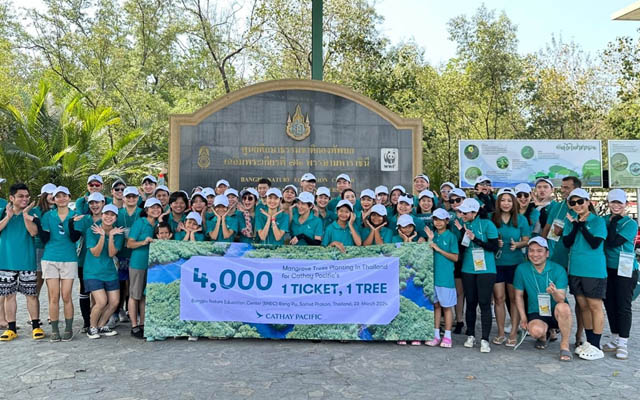
Cathay has reached a milestone in its 1 Ticket, 1 Tree journey, with the planting of 30,000 mangrove trees in South-east Asia since the initiative was launched in 2021.
This includes 7,500 mangrove trees that Cathay and its partners have committed to plant in 2024, from tickets sold in South-east Asia from a five-day campaign period in July 2023.
Now in its fourth year, 1 Ticket, 1 Tree is a South-east Asia initiative by Cathay that underscores its commitment to support local communities, restore local habitats and drive climate resilience.
Cathay plants a tree in the region for every ticket purchased from Singapore, the Philippines, Thailand, Indonesia, Malaysia, Vietnam and Cambodia during a specified campaign period. To kickstart 1 Ticket, 1 Tree this year, 4,000 trees were planted in Thailand’s Bangpu Nature Education Centre in Samut Prakan on March 23. The remaining trees will be progressively planted in mangrove forests across South-east Asia in the coming months.
Cathay continues to work with local environment and community partners to restore mangrove forests in the region. In Thailand for instance, half of the 4,000 trees were contributed by KTC (Krungthai Card), who joined Cathay’s efforts in Thailand for the first time this year. Since 2021, Cathay has worked with 13 local partners across the region to plant trees and ensure they grow and thrive.
Dominic Perret, regional general manager for South-east Asia, Cathay, said: “Giving back to the communities we serve is an important part of this endeavour, as we collaborate with our customers and business partners to protect the coastal ecosystems that many local communities in the region depend on for food, protection and income.
“We are extremely encouraged by the positive response we’ve received from other like-minded partners who have since joined us in this effort, or simply helped spread the word.”
Luxury Escapes rolls out booking portal for New Zealand agents
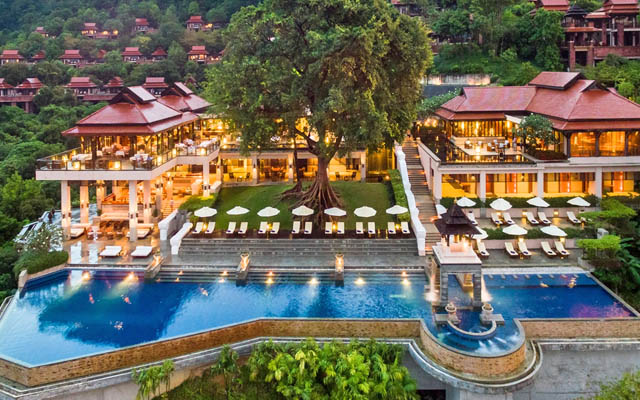
Luxury Escapes has introduced a new industry booking portal, Agent Hub, tailored for use by travel agents around New Zealand, enabling millions of New Zealanders to access exclusive Luxury Escapes travel deals through their preferred travel agent.
Travel agents can now tap into commissionable rates for Luxury Escapes’ Limited Time Exclusive offers. Thousands of agents had previously been selling these packages to customers without receiving any commission due to high demand. Luxury Escapes has now forged partnerships with agents to allow them to earn commission on their sales, working directly with tour operators and DMCs to offer some of the most competitive tour rates globally.
Earlier in March, Luxury Escapes Agent Hub launched in Australia, marking a significant milestone in Luxury Escapes’ commitment to revolutionising the travel industry.
Key features of the Luxury Escapes Agent hub include exclusive deals and add-ons, streamlined booking processes, a range of commission levels available on most product verticals, as well as access to Luxury Escapes’ extensive network of connections and industry expertise.
In addition to the launch of Agent Hub, Luxury Escapes will also introduce a number of upcoming incentive programmes designed to reward participating agents including bonus commissions, Luxury Escapes bonus credits and more.
“We’ve always loved the trade and the ability to work with literally thousands of agents at scale is hugely exciting for us,” remarked co-founder and CEO of Luxury Escapes, Adam Schwab. “The launch of our new industry portal allows us to give access to agents to our very best product and importantly, pay agents for the incredible work they do helping customers every single day”.
Chris Brandon, senior manager – agency distribution, Luxury Escapes, said: “We have long had huge demand from travel agents wanting to book our packages and are thrilled to now be able to offer industry access to the Luxury Escapes platform and product. We appreciate that many consumers have existing travel agent relationships and look forward to offering our amazing deals to a wider audience by way of travel agents across the country.”
Korean Air, WestJet expand codeshare agreement
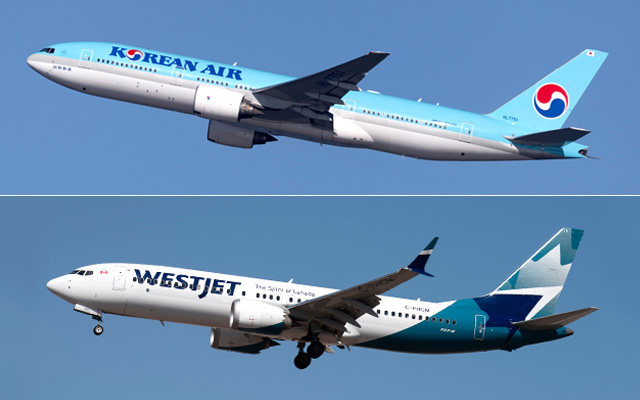
Korean Air and WestJet have expanded their codeshare partnership to provide more transpacific destinations to its customers.
Korean Air will begin selling flights on WestJet’s new route between Seoul Incheon and Calgary, which will launch from May 17. Flights on this route will operate three times a week using Boeing 787 Dreamliners.
WestJet customers will gain access to flights operated by Korean Air to six new destinations – Bangkok, Danang, Hanoi, Ho Chi Minh City, Hong Kong and Singapore – via Korean Air’s hub at Incheon Airport.
With the new codeshare expansion, the airlines’ codeshare network will increase to 36 routes, including Korean Air’s flights from Seoul Incheon to Vancouver and Toronto; WestJet’s domestic routes within Canada; and flights to/from the US via Vancouver and Toronto.
Dusit Thani Bangkok offers early-bird savings
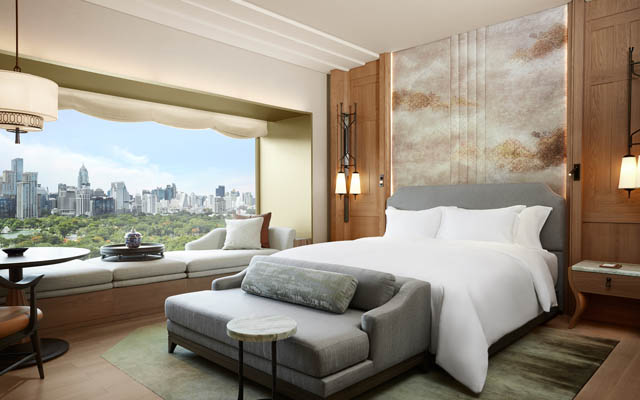
Dusit Thani Bangkok hotel will reopen on September 27 this year after its transformation as part of Dusit Central Park, and has launched a special reopening offer for guests.
Starting May 1, guests can secure their bookings for the new Dusit Thani Bangkok and be rewarded with a nightly credit of US$75 for dining and spa treatments, along with other enticing perks. Rates start at US$330++ per night, and bookings for this offer can be made until October 31 for stays between September 27, 2024 and March 31, 2025.
Guests can enjoy the 257 guestrooms and suites that boast floor-to-ceiling windows with views of Lumpini Park, wellness offerings, curated dining experiences, a multi-level rooftop bar, and more at the redesigned property.
For more information, visit Dusit Thani Bangkok.
Lead with inclusivity, drive hospitality forward

 In hospitality, inclusive leadership and gender balance are becoming important business imperatives, as gender-diverse teams reportedly see up to 19 per cent higher profits. However, gender parity in leadership remains a challenge in this industry, owing to factors such as demanding expectations, work-life balance struggles, and the scarcity of female leaders as role models. A 2022 WTO report noted the insufficient data on women in leadership across Asia-Pacific, and underscored the urgency for action.
At Hilton, we believe in the value and impact of women at every level of our organisation and are committed to amplifying women’s voices within our executive teams. Women currently constitute 55 per cent of our Asia Pacific Executive Committee, and we have set ourselves a goal to increase the percentage of female general managers in this region to at least 25 per cent by 2027.
We also address unconscious bias in talent selection by instituting requirements for gender-diverse candidate slates and interviewing panels in our recruitment process, and implementing compulsory unconscious bias training for our leaders and team members. Our leadership programmes, such as Lead@Hilton in partnership with Harvard University and the SHINE Program for emerging director-level talents, are instrumental in shaping diverse leaders for the future of hospitality.
Embracing inclusion: team members champion inclusivity
Inclusion at Hilton must transcend leadership ranks. That is why we place incredible emphasis on evolving beyond a top-down mandate to foster a shared value embraced by our 62,000 Asia Pacific Team Members. That is when our workplace embodies the very essence of our signature hospitality – powered by humanity, and strengthened by inclusion, wellness, growth and purpose for all.
We empower our Team Member Resource Groups (TMRGs), through our Courageous Conversations to promote diversity within Hilton and beyond. Alongside Women’s and Pride TMRGs, we’re launching Generations and Abilities TMRGs in Asia-Pacific, celebrating the unique strengths of our multi-generational and differently-abled workforce. Led by DEI advocates, our TMRGs drive initiatives for awareness, empathy, and collaboration, cultivating a truly inclusive environment and supportive ecosystem where all team members can thrive.
Amid the challenges of a talent-scarce environment, Hilton proudly distinguishes itself as an employer of choice, having been named the #1 World’s Best Workplace last year, and Asia’s top-ranked hospitality company for seven consecutive years. This validates our commitment to fostering a workplace where every Team Member thrives and is empowered to bring their true self to work.
Hilton’s commitment to transforming its workplace experience also aligns with evolving priorities such as providing work flexibility through an AI-based smart scheduling system and attracting alternative talent sources such as gig and mature workers.
As the boom of travel continues its upward trajectory, it is paramount that our industry remains steadfast in its journey to inspire inclusion. In a post-pandemic world, this signifies our commitment not just to rebuild but to evolve, as we shape the future of hospitality with a workforce as diverse and dynamic as the guests we serve.
Indonesia’s Manado airport resumes operations
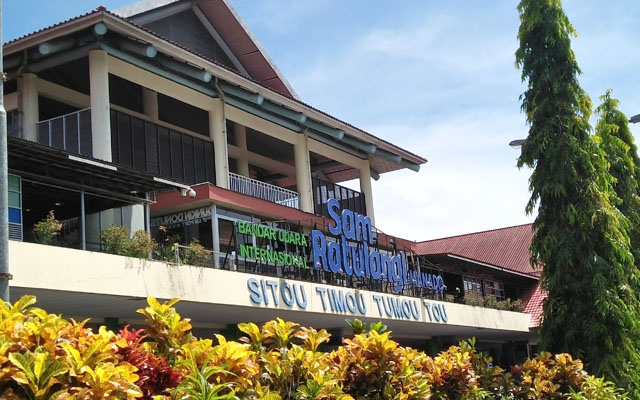
Volcanic ashes from the eruption of Mount Ruang in North Sulawesi had prompted the authority to close Manado’s Sam Ratulangi International Airport from April 18 to mid-day April 22, leading to flights and at least one event being cancelled.
At press time, the airport has resumed normal operations as of yesterday.
Since the eruption, passengers (mainly domestic) stranded in Manado have been looking for alternative routes via Gorontalu, Palu City and Ternate, shared Reenaldo Wangkar, managing director of Welcome Manado Wisata.
However, this incurred extra costs for passengers as they had to buy a new ticket.
Some international passengers were also left stranded as Scoot flights between Friday and Monday were cancelled.
Reenaldo noted that with the airport closure status updated only every 24 hours, this proved challenging for passengers as they had to “reschedule at each airline’s office everyday”.
Jouvendi Rompis, chairman of the Indonesian Travel Agents Association (ASTINDO) North Sulawesi Chapter, said: “Some tourists have been having problems returning home because of the closure – moreover many international divers, who were scheduled to dive in North Sulawesi, were stuck in Jakarta and Singapore.”
Reenaldo added that his tour groups for April 26 and 27 have already considered cancelling their trips, thus he has had to offer to reschedule their bookings, and is also prepared to refund the groups if rescheduling was not possible. The two groups are from Singapore (32 pax), and a Catholic pilgrimage group from Jakarta (10 pax).
“There was an important United Cities and Local Governments Asia-Pacific (UCLG ASPAC) event in North Minahasa which (has been) postponed until June. (As a result) some of our transport rental orders for the event were cancelled,” he continued.
On a more positive note, Reynold Mawikere, owner of Manado Golden Travel and secretary of ASTINDO North Sulawesi Chapter, shared that reports from his members showed that this month was incidentally a slow one, stating that “there are many open trips for next month” which are fully-booked.
He added that with Mount Ruang located about five-hours’ boat ride away from Manado, the eruption has not had a significant impact on the tourist attractions around Manado.
For guests who are already in Manado, Reynold commented they can still “continue to visit existing tourist attractions unless the specifications for photography are affected due to visibility”.
Kempinski to open two hotels in Yangzhou, China
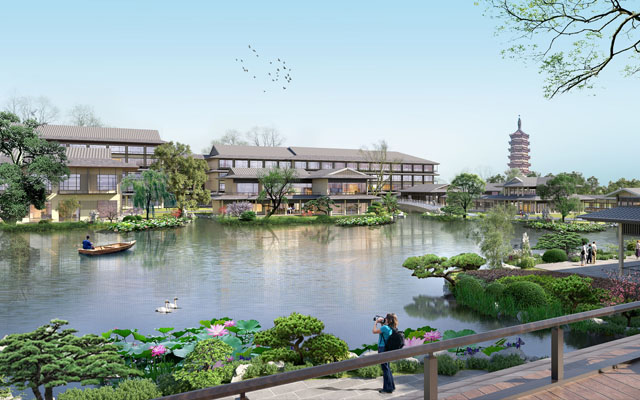
Kempinski Hotels has revealed plans to open a duo of dual-branded Kempinski and Bristoria hotels in Yangzhou Economic Development Zone in China.
Both hotels are scheduled to complete in 2025.
The hotel management agreement was signed by Kempinski Hotel Group with a wholly-owned subsidiary of Yangzhou Economic and Technological Development Zone Culture and Tourism Group Co.
When complete, the lakeside Kempinski Hotel Yangzhou Nuoyuan will offer 93 rooms and suites, and facilities like a swimming pool, spa, gym, fitness centre, and a ballroom.
Next door, Bristoria Hotel Yangzhou will have 312 guestrooms and a wide selection of meeting rooms and function spaces.
Easily accessible from Yangzhou Taizhou International Airport in less than an hour and linked directly to Nanjing and Shanghai via high-speed train, the hotels located are also close to some of Yangzhou’s cultural highlights, with activities including Guqin art, engraving printing technique, paper-cutting technique, Fuchun tea making, and more.
Accor introduces traineeship programme for young indigenous talent
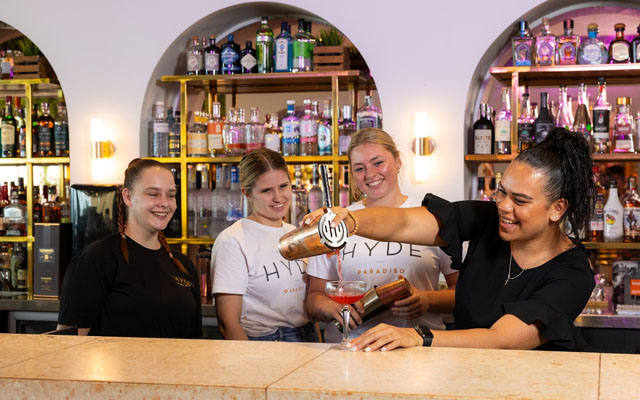
Accor has launched its new Accor Indigenous Hotel Traineeship to provide career pathways and development opportunities for indigenous young people keen to join the hospitality industry.
The programme has been designed in collaboration with various community and higher education partners, including Yugambeh Regional Aboriginal Corporation Alliance and Busy @ Work. Aimed at individuals aged 17-25, it is designed to cultivate long-term sustainable career pathways for future indigenous leaders within Accor.
The inaugural group of trainees hails from South East Queensland, specifically the Gold Coast and Brisbane regions, with Accor planning to expand the programme across Australia from next year.
Over the course of 12 months, the trainees will participate in a comprehensive full-time hotel-based traineeship, with theoretical components delivered by TAFE Queensland. Upon completion, trainees will complete a Certificate III in Hospitality Operations.
The traineeship offers a blend of classroom instruction and practical experience, with three training days per month, complemented by on-the-job training in various departments. All trainees will undergo three four-month departmental block rotations in F&B, housekeeping, and front office, providing them with a holistic understanding of hotel operations.
The traineeship programme forms part of Accor’s nation-leading Indigenous Careers Program, which has placed more than 2,500 Aboriginal and/or Torres Strait Islander team members into positions at Accor since its inception in 2015.
Similarly, in New Zealand, Accor has introduced the Tangata Whenua Program to enhance career opportunities for young Māori. This pilot initiative, spanning nine months, has already seen three participants placed in various departments, such as housekeeping, front office, and F&B, at Mercure Queenstown and Novotel Auckland Airport. These individuals benefit from comprehensive mentoring and educational assistance, provided jointly by Accor and Queenstown Resort College.
Accor Pacific chief operating officer PM&E, Adrian Williams, said: “Our Indigenous Hotel Traineeship is the culmination of significant dedication and support. We offer our trainees infinite avenues for career development and growth, a culture of inclusivity that is open to all, and open pathways to travel and work around the world, while respecting and valuing individual personalities. Through this new traineeship programme, we know we’ll secure incredible talent who will enjoy a rewarding career with Accor.
“This focus on personal capability development and pathways to leadership ensures Accor indigenous team members have opportunities to grow and build meaningful careers over the long term.”
Galaxy Macau unveils new edutainment centre for kids

Galaxy Kidz in Galaxy Macau Integrated Resort has upgraded its offerings for young guests, featuring a new edutainment centre with facilities and activities for children to discover nature and science while on holiday with their families.
Featuring décor inspired by mascot Wavey the peacock, along with a series of educational workshops, children staying at selected hotels within Galaxy Macau can immerse themselves in a range of learning experiences. Plus, parents can enjoy a stress-free child-rearing experience, yet also have the choice to join in the learning activities with their children.

Eligible hotels include Galaxy Hotel, The Banyan Tree Macau, Okura Hotel Macau, Raffles at Galaxy Macau, or Andaz Macau – upon arrival, Wavey the peacock will greet them, guide them through check-in and present them with a game passport. Playful and child-friendly amenities are also available in hotel rooms.
Young guests staying at these hotels enjoy a complimentary two-hour access to the brand-new Galaxy Kidz Edutainment Center located on the second floor of Galaxy Hotel. The centre provides opportunities to explore S.T.E.A.M. subjects, from scientific experiments in Wavey’s Lab to culinary adventures in Wavey’s Kitchen. There are also outdoor activities, movie time, and story time.
Parties can be arranged as well for birthdays or other celebrations as well.






Global leading Travel & Tourism players – WTTC, UN Tourism and Sustainable Hospitality Alliance (SHA) – have joined forces to publish a landmark report setting out their joint plan to help halt and reverse biodiversity loss.
Launched on Earth Day 2024, Nature Positive Travel & Tourism in Action was developed in collaboration with specialist consultancy Animondial. The report is the sector’s pledge to support the implementation of the Kunming-Montreal Global Biodiversity Framework (GBF), the UN’s Biodiversity Plan.
It presents more than 30 case studies of inspiring and progressive actions from around the world involving large and small businesses, national and local government agencies, civil society groups, and inter-sectoral partnerships.
The report, which follows the 2022 WTTC report Nature Positive Travel & Tourism, includes practical frameworks and real-world examples that encourage both travel providers and travellers to embark on journeys that contribute to the conservation of our natural treasures, and also highlights the intrinsic link between biodiversity and tourism’s resilience.
Julia Simpson, WTTC president and CEO, said: “This historic partnership with Travel & Tourism heavyweights is a significant step in our collective journey towards a more sustainable and responsible sector.This report is not merely a publication but a movement towards integrating environmental stewardship into the core of travel experiences.”
Zurab Pololikashvili, secretary-general of UN Tourism, commented: “This pivotal new collaboration among key global players sets a robust framework for sustainable practices that not only drive significant impact but also exemplify the power of united efforts in conserving biodiversity.
Glenn Mandziuk, Sustainable Hotel Alliance CEO, said: “Nature underpins our society, economies and indeed our very existence. The hospitality industry is today a leader among industries in its Nature Positive approach and this report signifies how much our industry understands the true value of nature.”
Recognising that the sector has a critical role to play in protecting and conserving biodiversity, the Nature Positive Tourism approach is designed to be a touchstone for actionable change. It focuses on equipping the sector with the tools and insights needed to nurture and protect destinations upon which it depends.
View the report here.