IHG Hotels & Resorts has signed a management agreement with Phuket HA 2 Co. for voco Phuket Patong, further expanding the premium brand’s presence in Thailand.
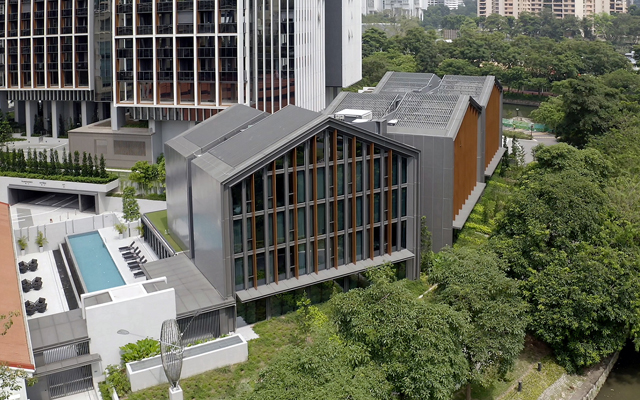
Scheduled to open in 2028, the 307-room property will form part of the mixed-use Abov Patong development in Phuket, which will include hotels, branded residences and lifestyle facilities such as a clubhouse, theatre, swimming pools and Kids Club.
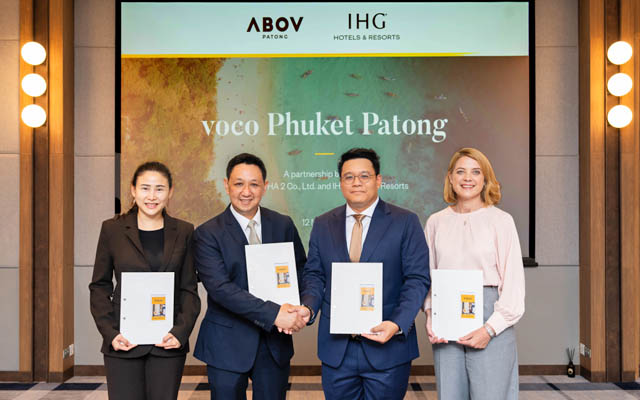
From left: Abov Patong’s Nada Anerutteva and Wuthikrai Kulsirisawad; and IHG’s Pathana Jitsaereetham and Kate Gerits
Located on the hillside of Patong and approximately 150m from the beach, voco Phuket Patong will offer ocean views and access to nearby entertainment, shopping and dining areas. Facilities at the hotel are expected to include a restaurant, two bars, spa, swimming pool and fitness centre.
The signing adds to the rapid growth of the voco brand in Thailand following its debut in Bangkok last year. Additional voco properties are also in development across Bangkok and Phuket.
IHG said the agreement also strengthens its broader presence in Phuket, where the group currently operates or has signed seven hotels across brands including InterContinental, Vignette Collection, Hotel Indigo, Holiday Inn and Holiday Inn Express.
“Phuket experienced its most successful high season in five years in 2025, surpassing pre-Covid benchmarks,” said Pathana Jitsaereetham, director, development, Thailand, IHG. “This resurgence highlights Phuket’s enduring charm as an island destination.”
Wuthikrai Kulsirisawad, CEO, Phuket HA 2 Co., said: “With its distinctive brand identity, I am confident that (voco Phuket Patong) will stand out from the crowd and be a valuable addition to the mixed-used development… I look forward to building a strong long-term partnership with the team as we introduce local and international travellers to experience the very best that Patong has to offer.”
Meliá Hotels International and Tanzanite International are moving ahead with a major expansion of Meliá Ho Tram Beach Resort, adding new accommodation, wellness and lifestyle facilities as demand for upscale coastal travel in southern Vietnam continues to grow.
Expected to open in 3Q2028, the expansion will add 191 suites and rooms alongside new wellness, leisure and lifestyle facilities, further strengthening Ho Tram’s positioning as an upscale coastal destination in southern Vietnam.
Meliá Hotels International will expand Meliá Ho Tram Beach Resort with additional suites, wellness facilities and serviced residences by 2028
The development will include five additional swimming pools across 2,500m², including a rooftop pool, as well as expanded fitness, wellness and dining facilities.
Ahead of the expansion, the resort is also introducing new family and wellness-focused experiences. Enhancements include an upgraded kids club featuring a treehouse and expanded activity programme, a professional football pitch scheduled to open in June 2026, and a dedicated outdoor zone for teenagers.
From August 2026, the resort’s wellness programme will expand to include an onsen experience and a new Wellness Inclusive Package incorporating yoga, meditation, tai chi, spa therapies and nature-based activities. Additional experiences will include cacao and coconut oil workshops, forest bathing trails and access to sauna and steam facilities.
As part of the wider development, Meliá and Tanzanite International will also introduce The Indochine Residences at Meliá Ho Tram, comprising serviced two- and three-bedroom residences, duplexes and penthouses linked to the resort’s hospitality and rental programme.
The expansion comes as Ho Tram continues to develop as a coastal tourism destination, supported by infrastructure improvements and the future opening of Long Thanh International Airport, located approximately 66km away.
“Vietnam continues to represent one of the most strategic growth markets for Meliá Hotels International in Asia-Pacific, and Ho Tram is rapidly emerging as a premier leisure and lifestyle destination within the region,” said André P Gerondeau, chief operating officer, Meliá Hotels International.
Nguyen Nam Son, chairman of Tanzanite International, added that the project reflects the partners’ long-term commitment to Ho Tram and is expected to generate more than 1,000 construction jobs and approximately 500 operational roles once completed.
Explora Journeys has opened sales for its Summer 2028 Journeys Collection, marking the debut of Explora VI and the completion of the brand’s six-ship fleet.
Launching in August 2028, Explora VI will join the line’s global deployment across 178 destinations in 27 countries. The programme spans the Mediterranean, Northern Europe, Iceland, Greenland, Alaska and the North American East Coast.
Explora Journeys opens bookings for its Summer 2028 season alongside the debut of Explora VI
The itineraries focus on slower-paced travel, with overnight stays and extended port calls in destinations including New York, Reykjavik and Istanbul, alongside maiden calls to ports such as Korčula and the Faroe Islands.
Explora I and Explora II will operate Mediterranean itineraries between April and October 2028, covering destinations across the Aegean, Adriatic, Iberia and North Africa. Explora III returns to Alaska from May to September, while Explora IV and Explora V will sail across Northern Europe, the Baltic Sea, Iceland, Greenland and the North American East Coast.
Explora VI will operate 13 Mediterranean journeys between August and November 2028, beginning with its maiden voyage from Rome to Barcelona. The itineraries include calls across Sicily, Sardinia, the French Riviera and the Adriatic coast.
Explora Journeys said guests booking early will have access to preferred rates and suite selections for the inaugural season of Explora VI.
Marriott International and The Fern Hotels & Resorts have surpassed 75 hotel signings and 50 property openings under the Series by Marriott brand in India, less than six months after the collaboration launched in November 2025.
The milestone adds more than 3,556 rooms to Marriott International’s India portfolio and marks one of the company’s fastest regional brand expansions to date.
Marriott International and The Fern Hotels & Resorts have reached 75 signings and 50 openings for Series by Marriott properties across India
Developed in partnership with Concept Hospitality Private Limited (CHPL), Series by Marriott was introduced as a collection brand bringing together locally recognised hotel groups under the Marriott Bonvoy platform. The portfolio now spans 43 cities across India, including Tier 1, 2 and 3 markets, as well as resort destinations.
Open properties include The Fern Mumbai, Goregaon, Series by Marriott; The Fern Jaipur, Series by Marriott; The Fern Habitat Goa, Candolim, Series by Marriott; Rakabi The Fern Igatpuri, Series by Marriott; and The Fern Residency Bengaluru, Seshadripuram, Series by Marriott.
The brand targets domestic and regional travellers seeking internationally recognised standards alongside locally rooted hospitality experiences. Properties are designed around core travel essentials such as accommodation, connectivity and service consistency, while incorporating regional identity and destination-specific elements.
Selected hotels within the portfolio also offer fitness facilities, breakfast options and meeting spaces catering to both leisure and business travellers.
In addition, guests staying at participating properties can access Marriott Bonvoy benefits, including points earning and app-based travel services.
“When we launched Series by Marriott in India last November, we spoke of a brand designed to scale with both speed and purpose,” said Kiran Andicot, senior vice president, South Asia, Marriott International. “Reaching 75 signings, with 50 open and operating hotels across the country, in under six months is a validation of that vision. India is not simply a launchpad for this brand; it is proof of concept.”
Suhail Kannampilly, managing director, Concept Hospitality, added that the partnership combined The Fern’s regional hospitality approach with Marriott International’s global distribution and loyalty network, contributing to stronger owner and traveller interest in the brand.
Global Hotel Alliance (GHA) has added four new hotel brands to its network, expanding the alliance’s footprint across Europe, the Middle East and Asia.
The additions include Almanac Hotels, Regal Hotels International, Story Hotels & Resorts and TemptingPlaces Collection, collectively contributing 22 properties to the GHA Discovery loyalty programme.
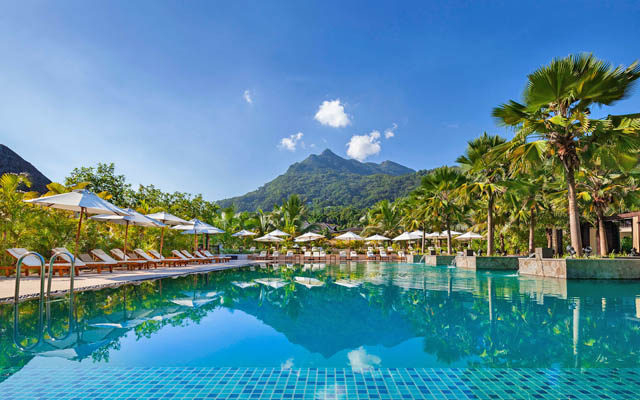
Global Hotel Alliance has expanded its network with four new hotel brands spanning Europe, Asia and the Middle East; Story Seychelles, pictured
The expansion strengthens GHA’s presence in destinations including Hong Kong, Barcelona, Vienna and Prague, while also introducing the alliance to new markets such as Zagreb in Croatia and Rabat in Morocco.
GHA said the latest additions continue its strategy of broadening its portfolio of independent hotel brands while enhancing options available to its more than 35 million GHA Discovery members.
Almanac Hotels joins the alliance with boutique properties in Barcelona, Vienna and Prague, focusing on locally inspired hospitality and design-led stays. Regal Hotels International adds 11 properties across its Regal, Regala and iclub brands, bringing approximately 6,800 rooms and more than 30 dining venues into the network.
Story Hotels & Resorts contributes five properties across the Middle East, North Africa and the Indian Ocean, including beachfront and urban hotels centred on destination-led experiences and wellness. TemptingPlaces Collection joins with a portfolio of boutique properties in Europe, including Château d’Augerville Golf & Spa Resort in France and Dent Blanche Resort in Switzerland.
Alongside the new brand additions, GHA said existing member brands have introduced 14 additional hotels and resorts since the start of the year. Recent openings include Capella Kyoto in Japan, Tivoli Palazzo Gaddi in Florence, Corinthia Rome, Anantara Kafue River Tented Camp in Zambia and Avani Mooloolaba Beach Hotel in Australia.
“Our continued expansion reflects the strength of our alliance proposition and the growing desire for collaboration within the independent sector,” said GHA CEO Chris Hartley.
“With the addition of these eclectic brands, we are further diversifying our portfolio and the value we deliver to over 35 million GHA Discovery members.”
The PuLi Group has named Dean Winter as CEO, effective June 1, 2026, as it prepares for the next phase of expansion and the relaunch of The PuLi Shanghai.
He joins from Swire Hotels, where he was managing director, overseeing a portfolio that includes The Upper House Hong Kong.
With more than three decades of luxury hospitality experience, Winter will lead the group’s strategic direction, brand development and portfolio growth across Asia.
Recognising Asia-Pacific as the world’s aviation growth engine, a recent presentation by OAG Aviation’s commercial and industry affairs leader for APAC and MEA, Mayur Patel, underscored the importance of continuous infrastructure development to keep pace with growing travel demand.
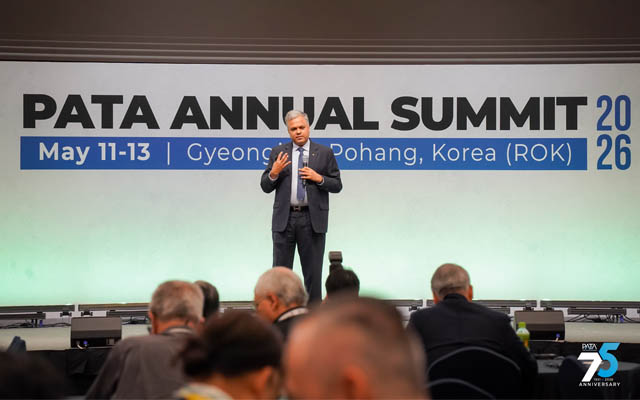
His presentation, delivered at the PATA Annual Summit in Gyeongju, South Korea, noted that Asia-Pacific’s aviation industry has recorded annualised growth of 5.2 per cent over the past 25 years, double the global average.
Mayur Patel said aviation profit margins remain thin, making it important for airlines to operate efficiently and sustain growth carefully
Patel described the performance as “encouraging and positive, especially when you’ve got half of the world’s population – 4.8 billion – people residing here”. He added that he sees “global opportunity to do more business together”.
To build the foundation for the next decade of growth, Patel emphasised the importance of infrastructure investment, noting that many airports are already expanding with future demand in mind.
Patel said: “Hong Kong is moving its airport capacity towards 120 million passengers and is (enhancing its) infrastructure with a third runway and new terminal. It is also getting new airline capacities into the system.
“Singapore’s Changi Airport is looking towards 140 million passenger capacity by mid-2030, and the fifth terminal is now under construction to get more passengers into the air hub.
“At Incheon International Airport (South Korea), the fourth runway is completed and a fifth is being planned, with the aim of serving a capacity of 106 million per year.”
Expansion projects are also underway across the region, including at Suvarnabhumi Airport in Bangkok; Long Thanh International Airport, currently under construction east of Ho Chi Minh City; second airports planned for Delhi and Mumbai; and 25 airports under construction across China in 2025 alone.
Patel said most airports in the region currently handle between 65 million and 80 million passengers annually, with many aiming to process between 120 million and 250 million passengers over the next decade.
“There will be significant capacity (to support) airlines that are ordering new aircraft that will need to be filled by more passengers,” Patel remarked.
He noted that Asian carriers have more than 5,800 aircraft on order – double the total of any other region – which is expected to add 1.38 billion seats across Asia-Pacific over the next decade.
As most future fleets will comprise narrow-body aircraft, Patel said low-cost airlines will have greater opportunities to expand, creating new city pairs, opening new markets and attracting different traveller segments.
However, Patel stressed that growth must also be resilient.
“Aviation profit margins are very thin (2.3 per cent, which is far below the 3.9 per cent global average), so we’ve got to be very smart about how we operate and sustain growth,” he said, adding that airlines must optimise yield, not just seat capacity, to avoid fragile networks driven by profitless growth.
Further, modern airport technology, particularly biometric systems, will ensure efficient growth. Using Hong Kong and Singapore as examples, Patel noted that travellers can complete immigration procedures quickly while keeping their passports in their bags.
Next, Patel discussed the evolution of the low-cost carrier model as a contributor to resilient aviation growth.
“The low-cost carrier model has been one of the great success stories of Asia-Pacific aviation; 22.5 per cent compound annual growth since 2000 is a remarkable track record. But as these networks mature and unit costs inevitably rise, the primary challenge shifts from growth to profitability. The era of simply adding routes and seats is giving way to a more complex question: how do you sustain margins when the structural cost advantages that defined the model begin to erode?
“The natural response is the hybrid model, carriers that retain the cost discipline of a low-cost operation while layering in the product and service flexibility of a full-service airline. We’re already seeing this play out across the region. Travellers today are not a homogeneous group. A millennial leisure traveller, a corporate road warrior, and a premium family holidaymaker have fundamentally different expectations. A carrier that can serve all three, without the overhead of a traditional full-service structure, has a genuine competitive advantage – a good example of this is India’s IndiGo Airlines.”
Patel added that resilience will also depend on smarter aircraft with lower unit costs, greater point-to-point connectivity, diversified demand, and the expansion of ultra-longhaul services. He cited Qantas’ Project Sunrise, scheduled for 2027, which will connect Sydney and London non-stop in approximately 22 hours.
TRENZ, New Zealand’s annual tourism trade event, has concluded its 2026 edition in Auckland, with organisers confirming Christchurch as the host city for next year’s show.
Tourism Industry Aotearoa (TIA) said TRENZ 2027 will be held at Te Pae Christchurch Convention Centre from May 11 to 13 next year, marking the fourth time the event has taken place in Christchurch and the second at the venue.
Christchurch has been confirmed as the host city for TRENZ 2027; River Avon in Christchurch, pictured
According to TIA, this year’s event in Auckland brought together around 1,200 delegates and facilitated approximately 16,000 business meetings across two-and-a-half days.
TIA chief executive Rebecca Ingram said Auckland had delivered a strong host city experience, supported by partners including Tataki Auckland Unlimited, Tourism New Zealand and Air New Zealand. She also highlighted new initiatives such as the International Media Marketplace introduced during this year’s event.
The announcement comes as Christchurch continues to see growth in international visitor arrivals. TIA said 287,000 international travellers passed through Christchurch Airport between November 2025 and March 2026, up 22 per cent year-on-year.
Anne Newman, general manager of visitor economy at ChristchurchNZ, said the city had continued to expand its tourism infrastructure, accommodation and visitor experiences since previously hosting TRENZ in 2023.
“There’s a real buzz in Ōtautahi, and we’re looking forward to sharing that energy with the travel trade and our industry partners,” she said.






 He joins from DFDS A/S, where he most recently served as vice president and head of the company’s passenger and freight business in Northern Europe.

 From all of us at TTG Asia Media, Selamat Hari Raya Haji to our Muslim friends!
 With more than three decades of luxury hospitality experience, Winter will lead the group’s strategic direction, brand development and portfolio growth across Asia.