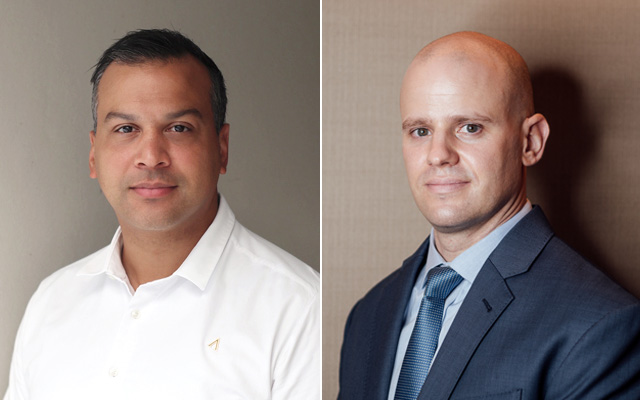
Conrad Koh Samui Resort & Residences has made significant additions to its executive team with Brent Assam as the director of operations and Marco Araujo as its new general manager.
As the new director of operations, Assam will oversee the daily operations at Conrad Koh Samui. Boasting an extensive background in F&B management and operations, his 20-year career in hospitality includes a notable tenure at Hilton Adelaide, where he served as director of operations.
From left: Brent Assam and Marco Araujo
With over two decades of experience in the luxury hospitality industry, Araujo brings with him a wealth of expertise and leadership capabilities to the team. In his new role, he will oversee the commercial and operational performances for Conrad Koh Samui.
Western Australia has been witnessing a rising trend in women-only tourism in the past six to 12 months. The development echoes a broader global movement towards creating safer, more inclusive travel opportunities tailored specifically for women.
“This year marked the launch of four innovative women-only travel products, reflecting a strong demand for experiences that allow women to connect deeply with both themselves and nature,” said Sueanne McCumstie, acting lead public relations manager, Tourism Western Australia.
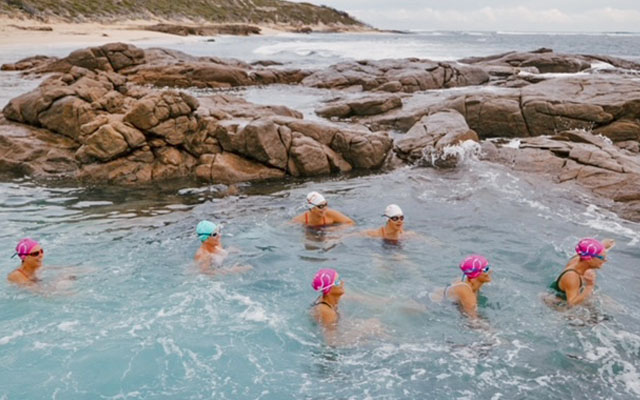
Swimming Women offers a tour that comprises scenic swims in rock pools, rivers, and the Indian Ocean
“It aligns with the global trend of inclusivity and accessible tourism for all – including LGBTI, people living with accessibility needs and people seeking exclusive experiences,” she added.
Among the new offerings is a Bardi and Jawi Cultural Experience, on the Dampier Peninsula north of Broome. It invites women to explore the ‘secret women’s business’ of local indigenous women through activities like fishing, oystering, and bush tucker gathering. The four-night experience provides an immersive look into the roles and skills of indigenous women.
Another product is the Reddell Beach Walk and Talk Experiences by a local elder from Jarndu Ngaank Tours. Guests are introduced to significant cultural ceremonies, including a Welcome to Country, Smoking Ceremony, and Water Ceremony designed to blend education with personal healing and well-being through cultural insights.
In Margaret River, Swimming Women has expanded its offerings with a tour that takes participants through scenic swims in rock pools, rivers, and the Indian Ocean, exploring unique aquatic spots with regional stories and nourishing food.
The fourth tour is a Yorgars basket-weaving workshop which also promotes female empowerment through artistic expression through understanding the matriarchal legacies of the indigenous Nyungar people.
These developments were highlighted at a media event where nearly 80 international media members were updated on the latest tourism developments across Australia, before the launch of the Australian Tourism Exchange 2024 in Melbourne today (May 20).
This year’s event has attracted over 1,500 seller delegates and 700 global buyers, marking a 10 per cent increase in buyer participation from last year.
The Apurva Kempinski Bali has become the first hotel in Indonesia to be awarded the Global Sustainable Tourism Council (GSTC) Certification.
This certification provides guidance for sustainability standards in the travel and tourism sectors which support the four pillars: Sustainable Management, Social Impact, Cultural and Community Preservation, and Environmental Stewardship.
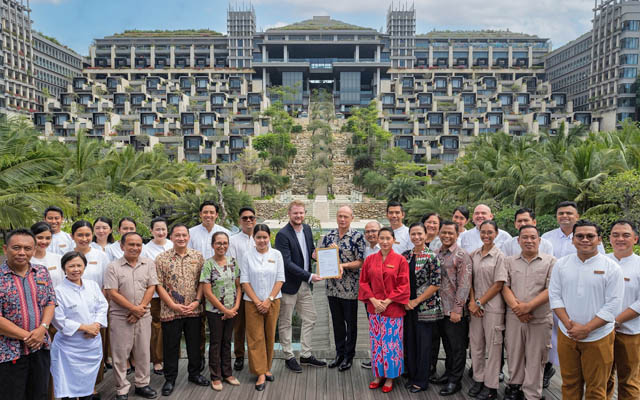
The Apurva Kempinski Bali is the first hotel in Indonesia to receive the GSTC Certification
The rigorous audit by the GSTC’s appointed certification body, Control Union, highlighted the Indonesian resort’s key criteria, including effective sustainability management, initiatives that maximise social and economic benefits for the local community, focus on preservation of cultural heritage, and commitment to reducing the property’s environmental footprint through various sustainability initiatives such as a hydroponic rooftop garden, waste management, electric vehicles, and more.
To further emphasise its dedication to climate neutrality, the resort partnered with Eco-Tourism Bali to launch the mangrove planting programme, beginning with the planting of 1,000 seeds.
“At our resort, we continually strive to innovate and find new ways to drive sustainability forward in the hospitality industry. It is truly an honour for us to be the first hotel in Indonesia to receive the prestigious GSTC certification,” shared Vincent Guironnet, general manager, The Apurva Kempinski Bali.
“We remain dedicated to creating impactful change while delivering exceptional experiences to our guests, and shaping a more sustainable future for generations to come.”
Trip.com Group has partnered with independent online booking and distribution platform Rezdy to enhance connectivity between tour and activity operators, and travellers worldwide.
By harnessing Rezdy’s API integration, providers within the Trip.com Group ecosystem will have access to connect and promote their tours to end customers in real-time – automating pricing updates, availability, and content through this API.
This partnership will unlock new travel options for Trip.com Group users, such as whale-watching
This integration simplifies overall operations for operators, eliminating the need to create updates across multiple channels, and ensures that end-users of Trip.com Group have access to the latest offerings and best deals.
Through this partnership, Rezdy operators of all sizes will be able to tap into Trip.com Group’s vast customer base across Asia, Oceania, North America, Europe, and beyond. It will also unlock fresh travel options for Trip.com Group users, such as cruising in the Great Barrier Reef region, whale-watching, parachuting from a plane, and more.
Chase Liu, general manager of tours and tickets overseas, Trip.com Group, shared: “Enhancing our connectivity with local tour and activity partners with the help of Rezdy offers exciting new ways for travellers to explore their destinations.”
“Advanced reservation technology is revolutionising the travel industry by automating processes for operators and resellers, fostering growth and efficiency through enhanced connectivity,” added Azra Ljaljic, vice president of distribution at Rezdy.
Launched in May this year, all inbound travellers to Singapore can now use the automated lanes at Changi Airport to clear immigration without any prior enrolment in the system.
This makes Singapore among the first in the world to introduce passport-free and contactless immigration clearance, a goal the city-state has set to achieve by the end of 2024.
All foreigners visiting Singapore can now use the automated immigration lanes at Changi Airport (Photo: Fotos593)
As part of the Immigration and Checkpoints Authority’s (ICA) new clearance concept announced in 2019, which aims to provide faster and more secure immigration clearance, the system will be able to clear travellers using facial and iris scanning.
Previously, only Singapore residents and passport holders from 60 jurisdictions were allowed to use the automated lanes. In 2023, more than 160 automated lanes were installed, with another 230 lanes to be set up this year. ICA intends to install about 800 such lanes across all of Singapore’s checkpoints by 2026.
Aside from Changi Airport, Singapore residents and all departing travellers will be able to enjoy contactless immigration clearance at Changi and Seletar airports, as well as Marina Bay Cruise Centre, by the end of the year.
Tribe Auckland Fort Street is on track to open its doors this summer, and will become the brand’s first address in New Zealand.
Located on Fort Street, just a stone’s throw from central Britomart and the Commercial Bay precinct, the hotel will offer 60 compact guestrooms featuring the latest technologies, a lobby bar, terrace, and social hub.
Tribe Auckland Fort Street will offer accommodation and collaborative spaces, such as the Social Lounge, pictured
Commenting on the launch, Accor Pacific COO PM&E, Adrian Williams, said: “Today’s travellers seek simplicity, affordability, and connectivity in a design-led environment. They know that comfort and fair prices can co-exist and that’s exactly what Tribe hotels offer — spaces that are smart, stylish and comfortable, at a great price.
“We know that Tribe will resonate both with domestic and international guests in New Zealand and look forward to debuting the brand’s first address here.”
Plaza Premium Group (PPG) will introduce the City Terminal by Plaza Premium Lounge in Osaka’s Umeda City in Japan this summer.
A joint venture between PPG and JWIDE, the City Terminal is the first-of-its-kind from Plaza Premium Group. The new opening also extends PPG’s presence in the Japanese market, following the launch of Plaza Premium Lounge Nagoya in 2023 at Chubu Centrair International Airport.
The City Terminal in the heart of Osaka will serve as a one-stop-shop for travellers when opened this summer
When operational, the City Terminal will serve as a one-stop-shop where travellers can enjoy a lounge, baggage delivery and transportation, travel concierge, foreign exchange, and more.
Mei Mei Song, director of global brands and product transformation, PPG, said: “Japan is a key travel route to Hong Kong, where we are located, so that means travellers often do short trips to Japan – but as the flight times and check-in times are often not perfectly in sync, there is a lot of ‘wasted time’ in the process that can be better spent exploring the culture and tasting Japan… these gaps in the journey can be resolved with our lounge and concierge services in town, making the experience more seamless.”
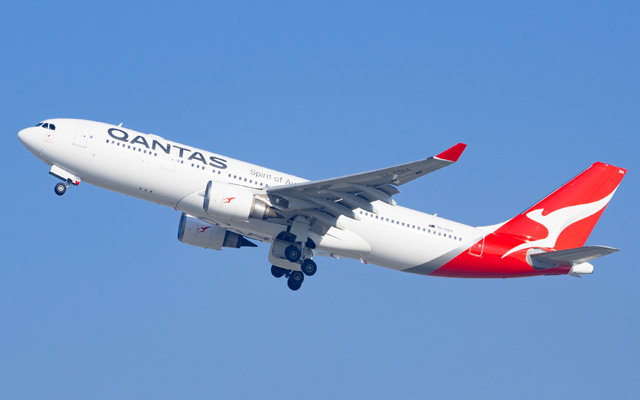
Los Angeles, CA- 8 Dec 2021: A Qantas A330 departing Los Angeles International Airport heading back home to Australia.
Qantas will launch a new route from Manila with direct flights to Brisbane in Queensland, Australia from October 28.
The flights will operate four days per week with the Airbus A330 aircraft which features 27 Business Class suites in 1-2-1 configuration, with each suite featuring direct aisle access and converting into a lie-flat bed.
Qantas’ new Manila-Brisbane service will commence end-October
The new service will complement Qantas’ existing daily service to Sydney and will add more than 100,000 seats between the Philippines and Australia each year.
In addition, Qantas will introduce ‘fast and free’ Wi-Fi across its existing fleet of international aircraft, including Airbus A330 aircraft. The service will be progressively introduced on Qantas flights between Manila and Australia from next year.
A novel Porsche experience venue, new dining and entertainment destinations, and popular-culture attractions are among the many fresh tourism draws that have been lined up for visitors to Singapore and locals alike.
Starting the end of May, Singapore will see new dining, arts, entertainment and retail facilities mushrooming on the grounds of the former Nan Chiau High School, which is being transformed by The Lo & Behold Group into a vibrant and creative cluster for locals and visitors to enjoy.
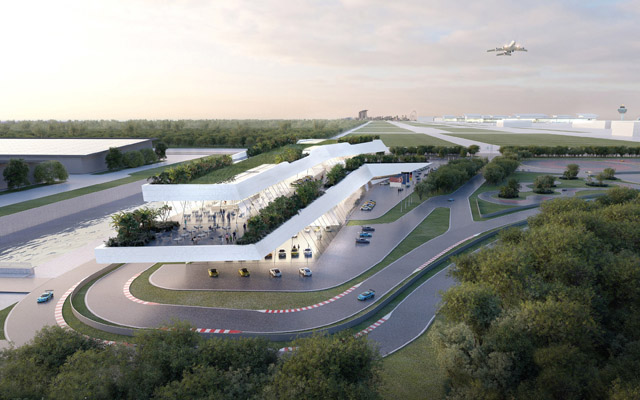
An impression of the new Porsche Experience Centre Singapore, which will open in Changi by 2027
The riverside destination, CQ @ Clarke Quay, has also been revitalised, launching on April 26 with a new positioning that underlines its all-day welcome. An asset enhancement initiative has expanded the destination’s range of day activities and nightlife attractions for locals and tourists. There are now about 60 dining, retail and lifestyle concepts in CQ @ Clarke Quay, half of which are new to the destination, such as Swee Lee Clarke Quay, which houses a bar and café, an artist lounge, vinyl listening stations, a creator corner with music editing set-ups, and a large hall that doubles as a dining space and performance venue; and Home Singapore, where brunch is served in the day and live music flows out at sundown. More dining venues and activity centres will launch in the coming months.
Later this year, the ArtScience Museum at the Marina Bay Sands will unveil The World of Studio Ghibli, an immersive exhibition celebrating some of the studio’s most iconic animation films while Harry Potter fans can head to Resorts World Sentosa to relive his enchanted journey in life through The Harry Potter: Visions of Magic, an interactive immersive experience presented by NEON and Universal.
A highlight in Singapore’s attraction pipeline is the Porsche Experience Centre Singapore, which will open in Changi by 2027, next to the Changi Exhibition Centre and 20 minutes from Changi Airport. It will be the world’s first regional Porsche Experience Centre, featuring a dynamic handling track over two kilometres in length for demonstrating the prowess of two- and four-door Porsche sports cars, an aftersales facility, and a range of activities for families and experiences for car enthusiasts both locally and within the South-east Asian region.
Meanwhile, two MoUs were inked last week to reflect deeper commitment among partners to enliven Singapore’s Marina Bay and Sentosa precincts.
Further, Singapore Tourism Board (STB) will issue a call in the coming months for a tender for the development of a wellness attraction at the southern coast of Singapore, on a plot located close to the Marina Barrage and Gardens by the Bay.
Melissa Ow, chief executive of STB, said this development “will enable Singapore to capture new opportunities in the wellness travel space and contribute towards greater vibrancy of the Marina South precinct”.
“While details for this tender will only be revealed later, we hope that this would be an attraction that offers a myriad of different wellness experiences, such as therapeutic arts, light-and-frequency-based types of therapy, complimentary health facilities, and indoor and outdoor water- and equipment-based types of exercises. I think this will allow Singapore to tap into the global wellness movement,” she shared.
These developments will further augment the city-state’s tourism offerings, which have continued to evolve and advance as Singapore works towards its Tourism 2040 goals, of which one vision is for the country to be a world-class destination with diverse, unique and inspiring experiences for visitors.
Singapore’s two integrated resorts announced expansion plans earlier on. Resorts World Sentosa will present Illumination’s Minion Land at Universal Studios Singapore and the new Singapore Oceanarium, an expansion of the S.E.A. Aquarium. Marina Bay Sands is adding on another tower and a 15,000-seat entertainment arena, which will be ready in July 2029.
These new and refreshed activities and experiences are as much meant for Singapore residents as they are for tourists, Ow told TTG Asia.
“It was great to see this great outpouring of love from domestic visitors for our tourism businesses during the pandemic. Locals have continued to embrace and participate in many of the tourism, leisure and lifestyle activities that our industry partners have put out. This pride in our local offerings will remain, and I hope more of our new stakeholders and partners will bear in mind and think of the accessibility of their products and services to our domestic audience,” said Ow.
The Singapore Tourism Board (STB) and Google will be expanding on its partnership to create more Augmented Reality (AR) experiences, which will be directly available on Google Maps for the first time.
This announcement was made during Google I/O 2024, the tech company’s annual developer conference, held on May 14.
STB and Google will create more AR experiences on Google Maps, like the Supertree Grove at Gardens by the Bay viewed remotely via Street View, pictured
STB is one of two institutions globally to join a pilot programme that will bring immersive AR experiences in Singapore directly into Google Maps later this summer.
This partnership builds upon the success of Merli’s Immersive Adventure – an innovative AR tour to six stops around Singapore through STB’s Visit Singapore Travel Guide app launched in January this year.
As part of this pilot, STB will continue to use Google’s ARCore and Geospatial Creator to develop new location-based AR experiences. Unlike before when STB’s AR experiences were made available only on its travel app, these new AR experiences can soon be discovered and enjoyed entirely within the Google Maps mobile app.
Moreover, STB has also onboarded over a dozen other tourism stakeholders in Singapore to join the pilot, who themselves will also develop location-based AR experiences. These stakeholders include retail malls along Singapore’s Orchard Road shopping belt, local heritage businesses in Chinatown, and popular museums and attractions.
Together, there will be 30 places of interests with AR experiences, creating an immersive journey across key tourism precincts in Singapore, featuring places like Chinatown, the Supertree Grove at Gardens by the Bay, Sentosa Sensoryscape, and more.
With this expansion, the AR content will now be visible remotely via Street View on the Google Maps mobile app for a seamless and accessible experience regardless of location. Users near the landmarks can also discover the AR content on their mobile devices by scanning their surroundings using Lens in Maps, as it overlays the physical surroundings in the real world. This will be helpful for visitors planning their trips to Singapore, and navigating the island through AR tours when they are in the country.
STB plans to further grow the number of location-based AR experiences in Google Maps beyond 30, building on its goal of making Singapore the world’s first “AR City” in Google Maps.
Eric Lai, group product manager, AR, Google, said: “Through location-based AR experiences, we’re making it more intuitive for over a billion users to discover this iconic city in a way like never before. This is just the beginning of a journey that will reshape how we explore the world.”
Simon Ang, director, The Collaboratory, STB, said: “This pilot greatly benefits local businesses, who can leverage AR to tell different stories over the same spaces, and have their content discoverable and accessible on Google Maps. It also benefits travellers as it aids their discovery of new places of interest, and enriches them with a deeper understanding of Singapore’s rich history and culture through interactive storytelling.”












A novel Porsche experience venue, new dining and entertainment destinations, and popular-culture attractions are among the many fresh tourism draws that have been lined up for visitors to Singapore and locals alike.
Starting the end of May, Singapore will see new dining, arts, entertainment and retail facilities mushrooming on the grounds of the former Nan Chiau High School, which is being transformed by The Lo & Behold Group into a vibrant and creative cluster for locals and visitors to enjoy.
The riverside destination, CQ @ Clarke Quay, has also been revitalised, launching on April 26 with a new positioning that underlines its all-day welcome. An asset enhancement initiative has expanded the destination’s range of day activities and nightlife attractions for locals and tourists. There are now about 60 dining, retail and lifestyle concepts in CQ @ Clarke Quay, half of which are new to the destination, such as Swee Lee Clarke Quay, which houses a bar and café, an artist lounge, vinyl listening stations, a creator corner with music editing set-ups, and a large hall that doubles as a dining space and performance venue; and Home Singapore, where brunch is served in the day and live music flows out at sundown. More dining venues and activity centres will launch in the coming months.
Later this year, the ArtScience Museum at the Marina Bay Sands will unveil The World of Studio Ghibli, an immersive exhibition celebrating some of the studio’s most iconic animation films while Harry Potter fans can head to Resorts World Sentosa to relive his enchanted journey in life through The Harry Potter: Visions of Magic, an interactive immersive experience presented by NEON and Universal.
A highlight in Singapore’s attraction pipeline is the Porsche Experience Centre Singapore, which will open in Changi by 2027, next to the Changi Exhibition Centre and 20 minutes from Changi Airport. It will be the world’s first regional Porsche Experience Centre, featuring a dynamic handling track over two kilometres in length for demonstrating the prowess of two- and four-door Porsche sports cars, an aftersales facility, and a range of activities for families and experiences for car enthusiasts both locally and within the South-east Asian region.
Meanwhile, two MoUs were inked last week to reflect deeper commitment among partners to enliven Singapore’s Marina Bay and Sentosa precincts.
Further, Singapore Tourism Board (STB) will issue a call in the coming months for a tender for the development of a wellness attraction at the southern coast of Singapore, on a plot located close to the Marina Barrage and Gardens by the Bay.
Melissa Ow, chief executive of STB, said this development “will enable Singapore to capture new opportunities in the wellness travel space and contribute towards greater vibrancy of the Marina South precinct”.
“While details for this tender will only be revealed later, we hope that this would be an attraction that offers a myriad of different wellness experiences, such as therapeutic arts, light-and-frequency-based types of therapy, complimentary health facilities, and indoor and outdoor water- and equipment-based types of exercises. I think this will allow Singapore to tap into the global wellness movement,” she shared.
These developments will further augment the city-state’s tourism offerings, which have continued to evolve and advance as Singapore works towards its Tourism 2040 goals, of which one vision is for the country to be a world-class destination with diverse, unique and inspiring experiences for visitors.
Singapore’s two integrated resorts announced expansion plans earlier on. Resorts World Sentosa will present Illumination’s Minion Land at Universal Studios Singapore and the new Singapore Oceanarium, an expansion of the S.E.A. Aquarium. Marina Bay Sands is adding on another tower and a 15,000-seat entertainment arena, which will be ready in July 2029.
These new and refreshed activities and experiences are as much meant for Singapore residents as they are for tourists, Ow told TTG Asia.
“It was great to see this great outpouring of love from domestic visitors for our tourism businesses during the pandemic. Locals have continued to embrace and participate in many of the tourism, leisure and lifestyle activities that our industry partners have put out. This pride in our local offerings will remain, and I hope more of our new stakeholders and partners will bear in mind and think of the accessibility of their products and services to our domestic audience,” said Ow.