

AI-driven travel rewards mobile platform launches in Singapore
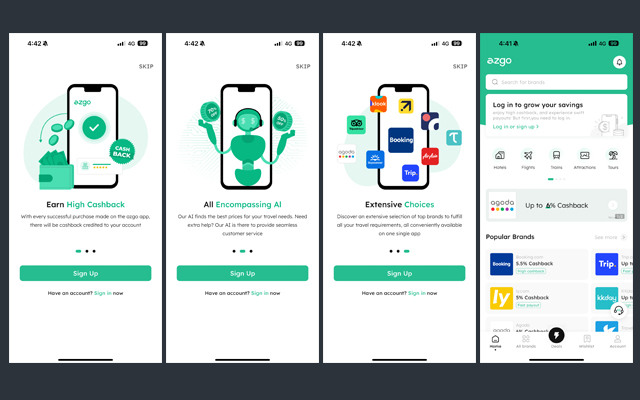
Azgo, an AI-powered travel rewards platform, has launched in Singapore, enabling holiday-goers in the city-state the opportunity to enjoy affordable travel deals at close to 500 global merchants.
These include popular airlines, hotel accommodation, airline tickets, land transfers and in-market tour operators, Wi-Fi, overseas SIM cards and trusted international travel insurance brands.
Leveraging artificial intelligence (AI) to drive intuitive navigation, the Azgo platform lets users effortlessly search for what they need to make their desired vacations happen. From search intent to purchase to checkout, the platform’s intuitive user interface also keeps track of an individual’s search pattern and history for analysis and enhanced recommendations.
In addition to its user-friendly interface, Azgo’s diverse range of travel-related products and services empowers users to seamlessly plan their travels with affordable deals, where they can also earn, consolidate and stack their cashback with every purchase for subsequent trips – this helps travellers maximise their resources, make informed decisions and mitigate financial stress.
Azgo’s entry into Singapore comes at a time where global travel is set to exceed, with global passenger traffic poised to surpass pre-pandemic levels at 9.7 billion by end of the year. At the same time, inbound visitor footfall to Singapore is expected to hit 15 million, ringing in approximately S$26 billion (US$19.4 billion) in tourism receipts, according to the Singapore Tourism Board.
Moreover, Singapore is a hub for eCommerce, with its tech-savvy generation, pervasive, ultra-highspeed networks and infocommunication technology infrastructure, along with the government’s direction in embracing digitalisation to become a Smart Nation. With 99 per cent of the Singaporean population between 18 and 59 owning a smartphone and almost all households having internet access, the city-state is an ideal hotbed for platforms and digitally-pervasive technologies.
Yan Yuan Sng, country head, Azgo Singapore, commented: “Entering Singapore is an exciting prospect for the team at Azgo. The vast potential of the consumer landscape and maturity of Singaporeans seeking free, independent travelling experiences – coupled with Singapore’s dedicated efforts to foster its growth – highlights a pronounced demand for increased flexibility and enhanced convenience in both online shopping and travelling spaces. We see this as encouraging as it empowers us to dive deeper and discover more opportunities within the ever-growing e-commerce and tourism landscape.”
Singapore Airlines enhances Premium Economy in-flight experience
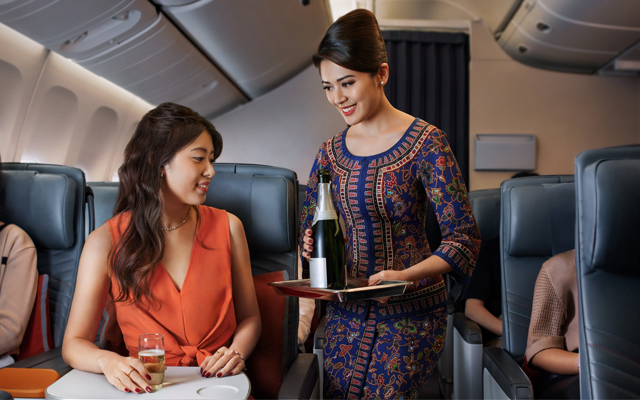
Singapore Airlines (SIA) has unveiled its revamped Premium Economy Class in-flight experience, which includes an improved and expanded selection of F&B options, as well as a new amenity kit, available on flights from March 31 this year.
Customers travelling in Premium Economy Class will be offered a glass of Charles de Cazanove Brut Tradition NV champagne shortly after take-off, and are offered a wide variety of meals, snacks, and beverage options – all of which will be served in custom-made porcelain Premium Economy Class service ware.
SIA has developed over 200 new appetisers, main courses, and desserts as part of this expansion of the Premium Economy Class in-flight meals. Each meal will consist of a seasonal appetiser, main course (either international or Asian cuisine), bread, dessert, and cheese and crackers, all served on a full-sized tray.
Customers may also choose from an expanded Book the Cook menu, which features up to 20 dishes available on rotation, for pre-order at least 24 hours before departure.
Complementing the meals are a selection of wines and Champagne, curated by SIA’s panel of wine experts exclusively for the Premium Economy Class cabin, along with an extensive selection of spirits including whisky, gin, vodka, signature cocktails like the Singapore Sling, and a variety of beers.
For the non-alcoholic beverage selection, peppermint and chamomile teas, as well as hot chocolate from Cadbury, have been added to the existing soft drink, fruit juice, coffee, and tea options. More snack choices are also available.
On flights longer than seven hours, customers can request for the all-new Out of the Woods amenity kit, which features eco-friendly and sustainable lifestyle products and are designed exclusively for Premium Economy Class customers.
Wine, dine and play
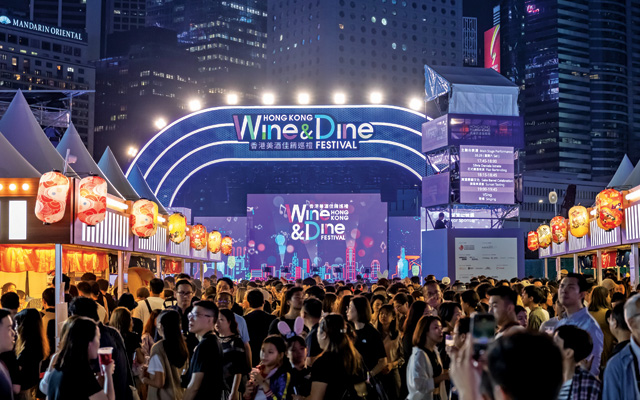
Determined to bring back the shine to Hong Kong’s night-time economy, the government launched the Night Vibes Hong Kong campaign in September 2023 to inspire different sectors of the community to create events that entice residents and visitors to head out for fun after sunset.
In support of this goal, the Hong Kong Tourism Board (HKTB) curated its own set of night-life programmes. From November 2023 to March 31, 2024, visitors can pick up Hong Kong Night Treats dining vouchers to be used at participating bars and Quality Tourism Service Scheme-recognised restaurants. Some one million vouchers, each worth HK$100 (US$12.70) each, have been distributed so far.
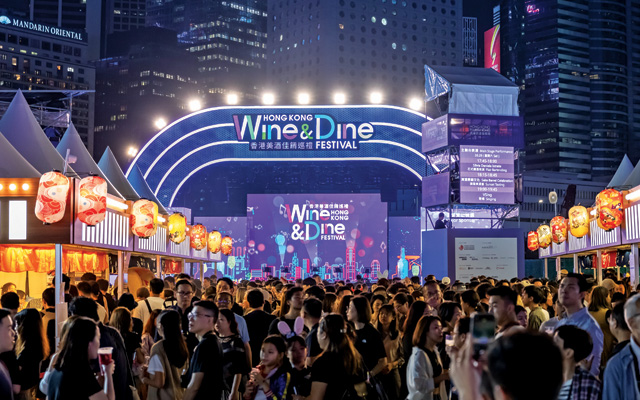
HKTB’s Hong Kong Night Bus Tour, which ended its run in January 2024, gave visitors a discounted ride on three designated routes that showed off the destination’s famous attractions and landmarks at night.
This effort continues into the new year, and will see Hong Kong’s Home and Youth Affairs Bureau collaborating with district offices and councils on activities in 1H2024 that highlight regional characteristics and traditional local culture. A resulting project is the Day x Night Vibes @18 Districts initiative, announced on January 9.
Chief secretary for administration Eric Chan Kwok-ki explained that Day x Night Vibes @18 Districts initiative would comprise carnivals, art exhibitions, music performances, and sports experiences for “everyone, whether they are with family or friends”. Activities will be scheduled until May 2024.
Private sector players are also putting their back into reviving Hong Kong’s night scene.
Nina Hospitality has come up with new F&B offerings to be enjoyed as night falls. Guests of Lodgewood Mongkok Hotel are welcome to a canton pot dinner that features fresh local ingredients. At Nina Hotel Causeway Bay’s Ah Yung Kitchen, a pairing menu has been created in partnership with Martell.
Nina Hospitality’s managing director, Simon Manning, said: “Night Vibes Hong Kong helps to differentiate Hong Kong from other destinations and encourages more visitors to choose our city as their travel destination.
“The night events and activities showcase the rich culture and diversity of Hong Kong, giving tourists a deeper understanding and appreciation of our city. This can lead to longer stays and repeat visits, which ultimately boosts the tourism industry and benefits businesses like Nina Hospitality.”
Luc Bollen, general manager of The Park Lane Hong Kong, a Pullman Hotel, is also appreciative of the Night Vibes Hong Kong campaign, saying it has greatly benefitted both inbound tourism and his hotel.
Occupancy at his hotel in 4Q2023 was over 90 per cent.
He said: “Highlighting Hong Kong’s vibrant cultural offerings after dark attracts the growing market of travellers seeking authentic experiences.”
HKTB data shows an encouraging return of international visitors. Between January and November 2023, the destination recorded a 6,672 per cent growth in arrivals over the same period in 2022. Visitor arrivals from mainland China alone reached 23 million.
Bollen said: “A lot of the rebound needs to be attributed to the efforts of the HKTB.”
“We expect to see increased bookings as events bring international guests back to the city. We hope that more high-calibre events can return to Hong Kong,” he remarked.
The Park Lane Hong Kong, a Pullman Hotel will host its own line-up, such as CSR parties and a 50th anniversary finale party in 4Q2024 that will highlight the hotel’s signature offerings.
On the calendar so far are the Timeless Flavours cocktail series at Skye Rooftop Bar & Dining, two special dinners hosted by Michelin-star chef Thierry Drapeau, and more.
While much is being done to enliven Hong Kong’s night scene, Gunther Homerlein, general manager/owner of Destination China, said it was also crucial that travellers in the longhaul markets were aware of the initiatives.
Homerlein told TTG Asia: “Any initiative that shows a positive event and creates good press is needed at this point. But if you asked the average travel agent in the UK, for instance, he has no idea (of the night-time campaign and programmes).
“The first thing we must do is dispel misinformation about Hong Kong and promote the city’s easy accessibility.”
New rides in the sky
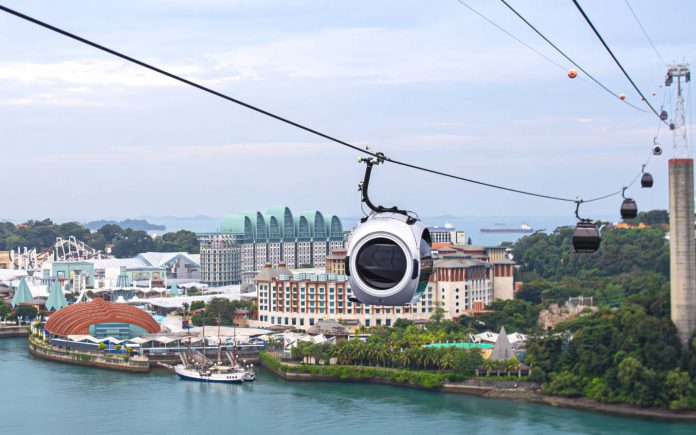
Look out at the Singapore skyline around the Southern coast and you will soon see futuristic spheres gliding by. These are SkyOrb Cabins, Singapore Cable Car’s latest generation of cable cars.
Aptly named as such, these spherical cabins with a cool chrome exterior are unveiled on March 15 evening as part of the attraction’s 50th anniversary celebrations this year. First rides will begin on March 20.
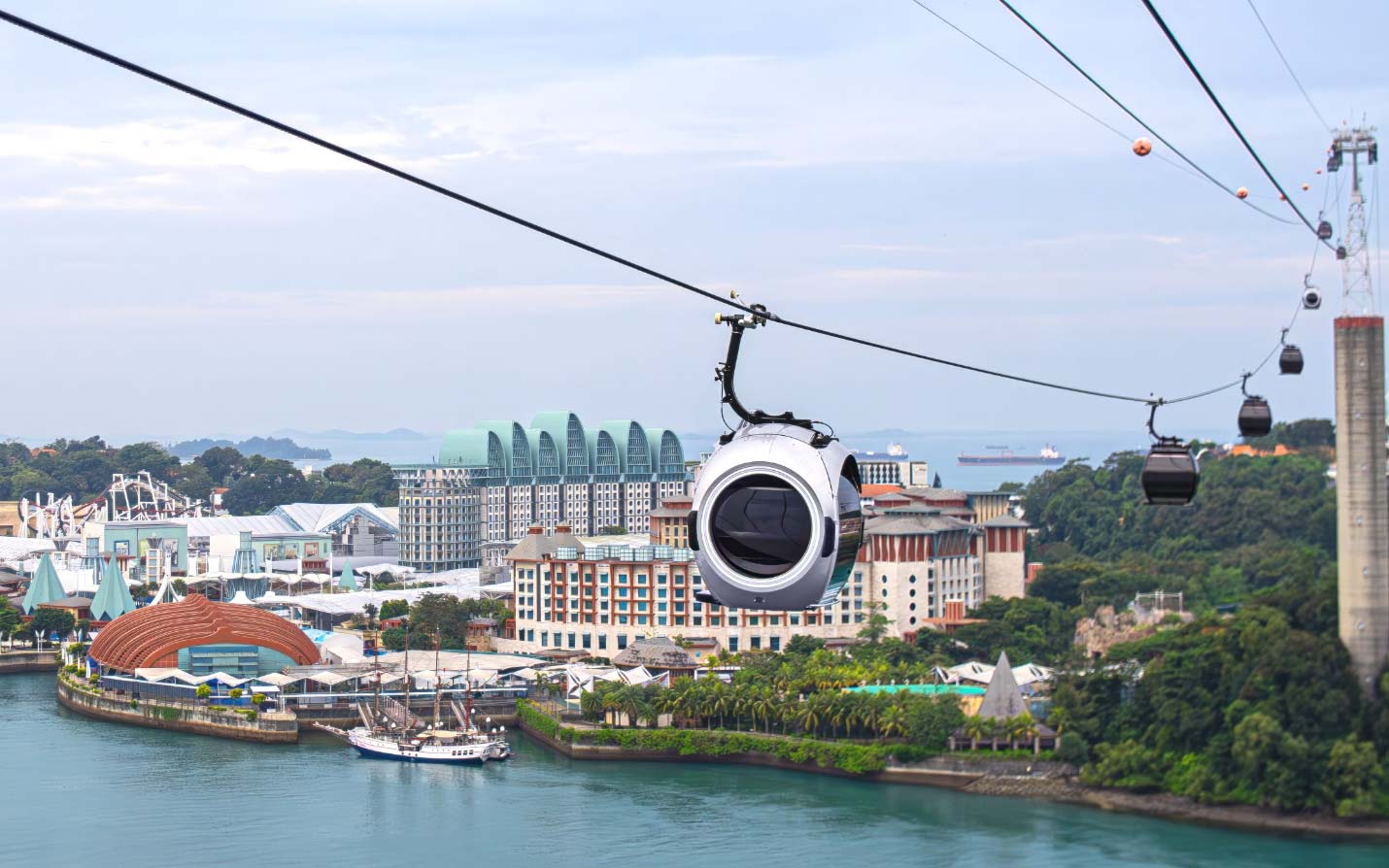
With glass-bottomed floors, passengers are promised a clear view of their surroundings as they glide through stations at Mount Faber, HarbourFront and Sentosa island, at 100 metres above sea level. The new cabins also boast enhanced ventilation.
From afar and against a darkened sky, the SkyOrb Cabins stand out with their colour-changing lighted rings around the windows.
There are seven of such SkyOrb cabins, and they join Singapore Cable Car’s existing fleet of cabins, which now number more than 70.
Cable Car Sky Pass (unlimited rides or round trip) and Mount Faber Line (round trip) ticket holders, as well as Faber Licence members, can upgrade one way of their round trip (between Mount Faber and Sentosa cable car stations) to a SkyOrb Cabin experience for an additional S$15 (US$11.22) per person on weekdays and S$20 per person on weekends and Public Holidays. This is for a single boarding.
Tickets can be purchased at the ticketing counters at Mount Faber and Sentosa stations.
Click here for more information.
Time to shine

 Can you bring us back to how the company overcame the pandemic business disruption to emerge stronger?
It was the unwavering team spirit demonstrated by all my colleagues during the darkest days of the pandemic. Despite many challenges, our team stood together, working tirelessly to navigate the crisis.
Our history is testament to our resilience – from overcoming SARS (the Severe Acute Respiratory syndrome outbreak in 2003) to weathering the Global Financial Crisis (2007 to 2008) and Covid-19, where each challenge has only made us stronger. Our cohesive spirit allowed us to unite when it truly mattered, and together, we steered the company through its toughest times without hesitation.
What steps did Trip.com Group take to save the business?
Effective leadership is paramount during crises. The company took immediate action at the onset of the pandemic through various initiatives, including providing our customers with full refunds without knowing if our partners would pay us back, as well as substantial financial support for our partners, demonstrating our guiding principle of Customers first, Partners second, Trip.com Group third.
We launched campaigns such as our BOSS Live series of livestream sessions and the Travel On initiative to provide vital support to partners, and rolled out a series of tailored travel products and services to enable and inspire travel. Through these efforts and our collaboration with partners from around the world, the global travel industry gradually recovered.
Today, travel has resumed, travellers are venturing out and exploring the world again, and Trip.com Group is stronger and better positioned to capitalise on the recovery of the global tourism industry.
As the WTTC recently noted, the global travel and tourism sector is on track to exceed 2019 levels this year. Tourist-friendly measures such as the implementation of visa-free travel, which has been increasingly common especially with Asian countries, will speed up the recovery of international travel.
China, for example, has removed visa restrictions for visitors from more than 10 countries since June 2023 alone, and there have also been visa exemptions announced for Chinese travellers by countries including Singapore, Thailand and Malaysia. There is certainly lots of room for growth, especially for China-inbound travel, and we are working with many partners on various initiatives – including the Nihao! China campaign – to bring more tourists to China.
What is the role of technology in your company’s innovation and future-proofing?
Throughout the pandemic, we continued investing in areas that would help us in the longer term, such as in technology. We have already seen the fruits of this investment, with the integration of technology such as AI in some of our workflows, including customer service, to increase efficiency. AI freed up our customer service colleagues to focus on more complex requests, reinforcing our commitment to customer satisfaction.
We also introduced an AI travel assistant, TripGenie, last year, which has helped many of our customers plan itineraries and recommend bookings for their trips. TripGenie has produced remarkable results since its introduction, enhancing user engagement and overall service effectiveness.
We capitalised on AI to introduce our curated AI-enabled lists that address users’ diverse needs and preferences, providing real-time updates on travel trends, prices, and top-ranked hotels, flights, and attractions.
More recently, we launched our Trip.Vision app, designed to leverage the advanced capabilities of Apple’s latest mixed-reality headset, the Apple Vision Pro. Inspired by the idea of providing unique travel experiences even before the first suitcase is packed, Trip.Vision invites users to virtually explore renowned destinations such as Mount Everest, Guilin, the Maldives, Antarctica, and the Sahara Desert through high-quality and realistic panoramas.
As a forward-looking organisation – we believe that vision runs throughout the entire company, we are always looking ahead to see what’s next and to prepare for whatever the future holds.
How has the Chinese traveller changed in the last four years and how do destinations and suppliers have to adapt to meet these changes?
Domestic tourism has been given a big boost, exceeding 2019 levels by some 60 per cent. Mainland China is a massive place, and exploring their own backyard has helped Chinese travellers realise that there are indeed many wonderful sights and experiences they can enjoy without needing to travel outside the country.
There is an industry-wide trend of smaller groups travelling together – it is the same for Chinese travellers, with smaller group tours now being favoured as people prefer to travel with friends or family rather than a huge busload of strangers like before.
We have observed that younger travellers – those born in the 1980s and the 1990s – are increasingly looking to travel for high-quality wellness experiences and event tourism, particularly for concerts and music festivals.
Sustainable tourism is another shift that is picking up steam, with environmental awareness motivating more than 16 million of our customers to choose low-carbon travel options, such as hotels that adhere to sustainable standards.
The group has also prioritised options such as the rental of electronic vehicles and offering flights with lower carbon emissions.
Destinations and suppliers therefore need to look at how they can satisfy these evolving demands. Can I effectively offer different products to different segments? Or do I focus on a specific niche and make a concerted play for tourists in that segment? If I wish to attract a specific type of traveller, am I equipped to do so, and if not, how quickly can I make the necessary changes? These are some important questions that need to be considered.
What is your vision for the company as it turns 25-years-old this year and into the future?
For our anniversary this year, we wish to celebrate the progress we have made in our globalisation drive – we have strengthened our position in Asia, and are still growing internationally beyond Asia as well.
As has been the case for the past 25 years, we remain committed to enhancing customer experience and unlocking value for our partners, and we will continue to strive towards becoming a top travel services provider in the world.
To do this, we aim to strengthen our existing collaborations with our global partners. We are also looking to establish new relationships with partners from around the world whom we have not worked with yet as we grow and deepen our global footprint.
Aside from such partnerships, I also see Trip.com Group continuing to strengthen its reputation as not just a travel company, but also a technology company.
We have been quick to remain at the forefront of new and emerging technologies, as evidenced by our quick adoption of AI last year with TripGenie and our AI-driven initiatives.
We are constantly on the lookout for new ways to harness the power of technology, to keep innovating, stay ahead of the curve and break new ground in our pursuit of the perfect trip for a better world.
We believe tourism can make a big difference to the world – not just by contributing to the global economy and GDP, but also through enhancing mutual understanding, so we will keep doing more to facilitate people-to-people and cultural exchanges through travel.
Our team is committed to a simple mission: while we are sending people further away, we are bringing the world closer.
Singapore deepens investment into Indonesian source market
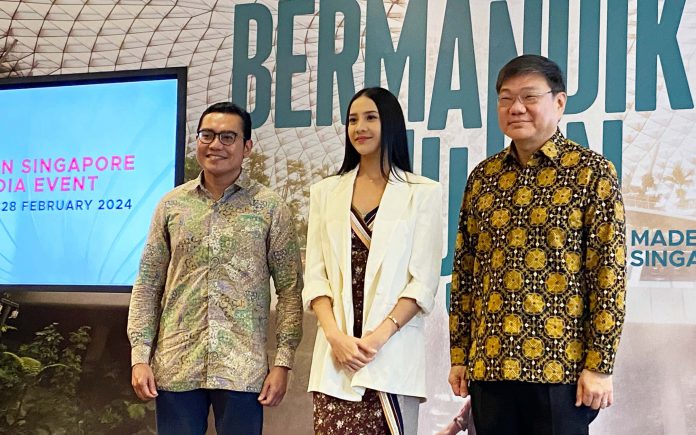
The Singapore Tourism Board (STB) is looking to raise arrivals from Indonesian this year – up from 2.3 million in 2023 – as it gears up destination promotions in more Indonesian cities.
Speaking at the Made in Singapore media event in Jakarta this week, Mohamed Hafez Marican, area director for Singapore Tourism Board in Indonesia, noted that the Indonesian travel market had a huge impact on Singapore’s travel and tourism industry recovery.
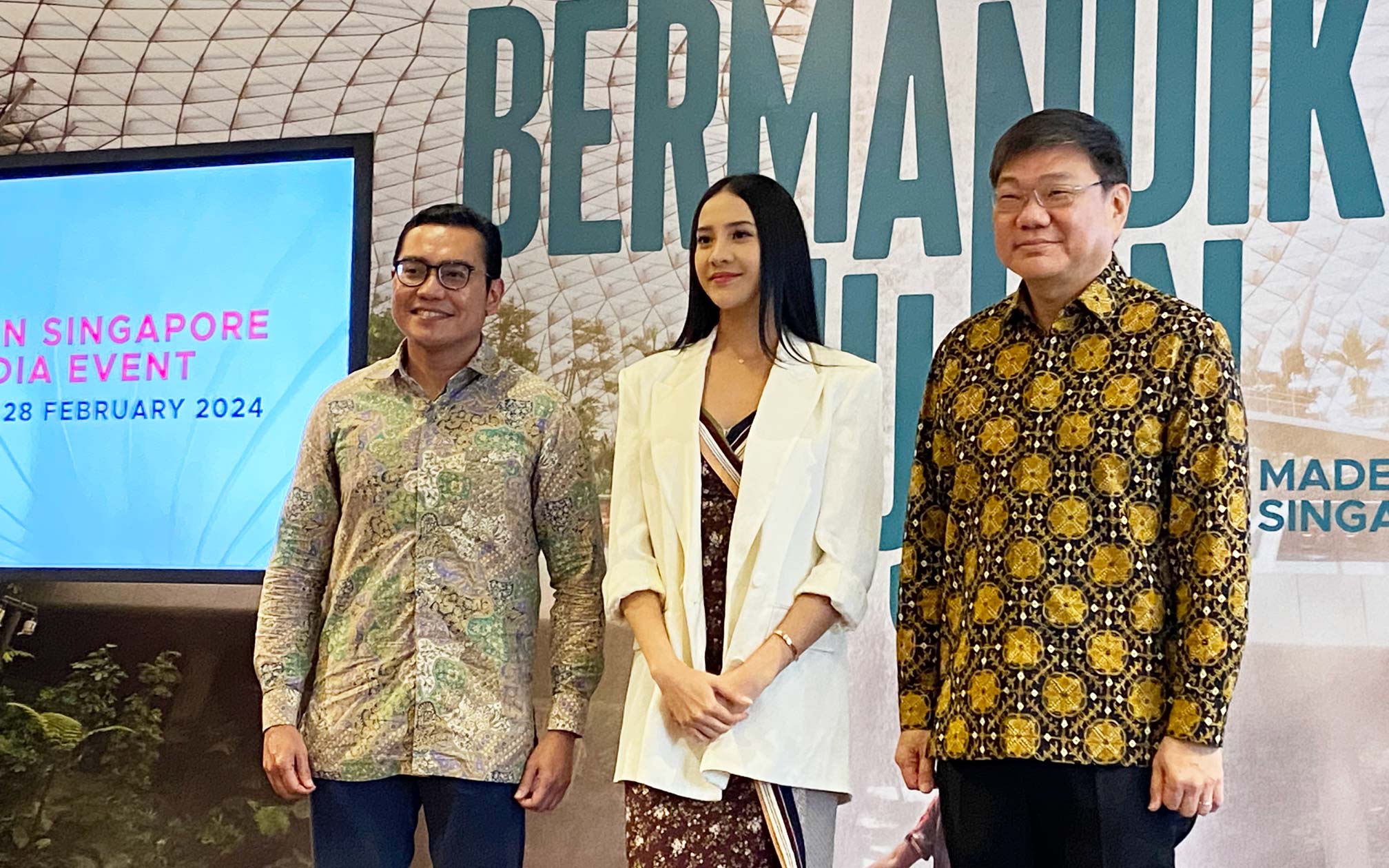
While he said “no specific numbers” have been set as target for 2024, he assured that the STB team aims to “achieve more” than it did in 2023.
To strengthen its positioning as a welcoming, Muslim-friendly destination for Indonesians, STB will take its destination marketing efforts deeper into Indonesia, beyond capital city Jakarta. Activations are planned for Medan, Surabaya, Bandung, and Makassar, including roadshows in Surabaya, Denpasar and Balikpapan, according to Hafez.
“We collaborate with ASITA Pariwisata, the association of Indonesia’s tour and travel companies, and the Indonesian Hajj and Umrah Travel Association (Amphuri) East Java chapter to develop tourism products and establish market presence in East Java and other cities outside Jakarta,” Hafez detailed.
According to Monas Tjahjono, chairman of ASITA Tourism East Java chapter, the collaboration is to introduce Singapore as a friendly destination to Muslims in East Java.
Meanwhile, Amphuri will make Singapore one of the destinations in Umrah-plus packages or as a stopover destination in Umrah/hajj packages.
Monas said: “There is a perception that it is difficult to find halal restaurants and hotels in Singapore. STB and ASITA Pariwisata want to correct this and convey that Singapore is a Muslim-friendly destination.”
ASITA Pariwisata will launch 3D/2N and 4D/3N halal tour packages to Singapore, with visits to Sultan Mosque and Kampong Glam. However, the main highlights will be halal restaurants in popular tourist places such as Orchard Road and Sentosa, remarked Monas.
New products and hidden gems, such as culinary tours of Lau Pa Sat food market and Rumah Toko Warisan Kami, will also be played up.
STB will intensify social media promotions to reach a wider audience and inspire travel through storytelling. Efforts will include collaboration with media and entertainment firms, as well as celebrities.
Editor’s note: The original news copy stated a target of four million arrivals from Indonesia this year, double of 2023’s figure. STB did not state a figure for its target. TTG Asia apologises for the error.
BWH Hotels brings more products to price-conscious travel market
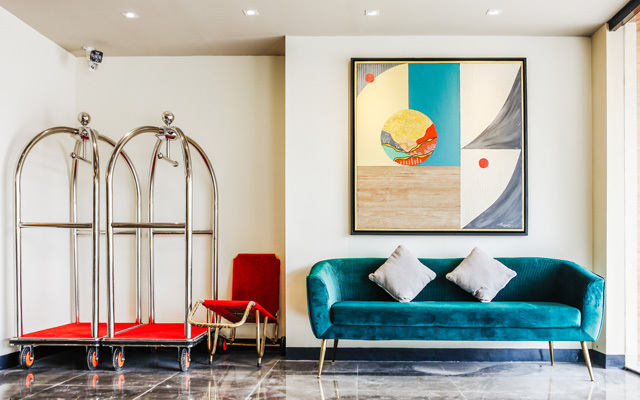
BWH Hotels (BWH) has signed on three new SureStay properties in Australia’s Brisbane and Sydney, expanding its product line for the price-conscious travel market.
Two of the SureStay-branded hotels will occupy converted properties in Sydney’s CBD and St Leonards, and are set to complete later this year.
The third product will bear the SureStay Studio brand – first in market – and be located in Brisbane’s Mount Gravatt. This will be converted from existing residential apartments into two-bedroom accommodation.
Rod Munro, managing director, BWH Hotels Australasia, said: “SureStay Hotels has experienced remarkable growth in recent years and the milestones prove that our premium economy products have quickly become one of the fastest growing brands in the hotel industry. SureStay is resonating with investors as we navigate the current economic crisis. With a strong pipeline and interest from new developers, we look forward to continuing to expand SureStay’s presence across the region.”
“When labour and construction costs are at historical highs, a premium economy brand represents the ideal solution for cost-effective asset repurposing, serving as a gateway to a global brand,” said Danilo Curcuruto, director of development, BWH Hotels Australasia.
“It’s great to see Australia catching up with the appreciation for this underestimated segment, which delivers consistency in performance, flexibility, and a targeted approach to an emerging customer database,” added Curcuruto.
All three are expected to welcome their first guests at the end of 2024.
With their opening, BWH will have eight Sydney properties and five Brisbane properties.
Uniworld expands fleet
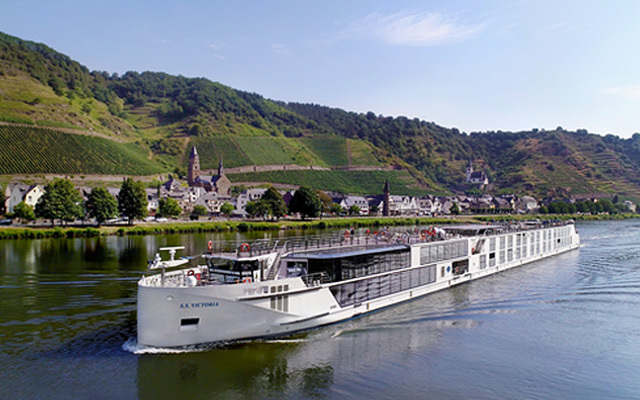
Fans of luxury river cruises should keep their eyes peeled for a new vessel that is set to join Uniworld Boutique River Cruises in 2026 for a European sailing season.
The new-build Super Ship, the S.S. Emilie, is inspired by renowned Austrian painter Gustav Klimt and named after his life partner and muse, Emilie Flöge.
Ellen Bettridge, president and CEO of Uniworld Boutique River Cruises, said in a release: “We’re thrilled to introduce a brand-new ship to our fleet in 2026, just in time to celebrate Uniworld’s 50th anniversary.”
She added that the “outstanding new vessel reaffirms our dedication to providing the best and most luxurious ships on the rivers”.
The S.S. Emilie will join other new Super Ships, including the S.S. Victoria, debuting on the Rhine and Moselle rivers in 2024 and the S.S. Elisabeth, debuting on the Rhine in 2025.
Programme details will be released in time to come.
Malaysia Airlines, Google join hands to boost Malaysia inbound
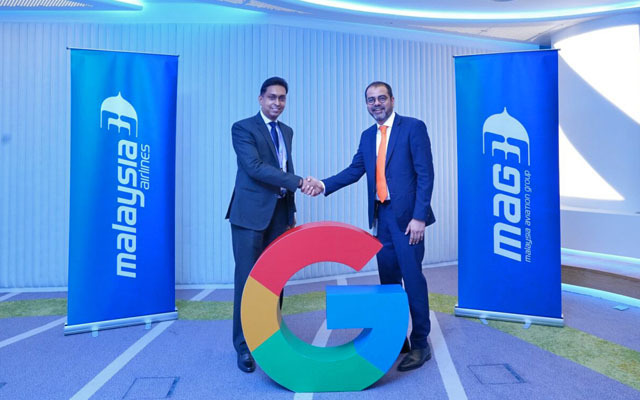
Malaysia Airlines and Google have forged a partnership to accelerate Malaysia’s ascent as a top-tier tourism destination while driving digital evolution within the aviation sector through the power of AI and digital technologies.
The partnership is said to be a significant milestone in Malaysia Airlines’ quest towards digitalising its commercial advancement to stimulate growth and demand from key markets and establish Malaysia as a central hub for international travellers.
By teaming up with Google, the national airline intends to harness cutting-edge AI and digital technologies to enhance its commercial operations, streamline processes, and provide tailored experiences to travellers. It will also utilise various critical product domains, encompassing Google Pay, Google Flights, and AI-powered marketing solutions, to enhance the customer experience.
Dersenish Aresandiran, chief commercial officer of airlines with Malaysia Aviation Group, said in a press release: “By harnessing the power of Google’s technology innovation and expertise, we are confident that we can unlock new opportunities, elevate the travel experience, and strengthen Malaysia’s position as a leading tourism hub in the region, aligning with the government’s vision for Visit Malaysia Year 2026.”
With travel demand set to surpass pre-pandemic levels this year, the airline also plans to leverage innovative solutions to fuel its growth and marketing channels, positioning the airline for substantial network expansion plans this year. Through Google’s AI-powered Performance Max, it will enable Malaysia Airlines to optimise its marketing campaigns, ensuring increased reach, relevance, and ROI in an increasingly competitive travel market.






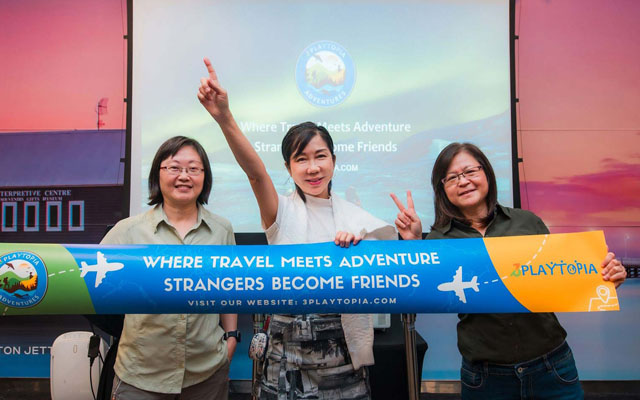
Three avid explorers have come together to form 3Playtopia, a made-in-Singapore community-based platform that allows travellers to turn their best destination discoveries into inspiring itineraries that they will also lead, benefitting other like-minded wanderers.
3Playtopia – where the numeral three represents air, sea, and land as well as you, me and us – targets adventure seekers who are drawn to unique destinations and experiences, from Asia to Africa.
Alicia Seah, one of the founders of 3Playtopia and an experienced travel and tourism marketer based in Singapore, told TTG Asia that the platform is designed for well-travelled individuals who desire programmes out of the ordinary or are transformative as well as those keen to explore but lack travel buddies or time to plan.
The other two founders are Chong Lee Ling, who works in a financial institution and has travelled across 61 countries; and Chew S F, an accomplished IT professional with a profound love for adventure.
Seah, who carries the title, chief of happiness, emphasised the community spirit of 3Playtopia, saying that the company’s slogan was, Where Travel Meets Adventure, Strangers become Friends.
The platform currently lists a number of adventures curated and led by what Seah refers to as “travel-preneurs” – people who are passionate about and familiar with the destination, and who are ready and willing to build and lead a tour. For example, a 12-day Iceland Ring Road Tour is organised by adventurer Daniel Goh.
“These travel-preneurs started off as regular travellers joining our community and then deciding that they want to share their favourite destinations and trips with others too. As more travellers join our tours, more will be sold on our concept and be keen to build and lead their own niche programmes too,” she added.
Aspiring travel-preneurs have to undergo an interview before they are approved and allowed to curate and lead tours.
3Playtopia retails its tours on its website, 3playtopia.com, and via a strategic partnership with EU Holidays, one of Singapore’s biggest outbound travel agencies.
Alan Ang Wee Tat, managing director of EU Holidays, said the partnership was a reflection of the company’s desire for a “diversified portfolio” that allows it to be better prepared “for the future as different types of travel evolve over time”.
“This initiative aligns with our commitment to remaining pertinent and accessible in an increasingly digital world, ensuring that we consistently address the changing preferences of travellers,” he added.
Its latest project is with the Taiwan Visitors Association, where they will jointly craft three trips aimed at showcasing Taiwan’s breath-taking mountains and opportunities for natural adventures.
“Taiwan is already a well-known holiday destination, loved for its vibrant night markets and food culture. However, Taiwan is 70 per cent mountains, which gives it a huge potential to develop mountain holidays and adventure tourism,” explained Seah.
Taiwan Tourism Administration Singapore office expressed strong support for 3Playtopia and its commitment to highlighting the different tourism aspects of Taiwan.
The trips are built for different levels of expertise. Beginners can join the five-day, four-night Secret Hikes of Taipei, which include fun visits to four lively night markets. Intermediate trekkers can join the Dali Datong Trail to explore Taiwan’s last aboriginal villages, such as those inhabited by the Truku people, while enjoying a coastal mountain vista.
For advanced trekkers, the majestic Jade Mountain awaits. Also known as Yu Shan, it rises 3,952m above sea level and is Taiwan’s tallest mountain. This trip will feature a period of preparation, where experienced mountaineer Joanne Soo – who had conquered Mount Everest – will lead activities to build participants’ endurance, guide them on acquiring the right gear, and educate them on trekking etiquette and expectations.
Besides ascending mountains, participants can also partake in a range of activities, such as ATV riding, paragliding, and visits to picturesque flower fields.