


Shenzhen-Zhongshan Bridge commences operations, boosts travel to Hong Kong

The new 24-km Shenzhen-Zhongshan Bridge has cut down the travelling time between Shenzhen and Zhongshan from two hours to 30 minutes, spurring tourism within Greater Bay Area (GBA) and courting more traffic to and from Hong Kong.
Commissioned on June 30, this mega link includes a sea-crossing bridge, a subsea tunnel, artificial islands and an underground interchange, connecting Shenzhen, Zhongshan, and Nansha District of Guangzhou. It also boasts the only direct expressway connecting Shenzhen, Dongguan and Huizhou with Zhuhai, Zhongshan and Jiangmen.

Hong Kong-based Sino Step Travel Service branch manager Wing Chan plans to roll out at least 20 new tour itineraries using the new bridge and expects business to increase by two thirds. She shared that the mass market is their target, and that the one-day tour to Zhongshan has been popular among senior travellers.
“For sure, the new bridge experience will stimulate desire for travel (as well as) more time to explore sightseeing and shopping,” she said. “In addition to Zhongshan city, nearby areas like the western part of Guangdong Province will also benefit (from it).”
She is confident that this route will remain in demand for quite a while, unlike the dissipating Shenzhen shopping tours to Sam’s and Costco that “Hongkongers craved for earlier this year”.
The Hongkong-Zhongshan route is currently operated by Eternal East (E&E) Cross-Border Coach Management. Its deputy chief operating officer, Paul Tse, explained that the route has cut the travel time from Hong Kong to Zhongshan by 45 minutes. The cost of a one-way bus fare has also been lowered from HK$110-120 (US$14-15) to HK$90-$100.
Tse commented: “We have also boosted the frequency of services between both cities – from 26 to 40 times per day. Moreover, we are thankful to have benefitted from the government’s labour importation scheme last month (where) Mainland Chinese bus drivers arrived to alleviate the acute labour shortage.”
To mark the inauguration of the bridge, its sister company E&E Tours had also rolled out a special two-day-one-night Zhongshan tour – all 60 seats were snapped up in an instant.
In addition, tourism stakeholders comprising airline, travel trade associations and hotels paid a visit to the site on June 21 for an inspection.
Travel Industry Council chairman Gianna Hsu hopes more visitors from overseas will adopt multi-destination tourism and visit the GBA via the bridge.
“In the meantime, Mainland Chinese FITs can enjoy a better access to Hong Kong, and we are pleased to see agents proactively preparing various tour programmes by leveraging on this bridge,” noted Hsu.
Singapore’s Sentosa tourism workers to upskill over three years

Sentosa Development Corporation (SDC) and NTUC LearningHub (NTUC LHUB) signed a memorandum of understanding (MoU) on July 4 that will see about 15,000 workers from SDC and partners attend training programmes over three years.
“Through this collaboration with NTUC LearningHub, we aim to enhance the equipping of our workforce with the necessary skills to provide exceptional experiences to our guests, increase productivity of our businesses and bolster the tourism value proposition of Sentosa and Singapore,” said Thien Kwee Eng, CEO of SDC.

The partnership is centred on the formation of the One Sentosa Transformation and Equipping Platform (1-STEP), a “learning framework aimed at accelerating the transformation of Sentosa as a tourism destination through emerging tourism capabilities” said the signatories.
Key areas of focus are customer experience, wellness and regenerative tourism, sustainability, and data and artificial intelligence.
Among the targets are to implement 100 transformative projects and initiatives, engage 2,000 participants over three editions of Sentosa Learning Festival (SLF) and have at least 15 island partners attain and retain two tourism-related certifications such as Certified Event Sustainability and Digital Event Strategist.
1-STEP covers some 200 establishments on Sentosa comprising hotels, attractions and F&B outlets.
Resorts World Sentosa (RWS), which employs 70 per cent of workers on Sentosa, is the main supporting partner.
RWS CEO Tan Hee Teck shared: “The customised training offered by 1-STEP will benefit our multi-disciplinary teams performing various roles across the integrated resort destination, from world-class attractions to entertainment and lifestyle offerings.”
The inaugural SLF from June 24 to July 5 gave almost 1,000 participants a taste of 1-STEP programmes through masterclasses, workshops and tours. They were held at various locations on and off the island, and comprised in-person and virtual sessions.
NTUC LearningHub will work with training providers/partners such as the Global Sustainable Tourism Council, World Mode Holdings Group, Professional Convention Management Association, Singapore Association of Convention & Exhibition Organisers & Suppliers and Tourism Management Institute of Singapore.
Jeremy Ong, CEO of NTUC LearningHub, stated: “We are committed to fostering an ecosystem that not only enhances the skills and employability of tourism professionals but also establishes new standards of excellence for Sentosa to enhance its visitor experience. This is crucial as we champion our shared vision in solidifying Singapore as a leading destination for tourists.”
The Singapore Tourism Board and NTUC LearningHub also signed a three-year MoU that has SDC as pilot partner. Covering the wider tourism sector, courses will be in emerging areas such as sustainability and service experience excellence.
Hong Kong Tourism Board appoints Pacific World Travel as trade representative in Malaysia

Kuala Lumpur-based Pacific World Travel (PWT) has been appointed by the Hong Kong Tourism Board to provide trade representation services for the Malaysian market effective July 1.
PWT will be responsible for the planning, development, and implementation of trade marketing strategies and campaigns to encourage visitor arrivals from Malaysia to Hong Kong.

Tunku Iskandar Tunku Abdullah, group president of Melewar Group’s tourism-related companies which includes PWT, shared: “We are committed to fostering strong partnerships and delivering innovative campaigns that will highlight the unique and vibrant experiences Hong Kong has to offer.
“Our team at PWT is excited to embark on this journey and work closely with the travel trade and media organisations to make Hong Kong a preferred choice for Malaysian travellers.
“With your continued support and collaboration, we can achieve great success in promoting Hong Kong as a leading international city in Asia and a world-class tourist destination.”
Aviation roundup: AirAsia X, Vietjet and more


AirAsia X to debut flights to Nairobi
AirAsia X will connect travellers from Malaysia to Nairobi in Kenya’s capital from November 15 this year, following the airline’s introduction of new flights to Almaty in Kazakhstan.
The airline will also offer a seamless Fly-Thru connection, creating a link between Kenya and 130 destinations across South-east Asia, Northern and Central Asia, and Australia.
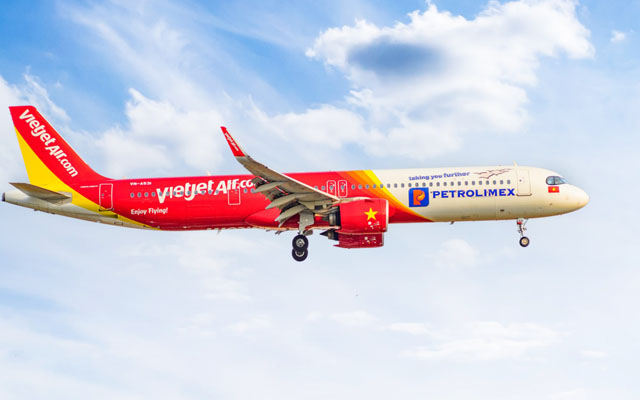
Vietjet launches new routes to Xi’an, Daegu
Vietjet has commenced two new services – from Ho Chi Minh City to Xi’an in China, and between Nha Trang and Daegu in South Korea.
Following the launch of its Shanghai and Chengdu services earlier this year, the airline’s non-stop direct flight from Ho Chi Minh City to Xi’an operates four round trips per week.
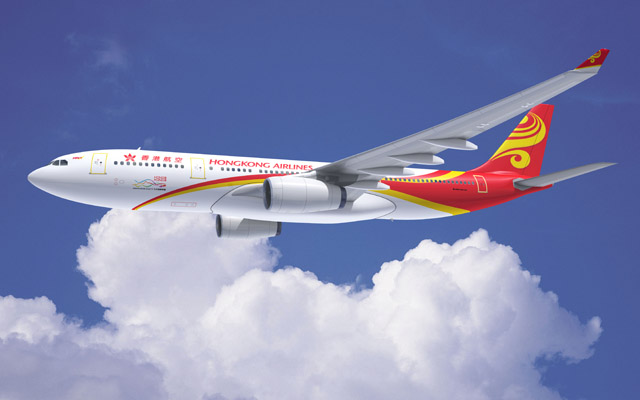
Hong Kong Airlines commences Hong Kong-Xining service
Hong Kong Airlines will launch a new route to Xining in Qinghai Province, offering two flights weekly from July 9.
Xining is situated on the Qinghai-Tibet Plateau and serves as a key gateway linking China’s eastern and western regions, including Tibet.
This new direct flight service will further strengthen connectivity between Hong Kong and mainland China.

Emirates’ new Boeing aircraft destinations
Emirates has unveiled the first cities on its network to be served with its newest Boeing 777 cabin interiors – Geneva, Tokyo Haneda and Brussels.
The airline will offer customers more opportunities to experience its signature Premium Economy on this aircraft and, for the first time, Emirates’ next-generation Business Class seats, set in a new 1-2-1 configuration.
The first upgraded Emirates Boeing 777 products will operate on the following services: EK 83/84 to and from Geneva from August 11, EK 312/313 to and from Tokyo Haneda from September 1, and EK 183/184 to and from Brussels from September 11.
A total of 81 Boeing 777s will be refurbished as part of Emirates’ investment in its retrofit programme, and more destinations to be served with the airline’s latest products will be announced over the course of the next few months.
Singapore Flyer celebrates the nation’s birthday with first overnight Moonlight Flight

To celebrate Singapore’s 59th Birthday, Singapore Flyer has unveiled an array of special events and promotions, including its first-ever overnight flight, complemented by a waterfront night market and a lucky draw for tickets to premium experiences and dining vouchers.
For the first time ever, the Singapore Flyer will operate non-stop overnight from 23.00 on August 9 to 08.00 on August 10. Guests can immerse themselves in the National Day celebrations after hours at only S$25 (US$18), which includes a 30-minute flight on the giant observation wheel and admission to Time Capsule, an immersive and multi-sensory attraction that spans across two levels, showcasing Singapore’s storied past, present and future.

Furthermore, Singapore citizens and permanent residents born in August can enjoy free entry to the Moonlight Flight with every paying guest.
From August 7 to 11, the Street Eats Under the Stars night market is set to light up the Singapore Flyer grounds with a full array of F&B offerings and casual seating facilities over the National Day long weekend. Located at the Waterfront Promenade beside the Formula 1 Singapore Grand Prix race track, guests can savour night market fare alongside views of iconic landmarks such as Marina Bay Sands and Gardens by the Bay. Street Eats Under the Stars is open from 17.00 to 23.00 on August 7, 8, 10 and 11, and from 17.00 on August 9 to 03.00 on August 10. Admission is free.
Additionally, guests get a chance to win prizes by scanning a QR code at Street Eats Under the Stars.
For more information, visit Singapore Flyer.
UN Tourism, Philippines to boost gastronomy tourism in Asia-Pacific

UN Tourism has issued the Cebu Call to Action for resilient food tourism in Asia-Pacific to attract more tourists and bring socio-economic benefits to the people while proposing an international tourism school based in Cebu.
These took place in Cebu where UN Tourism held its first-ever Regional Gastronomy Tourism for Asia-Pacific, back to back with the 36th Joint Meeting of the UN Tourism Commission for East Asia and the Pacific and the UN Tourism Commission for South Asia.

Sandra Carvao, UN Tourism market intelligence, policies and competitiveness director, identified 12 points of action for member countries to implement, among them developing comprehensive strategies at national, regional and local levels to integrate gastronomy tourism into policy formulation and practice; promoting culinary identity; and supporting small businesses to enhance their market position.
Meanwhile, UN Tourism secretary-general Zurab Pololikashvili shared that there are ongoing discussions with Philippine tourism secretary Christina Garcia Frasco to have a UN-backed international tourism institute or academy that will include gastronomy and culinary training in Cebu, where Asian students can attend instead of travelling to culinary and tourism institutes in distant destinations.
Pololikashvili noted that UN Tourism has formed the Tourism Online Academy in 2019, in partnership with Spain’s IE University, and has now over 50 different products and courses on offer with an existing 28,000 students.
Part of the talks with UN Tourism is coming up with a framework to help Asia-Pacific countries attract more foreign investments in tourism this year or next even as the Philippines is already crafting a gastronomy roadmap with funds already allotted for it, Frasco disclosed.
Putting the spotlight on gastronomy tourism is a significant boon for halal tourism, which is proving to be in demand from the destination’s new source markets like the Middle East, Indonesia and Malaysia, among others, said Myra Paz Valderrosa-Abubakar, Philippine tourism undersecretary for Muslim affairs and Mindanao promotions.
Tourism Australia participates in ILTM APAC for the first time

According to a new report from Marriott International Luxury Group, Australia is at the top of the list of hottest destinations among luxury travellers in Asia-Pacific, ahead of Japan and Hong Kong.
Thus, it is only fitting that Tourism Australia decided to join ILTM Asia Pacific for the first time this year.

Robin Mack, executive general manager, commercial & business events Australia, told TTG Asia: “The Asia-Pacific region is a highly valuable market for Australia’s luxury travel industry. ILTM Asia Pacific enables us to connect with the luxury travel trade in Asia, introduce Australia’s newest premium tourism offerings, and showcase Australia’s unique style of luxury – where the brilliance of nature, culture, hospitality and exclusivity meet.”
In the same Marriott report, 91 per cent of respondents also cited safety as important for a luxury experience, and fine dining is a major travel draw, with 88 per cent planning trips around food.
“What luxury travellers are looking for aligns with the experiences that Australia prides itself on offering – safe travel and gastronomic experiences that can’t be found anywhere else in the world,” Mack pointed out.
One of the growth areas post-lockdown for high-net-worth individuals is the appeal of “secluded luxury”, which Australia “offers in spades”, said Mack.
For example, the exclusive 40-key Lizard Island Resort off the coast of Queensland on the Great Barrier Reef recently unveiled The House, a private three-storey three-bedroom holiday home. A 45-minute plane ride from Cairns, the resort is located in a 1,013-hectare National Park boasting 24 sandy beaches and a lagoon.
Mark Leslie, Lizard Island’s general manager, told TTG Asia: “It is also our first time at ILTM Asia Pacific, and it is our first time marketing to the Asia-Pacific market (to date, the resort mainly receives clients from the US and Europe). The Asia-Pacific market is at our doorstep, but is largely untapped by us.”
Leslie added that with flight connections twice weekly from Singapore to Cairns, and Cathay Pacific mounting flights from Hong Kong to Cairns in October, it presents a huge opportunity for luxury travellers in the region.
Earlier this year, Tourism Australia also hosted the first showcase event in Asia for the Signature Experiences of Australia to increase awareness among South-east Asian agents of the trade-friendly programme, and the diversity of exclusive and special interest experiences on offer across Australia, from Luxury Lodges of Australia to Discover Aboriginal Experiences.
The Landmark Mandarin Oriental, Hong Kong to undergo transformation
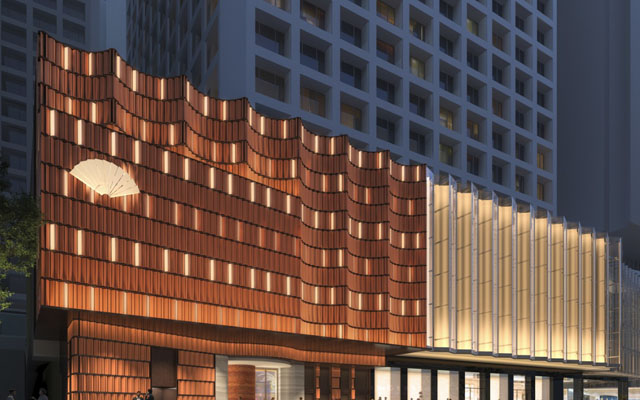
The Landmark Mandarin Oriental, Hong Kong is partaking in Landmark’s transformative project Tomorrow’s CENTRAL, which will set a new benchmark for ultra-luxury living in the heart of Hong Kong.
During the hotel’s refurbishment, which is scheduled to begin in November this year, the hotel will continue to operate its F&B offerings. Two new dining and bar concepts will be introduced, including an al fresco terrace in the heart of Central.
The project will also be extended to the guestrooms and suites, as well as the hotel’s spa.
In addition, the transformation will provide guests with access to 10 luxury Maison destinations – Cartier, Chanel, Dior, Hermès, Louis Vuitton, Prada, Saint Laurent, Sotheby’s, Tiffany & Co. and Van Cleef & Arpels – which feature over 200 additional retail experiences and more than 100 gastronomic offerings.
Collinson expands partnership with China Eastern Airlines

Collinson has expanded its partnership with China Eastern Airlines, adding 24 airport lounges in China to Priority Pass’ network.
These new additions complement the current China Eastern Airlines operated lounge at Qingdao Jiaodong International Airport, which was made available to the Priority Pass network last year. Of the 24 newly-added airport lounges to the Priority Pass network, 20 are live as of today.

China Eastern Airlines’ portfolio of airport lounges offers a variety of unique experiences that reflects the local culture and tradition of the city that the airport lounge is present in. Visitors can immerse themselves in cultural experiences such as local folk culture exhibits, traditional festival treats and tea art performances. They can also experience a taste of popular local delights such as the highly acclaimed MU Noodles as well as traditional Yunnan and Sichuan cuisine. For travellers visiting the China Eastern Airlines No 101 lounge at Shanghai Pudong International Airport, they can also enjoy a view of the sunset at the outdoor platform facing the tarmac.
“We’ve made significant strides in enhancing the travel experience via our partnership with China Eastern Airlines and we are delighted to continue elevating every journey into something special,” said Todd Handcock, global chief commercial officer and Asia-Pacific president, Collinson International.








Japan’s travel and tourism sector can expect a record-breaking 2024 based on its “robust recovery” in 2023, according to a study by WTTC.
The 2024 Economic Impact Research forecasts the sector’s contribution to Japan’s economy will reach almost 44.6 trillion yen (US$275.9 billion) in 2024, equating to a 5.7 per cent increase on 2019’s contribution and accounting for 7.5 per cent of the country’s GDP.
Employment in the sector is set to surpass six million jobs this year, a 10 per cent increase year-on-year and 209,700 more than in 2019.
Visitor spending is also expected to reach new highs, with international and domestic travellers projected to spend 6.3 trillion yen and 24.9 trillion yen respectively. This consumption would surpass 2019 levels by 16 per cent for inbound tourists and two per cent by Japan-based ones.
“Japan’s travel and tourism sector is set to break all records, partly fuelled by a positive exchange rate for international travellers,” said Julia Simpson, president and CEO of WTTC.
“All the indicators are set to rise – contribution to the Japanese economy, increasing job numbers and visitor spending. These milestones highlight Japan’s leadership and commitment to excellence in the global tourism landscape,” she added.
Government data indicates it may even be possible that Japan’s travel and tourism sector performance will exceed predictions. In 1Q2024 alone, spending in Japan by international visitors totalled an annualised 7.2 trillion yen in nominal terms, making tourism the country’s second-largest export category.