


World Express Malaysia to reveal refreshed look and offerings

Following the April brand refresh of World Express Singapore (WES), marking its 55th anniversary, World Express Malaysia (WEM) will unveil its new website together with the new logo on name cards and other collaterals by the end of July.
WEM is part of Melewar Group’s travel and tourism-related companies and group president Seri Iskandar Bin Tunku Abdullah, known in the industry as TI, said the new branding “reflects the new and fresh vibrancy that World Express now stands for”.

TI and WES chairman Tan Chee Chye became business partners through their PATA affiliation.
WEM executive director Cherry Lee and WES managing director Darren Tan have been working closely on the “new look” and team members from both sides attended an operations retreat and product refresher in Penang last week.
Lee told TTG Asia that she will work with Tan to co-sell both countries and leverage on WEM’s offices in Kuala Lumpur, Penang and Kota Kinabalu as the Local Insider for Peninsular Malaysia and Borneo.
The pair will be co-sellers at the upcoming PATA Travel Mart taking place in Bangkok at the end of August focusing on the UK, the US and English-speaking markets.
Despite the rise in transport costs and guide fees, Malaysia still offers value for money due to the currency exchange, Lee noted.
She welcomed the increase in air capacity with the return of daily British Airways flights between London and Kuala Lumpur on November 10 to tap leisure and meetings and incentive clients.
Commenting on new WEM products and services, she shared: “We are looking to promote Singapore-Malaysia self-drive holidays and increase the length of overland coach tours.
“For example, coach tours will feature two nights in Malacca instead of one, and three instead of two in Kuala Lumpur to allow more time for market visits and cooking programmes in Malacca; and longer walking tours in Kuala Lumpur and Penang beyond the current four hours for more in-depth discovery of heritage, natural habitats, etc.”
WEM will also be stepping up its handling of shore excursions for WES’s cruise clients from Singapore, she added.
New transit lounge opens at Philippines’ NAIA Terminal 1

The Manila International Airport Authority (MIAA) and flag carrier Philippine Airlines (PAL) have officially opened the new Passenger Transit Lounge at the Ninoy Aquino International Airport (NAIA) Terminal 1.
The transit lounge – located at the pre-departure area – is open 24 hours daily and is adjacent to the OFW Lounge.

The lounge provides a comfortable and relaxing space for passengers with connecting flights as well as a suitable holding area for inadmissible passengers excluded by the Bureau of Immigration.
Amenities at the lounge includes comfortable seats, charging stations, and shower facilities.
Light up the skies with kites at Hoiana Resort & Golf

Hoiana Resort & Golf will launch the inaugural International Kite Festival in Vietnam this July to showcase the craftsmanship and beauty of kite making and performing.
This four-day festival will run from July 25 to 28, and is an integral element of Hoiana’s Summer Vibes campaign.

Guests can look forward to an array of activities, including kite-flying performances by teams from 12 different countries and regions, including Mainland China, Hong Kong, Taiwan, South Korea, Japan, Thailand, Indonesia, the Philippines, Malaysia, Australia, India and Vietnam.
The festival will feature a diverse range of kites and a colourful display area, along with the LED kite flying programme, which will illuminate the night sky on July 26, 27 and 28, as well as a music night featuring talented young performers on July 27.
In addition, guests can immerse themselves in kite making workshops, enjoy a variety of international cuisines, witness magic shows, experience fire dance performances, create memories in a photo booth, and partake in a myriad of other entertainment activities.
A Stay & Kite package is available, where guests will receive a 250,000 dong (US$9.90) food and beverage voucher, plus unlimited access to the kite festival area. For outside guests, complimentary kite festival area access is available once they register for Hoiana Premium Rewards or purchase a food and beverage voucher.
For more information, visit Hoiana Resort & Golf.
Osaka’s new lifestyle hub to gradually open

A new mixed-use development in Osaka that promises to facilitate innovation, well-being and a challenge-mindset for residents, visitors and businesses is set to partially open within weeks.
Grand Green Osaka aims to transform the north part of the city into a contemporary district with a wide range of facilities, improved transport links and 45,000m² of green space. Facilities will include shops, restaurants, a spa, a museum, sports and edutainment cubes, an information centre and a 120m-long canopy-covered event space.

It will also house three hotels catering to different markets: the luxury Waldorf Astoria Osaka with 252 rooms, the upscale Hotel Hankyu Gran Respire Osaka with 482 rooms and Canopy Osaka Umeda, a lifestyle property with 308 rooms.
The complex will be opened in full within fiscal year 2027 and a new train station under the development with a direct connection to Kansai International Airport will be opened by JR West in 2023. By 2031, this new train line will extend to Shin-Osaka Station, a gateway to the Shinkansen lines, thereby boosting access to other parts of Japan.
Designed to improve the quality of life of residents and visitors alike, Grand Green Osaka will centre around the new Umekita Park (a tentative name). It will feature abundant spaces for visitors to relax and interact with nature, such as the Reflection Lawn, which will host various activities and events for up to 10,000 people.
The park will also act as an a sustainable ecosystem to support biodiversity and an evacuation space to boost the city’s disaster resilience.
Malaysia to propel smart hotel innovations

The Malaysia Budget & Business Hotel Association (MyBHA) has signed a memorandum of understanding (MoU) with hospitality technology solutions provider, Vendfun, to enhance technological advancements and promote smart hotel initiatives within Malaysia’s hospitality industry.
The MoU marks a significant step towards the development of smart hotels, with both parties sharing a common vision of harnessing advanced technology to revolutionise the hospitality sector, enhancing guest experiences and improving operational efficiency.

MyBHA and Vendfun will work together to develop and promote smart hotel concepts within Malaysia. This initiative includes introducing technological solutions that can transform traditional hotel operations into smart, efficient, and guest-friendly experiences.
The collaboration will focus on several key smart hotel initiatives, including smart check-In and check-out systems to reduce wait times and enhance guest convenience; energy-efficient solutions such as smart lighting, HVAC systems, and water management to promote sustainability and reduce operational costs; digital room key system and artificial intelligence-powered guest services to provide tailored recommendations, personalised greetings, and efficient service delivery.
In addition, MyBHA and Vendfun will jointly organise training and development programmes to equip hotel staff, owners and investors with the necessary skills to manage and utilise new technologies.
These programmes will include hands-on training sessions to ensure participants gain practical experience in using advanced technologies as well as seminars led by industry experts to discuss the latest trends and advancements in smart hotel solutions.
The partnership will also focus on conducting joint research and development initiatives to innovate and adapt to evolving industry demands.
Sri Ganesh Michiel, president of MyBHA, expressed his enthusiasm for the partnership: “By embracing advanced technologies, we are not only enhancing the guest experience but also ensuring that our members remain competitive in an increasingly digital world.”
“Our goal is to leverage our technological expertise to create innovative and efficient hotel operations that benefit both guests and hotel owners. This MoU signifies our commitment to driving the future of hospitality in Malaysia,” added Benny Wee, CEO of Vendfun.
Niccolo Hotels’ new campaign targets millennial, Gen Z travellers

Niccolo Hotels has unveiled its Persona N campaign designed to encourage guests to connect with themselves through stay experiences, culinary presentations, wellness offerings, and art and design appreciation.
The new campaign also aims for guests, particularly millennial and Gen Z travellers, to embrace facets of their identity, and to enjoy the immersive experiences offered at the Niccolo Hotels situated in the heart of Chengdu, Changsha, Chongqing, Suzhou and Hong Kong.
To support the campaign, a video was developed to showcase Niccolo Hotels’ understanding of millennial and Gen Z travellers and their motivation to follow their passions. Depicting immersive experiences that go beyond luxurious accommodation, various personas – The Creator, The Indulger, The Retreater, The Harmonist and The Socializer – are featured engaging with art pieces, embracing time in solitude with wellness activities, enjoying a dining experience and night life.
In addition, a survey by iiMedia Research revealed that consumers are now gravitating towards more relaxed and comfortable travel options, with 60 per cent of consumers stating their primary motivation for holiday travel is to unwind and alleviate stress, while in terms of hotel preferences, 24.6 per cent indicated they would choose to stay at a luxury hotel.
The campaign runs from now till August 31, where guests can enjoy up to 25 per cent off the best available rate for a minimum two-night stay, which comes with daily breakfast for two. Members of Cathay Pacific’s frequent flyer programme will also earn double Asia Miles.
“We conceived Persona N to reiterate the on-property experiences for millennial and Gen Z travellers, who have steadily grown to form a significant portion of the brand’s customer base,” said Holger Jakobs, vice president sales and marketing, Wharf Hotels. “Known to be independent travellers and individualistic, these two generations display unique behavioural trends and are increasingly focused on self-discovery, self-indulgence and fulfilment.”
Trip Affiliates Network launches connectivity platform for agents
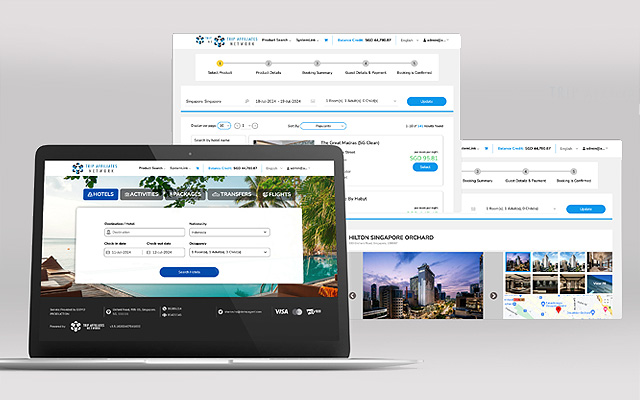
Trip Affiliates Network (TA Network) has introduced an advanced connectivity tool that will boost the efficiency and effectiveness of travel agents, help increase inventory, boost sales and commissions, improve productivity, reduce errors, and deliver superior customer service.
Hotel Switch is a tool that integrates multiple features to enhance travel agents’ ability to offer a wide range of accommodation and manage bookings efficiently.
The platform maps to over two hundred thousand hotels linked to the TA Network, allowing agents to provide clients with a wide range of accommodation options, catering to different preferences and budgets.
Real-time updates on allotments and/or blackouts when rooms are unavailable are automated, ensuring that agents have access to the best available rates 24/7.
Tactical hotel/package promotions enable agents to earn higher commissions like OTAs and offer competitive deals and promotions, while the automated 24/7 feature offers instant booking and confirmation. Furthermore, complimentary VCC payment support is available.
Agents will also be able to book directly with hotels instead of using third-party online hotel suppliers, which help eliminate check-in issues and provide a smoother, more reliable booking experience for clients.
“Hotel Switch is a vital tool for travel agents aiming to stay competitive and meet the evolving demands of their clients,” said Josef Foo, managing partner, TA Network.
Malaysia Airlines’ new look

Malaysia Airlines’ first A330neo recently rolled out of the Airbus paint shop in Toulouse, showcasing the airline’s signature Malaysia flag livery.
The aircraft will next be equipped with its Rolls-Royce Trent 7000 engines and undergo performance tests in preparation for its first flight.

All cabin systems will also be meticulously tested, including comprehensive checks of air flow and air conditioning, lighting, galleys, lavatories, seating, and in-flight entertainment systems – Airbus will also conduct advanced general performance tests to ensure the aircraft meets all specifications and is ready for delivery.
Malaysia Airlines is set to receive its first A330neo in 3Q2024, which will serve routes across Asia, Oceania and the Middle East.
Culinary masters come to One&Only Desaru Coast

Ember Beach Club at One&Only Desaru Coast is presenting the third edition of the Ember Curates series on August 17, featuring a Michelin-starred dinner collaboration with two renowned chefs: Mano Thevar of the two-Michelin-starred restaurant Thevar, and Andrew Walsh of one-Michelin-star CURE.
For one night only, Ember Beach Club will host a four-hands gastronomic experience, where guests can expect to be delighted with a collaborative menu with pairings that meld the styles of distinct South Asian flavours from Thevar, alongside the seafood and barbecue inspired flavours from Walsh’s signature creations at Ember Beach Club.

Limited seats are available for booking at 650 ringgit (US$139) per person, with room rates starting from 2,900 ringgit.
The first One&Only resort in South-east Asia is easily accessible two hours by car from Singapore or 90-minutes via the Singapore-Desaru ferry service.
For more information, visit One&Only Desaru Coast.

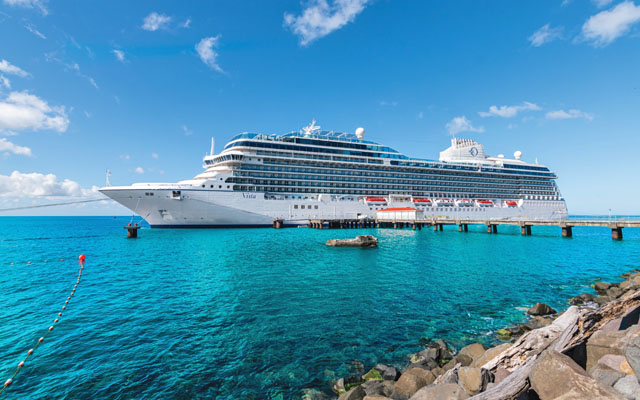






Resorts World Cruises (RWC) will expand its global footprint to the Arabian Gulf and Gulf of Oman with the upcoming homeport deployment of Resorts World One in Dubai from October 18, 2024 to April 13, 2025.
Resorts World One is expected to make 75 calls in the region with 150,000 passengers over the six-month period, which will significantly contribute to the growth of cruise tourism in the Arabian Gulf and Gulf of Oman. The ship will attract a new segment of Fly-Cruise passengers from India, increasing diversity to the Arabian Gulf cruise market.
Resorts World One will sail from Dubai from October 18 onwards, offering itineraries that include the two-night Sir Baniyas Weekend Cruise with departures on Fridays; a three-night Oman Cruise to Khasab and Muscat departing on Sundays; and a two-night Doha Cruise departing on Wednesdays.
Guests will have the flexibility to combine two or all three of the itineraries to increase the cruise length to a four-, five- or a seven-night cruise.
Shore excursions and onboard activities will allow passengers to immerse themselves in the rich cultural tapestry of Dubai and the surrounding region especially Muscat, Khasab and Sir Baniyas Island. Visits to iconic landmarks, heritage sites, and shopping destinations will be part of the itinerary for tourists while Bollywood DJ parties and music bands, pyjama and foam parties, movies, will be among other attractions onboard.
To cater to a diverse target audience, certified vegetarian and Jain cuisine will also be available to cater to travellers from India and others who prefer specialised vegetarian selections. With the ship’s deployment in the Arabian Gulf, Resorts World One will provide regional Muslim travellers with the convenience and access to certified halal-friendly offerings onboard the ship. Guests can also make pre-advanced appointments to have the crew of the same gender attend to the guests for selected onboard services such as the spa.
“With easy access and regular flight connectivity from India to Dubai, Indian travellers will also have more travel and vacation options to explore multiple destinations with a cruise vacation, paving the way for a new and exciting era of Fly-Cruise exploration,” said Naresh Rawal, vice president – sales (South Asia and Middle East), RWC.