Wyndham Hotels & Resorts has teamed up with motorcycle and lifestyle brand Harley-Davidson, to unlock a broad spectrum of hotel options in Asia-Pacific for members of the Harley Owners Group (H.O.G.).
Through the collaboration, H.O.G. members from around the world can enjoy up to a 20 per cent discount at over 500 participating Wyndham Hotels & Resorts properties in the region, by enrolling in Wyndham Rewards and booking hotels through direct channels.
Wyndham’s partnership with H.O.G. aims to attract more members and boost hotel bookings
In addition, H.O.G. members who join Wyndham Rewards and book a hotel stay can earn an extra 1,500 points, which can be redeemed for various rewards.
The partnership between Wyndham and Harley-Davidson is expected to attract more members, boost hotel bookings and strengthen Wyndham’s prominent position in the hotel franchise sector.
Eyvonne Lin, head of marketing, loyalty, and communications, Asia Pacific, remarked: “I am thrilled to acknowledge that the spirit of Harley-Davidson serves as an inspiring beacon for its riders, fuelling their desire to explore and pursue their dreams, whether they are weaving through urban jungles or venturing into the unchartered territories.
“At Wyndham, our commitment is to be a steadfast ally in their journey, providing not just a place to rest, but a launchpad for their next exciting adventure. Leveraging our vast portfolio of hotels, we extend a warm invitation to all audacious dreamers and explorers, encouraging them to leave their indelible marks in every nook and cranny of the globe.”
Centara Hotels & Resorts has launched its Centara Life: Elevating the Essentials offering for CentaraThe1 members at newly rebranded Centara Life hotels worldwide.
Members will have the opportunity to take advantage of exclusive additional benefits for a limited time only.
CentaraThe1 members enjoy exclusive benefits from now till end-September
From now to September 30, CentaraThe1 members booking stays until December 31 will enjoy flexible breakfasts until 16.00, Buy 1 Get 1 Free on selected food and drinks, and double CentaraThe1 points on every stay, in addition to complimentary local snacks, nightly noodle stations and more.
In addition, guests can check in and out at their convenience with 24-Hour Travel Freedom, starting their stay at any time and checking out at the same time on their day of departure.
Marriott International has appointed Jason Nuell as area vice president – Australia, New Zealand and Pacific (ANZP), where he will lead the growth and performance of the brand’s footprint in the region.
Nuell joined Marriott in 2003 as the director of Food and Beverage at the Surfer’s Paradise Marriott Resort (now JW Marriott Resort & Spa Gold Coast). His career with Marriott International has included a range of senior leadership roles across South-east Asia, China, India, the US, and Europe.
The Philippines’ Department of Tourism (DoT), Department of Health, and the Tourism Infrastructure and Enterprise Zone Authority (TIEZA), have signed a memorandum of understanding (MoU) to establish the country’s first Tourist First Aid Facilities in order to elevate the safety standards in the country’s tourist destinations.
Under the MoU, the agencies will build the inaugural batch of Tourist First Aid Facilities in areas with a high concentration of tourists including La Union; Boracay Island in Aklan; Siargao Island in Surigao del Norte; Panglao Island in Bohol; Palawan; and Puerto Galera.
Philippines’ Tourist First Aid Facilities will be staffed by healthcare professionals and equipped with essential medical supplies and medications
According to DoT, La Union will be the first to break ground next month, with the expected completion in 1Q2025. TIEZA will be spearheading the design and construction of the facilities which will function as emergency response centres for tourists encountering accidents or injuries during their visit.
These centres will be staffed by well-trained healthcare professionals – physicians and nurses – and will be equipped with essential medical supplies and medications to ensure prompt and effective emergency assistance.
The facilities will also provide preventive care, with a second floor serving as a lifeguard station or viewing deck to oversee tourist safety.
Noting the profile of incidences happening at each destination, tourism secretary Christina Garcia Frasco clarified that such facilities aim to be able to provide the “right type of care”, considering the varying tourism products the destinations are offering to tourists.
Thus, the healthcare professionals will be strategically deployed depending on the needs of the destinations, as well as the medical equipment needed for each area.
To complement these Tourist First Aid Facilities, solar-powered Tourist First Aid Booths will also be installed along beachfront areas, particularly in long stretches of coastlines, to address the immediate medical needs of tourists without the presence of medical personnel. These booths will be equipped with First Aid supplies, automated external defibrillators, a pull-out stretcher, a CCTV camera, and a two-way communication system linking to a command centre for emergency calls.
According to Frasco, the UN Tourism has declared health, safety, security, and hygiene crucial for tourism sustainability and competitiveness.
“If our tourists become ill or injured during a trip to any of our island destinations, we must be able to ensure proper, rapid, and the best care on site,” she noted, citing that investing in tourist convenience and safety is imperative if the country is furthering the momentum of the Philippines’ tourism growth.
Indonesia’s new hospitality company, Mora Group, launched on July 31 in Surabaya, East Java, with a gala dinner attended by 200 guests from the corporate and travel industry partners.
During the celebration, the Surabaya-based company also announced its strategic partnerships with Japan’s Select Hotel Group – to develop hotels with Japanese hospitality concept in Indonesia – and South Kalimantan’s Qin Group for Muslim-friendly accommodation.
From left: Qin Group’s Norhin, Mora Group’s Andhy Irawan, and Select Hotels Group’s Hiroshi Nakamura
Mora Group’s founder and CEO Andhy Irawan said that the new company will develop and operate Qin Group’s hotels, along with developing Select Hotels Group’s portfolio in the country, which will be managed by the Japanese hotel company.
Having developed its own brands, including the upscale Morazen, mid-scale Hemora, and Lamora for the economy-plus category, Mora Group currently has two properties – Morazen Surabaya and Morazen Yogyakarta – and targets to add eight more in the next two years.
According to Andhy, discussions with investors for Lamora and Hemora properties in Bandung, Bali, Surabaya, and Banyuwangi are ongoing.
Meanwhile, Qin Group presently owns two properties within one complex in Banjarbaru, which include the economy Qin Hotel and mid-scale Grand Qin Hotel. Two more properties are under construction in Samarinda, South Kalimantan and in Solo, Central Java, shared Norhin, founder and CEO of Qin Group.
Norhin noted that as the Muslim travel market was huge in Indonesia and there is ample opportunity for Muslim-friendly accommodation, he has set targets to operate 20 properties over the next couple of years.
“This partnership opens new opportunities to provide hospitality services friendly to Muslim travellers in Indonesia. We are also exploring several regions in Morocco and Medina for Qin Group’s business expansion plans,” he said.
With 50 hotels in Japan, Select Hotels Group is expanding into Indonesia with a target of 50 hotels in the economy and mid-scale categories. Hiroshi Nakamura, president and CEO of Select Hotels Group remarked: “Our (initial) target is to have 20 hotels here in the next three years – by building new, buying existing or rebranding properties.”
In the works are the opening of Select Hotels Group’s office in Surabaya, and the launch of its Indonesian brand, Kan Raku, a mid-scale category.
Andhy commented that aside from hotel management, Mora Group has set up a digital operational system not only for hotels but also for other commercial businesses. The group also has a hospitality academy and ancillary company, like laundry, in the pipeline.
“Through this collaboration, Mora Group is ready to transform Indonesia’s tourism sector by introducing advanced hospitality practices and inclusive services that attract tourists from around the world. By promoting cultural diversity and leveraging international expertise, Mora Group is committed to enhancing Indonesia’s tourism industry, driving economic growth, and enriching the travel experience for all visitors,” concluded Andhy.
Tourism Western Australia (Tourism WA) held its largest-ever roadshow in Singapore on July 25 as part of its 2024 Singapore and Malaysia Trade Mission.
Last held in 2022, the Trade Mission drew more than 400 trade partners across Singapore and Malaysia, of which more than 170 were from Singapore. Additionally, 27 West Australian operators attended the Trade Mission in Singapore, with more than 1,900 B2B appointments held, showcasing the strong interest in Western Australia’s tours and travel experiences. Tourism WA also hosted an exquisite business gala dinner for all trade partners.
The 2024 Singapore Trade Mission highlighted the new experiences and activities in Western Australia
Australia ranks as the second-most popular travel destination for Singaporeans, with over 325,000 visitors recorded by the end of March 2024, spending approximately A$1.12 million (US$727,055). Perth in Western Australia emerges as the third most sought-after destination within the country among Singaporean travellers. Notably, a substantial proportion of these visitors are repeat travellers, underscoring Western Australia’s enduring appeal.
The Tourism WA 2024 Singapore Trade Mission educated trade partners on the new and exciting experiences and activities across dining, accommodation, adventure, nature, luxury, and culture that Western Australia has to offer visitors. The roadshow also highlighted three new marine-based experiences for the aquaphiles, such as an aerial adventure across the picturesque landscapes of the Great Southern region with Scenic Helicopters; an interactive marine experience at the new Marine Discovery Centre at Busselton Jetty; and pearling experiences in the pearling capital of Broome in Western Australia’s North West.
Tourism WA has also lined up events for the rest of the year for visitors to get an authentic taste of West Australia.
First up is Tine – Rone, an immersive art exhibition evoking a forgotten chapter of Australian history held at The Art Gallery of Western Australia in the Centenary Galleries until September. Next is West Australia’s home-grown festival, EverNow, which returns from October 3-7; and Pair’d, a four-day extravaganza celebrating wine and food, which will be held in Margaret River from November 14-17.
Mel Forbes, executive director, marketing, Tourism WA, commented: “In collaboration with our trade partners, we are dedicated to delivering an authentic experience tailored specifically for Singaporean visitors. Emphasising luxury, adventure, and culinary excellence, our focus is on curating a captivating and immersive journey that appeals to the diverse interests of Singaporean travellers, showcasing the finest in West Australian hospitality.”
According to the latest lounge data from Collinson International, owner and operator of Priority Pass, countries in Asia-Pacific have seen an exponential growth in global demand for airport lounges and travel experiences in the 1H2024.
Comparing visits from January to June 2024 with the same period last year, Collinson International has seen a 71% increase in visits from global travellers to their network of Asia-Pacific airport lounges and travel experiences. This is significantly higher than the 30% increase in visits made by global travellers to airport lounges and travel experiences outside Asia-Pacific.
The new Kyra Lounge at Hong Kong International Airport Terminal 1
Travel is back in full swing globally this year, with the Priority Pass airport lounge and travel experiences data helping to confirm several industry forecasts that projected Asia-Pacific would lead this growth among the regions by contributing to more than half of the global net gain in passenger numbers by 2043.
In terms of visits to airport lounges and travel experiences in the region by travellers globally, Thailand emerged top of the list for the first six months of 2024; ahead of countries like India, mainland China, Singapore, and South Korea. This top position was influenced by Thailand’s national blueprint for tourism development that launched last year. Notably, mainland China re-joined the top ranks this year, having been absent from the list last year as the country continues to make travel more accessible for international travellers since its reopening post-lockdown.
Airport lounges and travel experiences in Asia-Pacific are also experiencing strong traction among visitors from within the region. Comparing visits from January to June this year versus the same period last year, Collinson International reports a 73% increase in visits from Asia-Pacific travellers to Asia-Pacific airport lounges and travel experiences. While airport lounges remain a top preference for travellers in relation to travel benefits, travel experiences offered at airports – including spas, sleep pods and restaurants – are increasingly prioritised by Asia-Pacific travellers, as seen from the 144% growth in visits. This is compared to the 70% growth in visits to airport lounges by Asia-Pacific travellers.
Catering to the rapid recovery of travel and to the evolving needs of travellers, Collinson International has expanded its network of airport lounges and travel experiences in Asia-Pacific by 15% over the last 12 months, such as the opening of the new Kyra Lounge at Hong Kong International Airport.
The company has also expanded its network of airport lounges in mainland China (with its recent enhanced partnership with China Eastern Airlines, introducing 24 new additions to its network), Bangladesh (MTB Air lounge in Jashore and Skylounge in Chattogram), Cambodia (Angkor Lounge in Siem Reap Angkor International Terminal), and Thailand (Satellite Terminal in Bangkok and Krabi International).
Additionally, Collinson International has also introduced airport experiences into its Asia-Pacific inventory, including holistic travel experiences offered by dining and wellness establishments in the region, such as the Soo Ceylon Cafe and Tea Lounge at Colombo Bandaranaike International Airport, as well as massages at TranSpa and local cuisine options at Asian Street Kitchen at Singapore Changi Airport.
At other airports, Priority Pass Members and LoungeKey cardholders can also enjoy benefits like dining, experiences, and use of facilities such as gyms, steam baths, and more.
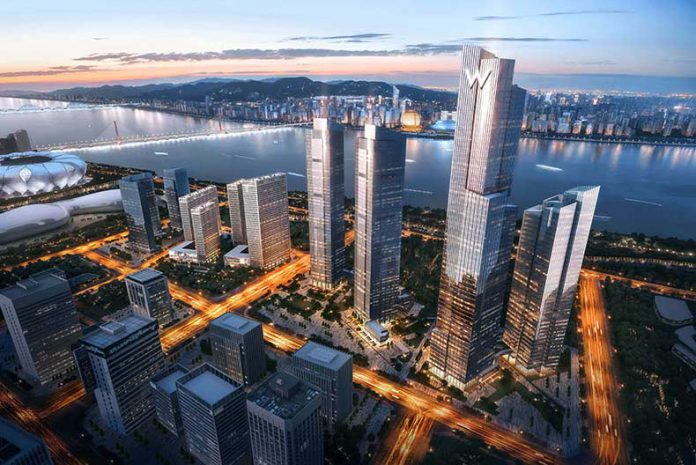
Marriott International has signed an agreement with Zhong An Commercial Group, part of China New City Group, to bring the W Hotels brand to Hangzhou.
Slated to open in 2031, W Hangzhou will be located at the north-west intersection of Minhe Road and Liyi Road in Qianjiang Century City, Hangzhou’s developing new CBD.
W Hangzhou will launch in 2031
The hotel’s street-front location is approximately 15km from Hangzhou East Railway Station and about 24km from Hangzhou Xiaoshan International Airport. It is adjacent to renowned landmarks and attractions, including the Hangzhou Olympic Sports Expo Center, a landmark complex in Qianjiang Century City, and the largest retail centre in the area, InCity.
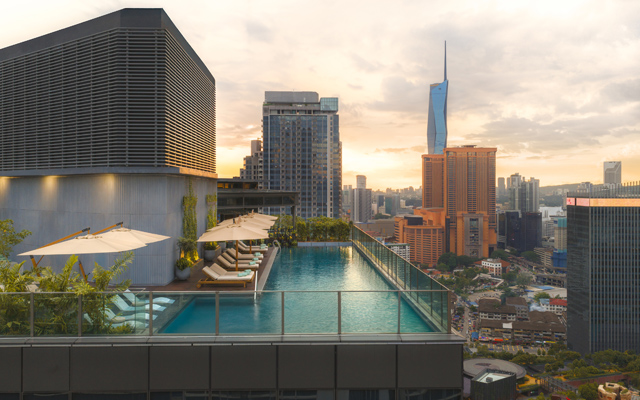
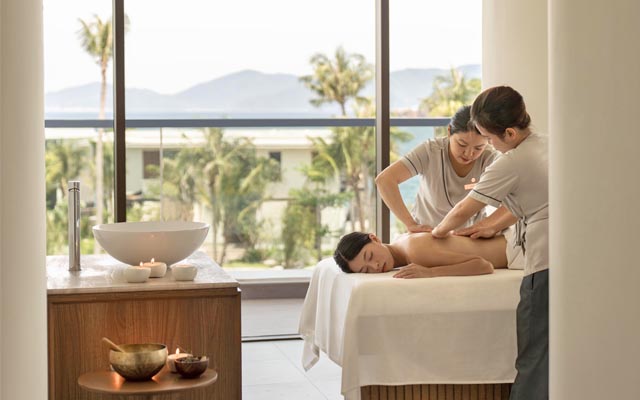
W Hangzhou will occupy the top floors of a 240m building that will be part of the IOC complex. The hotel will feature 270 guestrooms and suites, with about half of the rooms offering direct river views. There will also be two signature restaurants and a bar, a swimming pool, fitness centre, spa, ballroom, junior ballroom and four meeting rooms.
Indonesian OTA tiket.com has expanded its partnership with Amadeus to combine enhanced air distribution content – including NDC content – with leading technology capabilities.
The long-term partnership will enable the OTA to access travel content from the world’s leading airlines via the Amadeus Travel Platform and strengthen its offering to customers through access to Amadeus’ technology solutions, including AI powered solutions, payment technology, and biometric hardware for airports and border control, technical support and more.
The collaboration will enable tiket.com to access travel content and its offerings to customers
Dimas Surya Yaputra, co-founder and chief commercial officer, tiket.com said: “We look forward to working with Amadeus to provide our clients with offerings that are relevant at a time when travellers have higher expectations than ever before.”
Javier Laforgue, executive vice president, travel unit and managing director, Asia-Pacific, Amadeus added: “Expanding our partnership with tiket.com is a significant step forward for Amadeus in Indonesia. We look forward to working hand-in-hand with the organisation to leverage the latest innovations.”
The tourism sector in Dubai is growing strongly, aligning with the goals of the Dubai Economic Agenda (D33), one of which which is to double the size of Dubai’s economy over the next decade and consolidate its position among the top three global cities. In 2023, Dubai welcomed a record 17.15 million international overnight visitors – a 19.4 per cent year-on-year (YoY) growth over the 14.36 million tourist arrivals in 2022.
“We will continue to execute robust global and market-specific campaigns, collaborating with our key domestic and international partners. By adopting a diversified marketing approach, we aim to promote Dubai to audiences worldwide for both potential new visitors and repeat visitors,” said Issam Kazim, CEO of the Dubai Corporation for Tourism and Commerce Marketing.
Dubai welcomed a record 17.15 million international overnight visitors in 2023
Dubai’s status as a global entertainment hub has been bolstered by new attractions and a year-round calendar of business, leisure, and sporting events, which continue to attract international tourists. In 2024, Dubai is continuing to focus on key Asian markets such as China, India, South Korea, Japan, and South-east Asia for both leisure tourism and business events segments.
“These markets offer a mix of affluent travellers and growing corporate sectors, presenting opportunities for Dubai to showcase its luxury offerings, cultural experiences, and world-class infrastructure to attract visitors and business events alike,” said Bader Ali Habib, regional head of proximity markets, Dubai Department of Economy and Tourism.
The year 2024 has also begun on a positive note for Dubai, with the Emirate experiencing an 11 per cent YoY increase in international visitors from January to March. During this period, Western Europe emerged as Dubai’s largest source market, contributing 1.138 million arrivals, which accounts for a 22 per cent overall share. South Asia followed with 869,000 visitors, representing a 17 per cent share, while the CIS and Eastern Europe regions saw 817,000 visitors, making up a 16 per cent share.
Additionally, North-east Asia and South-east Asia contributed 470,000 arrivals, accounting for a nine per cent share. India has been leading the tourism growth for Dubai in Asian markets.
“For 1Q2024, we hosted about 687,000 visitors from India which is almost about 12 per cent more than the last year. One of the segments we are focusing in the Indian market is ‘stopover’ traffic. Dubai is a transit hub for Indians, especially for markets like Gujarat where people have families living in the US. Even if we get such transit travellers to visit Dubai for 24 hours, it opens new opportunities for us. We also want to capture the Indian weekend travel market,” added Habib.
Samir Mehta, chief operating officer with Desert Adventures Tourism, shared that India is the number one market for Dubai, with other key markets comprising the UK, Commonwealth of Independent States (CIS), Indonesia and Pakistan.
He added that “China has been slow to recover” due to the country’s prolonged Covid travel restrictions.
From January to March this year, Dubai’s hotels maintained a room occupancy rate of 83 per cent, while there was a two per cent YoY increase in overall room supply to more than 152,000. Total available rooms in Dubai reached 152,162 by end-March 2024, up from 148,877 rooms in March 2023, while the number of establishments stood at 832 at the end of the first quarter, compared to 814 during the same period last year.
From January to March 2024, Dubai had a total of 96,484 hotel rooms across four- and five-star establishments, representing a significant 64 per cent share of the overall hotel rooms in the city. One- to three-star hotels had a 19 per cent share of Dubai’s overall hotel market, with the category comprising 29,100 rooms. The hotel apartments segment boasted a total of 26,578 keys at the end of 1Q2024.
“Markets like the UK, CIS and India are recording strong growth. Interestingly, American travellers, though low in numbers, are showing interest in Dubai. Australia has also emerged as a meaningful market, as travellers have a stopover option on their way to Europe,” said Amanda Elder, chief commercial officer and member of the management board, Kempinski Hotels.
The Department of Economy and Tourism (DET) has taken the lead in implementing various activities under its Dubai Sustainable Tourism initiative, including the new Dubai Sustainable Tourism Stamp, which seeks to recognise hotels with the highest adherence to DET’s 19 Sustainability Requirements.
















The Philippines’ Department of Tourism (DoT), Department of Health, and the Tourism Infrastructure and Enterprise Zone Authority (TIEZA), have signed a memorandum of understanding (MoU) to establish the country’s first Tourist First Aid Facilities in order to elevate the safety standards in the country’s tourist destinations.
Under the MoU, the agencies will build the inaugural batch of Tourist First Aid Facilities in areas with a high concentration of tourists including La Union; Boracay Island in Aklan; Siargao Island in Surigao del Norte; Panglao Island in Bohol; Palawan; and Puerto Galera.
According to DoT, La Union will be the first to break ground next month, with the expected completion in 1Q2025. TIEZA will be spearheading the design and construction of the facilities which will function as emergency response centres for tourists encountering accidents or injuries during their visit.
These centres will be staffed by well-trained healthcare professionals – physicians and nurses – and will be equipped with essential medical supplies and medications to ensure prompt and effective emergency assistance.
The facilities will also provide preventive care, with a second floor serving as a lifeguard station or viewing deck to oversee tourist safety.
Noting the profile of incidences happening at each destination, tourism secretary Christina Garcia Frasco clarified that such facilities aim to be able to provide the “right type of care”, considering the varying tourism products the destinations are offering to tourists.
Thus, the healthcare professionals will be strategically deployed depending on the needs of the destinations, as well as the medical equipment needed for each area.
To complement these Tourist First Aid Facilities, solar-powered Tourist First Aid Booths will also be installed along beachfront areas, particularly in long stretches of coastlines, to address the immediate medical needs of tourists without the presence of medical personnel. These booths will be equipped with First Aid supplies, automated external defibrillators, a pull-out stretcher, a CCTV camera, and a two-way communication system linking to a command centre for emergency calls.
According to Frasco, the UN Tourism has declared health, safety, security, and hygiene crucial for tourism sustainability and competitiveness.
“If our tourists become ill or injured during a trip to any of our island destinations, we must be able to ensure proper, rapid, and the best care on site,” she noted, citing that investing in tourist convenience and safety is imperative if the country is furthering the momentum of the Philippines’ tourism growth.