Nicoline Dolman has been appointed as Discova’s regional contracting leader.
She will lead the contracting team in Asia to deliver a market product range for the region that drives business growth.
Based in Bali and originally from the Netherlands, Dolman brings a wealth of experience and knowledge from working in the hospitality and travel industry for well over a decade.
Cebu in the Philippines faces calls to diversify its tourism offerings after a disappointing year, according to industry experts.
At the recent Philippine Tourism and Hotel Investment Summit 2024 organised by the Philippine Hotel Owners Association (PHOA), an STR presentation revealed that while Cebu’s hotel rates boomed this year, it is still lacking in inbound demand.
STR data showed that Cebu is still lacking in inbound demand
STR senior director Asia Pacific, Jesper Palmqvist, further explained that occupancy rates were down to 56 per cent year-to-date in May, a big drop from the 78 per cent in 2018.
“Even if rates are back to historic levels, there’s just not enough international or domestic travellers – it’s a competitive reality as well in South-east Asia, with Phuket and Bali, for instance, growing quickly.”
Addressing the issue, Palmqvist said “diversity is key”, not just for Cebu but for the Philippines. “There is no one single market that replaces the Chinese market,” he opined.
China used to be Cebu’s biggest and the country’s second biggest inbound market, but instead of easing visa restrictions to encourage this market to return, the Philippine government further tightened its visa policies for Chinese visitors.
Palmqvist noted there are clear instances in South-east Asia showing that relaxing visas for Chinese helped tourism levels, as well as airlift, return fairly quickly. He pointed out there seems to be a deeper issue, as the country is missing the mark on its tourism priorities.
Concurring, C9 Hotelworks managing director Bill Barnett said that for Cebu, “it’s a lot about airlift and visas – you cannot stay there if you cannot get there”.
He emphasised: “The Philippines tends to brush off alternative markets like Russia, India and the Middle East… as they want Americans and Europeans.
“The issue is visa agreements – and the Philippine government is asleep at the wheel of tourism. They need to diversify the tourist mix, (which is) a big issue for legacy markets like Baguio, Cebu, and Boracay.”
New York-headquartered hospitality company Standard International was recently at ILTM Asia Pacific 2024 to launch its latest luxury brand, The Manner.
When asked why there was a need to develop a new concept, instead of expanding its current portfolio, Amar Lalvani, the executive chairman of Standard International told TTG Asia: “We believe there is a next generation of luxury guest that is looking for something different than what is out there today. This guest values privacy, discretion and intimacy versus the overt trappings and often intrusive service style that comes from traditional luxury experiences.”
The first Manner-branded property is set to open in September this year
He pointed out that The Standard Hotels are distinctly different, and are “vibrant, entertainment destinations that are social hubs for their communities”, while The Manner will be focused on “refined and intimate guest experiences”, akin to staying in a chic, well-connected friend’s home.
“The brand will sit at the intersection of a private residence, a member’s club, and a hotel. There are times when our guests are looking for a more refined, intimate experience and that is what The Manner provides. I find this very much true for myself when I travel, where the same person can have different needs and desires depending on the circumstances,” Lalvani noted.
Set to open in September 2024, the first Manner-branded property will be located in New York’s SoHo, and will be a conversion of an existing hotel. All infrastructure will be upgraded, and the entirely new aesthetic has been done in collaboration with Hannes Peer, a renowned architect, artist and interior designer from Milan who specialises in high-end residential design. The Manner in SoHo is his first hotel project.
The company, which Thailand real estate luxury developer Sansiri owns a 62 per cent stake, has no immediate plans to bring The Manner to Asia-Pacific, although there are “many destinations” where a Manner property could call home.
Lalvani pointed out: “Given that luxury hotels in Asia tend to be quite traditional, The Manner would stand apart in what we offer our guests; but for now, we are extremely focused on our first Manner in SoHo, to make it as incredible as possible. I have no doubt that if we do that, the rest will follow.”
Standard International was also at ILTM Asia Pacific to promote their new-build property in Singapore – The Standard, Singapore.
Mai Timblick, chief creative officer, Standard International, told TTG Asia: “The Standard, Singapore will have touchpoints throughout that will underscore the property’s vibrant intersection of East and West.”
The eight-storey, 143-key property will boast a residential feel reflecting the surrounding neighbourhood in Orange Grove, and feature a tiered courtyard and greenery at the pool, as well as the brand’s first-ever Japanese izakaya restaurant. It is slated to open by the end of this year.
A private sector-driven travel sales mission to Singapore is scheduled from August 26 to 28 this year, an initiative spearheaded by the Hotel, Resort & Restaurant Association of Cebu (HRRAC) and the Cebu Association of Tour Operation Specialists (CATOS).
The three-day mission will involve interactive sessions with top-producing travel agents, MICE and leisure organisers, and tour wholesalers in Singapore. The highlight of the mission will be a full-day product presentation and B2B session in a vibrant travel mart atmosphere.
The travel sales mission hopes to attract more Singaporean visitors to Cebu; Kawasan waterfalls on Cebu Island, pictured
The mission aims to showcase Cebu’s diverse offerings, including its pristine beaches, vibrant dive sites, adventurous activities, culinary delights, and rich cultural heritage. Special focus will be placed on Cebu’s new attractions, high-tech convention centres, and integrated entertainment resorts, all designed to appeal to Singapore’s robust family leisure and MICE market.
The cities of Cebu, Mandaue, and Lapu-Lapu, along with the Department of Tourism Region 7, have been invited to support and participate in this sales mission. This collaboration aims to strengthen Cebu’s tourism appeal and establish it as a premier destination for Singaporean travellers.
Selrahco Management and Consultancy president and CEO, Charles Lim, who is assisting the sales mission, said they have also reached out to Mactan Cebu International Airport as it is the hub for tourists to Cebu and the gateway to most destinations in the Visayas and Mindanao, including Boracay, Siargao, Davao, Bacolod and Iloilo.
A Singaporean who was at one time the Special Tourism Envoy for ASEAN under the presidency of Gloria Macapagal Arroyo, Lim settled down in Cebu over 25 years ago after working for Singapore Airlines – the first foreign airline that started a regular commercial flight linking Singapore to Cebu 34 years ago.
“Singapore is a big potential market for Cebu. It is currently the biggest source of our arrivals from South-east Asia and we hope to build it up further,” explained Alfred Reyes, president of HRRAC.
“There are three airlines operating no less than 21 flights a week as of today between our two cities,” added Reyes. “That speaks a lot by itself. We need to further promote our destination to the Singaporeans.”
CATOS president Alice Quiblatin shared: “The Cebu product of sun and sand, diving and adventure, food and shopping has always been an attraction, based firmly on our heritage and culture.
“Today, we have several new products from theme parks to convention facilities and an integrated entertainment resort. This opens up more markets for us and we know Singapore’s family leisure and MICE market is very strong.”
IHG Hotels & Resorts has added two Crowne Plaza hotels to its Sydney premium estate portfolio, following an agreement with Frank and Wade Huang of Star Millennium.
Two well-loved hotels at Sydney Airport and Macquarie Park will be rebranded as Crowne Plaza Sydney Airport and Crowne Plaza Macquarie Park, respectively.
Crowne Plaza Macquarie Park is set to open in early 2025 after refurbishment of its lobby and rooms
Holiday Inn Sydney Airport will be rebranded as Crowne Plaza Sydney Airport in September 2024. The 252 guestrooms have undergone refurbishment in 2022 and are already at a Crowne Plaza standard, while the lobby and restaurant will be updated to complete its transition into the premium segment.
Meanwhile, the 196-room Crowne Plaza Macquarie Park is set to open in early 2025, transitioning from the Courtyard by Marriott to the Crowne Plaza brand. This rebranding will include a comprehensive refurbishment of the lobby and guestrooms.
The hotels will move to franchise, with Star Millennium appointing Trilogy Hotels to operate both hotels.
Cameron Burke, director of development at IHG Hotels & Resorts, commented: “It’s exciting to see the Crowne Plaza brand continue to go from strength to strength, building on its reputation as one of the world’s best known and loved premium hotel brands among corporate and leisure travellers alike. We look forward to further strengthening our wonderful partnership with Frank and Wade in the coming years.”
“Crowne Plaza Macquarie Park will set a new standard for quality in the Macquarie Park business precinct, and Crowne Plaza Sydney Airport will enhance its legacy as a Holiday Inn by delivering a premium guest experience,” added Wade Huang, director of Star Millennium.
Island Shangri-La, Hong Kong, Hong Kong
Island Shangri-La, Hong Kong has undergone transformation and unveiled The Shangri-La Suite – the 222m² two-bedroom suite features a private residence, comprising a his and hers walk-in wardrobe in the master bedroom, sitting room and private bar, private dining room which seats up to ten people, kitchen, wine cellar and staff entrance for guests’ privacy.
The Shangri-La Suite is also primed with special lighting points, ceiling-mounted audio-visual speakers, perimeter hanging rails, and furniture that can be reconfigured to cater for different events.
Guests are offered an extensive programme of amenities exclusive to The Shangri-La Suite, such as a personal butler, complimentary bath amenities, pillow menu, sleep ritual gong bath and aromatherapy service.
Courtyard by Marriott Kuala Lumpur South
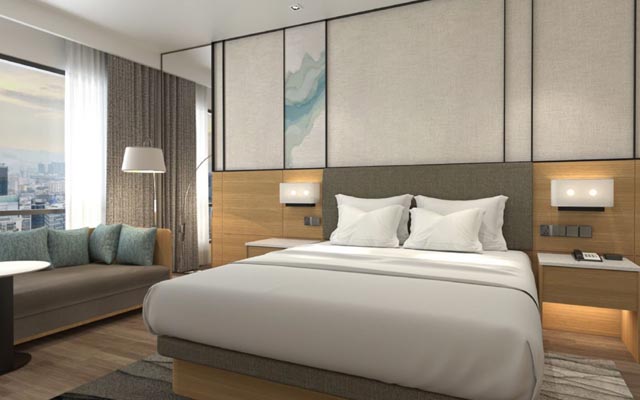
Courtyard by Marriott Kuala Lumpur South, Malaysia
Courtyard by Marriott Kuala Lumpur South offers 278 rooms and suites, and is just a 20-minute drive from the city centre with easy access to major roads and highways.
Facilities include an outdoor swimming pool with sun deck, kid’s pool, steam and sauna rooms, F&B outlets, fitness centre, and event venues.
The hotel also has direct access to the new Bloomsvale Shopping Gallery.
Grand Westside Hotel
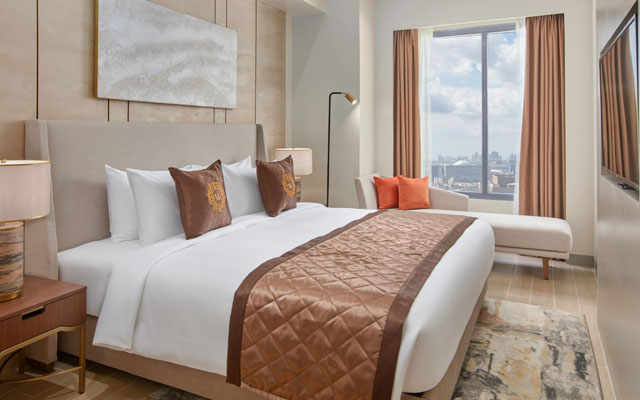
Grand Westside Hotel, the Philippines
The Grand Westside Hotel is the biggest hotel in the Philippines with 1,530 rooms.
The 19-story, two-tower building is strategically located in the Westside City township development of Megaworld in Parañaque City, and is just eight minutes away from Ninoy Aquino International Airport.
The hotel boasts four dining outlets, event venues, executive lounge, gym, spa, children’s pool, Zen garden, an aircrew lounge, as well as a two-level retail and commercial space. It also has dedicated rooms designed for specially-abled guests.
Wyndham Ion Majestic Hotel
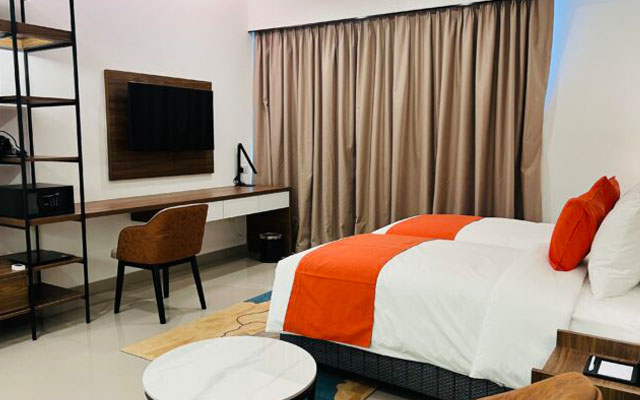
Wyndham Ion Majestic Hotel, Malaysia
Wyndham Ion Majestic Hotel is nestled amid the Banjaran Titiwangsa rainforest in Genting Highlands.
The hotel features a Vertical Sky Glass Pyramid on the rooftop, a perfect venue for coupled tying the knot, as well as event venues that can accommodate up to 1,500 guests. Guests can enjoy concierge services, dining options, and wellness treatments at the hotel.
Just an hour from Kuala Lumpur, the property offers easy access to Genting Skyway, Genting Highlands Premium Outlets, Genting Skyworlds Theme Park, and SkyAvenue shopping haven. It will also soon introduce Malaysia’s first and highest dedicated 3D holographic theatre.
Royal Caribbean has launched a promotion from July 16 to August 20, offering guests up to S$950 (US$708) off for their next cruise booking for 2024-2025 travel itineraries departing from Singapore.
Additionally, guests booking cruises to global destinations (not departing from Singapore) can enjoy up to US$500 in on-board credits, which can be used to unlock a world of experiences aboard Royal Caribbean cruises, including spa services, dining, attractions, shopping, and more.
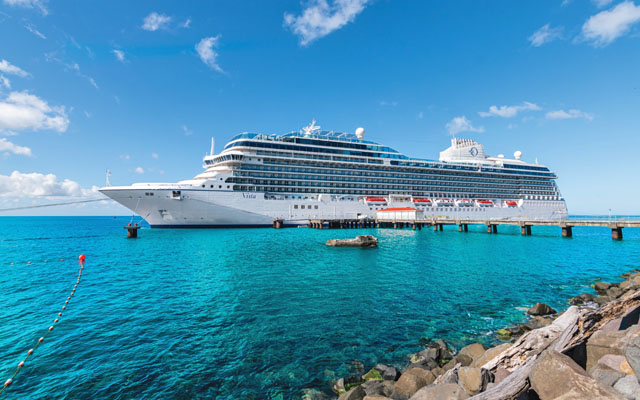
Royal Caribbean is offering guests discounts for their next cruise booking for itineraries departing from Singapore; Ovation of the Seas, pictured
Onboard Anthem of the Seas, which is set to arrive in Singapore in November, travellers can choose to explore South-east Asia with three- to 10-night itineraries to Malaysia, Thailand, Indonesia, and Vietnam. Travellers can also enjoy the beaches of Phuket and Bali, walk the volcanic foothills in Lombok, and indulge in the street food culture of Penang. Adventurers can explore Bangkok’s mix of heritage and modern architecture, traverse Vietnam’s landscapes and immerse themselves in the rich history and cuisine at the ports of Ho Chi Minh City, NhaTrang, and Chan May.
Then in October 2025, Ovation of the Seas is also arriving in Singapore with new travel itineraries featuring three- to eight-night holidays to Indonesia, Malaysia, Thailand, Vietnam, and Hong Kong.
As Middle Eastern countries look to diversify their economies, moving beyond oil wealth, tourism has emerged as a key focus segment for the governments of the region. From investing heavily on tourism infrastructure projects to cooperating with each other, destinations within the Middle East are leaving no stones unturned to draw international travellers to their shores.
Leading the aggressive tourism approach is the Saudi Arabian government which is investing billions of dollars in developing new tourist attractions, such as the Red Sea Project, AlUla, and the futuristic city of Neom. The Saudi government has set an ambitious target of attracting 150 million international travellers by 2030.
ew attractions, like Museum of the Future in Dubai, offer tourists more things to do
Key Asian markets including India and China are key to achieving its tourism goals. In 2023, air connectivity between India and Saudi Arabia alone reached 2.8 million seats, marking a 31 per cent increase in capacity since 2019.
“We recognise the immense potential of the Asian markets. The leisure travel has emerged as the strongest segment showcasing a splendid performance from the Asia-Pacific region, especially India. Our approach involves a multi-faceted strategy that focuses on promoting Saudi’s unique cultural heritage, historical sites, natural landscapes, and modern attractions such as entertainment hubs, theme parks, opening of ultra-luxury resorts, among others,” said Alhasan Aldabbagh, president – APAC, Saudi Tourism Authority.
As per HBX Group, one of the leading B2B players in travel tech space, the most popular destinations in the Middle East are Dubai, Riyadh, Doha, and Abu Dhabi among travellers from the Asia-Pacific. Meanwhile, interest is growing the fastest for Makkah (mainly with travellers from Indonesia after the end of Ramadan), Doha, Madinah, and Ajman (among the Chinese).
In fact, Chinese outbound tourism growth for the Middle East is fast approaching pre-pandemic levels. Suki Lin, senior director, APAC at Nativex, a digital marketing platform, said: “Dubai is top of mind among Chinese travellers (due to) new products like the Museum of the Future. Saudi Arabia comes in second, with Red Sea and Neom catching the attention of Chinese social media platforms.”
Lin added that Saudi Arabia’s e-Transit Visa for up to 96 hours has brought Chinese travellers to Riyadh. Turkey and Qatar are also growing in popularity among Chinese leisure tourists.
Following last year’s announcement at the Gulf Cooperation Council (GCC) meeting in Oman, the six GCC countries (Bahrain, Kuwait, Oman, Qatar, Saudi Arabia, and the UAE) are now close to implementing a unified Gulf tourist visa regime and will jointly promote the region for tourism.
This unified visa will be named GCC Grand Tours – it was announced during the Arabian Travel Mart 2024. GCC destinations expressed confidence that the new visa regime will encourage tourists to explore multiple destinations within the region.
Sarah Ahmed Buhiji, CEO of the Bahrain Tourism and Exhibitions Authority, said her destination is ready to excel, having witnessed “incredible infrastructure developments”, such as the new terminal at the Bahrain International Airport, which expanded passenger handling capacity to 14 million a year.
“We have the Exhibition World Bahrain, one of the largest exhibition centres in the region. Today, we are promoting Bahrain as a MICE hub,” she said.
“Working together with the GCC offers a lot of opportunities. We are working on building packages that will attract more tourists to come to the region and experience multiple destinations. A traveller can visit Bahrain and stay for two to three nights, and then explore Amman or Saudi Arabia. The accessibility between many GCC countries is easy. For example, Bahrain to Saudi Arabia takes just 40 minutes by car,” she added.
Dreams of stronger tourism performance is aided by growing air capacity.
OAG Aviation noted that total seats available in Middle East stood at 194,210,303 in 2014, up from 254,811,576 in 2023 – reflecting an average annual growth rate (AAGR) of 2.7 per cent between 2014 and 2023.
“The Middle East region is growing above the global average,” said Mayur Patel, head of Asia, OAG Aviation.
Still, Nick Flynn, hotel manager, Shangri-La Al Husn, Muscat, hopes to see more flights from China.
“The key market for us in Asia is India, where we are recording strong demand from FIT, wedding and MICE segments. Although we have welcomed a handful of guests from Singapore, we are not seeing a pick up in demand from South-east Asia as well as China. Absence of direct air connectivity between Oman and China is a bottleneck in growing tourist arrivals from the Asian giant,” said Flynn.
There are strong stirrings in the Middle East hotel front too, as more hotel companies step in to make the most of tourism opportunities in the region. To facilitate its entry into the Middle East, hotel representation firm Heavens Portfolio recently acquired The Travel Collection, an established representation agency in Dubai.
“We are growing our operation in GCC countries including Dubai, Saudi Arabia and Qatar. Inbound tourism to GCC countries is poised to grow further and with our presence in the region, we expect to be a part of tourism growth in the Middle East,” said Christine Galle Luczak, founder and CEO, Heavens Portfolio.
As new developments emerge, sustainability remains a hot topic and sits at the core of tourism roadmaps drawn up by Middle Eastern destinations.
With the UAE’s Year of Sustainability extending into 2024, Dubai has embarked on campaigns like Refill for Life, promoting the use of reusable bottles and encouraging people to refill via 50 water fountains established throughout the city.
Oman is showing commitment to sustainability through projects like The Sustainable City-Yiti – which has been described as the country’s first net-zero energy city.
Ayala Land Hospitality has named George Aquino as its new president and CEO.
A seasoned hotelier, he brings a wealth of experience to the role, having previously served as vice president and managing director of AHC Hospitality in the US.
Under his leadership, Aquino will prioritise the renovation of the 51-room Lagen Resort.
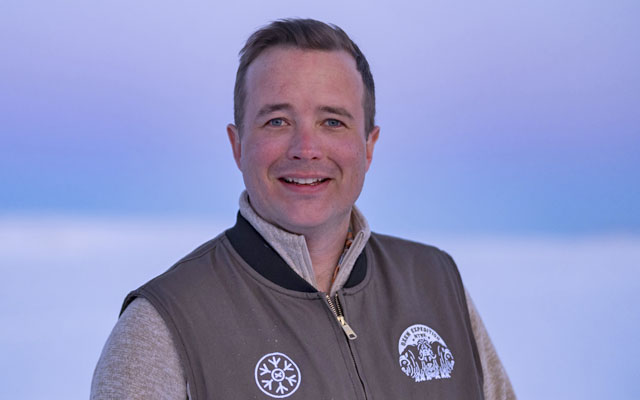
Hurtigruten Expeditions (HX) has appointed Alex McNeil as its chief expedition officer, in which he will oversee all aspects of HX’s global itinerary and expedition experience in this newly-created role.
With over 15 years of experience and nearly 200 expeditions in his belt, McNeil will ensure that each voyage is meticulously designed and curated to offer unparalleled exploration, education, and leave a positive impact on any communities they interact with.
He was previously senior vice president of product and guest experience at HX for 18 months, and prior to that, he served as director of expedition experience and innovation at Quark Expeditions.



 Based in Bali and originally from the Netherlands, Dolman brings a wealth of experience and knowledge from working in the hospitality and travel industry for well over a decade.




 Under his leadership, Aquino will prioritise the renovation of the 51-room Lagen Resort.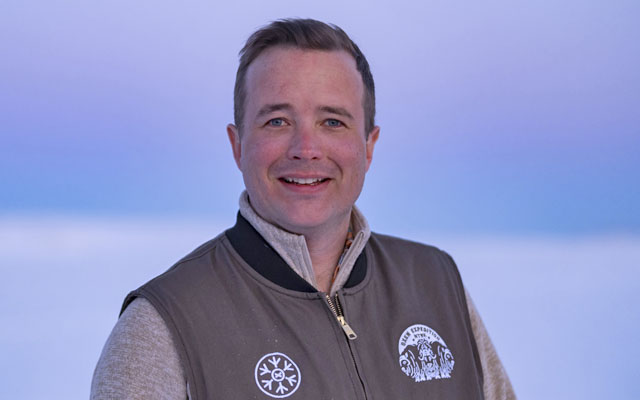
 He was previously senior vice president of product and guest experience at HX for 18 months, and prior to that, he served as director of expedition experience and innovation at Quark Expeditions.






Cebu in the Philippines faces calls to diversify its tourism offerings after a disappointing year, according to industry experts.
At the recent Philippine Tourism and Hotel Investment Summit 2024 organised by the Philippine Hotel Owners Association (PHOA), an STR presentation revealed that while Cebu’s hotel rates boomed this year, it is still lacking in inbound demand.
STR senior director Asia Pacific, Jesper Palmqvist, further explained that occupancy rates were down to 56 per cent year-to-date in May, a big drop from the 78 per cent in 2018.
“Even if rates are back to historic levels, there’s just not enough international or domestic travellers – it’s a competitive reality as well in South-east Asia, with Phuket and Bali, for instance, growing quickly.”
Addressing the issue, Palmqvist said “diversity is key”, not just for Cebu but for the Philippines. “There is no one single market that replaces the Chinese market,” he opined.
China used to be Cebu’s biggest and the country’s second biggest inbound market, but instead of easing visa restrictions to encourage this market to return, the Philippine government further tightened its visa policies for Chinese visitors.
Palmqvist noted there are clear instances in South-east Asia showing that relaxing visas for Chinese helped tourism levels, as well as airlift, return fairly quickly. He pointed out there seems to be a deeper issue, as the country is missing the mark on its tourism priorities.
Concurring, C9 Hotelworks managing director Bill Barnett said that for Cebu, “it’s a lot about airlift and visas – you cannot stay there if you cannot get there”.
He emphasised: “The Philippines tends to brush off alternative markets like Russia, India and the Middle East… as they want Americans and Europeans.
“The issue is visa agreements – and the Philippine government is asleep at the wheel of tourism. They need to diversify the tourist mix, (which is) a big issue for legacy markets like Baguio, Cebu, and Boracay.”