


 What led to such a stellar performance in 2023?
The whole rebound and recovery of travel after years of restraint definitely helped us.
However, we need to go back further, to Covid times, when we did not have to close a lot of our properties because of our apartment-style product and flex-hybrid business model. This business model demonstrated its agility during the pandemic, and got us a lot of validation from third-party owners. They saw how well this type of lodging can perform in both challenging and good times.
As a result, we had better signings during the pandemic and continue to see record signings, which meant record openings.
The other reason for Ascott’s top performance was our conversion signings. Owners, who appreciated our agility, asked if we could convert their property to one of our brands, so as to benefit from our flex-hybrid business model.
With conversions, we don’t need to build (a property) from scratch. Existing properties are faster to turn around and take to market.
We studied our brands to identify those that are best for the conversion play, and Citadines was one of them. Citadines is now one of our fastest growing brands. It is conversion-friendly, given that it carries very distinct brand signatures that are easier to make happen in both new and existing properties.
Then, we came up with The Collection brands (The Unlimited Collection and The Crest Collection), which are suited for higher-end properties.
The Collection brands allow owners with premium boutique properties to come to us and benefit from our flex-hybrid business model.
We were able to convert a lot of properties (to these brands) in a very short time, sometimes within a month of taking over the property.
What are Citadines’ distinct brand signatures, and why are these easy to implement?
Traditionally, when we look at hotel brands, we tend to focus on the hardware. Coming out of Covid, we embarked on the Brand360 exercise to bring our focus beyond hardware and onto the comprehensive brand experience.
The exercise involved the hardware team, which is made up of project, design, technical people, and also the software team, which comprises people dealing in operations, communications, branding, and so on.
One of the brand experiences that we created for Citadines is the For the Love of Coffee programme. Citadines is an urban city brand and is present in all the key gateway cities. We believe that every city has its own coffee culture, and our guests – many of whom are business travellers who cannot get through their day without coffee – can experience city living through the local brew.
Such experiences are not hardware-based, which makes it easier for us to inject into new properties. .
How many Citadines are there?
As this brand originated in France, we have a substantial number in Europe. These are first generation Citadines.
After Ascott acquired the brand (in June 2004), the concept was spread across the world. There are now more than 200 Citadines properties globally.
Fifty-four properties, or more than a quarter of the Citadines portfolio, are in China. Within South-east Asia specifically, the Philippines is where most of our Citadines properties are located, with a total of 18 properties, both operating and in the pipeline.
Our new generation Citadines are opening in cities like Amsterdam, Vienna, Sydney and Singapore.
Citadines does very well in locations with a business profile.
The brand is evolving and properties are taking shape based on their location and needs of their clientele. Some Citadines offer onsite F&B while others have just a grab-and-go kiosk. That’s the flexibility we offer.
Which of your brands, besides Citadines, are fast growing, and in which locations?
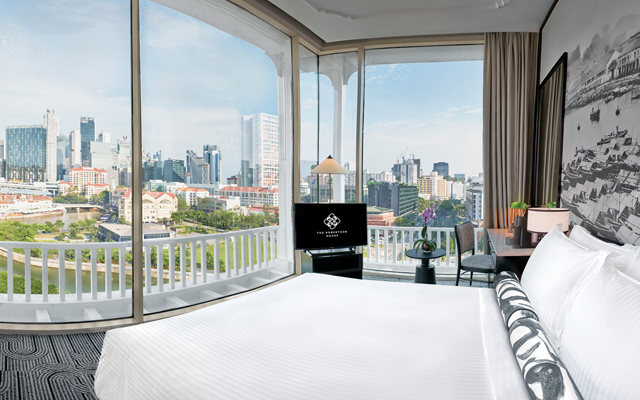
The Crest Collection is a special one. It was concentrated in France but we took it to Asia. The first to open in Asia was The Grand Mansion Menteng in Jakarta. The Robertson House in Singapore followed next, along with The George Penang in Malaysia.
These were all signed and opened within months because they were already so beautiful. We were able to immediately bring them into our network to sell. Because of that, The Crest Collection is able to gain a lot of attention from owners. We are going to convert The Cavendish London and one of our Citadines in Paris into The Crest Collection, and we have signed one in Bucharest.
The Crest Collection is exciting because every property is different. We harness the building as well as its location to deliver a unique guest experience.
Oakwood is thriving too, and is a huge contributor to our record earnings. When we acquired the whole portfolio, we boosted our inventory and that had an immediate impact on our earnings. Oakwood was to us a very good acquisition, with synergies that we were able to harness. We only had to enhance the brand and highlight its unique points.
In Oakwood’s case, the brand focuses on blended travel – the combination of business and leisure, where it takes care of its guests by providing a comfortable environment for rest and work. Owners appreciate Oakwood’s focus on blended travel, which is how people are preferring to travel post-lockdown, so we are able to sign on new properties very fast.
We are bringing more apartment-styled lodging to tourist destinations, like Oakwood Suites Chongli in China’s snow mountains, because it helps us with our loyalty programme.
A lot of our customers are traditionally what we call corporate people. When they earn points from stays during business trips, they hope to use it on their personal travel. We want to give them more options to spend their points with us.
Getting more into the tourist areas is a change in Ascott’s playbook, isn’t it?
Yes, we are a little bit of the new-kid-on-the-block in this tourism space! Traditionally, we have been more apartment-type, more long-stay focused; we are the market leader in this very corporate-focused segment.
Now, we are seeking opportunities to expand our portfolio in tourist destinations, so as to play in the wider hotel space.
To do so, we need a debut party, to tell owners that they can also bring their hotel or resort properties to Ascott, not just their apartment-type real estate, and to tell travellers that they can now spend their loyalty points on a resort stay. It is all about education.
We have a large team of hunters (business development personnel) going out to make sure everybody knows Ascott is here for the party.
How big is your hunting team?
Almost every region has its own team, and we have a special army just for the lyf brand because the product and concept are new, and the target market is slightly different (from our other brands).
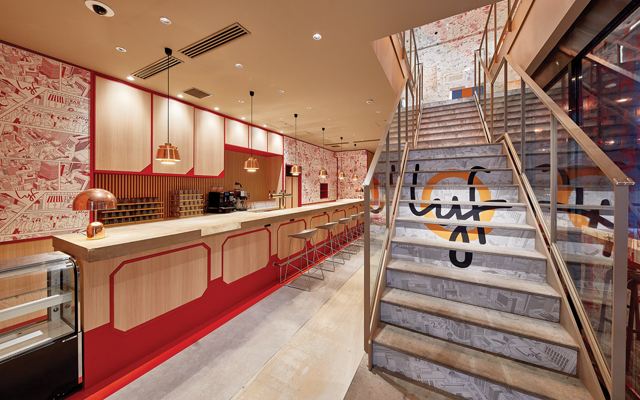
lyf customers like to socialise and do activities together, and are drawn to experiences, so properties are designed differently, with a lot more common spaces, for example. The vibe across lyf properties may be the same, but space and design differ from hotel to hotel.
I remember your first lyf – lyf Funan Singapore, which opened in 2019. Very fun and young.
It is doing well for a home-grown brand and product that we created ourselves. lyf challenges the mindset of owners. Some owners want to have different types of products, not the traditional hotel or apartment, and are prepared to be adventurous. This brand appeals to them.
What lyf openings are planned?
lyf Ginza Tokyo (opened November 2023) is our first lyf-branded property in Tokyo. We will soon open another lyf in Shibuya.
I must say that Japan is an important destination for us; we have almost all our brands in Japan.
Beyond Japan, lyf is also opening in Bondi Junction, Sydney; Gambetta in Paris; Ostend in Frankfurt; Canggu in Bali; Penang and Kuala Lumpur in Malaysia; among many others.
Are there certain brands that work best for Ascott’s presence in tourist destinations?
When we identify a project with the owner, we will consider its location, hardware, and potential clientele. For a location that is more suited for families, we will recommend brands like Somerset. For locations likely to attract blended travellers, we will recommend Oakwood.
Oakwood Suites Chongli is a good case study of our entry into more tourist destinations. The location is popular with business travellers, but it is also known as one of the host cities of the Beijing 2022 Olympic Winter Games and has beautiful snow mountains. We know that business travellers would likely extend for business, or be joined by their family.
In this case, Oakwood is an ideal brand due to its blended travel positioning as well as its strong F&B offering. One of Oakwood’s brand signatures is the comfort-food-inspired programme, All You Knead Is Comfort, where activities such as cooking classes and seasonal pop-ups are conducted.
Are the brands and properties launched in 2023 a reflection of travel trends and travellers’ lodging preferences?
Definitely! The Crest Collection, for example, is doing very well because of the growing desire among travellers for luxurious experiences that are not run-of-the-mill.
At the same time, there are more and more unique assets coming in. From the owners’ perspective, they want to ensure operators of their assets can give them a new personality.
With The Crest Collection or The Unlimited Collection, which will soon announce a brand refresh, we can design very special and luxurious experiential spaces for guests.
Let’s talk about Ascott’s 40th anniversary this year. How is the company marking the occasion?
We want a debut party, like I said earlier, to tell the market that we are here and prepared to give you a full accommodation solution, whether you are an owner, investor or customer. We want to talk about who we have become and who we are going to be. We want to change people’s mindset of Ascott.
Hence, our celebration is themed Ascott Unlimited.
To owners and investors, we want to say that we can bring them unlimited opportunities; we will design something that works, with a whole spectrum of brands and different market positioning to target different customers.
To our customers, we want to invite them to book with us and show them our unlimited choices for business, leisure, wellness, or whatever they are travelling for.
We want to communicate with our people (staff) too, to tell them that they have unlimited opportunities to grow with the company.
Meanwhile, embracing this Ascott Unlimited concept is our Unlimited Good idea that advocates for growth with responsibility. When we speak to owners, we encourage them to have sustainable buildings and suggest features that are friendlier to the environment.
When we speak to our customers, we share with them our conservation efforts.
How does Ascott see its role in the industry changing in the next four decades?
We have been advocating very strongly the concept of tech-forward hospitality. We have the benefit of being younger than a lot of other hospitality firms, so we are in a good position to build technology systems, from the front-end to the back-end.
We are one of the first to embrace cloud technology in our operations, and remain agile with our technology infrastructure, allowing us to embrace new ways of business. It helps that we have a very tech-savvy CEO, who is supportive of our efforts to push ourselves on this front.
Through some of the new announcements we have made, you will see how tech-friendly we are and how we are prepared to try a lot of what we call the new world type of technology.
Take generative AI for example; we are one of the first – if not the first – to have generative AI chatbots answering questions from our customers, allowing us to take a load off our call centres.
Most of the questions customers have are not sophisticated – they usually have just one simple question, but have to wait in line for attention. Our generative AI chatbots tackled some 20,000 calls within the first three months of activation.
I see a lot of good in generative AI. It is getting harder to get good people, so generative AI can help us get some things done while leaving real people to handle the more important tasks.
My team is now using generative AI to create advertising and marketing campaigns. Some that you see online are produced by AI, some by real people. I want to encourage them to use new technology, so I created a competition between human-generated creative assets versus AI-generated ones. We put both to the test, and see which one converts customers better.
So fun! When did you start doing this, and who’s winning so far?
We started this project last year. Creative assets by Team Human are more favoured by our audience, but Team AI works very fast – if this asset is not getting the attention needed, AI can pivot and do something different immediately.
Overall, Team AI performs better with its many assets and in terms of productivity. However, when comparing asset to asset, Team Human gets more engagements.
That’s good news for humans!
Well, yes! We are still doing this with our social posts. We are upholding this tech-forward mindset as a company through courses and workshops for our people.
One last question – what targets has the company set for the team this year, after coming from such a high in 2023?
Two things – one, revenue; two, brands.
Revenue is key, but not just in absolute revenue. We want quality revenue too. If we did 155 this year compared to 100 last year, but everybody else is earning 300, that is not quality revenue.
Next, brands. We have refreshed all our brands and need to make sure all our stakeholders understand what we have done. Brand advocacy, brand understanding, and brand appreciation are all important. Our Ascott Star Rewards loyalty programme is related to this. People are not loyal to loyalty programmes; they are loyal to brands.
So, while we are strengthening our brands and getting people to try us for the first time and be acquainted with Ascott, we are also giving our highest-tier members – those who really spend with us – special experiences.
As part of our Ascott Unlimited 40th anniversary celebrations, we launched Ascott Privilege Signatures, a club that offers exclusive events to members.
We will continue to announce new things throughout the year as part of our anniversary celebrations.



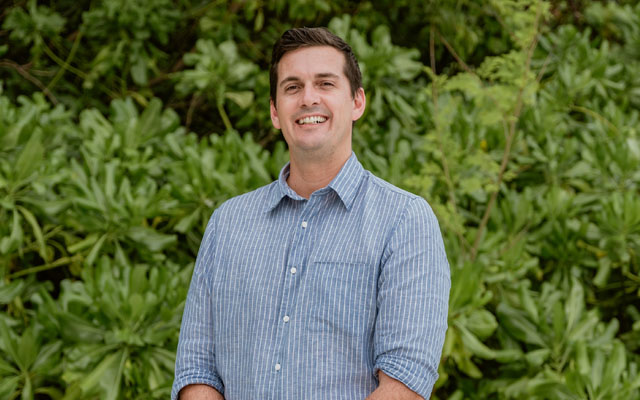
 An Australian national, he brings a wealth of experience to his first general manager posting. Most recently, he served as the hotel manager at W Sydney, overseeing the pre-opening phase of the world’s largest W Hotel.






The Tourism Authority of Thailand (TAT) has designated 2025 an “Amazing Thailand Grand Tourism Year”, targeting a 7.5 per cent increase in tourism revenue compared to 2024, striving to exceed its all-time-high of 39 million foreign visitors and propel over 205 million domestic trips, boosting the number of seven-digit markets to 13 in 2025.
TAT’s 29 branches worldwide will work together to tap global subcultures with high disposable income, and 23 markets with potential to drive over 80 per cent of the income from international tourists.
“Strategies include leveraging Thailand’s newfound popularity as a filming destination to draw fandoms, promoting active outdoor experiences to new generations from the US and Canada, and targeting high-spending lifestyle travellers, such as DINKs (double income, no kids) demographics and LGBTQ+ communities, particularly from Germany and Switzerland,” shared TAT governor Thapanee Kiatphaibool.
Wellness tourism will be a focal point for Russian visitors, and luxury travel services will be marketed to Arab tourists, along with efforts to attract repeat visitors with “deep knowledge of Thailand” who are inclined towards longer trips of 12-18 days, potentially generating up to 30 per cent of inbound revenue.
The shorthaul market revival strategy features a two-pronged approach: attracting younger travellers and leveraging technology for content marketing.
“Since 2019, Thailand’s shorthaul markets have experienced double-digit growth, with the exception of China. We will create a new image of Thailand, especially for younger travellers, to ensure they return in the future – especially for the Chinese, Japanese, Taiwan and Hong Kong markets,” shared Kiatphaibool.
She added: “We will create a memorable image of the country for our ‘future customers’, including children travelling with their parents, by creating travel experiences that align with the interests and activities of the younger generation. Partnerships with international schools and educational institutions in Thailand will also be promoted.”
Kiatphaibool emphasised other dynamic strategies like leveraging content marketing in the beauty and lifestyle niches for Chinese women, partnerships with local malls for South-east Asia shopping enthusiasts; targeting high-income Malaysians and Chinese with extended overland tours, fly and drive groups from Singapore, rail and caravan trips from southern China to northern Thailand; and celebrating 50 years of China relations through diverse exchanges and special promotions like Nihao Month and special deals for Chinese passport holders.
“We will host activities at the government-to-government, business-to-business, and people-to-people levels between the two countries,” stated Kiatphaibool.
The TAT is equally committed to stimulating domestic travel by boosting domestic seat capacity and flight routes, along with the launch of the Tiew Tan Tee Sook Tan Tee (Immediate Happiness from Immediate Travel) campaign designed to inspire spontaneous travel among locals.
“We will cater to high-spending domestic niches like pet owners by promoting pet-friendly accommodations and the LGBTQIA+ community with inclusive travel options. Additionally, showcasing local festival experiences year-round aims to attract Thai outbound travellers to travel domestically instead,” said Kiatphaibool.