

Oceania Cruises introduces innovative marketing solution for trade partners
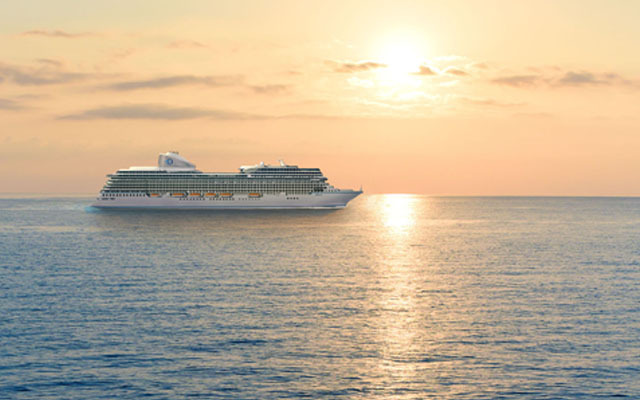
Oceania Cruises has launched Oceania Insider Connect, a free trade solution powered by technology from Approach Guides to boost the sales and marketing efforts of its valued travel advisor partners.
Oceania Insider Connect offers two marketing solutions: the first is instantly brand-able marketing pages that showcase Oceania Cruises’ itineraries, onboard experiences, destinations, ships and latest promotions; and the second is a co-branded website with real-time pricing and availability, driving actionable leads directly to advisors.
In addition to pre-designed content experiences and offers using dynamic images and marketing, Oceania Insider Connect supports advisors with their marketing outreach, harnessing the power of AI to suggest social posts and client emails as well as creating dynamic QR codes linked back to an advisor’s own website.
Oceania Cruises’ sister brands, Norwegian Cruise Line and Regent Seven Seas Cruises, are already experiencing success with their respective versions of this service – NCL Connect and Regent Connect. The programme continues to receive positive feedback, with travel partners stating that the ease and personalisation of the platform has helped them better engage their valued client base and sell more efficiently.
“As we prepare for further growth with the addition of our eighth ship, Allura, launching next summer, this tool will support our travel partners and our mutual success. Our trade partners are busier than ever and Oceania Insider Connect is exactly the type of innovative technology that will make it easy and efficient to cultivate their business,” said Jason Worth, vice president, international sales at Oceania Cruises.
“With Oceania Insider Connect, our esteemed travel advisors will be able to share the Oceania Cruises experience, increase their engagement and build long-lasting client relationships – all with less work and this free tool.”
Universal Studios Singapore reveals new details about Illumination’s Minion Land

Illumination’s Minion Land will open at Universal Studios Singapore (USS) at Resorts World Sentosa (RWS) in 2025, transporting guests in South-east Asia to an immersive, new land inspired by Illumination’s beloved Despicable Me and Minions franchise.
Minion Land will feature multiple rides, including Despicable Me Minion Mayhem and an all-new carousel exclusive to USS, Buggie Boogie, which features dance music remixed by the Minions, as well as a variety of themed retail and dining experiences.

Created in partnership between Universal Creative and RWS, Minion Land will comprise three distinct areas: Minion Marketplace, Gru’s Neighbourhood, and Super Silly Fun Land.
Minion Marketplace is the one-stop location to shop all things Minions including themed sweet treats and merchandise at three stores – Sweet Surrender, Pop Store and Fun Store.
Adjacent to Minion Marketplace is Gru’s Neighbourhood, where the former supervillain now lives with his family, and beneath their home lies Gru’s Lab and his loyal horde of Minions. This is where the popular Despicable Me Minion Mayhem immersive motion simulator ride will be.
Super Silly Fun Land, the seaside carnival from Despicable Me, is right across the street from Minion Marketplace and Gru’s Neighbourhood. Guests can look forward to the Buggie Boogie, the first-ever Minion dance party-themed carousel; Silly Swirly, spinning and soaring through the sky in colourful vehicles while catching views of Super Silly Fun Land and the lagoon; dining at the Super Hungry Food Stand restaurant; indulge in Minion-inspired popcorn flavours; have a go at the Space Killer game booth; and flip bananas at the Ba-Na-Na CaBaNa! for a chance to win prizes.
In addition, there are plenty of fun photo opportunities with the Minions.
“We are thrilled to bring Illumination’s Minion Land to Universal Studios Singapore at Resorts World Sentosa and transport fans in South-east Asia into the world of Illumination’s globally popular Despicable Me franchise,” said Lee Shi Ruh, president of RWS. “With its exciting line up of attractions, retail, and dining – some of which are exclusive to Universal Studios Singapore – Minion Land is poised to be a popular draw for both local and overseas visitors alike.”
Page Thompson, president of New Ventures, Universal Destinations & Experiences, shared: “The Minions are such well-loved characters and this newest land builds on the incredible storytelling from the Despicable Me and Minions franchises, brought to life in an exciting, immersive theme park setting. Guests are going to love this new addition.”
New hotels: Angsana Quan Lan, Mercure Kuala Lumpur Trion and more


Angsana Quan Lan, Vietnam
Nestled in Vietnam’s Bai Tu Long Bay, Angsana Quan Lan boasts 156 rooms and suites offering views of the Gulf of Tonkin. Onsite are three dining venues, spa, rooftop mini-golf course, outdoor lagoon-shaped pool, indoor swimming pool, and event venues.
Angsana Quan Lan also features Vietnam’s first and only coastal zipline integrated into a resort, as well as direct access to Son Hao Beach, ideal for various water sports and activities.

Mercure Kuala Lumpur Trion, Malaysia
Mercure Kuala Lumpur Trion offers 228 rooms, an all-day dining restaurant, lobby lounge, swimming pool, sundeck pool café, gym and function rooms. Committed to sustainability, the hotel adheres to a zero single-use plastic policy, utilising disposable paper amenities, reusable soap bottles and 3M water filtration.
Located within the Trion @ Kuala Lumpur complex, which includes serviced apartments and retail shops, guestst at Mercure Kuala Lumpur Trion can easily access shopping destinations and the Chan Sow Lin LRT station.

SureStay by Best Western Bangkok Ramintra, Thailand
SureStay by Best Western Bangkok Ramintra features 80 loft-style rooms, all equipped with modern features and complimentary Wi-Fi.
Facilities include a restaurant, coffee shop, gym, and meeting room.
The hotel is located on the main Ratchada-Ramintra Road in the city’s Khan Na Yao district, just a short drive from both Suvarnabhumi and Don Mueang International Airports, and a few minutes away from the city’s MRT subway network at Nopparat Station.

Sheraton Lanzhou Anning, China
The 354-key Sheraton Lanzhou Anning offers facilities such as social spaces, dining options, club lounge, and event venues.
There is also the Sheraton Club, an exclusive space for Marriott Bonvoy Elite members and guests staying at Executive Floor, which features curated F&B offerings, premium amenities, enhanced connectivity, and more.
Situated in the heart of Lanzhou’s Anning District in China, the hotel is approximately 55km from Lanzhou Zhongchuan International Airport and about six kilometres from Lanzhou West Railway Station. Guests can easily visit historical and cultural attractions such as the Gansu Provincial Museum and the Zhongshan Bridge during their stay.
Pan Pacific Hotels Group puts a pin on Kyoto
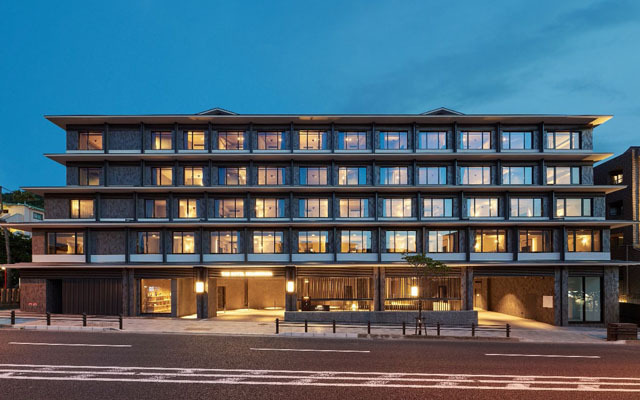
Pan Pacific Hotels Group (PPHG) is expanding its footprint in Japan with the signing of a strategic partnership with Tokyu Hotels that will result in its first Kyoto property. The Hotel Higashiyama Kyoto Tokyu, A Pan Pacific Hotel will join the PPHG portfolio come January 2025.
The 143-room hotel, which recently celebrated its second anniversary, features a design that draws inspiration from the calming flow of the nearby Shirakawa River. Its location allows hotel guests to enjoy easy access to many local attractions.
PPHG has an existing partnership with Tokyu Hotels through Bellustar Tokyo, A Pan Pacific Hotel and Hotel Groove Shinjuku, A Parkroyal Hotel, both located in Shinjuku, Tokyo.
Jun Murai, representative director and president, Tokyu Hotels & Resorts Co., said: “We are very pleased to be partnering with Pan Pacific Hotels Group for the third property, following the two hotels that opened in Tokyu Kabukicho Tower last year. We feel that the core values and vision of Pan Pacific Hotels Group align closely with our company’s purpose and philosophy, and by combining the strengths of both companies, we will be able to develop an even better brand for our guests and the local community.”
Murai added that the partnership would allow The Hotel Higashiyama Kyoto Tokyu, A Pan Pacific Hotel to offer a wider welcome to the world and introduce the charms of Kyoto to more travellers.
Choe Peng Sum, chief executive officer of PPHG, underlined the strong tourism potential of Japan. He said: “JNTO recently announced that visitor arrivals into Japan from January to June 2024 increased by 65.9 per cent to 17.8 million over the same period last year, with the monthly figure for June 2024 hitting an all-time high of 3.14 million.”
He added that Kyoto itself was “consistently ranked within the top five most visited cities in Japan”.
Sri Lanka’s new visa scheme triggers frustration and protests
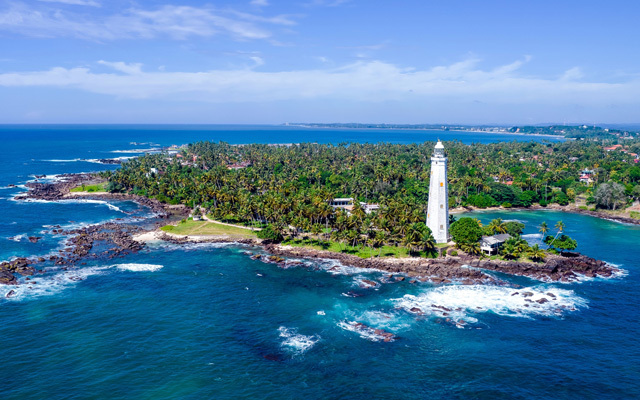
Sri Lankan opposition politicians are backing protests by local travel trade players against a new but confusing and pricier visa scheme that is said to be secured through a fraudulent deal.
The new visa scheme was introduced by Sri Lankan authorities in April 2024, with VFS Global signed on to handle visa processing and facilitation. Under the new arrangement, visa fees are hiked up to US$100 per visitor; it was US$50 previously for a 30-day visa, which included a facilitation fee of US$25.
Travel trade players warned that the new scheme would lead to a drop in tourist arrivals. They made their case in a joint petition, pointing to strong arrivals in November 2023 and January 2024 that fell off after mid-April 2024 when Sri Lanka introduced the controversial VFS Global Visa system. April arrivals dipped below 2017 levels and continued to fall ending May and June below 2015 levels.
Industry protests have so far led the authorities to reverse visa fees to US$50, including a facilitation fee of US$10 in May.
However, citizens of seven countries – India, China, Russia, Japan, Malaysia, Thailand and Indonesia – who are entitled to free visas, are still required to pay a facilitation fee of US$10 per entry.
On July 26, six tourism organisations including the Sri Lanka Association of Inbound Tour Operators (SLAITO) and the Hotels Association of Sri Lanka (THASL) filed action in the Supreme Court pleading that their “fundamental rights” had been violated by the new scheme. They are against the new visa pricing and confusing procedures.
SLAITO president Nishad Wijetunga said the new visa system was complicated and confusing. From having to deal with just 10 to 11 questions previously, visa applicants must now answer around 30 questions. Furthermore, visa applicants who log into the Sri Lanka Immigration Department website are now redirected to the VFS Global website, where they are asked for the country they intend to travel to, which Nishad felt was confusing.
THASL president M Shanthikumar said the website was not user-friendly and added that travellers from India, Sri Lanka’s biggest source market, have raised genuine concerns.
Separately, three politicians from the main parliamentary opposition have also filed suits in the Supreme Court claiming their rights had been infringed on by what they perceived as a corrupt and fraudulent deal.
The authorities have dismissed claims of fraud in the transaction with VFS Global.
The scheme also raised security concerns. A visitor who was issued a visa was also sent via email details of another applicant. Erroneous visa communications is another reason politicians have headed to court, citing security flaws.
A 50 and Fabulous Special: Royal Plaza on Scotts
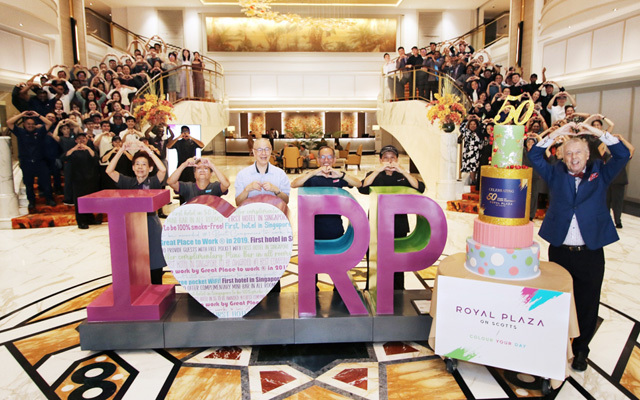
More than just marking its 50th anniversary in March 2024, Singapore hotel Royal Plaza on Scotts celebrated five decades of providing guests with warm hospitality.
During the celebration month, Royal Plaza on Scotts hosted a series of events, including internal celebrations for its staff, community outreach programmes throughout the year, and special promotions for guests.
The hotel has been a big part of Singapore’s hospitality scene for five decades, and over the years, it has transformed itself alongside the city. Beginning its journey as the first Holiday Inn property in Asia in 1974, the property underwent several rebrandings before it was named Royal Plaza on Scotts in 1999.
From offering first-of-its-kind amenities like complimentary minibars and Wi-Fi to achieving remarkable feats like crafting the largest bread and butter pudding heart, the hotel has always pushed boundaries. The property also actively engages in community support initiatives such as with Comchest, reinforcing its commitment to social responsibility.
The hotel’s general manager and chief experience officer, Patrick Fiat, shared: “Our commitment to providing exceptional service has also earned us numerous awards, including Best Independent Hotel in Asia-Pacific and recognition for our outstanding workplace culture. Our popular buffet restaurant, Carousel, has been awarded Singapore’s Best Buffet Restaurant and has welcomed over 5.3 million diners since 2007.”
Aside from the accolades, perhaps the most heart-warming aspect of Royal Plaza on Scotts’ story is its positive workplace culture.
Ruslan Abdullah, an engineering supervisor with five decades of service, said: “I have been working here for 50 years, and in this hotel, we do not use access cards. Trust and respect for each other are fundamental here.”
Carol Teo, a housekeeping attendant who has been with the hotel for just as long, added: “Whether you’re in top management or entry-level, everyone is treated the same. That’s what I like about Royal Plaza on Scotts.”
Challenges, of course, were inevitable. With the rise in competition around Orchard Road in recent years, Royal Plaza on Scotts has to keep on finding new and refreshing ways to attract both loyal and new guests to stay. The recent pandemic also forced the hotel to prioritise safety and adapt to a new reality.
Some of the forward-looking strategies, shared Fiat, included the continuous enhancement of customer experiences through upgraded facilities and services; embracing technology to enhance operational efficiency; and exploring new marketing and data analytic tools to better understand market trends and customer behaviour.
Fiat pointed out: “Building strong partnerships are also important. These include forming strategic alliances with travel agencies, airlines, and local attractions to create comprehensive travel packages, and collaborating with industry stakeholders to stay ahead of market trends and regulatory changes.”
One more strategy in Fiat’s toolbox for the future is the fostering of its positive workplace culture to attract and retain top talent, and investment in staff training to ensure high service standards and employee satisfaction, which translates to better guest experiences.
By proactively addressing these challenges and implementing forward-thinking strategies, Royal Plaza on Scotts can ensure its relevance and success for another 50 years in Singapore’s dynamic hotel sector.
Fiat concluded: “As we celebrate 50 years of hospitality excellence, Royal Plaza on Scotts remains committed to our core values of trust, respect, fun at work, and teamwork. We look forward to continuing to innovate and provide exceptional experiences for our guests, while also contributing positively to our community. Here’s to another 50 years of warm hospitality and memorable moments.”
Travel dream comes true for Vietnamese orphans

Meliá Hotels International and Vietnam Airlines played travel fairy godmothers to 70 orphans from Nha Trang on July 23, whisking them away for an overnight stay at Meliá Vinpearl Cam Ranh, where the children also got to have fun with crafting and teambuilding games.
 The event marked the start of a long-term agreement between the Spanish hotel group and Vietnam Airlines, with the intention of supporting local communities through once-in-a-lifetime experiences. Meliá has pledged to organise a fun-filled trip for disadvantaged Vietnamese youths once a year in a domestic destination where it has a hotel or resort.
Meliá currently has 19 hotels across the country.
Last week’s initiative was also supported by SpaceSpeakers Group and Vietnam Children’s Fund Social Enterprise Co.
Cathay Pacific brings back tree-planting initiative in South-east Asia

Hong Kong flag carrier Cathay Pacific is conducting the fourth edition of its annual 1 Ticket, 1 Tree initiative across South-east Asia, where one mangrove tree is planted in the region for every flight ticket purchased from Singapore, Malaysia, Philippines, Thailand, Indonesia, Vietnam and Cambodia during the activation period.
The initiative takes place this week, from July 25 to 31.
The airline will take into account tickets purchased on its own website and mobile app, as well as those booked by corporate clients through Cathay’s agents.
The initiative was first launched in 2021, and has resulted in the planting of 30,000 mangrove trees. It is supported by 13 partners including corporations, non-profit organisations, and local environment and community groups.
For the 2024 edition, the initiative is expanded to cover cargo shipments across the region, where a tonne of cargo booked results in one planted tree.
Cathay regional general manager for South-east Asia, Dominic Perret, said: “Given the vital role of mangrove forests in supporting local communities and protecting their livelihoods, doing our part to ensure they grow and thrive deeply resonates with us. We are therefore very encouraged by the strong support 1 Ticket, 1 Tree has received across South-east Asia since we started this initiative four years ago.”
Albatros Expeditions to lead first-ever Halal-certified cruise to Antarctica

Muslim explorers to the Antarctica will soon be able to take comfort in the knowledge that their meals will come from a fully Halal-certified kitchen – made possible by Albatros Expeditions’ Halal project, which is said to be the first of its kind in the polar industry.
Albatros Expeditions’ Halal-certified kitchen will come into operation in 2026.
The initiative is spearheaded by the company’s South-east Asia business development manager Rashidah Lim, an industry veteran and the polar industry’s only female Muslim expedition leader. She is supported by her colleagues in marketing, business development, and product divisions.
Jens Rasmussen, COO and board member of the Albatros Travel Group, described the launch of the first Halal-certified cruise to Antarctica as “an exciting milestone” for the company.
While travellers with other religious identities are welcome onboard, the Muslim-friendly environment means no pork or alcohol will be served. Guests are also not allowed to bring outside F&B onto the cruise ship.
Apart from Halal-certified dining, accreditation by CrescentRating, there will also be ladies-only hours in the onboard sauna every day.

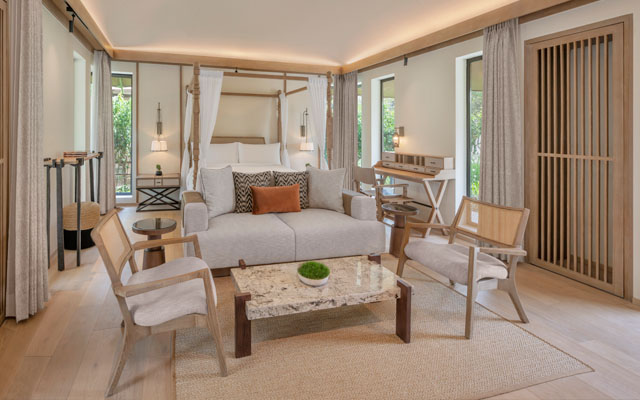






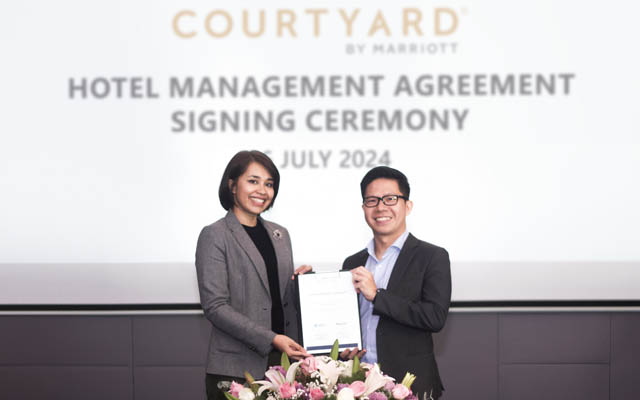
Marriott International recently signed a hotel management agreement with SKS Group to open Courtyard by Marriott Subang in Selangor, slated to be operational in 2026.
This agreement will be the third collaboration between both companies, following the launch of Four Points by Sheraton Desaru in 2021 and the opening of Sheraton Johor Bahru next year.
Courtyard by Marriott Subang, part of a mixed-use development featuring retail spaces, will offer 280 guestrooms, an all-day dining restaurant, rooftop pool, and event spaces when opened.
The hotel is located in Subang’s bustling economic zone, with leisure attractions nearby. It is just a five-minute drive from Sultan Abdul Aziz Shah Airport and 35 minutes from Kuala Lumpur International Airport .
Andree Susilo, senior director, hotel development, Asia-Pacific, Marriott International, said: “Subang is flourishing, with increasing demand from both international and domestic travellers, making it an ideal fit for Courtyard by Marriott, where guests are offered everything they need while travelling for business or leisure.
“Our partnership with Marriott International cements our contribution to Subang’s appeal as a commercial and leisure destination with an array of our distinctive hospitality offerings. It sets the stage that will further propel the hotel industry to greater heights in Malaysia and underscores our shared vision and mutual dedication to provide exceptional hospitality experiences,” shared Meera Raj, head of hospitality, SKS Group.