TTG Asia
Asia/Singapore Friday, 10th April 2026
Page 33

Asia set to drive global aviation growth over next two decades: Alton

0

Asia is forecast to drive global aviation growth over the next two decades, with India, China and South-east Asia expected to account for eight of the world’s 10 fastest-growing air travel markets between 2024 and 2044.

The findings are outlined in a new whitepaper released by Alton Aviation Consultancy ahead of the 2026 Singapore Airshow.

India, China and South-east Asia are expected to drive the next phase of global aviation growth

According to the report, international passenger traffic in Asia-Pacific grew by eight per cent in 2025, exceeding global revenue passenger kilometre growth of 6.8 per cent. Airlines across the region have launched more than 600 new routes since 2015, expanding access to secondary and underserved destinations and strengthening regional connectivity.

India is identified as one of the fastest-growing aviation markets globally, supported by economic growth and rising demand for air travel. While China remains a major contributor to regional traffic, the report notes increasing momentum in South-east Asia, particularly in Indonesia, Vietnam and the Philippines.

The whitepaper also points to near-term opportunities on unserved and underserved routes. Advances in longer-range narrowbody aircraft are expected to support new point-to-point services between secondary cities, allowing airlines to operate routes that were previously not viable for widebody aircraft.

The report also observes a rise in airline consolidation across Asia as carriers respond to cost pressures and competitive conditions. While demand remains strong, financial challenges are prompting airlines to reassess operating models and pursue structural changes to support longer-term resilience.

To accommodate projected growth, governments and airport operators across the region are progressing major infrastructure developments and introducing new technologies aimed at improving capacity, efficiency and passenger handling.

“Asia’s air travel story is no longer just about China. The growth we’re seeing in South and South-east Asia is broad-based. Airlines are responding with strategic moves, from entering new markets and renewing fleets to forging ambitious partnerships that reflect the region’s evolving competitive dynamics,” said Mabel Kwan, managing director in Alton’s Singapore office.

“We’re seeing patterns that echo past restructuring cycles in North America and Europe. But in Asia, this shift is unfolding against a backdrop of ongoing traffic growth, which presents a very different kind of opportunity,” added Adam Cowburn, managing director in Alton’s Singapore office.

The report, Repositioning for Resilience: Managing Volatility and Unlocking Long-Term Growth, can be viewed here.

Archipelago expands globally across more segments

0

Archipelago is scaling its global footprint, expanding into Latin America, South-east Asia and the Middle East with a strategy that spans ultra-luxury to high-volume pilgrimage accommodation.

The Indonesia-based international hotel group has entered the premium segment by launching its first luxury brand in partnership with Tonino Lamborghini.

Archipelago and KEC formalise their joint venture as part of Saudi Arabia expansion plans

Speaking at the CEO Table: Hospitality Unpacked in Jakarta, John Flood, CEO of Archipelago, said the group opted for a partnership rather than developing an in-house brand to secure a “strong lifestyle brand rather than creating one from scratch”.

The collaboration has led to the launch of Tonino Lamborghini Hotels by Huxley, with the first four ultra-luxury projects already signed in the Dominican Republic, Colombia and Miami.

Under the partnership, Archipelago will also manage Tonino Lamborghini Residences.

Building on this momentum, the group is eyeing further expansion of its luxury portfolio in Mexico, Indonesia and the Philippines, while also making a strategic entry into the Middle East.

At the end of 2025, Archipelago signed a joint venture agreement with Knowledge Economic City (KEC) to establish a Madinah-based hospitality management company, with equal shareholding. The partnership aims to set up a specialised hospitality management platform, develop a Saudi hotel brand and deliver its first project in Madinah as part of KEC’s wider expansion in the Kingdom’s hospitality sector.

The first project will be a 2,600-room property spanning eight hectares, targeted to open in early 2028. The concept is intended to be replicated in Mecca and Jeddah, allowing pilgrims to follow the same travel route across all three locations.

“These are two-star hotels designed for group travels, with large room capacities. KEC is developing up to 40,000 hotel rooms, along with shopping malls, sports facilities and transportation infrastructure,” he said.

“As an Indonesian company, our immediate strength lies in bringing the Indonesian pilgrim market. That is our primary focus at the moment. Indonesia sends millions of pilgrims every year. This represents a massive, stable demand,” he said.

Beyond the pilgrimage route, Flood said Archipelago would also enter the Red Sea region with more conventional leisure hotels.

Closer to home and across the Atlantic, Archipelago’s growth will continue with 26 properties scheduled to open this year. A significant portion of this expansion is concentrated in the Caribbean, where the group will launch 10 Aston and By Aston branded hotels in the Dominican Republic.

Flood highlighted the strategic value of the region, noting that “the American outbound market is massive”, with the Dominican Republic and Mexico remaining the two most popular destinations for US travellers.

Other openings this year include an Aston property in Cuba and two KOOP-branded properties in the Philippines. In Indonesia, 13 new and rebranded properties will be added to the group’s existing portfolio of 165 hotels across the country.

Archipelago operates more than 45,000 rooms across more than 300 hotels in South-east Asia, Latin America, the Caribbean, the Middle East and Oceania.

Preferred Hotels & Resorts adds 21 properties to global portfolio

0

Preferred Hotels & Resorts welcomed 21 new member properties to its global portfolio between October 1 and December 31, 2025, expanding its presence across Europe, Asia-Pacific, the Middle East, Africa and the Americas.

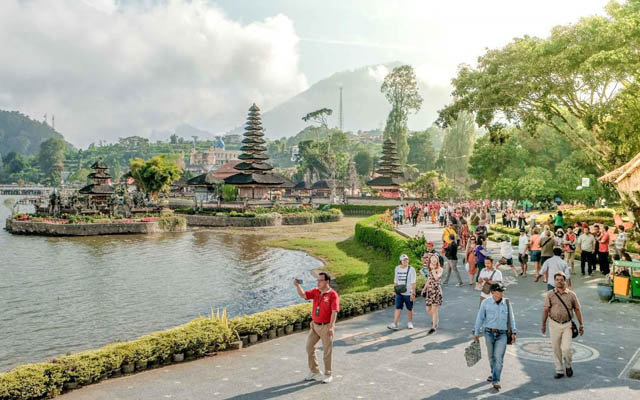
The new additions include a range of independent hotels and resorts across the brand’s LVX, Lifestyle, Legend and Preferred Residences collections. Among the new members are Samsara Ubud in Bali, a 17-villa property; Treasure Bay Fuxian Lake in Yunnan province, China, with 464 rooms; Admiral Hotel in Copenhagen, housed in a restored 18th-century waterfront warehouse; Horseshoe Bay Resort in Texas Hill Country, set across about 2,833 hectares along Lake Lyndon B Johnson; and Masseria San Domenico in Puglia, Italy, a restored 15th-century estate with 40 rooms and suites.

Preferred Hotels & Resorts expands its global portfolio with 21 new member properties, including Samsara Ubud in Bali, pictured

Other properties joining the portfolio during the period include hotels and residences in Italy, Spain, Denmark, Israel, Panama, South Africa, Egypt and the US. The Egypt additions include five Nile cruise vessels operating from Luxor.

Many of the new member properties participate in I Prefer Hotel Rewards, the group’s points-based loyalty programme, which has more than six million members globally. New and existing members can earn 2,500 bonus points on eligible stays at participating new member hotels for bookings made by March 31, 2026, for stays completed by June 30, 2026.

Lindsey Ueberroth, CEO of Preferred Hotels & Resorts, said: “These additions reflect our commitment to curating exceptional, experience-led travel around the world, including our exciting entry into Egypt’s luxury Nile cruise segment, with five exceptional Nile cruise experiences now part of our global portfolio.”

Preferred Hotels & Resorts now represents more than 650 independent hotels, resorts and residences worldwide.

Tan Boon Khai to lead Therme Group as CEO

0

Therme Group has appointed Tan Boon Khai as CEO of Therme Group Singapore. He will lead the development of Therme Singapore at Marina South as part of the group’s expansion in Asia.

Tan has more than 30 years of experience across the public and private sectors in Singapore. He was previously CEO of JTC Corporation.

ASEAN outlines tourism priorities for 2026-2030

0

The Declaration on the Implementation of the ASEAN Tourism Sectoral Plan 2026-2030 was unveiled on January 29, 2026 at the ASEAN Tourism Conference in Cebu, Philippines, marking a decisive move from post-lockdown recovery towards long-term transformation of the region’s tourism sector.

The declaration aligns with the ASEAN Vision 2045, the bloc’s long-term development blueprint endorsed by ASEAN leaders in May last year, which sets out a 20-year trajectory for the region’s economic, social, and institutional growth.

The declaration sets out five priorities to guide South-east Asia’s tourism development over the next five years

Under Vision 2045, tourism is positioned as a key driver of quality growth, resilience, and meaningful employment.

In 2024, tourism generated close to US$400 billion in 2024, accounting for almost 10 per cent of South-east Asia’s GDP and supporting about 42.5 million jobs, shared ASEAN deputy secretary-general, Satvinder Singh in his opening address.

In 2025, South-east Asia welcomed 144 million international visitors, a 13.4 per cent year-on-year increase, with nearly 48 million travellers coming from within the region.

He noted that South-east Asian tourism faces mounting pressures from climate change, digital disruption, geopolitical uncertainty, and intensifying global competition.

He shared that the ASEAN Tourism Sectoral Plan and the ASEAN Tourism Marketing Strategy for 2026-2030 is an opportunity for the region to move decisively from recovery to transformation.

The five-year sectoral plan is built around five interlinked priorities: resilient tourism, empowerment of the tourism workforce, accessible and seamless travel, digital tourism and product diversification, and sustainable tourism.

As host country and lead country coordinator for the ASEAN Tourism Sectoral Plan, the Philippines highlighted how national policies are already aligned with the plan’s five priorities.

Department of Tourism secretary, Christina Garcia Frasco said the Philippines’ experience, particularly in climate resilience, had helped to shape the plan’s direction.

She underscored the importance of resilience today, citing recent floods, earthquakes, and extreme weather events affecting Cebu and other destinations in the country.

She pointed to government initiatives that are currently underway, including large-scale skills training, emergency cash assistance for displaced tourism workers, visa liberalisation, as well as improved air connectivity.

Frasco shared that Cebu alone had gained 12 new international routes in 2025, thus strengthening its role as a regional gateway.

She also highlighted the Philippines’ digital nomad visa, expanded visa-free system for major markets, partnerships with global payment platforms, and the Philippine Experience Program, which is designed to promote culture, heritage, gastronomy and emerging destinations to ease pressure on overcrowded sites and raise visitor spending.

Asian Development Bank (ADB) vice-president for East and South-east Asia, and the Pacific, Scott Morris said South-east Asia’s tourism rebound has been driven by strong intra-regional travel and renewed long-haul demand.

“Countries are transitioning away from volume-led models towards higher-value and more diversified forms of tourism,” Morris said, adding that ADB has committed more than US$4 billion to tourism-related projects and has a US$3 billion investment pipeline through 2030.

An ASEAN Dialogue Partner, Igor Maksimov, deputy director general Department of Multilateral Economic Cooperation and Special Projects at the Ministry of Economic Development of the Russian Federation, said Russia is prepared to support ASEAN member states through technical cooperation and capacity building, including smart city management systems, large-scale tourism investment projects, and workforce training programmes.

Timor-Leste eyes tourism growth as ASEAN’s newest member

0

Fresh off its historic accession as the 11th member of ASEAN, Timor-Leste has set an ambitious goal to welcome 200,000 international visitors annually by 2030.

As the first new nation to join the regional bloc in over 25 years, the country is leveraging its membership to open its doors to a new wave of international travellers, positioning itself as South-east Asia’s last frontier for authentic, sustainable adventure, stated Antonio da Silva, director general of tourism, Ministry of Tourism and Environment, Government of Timor-Leste.

Da Silva said ASEAN’s platform and support would help raise Timor-Leste’s profile and position it among recommended destinations in the global market

When asked if Timor-Leste would be ready to host the ASEAN Tourism Forum in 2029, da Silva said that they are “working towards what is expected of us in 2029”.

“At this point, the government is trying to catch up (to other ASEAN member states) in terms of facilities, human resources, and ground support. It’s not only infrastructure capacity that we need to address, but also the broader agenda of aligning our human resources and regulatory standards with the ASEAN framework,” he elaborated.

Timor-Leste is modernising its infrastructure to grow beyond an existing event capacity of 200 to 300 participants. The Dili International Conference Centre, which broke ground last year, is expected to meet ASEAN MICE Standards in time to host the 2029 ASEAN Summit. Accommodation is also expanding, with the recent opening of JL World Hotel and the nation’s first five-star property, Palm Springs Hotel Dili.

Simultaneously, a major upgrade of Presidente Nicolau Lobato International Airport is underway. The project includes a new terminal and a runway extension to 3,000m to accommodate larger aircraft, with a goal of handling up to one million passengers annually by 2028 – a significant jump from the current 250,000. Work will also soon begin on the Dili Waterfront Upgrade, a 2.7km redevelopment of Avenue de Portugal that will transform the coastline into a tourist hub with modernised walkways, retail, and dining.

In addition, new initiatives, such as the Tourism Service Ambassador Training Programme will be launched this year. The government is also reviewing and upgrading tourism curricula to align with the ASEAN Mutual Recognition Arrangement on Tourism Professionals and Core Competency Standards.

Da Silva also acknowledged that it is a challenge to promote Timor-Leste as a standalone destination, but joining ASEAN will help it to create multi-country travel packages.

“With all the support and the platform that ASEAN has, (it will) uplift our image to become one of the most recommended destinations within the global market,” he concluded.

New exhibition plaza project set to reshape Kep’s coastline

0

A major multi-million dollar coastal project is slated to change the face of Kep in southern Cambodia, positioning the quaint coastal town as one of the region’s prime beach destinations.

Kep Exhibition Plaza (KEP), spearheaded by Kep West, will include event spaces, art installations, F&B outlets, a stretch of beach, the country’s first underwater museum showcasing marine conservation efforts in the area, and a beach club.

Kep West plans a multi-million dollar coastal development in Kep, featuring event spaces, a beach club and Cambodia’s first underwater museum

Jef Moons, owner of Kep West, said KEP will comprise The Lighthouse and The Beach Club, which will transform the area into a leading destination for culture, lifestyle and sustainable tourism.

“The Lighthouse and The Beach Club represent a new era for Kep. These projects are designed to honour Kep’s heritage while shaping a forward-looking coastal destination that blends architecture, community and culture,” Moons said.

The Lighthouse will be a “contemporary landmark overlooking the sea”, featuring a range of F&B outlets, flexible event and meeting spaces, concept stores, and a multifunctional ballroom for private events, weddings and conferences.

Next to it, The Beach Club will be a blend of an upmarket beachfront restaurant, bar, infinity pool and lounge areas. Moons said it will host lively beach parties. The space will also house the Royal Cambodia Yacht Club.

Development of The Lighthouse and The Beach Club is set to begin early 2026, with openings planned for the 2027-2028 season.

The project also includes the Art for Kep initiative that aims to position Kep as a creative hub by connecting local and international artists through residencies, exhibitions and collaborative projects.

This year’s residency will form the basis of the Ocean Museum and Underwater Gallery, which will feature 3D-printed sculptures designed to serve as both artworks and living coral reefs. A Mangrove Forest Project is also planned to present art and environmental education.

“Collectively, these initiatives will elevate Kep into one of South-east Asia’s new coastal destinations ready to be discovered. The city will stand out for its innovative architecture, diverse lifestyle options, rich cultural activities and real sense of authenticity,” Moons said.

Emirates, Marriott to develop Ritz-Carlton lodge in New South Wales

0

Emirates and Marriott International have signed an agreement to develop Emirates Wolgan Valley, a Ritz-Carlton Lodge, a 40-key all-inclusive property to be located within a 2,833-hectare conservancy in Australia’s Greater Blue Mountains World Heritage area.

The project is expected to be the first Ritz-Carlton Lodge globally and is scheduled to open in mid-2026. The lodge will be developed on the site of the former Emirates Wolgan Valley Resort in New South Wales and will operate within a conservation reserve, with the built footprint occupying less than two per cent of the land.

The 40-key development will add to The Ritz-Carlton’s existing presence in Australia

Since 2006, Emirates has invested A$150 million (US$99 million) in the Wolgan Valley property, including restoration of heritage structures such as the original 1832 homestead and conservation programmes involving the planting of more than one million native trees. Emirates is investing an additional A$50 million in refurbishment works, in collaboration with Marriott International, to reposition the property under The Ritz-Carlton brand.

Following the closure of Wolgan Valley Road in 2023, Emirates maintained the site with a small team of locally employed staff while operations were suspended. The reopening of the lodge is expected to support up to 150 jobs and provide opportunities for local suppliers.

Access to the lodge will be via four-wheel drive along the Donkey Steps or by helicopter. The property is planned to include 40 lodges, each with a private pool, along with dining venues, wellness facilities, recreational amenities and guided outdoor experiences led by resident experts.

The development will add to The Ritz-Carlton’s existing presence in Australia, which includes properties in Perth and Melbourne.

AI visibility critical for hotels, CREX highlights

0

As generative AI shifts from a search novelty to a functional booking engine, the hospitality industry is facing a critical pivot.

Sam Hon, CEO of CREX, an AI visibility scanner for hotels, stated that travel planning AI adoption rose globally from 22 per cent in 2023 to 48 per cent in 2025, with 78 per cent projected for 2026. Currently, 60 per cent of AI users are using the technology for travel bookings.

Hon emphasised that the goal is visibility during early planning to bypass intermediaries and drive direct bookings; photo by Anne Somanas

Hon said AI should be treated as an emerging distribution channel, comparable to an OTA or wholesaler.

Speed is becoming critical, as AI models refresh roughly every 10 days. Properties that require too much effort to be discovered are often bypassed in favour of more accessible data sets. Traditional SEO keyword matching is proving ineffective, as AI prioritises semantic meaning over keywords.

“SEO doesn’t work very well with AI, because AI looks into semantic meanings – meanings of words, paragraphs or even long conversations; it does not do keyword matching,” Hon noted.

Data consistency is another challenge. AI reasoning models cross-reference a hotel’s declared information against multiple digital touchpoints. Discrepancies between websites and social media profiles, or even images such as lobby posters, can result in lower discovery scores.

Hon also warned of “GEO poisoning”, where external bloggers or third parties shape a hotel’s brand identity if the property fails to manage its own narrative.

Looking ahead, AI wallets and hyper-personalisation will automate the conversion process. The goal is visibility during early planning to bypass intermediaries and drive direct bookings.

“AI wallets are coming soon, and the traveller will be comfortable doing everything within AI. The first step is you must be visible; you must be in the list. Only then does the commerce and the checkout process come in,” Hon said.

Universal Studios, Pokémon level up theme park collaboration

0

Universal Studios Japan and The Pokémon Company have outlined plans to develop new Pokémon-themed experiences, with the first phase set to begin at Universal Studios Japan. The project forms part of the park’s ongoing strategy to expand its range of character-based attractions.

The collaboration aims to introduce new immersive experiences based on the Pokémon franchise. Universal Studios Japan has previously presented Pokémon parades and shows since October 2021, and the new project will build on these earlier initiatives.

Universal Studios Japan and The Pokémon Company plan new Pokémon-themed experiences, with the first phase launching in Japan; photo by The Pokemon Company

Following its debut in Japan, Universal Destinations & Experiences plans to introduce Pokémon experiences at other Universal parks worldwide. Further details, including timelines and formats, will be announced at a later date.

The project is positioned as a long-term collaboration between Universal Studios Japan and The Pokémon Company, marking the next stage in a partnership first announced in 2021. The new development coincides with Pokémon’s 30th anniversary.

Universal Studios Japan said the initiative is intended to expand the park’s portfolio of large-scale themed entertainment, while also serving as a foundation for future international developments across Universal’s global network.

Mark Woodbury, chairman and CEO of Universal Destinations & Experiences, said: “Collaborating with imaginative and inventive storytellers fuels our ability to create and deliver mind-blowing attractions and experiences that shatter guest expectations.”

“As Pokémon celebrates its 30th anniversary this year, we are thrilled to launch this new project at such a significant milestone. Our mission is to enrich both the real and virtual worlds through Pokémon, and with this project, we aim to create theme park entertainment that surprises and delights fans around the globe,” added Tsunekazu Ishihara, president and CEO of The Pokémon Company.