TTG Asia
Asia/Singapore Friday, 26th December 2025
Page 325

This way to innovation

0

Digital transformation within Singapore’s hotel sector has picked up pace over the course of the pandemic disruption, as managers and operators realise a need to raise their efficiencies and service quality amid growing resource strains and changing consumer expectations.

As the national agency driving Singapore’s digital transformation and often the go-to for organisations seeking innovation clarity, the Infocomm Media Development Authority (IMDA) knows this best. It has seen a spike in assistance requests from hospitality organisations in recent years.

Royal Plaza on Scotts makes it easy for guests to access services

Ng Kaijie, director for innovation at IMDA, told TTG Asia that the Covid-19 pandemic was a “catalyst” for innovation.

“During the downtime, many hospitality managers were able to rethink their strategies and operations. Organisations with a bit more cash in hand were able to ponder about innovation so as to emerge better post-lockdown. The practice of social distancing then also forced hospitality managers to consider the possibility of an evolved face-to-face service expectation,” Ng elaborated.

However, the path from transformation realisation to innovation execution is not always well-lit.

“We had companies coming to IMDA saying that Generative AI is so hot now, how could it be applied to their business,” recalled Ng.

To move the cart behind the horse, IMDA leads companies into a conversation – a process the agency calls design thinking – to first identify their problem statement and desired outcome.

Ng said: “The technology to be applied is more of an afterthought; it may not be Generative AI at all.”

IMDA also helps companies to identify the right solution provider in a sea of options and stays on to provide advice throughout the innovation journey.

Ng said companies might not realise “things they need to consider in their innovation journey”, such as required equipment, customer data protection requirements, and cybersecurity strategy.

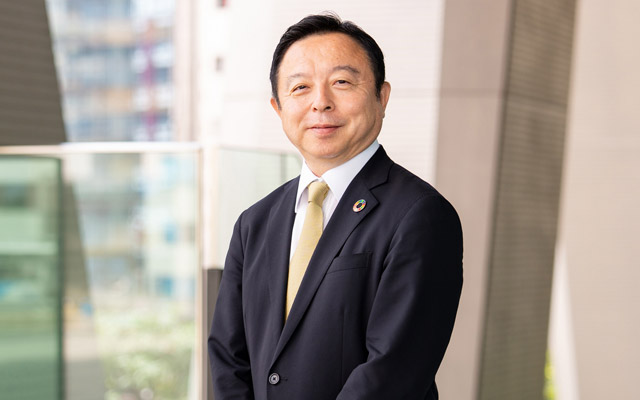
From left: Vouch’s Joseph Ling; Royal Plaza on Scotts’ Neeta Dave; IMDA’s Ng Kaijie

Essential help
IMDA’s Open Innovation Platform – which is free to use – supports and empowers companies to drive success through the innovation process. Companies seeking digital solutions start off by working with IMDA consultants to diagnose and refine their challenge statements, which are put up for quarterly Innovation Calls. During these calls, IMDA will scout for solvers from its pool of over 13,000 solution providers worldwide. Companies can then review proposals, select finalists, and fund their preferred solution provider to begin prototype.

For hoteliers that want an immediate solution to their problem, IMDA’s Discovery engine comes in handy. It functions like Google search, allowing users to type in what they are looking for and get some possibilities based on past winning solutions offered by listed solution providers. Hoteliers can then enquire with suggested solution providers.

IMDA only lists solution providers that were active in earlier Innovation Calls.

It also works with other agencies, like the Singapore Tourism Board (STB), to bring credible solution providers on board. STB has its own rigorous selection process for its Singapore Tourism Accelerator, a programme that gathers the world’s most promising technology startups or scale-ups that can power the travel and tourism industry.

Spotlight: Vouch
Established in 2016, Vouch has been catalysing digital transformation in the hospitality industry through a whole technology stack that supports rooms & housekeeping, F&B, and revenue departments. It won the Singapore Tourism Awards’ Best Business Innovation award in 2019 and was named one of PhocusWire’s Hot 25 start-ups for 2021.

Joseph Ling, CEO and founder of Vouch, recalled that Vouch started off wanting to solve hotels’ labour problem.

“It still is the main problem we are trying to solve,” he said. “Hotels in Singapore have a major labour issue, which existed even before the pandemic; Covid-19 exacerbated it.”

Ling sees the potential for technology to improve several processes in a hotel.

He said: “In some countries, language is a problem because English literacy is not very high. Communicating with foreign tourists is a challenge. Technology can help. In some countries, hotels are under pressure to drive up ancillary revenue. Technology can help.”

He added that understanding data could take innovation for efficiencies even farther. However, this requires data analysts who are also familiar with hotel operations.

“Not all hotels can afford such a resource,” reflected Ling, who is now looking at ways to use AI to process data and produce insights that enable process tweaks.

Labour pains
While acknowledging that hotels are a high-touch business, Neeta Dave, director of operations at Royal Plaza on Scotts, a hotel located in a prime section of Singapore’s Orchard Road shopping belt, has had to rely on technology to ease manpower strains.

The hotel uses a Vouch system that allows guests to convey common requests – like extra water, fresh towels, and dinner reservations at the hotel – via a QR code. Guests can also indicate in the system their desire for the concierge or housekeeping attendant to call them back for more complex requirements. With this system, the hotel no longer need to dedicate staff to answering calls.

“Our staff can be directed to other important tasks that would build their job expertise or give them a more rewarding job experience,” said Neeta.

Obstacles to change
As people are by nature resistant to change, both Ling and Neeta said patience is needed for successful transformation.

Ling said: “I’ve learnt that we cannot give a software to a customer and expect improvement to happen. Innovation adoption must be paired with change management. We have to advise them on how to improve their processes with the software, be patient, and make changes step by step for all users.”

Neeta advised communicating the need for innovation clearly to employees to eliminate suspicion that technology would replace them.

It was also important to have support from the general manager and the board for innovation to work, she added.

To further improve operational efficiencies, Royal Plaza on Scotts will by end-March install check-in kiosks in the hotel lobby. Neeta said: “Even with this facility, staff need not fear replacement because they will be stationed at the kiosks to assist guests who need help.”

Ready for change

0

When this issue lands on your lap in March, I would have just crossed my 18th year with TTG Asia Media – an auspicious number, I know. I often get asked what is keeping me this long in the same job and industry. My reply – I’m covering an ever-changing travel and tourism landscape, so there is never a dull day.

However, change is not always welcomed and understood. My interviews the past month with industry leaders have highlighted the pressing need to evolve operations, especially amid manpower challenges. Pan Pacific Hotels Group is undertaking a million-dollar job transformation exercise that involves time-motion studies and data scientists. Singapore’s Infocomm Media Development Authority is stepping up its outreach to a growing number of local hoteliers that need guidance on their innovation journey.

The purpose of innovation needs clarity and buy-in from all levels and users, so as to avoid fear and suspicion of technology coming in to replace jobs held by humans. The implementation process also needs patience, and the outcomes paired with rewards for staff who made an effort to evolve with their employer for greater productivity.

Positive changes in travel and tourism are not limited to just digitalisation for efficiency. With consumers paying more attention to responsible travel, destinations must also move in that direction. Laos, for one, has just completed its four-year SUSTOUR Laos project to transform into a sustainable tourist destination (page 11). Indonesia’s Nglanggeran Tourism Village is also setting an example of how an entire community can benefit when tourism is developed with its people at the heart (pages 18 and 19).

We are merely scratching the surface of positive changes in this issue. So, tell me, isn’t this industry so interesting?

Save more when staying longer at Trisara

0

Trisara resort in Phuket, Thailand has introduced its Stay Longer, Save More deal, offering guests an exclusive discounted rate with extra benefits if they stay a minimum of four or seven nights.

The additional benefits include daily breakfast, return airport transfer, complimentary use of non-motorised water sports equipment, complimentary daily outdoor activities, as well as 2,500 baht (US$94) in Wellbeing credits which can be used to redeem activities such as massage and beauty therapies, personal training, and yoga and meditation.

Remote workers, families and groups of friends can enjoy long-stay rates at Trisara

Perched directly over the property’s private bay, Trisara’s collection of residences range from two-bed units to multi-bedroom configurations, featuring expansive suites, sea-facing verandas, and extensive swimming pools.

Each residential villa is attended to by a dedicated maid and chef who prepare home-cooked Thai and Western dishes on demand and by request.

With privacy guaranteed, the residences are also perfect for special occasions such as anniversaries, birthdays, marriage proposals or celebrations with extended family or with groups of friends.

For more information, visit Trisara.

Marriott’s gift of giving

0

Singapore gets $300 million tourism boost

0

Singapore’s Tourism Development Fund will get a S$300 million boost that will go into a range of initiatives aimed at reinforcing the city-state’s global business-hub status.

The industry can expect to see a rejuvenation of existing tourism offerings, training support for tourism workers, and intellectual development of local tourism companies. A pipeline of quality experiences will be launched in the coming years, in collaboration with tourism players.

The latest Tourism Development Fund booster will be spent on enhanced tourism experiences, talent investments and support for local businesses

The Tourism Development Fund, first established in 2005, has so far backed major tourism developments such as Trifecta and supported more than 100 local tourism businesses in their productivity and sustainability journey over the past two years, stated minister of state for trade and industry Alvin Tan in parliament on March 1, reported local media.

Singapore welcomed 13.6 million international visitor arrivals in 2023, which was 71 per cent of 2019’s arrivals. Indonesia, China and Malaysia were the top performing source markets.

The destination is expected to receive 15 to 16 million arrivals this year, with tourism receipts projected to sit around S$26 billion to S$27.5 billion.

Hong Kong gets hefty tourism development funding boost

0

The Hong Kong government has allocated more than HK$1.09 billion (US$127.7 million) in funding to strengthen the destination brand and expedite tourism development.

Financial secretary Paul Chan said the newly released budget would allow Hong Kong’s tourism industry to create more products and stage more events to attract high-quality tourists who would also spend more time in the destination.

Hong Kong will build a greater line-up of experiences and mega events as well as lead intensified destination marketing

Hong Kong’s mega events calendar will feature big names like the 15th National Games in 2025, jointly hosted by Hong Kong, Guangdong Province and Macau; as well as financial forums such as the Asian Financial Forum, the Global Financial Leaders’ Investment Summit, and the Asian Financial Forum.

The funding will also facilitate the creation of the Sponsored Overseas Speaking Engagement Programme, which will sponsor reputable scholars and industry leaders to attend overseas events where they will promote Hong Kong’s many strengths.

Visitors to Hong Kong can expect a medley of new and enhanced experiences, such as monthly pyrotechnic and drone shows set against Victoria Harbour; a revamped A Symphony of Lights light-and-sound show; immersive city walk programmes; and various outdoor activities like hiking, cycling, stand-up paddle-boarding, trail-running, and stargazing in the wilderness.

The Tourism Commission will continue to organise signature creative arts and cultural projects in the coming years. Such projects, like the Sai Kung Hoi Arts Festival and the Design District Hong Kong, have been very well received.

The hefty budget will be accessible to Hong Kong Tourism Board, with HK$971 million set for use over three years – 2024/25, 2025/26, and 2026/27 – while HK$665 million is earmarked for 2024/25.

HKTB chairman Pang Yiu-kai thanked the government’s funding and shared usage intentions: “We will adopt four key strategies to reinforce the city’s status. First, we will continue to develop diverse tourism experiences. Second, we will organise and support mega events throughout the year. Third, we will step up promotions in visitor source markets. And finally, we will continue to join hands with the industry to enhance the capacity to receive visitors, to launch a new promotional campaign to encourage the trade and the public to be good hosts, and to enhance service qualities so that we offer every visitor the best possible experience.”

Cathay Group welcomes the government’s pro-tourism budget. Its executive officer Ronald Lam said: “As a committed enabler of Hong Kong’s future through our ability to connect Hong Kong and the Chinese Mainland with the world, Cathay remains focused on continuing to sustainably grow our business as Hong Kong’s home carrier.”

Lam reinforced that Hong Kong has a thriving international aviation hub, where Cathay, together with about 120 airlines, provides flight services to some 180 destinations globally from Hong Kong International Airport.

“We enthusiastically welcome initiatives that further strengthen Hong Kong’s leading hub status,” he stated.

Set for operations in end-2024, the Three-Runway System at Hong Kong International Airport is expected to bring new and exciting opportunities for the aviation industry.

Lam said: “We fully support the government’s proactive plans to leverage the opportunities presented by the Hong Kong-Zhuhai-Macao Bridge and the Three-Runway System to foster increased intermodal connectivity, and continue to develop flight services along existing major routes as well as routes connecting Hong Kong with Belt and Road Initiative countries and regions.”

Strong outbound demand expected at Singapore’s first major travel fair for 2024

0

Sands Resorts Macao leaps forward with accessibility

0

Sands Resorts Macao will introduce Hong Kong International Airport (HKIA) check-in and direct bus transfer service effective March 1, providing convenience and comfort for its guests.

It is said to be the first integrated resort in the destination to offer such services.

Guests of Sands Resorts Macao benefit from check-in and direct bus transfers right at HKIA

Guests can now enjoy the convenience of checking in for their flights directly from the integrated resort, saving valuable time while enjoying a seamless journey to HKIA. Furthermore, it is expected that this initiative will play a role in supporting the MGTO’s visitor number goals for 2024 and beyond.

The new bus service – part of Phase 1 of expanded transportation offerings – will depart from The Venetian Macao directly to the Hong Kong-Zhuhai-Macao Bridge port, providing a convenient link to HKIA.

Stephanie Tanpure, vice president of sales, Sands China, said: “The introduction of airport check-in and direct bus transfers is a critical component of our response to calls to enhance the accessibility of Macau as a destination. We are committed to ensuring that every guest’s journey with us is as easy and convenient as possible.”

Silversea prepares for Silver Ray’s debut in June

0

Silversea’s second Nova-class ship, Silver Ray, celebrated a successful float out at the Meyer Werft shipyard in Papenburg, Germany on February 25, as she nears her debut sailing scheduled in June this year.

Silver Ray will then spend her inaugural season in the Mediterranean, before crossing the Atlantic in December.

Silver Ray will debut this June

The float out marks a significant milestone in a ship’s construction, representing the project’s advancement into its final stages. Now nearing completion – approximately 15 months since Meyer Werft first cut steel for the ship – Silver Ray is the sixth addition to Silversea’s fleet in just three years.

“With the float out of Silver Ray, excitement is building for the launch of the second ship in our pioneering Nova-class,” said Silversea president Barbara Muckermann.

“We received such incredibly strong feedback on Silver Nova from guests, travel advisors, and members of the press following her launch in August 2023. Sustaining the wave of innovation that is driving our success, the launch of Silver Ray will strengthen Royal Caribbean Group’s unwavering commitment to delivering a lifetime of vacations for guests, with its industry-leading global brands.”

With pioneering energy efficiency standards, Silver Nova and Silver Ray are 40 per cent more energy efficient than required international standards and regulations. On board, guests enjoy the brand’s hallmarks of luxury with a range of enhancements, including all-new venues and suite options, new Otium wellness experiences and amenities, and enrichments to the S.A.L.T. culinary programme, with the introduction of the S.A.L.T. Chef’s Table.

Staff training key to tourism business well-being: Singapore industry leaders

0