


TAT invests one million baht on an adorable courtship of China

A campaign with China’s renowned art toy company, Pop Mart, is the latest initiative by the Tourism Authority of Thailand (TAT) to work its way into the hearts of Chinese travellers. The project, which comes with an investment of 1 million baht (US$27,242), will leverage the popularity of the furry Labubu designer toy to enhance cultural ties and attract Chinese tourists to Thailand.
This co-branding initiative, unveiled at the Thailand Travel Mart Plus 2024 by Chuwit Sirivajjakul, TAT’s executive director for the East Asia region, coincides with the 50th anniversary of the Thailand-China Relations Project in 2025.

With filming scheduled for July 1 to 4, 2024, the campaign will feature Labubu in a series of promotional videos showcasing Thailand’s cultural and tourist attractions.
“We are excited to bring Labubu to Thailand as a cultural ambassador, offering a unique and engaging way to promote our country to Chinese tourists,” Chuwit stated at the press briefing.
As part of the campaign, Labubu will be filmed arriving at Suvarnabhumi Airport as a “special guest for Amazing Thailand” and participate in culturally rich activities. The doll will be further depicted engaging in various activities across Bangkok, such as Thai cooking classes, wearing traditional Thai clothing at Wat Arun, and exploring street food on Banthat Thong Road.
“This initiative is not just about tourism; it’s about creating a deeper cultural connection and celebrating our shared history with China,” emphasised Chuwit.
To enhance the campaign’s reach, TAT has partnered with Chinese travel platforms Trip.com and Tongcheng to develop travel packages following in the footsteps of Labubu’s adventures in Thailand. This strategy aims to tap into Labubu’s fanbase of over 100 million in China, encouraging them to visit Thailand.
The Pop Mart LABUBU x Amazing Thailand Special Edition collectible, managed by Pop Mart, will initially be available for sale at Mega Bangna in Bangkok before expanding to other locations.
The TAT plans to continue its marketing efforts post-launch by working with its Beijing Office and online travel agencies like Qunar to organise promotional activities targeting family and luxury travel segments, which the bureau considers key markets with high potential.
In terms of quantifiable returns, Chuwit said that the campaign, projected to reach an audience of over 500 million impressions and sell at least 20,000 travel packages to Thailand, is a pivotal component in achieving TAT’s tourism revenue target of 3.5 trillion baht for 2024.
MGM Macau takes its glitz and glamour to Thailand to charm more Thai travellers
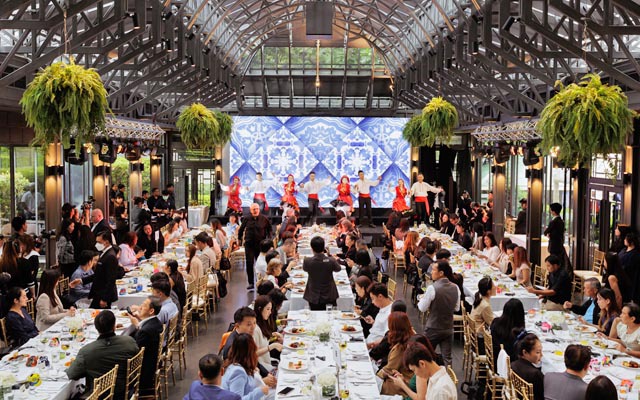
MGM China Holdings has launched its first large-scale overseas promotional campaign in Bangkok, Thailand in a bid to attract more Thai visitors to Macau through showcases of its creative entertainment offerings in its properties and the destination’s unique culinary culture.
Activities from June 13 to 29 include the Magnificent Gala Master dinner event, the MGM Travel Trade Luncheon, and the Macanese Food Promotion. In addition, a series of themed travel vlogs will provide Thai travellers with a glimpse into Macau’s cultural appeal.
As part of its campaign, MGM joined the Macao Government Tourism Office’s Experience Macao roadshow in Bangkok event at Central World last week.
Commenting on MGM Macau’s initiatives in Thailand, Pansy Ho, chairperson and executive director of MGM China Holdings, said: “MGM has always upheld the onus to support the Macau government’s efforts in elevating the city’s cultural tourism economy on the global stage. Building on the foundations of deep mutual understanding and the upcoming 50th anniversary of diplomatic relations between China and Thailand, the future between Thailand and Macau will be bright.
“On MGM’s calendar, this translates into a series of immersive, multi-dimensional events that celebrate our passions, underpinned by our deep-rooted belief that arts and culture are the global languages of the world. MGM will continue to champion the unique charms of Macau, transforming it into a world-class international leisure tourism destination that captivates the hearts and minds of travelers near and far.”
Hubert Wang, president & chief operating officer of MGM China Holdings, underscored the importance of the Thai traveller market for the company.
“Thailand represents the largest South-east Asian market as well as the fastest growing overseas market for MGM,” Wang remarked, adding that good airlift and performances by popular Thai artists at MGM venues have boosted the number of Thai guests by nearly 30 per cent over last year.
Speaking at MGM’s trade engagement, Maria Helena de Senna Fernandes, director of Macao Government Tourism Office, said Thailand ranks fifth among Macau’s top international visitor markets, and arrivals from the kingdom are up 203 per cent over 2023.
Banyan Tree Samui deepens food sustainability commitment

A series of food-related initiatives, from sourcing and upcycling processes, has been rolled out at Banyan Tree Samui, adding to its ongoing commitment to responsible operations.
Starting this year, the five-star hotel has stepped up its procurement of cage-free eggs. While 2.8 per cent of all eggs purchased by the hotel were classified as cage-free in January, that proportion has expanded to more than two-thirds by May.

At the same time, the hotel has just introduced a policy to purchase only sustainable seafood that is certified by the Marine Stewardship Council and Aquaculture Sustainability Council. Both standards are monitored by Bureau Veritas, the recognised world leader in testing, inspection and certification services. While almost all seafood and fish are purchased locally on the tropical island, Banyan Tree Samui imports items such as salmon and snow fish. All 100kg of salmon purchased on a monthly basis meet the requirements of the international agencies overseeing sustainable seafood practices.
In managing waste generated from coffee granules and capsules across the property, the hotel maintains a recycling and upcycling project that turns disposed aluminium capsules into everyday products such as bicycles, chairs, pens and window frames, as well as recycled coffee capsules. Coffee grains are recycled as compost fertiliser and renewable energy such as biofuel.
The hotel was awarded several years ago the highest level of certification by global watchdog EarthCheck – the first hotel in the country to achieve this award. Its award-winning restaurant, Saffron, is also a reputable sustainable dining establishment, which holds operations to the most rigorous sustainability guidelines.
TTG Conversations: Five Questions with Wong Ming Fai, Singapore Tourism Board

Customer support and marketing are the two most common business functions generative artificial intelligence (AI) is being used for in the travel and tourism landscape today, observes Wong Ming Fai, chief technology officer at the Singapore Tourism Board.
In this episode of TTG Conversations: Five Questions video news series, Wong discusses other functions of generative AI, motivations for travel and tourism business owners to hop on the the bandwagon, how they can get started with available information resources and assistance through the tourism bureau, and more digital transformation ideas.
Six Senses Samui welcomes new GM
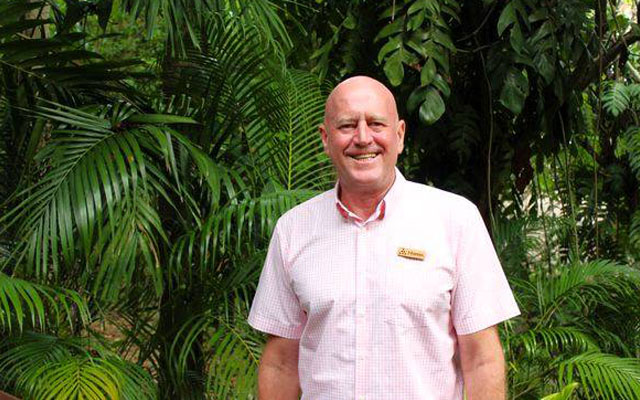
Six Senses Samui has appointed Johannes Steyn as its new general manager.
With over 25 years of experience in the international hotel industry, he first joined the Six Senses family in June 2022 as general manager at Six Senses Con Dao in Vietnam.
 During his career, he has worked for IHG, Anantara, Le Meridien, and Story Hospitality.
Ron Cusiter helms as Centara’s new EVP – commerical

Centara Hotels & Resorts has named Ron Cusiter as Centara’s new executive vice president – commercial.
 He joins Centara following his most recent role as vice president – global sales & The Americas with Kempinski Hotels. His wealth of industry experience brings fresh impetus and innovation to Centara’s global commercial efforts.
He has also held senior roles with COMO, Hyatt and Rosewood hotel groups over the course of his career.
Taste of Thailand Tour elevates Thai F&B industry for tourism

The Thailand Department of Tourism (DoT), in collaboration with the Thailand Tourism Standard agency, recently concluded this year’s Taste of Thailand tour.
This series of one-day seminars, conducted across six provinces, aims to elevate Thai restaurants and hotels to international F&B standards.

The tour visited the provinces of Chonburi, Prachuap Khiri Khan, Songkhla, and Nakhon Ratchasima, educating over 300 select local high-potential F&B entrepreneurs on essential topics such as current restaurant trends, food service in hospitality, and F&B standards for tourism.
It also included discussions on integrating traditional Thai cooking wisdom, sustainable practices, and local sourcing.
Additionally, the tour featured a chef’s table showcasing alternative proteins, authentic Thai flavours, and locally sourced products. The seminars invited well-known speakers including prominent designers, F&B owners and consultants, celebrity chefs, and other famous personalities, with the sessions being moderated by a well-known DJ.
Worateera Suwannasorn, director of sector for the development of tourism services at the DoT, expressed her enthusiasm for the programme: “The Taste of Thailand tour generated much interest from local operators and was a resounding success. By equipping restaurants with the knowledge and tools to excel, we’re not only enhancing the dining experience for tourists but also empowering Thai businesses to compete on a global stage.”
The Taste of Thailand tour is an annual series of seminars hosted for select Thai F&B entrepreneurs with high potential to become Thailand Tourism Standard certified.
At the end of each seminar, participants are invited to go through the certification process. The DoT allocates funding each year to subsidise the audit fee (approximately US$1,000 per venue) for a set number of venues.
While the Thailand Tourism Standard includes a set of 56 ISO-like standards encompassing different areas of business, one theme that encompasses a few standards is selected to be highlighted in the seminars each year.
“The Department of Tourism, which serves on the supply side and focuses on enhancing capacity, is the government counterpart to the Tourism Authority of Thailand (TAT) working on the demand side,” stated Suwannasorn.
“We encourage venues to go through the audit and certify them; the TAT then helps to market them to tourists and consumers,” she concluded.
Malaysia pushes forward for sustainability with ESG certification for hotels, resorts

The Malaysian hospitality industry took a significant step towards sustainable tourism on June 14 with the launch of the ESG (Environmental, Social, and Governance) certification for hotels and resorts.
This pioneering initiative was formalised through a Memorandum of Understanding (MoU) signed by the Malaysian Association of Hotels (MAH), SGS Malaysia, and Saimatrix Intergrated.

Approved and endorsed by the Ministry of Tourism Arts and Culture (MOTAC), this ESG certification for hotels and resorts aims to provide clear guidelines and a comprehensive, holistic, and measurable checklist for hotels and resorts in Malaysia – it will serve as the industry’s benchmark, following the nation’s 2030 vision for sustainable tourism.
By adopting these standards, hotels and resorts can ensure they are operating in an environmentally responsible, socially equitable, and well-governed manner.
MAH president Christina Toh said: “ESG practices are no longer a nice-to-have option or a passing trend but a pre-requisite for businesses and everyone who wishes for a better world and future for ourselves and our children.
“Recognising the importance of ESG practices, MAH took the initiative to collaborate with Saimatrix Intergrated and SGS Malaysia. We worked tirelessly together over a period of seven months to develop the ESG certification for hotels and resorts. This certification is designed to set a new standard in sustainable practices and become a benchmark within our industry, aligning perfectly with Malaysia’s National Tourism Policy of 2020-2030.”
She added: “Saimatrix Intergrated provided us with practical solutions and crucial consultations that align perfectly with our sustainability goals, while SGS Malaysia brought their extensive experience in certification and standards, ensuring our certification process is robust and in line with the industry’s best practices. Together, they have helped us lay a strong foundation for this initiative.”
Surya Kumar, undersecretary, tourism licensing and enforcement division, MOTAC, who was the guest of honour at the event, commented: “Tourism is a key economic sector for Malaysia, both financially and in terms of employment. It is imperative that we meet the needs of travellers while minimising our impact on natural resources and ensuring that tourism generates long-term employment for locals.
“The hospitality industry, which plays a significant role in the tourism ecosystem, must adopt ESG practices. The ESG certification for hotels and resorts is not just a mark of compliance for individual hotels, but a testament to our collective commitment to sustainable development for the entire industry.”








Tourism Australia (TA) launched a two-year Premier Aussie Specialist Program (PASP) in Hong Kong last Friday, with the appointment of 10 travel agents to become destination specialists and advocates.
Appointment is by invitation only, and qualified individuals must fulfil various conditions, such as having undertaken at least three training opportunities in the last 12 months and no less than three years of experience in selling Australia to their market.
Each PASP participant is required to complete 11 courses – eight courses on state and territories, a sustainability course, and two courses in the Aboriginal Australia curriculum within two years.
TA manager for Hong Kong, Carmen Tam, said: “This membership is an acknowledgement of an agent’s destination expertise, insider knowledge, strong ties with the Australian travel industry, and established record of selling Australia. We hope to groom them to get closer to consumers and be our opinion leaders and advocates. Once they better understand their customers’ travel intentions, we can craft new products together.”
Tam shared that major outbound agencies like Jebsen Travel, Wing On Travel and Miramar Travel as well as “diverse players” like The Events Team, which is a specialist in business events and luxury travel, were invited to the PASP.
Hong Kong arrivals to Australia has been recovering rapidly since 2023. As of April 2024, there were 204,000 travellers from Hong Kong, equivalent to 65 per cent of pre-Covid numbers.