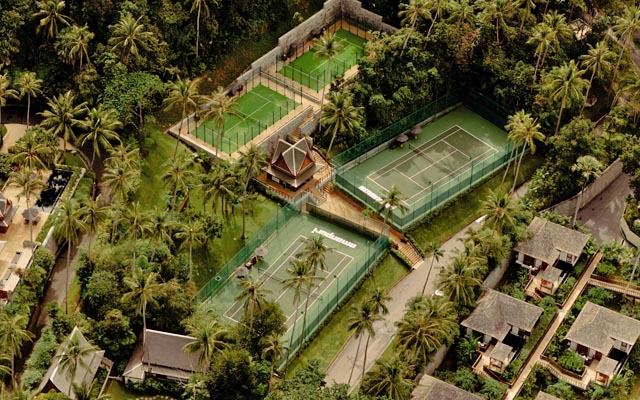
Centara Hotels & Resorts is working towards being the top 100 hotels in the world, in terms of the number of operating rooms, and it plans to do so by securing more management contracts over the next five years.
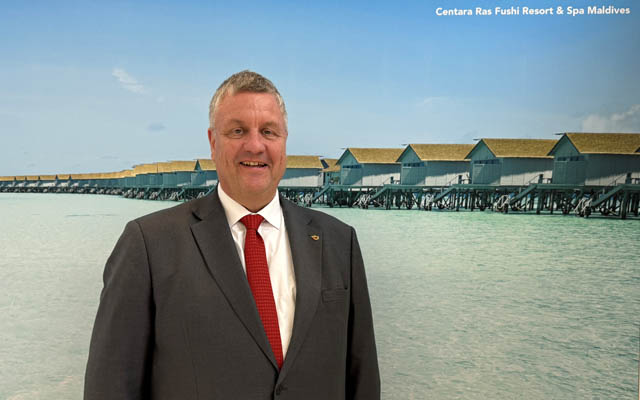
“To do this, we probably need another 5,000 to 6,000 rooms. A quarter of this anticipated growth is going to be owned, while the rest are managed. With our own real estate, we also want to double the revenue within the next five years,” Michael Henssler, chief operations officer of Centara Hotels & Resorts, told TTG Asia at ITB Berlin 2024.
Henssler: we have an awful lot to offer, but property owners don’t know about it
As Centara owns about one-third of its portfolio, Henssler said the company has empathy for fellow owners, and this is an advantage when it bids for management contracts.
At the moment, out of Centara’s 52 properties, around 20 are owned, while the rest are management contracts.
Henssler noted that resources for expansion are not a problem for the hospitality group, as it is backed by Thai multinational conglomerate Central Group.
“While Centara is renowned in Thailand, the perception of the brand outside of the country is not where it deserves to be, and this is our largest challenge. As a management company, we have an awful lot to offer, but property owners don’t know about it,” Henssler opined.
As to where future properties might be, Henssler pointed to home turf opportunities with Centara’s other hotel brands, such as COSI Hotels by Centara in a fourth-tier Thai city.
Vietnam, Laos, Indonesia, and Malaysia, as well as China, the Middle East, and North Africa are also destinations the groups wants to thrive in.
Henssler is also exploring popular resort destinations like Indonesia’s Bali, and Lombok, and Malaysia’s Kota Kinabalu, stating that Centara has “a lot of credibility in resorts”.
Overall, Henssler is optimistic about Asia’s travel sector, stating that it has rebounded strongly, and that the region is still value for money and safe.
However, he posited: “At the moment, growth rates in Asia are phenomenal, but I’m unsure of how long it can be sustained in this global climate. The only certain thing is uncertainty, so let’s stay vigilant, let’s stay creative, and let’s be humble.”
Radisson Hotel Group (RHG) will introduce its first Radisson Red property to Auckland, New Zealand, set to launch in 2025.
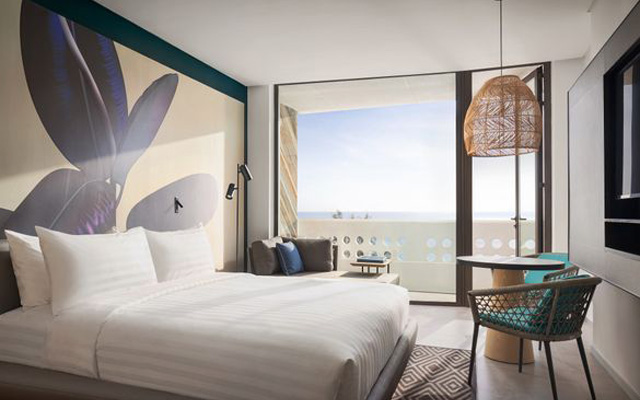
Owned by developer Stonewood Group, the purpose-built 322-key Radisson Red Auckland is located in the heart of Queen Street and will offer accommodation ranging from Standard Rooms to two-bedroom suites. Guests will be able to enjoy access to an all-day dining restaurant, a wellness facility as well as four function rooms.
The 322-key Radisson Red Auckland will open in 2025
The hotel forms an integral component of a mixed-use commercial development, incorporating dining establishments including a rooftop specialty restaurant, and retail outlets.
With close access to Auckland’s key attractions, guests can take a 10-minute walk to the Auckland waterfront or visit popular tourist attractions, casinos, art galleries, parks, and museums.
“Auckland is fast becoming one of New Zealand’s top tourist destinations renowned for its multiculturalism and culinary influences, making it an ideal and thriving market to launch the Radisson Red brand.” said Lachlan Hoswell, managing director, Australasia, RHG.
“The Radisson Red brand is an ideal brand that diversifies our real estate portfolio, with a strong commercial and operational value proposition with a distinct design concept that helps guests immerse themselves into Queen Street’s thriving arts district,” added Michael Chow, co-founder and director, Stonewood Group.
Vietjet is expanding its international flight network by introducing brand new routes from Hanoi to Hiroshima in Japan and Melbourne in Australia.
The Hanoi-Melbourne route will commence operation on June 3, operating twice weekly on Mondays and Fridays from Hanoi, arriving Melbourne later that day. Return flights depart Melbourne on Tuesdays and Saturdays.
Vietjet will launch direct flights from Hanoi to Melbourne and Hiroshima
Vietjet will debut direct flights between Hanoi and Hiroshima starting May 12, which will operate twice weekly return flights on Thursdays and Sundays.
Lanson Place Causeway Bay, Hong Kong
After a substantial refurbishment, Lanson Place Causeway Bay, Hong Kong has reopened with a new look, boasting 188 rooms and suites, including six penthouses.
The hotel offers a restaurant and bar on the first floor, an all-day lounge, new meeting areas and zones, as well as a new gym and wellness area.
The property is close to the city’s major business and commercial hubs, with access to malls, shops, eateries and bars. Guests can also visit landmarks such as the Peak, Victoria Harbour, Central and the West Kowloon Cultural District.
Swiss-Belhotel Airport Yogyakarta
Swiss-Belhotel Airport Yogyakarta, Indonesia
Swiss-Belhotel Airport Yogyakarta, located in Kulon Progo in the Yogyakarta province, offers 167 rooms and suites, restaurant, lobby lounge, outdoor swimming pool with views of the Kulon Progo Region. Other facilities launching soon comprise a family room and suite, sky lounge and rooftop bar, fitness centre, kids’ corner, spa, and event venues.
The new hotel is situated just five minutes from Yogyakarta International Airport, ideal for business travellers and tourists looking for a stay in the city while exploring Yogyakarta or transiting before connecting to various cities in Indonesia or abroad via the airport.
Novotel Sihanoukville Holiday Resort
Novotel Sihanoukville Holiday Resort, Cambodia
The 215-key Novotel Sihanoukville Holiday Resort is located directly on Independence Beach in Sihanoukville, Cambodia, and is just 25km from Sihanoukville International Airport.
The hotel offers eight room configurations, ranging from Standard Rooms to Suites. Interconnecting rooms are also available for families and larger groups. Facilities include four restaurants, 24/7 in-room dining, beachside infinity pool, kids’ pool, kids’ club, and ballroom.
Nature enthusiasts can discover the mangroves, forests, and coral reefs of Ream National Park and the picturesque Kbal Chhay Waterfalls.
Penang Marriott Hotel
Penang Marriott Hotel, Malaysia
Penang Marriott Hotel features 223 guestrooms boasting sea and city views, with facilities such as dining options, fitness centre, outdoor infinity pool, kids’ club, as well as meeting venues such as a pillar-less ballroom and five flexible function rooms.
The new hotel is situated in the central location of George Town, a UNESCO World Heritage Site, on Gurney Drive.
Visitor fees imposed in Asia so far are too low to put off travellers
Fees are no good for quelling overtourism, but will provide regular revenue for destinations to use on tourism infrastructure maintenance
Industry players urge transparency in collection and usage
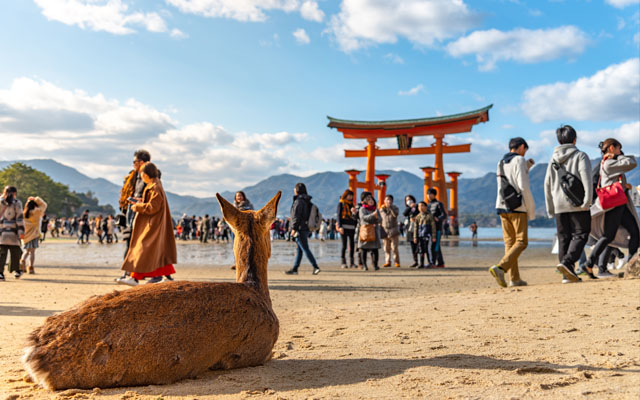
Miyajima in Hiroshima, Japan now charges a visitor fee which officials say will be used for sustainable tourism development
Bali is the latest destination in a line of others across the world to impose a visitor fee aimed at preserving the condition of the land, and will likely not be the last to do so as tourism authorities seek ways to better manage tourist flows and fund tourist infrastructure maintenance.
Since February 14 this year, all international visitors entering Bali have to pay a one-time levy of 150,000 rupiah (US$10) per person. The Bali government has said that the collection will be used to fund the preservation of Bali’s unique cultural heritage and to reinforce sustainable tourism efforts. The first year of takings, estimated at 250 billion rupiah, will specifically be used for cultural preservation programmes and critical waste management.
In October last year, the Japanese island of Miyajima, located in Hiroshima Prefecture and famed for the UNESCO World Heritage site of Itsukushima Shrine, began charging an entry tax of 100 yen (US$0.66) per entry or 500 yen for a one-year pass. Hatsukaichi City officials, who oversee Miyajima, say the visitor fee will be used for sustainable tourism development, including measures to alleviate visitor congestion, as well as the maintenance of the ancient shrine.
A tourist fee was also set to commence this year in Thailand, but has since been put on hold. Part of the collection was meant for a new health and accident insurance for foreign tourists, which is now funded by the nation’s coffers. The insurance coverage of up to 500,000 baht (US$13,861) per traveller involved in any accident while holidaying in the country – or up to one million baht in the event of death – is facilitated by Thailand’s Ministry of Tourism and Sports, and the National Institute of Emergency Medicine under the Ministry of Public Health.
Other popular Asian destinations, such as Jeju in South Korea as well as Taketomi and Amami in Japan, are mulling tourist fees.
Jeju intends to use the fees to manage waste brought on by its booming tourism industry. Discussions back in mid-2023 said tourists could expect to pay a fee for every night of stay on the island along with a one-time entry fee and vehicle rental surcharges.
Taketomi in Okinawa, which encompasses World Natural Heritage Site Iriomote island, submitted a draft plan last year for a visitor tax starting in fiscal year 2024. The income would be used to ease the strain on local infrastructure and reduce environmental damage caused by tourists, who numbered more than one million annually pre-pandemic.
Nearby island chain Amami, another World Natural Heritage Site, is also considering imposing taxes or asking for donations from visitors to help protect the endemic species and natural environment that make it one of the world’s biodiversity hotspots.
A welcome charge
Indonesian inbound operators say Bali’s tourism levy, which is a low US$10 equivalent, is not met with resistance, especially not European travellers who are used to higher tourism and accommodation taxes within Europe.
However, they feel that applications and payment systems could be improved. Presently, travellers are required to access a different link each for visa-on-arrivals, e-customs declaration, and the Bali Tourism Levy.
Ricky Setiawanto, director of business development at Panorama Destination, remarked that a single channel for all procedures would have been better for travellers.
Miyajima’s tourist fee, which is small change for travellers, has also not met with resistance.
Hamid: destinations could encourage better tourist behaviour through education
Will it work?
When asked if the entry fee has helped to ease overcrowding on the famed island, Hatsukaichi City’s Miyajima Planning and Coordination Division, director, Shunji Mukai, told TTG Asia that “there has been no change in the number of visitors before and after the introduction of the Miyajima Visitor Tax”.
However, all is not lost, as the city is assured of “stable and continuous annual revenue of 350 million yen as a financial source” – a hefty amount that is being put to good use, from “improving transportation access and enhancing amenities such as cleaning and maintaining toilets and rest areas, to projects related to the preservation and inheritance of Miyajima’s traditions and culture”.
One such project is the Another 1000 Years for Miyajima project, launched in 2023 to promote the development of Miyajima as a sustainable tourism destination with activities for everyone.
Mukai is certain that the Miyajima Visitor Tax is a necessary system, as it makes travellers “bear some of the costs” of realising tourism that “adequately addresses the needs of visitors, tourism industry, environment, and host communities while fully considering the current and future impacts on the economy, society, and environment”.
“Visitors are required not only to be travellers and consumers but also to engage with the community as contributors to the creation of sustainable tourism destinations,” stated Mukai.
Proper and sustainable management of a destination is critical if it wishes to be a “repeatable” attraction for travellers, opined Hiroshima Tourism Association’s chief producer and executive director, Shotaro Yamabe.
“In the development of repeatable tourism destinations, it is essential to ensure the satisfaction of tourists,” said Yamabe, adding that destinations must at least maintain “basic qualities” to avoid stressing visitors and the Miyajima Visitor Tax will help fund the delivery of such basic qualities.
While these fees will enable travellers to contribute to positive destination development and care, industry players have called for transparency in tracing collection and usage.
Ewan Cluckie, founder of Thailand-headquartered Tripseed, a destination operator and tour distributor committed to responsible tourism, said such financial initiatives “require proper enforcement and transparency in how funds are being allocated, something which rarely happens in reality”.
Adjie Wahjono, operations manager, Aneka Kartika Tours & Travel in Indonesia, said the tour operator community looks forward to the Bali Tourism Levy’s contribution to culture and nature preservation, and expressed hopes that the fund would also support trade promotions.
Besides such financial measures, PATA CEO Noor Ahmad Hamid said destinations could encourage better tourist behaviour through education, such as by explaining the benefits of bringing their own water bottles while exploring destinations and ordering food in moderation. Tourism organisations could also inform travellers of the challenges of overtourism, so that they can make “informed decisions on where to visit, based on the destination’s carrying capacity”.
An example of a destination-led campaign to improve travellers’ behaviour can be found in Palau, which launched an app in 2022 that allows users to accumulate points by completing eco-friendly tasks such as offsetting their carbon footprint, frequenting responsible businesses, and participating in community regenerative tourism projects.
Cluckie is all for traveller education too, saying that travellers should be encouraged to explore second-city destinations or to make the trip during low seasons so that they would contribute to a more stable flow of tourism income throughout the year.
He also urged travel industry players to do better to achieve responsible tourism growth.
“DMOs, overseas travel agents, and tour operators have a huge role to play in communicating the benefits of more sustainable trips to consumers. At the back end, DMCs must ensure their operations and procurement strategies are genuinely aligned with (sustainable) goals (instead of) prioritising profit over community well-being,” he said. – Additional reporting by Mimi Hudoyo
Western European markets show the strongest appetite
Accessible, welcoming and affordable destinations are top of mind
Indonesia wants Europeans to explore deeper, while Malaysia intensifies digital content and trade engagements
The top destination in Asia-Pacific for Eastern and Western Europeans in 2023 was Thailand, pictured
Interest in travel to Asia-Pacific among European travellers is building back, with Western European markets showing the strongest appetite for the region.
According to market research firm Euromonitor International, preliminary data for 2023 full-year European outbound volume shows 9.1 million trips made from Eastern Europe to Asia-Pacific and 18.7 million trips made from Western Europe to Asia-Pacific. This represents 65 per cent and 71 per cent of pre-pandemic 2019’s levels.
Top destinations in the region for Eastern Europeans in 2023 are Thailand (1.1 million), China (995,200), Indonesia (410,900), India (291,200) and Vietnam (291,100). The rest of the top 10 destinations are in Central Asia, comprising Armenia, Kazakhstan, Azerbaijan, Uzbekistan and Kyrgyzstan.
Among Western Europeans, the top 10 destinations chart is dominated by familiar Asia-Pacific tourism hotspots. Thailand takes pole position with 3.6 million trips from Western Europe, followed by Pakistan (two million, a hefty sum that includes Pakistani diaspora), India (1.7 million), Japan (1.3 million), China (1.1 million), Indonesia (1.1 million), Singapore (one million); Vietnam (835,100), the Philippines (662.100), and the Maldives (655,600).
Euromonitor International projects trips to Asia-Pacific from both Eastern and Western Europe to further improve in 2024, with a projected 10.9 million and 24.2 million respectively.
Travel intelligence firm, ForwardKeys shares similar observations of improving European interest in the Asia-Pacific region, although 2023 recovery was primarily driven by essential segments such as VFR, expatriate and business.
The UK is the most recovered European source market to Asia-Pacific in 2023.
Looking ahead to the first half of 2024, European origin markets that are driving the recovery to Asia-Pacific are Spain (up 14 per cent over 2019), Italy (down three per cent over 2019), Germany (down four per cent over 2019), Russia (down nine per cent over 2019), and France (down 13 per cent over 2019).
Olivier Ponti, director – intelligence and marketing at ForwardKeys acknowledged that the speed of the recovery is rather different across European markets.
“Some (European) markets are reactivating faster than others. A fine example is Spain, where we already see more bookings now compared to pre-pandemic times. Spain’s speedy outbound recovery has a lot to do with the re-establishment of air connectivity as well as aggressive marketing campaigns conducted by some Asia-Pacific destinations to attract Spanish travellers,” he detailed.
“That’s a success story because it shows that destinations can actually make a difference by investing in activities that rekindle travel demand,” he told TTG Asia.
Commenting on Asia-Pacific destinations that are most adored by European travellers, Ponti said the depreciation of the yen has played to Japan’s advantage. The destination recorded a “remarkable” 14 per cent increase compared to 2019, as travellers sought out more affordable destinations in a landscape of pricey airfares.
Other top-performing destinations, according to ForwardKeys data, include India (up 10 per cent over 2019), the Maldives (up eight per cent over 2019), Indonesia (up four per cent over 2019), and Thailand (down six per cent over 2019).
“Although China continues to lag behind (down 25 per cent over 2019), it holds real potential, especially since it has allowed visa-free entry to citizens from various European countries,” remarked Ponti.
Flight connectivity, wars to impact growth potential
While Asia remains an “extremely attractive destination for European travellers”, Ponti warned that the pace of air connectivity recovery and the consequences of war would impact Asia’s ability to further grow European arrivals this year.
“There is travel demand, but not enough airplanes to accommodate that demand while some airlines are reallocating airplanes to more profitable routes,” said Ponti, adding that destinations need to rebuild air connectivity with key source markets “so that they’re easy to reach while ensuring airfares are not being too expensive”.
He warned that high airfares would “kill demand” and cast a “limitation on growth” for international arrivals.
Meanwhile, the war in Ukraine has made the Russian airspace unavailable to many Western carriers, which meant longer flight duration, higher fuel consumption and, therefore, higher airfares, added Ponti.
Japan remains popular among European travellers due to the depreciation of the yen; the famous Shibuya crossing in Tokyo, pictured
Indonesia wants dispersion
Indonesian tourism organisations are looking to European source markets with great interest, as recent improvements in longhaul flight capacity have lifted European travel demand.
Umberto Cadamuro, chief operating officer of Pacto in Indonesia, told TTG Asia: “Despite the challenges that the European economy is facing, customers are showing a continued and strong interest in travel. When it comes to a long holiday, South-east Asia stands out in terms of quality and price when compared to other regions worldwide.”
For Pacto, bookings from the Netherlands and Italy are the strongest among longhaul markets.
Encouraged by continued growth in bookings, Cadamuro will step up marketing in Europe and open a new representative office in Spain soon.
Ricky Setiawanto, who is director of business development at Panorama Destination, said demand from Europe was growing faster than airlines could reinstate services.
Illustrating the strong level of interest in Indonesia, Ricky said one of his agents in the Netherlands reported that sales for the country ranked second to South Africa during a recent travel fair.
“We have 140 groups (coming from the Netherlands) this year, and our partner said there could be even more if more seats were available,” he said.
Besides popular Bali, Europeans are also drawn to Yogyakarta and Flores in East Nusa Tenggara, fuelled by the popularity of Komodo island, observed Cadamuro.
Leonardus Nyoman, owner and director of Flores Exotic Tour, confirms that arrivals to Labuan Bajo in Flores had increased tremendously, so much so Komodo islands have become too crowded. Fortunately, there are other Flores islands to explore, and his European clients appreciate unique cycling, photography and bird-watching tours in off-the-beaten-track areas.
Ricky hopes that promotions led by the Indonesian government could highlight destinations beyond Bali so as to disperse tourist traffic.
Malaysia taps partnerships
Online marketing and travel agency collaboration will keep Tourism Malaysia busy, as it works to achieve further growth in its key European markets this year.
The South-east Asian destination recorded over 100 per cent growth in its top performing European markets within the first 11 months of 2023. December arrival data is still pending at press time.
The top five European source markets to Malaysia are the UK, Germany, France, Netherlands and Spain.
In sharing the tourism board’s marketing plans with TTG Asia, Tourism Malaysia’s spokesperson said digital platforms would be key.
He detailed: “Social media will play an important role in attracting German-speaking and other European audiences. We will work with key opinion leaders, influencers and content creators to increase our reach and engagement. We have also embarked on interactive digital brochures and interactive maps for tourist destinations in Malaysia, in line with tourism industry trends where visual experiences and materials are key.”
Tourism Malaysia’s office in Frankfurt, in partnership with German tour operator Dertouristik, is running a 52-week e-learning programme for German-speaking outbound travel agents who are engaged in selling Malaysia or those intending to do so. It kicked off in June.
Another ongoing initiative is with German OTA Journaway.com to promote Malaysia through the agency’s online catalogues.
Other destination marketing activities include joint marketing support with airline partners and fam trips for selected outbound agents and media. – Additional reporting by Mimi Hudoyo and S Puvaneswary
Sabah State government plans to revive two iconic tourism events in the state this year, namely the Mount Kinabalu International Climbathon and Sabah Fest, as part of its preparations for Visit Malaysia Year 2026.
The two events are promoted by Sabah Tourism Board and organised by the board’s wholly-owned subsidiary, Sri Pelancongan Sabah – both have the support from the Ministry of Tourism, Culture & Environment (MoTCE) Sabah.
Sabah Fest showcases the diverse traditions, arts, craft, cuisines and performances of Sabah’s ethnic groups
The Mount Kinabalu International Climbathon, an annual event since 1987, faced a temporary hiatus in 2015 and 2016 due to safety concerns following an earthquake in Kinabalu Parks. It resumed in 2017 but remained inactive in 2018 before officially discontinuing in 2019 as its objectives of showcasing Mount Kinabalu and the surrounding Kinabalu Park had been accomplished.
Thonny Chee, CEO of Sri Pelancongan Sabah, shared that his organisation was waiting for feedback from MoTCE on their proposal to revive the Mount Kinabalu International Climbathon this year in October.
Chee expressed enthusiasm about the event’s potential to draw both local and international participants, highlighting its significance in promoting adventure tourism and showcasing the natural beauty of Mount Kinabalu and its surroundings.
As for Sabah Fest, its month-long celebration of cultural diversity, spanning more than 30 ethnic races, has long been a cherished tourism event since its inception in 1988. It showcases the diverse traditions, arts, craft, cuisines and performances of Sabah’s ethnic groups. However, the unfortunate disruption in 2020 due to the Covid-19 pandemic halted its momentum.
Chee sees the Sabah Fest revival not only as a means to reignite local pride but also as a strategic move to attract inbound tourists from the region. He shared: “By showcasing the rich tapestry of Sabah’s cultural heritage through traditional performances, arts, crafts, and culinary delights, Sabah Fest presents a unique opportunity for the tourism sector to capitalise on the growing interest in cultural tourism experiences.”
He added that Sri Pelancongan Sabah will send a proposal soon to MoTCE outlining plans for the revival of Sabah Fest and to have it complement the Harvest Festival in May, as it has traditionally been done.
The Classic Tribal Tourism Project Office, an agency of the Taiwanese government, is leading its first-ever showcase at ITB Berlin, in a bid to raise the profile of Taiwan’s 16 ethnic groups of local tribes among European travellers.
James Leu, president of Classic Tribal Tourism Project Office, told TTG Asia that while the destination is such a small one, it has a rich diversity of local tribes that co-exist well with the modern world while maintaining their traditional lifestyles.
Classic Tribal Tourism Project Office, led by James Leu (centre) shows off indigenous cultures and colours
The tribes boast their own culture, language, customs and social structure.
“Besides visiting iconic sites and sights in Taiwan, like Taipei 101, travellers can easily build a day trip or a two-day tour of a local tribe into their overall itinerary,” said Leu, noting that Europeans typically spend 10 days or more touring different parts of Taiwan.
“They can enjoy local food culture, learn about artisanal craft, participate in traditional dances, and savour serene and picturesque landscapes across Taiwan’s mountainous and coastal regions,” he added.
Leu also pointed out that European travellers, who increasingly seek meaningful travel, would appreciate the tribes’ enduring regard for ecological and sustainable development as well as the opportunity to take their tourism spend directly to local communities.
In HsinChu County, for example, travellers can join the Atayal tribe in hunting and cooking local dishes, while in Hualien County, they can immerse in the life of the Amis and Bunan tribes, taking on activities such as lover bag-weaving and climbing trees.
As an organisation that supports Taiwan’s indigenous tribes, Classic Tribal Tourism Project Office takes on the promotion mantle and helps connect international travel trade buyers with 20-plus qualified travel agencies that specialise in tribal tours as well as many other suppliers in this niche tourism space.
Hiroshima, Japan is working towards longer stays among European travellers by promoting the destination’s “diversity of peace”, which extends beyond its renowned Hiroshima Peace Memorial Museum to cover harmonious experiences in sports, the great outdoors, and food.
Yamabe Shotaro, chief producer and executive director, Hiroshima Tourism Association (HIT), said France, Germany, and the UK have been the prefecture’s top-performing European source markets, but there remains huge potential to grow the markets’ average length of stay because many travellers are still unfamiliar with the depth of Hiroshima’s tourism offerings.
Hiroshima hopes to attract more European travellers by promoting harmonious experiences in sports, the great outdoors, and food
He said: “Travellers would find peace in exploring our Seto islands and in discovering our delicious food, like okonomiyaki (savoury pancakes) and freshly-harvested seafood. Hiroshima is well known for its baseball and soccer teams, and in the city, sports fans can enjoy a live match in peace and harmony, regardless of who wins.”
According to HIT data, the UK contributes the biggest share of European arrivals, with 62,890 in 2023; in 2019 the volume was 71,760. Arrivals from France numbered 53,980 in 2023, inching closer to 2019’s 58,790. Arrivals from Germany is now 110 per cent over 2019’s 44,380 footfalls.
However, HIT is particularly keen on courting the French, as they have the ability to “influence” travel trends among other European segments, observed Yamabe.
With greater understanding of Hiroshima’s diversity of peaceful tourism offerings, HIT hopes to extend the average length of stay among Europeans from 1.3 days now to at least two or three full days in the near future.
Voyages onboard Silversea’s fleet of luxury ships, Silver Moon, Silver Dawn, and Silver Nova, will feature Asian epicurean adventures as guests journey through this part of the world from 2024 to 2026, and beyond.
The discovery of Asian flavours and food culture are part of Silversea’s signature dining programme, Sea And Land Taste – more commonly branded as S.A.L.T. The programme showcases flavours of the destinations and region the ship calls at. It was conceived by Adam Sachs, former editor-in-chief of Saveur Magazine and who is now director of the programme. S.A.L.T is exclusively available on Silver Moon, Silver Dawn, and the new Silver Nova.
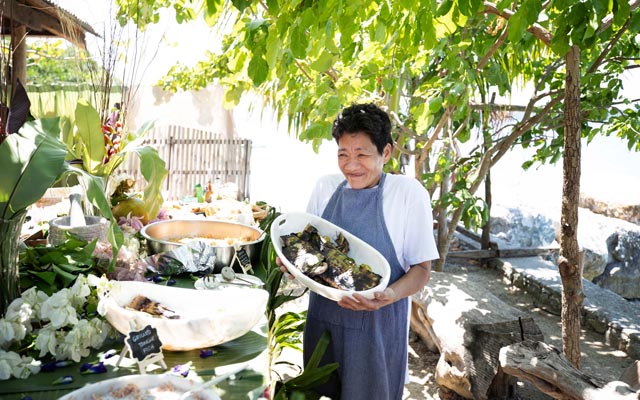
Silversea’s S.A.L.T immersive dining programme features shore excursions that introduce guests to destinations’ heritage and culture through food
S.A.L.T, according to Sachs, is an “ecosystem” that comprises S.A.L.T shore excursions, which are in-depth tours led by food experts who delve into local culinary traditions; S.A.L.T onboard dining through S.A.L.T. Bar and Kitchen, where the menu changes with the ports of call and local recipes, are made with local products; and S.A.L.T Lab, where small groups of guests can get hands-on experience of local recipes in a professional kitchen.
For the Asian voyages, S.A.L.T. Lab will feature hands-on cooking classes such as Seafood, Spices, and… Beef: Kerala’s Diverse Food Cultures, where guests will dive into the coastal cuisine of Kerala; Bread with a Side of Beethoven, which focuses on Sri Lanka’s unique bread culture, with recipes that highlight Portuguese influences, like maalu paan and mithivedi egg roll; and One Bowl, Endless Variations: The World of Laksa, where guests will discover regional variations of the beloved noodle dish across Malaysia and Singapore.
Through these classes, guests not only gain new cooking skills but also a deeper appreciation for the complex interplay between cuisine, culture, and history in Asia.
In the coming days, as Silver Moon sails from Singapore to Thailand and Vietnam, guests can join classes that spotlight the Peranakan kitchen, South-east Asia’s love for spices, and Vietnamese ‘drinking food’, led by professional chef and food anthropologist Gustava Cruz. An exclusive S.A.L.T. Culinary Demonstration and Talk on 20th century Thailand’s food culture will be hosted on March 5.
Silversea guests can continue to appreciate Asia through gourmet adventures onshore. S.A.L.T has curated excursions that take guests into the Peranakan culture at Singapore’s award-winning Intan Home Museum, a plant-based culinary journey with Michelin-starred chef Vichit Mukura in Bangkok, an organic farm visit with gourmet dining in Phuket, and an Indian dessert art session with chef Girish Nayak in Mumbai.
Sachs said: “I’m thrilled to guide our culinary exploration into the heart of Asia, a continent celebrated for its diverse food culture. The essence of S.A.L.T. is discovering the soul of places through their cuisines, from the intricate flavours of Japan to the lively markets of Vietnam. We’re not just tourists; we’re learners and adventurers, engaging with the world through its kitchens and dining tables.”