Nikki Beach Koh Samui is teaming up with Harley-Davidson for a one-day celebration on Saturday, October 25, blending the thrill of iconic bikes with the indulgence of beachfront brunch.
The event kicks off with a Harley Ride-In Parade, followed by themed cocktails, temporary tattoos, and exclusive co-branded merchandise.
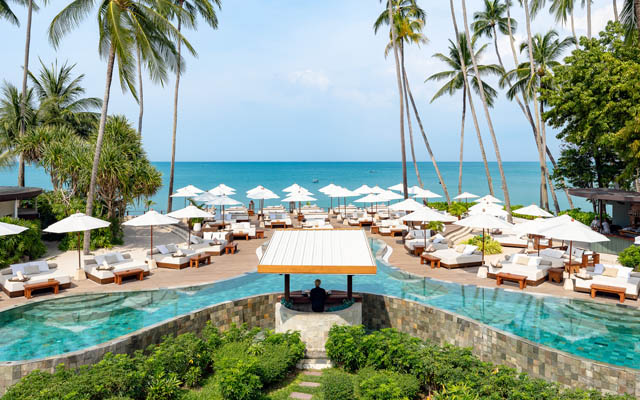
Nikki Beach Koh Samui sets the stage for a sun-soaked celebration where Harley rides meet beachfront brunch and more; photo by Nikki Beach Hospitality Group
Guests will enjoy Harley-inspired dishes like Route 66 Ribs and Born to Ride BBQ skewers, alongside live rock and blues music, a mural painted in real time, and a VR ride experience. The day wraps with a Sunset Ride-Out and after-party.
In support of breast cancer awareness, the event will raise funds for Think Pink Samui to help purchase an ultrasound machine for Nathon Hospital. Guests are encouraged to wear a touch of pink to show support.
Set on Lipa Noi Beach, Nikki Beach Koh Samui offers barefoot luxury, vibrant entertainment, and a signature Celebration of Life experience.
Reservations for this exclusive event are now open.
Skyscanner released its Travel Trends 2026 Report in New Delhi on Thursday (October 9), unveiling seven key travel trends along with the top trending and best-value destinations for the coming year.
Neel Ghose, Skyscanner travel trends and destinations expert, presented the findings, emphasising that 2026 will be “the year travel gets more personal”.
Ghose: people are using AI not just for destination research or comparing flights and hotels, but also for inspiration
“This is not just about where people are travelling but why they are travelling. Travellers are bringing their full personalities into their journeys, seeking authentic experiences that reflect their identities,” he said.
According to Skyscanner’s data, Indian travellers are planning to travel more in 2026, backed by higher budgets and rising disposable incomes. Three out of five Indian travellers have set higher budgets for flights while one in two have increased their accommodation budgets.
India leads globally in adopting AI for travel planning, with 86 per cent of travellers confident about using AI tools to plan their trips. “This is the highest global adoption rate across all Skyscanner countries. People are using AI not just for destination research or comparing flights and hotels, but also for inspiration,” noted Ghose.
The report highlighted a growing interest in destinations that reflect travellers’ desire for unique cultural and personal experiences. Jorhat in Assam topped the list with a remarkable 493 per cent year-on-year surge in searches. Jaffna in northern Sri Lanka followed, recording a 325 per cent rise in searches. Other trending destinations include Queenstown (New Zealand), Chiang Rai (Thailand), Manila (the Philippines), Ho Chi Minh City (Vietnam) and Varanasi (India).
The report underscored India’s shift from being a price-conscious to a value-conscious market. Tirupati topped the list of best value destinations, with airfares falling 18 per cent year-on-year despite growing demand. Langkawi followed with a 17 per cent drop while Berlin recorded a 16 per cent decline. Dehradun and Phuket also emerged as strong value destinations for 2026.
In terms of key travel trends the report highlighted growth of multi-generational travel with 47 per cent of adult Indians travelling with their parents while 38 per cent are travelling across three generations.
Mountains are also in demand.
“A staggering 92 per cent of travellers are considering or planning a mountain escape in summer or autumn 2026,” Ghose said. Rishikesh, Manali, the Swiss Alps and the Rockies are among the favourites.
Culinary exploration is moving beyond Michelin-starred restaurants. Over 75 per cent of Indian travellers always or often visit local supermarkets abroad, seeking authentic and everyday food experiences. Skincare and beauty rituals are shaping travel plans with 45 per cent of Indian travellers trying beauty treatments abroad.
Many Indian travellers are planning trips to meet people they connected with on dating apps. Forty-four per cent are more open to meeting new people while travelling, with 26 per cent saying they feel freer to be themselves on the road.
According to the report, 84 per cent of Indian travellers have booked or would consider a trip inspired by literature, highlighting a growing cultural curiosity.
Accommodation choices are influencing travel decisions like never before.
“More than ever, travellers are choosing where to go based on where they want to stay,” Ghose said. Eighty-two per cent of Indians have selected a destination purely because of accommodation.
The launch event was attended by Suryakumar Yadav, Skyscanner’s first-ever brand ambassador in India and captain of the Indian Men’s T20I cricket team.
Malaysian hospitality tech start-up JOMhotel.com is reshaping how hotels manage unsold rooms and how travellers book last-minute stays, positioning itself as a fairer, faster and more transparent alternative to global OTAs.
Previously known as JustTonite.com, the rebranded platform retains its same-day stay focus while introducing smarter technology and a stronger Malaysian identity.
Kong described it as a hotel-first platform built by insiders to boost revenue and deliver great last-minute deals to travellers
“It’s a platform built by hoteliers, for hoteliers. Our leadership team of hotel general managers, online travel agent specialists, and tech developers share one vision: to help hotels optimise revenue while offering travellers great last-minute deals,” said Anthony Kong, director of JOMhotel.com.
Unlike traditional OTAs that prioritise high commissions or paid visibility, JOMhotel.com operates on a lean commission model and organic ranking algorithm, ensuring all hotel partners receive equal exposure. The platform’s six dynamic rate tiers enable hotels to release distressed inventory strategically, while an instant payment feature guarantees immediate revenue upon booking – eliminating long pay-out cycles.
For travellers, JOMhotel.com delivers verified stays at same-day, non-refundable rates, giving them access to unbeatable deals “whether they’re extending a business trip, attending a concert, or simply living the you-only-live-once (YOLO) lifestyle”, said Kong.
Targeting Malaysia’s growing same-day booking market — estimated at around 30 per cent of hotel stays — the platform caters to urban professionals, concert-goers, and spontaneous travellers seeking trusted, great-value accommodation.
JOMhotel.com plans to launch its mobile app in 2H2026, alongside a rewards programme offering instant credits and member-only promotions. As Malaysia gears up for Visit Malaysia Year 2026, Kong said the platform will help hotels convert distressed inventory into real revenue while giving travellers more ways to experience the country spontaneously.
Airfares in the Asia-Pacific and the Middle East regions have risen sharply, according to Airports Council International Asia-Pacific & Middle East.
The 2025 Airfare Trends report shows that increases are largely driven by inflation and reduced airline competition, rather than airport charges.
Travel demand surges across Asia-Pacific and the Middle East – but rising airfares are reshaping the journey
Oceania remains the most expensive region for air travel, while India and China continue to sit below the regional average. The report warns that lowering airport charges would have limited effect on ticket prices and could restrict airports’ ability to invest in capacity and technology.
Developed with Flare Aviation Consulting, the report provides a data-driven analysis of markets experiencing significant airfare increases and examines the factors behind these changes across two of the world’s most dynamic aviation regions.
Despite a substantial recovery in passenger traffic, airfares across the region have generally increased from 1H2019 to 2025, reversing the downward trend observed in pre-pandemic years. The rise is largely driven by inflation and reduced airline competition in certain key markets.
The Asia-Pacific region saw an average increase of 8% from 1H2019 to 2025, compared with an 18% decrease during 1H2014 to 2019. The increase has been more pronounced at the country level, particularly in Oceania and South-east Asia. The Middle East recorded a 15% increase over the same period, compared with an average 9% decline in 1H2014 to 2019.
The report confirms the limited role of airport charges in determining airfares. Airport charges and turnaround costs, including government taxes, have generally risen below Consumer Price Index levels. In markets where airport charges have fallen, airfares have continued to increase.
Airfares have risen across most markets, except China. South-east Asia and Oceania recorded the largest increases, with fares 20% and 30% above pre-pandemic levels, respectively. Oceania remains the most expensive region for air travel, while India and China are below the regional average.
International fares are up 17% above pre-pandemic levels, particularly in South-east Asia and developed East Asia. Domestic fares have surged over 30% above 2019 levels, especially on shorthaul low-cost carrier routes with reduced competition.
Economic travellers bear the largest share of these increases. Routes with low airline competition saw fares rise up to 13 percentage points above the regional average. The US-China market remained stable in 2025. Airfare shifts are largely determined by inflation and airline competition, factors beyond airports’ control.
Overall, fares increased by between 9% and 28% across the regions, even in markets where airport charges declined.
Stefano Baronci, director general, ACI Asia-Pacific & Middle East, said: “The objective of this analysis is to assess market dynamics and their impact on aviation, as well as provide transparency into the rising cost of air travel. This study also proves that lowering airport charges does not translate into a reduction in ticket prices; instead, it limits airports’ ability to invest in capacity and technology to enhance service quality.
“To make air travel more affordable for consumers, policymakers should focus on liberalising markets such as open skies, market access, and efficient slot policies, which can strengthen airline competition while ensuring airports can continue to invest to support growth in the coming years.”
Skip-generation holidays are gaining momentum across Asia-Pacific, according to Hilton’s 2026 Trends Report. Grandparents and grandchildren are increasingly travelling together – often without parents.
Families are also redefining travel with a stronger focus on time together and shared experiences that strengthen intergenerational bonds.
More families across Asia-Pacific are embracing skip-generation holidays as grandparents and grandchildren travel together to strengthen family bonds and create shared memories
Six in 10 respondents (60%) across the region say they have taken or plan to take a skip-generation holiday. The trend is most pronounced in China (86%) and India (79%), where it has moved from novelty to mainstream. In China, more than three-quarters (77%) expect to book at least one to two skip-generation holidays in 2026, suggesting such trips may soon rival traditional family vacations.
The desire to create lasting memories is the main motivation behind skip-generation travel. 58% of families across Asia-Pacific cite this as their reason for travelling, rising to 67% in India, 64% in Australia, and 63% in New Zealand. In Japan, nearly half of families (47%) and 50% of grandparents say the appeal lies in experiencing new things together.
Grandparents are also taking a more active role in shaping family travel decisions. In China, nearly half (46%) are initiating skip-generation trips, underscoring the growing influence of older generations and the importance of accommodation that meets all age needs.
Nearly nine in 10 (89%) respondents believe travelling with family supports grandparents’ health and well-being. For grandparents, time with grandchildren is the most valued part of travel (50%). Accessible facilities and wellness amenities are increasingly seen as essential to ensure comfort and inclusion for all generations.
While Hilton’s global research found that rest and recharge (56%) remain the main reasons to travel for leisure in 2026, in Asia-Pacific, priorities differ. 61% of travellers say quality time with family matters more than downtime, with the sentiment strongest in India (72%) and China (62%).
Families are choosing experiences that encourage shared discovery. Culinary exploration (69%) and visits to historical and cultural landmarks (63%) are the top activities, particularly in Singapore, where more than eight in 10 families (81%) cite food-related exploration as their preferred activity.
Multi-generational travel continues to expand alongside skip-generation holidays. Nearly half (48%) of families in Asia-Pacific take trips involving three or more generations at least once a year, led by China (78%) and India (65%). Strengthening family bonds (60%) and creating lasting memories (57%) are the key motivations.
Accommodation remains central to enabling inclusive stays. Nearly half of families (48%) prefer interconnecting rooms or family suites, while 42% prioritise senior-friendly facilities such as mobility aids, medical support, and accessible dining. Relaxation and wellness amenities (42%) also rank highly, highlighting the growing need for options that cater to every age group.
These findings form part of Hilton’s 2026 Trends Report, The Whycation: Travel’s New Starting Point, which examines how intergenerational and purpose-driven travel are shaping future travel patterns.
The report also identifies three additional trends: Hushpitality reflects travellers’ desire for peace and quiet in destinations that allow them to disconnect from distractions. Home Comforts are the New ‘Carry On’ shows that travellers increasingly seek familiarity and comfort while away, incorporating everyday routines into their trips. Inheritourism highlights how children continue to travel with parents as they grow up, maintaining preferences and habits shaped by family travel traditions.
Ben George, senior vice president and commercial director, Asia Pacific, Hilton, said: “The rise of skip-generation travel highlights a fascinating shift in how families are connecting. By designing experiences that anticipate the needs of multi-generational families, we aim to make every stay as seamless and memorable as possible, helping guests create meaningful moments together.”
Riyadh Air launches daily Riyadh-London flights and new loyalty programme
Riyadh Air will begin daily flights from Riyadh to London Heathrow Airport (LHR) on October 26, 2025, ahead of its official 2025 launch.
The initial flights, operated on the aircraft Jamila, will be used to test operational readiness and ensure reliability ahead of full commercial operations.
Riyadh Air has also launched Sfeer, its loyalty programme. Early members, designated as The Founders, will receive priority access to bookings on future flights. Sfeer allows members to share points within their community and offers a no points expiry policy. Membership also provides benefits including complimentary onboard Wi-Fi, with additional rewards and features available as the programme develops.
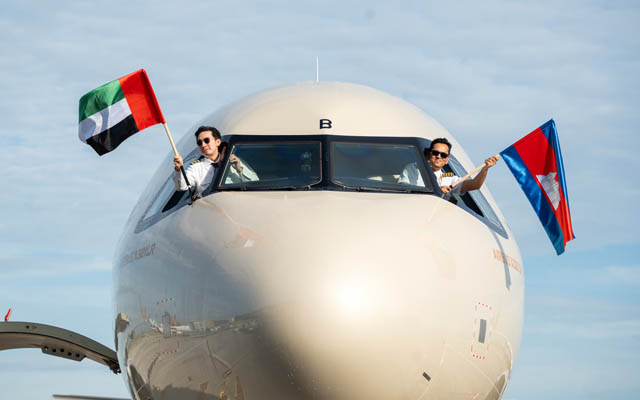
Etihad lands in Phnom Penh
Etihad adds Medan and Phnom Penh to network
Etihad Airways has expanded its South-east Asia network with the launch of new routes to Medan in North Sumatra and Phnom Penh in Cambodia, bringing its total global destinations to 83.
The inaugural flights took off on October 2 and 3 respectively, making Etihad the only airline directly connecting the Gulf Cooperation Council to both Sumatra and Phnom Penh.
The services are operated by Airbus A321LR aircraft with a three-cabin configuration, including First, Business and Economy. Flights between Abu Dhabi and Medan operate three times weekly, while the Phnom Penh service operates four times weekly and will increase to six flights per week from November 1, 2025.
Lufthansa, SIA add Brussels Airlines to joint venture
Lufthansa-Singapore Airlines joint venture expands with Brussels Airlines
The Lufthansa Group and Singapore Airlines have expanded their joint venture with the addition of Brussels Airlines. From October 26, 2025, customers can book codeshare flights between Singapore and Brussels operated by Singapore Airlines, providing more travel options and seamless connectivity between Singapore, Belgium and onward European destinations.
The joint venture, now in its eighth year, offers joint fares across seven countries and 26 destinations. The expansion also includes intermodal feeder routes, allowing travellers to connect to the airlines’ European hubs via bus or train services, enhancing accessibility and travel flexibility across the region.
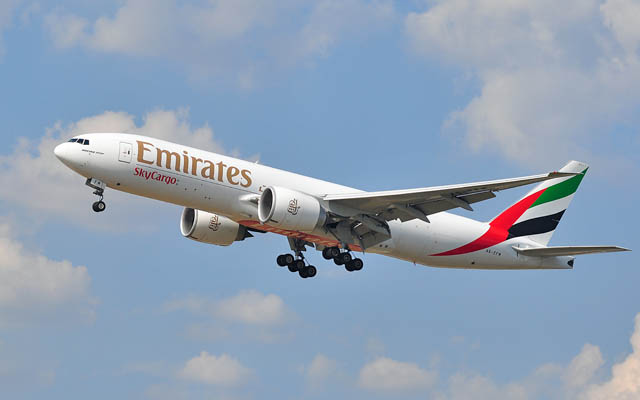
Emirates
Emirates expands London Heathrow services for Winter 2025
Emirates will add six weekly flights to its London Heathrow schedule from October 26, 2025, increasing travel options during the winter season. The additional services complement the airline’s existing six daily flights between Dubai and London Heathrow.
The new flights will operate on all days except Fridays using Boeing 777-300ER aircraft, offering over 350 seats across First, Business and Economy. Strategically timed departures provide convenient connections to destinations across Asia, including Durban, Phuket, Kuala Lumpur, Hong Kong, Beijing, Shenzhen, Guangzhou, Jakarta, and cities in West Asia and the Middle East such as Ahmedabad, Lahore, Maldives, Hyderabad, Chennai, Bahrain, Dammam and Riyadh.
As the year draws to a close, Minor Hotels invites travellers to celebrate the festive season with a curated collection of experiences across its properties in Asia and the Maldives. From cultural immersion to wellness journeys and island revelry, each destination offers a unique way to connect, reflect, and ring in 2026.
At Anantara Koh Yao Yai, guests explore Thai folklore through sound baths, batik painting, and cultural activities, culminating in a sunrise ceremony and island breakfast on New Year’s Day.
Wellness, creativity, and island indulgence come together for a festive season full of rhythm and renewal at Niyama Private Islands Maldives
Anantara Layan Phuket focuses on wellness with skin treatments, IV therapy, and detox journeys at its longevity centre, helping guests glow into 2026.
Anantara Bophut Koh Samui draws inspiration from The White Lotus, offering themed dining, family-friendly crafts, and a signature spa ritual with white lotus oil.
In Northern Thailand, Anantara Golden Triangle celebrates Mekong heritage with jazz mornings, Explorer Cocktails, and festive dinners featuring regional flavours and performances.
Avani+ Luang Prabang honours land, river, and spirit with Baci ceremonies, sunset cruises, market tours, and a climb up Phousi Hill in the UNESCO-listed town.
Niyama Private Islands Maldives delivers boho-luxe celebrations with visiting chefs, fitness experts, tattoo artistry, and daily island-inspired festivities.
Avani+ Fares Maldives blends heritage and fun with street food souks, pirate cruises, and tropical movie nights, all set to the rhythm of Bodu Beru beats.
Sentosa Development Corporation (SDC) has launched the Cooling Sentosa Roadmap, a long-term plan to improve outdoor thermal comfort across the island.
The initiative responds to growing awareness of urban heat and advances in cooling technologies, and aligns with the Singapore Green Plan.
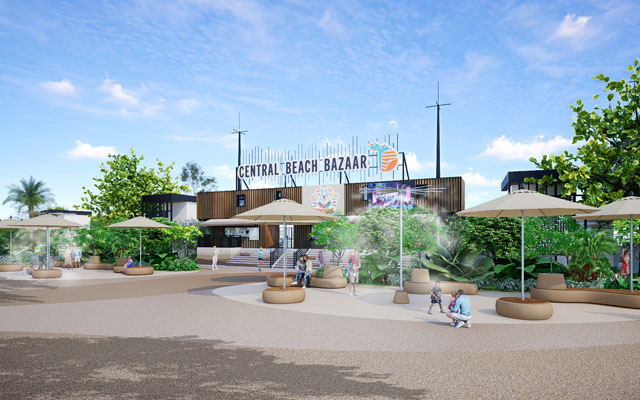
Artist’s impression of the upcoming Cool Node at Central Beach Bazaar, featuring integrated cooling elements and shaded public spaces, scheduled for completion in 2026
Central to the roadmap is the Sentosa Cooling Network, which will introduce cool nodes and zones designed to lower temperatures by at least four degrees celsius, measured using Physiological Equivalent Temperature. Cool nodes offer quick relief in smaller areas, while cool zones anchor larger precincts with infrastructure and design features to improve comfort – 10 such sites are planned by 2030, with initial efforts focused along the beachfront.
The roadmap builds on existing measures such as shade structures, fans, coolers, and hydration points. In March 2025, SDC commissioned an environmental consultant to assess outdoor thermal comfort across Sentosa. The study identified areas for intervention and recommended both short- and long-term solutions. It found that greenery, porous structures and wind corridors help reduce heat. Sentosa Sensoryscape, for example, facilitates airflow and includes shaded walkways, fans, and water features.
One pilot site is the Cool Node at Siloso Beach, featuring misting systems, cool coatings and increased shade. A guest survey showed three in four respondents were satisfied with the cooling features. Another node is planned at Central Beach Bazaar, a 2,400m² site near Beach Station, with works beginning in late 2025.
SDC is also implementing immediate measures such as installing new fans and water coolers, adding soil-less green roofs, and planting trees. Sentosa will serve as a testbed for new cooling technologies, including trials with Envicom and Delta Sirius under the Sustainability Open Innovation Challenge.
Nature-based solutions are also being explored, including a regenerative tropical MicroForest at Central Beach Bazaar. Developed with NUS Cities and the NUS Centre for Nature-based Climate Solutions, the forest will be monitored for biodiversity, microclimate and guest perception.
SDC is working with businesses and stakeholders to align sustainability efforts. Island Partners such as Resorts World Sentosa and Weave mall have adopted cooling strategies including ETFE roofing, automated fans and water-based cooling systems. Other partners include Mount Faber Leisure Group, Raffles Sentosa Singapore and Sofitel Hotel Sentosa Singapore.
The roadmap will guide future planning under the Greater Sentosa Master Plan, with infrastructure designed to improve thermal comfort across the island.
“As an island destination, there are lots to be discovered especially in Sentosa’s natural environment. Our commitment to a sustainable future drives the Cooling Sentosa roadmap. By embracing innovative cooling technologies and smart infrastructure, we aim to leverage science-driven and nature-based solutions to ensure a comfortable, eco-friendly environment for residents and visitors alike. This roadmap is not just about cooling. It’s about shaping a climate-resilient, green Sentosa that sets a benchmark for sustainable destination stewardship,” said Thien Kwee Eng, CEO of SDC.
Victoria is set to amplify its global presence with a A$43 million investment (US$27.5 million) aimed at boosting international tourism marketing – driven by the belief that more visitors mean more jobs.
Premier Jacinta Allan joined Visit Victoria in Shanghai to officially launch the new Every Bit Different campaign, targeting China – Victoria’s largest international visitor market. The campaign will be rolled out across social media platforms, billboards, television, and broadcast partnerships, showcasing the state’s rich offerings in wildlife, nature, culture, dining, sport, and major events.
Victoria’s new tourism campaign sets its sights on China to boost global interest and local jobs
China’s strong affinity for Victoria’s home-grown tennis Grand Slam will be a focal point, alongside promotions of the state’s events calendar. Advertising efforts will also expand into other key international and domestic markets, supported by education and training programs for overseas travel agents to keep Victoria top of mind.
In the year ending March 2025, 411,000 Chinese travellers visited Victoria, contributing A$2.9 billion to the economy – a 23.3 per cent increase year-on-year. By 2029, that number is projected to reach nearly 800,000.
The campaign coincides with new flight routes to Melbourne from Shenzhen Airlines and Hong Kong Airlines, secured through the government’s industry partnerships programme. It also aligns with the broader China Strategy, which aims to position Victoria as the leading destination for Chinese visitors and students.
A multi-year marketing partnership has also been signed with Trip.com to further drive inbound travel from China.
Victoria’s A$40 billion visitor economy supports over 288,000 jobs, including 183,800 direct tourism roles – nearly three-quarters of which are in hospitality, accommodation, and retail. According to an independent KPMG report, every dollar invested in Visit Victoria marketing generates up to A$27 in visitor spending.
Allan, speaking at the China Strategy launch in Beijing, emphasised Victoria’s ambition to become the top destination for Chinese travellers: “We want one in every five international visitors to Victoria to come from China. With an investment like this, we’re putting Victoria on the global map – starting with China.”
She concluded: “Our goal is simple: more visitors, more jobs.”
Singapore travellers are adopting digital technology at a rapid pace, with increasing use of biometric gateways, mobile platforms and integrated applications to manage their journeys, according to global research by Amadeus.
The report, Connected Journeys: How Technology Will Transform Travel in the Next Decade, examines shifting traveller expectations as digital tools become more common. While innovation is welcomed, reliability remains a key priority.
Technology adoption among Singapore travellers is reshaping the airport experience
Singapore respondents showed a higher-than-average willingness to use biometric gateways to replace repeated identity checks at airport touchpoints such as check-in, boarding and immigration. 79% expressed interest, compared to a global average of 69%. 36% said they would use biometric security to reduce queuing times, and 33% were interested in receiving real-time updates on traffic and arrivals. 62% preferred checking in luggage from home rather than at the airport.
Travellers also expressed interest in integrated solutions. 32% favoured a single application to manage all travel details, including flights, accommodation and transport. Among business travellers, 34% preferred a consolidated app, and 32% cited smart luggage tracking as a priority.
Use of AI in travel planning is increasing. Generative AI usage rose from 11% in 2024 to 20% in 2025. Of those using AI, 92% reported benefits such as time savings (43%), easier itinerary creation (37%), and destination discovery (35%). 83% of business travellers said they would find an AI trip assistant useful.
Despite the uptake of digital tools, reliability remains central to traveller confidence. 91% of air travellers reported some level of anxiety during trips, and 76% said they would rebook with providers who manage disruptions effectively.
Javier Laforgue, executive vice president and managing director, Asia Pacific, Amadeus, said Singapore’s adoption of travel technology reflects its role as a regional hub, but added that reliability and support remain essential to building traveller trust.
Digital tools are valued for managing disruptions. 33% of respondents prioritised quick rebooking, and 29% preferred applications that allow self-management. However, human support remains important. 30% still want to speak with a person, and 50% would wait hours for human assistance even if an AI agent were immediately available. Among business travellers, 71% value dedicated communication channels, and 76% want proactive outreach during disruptions.
However, challenges with Generative AI persist. 61% reported difficulties, including too many options (28%), inaccurate information (26%), and the need to verify recommendations (24%). These findings suggest that human judgement remains necessary to support digital tools.
Amadeus concluded that while technology presents opportunities, providers must balance innovation with reliability to maintain traveller confidence and loyalty.