Singapore university partners SITA to enhance air passenger experience
SITA is collaborating with Singapore University of Technology and Design (SUTD) to create new off-site passenger processing solutions, allowing airline passengers to check themselves and their luggage in from almost any location – even before they arrive at the airport.
The SUTD-SITA off-airport processing project kicked off in March this year and will run for a year. SITA will provide SUTD access to its SITA Flex solution, giving the SUTD researchers the necessary technology to turn their current physical, digital, and experiential off-airport designs into workable prototypes.

When fully integrated and completed, passenger processing procedures – passport scanning, luggage weighing, and printing of luggage tags and boarding passes – which are usually done at airports, will be available off-site using these prototypes.
Tourists could even have their luggage sent to the airport in advance right from their hotel, eliminating the need for them to leave their luggage with the hotel concierge should their flight depart hours after checking out of the hotel. They can simply carry on with their activities and head straight to the airport just an hour, instead of the usual two hours, before their flight departs.
As the hardware and service design requirements are ironed out and the solution takes shape, the off-airport concept will be tested for seamless integration and optimal performance with various SITA partners, including airlines, airports and ground handlers.
Sumesh Patel, SITA’s president for the Asia-Pacific region, commented: “SUTD’s designs break away from a traditional approach to off-airport touchpoints, and powering it will facilitate innovation and our ability to continually transform the passenger experience. It will also demonstrate the existing versatility of our solutions, which can be deployed both in- and off- airport and on non-SITA platforms.”
“We are designing the first fully integrated offsite solution to be powered by the SITA Flex solution – this will reshape and elevate global air travel with greater convenience and efficiency. We look forward to validating our designs in trials with airport and airline operators, cruise centres as well as hoteliers in the months to come,” shared Chong Tow Chong, president of SUTD.
Natra Bintan wants more domestic guests
Tented accommodation Natra Bintan, a Tribute Portfolio Resort has rolled out glamping experiences with activities for couples on honeymoon, friends, families as well as corporates groups on incentive and team-building programmes – all in a bid to grow bookings from the domestic Indonesian market.
Natra Bintan, Marriott International’s first tented accommodation concept on Bintan island, comprises 100 safari-themed tents, each 45m² in size, which come with outdoor patios and lush gardens where guests can have a private barbecue party.

The resort is home to South-east Asia’s first and largest man-made seawater lagoon, the Crystal Lagoon. A variety of land and water activities, such as ATV rides, archery and cable ski, are available to guests. These are operated by Treasure Bay Bintan.
For the adventurous, the resort can arrange a guided kayak tour through the private mangroves, golfing at Bintan Golf Club, and hiking in the rainforest of Gunung Bintan. A Mangrove Discovery Tour and dinner at Kelong floating restaurant are also recommended activities.
Young guests are entertained with painting, martial arts, dance and picnics.
While the resort’s hardware and software offerings are attractive, Ratna Wahyuni, general manager of Natra Bintan, said her team face the challenge of raising the awareness of Bintan as a destination among domestic travellers.
“Bintan is not so popular among Indonesians yet. We still hear people asking where Bintan is, and even those who know Bintan will ask what can they do here,” Ratna added.
Natra Bintan made moves to court the domestic market during the pandemic. “We started building awareness among Indonesian travellers through promotional videos with Traveloka.”
More efforts are needed, especially in educating Indonesians about Bintan’s accessibility.
Ratna said not many are aware that there are daily flights from Jakarta to Raja Haji Fisabilillah Airport in Tanjung Pinang, just about an hour’s drive from the resort. Local travellers are not limited to the ferry service via Singapore – something that many perceive.
Calvine Vorry, Natra Bintan’s director of sales and marketing, said the resort is ideal for bringing people together. Families and friends staying together within a compound can arrange for a joint barbecue dinner.
Many corporate groups recognise the resort’s social bonding potential, making it a popular choice for team-building programmes. This year alone, Natra Bintan has hosted events from Indonesian financial institutions and oil companies. It will welcome a large event this September, organised by a tobacco manufacturer from Batam for more than 200 guests from Singapore, Malaysia, and Vietnam. This event will buyout 100 rooms.
Currently, the domestic market is 20 per cent of the total business at the resort. Its biggest market is Singapore, at 70 per cent, while China, India, and South Korea make up the rest.
Ratna wants to grow the domestic share by 10 to 15 per cent, and hopes that airfares between Jakarta and Bintan – often higher than that to Bali and other destinations with similar flight duration – would come down to facilitate travel.
Community-powered hospitality platform to promote sustainable travel stays
StayAltered has unveiled the latest version for its community-powered hospitality platform, with new booking and rewards features, partner services, and member benefits for independent hoteliers and sustainable travellers.
Contributing to this new version are over 80 independent hoteliers who joined forces with a founding network of contributors and partners, including COAX Software in Ukraine, GuestRevu in the UK, and Weeva in South Africa.

StayAltered combines the power of a global hospitality brand with the reach of a travel booking website, and helps sustainable travellers easily find, book, and earn rewards with independent hoteliers.
In the coming months, StayAltered will announce enhanced membership benefits for StayAltered guests with the launch of Special Guests and Super Guests plans, as well as more cooperative solutions and partner services for StayAltered hosts.
“StayAltered champions independent hoteliers, who represent over two-thirds of the global hospitality industry,” said Evan Tzeng, founder of StayAltered. “When locally-operated and sustainably-managed, their accommodations become sociocultural anchors and economic drivers for communities to thrive and flourish.”
“We believe in harnessing collective power to make tourism more purposeful and impactful. StayAltered provides us a platform to realise this vision collaboratively,” added Arunavh Dam, StayAltered host and co-founder of Muhaan Collective, a social enterprise in India developing experiential tourism and hospitality models with rural communities.
Oceania Cruises makes cruising personal
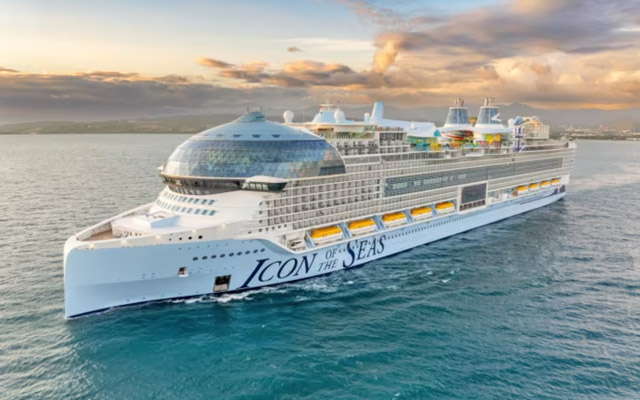
Oceania Cruises has relaunched its Cruise Vacation Guide, bringing travellers a personalised portfolio inclusive of pre-cruise information before setting sail.
Shipped to guests approximately 60 to 70 days prior to their embarkation date, the kit includes a personalised welcome letter from Oceania Cruises president, Frank A. Del Rio, a ‘Welcome Aboard’ booklet with general cruise information and a deck-by-deck guide per vessel, four reusable luggage tags and personalised luggage tag inserts that are customised with the guest’s name, sail date, ship and stateroom and colour coordinated based on booking category.

Guests previously received a shore excursion booklet in their pre-cruise documents mailed directly to them, but now, they will be able to access a digital shore excursion overview booklet on the Oceania Cruises website under Shore Excursions, and through their booking portal, in addition to receiving a digital PDF of shore excursion offerings specific to their voyage.
“It’s important to us that travellers sailing with Oceania Cruises enjoy a personalised and seamless experience from the time they book their voyage until their return home,” said Del Rio. “While most other lines are making the shift to a fully digital experience, we are responding to our guests’ preference for physical, in-hand documents, showing our dedication to meet the needs of our guests while also providing digital versions.”
PATA welcomes new executive board
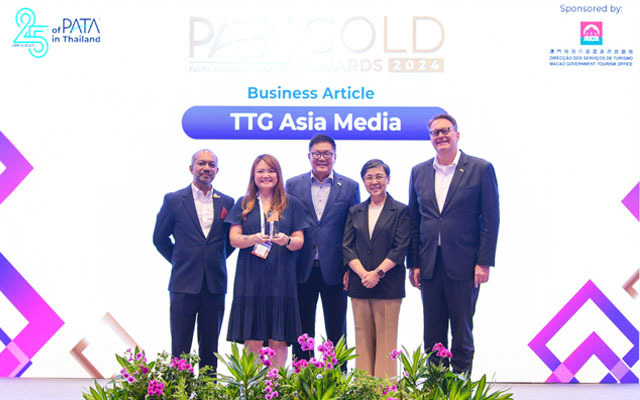
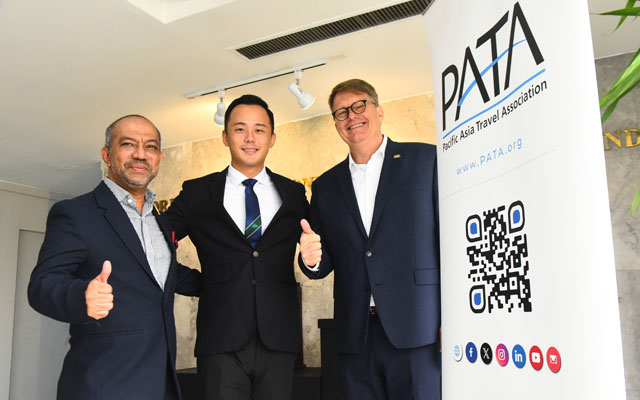
PATA has ratified its new Executive Board, which will be led by Peter Semone, who will serve as the chair for a consecutive second term.
Semone is a tourism development expert specialising in the Asia-Pacific region and has served in leadership roles for international donor funded projects in Timor-Leste, Lao PDR and Vietnam.

Meanwhile, Suman Pandey, president of Explore Himalaya Travel & Adventure will be the new vice chair, and Asian Trails’ chairman Luzi Matzig will serve as the new secretary/treasurer of PATA.
Other members for this term include Ben Montgomery, director of business relations management, Centara Hotels & Resorts, Thailand; Henry Oh, chairman, Global Tour, South Korea; Noredah Othman, CEO, Sabah Convention Bureau, Malaysia; Mayur Patel, head of Asia, OAG, Singapore; Gerald Perez, vice president, Guam Visitors Bureau, Guam; and SanJeet, director, DDP Publications, India.
PATA CEO Noor Ahmad Hamid remains on the Executive Board as an Ex-Officio member.
Cheers to culinary excellence
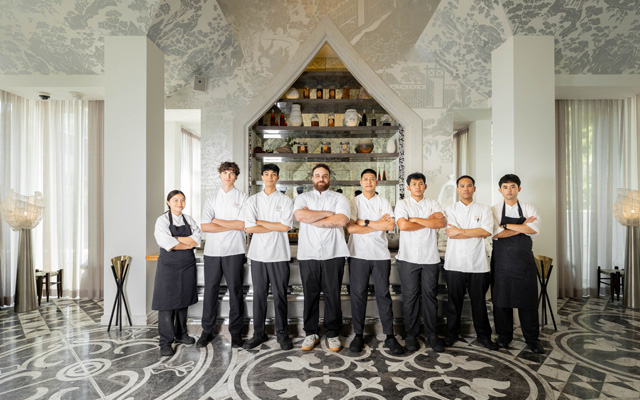
Partners and sponsors, including CrescentRating and Resorts World Cruises, celebrated the June 5 inaugural HalalTrip Gastronomy Awards 2024 by HalalTrip, in collaboration with the Singapore Halal Culinary Federation.

Sixteen restaurants received One Diamond awards, five in varying categories received Best-In-Class, two chefs were awarded in the HalalTrip Gastronomy Cookoff Showdown, and one veteran chef was recognised for the Legacy Award.
ITIF 2024 roundtable debates ways for Indonesia to grow arrivals
Indonesian minister of tourism and creative economy, Sandiaga Uno, has underlined the importance of the tourism industry in the country’s pursuit of economic growth at the International Tourism Investment Forum (ITIF) 2024 held in Jakarta on June 5 and 6, while noting strong performance in 2023.
Despite 2023 international arrival numbers falling short of pre-pandemic levels, reaching 11.7 million visitors and 35 per cent down from before, tourism revenue surpassed targets by 40 to 45 per cent.

Sandiaga expressed confidence in the country’s tourism performance, judging from its latest ranking on the 2024 edition of World Economic Forum’s Travel and Tourism Development Index – up 10 spots from 32nd to 22nd place. The ranking takes into account the implementation of quality and sustainable tourism, and its stronger position on the index has earned Indonesia international recognition, opined Sandiaga.
He was addressing investors, financial institutions and travel-related businesspeople at the Invest in Wonderful Indonesia Roundtable Discussion, held during ITIF 2024, which was organised by the Indonesian Ministry of Tourism and Creative Economy and supported by UN Tourism.
“We are confident that the key is to increase investment, and we need more investment in the tourism sector,” stated Sandiaga.
To entice investors, Sandiaga said Indonesia would continue to offer various tourism conveniences, such as visa-on-arrival and smart gate systems in immigration areas, as well as introduce Special Economic Zones (SEZ) and the five super-priority tourism destinations comprising Mandalika-Nusa Tenggara Barat, Lake Toba-North Sumatra, Likupang-North Sulawesi, Labuan Bajo-Nusa Tenggara Timur, and Borobudur-Central Java.
In response, Natalia Bayona, executive director of UN Tourism, urged for greater collaboration between the government and the private sector to better face global geopolitical factors, which could affect the investment climate.
She stressed: “We need more professionals’ presence, more reliable talents; we need to create more job opportunities. Therefore, investing in people is crucial to creating sustainable jobs that we can support.”
Commenting on human resource investment, Sachin Gopalan, CEO of IndoFringe, said youth programmes were needed to groom future leaders, who are all currently students, to carry on Indonesia’s Emas 2045 vision and India’s Viksit Bharat@2047 vision.
By connecting the youths of Indonesia and India, they can brainstorm and develop the future creative economy together, he opined.
In support of talent development, Indian ambassador for Indonesia and Timor-Leste, Sandeep Chacravorty, said both Indonesian undergraduates and postgraduates now have the chance to study abroad under its education programme.
Besides focus on human capital, UN Tourism’s Bayona said the industry also needed to develop start-ups and strengthen local SMEs so that they “become the backbone of the tourism sector”.
Several additional suggestions were put forth by other panellists, such as the privatisation of airports and seaports; the need for more attractions in tourist destinations to provide better visitor experiences; as well as the development of golf tourism.
Dharma Mangkuluhur, commissioner of Intra Golflink, opined: “Golf tourism is a sector that Indonesia should focus on. Our golf courses need upgrading (to meet the standards of neighbouring countries). There are 250,000 travellers coming to Indonesia (a year) for golfing while Thailand receives six million. This market is big and Indonesia should (tap it).”
Dubai Tourism wants more Indonesians
Dubai Tourism conducted its Dubai Tourism Roadshow 2024 in Jakarta last week to boost inbound arrivals from Indonesia and meet its 2024 target of 100,000 travellers from the South-east Asian market.
B2B tabletop meetings were held between 10 Dubai travel-related companies and some 100 Indonesia outbound travel companies.

Dubai recorded 75,000 arrivals from Indonesia in 2023, which was 36 per cent higher than the previous year.
Shahab Shayan, regional director, Asia Pacific and Turkey at Dubai Economy and Tourism (DET), remarked that tourist arrivals from Indonesia have been rising continuously – Indonesian travellers were still holidaying in Dubai during the pandemic, demonstrating the potential of Indonesia as one of Dubai’s key source markets in South-east Asia.
He added: “Looking ahead, Dubai Tourism will continue to engage industry stakeholders and collaborate more to position Dubai as a preferred tourist destination for Indonesians.”
Christian Sidharta, manager (Indonesia) at Dubai Tourism, shared that the roadshow highlighted new and upcoming attractions, including The Museum of the Future, The View of the Palm, Hatta Mountain, AYA Universe, and Siro Dubai.
“There is misconception that travelling to Dubai is boring because (there is) nothing new. We want to correct this by educating the agents that there is always something new, and (there are) many varieties of products, so they can develop new itineraries,” said Christian.
Another key message was that Dubai is the city for everyone, with more midscale hotels than upscale ones.
Christian pointed out that while “Dubai is historically known as an ultra-luxury destination”, it can be “affordable” and can cater to all types of travellers.
Khairul Sofwan, director of Safa Tours and Travels, told TTG Asia that Dubai’s luxury experiences were highly sought after by his clients, who loved touring in a Rolls Royce or on a helicopter, and would stay for five days and four nights.
The challenge for Khairul, however, is in creating itineraries for repeat high-end clients who are looking for more unique experiences, not just the new attractions that Dubai has showcased.
Trip.com Group teams up with Tourism Malaysia to boost inbound arrivals
Trip.com Group has signed a three-year Memorandum of Collaboration with Tourism Malaysia to expand their existing partnership beyond China, and into the wider Asia-Pacific region.
Leveraging Trip.com Group’s global resources, the focus will be on attracting more Chinese and international visitors to Malaysia through cooperation on the marketing front, including key product promotions, especially for hotels and attractions. More areas within Malaysia, such as Johor and Sarawak, will also be promoted to travellers.

In conjunction with the 50th anniversary of the establishment of diplomatic relations between China and Malaysia, Harley Travel will work with Trip.com and the Ministry of Tourism to promote tourism between Malaysia and China on the back of the visa-free travel arrangement between both countries.
Based on Trip.com Group’s data, some of the most popular Malaysian cities for travellers globally are Kota Kinabalu, Penang, Langkawi and Semporna.
Edison Chen, vice president of destination marketing & strategic alliances, Trip.com Group, said: “Tourism to Malaysia has picked up since the start of visa-free travel arrangements with China, but we believe there is still more we can do to enhance Malaysia’s profile as a key tourist destination. Trip.com Group is committed to helping Malaysia’s tourism industry grow not just in absolute numbers, but also in attracting quality tourists.”
Manoharan Periasamy, director general of Tourism Malaysia, said: “This expansion of our agreement to cover the whole of Asia-Pacific shows how successful it has been, and we are excited to work together to enhance our tourism promotion efforts to other regional markets and show travellers what Malaysia has to offer.”
In addition, Tourism Malaysia recently unveiled its strategic roadmap for Visit Malaysia 2026, which aims to attract 35.6 million international tourist arrivals and 147.1 billion ringgit (US$31.3 billion) in tourist expenditure.


Infrastructure improvements and promotion of lesser-known destinations are among the steps being taken by Indonesian travel and tourism players to tackle overcrowding in hotspots like Bali.
Within Bali alone, the spread of tourists has been uneven, with a strong concentration in South Bali, which comprises Kuta, Seminyak, Legian, Jimbaran, Benoa, Nusa Dua, Uluwatu and Pecatu.
Wayan Suena, president director of Indonesia Impression, noted that hotels in South Bali are usually fully booked, while hotels in the north, east and west suffer low demand. He believes that demand can be spread out to the other regions of Bali by improving access.
To disperse travellers to other parts of Bali, the Bali Tourism Office is improving tourism hardware and infrastructure. “We are repairing the Besakih Temple; building an international theme park with Paramount Pictures in Jembrana, West Bali; completing the Singaraja-Denpasar shortcut access; and continuing construction of the toll road in West Bali,” detailed Tjok Bagus Pemayun, head of the Bali Tourism Office.
Wayan said the Singaraja-Denpasar shortcut access development has already yielded positive results – more visitors are taking one-day tours to Sekumpul waterfall and the Lovina area in Singaraja.
“More agents are also selling one-day tours for dolphin-watching in Lovina,” he added.
Beyond Bali, Wita Tour is promoting itineraries such as Bangka-Belitung, and will create tours to Komodo, Sumba and places in Sumatera.
Addressing the woe of overtourism, Dwi Nugraha, world product manager, Pacto DMC, said areas like Bali’s Canggu and Ubud were often congested due to improper traffic management, not overtourism.
“It is important to carefully assess each area and the reasons behind the high tourist numbers before labelling (the issue) as overtourism,” Dwi warned.
Meanwhile, he is hopeful that road improvements will connect all Bali regions so travellers can easily access areas such as Pemuteran, Amed, and Munduk, thus easing the burden of crowds on South Bali.
David Putrawan, sales and marketing manager of Wita Tour, opined that improved infrastructure could be a double-edged sword. With easier access, more people would visit a destination and give rise to potential overtourism.