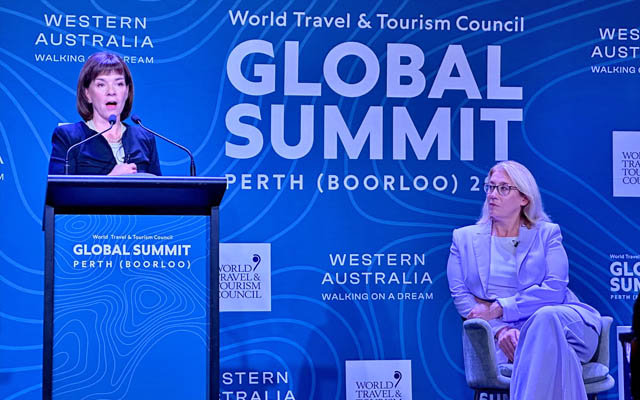
For the first time in Australia, the 24th WTTC Global Summit opened in Perth, announcing new records and initiative – including groundbreaking reports on Oceania’s tourism potential and insights into indigenous tourism.
“2024 is a very exciting time for our sector. This year, global travel and tourism in GDP terms is set to surpass the pre-pandemic levels in 2019 and reach a record of US$11.1 trillion,” said Julia Simpson, WTTC president and CEO.
“This incredible growth means the sector now represents 10 per cent of the global economy, and travel and tourism will support 348 million jobs around the world,” she added.
Travel and tourism is also growing faster than its environmental impact, demonstrating that the industry’s growth is becoming cleaner.
“Our sector is proving that we can grow responsibly. We’re decoupling growth from emissions, expanding travel and tourism economically while lowering its environmental footprint,” stated Simpson.
“This is a defining moment, proving that innovation and sustainability go hand in hand in shaping the future of global tourism,” she noted, emphasising that while progress is being made, achieving absolute reductions in greenhouse gases must be significantly accelerated to meet the Paris climate goals.
In 2023, the sector’s dependence on fossil fuels decreased to 88.2 per cent, compared to 90 per cent in 2019. Meanwhile, the share of low-carbon nuclear and renewable sources rose from 5.1 per cent in 2019 to 5.9 per cent in 2023, signalling progress towards sustainable goals.
New data and methodological improvements have also led to a revised estimate of the sector’s 2019 greenhouse gas emissions, now calculated at 7.8 per cent, down from the previous figure of 8.1 per cent.
As the first WTTC Global Summit in both Australia and Perth, it is expected to position Western Australia (WA) as a rising global leader in tourism trade and boost the local WA economy with a projected A$3.8 million (US$2.5 million) in impact.
WA deputy premier, treasurer and minister for transport and tourism, Rita Saffioti, said the state has injected more than A$70 million since the pandemic to support new aviation links, which is seen as crucial for an isolated destination.
“We (also) have a strategy to increase the range of events that we host in this state. We understand that tourists continue to look for new experiences but also, sometimes need that reason to travel.
“Finally, another key point of our strategy, is to support and grow our Aboriginal tourism strategy. We know that tourists from around the world want to be able to experience our original, indigenous culture. So, we have a dedicated plan to make sure WA can continue to support new indigenous and Aboriginal tourism,” added Saffioti.
WTTC senior vice president, Virginia Messina, said Australia’s travel and tourism sector is set to reach record-breaking numbers with a projected economic contribution of more than A$265 billion, according to WTTC data.
“(This) represents about 10 per cent of the Australian economy. It is also set to support 1.6 million jobs, representing nearly 11 per cent of the country’s workforce,” she added.
More details on WTTC’s new initiatives and reports will be revealed during the summit.


 Accor underwent a global organisational restructuring several years ago – what has it achieved?


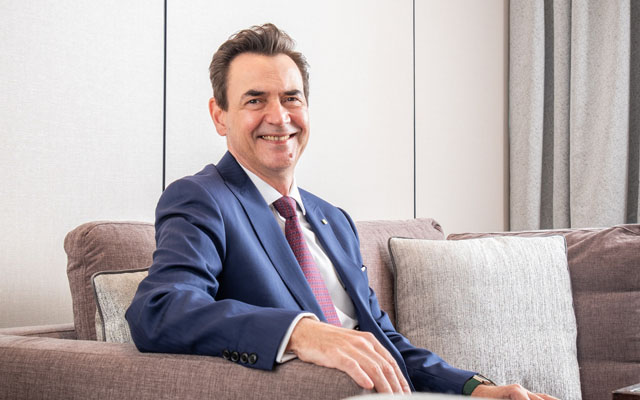
 Kapek has spent nearly 20 years in leadership roles within the group, managing hotels and resorts across multiple destinations. He was most recently vice president operations at Shangri-La’s China World Trade Center hotels.