Philippine Airlines (PAL) has kicked off its Ultimate Seat Sale, offering travellers lowest fares of the year on select international and domestic destinations from now to September 20.
Fares start as low as US$50 for round trip base fare for international travel, and 209 Philippine pesos (US$21) one-way base fare for domestic travel.
Philippine Airlines’ Ultimate Seat Sale is on now till September 20
Travellers to New Zealand will soon have to pay nearly thrice the amount in entry fees from October 1, a move by the government that has sparked criticism from the key tourism sector that the higher levy will deter visitors.
The international visitor and conservation and tourism fees will be raised to NZ$100 (US$61.88) from $35 to “ensure visitors contribute to public services and high-quality experiences while visiting New Zealand”, according to the New Zealand government.
New Zealand will near triple its tourist levy come October 1; Auckland in New Zealand, pictured
The decision was made after the NZ$35 fee, which was first introduced in July 2019, proved insufficient to cover the costs incurred by the impact of tourists on the natural environment.
The government said the fee was competitive and it was confident New Zealand would continue to be seen as an attractive visitor destination.
However, tourism stakeholders believe the sharp increase in levy will discourage visitors, as the country is still struggling to recover from strict border closures implemented during the Covid-19 pandemic.
In addition, the New Zealand government has recently increased the costs of visitor visas, and plans to also increase charges on regional airports.
“New Zealand’s tourism recovery is falling behind the rest of the world, and this will further dent our global competitiveness,” said Rebecca Ingram, chief executive, Tourism Industry Association.
For NZ Airports chief executive Billie Moore, the government’s decision is “a triple-whammy for our sector, which is trying to work hard for New Zealand’s economic recovery”.
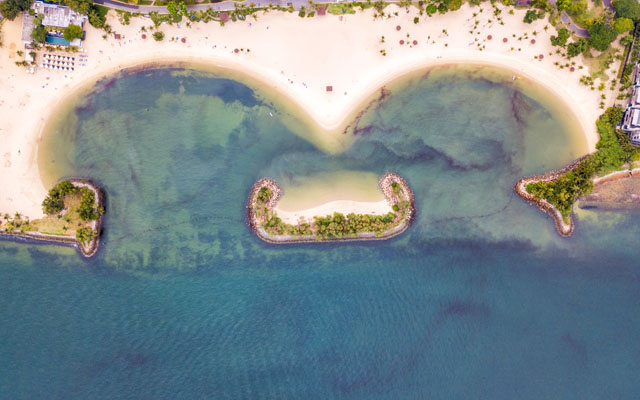
Tanjong Beach in Sentosa, which was most impacted by the oil spill on June 14, is now reopen for swimming and sea activities, announced Sentosa Development Corporation, ahead of the expected three months for clean-up and restoration.
The reopening has been carried out in accordance with the relevant national guidelines to ensure that water quality at Tanjong Beach has returned to normal and stable levels through regular monitoring.
Beach-goers can now head back to Tanjong Beach in Sentosa
With all three beaches now reopened, swimming and water activities have resumed for all visitors.
PATA Nepal Chapter has launched a marketing campaign to introduce new products and promotions as well as raise awareness for lesser-known destinations, such as the western, eastern and northern parts of Nepal, where there are already wildlife, mountains, and cultural attractions.
Narendra Bhatta, general secretary of PATA Nepal Chapter and managing director of Heritage Tours and Travels, told TTG Asia that Nepal stakeholders recently invited a number of tour operators and DMCs from India to visit the far west of the country, where wildlife-sighting, rafting, trekking and pilgrimage programmes were introduced.
Buddhist Circuit has launched the first Women Empowerment Spiritual Sports Run that begins at Lumbini and ends at Kapilvastu, pictured
Similar fam trips will be held next year to help more overseas tour operators develop new programmes to attract travellers to Nepal.
To facilitate access, Nepal Airlines plans to launch a new service between Kathmandu and Sydney, Australia in the next few months, operated on an Airbus 332 with 274 seats in two classes. This would be Nepal Airlines’ first regular scheduled flight to Australia.
The airline previously operated chartered flights to Australia on a scheduled twice-weekly service.
Meanwhile, the Buddhist Circuit company, which organises spiritual tours connected with Buddha’s life, has launched the first Women Empowerment Spiritual Sports Run – Mother Maya Devi Maternity Route Marathon. The run starts from Lumbini and ends at Kapilvastu Palace, tracing the route Buddha’s mother, Mother Maya Devi took to birth the prince. The three-day marathon will take place across Enlightenment Day, Mahaparinirvana Day, and Vesak Day.
Having organised the Mount Everest Marathon for the last 20 years, Bikram Pandey, founder and owner of Buddhist Circuit, said: “This is the first women empowerment run dedicated to the queen who gave birth to Buddha. The programme will not just be for runners; visitors can also participate in a pilgrimage or a holy walk, guided by a nun or priest.”
Gangneung City, located in Gangwon Province, South Korea, has long been a powerhouse in domestic tourism. Now, the city is setting its sights on the international market, with a particular focus on Taiwan and Japan due to their geographic proximity.
In the coming year, Gangneung City aims to expand its target markets to include South-east Asia, a region that is increasingly captivated by K-culture – Korean music, dramas, and films, shared Um Kum Mun, tourism policy department director, Gangneung City.
From left: Gangneung City Hall’s Park Soyoung, Um Kum Mun and Lee Seok-je
The city was the film site for popular dramas such as Goblin and The Glory.
Meanwhile, the city’s business events infrastructure is expanding. A yet-to-be-named convention centre is being built in the Olympic Park. This is scheduled for completion in 2026, in time for the 32nd ITS World Congress in October. The high profile event on smart mobility and digitalisation of transport is expected to attract participants from 100 countries.
It is the first purpose-built convention centre for the city, which has set its sights on the business events industry. It intends to grow inbound corporate incentive events as well.
With Gangneung City being connected to Seoul by a three-hour ride on the KTX high-speed train, Um said his destination would be attractive for twin-city leisure and MICE itineraries.
IHG ANA Hotels Group Japan (IHG) has joined forces with Hotel Management International (HMI) to expand its footprints by rebranding three hotels in Japan to the ANA Crowne Plaza brand.
Totalling 539 rooms, the three Crown Palais hotels will undergo extensive renovations as they convert to ANA Crowne Plaza Kochi, ANA Crowne Plaza Chiryu and ANA Crowne Plaza Hamamatsu. Opening in 1H2026, these three hotels will join a 20-strong ANA Crowne Plaza portfolio in Japan that includes ANA Crowne Plaza Osaka and ANA Crowne Plaza Kanazawa.
From left: IHG’s Abhijay Sandilya and HMI’s Hira Ryuko
Abhijay Sandilya, CEO of IHG ANA Hotels Group Japan and managing director of IHG Hotels & Resorts Japan & Micronesia, said: “Converting these properties reflects the attractiveness of our brands, the value of IHG’s global enterprise backed by our strong in-market team with ANA’s support. Expanding the brand’s presence and adding three new destinations – Kochi, Chiryu and Hamamatsu – to our extensive portfolio across the country offers guests new experiences and options whether they are travelling for leisure, business or blended travel.”
Ryuko Hira, president of HMI, added: “With a long history of operating hotels for more than half a century across Japan, we are confident that the power of IHG and the ANA Crowne Plaza brand will enable us to strengthen our offering and expand our business, attracting a wider range of travellers to our hotels.”
ANA Crowne Plaza Kochi, ANA Crowne Plaza Chiryu and ANA Crowne Plaza Hamamatsu will add to IHG’s growing presence in Japan which currently sits at 47 open hotels with 15 in the pipeline.
Accor has strengthened its partnership with Worldwide Hotels Group by signing an agreement to introduce two new properties in Kuala Lumpur, Malaysia, set to launch in 1Q2025.
These properties, following refurbishments and rebranding, will mark the debut of the Grand Mercure brand in Malaysia as well as the addition of an ibis Styles to Kuala Lumpur.
Accor and Worldwide Hotels Group will introduce two new properties in Kuala Lumpur in 2025
As the first Grand Mercure branded hotel in Malaysia, the new Grand Mercure in Kuala Lumpur is located between the entertainment hub of Bukit Bintang and Chinatown, and will feature 325 rooms, an all-day dining restaurant, fitness centre, swimming pool, and event spaces.
The new ibis Styles will be situated in the Bukit Bintang district, just steps away from public transportation and within walking distance of modern shopping malls and a variety of dining options. The hotel will offer 168 rooms, an all-day dining restaurant and bar, laundromat, and fitness area.
These two signings bring the total number of Accor’s PM&E pipeline keys across Asia to 46,802.
“Kuala Lumpur is a strategic destination for Accor, and we are thrilled to bring our global brands to this high-potential location. We remain committed to our expansion strategy, with a clear roadmap to consolidate our presence in Asia,” said Garth Simmons, COO of Accor’s PM&E Division in Asia.
Carolyn Choo, CEO of Worldwide Hotels Group, shared: “Together with Accor, we are confident in delivering exceptional experiences that reflect the unique cultural essence of Kuala Lumpur. We anticipate the opening of these properties in early 2025 and are eager to see the positive impact they will have on the local hospitality sector.”
Minor Hotels, together with Singapore’s Kajima Development and Abu Dhabi-based Alwathba Investment, will launch its Avani Hotels & Resorts lifestyle brand in Singapore, marking the group’s entry into the country.
Scheduled to open in 1Q2027, the 13-storey property will boast 200 keys, and is located in Singapore’s Tanjong Pagar district, just minutes away from the CBD and Chinatown.
From left: Alwathba Investment’s Rashed Mohammed Ahmed Darwa Alkaabi, Minor International’s William E Heinecke, Kajima Development’s Shuichi Oishi, and Minor International’s Dillip Rajakarier
The hotel will offer both business and leisure guests a contemporary stay that blends the rich heritage of the city-state’s iconic shophouses with its modern urban development. The Tanjong Pagar neighbourhood is a food hotspot, offering dining options ranging from traditional hawker fare at Maxwell and Amoy Street food centres to Michelin-recommended global cuisine along Kiong Siak Road, Telok Ayer and Duxton Hill.
It is also nearby to the Tanjong Pagar MRT Station and 350 metres from the Maxwell MRT Station, providing easy access to Singapore’s Downtown Core, Marina Bay and other districts.
“Avani Singapore represents a strategic market entry for Minor Hotels, and we are honoured to have our partners Kajima and Alwathba alongside us as we venture into Singapore’s hospitality sector,” commented Dillip Rajakarier, group CEO of Minor International and CEO of Minor Hotels.
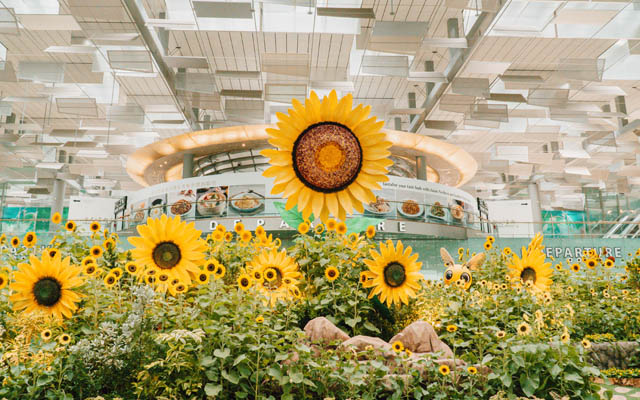
Changi Airport in Singapore has been transformed into a blooming spectacle with its first-ever flower-themed showcase from now till end of September.
The Sunflower Sojourn display features over 5,000 sunflowers of more than 10 varieties, beautifully arranged at over 20 locations across all four terminals. The showcase extends outdoors to Hub & Spoke, making it the largest sunflower showcase ever held in an airport.
An eight-metre-tall sunflower topiary sculpture at Terminal 3 Departure Hall adorned with over 1,000 sunflowers, welcomes visitors to Singapore (Photo: Changi Airport Group)
Visitors will be treated to floral displays featuring larger-than-life sunflower topiary sculptures, towering at five and eight metres tall respectively, at the Departure Halls of Terminals 2 and 3.
The blooms are grown in Changi Airport’s own plant nursery, and visitors can also discover the sunflower’s cultural significance, ecological importance and the diverse human uses of this plant.
Visitors can also grab exclusive merchandise at the Main Event Outpost at Terminal 3 Departure Hall and the sunflower-themed vending machine located at Terminal 3 North, near the Jewel link bridge. These include the limited-edition Buddy bear dressed in a sunflower outfit, as well as pens, coasters, acrylic magnets and pouches which feature minimalist artwork inspired by Changi Airport’s gardens, including the Sunflower Garden, Enchanted Garden, and Cactus Garden.
Hub and Spoke visitors can enjoy delectable sunflower-inspired dishes like soft-serve yogurt with sunflower-flavoured sauce and sunflower butter toast, available in limited quantities.
“The sunflower, a symbol of joy and cheerfulness, perfectly aligns with our service philosophy of delivering delightful and positively surprising experiences to all visitors,” commented Ang Siew Min, senior vice president of airport operations development, Changi Airport Group.
Philippine Airlines (PAL) has teamed up with Amadeus to leverage on the latter’s broad set of solutions and services to enhance the travel experience of passengers on its international and domestic flights.
PAL will benefit from the full integration of customer loyalty knowledge and data with the Altéa Passenger Service System (PSS) to deliver real time personalisation throughout the customer journey. PAL first embarked on a digital transformation journey with the adoption of Amadeus’ Altéa PSS in 2018 and more recently Amadeus’ customer profiling and personalisation solution, Traveler DNA.
Philippine Airlines has chosen Amadeus to upgrade its digital channels and improve traveller experience
Amadeus will provide a team of travel industry experts with unique knowledge of airline website optimisation to completely evolve PAL’s digital channels.
Working hand-in-hand to create a truly end-to-end customer experience, from acquisition to post travel, Amadeus will redesign the airline’s website and operate it from a new cloud based infrastructure, as well as provide managed services to maintain, monitor, and fully manage the cloud hosting environment of the PAL website.
Co-innovation through an established digital lab and competency centre organised between the two companies will continue, with a focus on further customising and enhancing the carrier’s website.
PAL will implement the Amadeus Loyalty Management solution to enhance the proposition of Mabuhay Miles, powering its transformation into a digital, lifestyle loyalty programme. This will provide more flexibility to better serve loyalty members, increasing their engagement.
The modern loyalty technology will empower PAL with a full range of capabilities including currency retailing, a modern UI experience, a loyalty member portal, targeted promotions, real-time identification and allocation of benefits, as well as advanced acquisition, member recognition and segmentation.
The carrier will also be able to expand its loyalty partner network, offering them an intuitive, self-service partner management portal.
The digital services and loyalty solutions feature full integration with the Altéa PSS suite, as well as technology from Amadeus’ partner network.
PAL president Stanley Ng said: “Our website and the Mabuhay Miles programme are key aspects of our digital strategy. This partnership with Amadeus will help us strengthen our technology infrastructure in these areas further. With Amadeus’ expertise and unique understanding of the travel industry, we will be able to keep service levels high and anticipate future technological developments in the market. We look forward to working with Amadeus as we progress on our digital transformation journey.”
“We have a team of dedicated experts working closely with Philippine Airlines to elevate and optimise its website and we will also work alongside the carrier to grow its loyalty programme, to improve customer experience, and increase engagement of loyalty members,” added Javier Laforgue, executive vice president, travel unit & managing director, Asia Pacific, Amadeus.


















Travellers to New Zealand will soon have to pay nearly thrice the amount in entry fees from October 1, a move by the government that has sparked criticism from the key tourism sector that the higher levy will deter visitors.
The international visitor and conservation and tourism fees will be raised to NZ$100 (US$61.88) from $35 to “ensure visitors contribute to public services and high-quality experiences while visiting New Zealand”, according to the New Zealand government.
The decision was made after the NZ$35 fee, which was first introduced in July 2019, proved insufficient to cover the costs incurred by the impact of tourists on the natural environment.
The government said the fee was competitive and it was confident New Zealand would continue to be seen as an attractive visitor destination.
However, tourism stakeholders believe the sharp increase in levy will discourage visitors, as the country is still struggling to recover from strict border closures implemented during the Covid-19 pandemic.
In addition, the New Zealand government has recently increased the costs of visitor visas, and plans to also increase charges on regional airports.
“New Zealand’s tourism recovery is falling behind the rest of the world, and this will further dent our global competitiveness,” said Rebecca Ingram, chief executive, Tourism Industry Association.
For NZ Airports chief executive Billie Moore, the government’s decision is “a triple-whammy for our sector, which is trying to work hard for New Zealand’s economic recovery”.