The Mulia, Mulia Resort & Villas – Nusa Dua, Bali (Mulia Bali) has unveiled a special festival dining experience that marries two rich traditions: the cultural celebration of Ajengan and the Mulia’s Mid-Autumn Mooncake collection.
Derived from the Balinese word for food, Ajengan is more than just a dining experience. It is a cultural night that immerses guests in the richness of Balinese culture, art, and culinary traditions. Held at the exquisite Eden Garden, this all-you-can-eat dinner invites both guests and visitors to discover the finest elements of Balinese heritage every other Thursday from 19.00 onwards. There will also be dance performances by a local dance troupe from a nearby village.
Guests can indulge in an all-you-can-eat dinner while enjoying a cultural dance performance during Ajengan
In addition, guests can try some of this year’s mooncakes, which comes in an elegant packaging reflecting the beauty of the Mid-Autumn Festival.
Authorities in Singapore, Malaysia, Indonesia, and Thailand, among others in the region, have established precautionary measures at borders against the import of mpox from abroad, following the World Health Organisation’s (WHO) declaration of mpox a global public health emergency on August 14.
A WHO statement cited a surge in cases of the new mpox clade 1b strain in Congo, Burundi, Kenya, Rwanda and Uganda.
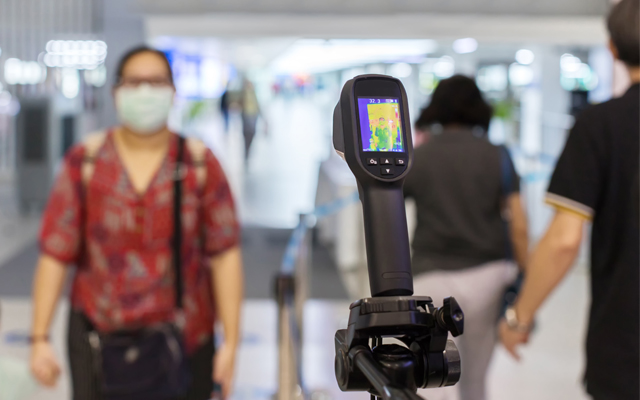
Thermal scanners are deployed at international border crossings
Singapore started from August 23 temperature and visual screening at both air and sea checkpoints. The city-state does not have direct flights between Singapore and any country with an mpox outbreak, stated the health ministry. National Centre for Infectious Diseases, National University Hospital, and KK Women’s and Children’s Hospital are prepared to handle infected patients.
In Johor, the Malaysian state bordering Singapore, health authorities have stepped up public health screening activities at all international checkpoints – Bangunan Sultan Iskandar Customs, Immigration and Quarantine (CIQ), Sultan Abu Bakar Complex CIQ, Senai International Airport, and international ferry terminals.
Kuala Lumpur International Airport (KLIA) Terminal 1 has also tightened screening procedures. While most travellers and crew will pass through thermal scanners, those arriving from high-risk country – or those showing symptoms of illness – will undergo more thorough screening at a centre near gate C22.
Health minister Dzulkefly Ahmad said symptoms to watch for include high temperature, blistered skin, or swollen glands. People with these symptoms would be given a health alert card and referred to the nearest healthcare facility.
In Thailand, authorities now require people travelling from high-risk areas to register in the Thai Health Pass system, which will collect entry and exit dates and times to aid contact tracing where necessary.
International arrivals at Indonesia’s major ports of entry such as Soekarno-Hatta International Airport, Jakarta and I Gusti Ngurah Rai International Airport Bali will pass through thermal scanners and are required to fill out an online health declaration form. Symptomatic passengers will undergo checks in a private facility upon arrival.
During a press conference earlier this week, Singapore health minister Ong Ye Kung emphasised that “Mpox is a troublesome virus which we can manage”.
He noted that the new mpox strain was less transmissible than respiratory viruses such as influenza and Covid-19. An mpox infected person can spread it to an average of 1.3 persons, while the rate of infection is five for Covid-19 (Omicron) and 10 for measles.
As such, Ong said the state of disruption resulting from Covid-19 would unlikely occur with mpox.
Finn Partners’ latest industry report, China’s Women in Charge, produced in association with ILTM Asia Pacific 2024 and presented on July 1 at the trade event’s Opening Forum, paints a clearer picture of the next Chinese outbound traveller segment that the travel and tourism industry needs to watch out for: affluent female travellers.
The report notes that high-value Chinese female travellers are seeking more meaningful travel experiences, as they see travel as opportunities for enrichment, new learnings, and personal fulfilment.
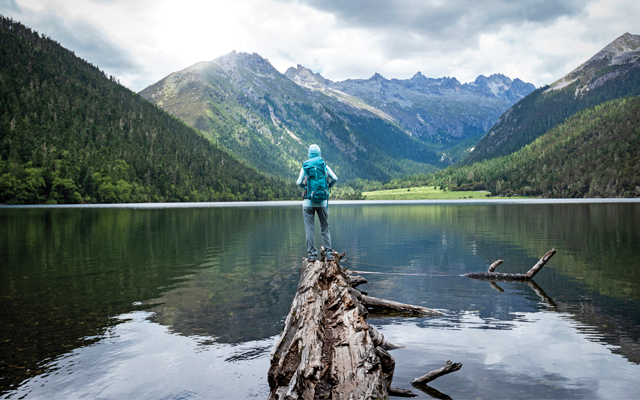
Chinese female travellers are bolder and more adventurous than ever, prioritising off-the-beaten-path destinations and meaningful experiences
“Where travel was once a form of conspicuous consumption, it is now a sign of independence,” said Jenny Lo, managing partner of Finn Partners.
“A famous Chinese saying goes: women hold up half the sky. Clearly, this is so in travel,” Lo added, emphasising that women make 80 per cent of travel decisions and account for six out of 10 Chinese tourists in 2023.
“They are the ones who hold the household’s purse strings. As China reclaims its position as a top spender in international travel, it suffices to say that female travellers will have an impact on the travel business,” Lo said.
Precise travellers
On the back of changing social and cultural dynamics in China and with more Chinese females choosing not to have children and prioritising personal goals, travel patterns are evolving too.
In detailing the ways Chinese women are using their economic and social influence on the travel industry, the report highlighted five key takeaways.
Redefining luxury: the definition of luxury has shifted away from external validation to self-fulfilment. Sixty-three per cent of respondents define luxury as enjoying “me time”, while half interpret luxury as experiences that evoke joy.
Travel to enrich: China’s female luxury tourists no longer travel to escape daily routines or family obligations. They embrace travel as an opportunity to challenge themselves or learn new skills. Ninety-nine per cent believe that travel brings profound joy, and the same percentage see it as essential to expanding their horizons.
Need for niche: while most Chinese tourists take familiar routes, almost 90 per cent of Chinese female travellers are attracted to niche destinations for their natural beauty and landscapes. As an expression of individuality, 66 per cent are drawn to unsung destinations that offer unique local experiences, while 58 per cent are willing to veer off the beaten path to visit destinations of cultural or historical significance.
Flying solo: there is a growing trend for solo travel, particularly among female travellers, who see this as a reflection of their independence. Regardless of their marital status, over 80 per cent of respondents feel equally comfortable travelling on their own as with a spouse or partner. Seventy-three per cent of married respondents are likely to increase their solo travel in the coming years. For those with children, 46 per cent plan to travel without or travel less with their children.
Rising self-influence: empowered by financial autonomy and preference for solo travel, 82 per cent of respondents say their opinions mattered more than before when arranging travel. While they may be influenced by partners (60 per cent), this demographic is less likely to be swayed by celebrities and social media influencers (10 per cent) or advertisements (nine per cent). Older affluent female travellers favour travel advisors, trusting their insights and seeking guidance from experts when curating bespoke travel experiences, while the younger ones are more open to celebrities, influencers, and travel bloggers for inspiration.
Be ready for the ladies
Lo told TTG Asia that while the report focuses on affluent Chinese females due to the great interest the travel and tourism industry has in the outbound Chinese market, the reality is that the female population across Asia is increasingly educated, financially empowered, and independent.
“This is a trend that is widely observed, and we would love to study the travel intentions of Asian women one day,” remarked Lo.
Even without supporting data now, Lo believes that travel and tourism businesses must already be prepared to welcome a growing number of female travellers who are going solo or with friends.
According to the study, 31 per cent of Chinese females prefer accommodation designed for women. Cathy Feliciano-Chon, managing partner at Finn Partners, urged hoteliers to adopt friendlier interior design and furnishings for women.
“Give us more hangers and don’t position clothes racks and hanging rods so high up. Give us mirrors and lighting that allow us to do our make-up. Give us proper, powerful hairdryers,” Feliciano-Chon said, adding that women-only floors are no longer enough.
Lo added that these ought to be “basics” at hotels, even at business hotels since more women are travelling for work. She added that respondents are also asking for solo travel packages, safe nightlife options, and more networking opportunities while on trips.
“Women are planning trips to celebrate personal achievements, so hotels could offer packages that facilitate that,” Lo suggested, pointing to ideas like exclusive designer shopping weekends and wellness retreats.
The world has long acknowledged that the minds of children are like sponges, and they take lessons from the actions of people around them. So, when I started in 2015 to travel with my firstborn when he was just 10 months old, I made a conscious decision to choose my destinations and activities wisely. Together, and along with his little brother years later, we spent time in tranquil parts of Ubud, walked down quiet paths in the ancient post town of Tsumago, had picnics in Japanese castle parks, stayed in a hanok surrounded by a private Hallabong tangerine orchard in Jeju, and played at old-school amusement parks that generations of locals once loved.
My family’s travel programmes are guided by a desire to go deeper into destinations, build memories on experiences we cannot find at home, and to support local businesses as much as possible.
Has my travel style rubbed off on my sons? My firstborn is now nine. I took off with him in June on our first mother-and-son bonding trip to Perth. In the planning stage, I shortlisted several activities and he marked out the must-dos: see the stars over The Pinnacles Desert, explore Fremantle Prison and learn what it was like to be a convict then, and comb through the galleries of WA Museum Boola Bardip (we eventually spent two days in this attraction!).
I am proud that he prioritised learning experiences that were unique to the destination. However, I am not the only one to use travel as a teaching opportunity. In our analyis on the travel behaviours of millennial and Gen Z travellers (page 16), Discova’s chief commercial officer, Rhydian James noted that millennials, when travelling with their young families, seek opportunities to teach and learn, not just to see. Seeing how this generation, along with the Gen Z that follows, prioritises unique and meaningful experiences, off-the-beaten-path places, and sustainable travel merchants, there is hope that these positive preferences will rub off on their offspring and catalyse responsible travel and tourism development into the future.
You have created this new World Tourism Seasonality Summit that will take place this October as part of the World Routes 2024 conference in Bahrain. Why are you so passionate about this topic, about extending the seasons of tourism?
It all begun back when I was 22, fresh out of university and into my job as a travel agent. I decided there and then that I wanted to work in this industry for a long time, partly because I love to travel and to discover how other people live and how other societies operate.
I have been with some of the biggest boys in the industry – Kuoni, MyTravel Group, and TUI. Later, I joined Routes, where I realised I was not an aviation man. I am a tourism man. When I looked at airlines and airport developments for Routes conferences, I saw planes transporting a whole load of people from one market to another and I was interested to know what drove their decision to travel to that destination.
In the early days of Routes, tourism authorities were missing from this conversation. So, I spoke about this to the CEO at that time, and he made me the director of tourism. My job was to go to tourism authorities everywhere and invite them to engage in air service development.
As I went about my job, I started to see tourism as a huge ecosystem. Tracking data from organisations like UN Tourism (previously UNWTO), WTTC and a whole variety of others made a few things jump out at me: since the beginning of tourism in the early 1900s through till today, effectively, with the exception of Covid, tourism has known nothing but growth.
What happens to an industry that knows nothing but growth? You get fat and lazy. And we did.
(At trade shows) were the same exhibitors, doing the same stuff, with the same messaging, selling the same time of the year, selling the same products. There was no creativity, because they didn’t have to be. There was going to be more tourists next year anyway, because more people were travelling and more airlines were getting onto the scene. Low-cost carriers were on the up then.
Then came overtourism.
The overtourism question really challenged me. UN Tourism predicted that there was going to be another 300 million more visitors by 2030. I didn’t believe that because multiple sources were saying that the global middle-class would grow by 1.5 billion in the next 10 years. These people have disposable income and many of them will want to travel.
That information should send a shiver down the spine of anybody in our industry. With that sort of demand against supply, prices would rise and travel could return to the realms of the relatively wealthy. Already, we are seeing tourist taxes and fees being implemented to manage tourists.
I have two daughters, and we aren’t from a wealthy background. They absolutely should have the opportunity to travel. Travel cannot be the preserve of the elite.
It got me thinking about better ways to manage tourist crowds that do not involve raising prices. And it hit me – the best time of the year to travel is during the low season. This is the time when hotels have capacity that’s wide open and the experience is not a negative one.
Overtourism is seasonal. You don’t see Majorca complaining about overtourism in January because there is pretty much no tourist then.
There is a reason for low seasons though. Do you see a challenge in spreading travel demand out across the low seasons?
The challenge that we’ve got is the perception of the low season. We need to change that perception by being more creative about how we market the destination during low seasons.
What traditionally predicted travel seasonality was weather and the school holidays. It is hard to push family travel outside of the school holidays, but perceptions of weather-driven holidays can be changed.
I was just speaking to (PATA Travel Mart exhibitors from) the Maldives, and they told me about their rainy seasons in May and June. Tourism business is very slow during those months. I have been to the Maldives a couple of times during the rainy season, and I found my experiences wonderful. You get the rain, but rain in the tropics is the most fabulous. It rains like it means it, with thunder and all, but then it is quickly done. What an experience! Rain in the tropics is not slow and long-drawn, and the skies are not grey and grizzly.
So, the Maldives marketers have to educate people about the rainy season – tell people that rainy seasons do not bring (a whole) day of rain. Above all, marketers must reach out to people who value more than just the destination’s weather.
Yes, I see that. The Maldives has in recent years been promoting itself among business event planners. Business events can bring arrivals outside of the usual peak months.
Yes, marketers have to identify and go after niches. Besides MICE, destinations can build low season demand through niches like wellness tourism and sports tourism. Wellness tourism, for example, does not require good weather. Travellers can meditate indoors.
Have you seen good examples of a destination that has built its tourism fortunes on weather-related strengths, like sunny summers or dreamy white winters, and is able to successfully diversify tourism footfalls into the low seasons?
There are certainly a few in Europe. Tenerife is well known for year-round sunshine and beaches, but it has so much more than beaches. For anybody who is not familiar with Tenerife, I would describe it as the Hawaii of Europe. It is a group of islands with a big volcano in the middle and subtropical rainforest in the north. It is great for cycling tours.
We worked with Tenerife on a campaign a couple of years ago. When we featured it on the cover of one of our magazines, everybody thought it was Costa Rica.
Tenerife is making inroads to showcasing more of the island than its beaches.
Tahiti is another example. It has a challenge with seasonality. We did some work with Tahiti and were brought over during the rainy season. We were there for five days before we saw a drop of rain.
I think it is risky for a destination to only position itself on its beaches. Europeans will not travel halfway around the world to see a beach; there are good beaches around Europe that are quicker to get to.
Local culture and heritage can make a strong position. As a traveller to Tahiti, I would want to meet a local who can tell me about traditional tattoos. Tahitians have tattoos that tell the full story of their life. You don’t get that in Europe or many other places. I would also want to experience the local cuisine, nature, songs, and dances.
So, for our Tahiti campaign, we filmed so many things but not one beach. There were so many other unique aspects of Tahiti to feature.
I’m seeing a lot more social media content on hidden parts of a destination and different times to visit to avoid crowds. Do you think social media can be a useful avenue to promote low season trends?
I’ve seen similar content, but not so much on low season ideas. Hidden gems, yes. I have a challenge with this though.
Let’s talk about Bali. People say, go to one of the Gili Islands instead of Bali because Bali is too touristy and crowded. While that message may come with good intentions, with the aim of diversifying tourism, the outcome is shifting the problem to somewhere else that may not be built to handle large volumes of people.
Look at Venice. With all of its might and money, it is still unable to stop overtourism. Now, if everybody flocked over to Trieste instead, which is right round the corner, there would be trouble.
Every destination has an element of seasonality. The reality is that destinations have hotels and attractions that are not fully occupied all year round. Yet, tourism players are calling for more capacity to cope with high demand during peak season.
We know that 30 per cent of global greenhouse gas emissions are a direct result of the built environment. So, is it right to build hotels to only be fully occupied just six months of the year? I say, absolutely not. The most sustainable approach is to work to fill it year-round.
Can policy help?
I’d like to see destinations take a harder stance on this. Well, I am an idealist. It would be good to see authorities telling developers to demonstrate concerted efforts to fill their property all 12 months before issuing the permission to build. This approach will be good for the economy, local businesses, people, and the environment.
I think governments will eventually have to do this when land space runs out.
Let’s talk about the World Tourism Seasonality Summit. Confirmed speakers are quite diverse, representing destinations like Turks and Caicos and Gauteng. Are these destinations that suffer the most pronounced seasonality issues?
We only started work on this summit less than eight weeks ago. It is a ridiculously short amount of time for this first event, but we are determined to make the best of it and have a good start.
In putting together the panel, I made sure to have a 50 per cent male, 50 per cent female representation and also to have people from different geographical areas to offer unique observations from their region.
My biggest disappointment is not being able to get enough engagement from Asia. We recognised that we have to do a lot more in the Asia-Pacific region. That led to our strategic partnership with PATA.
How do you see PATA supporting your cause?
PATA has such a strong reputation and brand in this region. It is more than an association; it’s a close-knit community. If anybody wants to engage with the tourism industry in Asia-Pacific, he has to go through PATA.
We hope that our strategic relationship will allow us to showcase PATA and what its members in the region are doing to promote their low seasons, and have PATA help to get our messages out there.
Are all speaking slots taken at this point?
They are. We had to try and get them filled up as quickly as possible, because the next thing is, we want people to come along to the event to see them speak.
What representation from Asia would you have wanted in the debut conference?
I would have liked to have somebody from Bali (Indonesia), Thailand, and Malaysia.
We will have more time to work on the second edition. For that, I would like to get speakers representing a land-locked destination and an island destination. It is also valuable to get speakers from India and China, as both are big tourism source markets as well as destinations.
What are your plans for future editions of the summit?
We hope to have a few throughout the year, including regional ones. The first summit in October this year will just be for a day. We hope to have future summits stretching over two or three days.
Have you decided on where the second summit will be?
We’re having discussions at the moment with the team at Routes. My hope is that we can reach an agreement whereby the next edition will be at Routes Asia in Perth.
I am also having conversations with the likes of Sri Lanka and Maldives.
The Asia-Pacific region has emerged as a key driver of growth for Norwegian Cruise Line (NCL), both as a significant source market and a popular destination for its global clientele.
According to Ben Angell, vice president and managing director of NCL Asia Pacific, the region has experienced a remarkable recovery post-lockdown.
Borg: solo travellers and multi-generational cruisers are increasing in significance
Bookings from South-east Asia and Hong Kong have seen robust growth since 2022, particularly for European cruises.
NCL is witnessing increased demand for fly-cruise travel from Asia to Europe and Alaska, as more travellers from the region recognise the value and convenience of cruising, a mode of travel that allows them to explore multiple destinations while only unpacking once.
Angell emphasised that cruises offer excellent value for money when compared to land-based holidays, as they bundle accommodations, F&B, entertainment, and more into a single package, making them an attractive option for travellers.
Damian Borg, director, sales, strategy and operations, Asia Pacific, highlighted the shift in demographics post-lockdown.
He shared: “More younger travellers from Asia are now choosing a cruise holiday. The average age for fly-cruisers to Alaska and the Mediterranean is now around 45 to 55 years old. Couples make up the majority of the market but solo travellers and multi-generational cruisers are increasing in significance.”
Borg noted that for working adults from Asia, seven- to 10-night cruises are particularly popular. Pre-pandemic, cruising was primarily favoured by affluent retirees, who typically chose trips lasting 12 to 15 days.
With ongoing improvements in air connectivity and capacity, Borg is optimistic about the outlook for 2025. He anticipates strong demand from Asian travellers choosing fly-cruises to destinations like Europe, the Mediterranean, and Alaska and to a lesser extent closer to home.
India is emerging as an important source market for NCL’s incentive travel cruises to Europe, the Mediterranean, Alaska, and Asia. Additionally, source markets like Taiwan, Hong Kong, and Singapore are showing promise for incentive travel.
Borg identified a key challenge in growing the business events segment is encouraging corporate clients to book group travel at least 12 months in advance to secure the best prices and cabin availability.
Working with travel agent partners is key to NCL’s success in developing the cruise market from Asia, both the leisure and MICE segments.
Through its representative offices in Hong Kong and Singapore, NCL is working with partner agents in Asia to educate them on its products and help them grow sales.
NCL is also introducing several new ports of call for its Asia-Pacific itineraries from September 2024 through March 2026. These include Albany, Busselton, Fremantle, Port Douglas, and Townsville in Australia; Matsuyama and Niigata in Japan; Aitutaki in the Cook Islands; and Suva in Fiji.
Its newest ship, Norwegian Aqua, is set to debut in April 2025 with seven-day Caribbean itineraries departing from Port Canaveral. Additionally, four Prima-Plus class ships are scheduled to launch between 2025 and 2028 which are set to showcase the continued evolution of the product. These will be followed by four more ships with a capacity of nearly 5,000 guests each, debuting between 2030 and 2036.
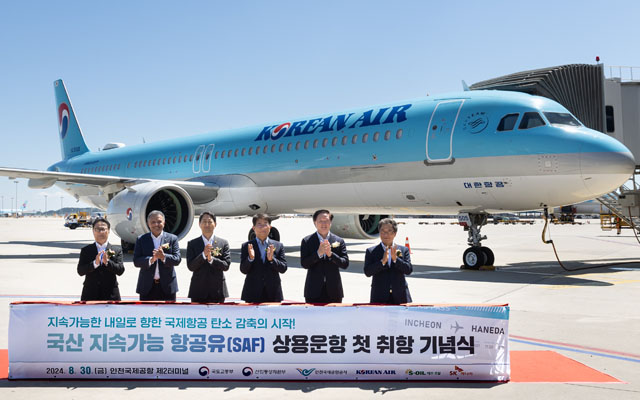
Korean Air will commence using domestically-produced sustainable aviation fuel (SAF) for the first time on flight KE719 from Seoul Incheon to Tokyo Haneda, making the airline the first Korean flag carrier to operate commercial flights partially powered by SAF produced in South Korea.
From August 30, 2024 through July 2025, Korean Air will utilise a one per cent SAF blend for flight KE719 from Seoul Incheon to Tokyo Narita once a week. This route will serve as a starting point for the airline’s domestic SAF programme, with plans to gradually expand SAF usage to medium- and longhaul routes.
A special ceremony was held on August 30 at Incheon International Airport Terminal 2 to celebrate the occasion
The SAF used on this route is supplied by two leading energy companies in South Korea: S-Oil and SK Energy. S-Oil will provide the SAF for the first six months, followed by SK Energy for the remaining period. S-Oil produces SAF from used cooking oil, while SK Energy utilises a combination of used cooking oil and animal fats. Both companies’ SAF products have been certified by the International Civil Aviation Organization under the Carbon Offsetting and Reduction Scheme for International Aviation, ensuring they meet international sustainability standards.
With the adoption of SAF gaining momentum globally, South Korea is also laying the groundwork for SAF market growth. In 2022, the country’s Ministry of Land, Infrastructure and Transport along with the Ministry of Trade, Industry and Energy announced the Eco-friendly Biofuel Expansion Plan to establish quality and production standards for domestically-produced SAF. In August 2024, the government amended the Petroleum and Alternative Fuel Business Act to permit the use of eco-friendly materials in petroleum refining processes.
Korean Air has been implementing SAF in its operations since 2017 when it first used SAF for a passenger flight from Chicago to Seoul Incheon. The airline has since expanded its SAF usage to passenger flights between Paris to Seoul Incheon.
In 2023, Korean Air conducted six test flights as part of a government-led SAF demonstration research project, contributing data towards the development of domestic SAF quality and production standards.
Korean Air continues to upgrade its fleet with next-generation aircraft models, including the Airbus A220-300, A321-neo, Boeing 787-9, 787-10, and 737-8, which offer 20 to 25 per cent lower carbon emissions per seat compared to previous generation aircraft.
Hong Kong-headquartered Wharf Hotels will be transforming its Marco Polo Hotels brand to focus on addressing the evolving behaviour of guests and the addition of numerous enhancements.
Located in gateway cities like Beijing, Hong Kong, Jinjiang, Wuhan, Xiamen, Cebu, Davao and Manila, the refreshed Marco Polo Hotels brand will centre itself with a new series of pillars — Enrich, Connect and Responsible — that will help define the essence of Marco Polo Hotels, a new visual identity, as well as a Viva Magenta brand colour to resonate with the brand’s personality.
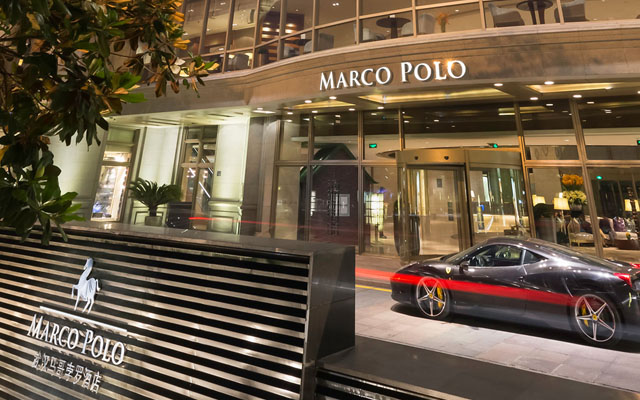
Wharf Hotels will transform its Marco Polo brand throughout 2024 and 2025; Marco Polo Wuhan, pictured
The brand’s new visual identity and colour palette will be deployed in stages to consumer-facing marketing materials and hotel collateral throughout 2024 and into 2025. The refreshed look is the beginning of a comprehensive enhancement plan, which includes the group’s first two rebranded properties – Prince Hotel, Hong Kong and Marco Polo Wuhan. Changes are expected to be progressively introduced at the other properties in the next few years, including investments in the interiors, as well as improved guest experiences.
Wharf Hotels president Thomas Salg commented: “We revisited our brand to ensure the rebranding and enhancements will better reflect the ethos of our namesake and address the increase of bleisure travel in Asia-Pacific.
“Today’s and tomorrow’s guests are looking for more than just a place to stay; they want inspiring experiences in the form of sights, sounds and tastes – both inside our hotels and out. What we set out to accomplish definitely showcases our commitment to creating a holistic guest experience and lasting value for our stakeholders.”
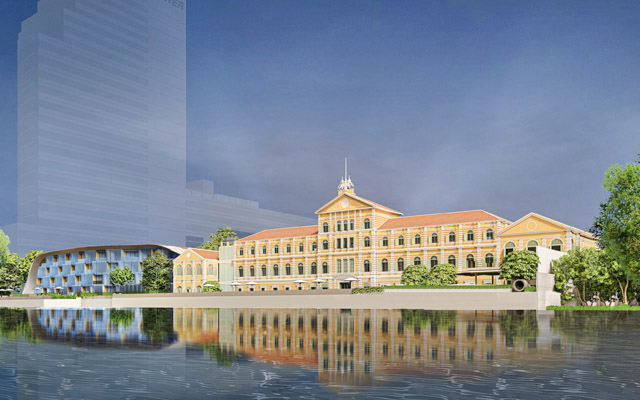
Langham Hospitality Group (LHG) and Rabbit Holdings, an affiliate of BTS Group, have teamed up open The Langham, Customs House, Bangkok.
Slated to open in 2026, the new hotel will be situated in the Thai capital’s Bang Rak District and occupy a complex alongside the Chao Praya River. The centrepiece of the site will be the city’s old Customs House, a heritage building that will be restored to its former glory as part of the project, along with a former post office, and flanked by a modern structure where the property’s 78 guestrooms will be based.
The Langham, Customs House, Bangkok will open in 2026
The new hotel will also feature an outpost of The Langham, Hong Kong’s three Michelin-star Cantonese restaurant, T’ang Court, as well as The Langham’s Chuan Spa.
The Langham, Customs House, Bangkok follows several successful heritage conservation hotel projects led by LHG. Key standouts include The Langham, Boston, a luxury hotel situated in a former Federal Reserve Bank building; The Langham, Chicago, a retreat housed in the iconic Mies van der Rohe building; and The Langham, Pasadena, a property steeped in Hollywood history that dates back to 1907.
The company has additionally broken ground on a project in Venice, Italy, centred on restoring an old glass factory on Murano Island.
LHG CEO Bob van den Oord said: “The Langham, Customs House, Bangkok exemplifies our strategy of incorporating cultural preservation into hotel development while concurrently creating unparalleled experiences for guests and the communities in which we operate.”
“Langham Hospitality Group’s dedication to creating timeless luxury hotels and demonstrated success in heritage conservation makes it the ideal partner to further our vision to set a new standard for luxury hospitality in the region and honour the rich cultural heritage of Customs House and the Bang Rak District,” added Kavin Kanjanapas, director of Rabbit Holdings.
Centara Hotels & Resorts has unveiled its East Coast Escape offer that invites travellers to explore the diverse beauty of Thailand’s eastern coast with savings at participating hotels in Pattaya, Rayong, Trat and the island of Koh Chang.
From now to November 20, CentaraThe1 members can book stays until December 20 at select properties along Thailand’s eastern shores, enjoying discounts of 25 per cent on eligible rate plans at Centara Nova Hotel Pattaya and COSI Pattaya Wong Amat Beach.
Explore the best of Thailand’s East Coast with Centara’s latest offer
This limited-time offer represents an additional 10 per cent savings on top of usual member privileges.
Members can also enjoy an increased 20 per cent discount for stays at Centara Pattaya Hotel, Centara Chaan Talay Resort & Villas Trat, Centara Sonrisa Residences & Suites Sriracha, Centara Koh Chang Tropicana Resort, and Centara Q Resort Rayong.














It all begun back when I was 22, fresh out of university and into my job as a travel agent. I decided there and then that I wanted to work in this industry for a long time, partly because I love to travel and to discover how other people live and how other societies operate.
I have been with some of the biggest boys in the industry – Kuoni, MyTravel Group, and TUI. Later, I joined Routes, where I realised I was not an aviation man. I am a tourism man. When I looked at airlines and airport developments for Routes conferences, I saw planes transporting a whole load of people from one market to another and I was interested to know what drove their decision to travel to that destination.
In the early days of Routes, tourism authorities were missing from this conversation. So, I spoke about this to the CEO at that time, and he made me the director of tourism. My job was to go to tourism authorities everywhere and invite them to engage in air service development.
As I went about my job, I started to see tourism as a huge ecosystem. Tracking data from organisations like UN Tourism (previously UNWTO), WTTC and a whole variety of others made a few things jump out at me: since the beginning of tourism in the early 1900s through till today, effectively, with the exception of Covid, tourism has known nothing but growth.
What happens to an industry that knows nothing but growth? You get fat and lazy. And we did.
(At trade shows) were the same exhibitors, doing the same stuff, with the same messaging, selling the same time of the year, selling the same products. There was no creativity, because they didn’t have to be. There was going to be more tourists next year anyway, because more people were travelling and more airlines were getting onto the scene. Low-cost carriers were on the up then.
Then came overtourism.
The overtourism question really challenged me. UN Tourism predicted that there was going to be another 300 million more visitors by 2030. I didn’t believe that because multiple sources were saying that the global middle-class would grow by 1.5 billion in the next 10 years. These people have disposable income and many of them will want to travel.
That information should send a shiver down the spine of anybody in our industry. With that sort of demand against supply, prices would rise and travel could return to the realms of the relatively wealthy. Already, we are seeing tourist taxes and fees being implemented to manage tourists.
I have two daughters, and we aren’t from a wealthy background. They absolutely should have the opportunity to travel. Travel cannot be the preserve of the elite.
It got me thinking about better ways to manage tourist crowds that do not involve raising prices. And it hit me – the best time of the year to travel is during the low season. This is the time when hotels have capacity that’s wide open and the experience is not a negative one.
Overtourism is seasonal. You don’t see Majorca complaining about overtourism in January because there is pretty much no tourist then.
There is a reason for low seasons though. Do you see a challenge in spreading travel demand out across the low seasons?
The challenge that we’ve got is the perception of the low season. We need to change that perception by being more creative about how we market the destination during low seasons.
What traditionally predicted travel seasonality was weather and the school holidays. It is hard to push family travel outside of the school holidays, but perceptions of weather-driven holidays can be changed.
I was just speaking to (PATA Travel Mart exhibitors from) the Maldives, and they told me about their rainy seasons in May and June. Tourism business is very slow during those months. I have been to the Maldives a couple of times during the rainy season, and I found my experiences wonderful. You get the rain, but rain in the tropics is the most fabulous. It rains like it means it, with thunder and all, but then it is quickly done. What an experience! Rain in the tropics is not slow and long-drawn, and the skies are not grey and grizzly.
So, the Maldives marketers have to educate people about the rainy season – tell people that rainy seasons do not bring (a whole) day of rain. Above all, marketers must reach out to people who value more than just the destination’s weather.
Yes, I see that. The Maldives has in recent years been promoting itself among business event planners. Business events can bring arrivals outside of the usual peak months.
Yes, marketers have to identify and go after niches. Besides MICE, destinations can build low season demand through niches like wellness tourism and sports tourism. Wellness tourism, for example, does not require good weather. Travellers can meditate indoors.
Have you seen good examples of a destination that has built its tourism fortunes on weather-related strengths, like sunny summers or dreamy white winters, and is able to successfully diversify tourism footfalls into the low seasons?
There are certainly a few in Europe. Tenerife is well known for year-round sunshine and beaches, but it has so much more than beaches. For anybody who is not familiar with Tenerife, I would describe it as the Hawaii of Europe. It is a group of islands with a big volcano in the middle and subtropical rainforest in the north. It is great for cycling tours.
We worked with Tenerife on a campaign a couple of years ago. When we featured it on the cover of one of our magazines, everybody thought it was Costa Rica.
Tenerife is making inroads to showcasing more of the island than its beaches.
Tahiti is another example. It has a challenge with seasonality. We did some work with Tahiti and were brought over during the rainy season. We were there for five days before we saw a drop of rain.
I think it is risky for a destination to only position itself on its beaches. Europeans will not travel halfway around the world to see a beach; there are good beaches around Europe that are quicker to get to.
Local culture and heritage can make a strong position. As a traveller to Tahiti, I would want to meet a local who can tell me about traditional tattoos. Tahitians have tattoos that tell the full story of their life. You don’t get that in Europe or many other places. I would also want to experience the local cuisine, nature, songs, and dances.
So, for our Tahiti campaign, we filmed so many things but not one beach. There were so many other unique aspects of Tahiti to feature.
I’m seeing a lot more social media content on hidden parts of a destination and different times to visit to avoid crowds. Do you think social media can be a useful avenue to promote low season trends?
I’ve seen similar content, but not so much on low season ideas. Hidden gems, yes. I have a challenge with this though.
Let’s talk about Bali. People say, go to one of the Gili Islands instead of Bali because Bali is too touristy and crowded. While that message may come with good intentions, with the aim of diversifying tourism, the outcome is shifting the problem to somewhere else that may not be built to handle large volumes of people.
Look at Venice. With all of its might and money, it is still unable to stop overtourism. Now, if everybody flocked over to Trieste instead, which is right round the corner, there would be trouble.
Every destination has an element of seasonality. The reality is that destinations have hotels and attractions that are not fully occupied all year round. Yet, tourism players are calling for more capacity to cope with high demand during peak season.
We know that 30 per cent of global greenhouse gas emissions are a direct result of the built environment. So, is it right to build hotels to only be fully occupied just six months of the year? I say, absolutely not. The most sustainable approach is to work to fill it year-round.
Can policy help?
I’d like to see destinations take a harder stance on this. Well, I am an idealist. It would be good to see authorities telling developers to demonstrate concerted efforts to fill their property all 12 months before issuing the permission to build. This approach will be good for the economy, local businesses, people, and the environment.
I think governments will eventually have to do this when land space runs out.
Let’s talk about the World Tourism Seasonality Summit. Confirmed speakers are quite diverse, representing destinations like Turks and Caicos and Gauteng. Are these destinations that suffer the most pronounced seasonality issues?
We only started work on this summit less than eight weeks ago. It is a ridiculously short amount of time for this first event, but we are determined to make the best of it and have a good start.
In putting together the panel, I made sure to have a 50 per cent male, 50 per cent female representation and also to have people from different geographical areas to offer unique observations from their region.
My biggest disappointment is not being able to get enough engagement from Asia. We recognised that we have to do a lot more in the Asia-Pacific region. That led to our strategic partnership with PATA.
How do you see PATA supporting your cause?
PATA has such a strong reputation and brand in this region. It is more than an association; it’s a close-knit community. If anybody wants to engage with the tourism industry in Asia-Pacific, he has to go through PATA.
We hope that our strategic relationship will allow us to showcase PATA and what its members in the region are doing to promote their low seasons, and have PATA help to get our messages out there.
Are all speaking slots taken at this point?
They are. We had to try and get them filled up as quickly as possible, because the next thing is, we want people to come along to the event to see them speak.
What representation from Asia would you have wanted in the debut conference?
I would have liked to have somebody from Bali (Indonesia), Thailand, and Malaysia.
We will have more time to work on the second edition. For that, I would like to get speakers representing a land-locked destination and an island destination. It is also valuable to get speakers from India and China, as both are big tourism source markets as well as destinations.
What are your plans for future editions of the summit?
We hope to have a few throughout the year, including regional ones. The first summit in October this year will just be for a day. We hope to have future summits stretching over two or three days.
Have you decided on where the second summit will be?
We’re having discussions at the moment with the team at Routes. My hope is that we can reach an agreement whereby the next edition will be at Routes Asia in Perth.
I am also having conversations with the likes of Sri Lanka and Maldives.