

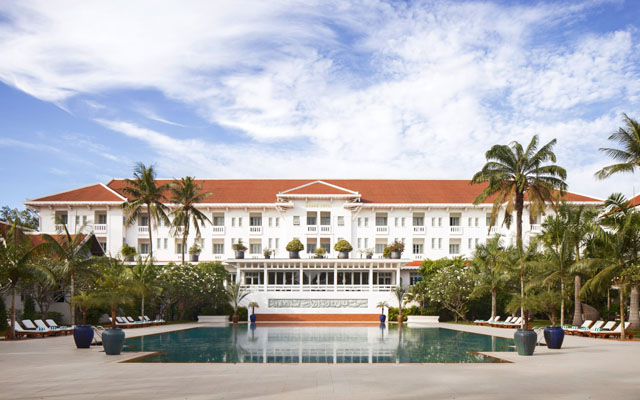
Accor hotels in Cambodia, including Raffles Hotel Le Royal and Raffles Grand Hotel d’Angkor, have launched the Discover Cambodia campaign spotlighting Khmer culture, heritage and hospitality.
The month-long campaign will run throughout August and will feature an array of activities, meals, discounts and more.
Some highlights include Raffles Hotel Le Royal in Phnom Penh, which will host an exclusive Khmer dinner and dance performance at Le Phnom 1929 at Raffles Hotel Le Royal, in addition to a special cocktail menu inspired by famous Cambodian singers at the hotel’s iconic Elephant Bar.
Raffles Grand Hotel d’Angkor in Siem Reap will offer a Golden Age Tasting Menu from August 1-10 at the Khmer fine dining restaurant 1932, as well as an exclusive Sunday Champagne Brunch on August 4 celebrating 1960s Cambodian pop music with the Khmer Magic Music Bus.
TRIBE Phnom Penh Post Office Square will offer a traditional Khmer-themed dinner at Hemisphere Sky Bar, with a concert by Sok Visal on August 15.
For younger guests, Sofitel Phnom Penh Phokeethra will host a kids’ camp with tennis, badminton, tae kwon do, football and more, along with cooking classes, treasure hunts and creative challenges. The hotel will also host a special Sunday Brunch at Do Forni on August 11, plus other activities.
Other participating Accor hotels include ibis Styles Siem Reap, Sofitel Angkor Phokeethra Golf & Spa Resort, Novotel Phnom Penh BKK 1, Novotel Sihanoukville Holiday Resort, and more.
For more information, visit Accor.


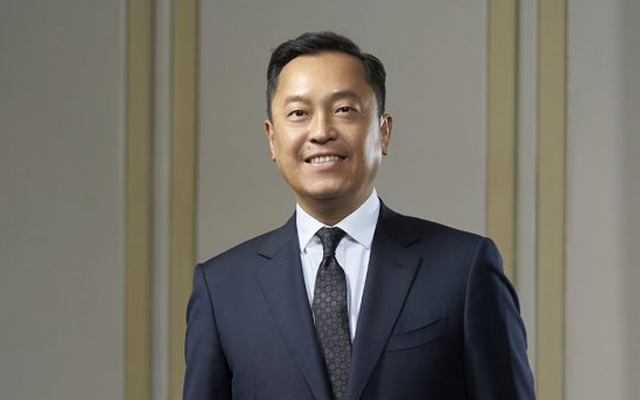
 Prior to this appointment, he was the chief operating officer of Meritus Hotels & Resorts and the Asia-Pacific managing director for IFH Worldwide.












The opportunity for inbound tourism to China is often overlooked, a sentiment echoed by industry leaders during the high-level industry leaders dialogue session at the China-Thailand Cultural Tourism Industry Summit, held in Bangkok on July 1.
“We shouldn’t lose sight of inbound tourism while strategising to attract Chinese tourists abroad,” stated Xu Jing, vice-chairman of the Global Tourism Economy Research Centre (GTERC), who was the panel moderator at the summit.
Highlighting China’s cultural richness, PATA chairman Peter Semone pointed to the country’s ranking within the top five for cultural resources globally on the World Economic Forum’s Travel and Tourism Development Index.
“China has 57 UNESCO World Heritage Sites and 43 intangible cultural heritage offerings. This is a massive opportunity for China, and it’s one that remains largely untapped,” remarked Semone.
He further emphasised the recent merging of China’s Ministry of Culture and Tourism as a strategic move and highlighted tourism’s role in fostering global understanding and peace.
He stated: “People travel to immerse themselves in different cultures and connect with others. If destinations offer homogenous experiences, why travel? One might as well stay home and use virtual reality. Those cultural experiences (are the ones) that promote empathy, respect, and cross-cultural communication, ultimately contributing to social harmony and global interconnectedness.”
William Heinecke, founder and chairman of Minor International, underscored the significance of both inbound and outbound tourism for China.
“We have hotels in China and we have restaurants in China so the domestic market and even the foreign market that goes to China is very important to us for our hotels. But equally important to us is, of course, the outbound market from China,” he said.
Heinecke remarked that his strategic acquisition of Spanish chain NH Hotel Group pre-Covid, which added 350 hotels to Minor’s portfolio, reflects what he foresees as a growing trend – Chinese tourists will increasingly seek diverse experiences beyond Asia.
He elaborated: “We made a very big bet that the travellers of China will not only be going to Asia and be heavy users of Asia, but they’ll also be going to Europe. They’re going to go around the world, because they are seeking richer, more experiential journeys.”
Additionally, Heinecke observed Chinese outbound travel today is less shopping-driven than in the past, saying that the Parisian shopping landscape has already been transposed to major cities like Shanghai or Beijing, and shopping is “less critical” today – having been replaced with the outbound hunger for experiences, food and culture.
Minor is also equally keen on the inbound travel market to China, with Heinecke predicting it will become “one of the largest markets”.
He shared that Minor is working with its partner in China for a pipeline of hotels that will cater to experiential travel, leveraging the country’s plethora of untapped cultural heritage and natural attractions.
The summit, which kicked off a cultural and tourism industry exchange visit by over 200 delegates comprising various industry leaders from Mainland China, Hong Kong SAR and Macau SAR over two days on July 1 and 2, convened key industry figures to discuss bilateral cooperation and unlock new promotional avenues in the Sino-Thai cultural tourism sector ahead of the 50th anniversary of Thailand-China diplomatic relations in 2025.