

The Ritz-Carlton, Bangkok appoints new hospitality team

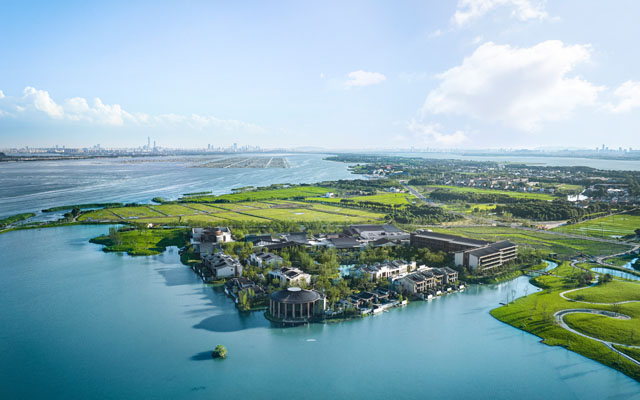
The Ritz-Carlton, Bangkok, which debuts in November, has appointed a team of six seasoned hospitality experts.
Having been with Marriott for 24 years, new general manager Tina Liu boasts an impressive business acumen and an extensive background in luxury hospitality. She has led teams at high-profile hotels, primarily in Thailand, and is fluent in Thai.

Next is hotel manager, Lewis Quinn, who brings with him over 15 years of working in hospitality to his new role, while Evelyne Hahang takes on the role of director of rooms, having honed her hospitality skills for over 15 years in the UK, France, Australia, and Thailand.
Leon Chan, who hails from Singapore, is the director of sales & marketing. He has amassed 15 years of hospitality sales and business development experience working at high-profile hotels in Singapore and Hong Kong.
For F&B, Clément Larre leads as director, with Glen Cooper as executive chef.
New Taipei invites Thai visitors to explore Northern Taiwan

The New Taipei City Government’s tourism and travel department recently organised a tourism promotion event in Bangkok, Thailand working with New Taipei’s hospitality industry to promote the city’s tourism attractions to Thai industry professionals.
Held on September 6, the delegation also visited organisations such as the Taiwan Tourism Administration (Bangkok Office), the Thai Travel Agents Association, and the Thai-Taiwan Business Association.

As of May this year, over 180,000 Thai tourists have visited Taiwan, making Thailand the third largest source of South-east Asian visitors after Malaysia and the Philippines.
The tourism and travel department will continue to market internationally renowned events such as the Christmas land in New Taipei City, the Pingxi Sky Lantern Festival, and the upcoming World Masters Games 2025 Taipei & New Taipei City, as well as tailor its promotions to the preferences of Thai tourists by highlighting local cuisine, including renowned New Taipei specialties such as Jiufen taro balls, Wanli crabs, Shimen rice dumplings, Wulai indigenous bamboo tube rice, and more.
Local souvenirs such as Pinglin Pouchong Tea Egg Rolls, Sanxia Biluochun Tea, and Yingge porcelain tea sets have also been popular among Thai industry professionals.
New Taipei also promoted regional travel itineraries across Keelung, Taipei, New Taipei, and Taoyuan, enhancing the visibility and appeal of all four cities, and strengthening the cooperation of the Keelung-Taipei-New Taipei-Taoyuan Collaboration and Exchange Platform.
AHRA completes ASEAN hospitality representation with VHA inclusion

The ASEAN Hotel and Restaurant Association (AHRA) has welcomed the Vietnam Hotel Association (VHA) into its fold, completing its representation of all 10 ASEAN member countries.
The integration of VHA into AHRA reinforces the association’s commitment to fostering collaboration, knowledge-sharing, and best practices across the region. By uniting the hospitality sectors of all ASEAN countries, AHRA aims to enhance the quality and competitiveness of South-east Asian hospitality industry on the global stage.

“Asia is set to drive travel growth in 2025 and as ASEAN intra-regional travel expands, we are happier than ever to welcome Vietnam Hotel Association to AHRA, completing the representation of all 10 ASEAN countries. We look forward to further collaboration to strengthen tourism in the region,” said Marisa Sukosol Nunbhakdi, president of AHRA.
“I believe that joining the AHRA will provide an opportunity for members of the VHA to engage, share valuable experiences on various matters of hotel and restaurant operations with other countries in the region, engage strong relationships in the hospitality and culinary sectors, and supporting each other in mutual development,” said Do Hong Xoan, president of VHA.
Tourism Australia welcomes new regional GM (South and South East Asia)

Tourism Australia has appointed Jennifer Doig to the role of regional general manager South and South East Asia.
She brings a wealth of marketing experience in the Asia region to the role, and was most recently working for Dubai Tourism as director of global campaigns.
 In her new role, Doig will drive trade and consumer marketing activity with the teams in Tourism Australia’s key markets in the region, including India, Indonesia, Malaysia and Singapore.
George Town Literary Festival 2024 returns end November

The 14th edition of the George Town Literary Festival (GTLF) returns from November 29 to December 1, and will feature the theme, Word on the Street.
This theme suggests the stories, voices and language uses that shape George Town, and highlights the importance of literature in expressing urban experiences and the power of language in moulding society.

GTLF 2024 promises an engaging line-up of events, including panel discussions, readings, book launches, exhibitions, film screenings, and workshops. Full programme details will be released closer to the festival date.
The festival will feature prominent Malaysian writers, such as novelist Tan Twan Eng, winner of the Man Asian Literary Prize and the Walter Scott Prize for Historical Fiction; Shih-Li Kow, Prix du Premier Roman Etranger winner; Dublin Literary Award 2024 longlisted author Aishah Zainal; Freeman Book Award winner Hanna Alkaf; as well as poets Hafiz Hamzah and Qurratul Ain.
Internationally acclaimed authors will also be part of the GTLF 2024 line-up, including Flemish author Jeroen Olyslaegers, Governor General’s Award-nominated Canadian writer Sheung-King, and Taiwanese novelist Kevin Chen.
In total, there are presently 30 writers from seven countries participating in this year’s edition.
The festival’s principal venues for this year will be Bangunan UAB (Think City), Bangunan Wawasan, the E&O Hotel, Khoo Kongsi, St. Xavier’s Institution, The Courtyard, and several other locations across George Town.
Local reader magnet, Gerakbudaya Bookshop Penang, returns as the festival’s official bookstore. It will offer a wide-ranging collection of titles by GTLF 2024’s line-up of writers and speakers at their pop-up store in Bangunan UAB from November 29 to December 1.
Programming partners for this event include Hin Bus Depot and Penang Hidden Gems, while Penang Institute serves as the festival’s owner and new organiser.
Most GTLF programmes will remain free and open to the public.
Travel DMC Group Singapore to promote sustainable tourism, enhance guest experience
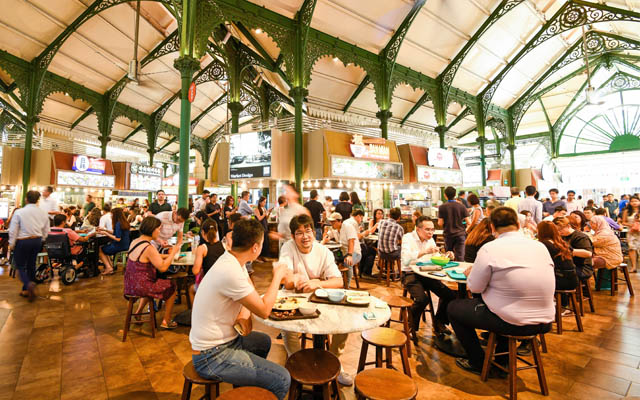
Travel DMC Group Singapore (TDMC) has teamed up with 20 local hawker centres to elevate the travel experience for guests from China and India, showcasing Singapore’s rich culinary heritage while promoting eco-friendly practices.
TDMC’s latest endeavour will see it collaborate with 20 renowned hawker centres to offer tourists a unique taste of Singapore’s diverse food culture. This partnership not only introduces travellers to the best of local cuisine but also contributes to the economic vitality of these local establishments.
As part of this initiative, TDMC will provide reusable water bottles in welcome kits for all clients, along with comprehensive information about the participating hawker centres, sustainability tips, and a guide to responsible tourism.
About 9,500 guests are expected within the next six months, during which they will be guided on tours to explore the local food scene.
Starting in 2025, TDMC will be reducing its carbon footprint by introducing six electric vehicles to its transportation services, a move that is expected to lower carbon emissions by 30 per cent.
“Partnering with local hawker centres is a natural extension of our commitment to promoting Singapore’s rich culture while supporting the local economy,” said Shiv Kumar Gokhar, managing director at Travel DMC Group Singapore. “We are excited to offer our guests an authentic culinary journey and contribute to a more sustainable future.”
Marriott International to open five more properties in Indonesia

Marriott International has signed an agreement with Pakuwon Jati to develop five additional properties from Jakarta to Surabaya and Batam.
The multi-deal agreement will comprise more than 1,300 rooms across Indonesia, adding to the current 1,925 rooms across seven hotels and one golf club for Pakuwon Jati that Marriott International currently manages.

The properties include Jakarta Marriott Hotel Kota Kasablanka, Aloft Surabaya, Pakuwon Indah, Courtyard by Marriott Batam, The Jakarta Edition and The Westin Batam.
Opening in December 2029 are Jakarta Marriott Hotel Kota Kasablanka, which will boast 320 guestrooms and suites, an all-day dining restaurant, pool and bar, patisserie, spa, fitness centre, and event venues; Aloft Surabaya, Pakuwon Indah which will feature 243 rooms and 23 suites, including four Family Suites; and the 306-key Courtyard by Marriott Batam which will offer an all-day dining restaurant with live stations, café and bar, swimming pool, fitness centre, and meeting spaces.
Then in December 2030, Indonesia will welcome its first The Jakarta Edition, which will house 240 rooms, F&B offerings, as well as leisure and business facilities. Also opening in December 2030 is The Westin Batam with 230 rooms and suites, as well as a sky bar, executive club lounge, event venues and more.
Rajeev Menon, president, Asia Pacific excluding China, Marriott International, said: “With 77 operating properties, we are optimistic and focused on strengthening our presence in Indonesia, in line with the strong demand for leisure and business travel.”
“By leveraging the expertise of Marriott International in the hospitality industry, this long-standing strategic collaboration promises to introduce innovative services and amenities tailored to meet the evolving astute needs of modern travellers and deliver unparalleled experiences that exceed the expectations of our discerning guests,” added Eiffel Tedja, director of Pakuwon Jati.
Indonesia moves to update tourism law

The Indonesian House of Representatives (HoR) and government will be revising its tourism law to ensure it remains relevant for the current and future tourism landscape in the country.
Proposed by HoR and the Indonesian Regional Representative Council, the Draft on Tourism Law addresses Law Number 10 of 2009. Key points from the draft include regulating tourism based on a new paradigm, managing both mass tourism and sustainable tourism effectively, and strengthening the identity of the nation by preserving community values, customs, natural resources, and cultural heritage.

Sandiaga Uno, minister of tourism and creative economy said: “The law has been around for almost 15 years now. (It is about time that) we redesign it together to provide a more significant contribution (particularly) to policy, budgeting and (public and private) involvement.”
Agustina Pramestuti, deputy chair of Commission X (10) of the HoR, stated that at least five meetings have been held since March 2024 to discuss the Draft on Tourism Law as well as the Draft on State Revenue and Expenditure Budget.
However, the Indonesian Tourism Industry Association (GIPI) remarked that the draft does not reflect the industry’s aspiration, and has requested the discussion be halted and resume only when the new HoR takes office on October 1 – a motion that was backed by Sandiaga.
GIPI chairman Hariyadi Sukamdani said: “The drafts issued by the HoR on April 5 and July 2 were not in line with the aspirations of tourism players. We hope the discussion of the draft (will involve) the tourism industry.”
Haryadi pointed out issues , such as the exclusion of the Indonesia Tourism Promotion Agency and GIPI, which are two institutions mandated in the existing law.
He continued: “Despite the mandate, the tourism promotion agency has not been formed, while GIPI – a forum for the collaboration of tourism business players – is removed from the draft. (On the other hand), the draft mentioned a new National Tourism Institution, which may have the potential to eliminate the role of the Ministry of Tourism.”
Maulana Yusran, deputy chairman of GIPI, also questioned the mention of the new institution in the draft, and whether the government intended to dissolve the “organisation and form a new agency”.
Khiri Travel adds the Philippines to its destinations

Khiri Travel has acquired Travel Authentic Philippines (TAP), adding the Philippines as its ninth Asian destination alongside Thailand, Indonesia, Cambodia, Vietnam, Laos, Sri Lanka, the Maldives, and Myanmar.
The DMC’s priority is to ensure that its Philippine products satisfy the broad range of tour operator clients that it currently serves, including specialist operators in sectors such as educational travel, adventure, luxury, as well as individual travellers.
The rebranding from TAP to Khiri Travel Philippines will be completed by this month.
Apart from exploration and insights in nearly all the main areas of the Philippines, Khiri Travel’s guests in the destination can expect themed tours such as island hopping, indigenous culture discoveries, architecture and heritage trips, home stays and general sightseeing – all which will be featured during the World Travel Market in London in November.
There will also be opportunities for giving back to the Philippine communities through projects for the Tagbanwa and Ifugao peoples, and more.
TAP country manager, Paulette Viacrucis, will retain her role with Khiri Travel Philippines, and will be supported by Stuart Tayler, who will lead the development and updating of product offerings from Khiri Travel’s office in Cebu City.
“We aim to ensure the Philippine experience for our guests is authentic, original and innovative with a keen eye for community, culture, conservation and sustainable profitability,” said Willem Niemeijer, founder and CEO of Khiri Travel.
Joey Gaston, co-founder of TAP, and now a board member of Khiri Travel Philippines, said that the goal will be to continue promoting tourism to non-traditional destinations around the country.
He shared: “Indeed, Khiri Travel Philippines will offer immersive and responsible travel experiences that highlight the beauty of our wonderful archipelago. We will do this while ensuring sustainable benefits for both the environment and local communities.”
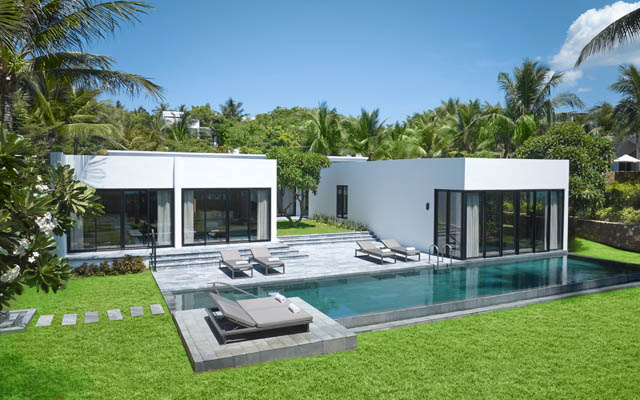






Banyan Group is expanding across East China with the launch of three new resorts: Banyan Tree Yangcheng Lake, Garrya Yangcheng Lake, and Garrya Xianju.
This follows the opening of the group’s first complex in East China earlier this year, comprising Banyan Tree Suzhou Shishan and Angsana Suzhou Shishan.
Set against the picturesque Jiangnan landscape, the opening of resort complex Banyan Tree Yangcheng Lake offers 70 guestrooms and villas, with private hot spring pools on every terrace, with facilities such as the Banyan Tree Spa, gym, hot springs, indoor heated pool, and restaurants.
Garrya Yangcheng Lake, situated on the eastern shore of the picturesque ‘Beauty’s Leg’ Peninsula, features a quiet lakeside retreat with 210 rooms and suites, with dining establishments, spa and well-being facilities, kids’ club, and multifunctional spaces.
Banyan Group’s inaugural resort in Taizhou, Garrya Xianju, is nestled within the Shenxianju Scenic Area and boasts 195 rooms, each with a private balcony. Amenities include two restaurants, a riverside pool, children’s club, yoga room, and spa.
Philip Ding, vice president and head of regional operations – China at Banyan Group, shared: “For three decades, Banyan Group has planted roots in awe-inspiring destinations around the world, becoming stewards of the communities and environment that we operate our businesses in.
“The Banyan Tree and Garrya complex at Yangcheng Lake, and Garrya Xianju in Taizhou will mirror the same commitment, as we hope to inject vitality into the local economies and contribute to the growth of tourism in regional China.”